Nuclear energy groups race to develop ‘microreactors’
Companies vie to create small plants for deployment to sites from data centres to oil platforms
Ft.com Malcolm Moore and George Steer in London, 9 Jan 25
Nuclear energy companies are trying to shrink reactors to the size of shipping containers in a bid to compete with electric batteries as a source of zero-carbon energy. Led by Westinghouse, the race to develop “microreactors” is based on the notion they can replace diesel and gas generators used by everything from data centres to remote off-grid communities to offshore oil and gas platforms.
Microreactors have a much smaller output of up to 20MW, enough to power roughly 20,000 homes, and are likely to operate like large batteries, with no control room or workers on site. The reactors would be transported to a site, plugged in and left to run for several years before being taken back to their manufacturer for refuelling. Westinghouse in December won approval from US nuclear regulators for a control system that will eventually allow the 8MW eVinci to be operated remotely. The reactor, which has minimal moving parts, uses pipes filled with liquid sodium to draw heat from its nuclear fuel and transfer it to the surrounding air, which can then run a turbine to produce electricity or be pumped into heating systems.
“Our goal is to be able to operate autonomously from a central location where we can just simply monitor a fleet of reactors that are deployed around the world,” said Ball…………………………………………
Ball said two of the target markets for eVinci reactors were data centres and the oil and gas industry, both on and offshore. He said the ability to run several microreactors side by side would make data centres more resilient than with a single source of energy.
…………………………………………………………………. But J Clay Sell, chief executive of X-energy, said the market for microreactors was “still emerging”. “We’ve probably invested as much as anyone in the sector,” he said. “But when you go down in size, the economics become much more challenged. You have to get to a greater level of scale for microreactors to become economic.”
………………………………………. there are questions over how to build, transport and run microreactors safely, said Ronan Tanguy, programme lead for safety and licensing at the World Nuclear Association. Regulators still have to draw up rules around whether microreactors can be operated remotely and how to make them safe from cyber attacks. Rules are also needed around transporting them, especially across national borders, and whether they should be fuelled in a factory or on site. Given their smaller size, they may also pose an easier target for nuclear fuel theft…………………. https://www.ft.com/content/a4c98cb2-797a-4943-9643-2fd75accfd59
No comments yet.
1 This Month
To see nuclear-related stories in greater depth and intensity – go to https://nuclearinformation.wordpress.com/
12 February – Webinar The Big Push: New Nuclear Projects in Canada
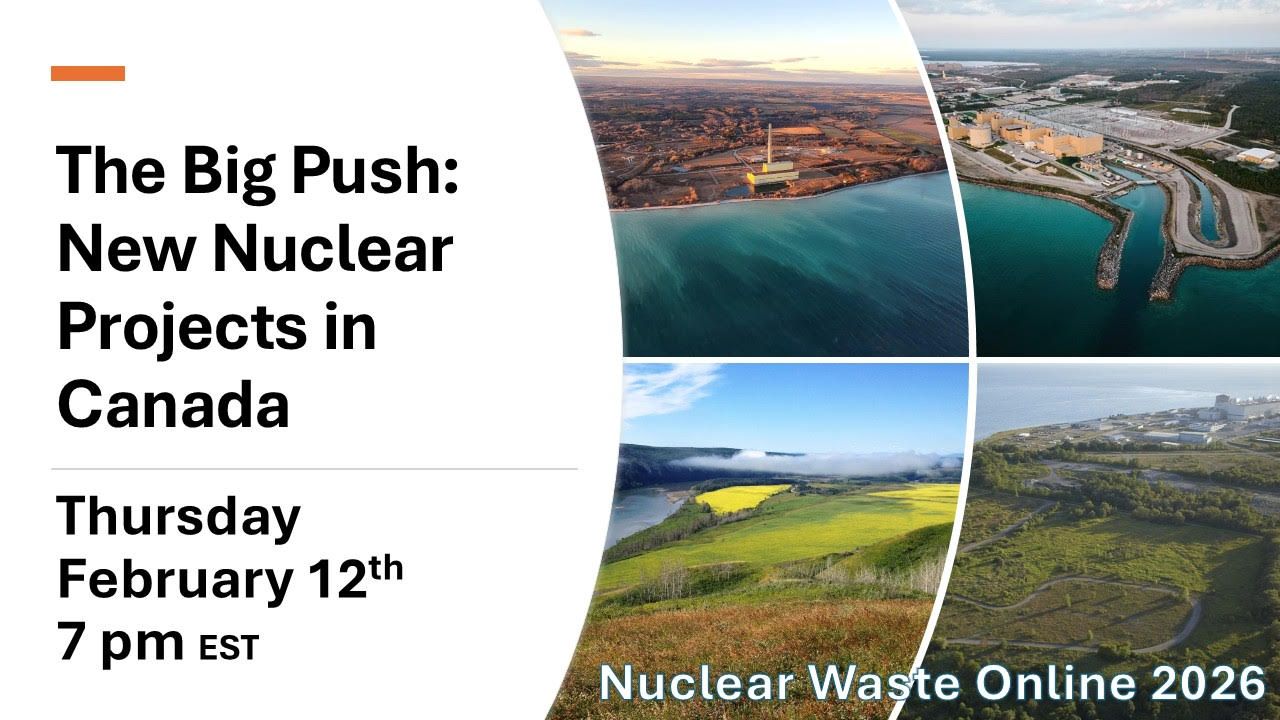
Thursday, February 12, 7 pm Eastern | 2nd of 4 sessions in the 2026 Nuclear Waste Online webinar series
Join a webinar on the push for new nuclear generation in Canada. Go to Northwatch.org to register or use the registration link https://us02web.zoom.us/webinar/register/WN_ZfWOf1GITqSRIZX8CB-A9w
-
Archives
- February 2026 (115)
- January 2026 (308)
- December 2025 (358)
- November 2025 (359)
- October 2025 (376)
- September 2025 (258)
- August 2025 (319)
- July 2025 (230)
- June 2025 (348)
- May 2025 (261)
- April 2025 (305)
- March 2025 (319)
-
Categories
- 1
- 1 NUCLEAR ISSUES
- business and costs
- climate change
- culture and arts
- ENERGY
- environment
- health
- history
- indigenous issues
- Legal
- marketing of nuclear
- media
- opposition to nuclear
- PERSONAL STORIES
- politics
- politics international
- Religion and ethics
- safety
- secrets,lies and civil liberties
- spinbuster
- technology
- Uranium
- wastes
- weapons and war
- Women
- 2 WORLD
- ACTION
- AFRICA
- Atrocities
- AUSTRALIA
- Christina's notes
- Christina's themes
- culture and arts
- Events
- Fuk 2022
- Fuk 2023
- Fukushima 2017
- Fukushima 2018
- fukushima 2019
- Fukushima 2020
- Fukushima 2021
- general
- global warming
- Humour (God we need it)
- Nuclear
- RARE EARTHS
- Reference
- resources – print
- Resources -audiovicual
- Weekly Newsletter
- World
- World Nuclear
- YouTube
-
RSS
Entries RSS
Comments RSS
 nuclear-news
Leave a comment