Short nuclear news round-up -week to 5 January 2025

Some bits of good news – 86 Stories of Progress from 2024 ,
A 12-year-old schoolgirl has designed a solar-powered blanket for the homeless. ALSO AT https://nuclear-news.net/2025/01/04/1-a-12-year-old-schoolgirl-has-designed-a-solar-powered-blanket-for-thehomeless/
TOP STORIES
2025, Iran is back in the U.S. crosshairs for regime change.
Japan, US to communicate on possible use of nuclear weapons.
Arms control is essential to prevent the total devastation of nuclear war.
Protect your girls: We show that biological sex IS a factor in radiation outcomes, WIDELY.
JIMMY CARTER: Commemorations by nuke watchdogs
Climate. A snapshot of climate devastation’: Study claims 2024’s biggest climate disasters cost $200bn – ALSO AT https://nuclear-news.net/2025/01/01/2-b1-a-snapshot-of-climate-devastation-study-claims-2024s-biggest-climate-disasters-cost-200bn/ Skiing in France is slowly dying ALSO AT https://nuclear-news.net/2024/12/31/2-b1-skiing-in-france-is-slowly-dying/deal for Ukraine ?
Noel’s notes. Iran and the “right to have nuclear weapons“. Is it realistic for Donald Trump to boast of a quick peace deal for Ukraine?
AUSTRALIA. The $80 billion question buried in Dutton’s nuclear power plan. The Coalition’s coal-keeper plan. Can true nuclear independence be achieved without ending the US Alliance? More Australian nuclear news at https://antinuclear.net/2024/12/31/australian-nuclear-news-30-december-6-june/
NUCLEAR ITEMS
| ECONOMICS. Sizewell C faces calls for more scrutiny of costs ahead of Final Investment Decision. Government urged to review Sizewell C nuclear plant over ballooning cost. Armed with Canadian taxpayer support, AtkinsRéalis and Westinghouse are competing to export nuclear reactors. Which one will prevail? -ALSO AT https://nuclear-news.net/2025/01/04/1-b1-armed-with-canadian-taxpayer-support-atkinsrealis-and-westinghouse-are-competing-to-export-nuclear-reactors-which-one-will-prevail/ |
| ENVIRONMENT. Some Types of Pollution Are More Equal than Others.Radiation is normal at Cesar Chavez Park, but it’s a different story underground, tests show. |
| ETHICS and RELIGION. The Moral Bankruptcy of the West. |
| EVENTS. Petition: Scrutinise Sizewell C |
| HEALTH. Where is the ‘mature debate’ about the health impacts of nuclear power? – ALSO AT https://antinuclear.net/2025/01/03/where-is-the-mature-debate-about-the-health-impacts-of-nuclear-power/ Cellphone radiation warning as researchers reveal new risk factor. |
| MEDIA. Examining Annie Jacobsen’s “Nuclear War: A Scenario”. BBC staffers reveal editor’s ‘entire job’ to whitewash Israeli war crimes. |
| PERSONAL STORIES. Toshiyuki Mimaki: Let’s save humanity from nuclear weapons. One Week in the Carter Presidency: Brokering Peace and a Nuclear Crisis -ALSO AT https://nuclear-news.net/2024/12/31/2-b1-one-week-in-the-carter-presidency-brokering-peace-and-a-nuclear-crisis/ |
| POLITICS.Nuclear power had a strong year in 2024, but uncertainty looms for 2025. No change in Iran’s nuclear doctrine, top security official says. US relaxes green hydrogen rules in race to boost nuclear sector -ALSO AT https://nuclear-news.net/2025/01/04/2-b1-us-relaxes-green-hydrogen-rules-in-race-to-boost-nuclear-sector/ |
| POLITICS INTERNATIONAL and DIPLOMACY. Iran says ready to enter talks soon with the West to agree on a new nuclear deal. Next nuclear talks between Iran and three European countries due on Jan 13.With successful Syrian regime change, will US set sights on Iran regime change 2.0? – https://nuclear-news.net/2024/12/31/2-b1-with-successful-syrian-regime-change-will-us-set-sights-on-iran-regime-change-2-0/ A Trump-Putin Deal Over Ukraine Does Not Look Good for Europe.Can Trump Trump China (or Vice Versa)? |
| RADIATION. Improved way to gauge radiation doses developed for Fukushima, (they studied only 30 people) |
| SAFETY. Incidents. The Time Navy Lt. Jimmy Carter Was Lowered Into A Partially Melted-Down Nuclear Reactor |
| SECRETS and LIES. EU officials will claim ignorance of Israel’s war crimes: a leaked document shows what they knew. |
SPACE. EXPLORATION, WEAPONS. The Quiet Crisis Above: Unveiling the Dark Side of Space Militarization
Departing Air Force Secretary Will Leave Space Weaponry as a Legacy.
TECHNOLOGY. Here comes Yakutia, Russia’s newest nuclear icebreaker.
WASTES. WIPP’s Legacy Transuranic Waste Disposal Plan Demonstrates DOE’s Broken Promises. Decommissioning: Pickering A nuclear power plant bites the dust!
| WAR and CONFLICT. Biden discussed plans to strike Iran nuclear sites if Tehran speeds toward bomb. Syrian minorities under threat as security forces carry out raids against ‘remnants of Assad militias’. |
| WEAPONS and WEAPONS SALES. Trump Wants Greenland to Deploy Medium-Range Missiles Aimed at Russia . US Has Given Israel $22 Billion in Military Aid Since October 2023. Biden spending last month shoveling billions to get more Ukrainians killed for nothing. Biden Administration Announces Nearly $6 Billion in New Ukraine Aid. Canada’s atomic legacy |
Can Trump Trump China (or Vice Versa)?
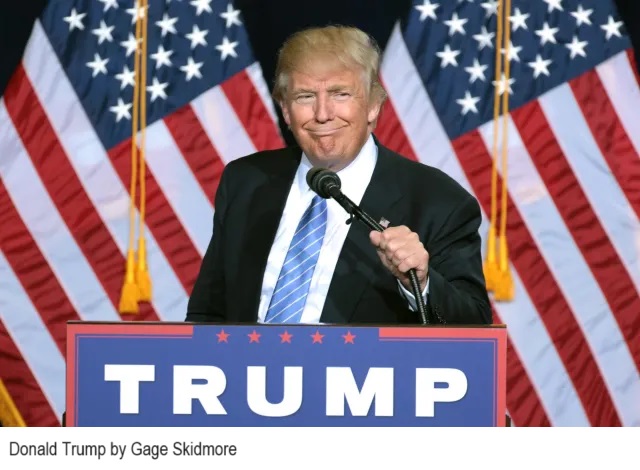
When Washington granted diplomatic recognition to China in 1979, it “acknowledged” that Taiwan and the mainland were both part of “one China” and that the two parts could eventually choose to reunite. The U.S. also agreed to cease diplomatic relations with Taiwan and terminate its military presence there.
For decades, one president after another reaffirmed the “one China” policy while also providing Taiwan with increasingly powerful weaponry.
the bind Trump will inevitably find himself in when it comes to Taiwan this time around.
Trump Confronts a Rising China
Can He Manage U.S.-China Relations Without Precipitating World War III?
By Michael Klare, December 17, 2024, https://scheerpost.com/2024/12/19/trump-confronts-a-rising-china/
Gaza, Haiti, Iran, Israel, Lebanon, Russia, Syria, Ukraine, and Venezuela: President-elect Donald Trump will face no shortage of foreign-policy challenges when he assumes office in January. None, however, comes close to China in scope, scale, or complexity. No other country has the capacity to resist his predictable antagonism with the same degree of strength and tenacity, and none arouses more hostility and outrage among MAGA Republicans. In short, China is guaranteed to put President Trump in a difficult bind the second time around: he can either choose to cut deals with Beijing and risk being branded an appeaser by the China hawks in his party, or he can punish and further encircle Beijing, risking a potentially violent clash and possibly even nuclear escalation. How he chooses to resolve this quandary will surely prove the most important foreign test of his second term in office.
As Waltz and others around Trump see it, China poses a multi-dimensional threat to this country’s global supremacy. In the military domain, by building up its air force and navy, installing military bases on reclaimed islands in the South China Sea, and challenging Taiwan through increasingly aggressive air and naval maneuvers, it is challenging continued American dominance of the Western Pacific. Diplomatically, it’s now bolstering or repairing ties with key U.S. allies, including India, Indonesia, Japan, and the members of NATO. Meanwhile, it’s already close to replicating this country’s most advanced technologies, especially its ability to produce advanced microchips. And despite Washington’s efforts to diminish a U.S. reliance on vital Chinese goods, including critical minerals and pharmaceuticals, it remains a primary supplier of just such products to this country.
Fight or Strike Bargains?
For many in the Trumpian inner circle, the only correct, patriotic response to the China challenge is to fight back hard. Both Representative Waltz, Trump’s pick as national security adviser, and Senator Marco Rubio, his choice as secretary of state, have sponsored or supported legislation to curb what they view as “malign” Chinese endeavors in the United States and abroad.
What such a deal might look like is anyone’s guess, but it’s hard to see how Trump could win significant concessions from Beijing without abandoning some of the punitive measures advocated by the China hawks in his entourage. Count on one thing: this complicated and confusing dynamic will play out in each of the major problem areas in U.S.-China relations, forcing Trump to make critical choices between his transactional instincts and the harsh ideological bent of his advisers.
Trump, China, and Taiwan
Of all the China-related issues in his second term in office, none is likely to prove more challenging or consequential than the future status of the island of Taiwan. At issue are Taiwan’s gradual moves toward full independence and the risk that China will invade the island to prevent such an outcome, possibly triggering U.S. military intervention as well. Of all the potential crises facing Trump, this is the one that could most easily lead to a great-power conflict with nuclear undertones.
When Washington granted diplomatic recognition to China in 1979, it “acknowledged” that Taiwan and the mainland were both part of “one China” and that the two parts could eventually choose to reunite. The U.S. also agreed to cease diplomatic relations with Taiwan and terminate its military presence there. However, under the Taiwan Relations Act of 1979, Washington was also empowered to cooperate with a quasi-governmental Taiwanese diplomatic agency, the Taipei Economic and Cultural Representative Office in the United States, and provide Taiwan with the weapons needed for its defense. Moreover, in what came to be known as “strategic ambiguity,” U.S. officials insisted that any effort by China to alter Taiwan’s status by force would constitute “a threat to the peace and security of the Western Pacific area” and would be viewed as a matter “of grave concern to the United States,” although not necessarily one requiring a military response.
For decades, one president after another reaffirmed the “one China” policy while also providing Taiwan with increasingly powerful weaponry. For their part, Chinese officials repeatedly declared that Taiwan was a renegade province that should be reunited with the mainland, preferably by peaceful means. The Taiwanese, however, have never expressed a desire for reunification and instead have moved steadily towards a declaration of independence, which Beijing has insisted would justify armed intervention.
As such threats became more frequent and menacing, leaders in Washington continued to debate the validity of “strategic ambiguity,” with some insisting it should be replaced by a policy of “strategic clarity” involving an ironclad commitment to assist Taiwan should it be invaded by China. President Biden seemed to embrace this view, repeatedly affirming that the U.S. was obligated to defend Taiwan under such circumstances. However, each time he said so, his aides walked back his words, insisting the U.S. was under no legal obligation to do so.
The Biden administration also boosted its military support for the island while increasing American air and naval patrols in the area, which only heightened the possibility of a future U.S. intervention should China invade. Some of these moves, including expedited arms transfers to Taiwan, were adopted in response to prodding from China hawks in Congress. All, however, fit with an overarching administration strategy of encircling China with a constellation of American military installations and U.S.-armed allies and partners.
From Beijing’s perspective, then, Washington is already putting extreme military and geopolitical pressure on China. The question is: Will the Trump administration increase or decrease those pressures, especially when it comes to Taiwan?
That Trump will approve increased arms sales to and military cooperation with Taiwan essentially goes without saying (as much, at least, as anything involving him does). The Chinese have experienced upticks in U.S. aid to Taiwan before and can probably live through another round of the same. But that leaves far more volatile issues up for grabs: Will he embrace “strategic clarity,” guaranteeing Washington’s automatic intervention should China invade Taiwan, and will he approve a substantial expansion of the American military presence in the region? Both moves have been advocated by some of the China hawks in Trump’s entourage, and both are certain to provoke fierce, hard-to-predict responses from Beijing.
Many of Trump’s closest advisers have, in fact, insisted on “strategic clarity” and increased military cooperation with Taiwan. Michael Waltz, for example, has asserted that the U.S. must “be clear we’ll defend Taiwan as a deterrent measure.” He has also called for an increased military presence in the Western Pacific. Similarly, last June, Robert C. O’Brien, Trump’s national security adviser from 2019 to 2021, wrote that the U.S. “should make clear” its “commitment” to “help defend” Taiwan, while expanding military cooperation with the island.
Trump himself has made no such commitments, suggesting instead a more ambivalent stance. In his typical fashion, in fact, he’s called on Taiwan to spend more on its own defense and expressed anger at the concentration of advanced chip-making on the island, claiming that the Taiwanese “did take about 100% of our chip business.” But he’s also warned of harsh economic measures were China to impose a blockade of the island, telling the editorial board of the Wall Street Journal, “I would say [to President Xi]: if you go into Taiwan, I’m sorry to do this, I’m going to tax you at 150% to 200%.” He wouldn’t need to threaten the use of force to prevent a blockade, he added, because President Xi “respects me and he knows I’m [expletive] crazy.”
Such comments reveal the bind Trump will inevitably find himself in when it comes to Taiwan this time around. He could, of course, try to persuade Beijing to throttle back its military pressure on the island in return for a reduction in U.S. tariffs — a move that would reduce the risk of war in the Pacific but leave China in a stronger economic position and disappoint many of his top advisers. If, however, he chooses to act “crazy” by embracing “strategic clarity” and stepping up military pressure on China, he would likely receive accolades from many of his supporters, while provoking a (potentially nuclear) war with China.
In January 2018, the first Trump administration imposed tariffs of 30% on imported solar panels and 20%-50% on imported washing machines, many sourced from China. Two months later, the administration added tariffs on imported steel (25%) and aluminum (10%), again aimed above all at China. And despite his many criticisms of Trump’s foreign and economic policies, President Biden chose to retain those tariffs, even adding new ones, notably on electric cars and other high-tech products. The Biden administration has also banned the export of advanced computer chips and chip-making technology to China in a bid to slow that country’s technological progress.
Accordingly, when Trump reassumes office on January 20th, China will already be under stringent economic pressures from Washington. But he and his associates insist that those won’t be faintly enough to constrain China’s rise. The president-elect has said that, on day one of his new term, he will impose a 10% tariff on all Chinese imports and follow that with other harsh measures. Among such moves, the Trump team has announced plans to raise tariffs on Chinese imports to 60%, revoke China’s Permanent Normal Trade Relations (also known as “most favored nation”) status, and ban the transshipment of Chinese imports through third countries.
Most of Trump’s advisers have espoused such measures strongly. “Trump Is Right: We Should Raise Tariffs on China,” Marco Rubio wrote last May. “China’s anticompetitive tactics,” he argued, “give Chinese companies an unfair cost advantage over American companies… Tariffs that respond to these tactics prevent or reverse offshoring, preserving America’s economic might and promoting domestic investment.”
But Trump will also face possible pushback from other advisers who are warning of severe economic perturbations if such measures were to be enacted. China, they suggest, has tools of its own to use in any trade war with the U.S., including tariffs on American imports and restrictions on American firms doing business in China, including Elon Musk’s Tesla, which produces half of its cars there. For these and other reasons, the U.S.-China Business Council has warned that additional tariffs and other trade restrictions could prove disastrous, inviting “retaliatory measures from China, causing additional U.S. jobs and output losses.”
As in the case of Taiwan, Trump will face some genuinely daunting decisions when it comes to economic relations with China. If, in fact, he follows the advice of the ideologues in his circle and pursues a strategy of maximum pressure on Beijing, specifically designed to hobble China’s growth and curb its geopolitical ambitions, he could precipitate nothing short of a global economic meltdown that would negatively affect the lives of so many of his supporters, while significantly diminishing America’s own geopolitical clout. He might therefore follow the inclinations of certain of his key economic advisers like transition leader Howard Lutnick, who favor a more pragmatic, businesslike relationship with China. How Trump chooses to address this issue will likely determine whether the future involves increasing economic tumult and uncertainty or relative stability. And it’s always important to remember that a decision to play hardball with China on the economic front could also increase the risk of a military confrontation leading to full-scale war, even to World War III.
And while Taiwan and trade are undoubtedly the most obvious and challenging issues Trump will face in managing (mismanaging?) U.S.-China relations in the years ahead, they are by no means the only ones. He will also have to decide how to deal with increasing Chinese assertiveness in the South China Sea, continued Chinese economic and military-technological support for Russia in its war against Ukraine, and growing Chinese investments in Africa, Latin America, and elsewhere.
In these, and other aspects of the U.S.-China rivalry, Trump will be pulled toward both increased militancy and combativeness and a more pragmatic, transactional approach. During the campaign, he backed each approach, sometimes in the very same verbal outburst. Once in power, however, he will have to choose between them — and his decisions will have a profound impact on this country, China, and everyone living on this planet.
JIMMY CARTER: Commemorations by nuke watchdogs
January 2, 2025, https://beyondnuclear.org/jimmy-carter-1924-2024-nuke-watchdog-commemorations/
Given his very extensive involvement in key nuclear issues, president Jimmy Carter’s death, at age 100, on December 29, 2024, elicited response from nuclear watchdogs. (See Peter Baker and Roy Reed’s New York Times obituary, here.)
Tom Clements, Savannah River Site (SRS) Watch director, published a tribute: “Thank you, Jimmy Carter, for your monumental environmental and non-proliferation decision in 1977! South Carolina and the nation owe you a debt of gratitude.”
Clements focused on Carter’s decision to halt commercial reprocessing in the U.S., which led to the cancellation of the Barnwell, South Carolina reprocessing facility near the border with Georgia, in the same town as a leaking “low-level” radioactive waste dump “serving” several dozen states for decades on end. Rural Barnwell, South Carolina is majority African American, with low-income challenges. It is also the birthplace of musician James Brown. It is nearby not only the SRS nuclear weapons complex, but also the Vogtle nuclear power plant on the Georgia side of the Savannah River, the largest in the country by both number of reactors (four), as well as nuclear mega-wattage-electric (more than 4,000).
Bob Alvarez of Institute for Policy Studies (IPS), former senior advisor to the Energy Secretary during the Clinton administration, added that “Carter, as Governor of [Georgia], stopped the [Atomic Energy Commission] plan to dig a 15-foot diameter shaft and dispose of 80 million gallons of high-level radioactive wastes at the Savannah River Plant beneath the region’s primary ground water supply.”
Glenn Carroll, Nuclear Watch South coordinator, celebrated Carter’s appointment of Tennessee Valley Authority chair S. David Freeman (pictured above, with the president in the Oval Office), who cancelled nine proposed atomic reactors.
As Carroll pointed out, “Jimmy Carter’s stand against [commercial] reprocessing not only halted the U.S. reprocessing endeavor but largely chilled the technology globally.”
This came at a crucial time. Argentina and Brazil, as well as South Korea and Taiwan, followed Carter’s lead and banned commercial radioactive waste reprocessing. Each country was a military dictatorship at the time, embroiled in cross-border tensions with their geopolitical neighbors, and were flirting with the idea of becoming nuclear weapons powers. Commercial irradiated nuclear fuel reprocessing would have provided them with a pathway to obtaining weapons-usable Plutonium-239.
In 1974, India followed just such a pathway to nuclear weapons status, using a Canadian CANDU research reactor, and U.S. reprocessing technology. This sparked a nuclear arms race with rival Pakistan.
Ian Fairlie echoed Carroll’s observation, saying:
“…[Carter’s] non-proliferation efforts extended beyond the US, e.g. he twisted the IAEA’s arm to establish its International Fuel Cycle Evaluation (INFCE) program (https://www.iaea.org/sites/default/files/22204883033.pdf) in order to stop (commercial) reprocessing world-wide.”
Fairlie added:
“In my lectures, I sometimes highlight the fact that there have only been 2 political leaders in the West who questioned their nuclear establishments, and both were well versed in nuclear physics. Carter, a nuclear chemist, and Angela Merkel the former German Chancellor, who was a theoretical quantum physicist.”
As previously mentioned above, Carroll also shared that:
“Dave Freeman and Arjun Makhijani’s Time to Choose report on renewable energy inspired Carter to appoint Dave to the TVA board where Dave distinguished himself by cancelling nine reactors on order and launched a public power career in which he saw goals of the [1974] report becoming real. Despite nuclear industry hype we see the present day colossal success of wind and solar energy as nuclear continues to lose momentum.”
Freeman, nicknamed “The Green Cowboy,” headed up the Ford Foundation’s Energy Policy Project in the early 1970s. Freeman hired Makhijani to co-author the A Time to Choose: America’s Energy Future report.
Makhijani went on to found the Institute for Energy and Environmental Research (IEER), where he serves as president. In August, 2007, Makhijani authored Carbon-Free and Nuclear-Free: A Roadmap for U.S. Energy Policy, which he dedicated to Freeman, as well as to Beyond Nuclear’s founding president, Helen Caldicott.
Carroll also commented that: “Jimmy Carter cast a long shadow! His example of wearing a sweater and turning down the thermostat resulted in flat energy demand growth for at least two decades.”
Carroll also shared a Mother Jones article, by Kai Bird, published on Dec. 29, 2024, “The Bold Environmental Vision of President Jimmy Carter: He protected Alaska’s wilderness and promoted solar energy before it was cool.”
Carter was also famous for installing solar panels on the White House. The New York Times has published an article entitled “What Happened to Carter’s White House Solar Panels? They Lived On. The panels, removed under Ronald Reagan, found new homes from Maine to China. And their legacy still reverberates.”
(In a later presidential administration, Steven Strong of Solar Design Associates was hired to install solar panels in the White House swimming pool area. After Ronald Reagan’s “solar sabotage” decades earlier, Strong joked he installed the solar panels extra well, so they would be very difficult to remove. Steven Strong, and his wife Marilyn Strong, were Beyond Nuclear Launch Partners in 2007 when we were founded, and continued to serve and support us for years thereafter.)
Jimmy Carter also established a key radioactive waste policy task force during his administration. Its final report laid much of the groundwork for the Nuclear Waste Policy Act of 1982, as Amended.
Carter, who won the Nobel Peace Prize in 2002, also attempted to hammer out a key nuclear arms reduction treaty — SALT II, Strategic Arms Limitation Treaty II — with the Soviet Union. He effectively succeeded, even though the U.S. Senate never ratified the treaty. As reported by the U.S. State Department:
“…On June 17, 1979, Carter and [Soviet leader] Brezhnev signed the SALT II Treaty in Vienna. SALT II limited the total of both nations’ nuclear forces to 2,250 delivery vehicles and placed a variety of other restrictions on deployed strategic nuclear forces, including MIRVs [Multiple Independent Reentry Vehicles].
However, a broad coalition of Republicans and conservative Democrats grew increasingly skeptical of the Soviet Union’s crackdown on internal dissent, its increasingly interventionist foreign policies, and the verification process delineated in the Treaty. On December 17, 1979, 19 Senators wrote Carter that “Ratification of a SALT II Treaty will not reverse trends in the military balance adverse to the United States.” On December 25, the Soviets invaded Afghanistan, and on January 3, 1980, Carter asked the Senate not to consider SALT II for its advice and consent, and it was never ratified. Both Washington and Moscow subsequently pledged to adhere to the agreement’s terms despite its failure to enter into force. Carter’s successor Ronald Reagan, a vehement critic of SALT II during the 1980 presidential campaign, agreed to abide by SALT II until its expiration on December 31, 1985, while he pursued the Strategic Arms Reduction Treaty (START) and argued that research into the Strategic Defense Initiative (SDI) adhered to the 1972 ABM [Anti-Ballistic Missile] Treaty.”
Jimmy Carter’s Nobel Peace Prize had to do with his use of the Office of the President of the United States as a mere stepping stone. Carter, a highly skilled carpenter himself, made Habitat for Humanity a household name, thanks to his decades of volunteer home-building for low-income families. The Carter Center in Atlanta, under the former president’s leadership, pursued such noble causes as international peace negotiations, overseas election observation, and disease eradication.
(As reported in the New York Times obit linked at the top of this post:
“While his presidency was remembered more for its failures than for its successes, his post-presidency was seen by many as a model for future chief executives. Rather than vanish from view or focus on moneymaking, he established the Carter Center to promote peace, combat disease and tackle social inequality. He transformed himself into a freelance diplomat traveling the globe, sometimes irritating his successors but earning the Nobel Peace Prize in 2002…
…Long pilloried by Republicans as a model of ineffectual liberal leadership and shunned by fellow Democrats who saw him as a political albatross, Mr. Carter benefited in recent years from some historical reappraisal, reinforced by a visit to Plains by Mr. Biden in 2021 and a gala celebration of the Carters’ 75th wedding anniversary three months later. Several recently published books argued that his presidency had been more consequential than it was given credit for.
In “His Very Best: Jimmy Carter, a Life,” published in 2020, Jonathan Alter called him “perhaps the most misunderstood president in American history,” one who was ahead of his time on the environment, foreign policy and race relations.
Similarly, Kai Bird maintained in “The Outlier: The Unfinished Presidency of Jimmy Carter” (2021) that the traditional view of Mr. Carter as a better former president than president was belied by the historical evidence. “The record of these achievements is not to be lightly dismissed,” he wrote.
And Stuart E. Eizenstat, Mr. Carter’s domestic policy adviser, insisted in “President Carter: The White House Years” (2018) that the former president was a thoroughly decent, honorable man who had been underrated. While he may have been miscast as a politician, Mr. Eizenstat wrote, Mr. Carter’s accomplishments, measured against those of other presidents, made him “one of the most consequential in modern history…“)
The First Lady served as his co-equal partner is many of these pursuits, just as she had done in the White House years. At the time of her death, Eleanor Rosalynn (née Smith) Carter, also born and raised in Plains, GA, had been married to Jimmy Carter for 77 years. She trail-blazed her own advocacy path as First Lady, including on mental health issues, promoting childhood reading, etc.
Despite Jimmy Carter’s positive and praiseworthy record summarized above, throughout his career, including while president of the United States, some of his actions re: nuclear power and weaponry were more troubling.
Of course, as president and commander in chief, Carter oversaw the U.S. nuclear weapons arsenal. This included full-scale nuclear weapons testing on Western Shoshone land, at the Nevada Test Site, from 1977 to 1981. Although such testing was conducted underground during that time period, under the requirements of the Atmospheric Test Ban Treaty, an estimated one-third of underground tests in the U.S. were vented to the atmosphere anyway, either accidentally, or intentionally.
Along with First Lady Rosalynn Carter ((August 18, 1927 – November 19, 2023), Jimmy Carter toured the Three Mile Island nuclear power plant, just days after Unit 2 had a 50% core meltdown. An element of the staff at the U.S. Nuclear Regulatory Commission (NRC) was, at that moment, still concerned a dangerous hydrogen explosion could occur.
The Carters’ TMI-2 tour was an attempt to downplay concerns about the worst reactor meltdown in U.S. history. Its significance still unfolds to this day. (See, for example, Beyond Nuclear’s coverage at the 35th annual commemoration in 2014. Also see Nuclear Information and Resource Service (NIRS) coverage at the 25th annual commemoration in 2004.)
The Carters’ tour of TMI led to a spoof by Saturday Night Live entitled “The Coca-Cola Syndrome.”
However, TMI-2 was not Jimmy Carter’s first close encounter with a serious reactor disaster. In 1952, as a young U.S. Nuclear Navy officer, Carter was sent to Chalk River, Ontario, Canada, to help deal with the aftermath of the first known reactor disaster in world history. (See a Jan. 4, 2025 New York Times article about Carter’s role at the Chalk River reactor meltdown disaster recovery mission.)
Jimmy Carter, a Naval Academy graduate (Class of 1946), also served in high posts in Admiral Hyman Rickover’s Nuclear Navy, including coordinating the pre-operational deployment of a very early nuclear submarine. As mentioned in the Times article immediately above, Carter was certified as among the very first “Atomic Submariners” in U.S. Nuclear Navy history.
As John D. Miller detailed:
“[Carter] was the precommissioning commanding officer of the ship that I later served as a nuclear engineering officer on for 30 months, the USS SEAWOLF (SSN575), the world’s second oldest nuclear submarine.”
And as reported in the New York Times obit linked at the top of this post:
“…In October 1952, Lieutenant Carter went to work for Capt. Hyman Rickover, who was well along in developing the Navy’s first nuclear-powered submarines and ships. After going back to school to study nuclear engineering, Lieutenant Carter became the executive officer in a crew that would build and prepare the first nuclear submarine, the Nautilus. By the winter of 1953, he was dreaming of commanding his own sub…”
After leaving office, former President Carter spoke at the dedication of a nuclear-powered, and -armed, attack submarine named after him.
Although Rickover had offered Carter a very high-ranking command position in the Nuclear Navy, Carter instead chose to return to his tiny hometown of Plains, Georgia to carry on the family’s peanut farming, after his father’s death. (Carter’s father had also served in the Georgia state legislature.) Jimmy Carter then later served on the Sumter County school board, and was eventually elected to the Georgia state legislature, the Georgia governorship, and the U.S. presidency.
While campaigning for president in New Hampshire in 1976, Jimmy Carter got in hot water with the groundbreaking anti-nuclear power movement there — the Clamshell Alliance — which was battling against the Seabrook nuclear power plant. As documented by Green Mountain Post Films in the 1978 documentary film “The Last Resort,” Carter referred to nuclear power as just that:
Candidate Jimmy Carter comes to New Hampshire in 1976 and calls nuclear power “the last resort”; Tony and Louisa Santasucci, angry Seabrook residents whose land borders the plant site: “We don’t need a monster like that!”.
Radiation is normal at Cesar Chavez Park, but it’s a different story underground, tests show

New precautions are being urged for workers in contact with underground liquids at the popular landfill-turned-park, but Berkeley residents need not fear a stroll on the surface.
Berkelyside, by Iris KwokJan. 2, 2025
Radiation testing of Cesar Chavez Park ordered by regional water regulators has found that bird watchers, morning walkers and dogs digging in the dirt have no cause for worry.
“All radiological activity detected at the ground surface and shallow subsurface is equal to or lower than typical background radiation levels expected in the ambient environment,” according to a report released Monday outlining the results of gamma-ray drone tests conducted this fall by UC Berkeley nuclear engineering experts.
But underneath the landfill-turned-park, it’s a somewhat different story.
Tests of groundwater and leachate — liquids between 6 to 34 feet underground formed when rainwater filters through landfill — revealed higher-than-usual levels of radium-226, a radioactive metal, according to the report, which found four types of radionuclides in the city’s monitoring wells.
Groundwater and leachate wells are secured with locks, lids and caps. While the wells are not publicly accessible, there could be a danger for workers.
“Contractors and maintenance personnel who come into contact with subsurface liquids at the site should now take additional precautions to prevent unnecessary exposure to radiation,” reads the report. Chronic exposure to high levels of radium can increase the risk of bone, liver or breast cancer, according to the Environmental Protection Agency website.
The liquid samples were collected by SCS Engineers, which authored the city-commissioned report, and sent to labs in Pittsburg, California and St. Louis, Missouri for analysis.
The highest levels of radium-226 were discovered in a leachate monitoring well on the northwestern quadrant of the park, according to the report. The sample taken from that well measured 226 picocuries per liter (a unit of measurement for radioactivity in air) — far exceeding the EPA’s limit of 5 picocuries per liter for drinking water. The highest level of radium-226 found in a groundwater monitoring well was 88.8 picocuries per liter.
…………………………………………………………………………………………………………………………….. In January 2024, the water board ordered the city to test for the presence of radioactive material in the park after archival documents emerged showing that the now-defunct Stauffer Chemical Company may have dumped 11,100 pounds of potentially toxic industrial waste there in the 1960s and ’70s when it was still a municipal dump. The city closed the landfill in the 1980s, covered it with soil and thick clay, and in the early 1990s reopened it as Cesar Chavez Park. In a July letter to the water board, the city reiterated that it was not previously aware of the potential presence of radioactive material at the site.
…………………………..Berkeley is planning follow-up tests of the radionuclides detected in liquids deep underground at Cesar Chavez Park, but is awaiting further guidance from the water board, city spokesperson Seung Lee wrote in an email. In the coming days, the city plans to share public updates about the test results on its capital projects webpage.
The water board did not immediately respond to Berkeleyside’s questions about a timeline for the follow-up testing. ………. https://www.berkeleyside.org/2025/01/02/radiation-cesar-chavez-park-underground-landfill
Cellphone radiation warning as researchers reveal new risk factor
by Matthew Phelan Senior Science Reporter For Dailymail.Com, 4 Jan 25 https://www.msn.com/en-au/health/other/cellphone-radiation-warning-as-researchers-reveal-new-risk-factor/ar-AA1wVrvG [good diagrams and pictures]
Anyone uploading videos of their scenic hike in a rural area with 5G is exposed to nearly twice the radiation of someone in a city, according to a new study.
Researchers believe the extra radiation stems not from 5G cell towers, but from users’ own mobile devices which work overtime to get out a signal in rural areas.
A team at the Swiss Tropical And Public Health Institute (Swiss TPH), tracked 5G cell phone users’ exposure to radiofrequency electromagnetic fields (RF-EMF) across two cities and three rural communities
RF-EMF are the means by which radio waves transfer energy, allowing wireless devices to communicate across frequencies that include microwave radiation — which under the wrong circumstances can deliver a dangerous amount of energy.
The team found that the average exposure in the rural areas was 29 milliwatts-per-square-meter (mW/sq-m) when uploading, nearly three-times the safety risk threshold recommended by the World Health Organization, 10 mW/sq-m.
That was also much higher than the amount recorded for phones uploading content in the two Swiss cities, for which the team found an average reading of 16 mW/sq-m.
The measurement represents how much radiofrequency energy is passing through a given surface area (like human skin) in the path of these wireless signals.
In summary, this study shows that environmental exposure is lower when base station density is low,’ said the study’s lead author, epidemiology researcher Adriana Fernandes Veludo.
‘However,’ she added, ‘in such a situation, the emission from mobile phones is by orders of magnitude higher.’
‘This has the paradoxical consequence that a typical mobile phone user is more exposed to RF-EMF in areas with low base station density,’ according to Fernandes Veludo, a PhD student collaborating with the 5G investigation Project GOLIAT.
But Fernandes Veludo also noted that the new findings ‘might underestimate the real exposure’ coming from these 5G cell phones, when operated in rural areas.
While European nations deem such levels as 29 mW/sq-m high, they are well below America’s own more lax threshold limits.
The Federal Communications Commission (FCC) has set the maximum permitted exposure level to 10,000 mW/sq-m.
The rollout of 5G has sparked conspiracy theories that the new form of wireless technology somehow causes Covid-19 or might be even a secret and high-tech new form of mind control.
While the new research out of Switzerland does not weigh-in on the health risks, it does provide new detailed information on what people are being exposed to out in real world scenarios.
The possible underestimate stems from how Fernandes Veludo and her colleagues collected their 5G cell phone radiation data in the first place.
The team measured exposures in each of their five test municipalities by traveling to specific locations wearing a backpack with a portable device that measured RF-EMF exposure plus a smartphone equipped with sensors and radiation-tracking software.
‘We have to keep in mind that, in our study, the phone was about 30 cm [11.8 inches] away from the measuring device,’ Fernandes Veludo noted.
‘A mobile phone user will hold the phone closer to the body and thus the exposure to RF-EMF could be up to 10 times higher,’ she said.
The Project GOLIAT team tracked the RF-EMF output from cell phone tower base stations and mobile phone devices in two cities, Zurich and Basel, against three rural towns, Hergiswil, Willisau and Dagmersellen.
In all five areas, they conducted comparison experiments in ‘microenvironments’ where different factors and human behaviors come into play, including: residential neighborhoods, industrial areas, schools, public parks or riding public transit.
But the researchers also ran all of these same experiments while the devices were interacting with the local 5G towers in two other common scenarios.
In the first scenario, the backpacking researchers collected data while the cell phone was in ‘flight mode’ or ‘airplane mode’ — meaning that their sensors were mostly only exposed to ambient signal coming from the 5G cell towers.
In the other scenario, ‘maximum data download was triggered,’ as opposed to maximum upload, by setting the phone to download large files off the web.
The results from both of these other tests, as published online in the journal Environmental Research in December, were slightly less surprising with the urban areas showing higher exposure to RF-EMF radiation.
The average for their rural test villages came to 0.17 mW/sq-m, while the average for Basel was 0.33 mW/sq-m and for Zurich 0.48 mW/sq-m.
‘The highest levels were found in urban business areas and public transport,’ according to co-author Dr Martin Röösli, a professor of environmental epidemiology at Swiss TPH who specializes in atmospheric physics.
Dr Röösli emphasized that all of these values were ‘still more than a hundred times below the international guideline values.’
In the maximum download scenario, the radiation increased almost uniformly to about 6–7 mW/sq-m, which the Project GOLIAT team noted likely comes from a technique deployed by 5G towers called ‘beamforming.’
As its name implies, ‘beamforming’ redirects and focuses signals from the tower directly at the phone that it is delivering download information to, which leads to more RF-EMF exposure in the process.
The effect was slightly higher in the two cities.
Fernandes Veludo noted this was only the first study of its kind. Future efforts to collect 5G levels in the environment for cell phone users would continue, with repeat studies to be conducted in nine more European nations over the next three years.
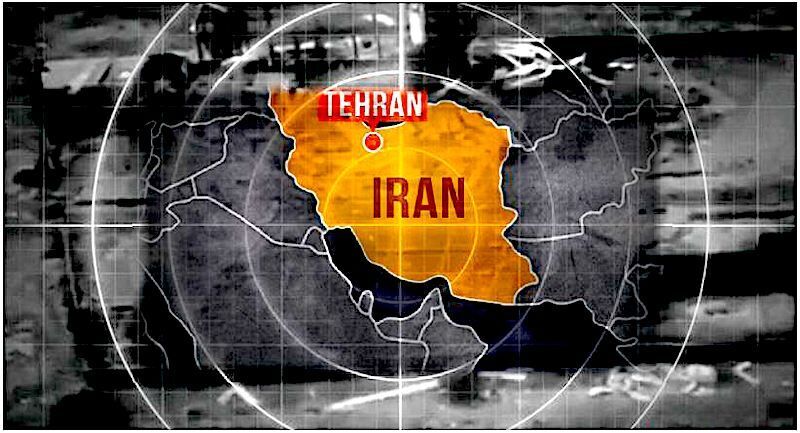
2025, Iran is back in the U.S. crosshairs for regime change
Finian Cunningham, Strategic Culture Foundation, Sat, 04 Jan 2025 https://strategic-culture.su/news/2025/01/04/2025-iran-back-in-us-crosshairs-for-regime-change/
A new American president and a new Middle East configuration have brought Iran back into the crosshairs for regime change with an intoxicating vengeance
The signs are that Iran is going to face intensified hostility from the U.S. over the next year for regime change.
The sudden fall of Syria and the isolation of Hezbollah in Lebanon – Iran’s regional allies – have made Tehran look vulnerable.
Anti-Iran hawks in the U.S. are cock-a-hoop about the prospect of regime change in Tehran.
The recent death of Jimmy Carter at the age of 100 puts in perspective how great a prize the Islamic Republic represents for Washington’s imperial desires. Carter was disparaged as the American president who lost Iran in 1979 as a crucial client state for U.S. power in the Middle East.
For over four decades, American imperialist power has sought to topple the Islamic Republic and return the Persian nation to the U.S. global fold.

Though, as U.S. Secretary of State Antony Blinken lamented last month, American “regime change experiments” in Iran have been a failure.
Now, however, there is renewed enthusiasm in Washington for the Persian prize.
The lust for regime change in Tehran has peaked with the dramatic fall of President al-Assad in Syria.
American lawmakers and Iranian exiles are publicly calling for the new Trump administration to get back to its maximum pressure campaign on Tehran because they believe there is “a perfect moment” for regime change.
During Donald Trump’s first White House (2017-2021), he revoked the Iranian nuclear deal of the Obama administration and ramped up economic sanctions in what was referred to as a policy of “maximum pressure.”
A growing chorus of Republicans and Democrats are urging the United States to seize the opportunity of a perceived weakened Iran to overthrow the clerical rule of Ayatollah Ali Khamenei.
At a recent forum in Washington, it was reported that speaker after speaker brayed for regime change in Tehran. For years, such a desire had been dulled with U.S. failure and the formidableness of the Islamic Republic.
“We have an obligation to stand together with allies in making sure this regime’s suppression will come to an end,” said Democratic Senator Cory Booker.
“Iran is projecting only weakness,” declared Jeanne Shaheen, another Democratic Senator.
Republican Senator Ted Cruz sounded vindicated over his long-time anti-Iran stance: “I have, for a long time, been willing to call quite unequivocally for regime change in Iran… The ayatollah will fall, the mullahs will fall, and we will see free and democratic elections in Iran. Change is coming, and it’s coming very soon.”
James Jones, a former White House national security adviser, said: “The tectonic shift in the Syrian government… should mean to the people of Iran that change is in fact possible in the Middle East.”
The Islamic Revolution in 1979 deposed Shah Pahlavi, an ardent American client. The revolution and the hostage crisis at the U.S. embassy in Tehran was a horrible blow to Washington’s global image. The Shah had been brought to power by the U.S.-British coup in 1953 and for 26 years, the dictatorial monarch ruled with an iron fist as a loyal and massive buyer of American weaponry and supplier of oil profits.
The overthrow of the Shah put Iran in the crosshairs for regime change. The Americans prompted the Iraq-Iran War between 1980 and 1988. The new Islamic rulers were subjected to crippling economic sanctions, which were eased in 2015 with the signing of the Iran nuclear deal brokered by the Obama administration. By then, the U.S. was trying a softer policy of regime change and limited engagement.
Trump abandoned that policy, reverting to a more hostile one. Trump ordered the assassination of Iran’s top military commander Major General Qassem Soleimani on January 3, 2020.
Trump can be expected to make Iran his foreign policy goal during the first year of his second administration beginning on January 20.
There is a giddy sense that the U.S.-backed Israeli war on Gaza, Lebanon and Yemen has fatally weakened the Islamic Republic.
During his election campaign, Trump endorsed Israeli plans to attack Iran’s nuclear sites militarily.
Trump will be tempted that Iran could be an early success for his political legacy. To overthrow the Iranian government and replace it with a pro-U.S. regime would be the prize of the century for the American imperial ego.
There is also the imperative of geo-strategy. Russia, China and Iran have emerged as an important alternative geopolitical axis that is perceived as a threat to U.S. global power and the American dollar hegemony. Iran appears to be the weakest link among the opposing bloc, known as the BRICS.
Trump seems to be prioritizing making a peace settlement in Ukraine with Russia. Part of that calculation is incentivized by freeing up U.S. resources to target Iran.
Last year, the imperialist Atlantic Council published an article headlined: “The United States needs a new Iran policy – and it involves regime change, but not the traditional kind”.
The Atlantic Council article advocated intensified economic and political pressure on Iran and internal destabilization by the covert backing of Iranian opposition groups. We can expect a turbo-charged color revolution in Iran, with Western media amplifying public protests against the authorities. Also recommended by the Atlantic Council: “Propaganda efforts to drive a wedge between Russia and Iran, as well as undermine its support by the rank-and-file within the Islamic Revolutionary Guard Corps (IRGC) and military, would also help weaken the regime.”
The year ahead is shaping up for a mammoth effort by the U.S. to target Iran.
Suddenly, the U.S. imperial regime-change machine has found the driving seat again after years of sputtering failure in Iran and Syria. The victory of CIA proxies in Syria to finally overthrow Assad is producing a rush to do the same in Iran. That prize seemed out of reach for too long. A new American president and a new Middle East configuration have brought Iran back into the crosshairs for regime change with an intoxicating vengeance.
1 This Month


Tell the Ukrainian Government to Drop Prosecution of Peace Activist Yurii Sheliazhenko

Petition to revoke the licensing of the Near Surface Nuclear Disposal Facility (NSDF) at Chalk River. https://www.ourcommons.ca/petitions/en/Petition/Details?Petition=e-7247


of the week – STOP SMALL MODULAR REACTORS IN CANADA
To see nuclear-related stories in greater depth and intensity – go to https://nuclearinformation.wordpress.com
-
Archives
- March 2026 (204)
- February 2026 (268)
- January 2026 (308)
- December 2025 (358)
- November 2025 (359)
- October 2025 (376)
- September 2025 (258)
- August 2025 (319)
- July 2025 (230)
- June 2025 (348)
- May 2025 (261)
- April 2025 (305)
-
Categories
- 1
- 1 NUCLEAR ISSUES
- business and costs
- climate change
- culture and arts
- ENERGY
- environment
- health
- history
- indigenous issues
- Legal
- marketing of nuclear
- media
- opposition to nuclear
- PERSONAL STORIES
- politics
- politics international
- Religion and ethics
- safety
- secrets,lies and civil liberties
- spinbuster
- technology
- Uranium
- wastes
- weapons and war
- Women
- 2 WORLD
- ACTION
- AFRICA
- Atrocities
- AUSTRALIA
- Christina's notes
- Christina's themes
- culture and arts
- Events
- Fuk 2022
- Fuk 2023
- Fukushima 2017
- Fukushima 2018
- fukushima 2019
- Fukushima 2020
- Fukushima 2021
- general
- global warming
- Humour (God we need it)
- Nuclear
- RARE EARTHS
- Reference
- resources – print
- Resources -audiovicual
- Weekly Newsletter
- World
- World Nuclear
- YouTube
-
RSS
Entries RSS
Comments RSS
 nuclear-news