US Space Force conducts ‘simulated on-orbit combat’ training
SPACE, By Brett Tingley, August 25, 2022
The exercise brought together Space Force members with counterparts in the U.S. Army and Air Force.
The U.S. Space Force just completed a major joint training exercise that saw participants engage in simulated orbital combat.
The exercise, known as Space Flag 22-3, took place from Aug. 8 to Aug.19 at Schriever Space Force Base in Colorado. Close to 120 Space Force personnel from multiple U.S. Space Force Deltas took part in the training alongside counterparts from the U.S. Air Force and the U.S. Army, according to a Space Force statement. The training was conducted by Space Force’s training and education component, Space Training and Readiness Command (STAR Command or STARCOM).
Space Flag 22-3 presented realistic training opportunities that “challenged players to consider complex astrodynamics while maneuvering and operating during simulated on-orbit combat engagements” in a “contested, degraded and operationally-limited environment,” the statement continues. ………………… https://www.space.com/space-force-space-flag-simulated-orbit-combat
World’s largest iceberg on the move again after months spinning on the spot
The iceberg is about three times the size of New York City and more than twice the size of Greater London
Rituparna Chatterjee, Independent 15th Dec 2024, https://www.independent.co.uk/climate-change/news/world-largest-iceberg-a23a-moving-antarctic-b2664564.html
The world’s largest iceberg is on the move again after decades of being grounded on the seafloor and more recently spinning on the spot, according to the British Antarctic Survey (BAS).
The mega A23a iceberg has broken free from its position north of the South Orkney Islands and is now drifting in the Southern Ocean, scientists said.
“It’s exciting to see A23a on the move again after periods of being stuck. We are interested to see if it will take the same route the other large icebergs that have calved off Antarctica have taken. And more importantly what impact this will have on the local ecosystem,” Dr Andrew Meijers, an oceanographer at the BAS, said.
The iceberg, known as A23a, split from the Antarctic’s Filchner Ice Shelf in 1986. But it became stuck to the ocean floor and had remained for many years in the Weddell Sea.
Scientists anticipate that A23a will continue its journey into the Southern Ocean following the Antarctic Circumpolar Current, which is likely to drive it towards the sub-Antarctic island of South Georgia. In that region it will encounter warmer water and is expected to break up into smaller icebergs and eventually melt.
Finding the Unmentionable: Amnesty International, Israel and Genocide

Binoy Kampmark, December 16, 2024, https://www.counterpunch.org/2024/12/16/finding-the-unmentionable-amnesty-international-israel-and-genocide/
It was bound to happen. With continuing operations in Gaza, and increasingly violent activities being conducted against Palestinians in the occupied territories, human rights organisations are making increasingly severe assessments of Israel’s warring cause. While the world awaits the findings of the International Court of Justice on whether Israel’s campaign, as argued by South Africa, amounts to genocide, Amnesty International has already reached its conclusions.
In a 296-page report sporting the ominous title “You Feel Like You Are Subhuman”, the human rights body, after considering the events in Gaza between October 2023 and July 2024, identified a “pattern of conduct” that indicated genocidal intent. These included, among other things, persistent direct attacks on civilians and objects “and deliberately indiscriminate strikes over the nine-month period, wiping out entire families repeatedly launched at times when these strikes would result in high numbers of casualties”; the nature of the weapons used; the speed and scale of destruction to civilian objects and infrastructure (homes, shelters, health facilities, water and sanitation infrastructure, agricultural land”; the use of bulldozing and controlled demolitions; and the use of “incomprehensible, misleading and arbitrary ‘evacuation’ orders’”.
The report does much to focus on statements made from the highest officials to the common soldiery to reveal the mental state necessary to reveal genocide. 102 statements made by members of the Knesset, government officials and high-ranking commanders “dehumanized Palestinians, or called for, or justified genocidal acts or other crimes under international law against them.” The report also examined 62 videos, audio recordings and photographs posted online featuring gleeful Israeli soldiers rejoicing in the “destruction of Gaza or the denial of essential services to people in Gaza, or celebrated the destruction of Palestinian homes, mosques, schools and universities, including through controlled demolitions, in some cases without apparent military necessity.”
From its alternative universe, the Israeli public relations machine drew from its own agitprop specialists, working on mangling the language of the report. The formula is familiar: attack the authors first, not their premises. “The deplorable and fanatical organisation Amnesty International has once again produced a fabricated response that is entirely based on lies,” came the howl from Israeli Foreign Ministry spokesperson Oren Marmorstein.
Other methods of repudiation involve detaching Hamas and its war with Israel from any historical continuum, not least the fact that it was aided, supported and backed by Israel for years as a counter to Fatah in the West Bank. Isolating Hamas as a terrorist aberration also serves to treat it as alien, artificially foreign and not part of any resistance movement against suffocating Israeli occupation and strangulation. They, so goes this argument, are genocidal, and countering such a body can never be, by any stretch, genocidal. The pro-Israeli group NGO Monitor abides by this line of reasoning, calling allegations of genocide against Israel “a reversal of the actual and clearly established intent of Hamas and its allies (including its patron, Iran), to wipe Israel off the map”.
Israel’s closest ally and sponsor, the United States, proved predictable in rejecting the findings while still claiming to respect the humanitarian line. The US State Department’s principal deputy spokesman, Vedant Patel, expresseddisagreement “with the conclusions of such a report. We had said previously and continue to find that the allegations of genocide are unfounded.” Patel did, however, pay lip service to the “vital role that civil society organizations like Amnesty International and human rights groups and NGOs play in providing information and analysis as it relates to Gaza and what’s going on.” Vital, but only up to a point.
Far less guarded assessments can be found in the American pro-Israeli chatter sphere. These follow the usual pattern. Orde Kittrie, senior fellow of the Foundation for Defense of Democracies, a name that can only imply that crimes committed in such a cause are bound to be justifiable, offers a neat illustration. Amnesty, he argues, “systematically and repeatedly mischaracterizes both the facts and the law.” Kittrie suggests his own mischaracterisation by parroting the IDF’s line that Hamas had “increased casualty counts by illegally using Palestinian civilian shields and by hiding weapons and war fighters in and below homes, hospitals, mosques, and other buildings.” This conveniently ignores that point that the numbers are not necessarily proof of genocidal intent, though it helps.
The report also notes that, even in the face of such tactics by Hamas, Israel was still “obligated to take all feasible precautions to spare civilians and avoid attacks that would be indiscriminate or disproportionate.”
Amnesty International’s report is yet another addition to the gloomy literature on the subject. Human Rights Watch, in November, pointed to violations of the laws of war, crimes against humanity, and the provisional measures of the ICJ issued urging Israel to abide by the obligations imposed by the UN Genocide Convention of 1948. The Israeli human rights organisation B’Tselem stated in no uncertain terms in October that “Israel intends to forcibly displace northern Gaza’s residents by committing some of the gravest crimes under the laws of war”.
Battling over the designation of whether a campaign is genocidal can act as a distraction, a field of quibbles for paper pushing pedants. The “specific intent” in proof must be unequivocally demonstrated and beyond any other reasonable inference. A smokescreen is thereby deployed that risks masking the broader ambit of war crimes and crimes against humanity. But no amount of pedantry and disagreement can arrest the sense that Israel’s lethal conduct, whatever threshold it may reach in international law, is directed at destroying not merely Palestinian life but any worthwhile sense of a viable sovereignty. Amnesty Israel, while rejecting the central claim of the parent organisation’s report did make one concession: the country’s brutal response following October 7, 2023 “may amount to crimes against humanity and ethnic cleansing.”
Binoy Kampmark was a Commonwealth Scholar at Selwyn College, Cambridge. He lectures at RMIT University, Melbourne. Email: bkampmark@gmail.com
With no real enemies, US poised to spend $1.8 trillion for national security in 2025.

Walt Zlotow, West Suburban Peace Coalition, Glen Ellyn IL, 18 Dec 24
Not one of the other 194 countries poses the slightest threat to the US Homeland. Yet the US foolishly provokes confrontation with Russia and China, the first and third most nuclear armed states.
With no enemies lurking near our borders, the US plans to spend $1.8 trillion next year to promote not defense, but US adventurism abroad.
750 bases in 80 countries overseas billeting 160,000 soldiers does not come cheap. Additionally, the US has squandered upwards of $200 billion to destroy Ukraine in our proxy war against Russia, and obliterate Gaza by our Middle East aircraft carrier Israel.
That helps explain why Congress is about to pass an $895.2 billion National Defense Authorization Act (NDAA) to fund discretionary activities of our Defense Department. Adding in mandatory defense spending of $25.8 billion swells the Pentagon’s budget to a cool $921 billion.
But don’t forget nuclear weapons programs, Homeland Security, cost to treat vets from America’s forever wars and miscellaneous foreign adventures. These add another $796.8 billion, making a national security grand total for 2025 a staggering $1,776,800,000. A far distant second in defense spending is China at less than a quarter trillion.
How can this be in the hyped ‘greatest democracy on Earth’? Simple. The administration, Congress, presidential candidates, the media offer not one word of discussion, much less protest about this monstrous squandering of US treasure to get millions killed, injured, starved, sick and homeless in countries America has no business meddling in.
America’s national security budget may as well be planned and passed on Mars, far from the radar of America’s 155,000,200 clueless voters having no say in this monstrosity whatsoever.
Of course, with the US war party crossing Russian red lines like it’s in a demolition derby, nuclear war becomes more likely than at any time since the Cuban Missile Crisis 62 years ago. If that happens, any important discussion of our $1.8 trillion national security budget will be moot.
Privatizing Syria: US Plans to Sell Off A Nation’s Wealth After Assad
December 18, 2024 , Kit Klarenberg, https://www.mintpressnews.com/privatizing-syria-us-plans-to-sell-off-a-nations-wealth-after-assad/288843/
In the immediate wake of the Syrian government’s abrupt collapse, much remains uncertain about the country’s future – including whether it can survive as a unitary state or will splinter into smaller states as did Yugoslavia in the early 1990s, a move that ultimately led to a bloody NATO intervention. Moreover, who or what may take power in Damascus remains an open question. For the time being at least, members of ultra-extremist Hayat Tahrir al-Sham (HTS) appear highly likely to take key positions in whatever administrative structure sprouts from Bashar Assad’s ouster after a decade-and-a-half of grinding Western-sponsored regime change efforts.
As Reuters reported on December 12, HTS is already “stamping its authority on Syria’s state with the same lightning speed that it seized the country, deploying police, installing an interim government and meeting foreign envoys.” Meanwhile, its bureaucrats – “who until last week were running an Islamist administration in a remote corner of Syria’s northwest” – have moved en masse “into government headquarters in Damascus.” Mohammed Bashir, head of HTS’ “regional government” in extremist-occupied Idlib, has been appointed the country’s “caretaker prime minister.”
However, despite the chaos and precariousness of post-Assad Syria, one thing seems assured – the country will be broken open to Western economic exploitation, at long last.
Multiple reports show that HTS has informed local and international business leaders that when in office, it will “adopt a free-market model and integrate the country into the global economy, in a major shift from decades of corrupt state control.”
As Alexander McKay of the Marx Engels Lenin Institute tells MintPress News, state-controlled parts of Syria’s economy may have been under Assad, but corrupt it wasn’t. He believes a striking feature of the ongoing attacks on Syrian infrastructure from forces within and without the country is that economic and industrial sites are a recurrent target. Moreover, the would-be HTS-dominated government has done nothing to counter these broadsides when “securing key economic assets will be vital to societal reconstruction, and therefore a matter of priority”:
We can see clearly what kind of country these ‘moderate rebels’ plan to build. Forces like HTS are allied with U.S. imperialism, and their economic approach will reflect this. Prior to the proxy war, the government pursued an economic approach that mixed public ownership and market elements. State intervention enabled a degree of political independence [that] other nations in the region lack. Assad’s administration understood without an industrial base, being sovereign is impossible. The new ‘free market’ approach will see all of that utterly decimated.”
A U.N. Human Rights Council report two years later noted pre-war Syria “was the only country in the Middle East region to be self-sufficient in food production,” its “thriving agricultural sector” contributing “about 21%” to GDP 2006 – 2011. Civilians’ daily caloric intake “was on par with many Western countries,” with prices kept affordable via state subsidy. Meanwhile, the country’s economy was “one of the best performing in the region, with a growth rate averaging 4.6%” annually.
At the time that report was written, Damascus had been reduced to heavy reliance on imports by Western sanctions in many sectors and, even then, was barely able to buy or sell much in the way of anything, as the measures amounted to an effective embargo. Simultaneously, the U.S. military occupation of a resource-rich third of Syria cut off the government’s access to its own oil reserves and wheat. The situation would only worsen with the Caesar Syria Civilian Protection Act’s passing in June 2020.
Under its auspices, a vast volume of goods and services in every conceivable field were and today remain banned from being sold to or traded with any Syrian citizen or entity. The legislation’s terms explicitly state preventing attempts to rebuild Syria was its chief objective. One passage openly outlines “a strategy to deter foreign persons from entering into contracts related to reconstruction.”
Immediately after coming into effect, the Syrian pound’s value collapsed further, sending living costs skyrocketing. In a blink, almost the entire country’s population was left barely able to afford even the bare essentials. Even mainstream sources typically approving of belligerence towards Damascus cautioned of an inevitably impending humanitarian crisis. However, Washington was neither concerned nor deterred by such warnings. James Jeffrey, State Department chief of Syria policy, actively cheered these developments.
Simultaneously, as Jeffrey subsequently admitted to PBS, the U.S. was engaged in frequent, secret communication with HTS and actively assisting the group – albeit “indirectly” due to the faction’s designation as a terrorist entity by the State Department. This followed direct approaches to Washington by its leaders, including Abu Mohammed Jolani, former leader of Al Qaeda affiliate al-Nusra. “We want to be your friend. We’re not terrorists. We’re just fighting Assad,” HTS reportedly said.
Given this contact, it may be no coincidence that in July 2022, Jolani issued a series of communications about HTS’ plans for future Syria, containing multiple passages in which finance and industry loomed large. Directly foreshadowing the group’s recent pledge to “adopt a free-market model,” the extremist mass murderer discussed his desire to “open up local markets to the global economy.” Many passages read as if they were authored by representatives of the International Monetary Fund.
Coincidentally, Syria, since 1984, has refused IMF loans, a key tool by which the U.S. Empire maintains the global capitalist system and dominates the Global South, ensuring ‘poor’ countries remain under its heel. The World Trade Organization, of which Damascus isn’t a member either, plays a similar role. Accession to both would go some way to cementing the “free-market model” advocated by HTS. After over a decade of deliberate, systematic economic ruin, geopolitical risk analyst Firas Modad tells MintPress News:
They have no choice. They need Turkish and Qatari backing, so [they] will need to liberalize. They have no capital whatsoever. The country is in ruins and they desperately need investment. Plus, they hope liberalizing may attract some Saudi, Emirati or Egyptian interest. It’s impossible for Syria to rebuild using its own resources. The civil war might resume. They are acting out of necessity.”
‘Shock Therapy’
In Syria’s protracted political and economic dismantling, there are eerie echoes of the U.S. Empire’s destruction of Yugoslavia throughout the 1990s. During that decade, the multiethnic socialist federation’s breakup produced bitter wars of independence in Bosnia, Croatia and Slovenia – encouraged, financed, armed, and prolonged every step by Western powers. Belgrade’s perceived centrality to these brutal conflicts and purported complicity in and sponsorship of horrendous war crimes led the U.N. Security Council to impose sanctions against what remained of the country in May 1992.
The measures were the harshest ever levied in U.N. history. At one point, producing inflation of 5.578 quintillion percent, drug abuse, alcoholism, preventable deaths and suicides skyrocketed, while shortages of goods – including water – were perpetual. Yugoslavia’s once thriving independent industry was crippled, its ability to manufacture even everyday medicines virtually non-existent. By February 1993, the CIA assessed that the average citizen had “become accustomed to periodical shortages, long lines in stores, cold homes in the winter and restrictions on electricity.”
Surveying the wreckage years later, Foreign Affairs noted that sanctions against Yugoslavia demonstrated how “in a matter of months or years whole economies can be devastated,” and such measures can serve as uniquely lethal “weapons of mass destruction” against civilian populations of target countries. Yet, despite such desolation and misery, throughout this period, Belgrade remained resistant to privatization and foreign ownership of its industry or to the pillaging of its vast resources. The overwhelming majority of Yugoslavia’s economy was state- or worker-owned.
Yugoslavia was not a member of the IMF, World Bank, or WTO, which went some way to insulate the country from economic predation. In 1998, though, authorities began waging a heavy-handed counterinsurgency against the Kosovo Liberation Army, a CIA and MI6-funded and armed al-Qaeda-linked extremist militia. This provided the U.S. Empire with a pretext to, at last, finish the job of neutralizing what remained of the country’s socialist system. As a Clinton administration official later admitted:
It was Yugoslavia’s resistance to the broader trends of political and economic reform [in Eastern Europe] – not the plight of Kosovar Albanians – that best explains NATO’s war.”
From March – June 1999, the military alliance bombed Yugoslavia for 78 straight days. Yet, Belgrade’s army was barely in the firing line at any stage. In all, officially, just 14 Yugoslav tanks were destroyed by NATO, but 372 separate industrial facilities got smashed to smithereens, leaving hundreds of thousands jobless. Markedly, the alliance took guidance from U.S. corporations on which sites to target, and not a single foreign- or privately-owned factory was hit.
NATO’s bombing laid the foundations for Yugoslav leader Slobodan Milosevic’s removal via a C.I.A.- and National Endowment for Democracy-sponsored color revolution in October of the following year. In his place, a doggedly pro-Western government advised by a collective of U.S.-sponsored economists took power. Their explicit mission was to “make an economic environment favorable for private and other investments” in Belgrade. Ravaging “shock therapy” measures were deployed the moment they assumed office, to the further detriment of an already immiserated and impoverished population.
In the decades since successive Western-backed governments across the former Yugoslavia have enforced an endless array of neoliberal “reforms” to ensure an “investor-friendly” environment locally for wealthy Western oligarchs and corporations. In lockstep, low wages and a lack of employment opportunities stubbornly endure or worsen while living costs rise, producing mass depopulation, among other destructive effects. All along, U.S. officials intimately implicated in the country’s breakup have brazenly sought to enrich themselves from the privatization of former state industries.
‘Internal Repression’
Does such a fate await Damascus? For Pawel Wargan, founder of the Green New Deal for Europe, the answer is a resounding “yes.” He believes the country’s story is familiar “to those who study the mechanisms of imperialist expansion.” Once its defenses are fully neutralized, he foresees the country’s industries being “bought-up at bargain sale prices as part of market ‘reforms,’ which transfer yet another chunk of humanity’s wealth to Western corporations”:
We’ve witnessed the well-rehearsed choreography of imperialist regime change: a ‘tyrant’ is overthrown; backers of national sovereignty are systematically and viciously repressed; with tremendous, but hidden, violence, the country’s assets are chopped and diced and sold to the lowest bidder; labor protections are discarded; human lives are cut short. The most predatory forms of capitalism take root in every crevice and pore that emerges in the collapse of the state. This is the agenda of structural adjustment policies enforced by the World Bank and IMF.”
Alexander McKay echoes Wargan’s analysis. Now “free,” Syria will be forcedly made “dependent upon imports from the West” evermore. This not only fattens the Empire’s bottom line but “also severely restricts the freedom of any Syrian government to act with any degree of independence.” He notes similar efforts have been undertaken throughout the post-1989 era of U.S. unipolarity. It was well underway in Russia during the 1990s “until the slow turn around in policy started in the early 2000s under Putin”:
The aim is to reduce Syria to the same status as Lebanon, with an economy controlled by imperial forces, an army used primarily for internal repression, and an economy no longer able to produce anything but merely serve as a market for commodities produced elsewhere, and site of resource extraction. The U.S. and its allies do not want independent development of any nation’s economy. We must hope the Syrian people can resist this latest act of neo-colonialism.”
Kit Klarenberg is an investigative journalist and MintPress News contributor exploring the role of intelligence services in shaping politics and perceptions. His work has previously appeared in The Cradle, Declassified UK, and Grayzone. Follow him on Twitter @KitKlarenb
Kit Klarenberg
Major report joins dots between world’s nature challenges

Helen Brigg,
Environment correspondent, BBC News @hbriggsjourno.bsky.social•@hbriggs BBC 17th Dec 2024
Climate change, nature loss and food insecurity are all inextricably
linked and dealing with them as separate issues won’t work, a major report
has warned. The review of scientific evidence by the Intergovernmental
Platform on Biodiversity and Ecosystem Services (IPBES), external found
governments are underestimating or ignoring the links between five key
areas – biodiversity, water, food, health and climate change. This “siloed”
approach has unintended consequences, such as damaging biodiversity through
tree-planting schemes, or polluting rivers while ramping up food
production, the report said. The latest assessment was approved by almost
150 countries meeting in Windhoek, Namibia.
BBC 17th Dec 2024
https://www.bbc.co.uk/news/articles/cwyxkz41knzo
Less power, more climate pollution: Four ways Australia’s Opposition leader Dutton is cooking the books on nuclear
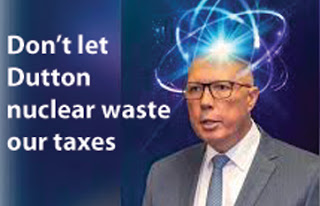
Climate Council , 13 Dec 24
“PETER DUTTON’S NUCLEAR numbers have more holes than Swiss cheese, leaving out big ticket items like the costs of dealing with radioactive waste,” says the Climate Council CEO Amanda McKenzie, slamming the Federal Coalition’s misleading modelling.
“Dutton must be honest with the Australian people. CSIRO tells us nuclear is double the cost of renewables, no amount of dodgy accounting can change the facts.”
Nicki Hutley, Climate Councillor and economist, said: “It’s shocking to see the Federal Coalition knowingly mislead Australians on the true costs of nuclear. If we’re going to debate the economics of energy it must be based. on real-world evidence – not dodgy modelling that obscures the real price tag.”
The Climate Council has identified four ways that the Federal Coalition appear to be cooking the books with their dodgy nuclear numbers:
1) Ignoring the costs of keeping our ageing coal-fired generators operating for longer, which would cost a bomb in constant maintenance and fault repairs, and produce far more climate pollution.
2) Failing to account for Australia’s growing electricity needs, producing up to 45% less power than our current plan by 2050. The Australian Electricity Market Operator expects power generation to double by 2050, and assuming any less is inaccurate.1
3) Underestimating the cost and timeline of building nuclear reactors, which international experience has shown cost on average 2.2 times more to build than their initial estimate, and take at least 15 years for construction alone.
-Advertisement-
4) Excluding significant and certain costs from their estimates, including the costs of managing highly radioactive nuclear waste.
Nicki Hutley, Climate Councillor and economist, said: “Nuclear doesn’t add up for Australia. The CSIRO tells us that nuclear energy will cost twice as much as renewables, and the risks of further budget and bill blowouts are simply not worth it. International experience has proven that nuclear is a financial black hole, with the average project costing more than double its original estimate, and projects like the UK’s Hinkley Point C costing triple. We’re already seeing renewables deliver power faster and at lower cost today.”
Amanda McKenzie, CEO of the Climate Council, said: “The Federal Coalition’s nuclear scheme would send our kids’ future up in smoke. Waiting up to 20 years for nuclear reactors means burning coal and fossil gas longer—adding 1.5 billion tonnes of climate pollution by 2050. That means more deadly bushfires, floods, and heatwaves.”
Greg Bourne, energy expert and Climate Councillor, said: “Australians can’t afford to wait 20 years for nuclear. All our coal-fired generators are due to close before even the first nuclear reactor could be built, and keeping our old coal clunkers running past their use-by-date presents a critical risk to our energy security. We need more renewables backed by storage now so it’s online before more coal is retired.”
Amanda McKenzie, CEO of the Climate Council, said: “Investing in renewable power backed by storage is the only way we can tackle climate change and replace our ageing coal fleet this decade. More than four million Australian households have already put solar panels on their roofs, saving $3 billion a year on electricity bills. Expanding access to rooftop solar will cut bills further, reduce climate pollution, and drive a cleaner, safer energy future. Let’s focus on what’s already working.”
1 Based on total generation implied by 14 GW of nuclear capacity, providing 38% of total generation at an 89% capacity factor.
Israel, not the ‘liberators’ of Damascus, will decide Syria’s fate

Syria’s future under al-Qaeda spin-off HTS will come in two flavours only. Either submit and collude like the West Bank, or end up wrecked like Gaza
Jonathan Cook, Substack, Dec 19, 2024
There has been a flurry of “What next for Syria?” articles in the wake of dictator Bashar al-Assad’s hurried exit from Syria and the takeover of much of the country by al-Qaeda’s rebranded local forces.
Western governments and media have been quick to celebrate the success of Hayat Tahrir al-Sham (HTS), even though the group is designated a terrorist organisation in the United States, Britain and much of Europe.
Back in 2013, the US even placed a £10 million bounty on its leader, Abu Muhammad al-Julani, for his involvement with al-Qaeda and Islamic State (ISIS) and for carrying out a series of brutal attacks on civilians.
Once upon a time, he might have expected to end up in an orange jumpsuit in the notorious, off-the-grid detention and torture facility run by the Americans at Guantanamo Bay. Now he is positioning himself as Syria’s heir apparent, seemingly with Washington’s blessing.
Surprisingly, before either HTS or al-Julani can be tested in their new roles overseeing Syria, the West is hurrying to rehabilitate them. The US and UK are both moving to overturn HTS’s status as a proscribed organisation.
To put the extraordinary speed of this absolution in perspective, recall that Nelson Mandela, feted internationally for helping to liberate South Africa from apartheid rule, was removed from Washington’s terrorist watch list only in 2008 – 18 years after his release from prison.
Similarly, western media are helping al-Julani to rebrand himself as a statesman-in-the-making, airbrushing his past atrocities, by transitioning from using his nom de guerre to his birth name, Ahmed al-Sharaa.
Piling on pressure
Stories of prisoners being freed from Assad’s dungeons and of families pouring on to the streets in celebration have helped to drive an upbeat news agenda and obscure a more likely dismal future for newly “liberated” Syria – as the US, UK, Israel, Turkey and Gulf states jostle for a share of the pie.
Syria’s status looks sealed as a permanently failed state.
Israel’s bombing raids – destroying hundreds of critical infrastructure sites across Syria – are designed precisely towards that end.
Within days, the Israeli military was boasting it had destroyed 80 per cent of Syria’s military installations. More have gone since.
On Monday, Israel unleashed 16 strikes on Tartus, a strategically important port where Russia has a naval fleet. The blasts were so powerful, they registered 3.5 on the Richter scale.
During Assad’s rule, Israel chiefly rationalised its attacks on Syria – coordinating them with Russian forces supporting Damascus – as necessary to prevent the flow of weapons overland from Iran to its Lebanese ally, Hezbollah.
But that is not the goal currently. HTS’s Sunni fighters have vowed to keep Iran and Hezbollah – the Shiite “axis of resistance” against Israel – out of Syrian territory.
Israel has prioritised instead targeting Syria’s already beleaguered military – its planes, naval ships, radars, anti-aircraft batteries and missile stockpiles – to strip the country of any offensive or defensive capability. Any hope of Syria maintaining a semblance of sovereignty is crumbling before our eyes.
These latest strikes come on top of years of western efforts to undermine Syria’s integrity and economy. The US military controls Syria’s oil and wheat production areas, plundering these key resources with the help of a Kurdish minority. More generally, the West has imposed punitive sanctions on Syria’s economy.
It was precisely these pressures that hollowed out Assad’s government and led to its collapse. Now Israel is piling on more pressure to make sure any newcomer faces an even harder task.
Maps of post-Assad Syria, like those during the latter part of his beleaguered presidency, are a patchwork of different colours, with Turkey and its local allies seizing territory in the north, the Kurds clinging on to the east, US forces in the south, and the Israeli military encroaching from the west.
This is the proper context for answering the question of what comes next.
Two possible fates
Syria is now the plaything of a complex of vaguely aligned state interests. None have Syria’s interests as a strong, unified state high on their list.
In such circumstances, Israel’s priority will be to promote sectarian divisions and stop a central authority from emerging to replace Assad.
This has been Israel’s plan stretching back decades, and has shaped the thinking of the dominant foreign policy elite in Washington since the rise of the so-called neoconservatives under President George W Bush in the early 2000s. The aim has been to Balkanise any state in the Middle East that refuses to submit to Israeli and US hegemony…………………………………………………………………………………………………………………
And to top it all, Israel looks like it may finally be in sight of signing off on “normal” relations with Washington’s other major client state in the region, Saudi Arabia – a drive that had to be put on hold following Israel’s genocide in Gaza.
Renewed ties between Israel and Riyadh are possible again in large part because coverage of Syria has further disappeared the Gaza genocide from the West’s news agenda, despite Palestinians there – starved and bombed by Israel for 14 months – likely dying in larger numbers than ever.
The narrative of Syria’s “liberation” currently dominates western coverage. But so far the takeover of Damascus by HTS appears only to have liberated Israel, leaving it freer to bully and terrorise its neighbours into submission. https://jonathancook.substack.com/p/israel-not-the-liberators-of-damascus?utm_source=post-email-title&publication_id=476450&post_id=153321149&utm_campaign=email-post-title&isFreemail=true&r=ln98x&triedRedirect=true&utm_medium=email
Missing nuclear package sparks major search after ‘very dangerous’ radioactive container vanishes on its way to Spanish airport
Daily Mail 16th, By NATALIE PENZA, 17 December 2024
A hunt was underway last night for a missing radioactive package which ‘failed’ to arrive at Madrid’s Barajas Airport.
Spain‘s Nuclear Safety Council (CSN) sounded the alarm yesterday evening over the transport package with ‘four radioactive sources’ of ‘very dangerous’ category 2 Selenium-75.
Local reports said the CSN had sent a team of inspectors to the airport to try to glean more information.
El Pais, a Spanish media outlet, reported that the CSN has since located the package and it has been deactivated.
It was not immediately clear how the transport container with the radioactive package had gone missing.
The International Atomic Energy Agency defines Category 2 on a scale of one to five as ‘very dangerous for people because the radioactivity carries grave risks where material is not properly protected.
Before the package was recovered, the CSN was last night recommending that anyone who came across the package should avoid touching it and immediately alert the authorities.
Selenium-75 is an isotope that has radiopharmaceutical uses. Se-75 sources are also used on off shore oil rigs and at power generation plants during outages……………………………………………………………………………………… https://www.dailymail.co.uk/news/article-14199155/missing-nuclear-package-spark-major-search-spanish-airport.html
Drone Incursions Closed Wright-Patterson Air Force Base’s Airspace Friday Night
Wright-Patterson AFB, a high-profile base that’s home to critical Air Force units, is the latest installation to deal with mysterious drones.
Howard Altman, Dec 15, 2024
he sprawling Wright-Patterson Air Force Base in Ohio is the latest military installation to report mysterious drones flying over its airspace, The War Zone has learned.
“I can confirm small aerial systems were spotted over Wright-Patterson between Friday night and Saturday morning,” base spokesman Bob Purtiman told The War Zone on Sunday in response to our questions about the sightings. “Today leaders have determined that they did not impact base residents, facilities, or assets. The Air Force is taking all appropriate measures to safeguard our installations and residents.”
The drones “ranged in sizes and configurations,” Purtiman said. “Our units are working with local authorities to ensure the safety of base personnel, facilities, and assets.”
After the drones were seen over Wright-Patterson, a Notice To Airman (NOTAM) was issued closing the airspace between Friday night and Saturday morning. The airspace has since been reopened, Purtiman said………………………………………………………………………………………………..
Wright-Patterson is just the latest in a long string of drone sightings over sensitive facilities and military capabilities. A few days ago, Ramstein Air Base in Germany joined the growing list of places registering unknown drone overflights.
Israel’s not-so-secret nuclear weapons

The Federation of American Scientists estimates that Israel possesses 90 nuclear warheads, which are likely stored underground, potentially at Tel Nof, located centrally between Tel Aviv and Jerusalem, and Hatzerim Air Bases. …………………with ranges to target cities as far away as Moscow, or possibly from submarines.
A new report from ICAN looks at the reality and implications of Israel’s nuclear weapons arsenal. Risk of Use
As long as nuclear weapons exist, there is the possibility that they will be used, either by accident or intentionally. Even in spite of the ambiguity around the existence of Israeli nuclear weapons and enforced secrecy that persists to this day, there are examples of close calls, particularly during times of heightened conflict. …………………………….
Despite its policy of ambiguity, some Israeli officials have even made explicit threats to use nuclear weapons,………………..
Consequences of Use……………………………………………………..
Proliferation Risk……………………………………………….
The Treaty on the Prohibition of Nuclear Weapons
The Treaty on the Prohibition of Nuclear Weapons is the first international treaty to ban nuclear weapons and nuclear weapons activities, including testing, deployment, maintenance and use. It was adopted by 122 governments in July 2017 at the United Nations. ………………………
Conclusion
Despite the policy of ambiguity around Israeli nuclear weapons, it is clear that Israel’s nuclear arsenal poses a significant risk for humanitarian catastrophe in the Middle East and it should take urgent steps towards nuclear disarmament. …………………………..more https://beyondnuclearinternational.org/2024/12/15/israels-not-so-secret-nuclear-weapons/
Read the full report complete with footnotes.
Introduction
Israel is one of nine countries that possesses nuclear weapons, with an estimated arsenal of 90 nuclear weapons, which it can launch by missiles and aircraft, and possibly by sea-based missiles.
Despite widespread acknowledgement by experts and former government officials of their existence, Israel and many Western governments maintain a policy of ambiguity about Israeli nuclear weapons. This pretense cannot continue. Nuclear disarmament is an essential component of a lasting peace agreement between Israel and Palestine, and in the region more broadly.
This is because of the risk of use of nuclear weapons and the catastrophic consequences of such use, as well as the proliferation risks posed by Israel’s continued possession of a nuclear arsenal. Despite efforts, states have not yet succeeded in negotiating a weapons of mass destruction free zone in the Middle East. The Treaty on the Prohibition of Nuclear Weapons, adopted in 2017, offers a clear pathway to nuclear disarmament, and Israel and all states should immediately join.
Historical Context
Israel’s nuclear weapons programme dates back to the 1950s, when it started to construct the Negev Nuclear Research Center near Dimona in 1958, following its purchase of necessary equipment to develop nuclear weapons, including a research reactor from France and heavy water from Norway.
Although unclear, it may have assembled its first nuclear weapons in the 1960s. Since then, Israel has adhered to a policy of deliberate ambiguity, refusing to confirm or deny its possession of nuclear weapons.
Current Israeli Prime Minister Benjamin Netanyahu and other officials use variations of the phrase “We won’t be the first to introduce nuclear weapons into the Middle East” in response to questions about Israel’s nuclear arsenal. The United States and other Western governments have adopted Israel’s policy of ambiguity, despite widespread acknowledgement by nuclear experts and even former government officials of the existence of an Israeli nuclear arsenal.
The United States has adopted a policy not to pressure Israel to join the nuclear Non-Proliferation Treaty (NPT) and all U.S. presidents since President Bill Clinton have even reportedly signed a letter indicating that arms control efforts would not target Israel.
Former German officials have likewise acknowledged that they were aware that submarines that they sold to Israel would be equipped with nuclear missiles. This tacit endorsement of a clear case of nuclear proliferation undermines broader nonproliferation and disarmament efforts in the Middle East.
Israel’s Current Nuclear Arsenal
Given the secrecy surrounding the Israeli nuclear arsenal, much is unknown, but experts have provided some estimates about its weapons.
The Federation of American Scientists estimates that Israel possesses 90 nuclear warheads, which are likely stored underground, potentially at Tel Nof, located centrally between Tel Aviv and Jerusalem, and Hatzerim Air Bases.
These warheads can be launched from aircraft and ballistic missiles, likely stored just 27 kilometers from Jerusalem but reportedly with ranges to target cities as far away as Moscow, or possibly from submarines.
Nuclear shipping will face significant challenges
A report by the European Maritime Safety Agency finds potential, but many obstacles
16 Dec 2024, Declan Bush
New, smaller reactor designs are much hyped. But ships would still have to
figure out how to fit them, what to do with the radioactive waste, and how
to sell the technology as safe to the public……… (Subscribers only) https://www.lloydslist.com/LL1151847/Nuclear-shipping-will-face-significant-challenges
On Ukraine war, will Trump channel JFK or LBJ?

Walt Zlotow, West Suburban Peace Coalition, Glen Ellyn IL, 17 Dec 24.
Donald Trump will inherit Joe Biden’s proxy war against Russia in Ukraine on January 20.
Biden has made clear he’ll never negotiate an end to his failed war that includes any concession whatsoever to Russian security interests. Biden is furnishing Ukraine with billions more in weaponry to prevent a Ukraine collapse on his watch. He’ll be damned if he allows a US defeat in Ukraine in his last year to bookend his accepting a US defeat in Afghanistan in his first year.
That presents a huge dilemma for Trump whose who routinely called for a quick end to this senseless war during his successful campaign.
But just like in his first term, Trump may be trumped on negotiating peace and disengagement by the US war party. Trump achieved nothing in terms of détente with North Korea, China, Iran, Russia or cutting America’s bloated 34,000 troop presence in NATO Germany. He may also fall victim to the same dread Biden has of being president when Ukraine does sue for peace, losing four provinces, committing to neutrality between East and West, including no NATO membership as the basis for a ceasefire.
Trump’s situation recalls the dilemma both JFK and LBJ faced over US involvement in America’s lost war in Vietnam 611 years ago.
JFK inherited his predecessor Ike’s 700 ‘advisors’ and Vietnam and ironclad US commitment to keep South Vietnam free from communism. By the end of 1962 Kennedy hiked the advisors to 11,000, incurring over 50 deaths in their non-combat role.
But by spring of 1963 JFK, more a realist than fanatical Cold Warrior, understood that no US presence could save South Vietnam from defeat. He began to secretly plan for a full US withdrawal. In May, 1963 he had Defense Secretary Bob McNamara draw up a withdrawal plan. Kennedy made this plan official policy with his National Security Action Memorandum 263, dated October 11, 1963. It called for withdrawal of 1,000 advisors by December and rest of the now 16,000 personnel out by the end of 1965. The 2 year gap to complete the US pullout was due to waiting till after his reelection to avoid political pushback from Republicans that could jeopardize his reelection.
This was US policy on the day JFK died. Had Kennedy lived there is no basis for believing he would not follow through on his pledge to end US military involvement in Vietnam.
When Lyndon Johnson became president, he immediately cancelled National Security Action Memorandum 263. His administration, Congress, the military and compliant national media all rallied around the fiction of complete continuity between JFK and LBJ on Vietnam. Johnson began pouring in more advisors before pivoting to direct US warfare after he hyped the August, 1964 Gulf of Tonkin incident to militarize US action against North Vietnam. LBJ famously remarked ‘I’m not going to be the first US president to lose war’.
In so doing Johnson destroyed his presidency and his legacy, along with over 58,000 soldiers killed, 150,000 inured, of which 21,000 were permanently disabled.
That is the dilemma Trump most likely is grappling with today. Will he follow thru with his campaign pledge to end America’s proxy war with Russia without total victory for our Ukraine proxies? Or will Trump succumb to the tragic Lyndon Johnson syndrome of continuing to pour hundreds of billions in US treasure, if not US lives, into a lost cause America should never have provoked.
Based upon Trump’s sorrowful record of caving to the war party in his first term, the latter course is the safer bet. But we should all work to push President Trump on Ukraine to channel JFK, not LBJ.
Blinded to Syria
By Patrick Lawrence / Consortium News, 15 December 24
Decades after deploying mass violence and rendering citizens grotesquely ignorant of the world, U.S.-led powers appear willing to risk world war, while reinventing a terrorist to lead what was a secular nation until last week.
I do not know anyone who was not shocked by the lightning speed with which Damascus fell to expensively armed jihadist militias last weekend.
I know very few people who do not understand that another domino has just fallen in the “seven-front war” Benjamin Netanyahu has boasted this year of waging across West Asia. I know very few people who do not recognize that terrorist Israel is well on the way to establishing itself as a dictatorial hegemon across the region.
I know very few people who do not understand that the longstanding project of the Zionist neoconservatives, who have more or less controlled U.S. foreign policy for decades, i.e., “remaking the Middle East,” is the design behind all that has occurred since the Israelis launched their attack on Gaza on Oct. 7, 2023.
I do not know anyone who has achieved the age of reason who does not recognize the U.S. hand in the stunning sweep through Syria of Hay`at Tahrir al–Sham, long-recognized as a terrorist organization. All one needs to grasp this is a little history.
But I know of no corporate or state-funded medium on either side of the Atlantic — the major dailies, the broadcast networks, NPR, PBS, the BBC — where you can read or hear about any of this.
Blinding Us
Mainstream media are doing exactly what they did as the U.S.–led “regime change” operation in Syria began in early 2012 at the latest and probably in the final months of 2011: They are making sure the events now unfolding in Syria are not quite illegible but nearly.
It is again a question of knowing the history. In the case of Hay`at Tahrir al–Sham and the other jihadists who knocked over the Assad regime as if it were made of Lego blocks, it is another exercise in dressing up a monster in a suit and tie.
The corporate press and broadcasters are now resolutely recasting the murderous fanatics who have seized control of Syria as legitimate “rebels.” Rebels, rebels, rebels: This is the approved terminology.
I see they have left off describing these Sunni zealots as the “moderate rebels” of yesteryear, that phrase having been hopelessly discredited last time around, but the drift is the same: These are civilized people out there trying to do the right thing.
My favorite in this line appeared in The Daily Telegraph several days before the Assad government collapsed: “How Syria’s ‘diversity-friendly’ jihadists plan on building a state.” I had to read this one twice, too.
Nowhere but nowhere in the West’s mass media can you find even a mention of the U.S.–Turkish-and-probably–Israeli support that made possible the swift sweep of Hay`at Tahrir al–Sham and its ever-bickering allies from its seat in the Idlib governorate through Hama and other cities to the center of Damascus.
This is, like the earlier years of the Western-backed terrorist attacks on the Assad regime, and like the proxy war in Ukraine, and like the Saudis’ U.S.–supported war against Yemen, and like the Israeli genocide against the Palestinians of Gaza, and like the Israelis’ attacks in Lebanon, sponsored military aggression we are not permitted to see without considerable effort to transcend official representations of reality.
What happened, what is happening, what will happen: I do not know anyone who is not asking these questions, too.
We must go back and back and back further to understand what has just occurred in Syria and to understand why, and finally to understand who Americans are and who they have been for all the decades since the 1945 victories……………………………………………………………………………………………………………………………………… more https://consortiumnews.com/2024/12/15/patrick-lawrence-blinded-to-syria/?eType=EmailBlastContent&eId=fed725fe-b253-4493-b036-850db39466d1
SpaceX Wants to Increase Launches at Boca Chica Without a Full Environmental Review


The Hypocrisy of Musk’s Anti-Regulation Stance
Despite Musk’s repeated calls for a smaller government and less regulation, SpaceX’s operations are heavily subsidized by the public,
If you are funded by the public, you should be regulated by the public. Musk’s calls, as the head of the DOGE to dismantle regulation are dangerously misguided.
Lynda Williams, December 12, 2024, https://www.counterpunch.org/2024/12/12/spacex-wants-to-increase-launches-at-boca-chica-without-a-full-environmental-review/
On April 20, 2023, SpaceX’s Starship—the largest and most powerful rocket ever built—exploded just four minutes after liftoff from its Boca Chica spaceport in Texas. While CEO Elon Musk touted the mission as a success for clearing the launch pad, the environmental and community fallout painted a different picture. Scorched wetlands, debris scattered for miles, and fire damage underscored the risks of high-stakes experiments in a region rich with biodiversity and human history. Now, SpaceX seeks approval from the Federal Aviation Administration (FAA) to increase its Starship launch frequency or “cadence” to 25 times per year—potentially 75 events annually when accounting for booster and spacecraft recovery attempts—all without completing the rigorous Environmental Impact Statement (EIS) required by law for projects of this magnitude. Instead the FAA only requires a weaker form of environmental review, an Environmental Assessments (EA).
Although Musk has accused the FAA of regulatory overreach and declared on Twitter that “humanity will never get to Mars” under such constraints, the reality is that the FAA has granted him every Starship license for he has sought at Boca Chica, never once requiring a full EIS. Now, as the Trump-appointed head of the Department of Government Efficiency (DOGE), Musk has the power to push anti-regulation initiatives like Project 2025, which seek to dismantle critical environmental protections. Without swift action to demand accountability, Boca Chica could become not just a testing ground, but a sacrifice zone for Musk’s megalomaniacal pursuit of a world where neither people nor the planet stand in his way. Unless his plans are stopped or slowed, communities, ecosystems, and taxpayers will bear the cost of his unchecked ambitions. Submitting testimony during the FAA’s public comment period is an important way to hold Musk and SpaceX accountable and demand a thorough environmental review with an EIS.
Boca Chica: A Community Under Siege
Boca Chica is far more than a launch site; it is a vital ecosystem and home to diverse communities. The region includes the Laguna Atascosa National Wildlife Refuge, wetlands and endangered species such as the Kemp’s Ridley sea turtle and piping plover. It is also sacred land for the Carrizo Comecrudo Tribe, whose members have opposed SpaceX’s industrial encroachment on their ancestral lands. The Tigua Tribe, also known as the Ysleta del Sur Pueblo, has argued that the development of the SpaceX launch site at Boca Chica Beach has disrupted their traditional ceremonial practices, which include the use of the beach for sacred rites, thereby violating their First Amendment-protected religious practices. Advocacy groups like Save RGV and the Center for Biological Diversity have stepped forward to challenge SpaceX’s operations, highlighting the disproportionate burden borne by the local environment and residents. Both organizations have filed lawsuits demanding the FAA require a full EIS for SpaceX’s activities at Boca Chica. Save RGV has highlighted violations such as discharging untreated industrial wastewater into surrounding wetlands, while the Center for Biological Diversity’s lawsuit argues that the FAA has violated the National Environmental Policy Act (NEPA) by allowing SpaceX to operate under insufficient EAs. Ironically, SpaceX is required to do a full EIS for Starship operations at Kennedy Space Center (KSC) under the U.S. Space Force due to stricter regulations. Yet Boca Chica, with its more fragile ecosystem, is left without the same level of scrutiny. The people of Boca Chica deserve the same protections and oversight as those at KSC.
For local residents, the impact of SpaceX’s operations is impossible to ignore. Frequent road closures disrupt daily life and block access to public beaches. Loud rocket tests and sonic booms disturb both human and wildlife populations, and the April 2023 explosion left debris scattered across miles of sensitive habitat. Meanwhile, Indigenous and local voices remain sidelined in regulatory decisions. The FAA has failed to adequately consult with communities, treating them as collateral damage in Musk’s ambitious pursuit of Mars.
According to a recent NPR story, the situation has worsened due to SpaceX’s wastewater discharges. The company has been found to have violated the Clean Water Act, with both the Environmental Protection Agency (EPA) and the Texas Commission on Environmental Quality (TCEQ) levying fines totaling over $150,000. Environmentalists, including local group Save RGV, have pointed out that this disregard for environmental regulations highlights the urgent need for a more comprehensive review of SpaceX’s impact on the region. Local activist Joyce Hamilton stated, “This is potentially really damaging,” emphasizing the significant environmental consequences of SpaceX’s unchecked operations.
Environmental Risks Ignored by the FAA
Although the FAA did complete an Environmental Impact Statement (EIS) for the SpaceX Starbase in 2014, it was only for Falcon 9 and Falcon Heavy rockets—much smaller and less complex systems. Since then, SpaceX’s operations have expanded dramatically to include the much larger and more powerful Starship/Super Heavy launch system. The FAA has relied on a Programmatic Environmental Assessment (PEA) and tiered reviews, rather than conducting a full EIS specific to Starship operations. While the FAA completed a full EIS for Falcon 9 and Falcon Heavy launches at Cape Canaveral in Florida, it has failed to apply the same standard to Starship’s vastly more powerful and experimental operations in Texas. The two systems are not comparable: Starship’s unique size, power, and planned recovery operations—along with its location in sensitive wetlands near endangered species—demand a new, comprehensive review. The FAA’s reliance on outdated assessments is grossly inadequate and leaves the area unprotected from significant, unexamined risks.
The environmental risks of SpaceX’s operations extend far beyond Boca Chica. The FAA has also permitted SpaceX to blow up Starship in the Indian Ocean, the Pacific Ocean off the coast of California, and north of Hawaii. Even in cases where the spacecraft are intended for “soft” landings in the ocean, the explosive charge used to destroy the spacecraft results in significant pollution, including harmful chemicals like rocket fuel residues, other contaminants, and debris that can endanger marine ecosystems. In the Pacific near Hawaii, it is dangerously close to the Papahānaumokuākea Marine National Monument, a UNESCO World Heritage Site that is considered sacred to Native Hawaiians. Despite its cultural and ecological significance, no cultural consultation has been conducted for permission to land or conduct operations near this sacred site. The monument is one of the largest marine protected areas in the world, home to over 7,000 species, many of which are endangered. The contamination of these waters from SpaceX’s operations further threatens the delicate biodiversity of this pristine marine environment. These crash landing sites are also in the direct path of humpback whale migration, potentially endangering their migratory patterns and jeopardizing their fragile populations.
In April 2023, SpaceX’s experimental launch license included a plan for Starship to crash into the Pacific Ocean just 62 miles north of Kauai. The EA claimed that fewer than one marine mammal would be harmed during the explosion, despite the spacecraft’s 100-metric-ton mass and the force of 14 tons of rocket fuel detonating on impact. The FAA’s “Finding of No Significant Impact” or FONSI ignored the area’s cultural significance and failed to consult with Hawaiian residents or agencies such as the Office of Hawaiian Affairs (OHA), which co-manages the marine sanctuary. Local experts raised concerns that even minor deviations from SpaceX’s “nominal” trajectory could cause debris fields to drift into the protected waters of Papahānaumokuākea.
Why the Current Reviews for Starship Are Totally Outdated and Inaccessible
Right now, SpaceX’s licenses for launching Starship at Boca Chica are based on a 2022 PEA. But here’s the catch: that review relies on the even older EIS from 2014 which wasn’t written for Starship at all—it was written for SpaceX’s Falcon 9 and Falcon Heavy rockets, which are much smaller and much less complicated. In fact, Starship isn’t even mentioned in the 2014 EIS.
The problem is simple: Starship is nearly twice the size of Falcon 9, ten times heavier, and far more powerful, with untested systems like mid-air recovery and deluge cooling that bring entirely new risks. While the 2014 EIS assumed far fewer launches, SpaceX now proposes up to 25 per year, with vastly greater environmental damage and disruption. The FAA’s reliance on this outdated framework ignores these realities and creates a confusing web of layered reviews that fail to provide a clear picture for the public or sufficient protection for local communities and ecosystems. It’s time to stop building on broken foundations and require a full, updated EIS that reflects the true scope of Starship’s operations.
Furthermore, the Council on Environmental Quality (CEQ) which oversees NEPA have regulatins that include requirements for public participation and clear communication. The current FAA Revised Draft EA spans 75 pages and refers to over a dozen additional technical documents critical to understanding the full scope of SpaceX’s proposed operations. These referenced materials total about 1,200 pages, requiring over 80 hours to read and analyze. Written in dense, jargon-heavy language, the EA and its supporting documents are nearly incomprehensible to the layperson, effectively excluding the public from meaningful participation. NEPA mandates that environmental reviews be accessible and transparent, yet the FAA has failed to provide simplified summaries or plain-language guides. Finding the place to submit comments and testimony is ridiculously complicated. This inaccessibility undermines public input and compliance with NEPA’s core purpose, leaving communities without the tools to adequately challenge or engage with the review process. The FAA must extend the public comment period and provide simpler, more accessible documents so communities can meaningfully engage.
The Hypocrisy of Musk’s Anti-Regulation Stance
Despite Musk’s repeated calls for a smaller government and less regulation, SpaceX’s operations are heavily subsidized by the public, having received over $5 billion in federal funding for projects ranging from national security launches to satellite deployments. On top of this, SpaceX benefits from indemnities under the Commercial Space Launch Act, which caps its liability for catastrophic accidents at $500 million, effectively shifting much of the financial risk to taxpayers. As SpaceX pushes for an accelerated launch cadence, the potential for accidents—and the resulting financial burden on the public—grows. This stark contradiction highlights how Musk’s anti-regulation rhetoric is at odds with the significant taxpayer dollars and protections that sustain his company.
In addition to federal subsidies, SpaceX also benefits from generous incentives provided by the state of Texas and the city of Brownsville. Texas has offered tax breaks, land leases, and infrastructure support to encourage SpaceX’s development of the Boca Chica launch site. Brownsville, a city with one of the lowest median incomes in the U.S., has also provided SpaceX with significant tax exemptions and financial incentives to attract the company to the region. These subsidies not only reduce SpaceX’s operating costs but also shift the financial burden onto Texas taxpayers and the local community. While Musk criticizes government regulation, his company is essentially a recipient of state and local welfare, further illustrating the gap between his public persona and the reality of SpaceX’s reliance on public funds.
If you are funded by the public, you should be regulated by the public. Musk’s calls, as the head of the DOGE to dismantle regulation are dangerously misguided. Those who benefit from public money and protections must be held accountable to the same level of oversight that ensures the safety, health, and well-being of the public they rely on. The people who are regulated should not be in control of deregulation. Its a conflict of interenst.
Musk’s Mars Myth and Planetary Risks
Musk’s plan to make humanity a “multiplanetary species” reflects a childish understanding of the challenges we face on Earth. His rush to colonize Mars, driven by a naive belief that it offers a backup for human survival, overlooks the fact that Mars is a hostile, uninhabitable world that couldn’t sustain a colony without Earth’s support and resources. Using his X platform, Musk is pushing the Mars survival myth to convince the public to fund his childish dream of conquering the “final frontier” of space on the taxpayer dime, all while demanding the dismantling of public agencies that protect people and the planet. Instead of risking Earth’s biosphere for an uncertain future on Mars, we should focus on safeguarding our home planet.
In addition to SpaceX, dozens of private companies and countries are ramping up rocket launches to deploy satellites, explore the moon, and mine asteroids. With thousands of launches expected annually in the coming years, the environmental impact—particularly on the ionosphere—could be catastrophic. The ionosphere plays a critical role in protecting Earth from harmful radiation from the sun and space, and the long-term consequences of rocket chemicals on this protective layer are still not fully understood. These risks have yet to be adequately addressed in the environmental review process, either domestically or globally.
We must act before the unregulated rush to space spirals out of control, leading to catastrophic unintended consequences damaging the ionosphere and the ecosystems that sustain life on Earth. Musk’s goal of making humanity “multiplanetary” could become a self-fulfilling prophecy, where the push for Mars colonization leads to the destruction of Earth’s biosphere. The future of our planet is at stake, and yet this critical issue is being ignored. There is no Planet B, and it certainly isn’t Mars.
Public Input: A Critical Opportunity
Public comments are due by January 17, 2025. You don’t have to be an expert to submit comments and it doesn’t take much time. You can read the EA here and submit comments electronically, by mail or in person or on zoom here. Here is a sample testimony you are free to use or modify:
“I am submitting this testimony to urge the FAA to require a full Environmental Impact Statement (EIS) for SpaceX’s Starship operations at Boca Chica. The current Revised Environmental Assessment (EA) is based on a Programmatic Environmental Assessment (PEA) from 2022, which in turn relies on a 2014 EIS written for Falcon 9 and Falcon Heavy—rockets that are far smaller and less complex than Starship. This outdated and insufficient review fails to account for the unique risks posed by Starship, including its size, power, experimental systems, and increased launch frequency. A full EIS is critical to assess the environmental, safety, and community impacts of this project and ensure transparency and accountability. Additionally, the FAA must extend the public comment period and provide simpler, more accessible documents so communities can meaningfully engage. Other impacted communities, such as Hawaii, where proposed crash sites are located, must also be included in the review process.”
Submitting comments to the FAA is important, but it’s not enough. We must take it a step further and push the Senate, which oversees the FAA, to hold them accountable. The U.S. Senate Committee on Commerce, Science, and Transportation, specifically its Subcommittee on Space and Science, oversees the FAA’s Office of Commercial Space Transportation, which regulates commercial spaceflight. Progressives on this subcommittee, such as Senators Edward Markey (D-MA) and Ben Ray Luján (D-NM), have stood for transparency and environmental protections. Senator Gary Peters (D-MI), a member of the full committee, has also championed science-backed policy. It’s critical to contact these lawmakers and demand they pressure the FAA to require a full EIS and ensure NEPA reviews are accessible to the public. We must not allow the billionaire space cowboys to turn Earth into a sacrifice zone for their ego trips to Mars.
Lynda Williams is a physicist and environmental activist living in Hawaii. She can be found at scientainment.com and on Bluesky @lyndalovon.bsky.social
1 This Month
29 Jan. Thursday 7-8 p.m. Webinar – World’s Largest Nuclear Station in Port Hope, ON?
To see nuclear-related stories in greater depth and intensity – go to https://nuclearinformation.wordpress.com/
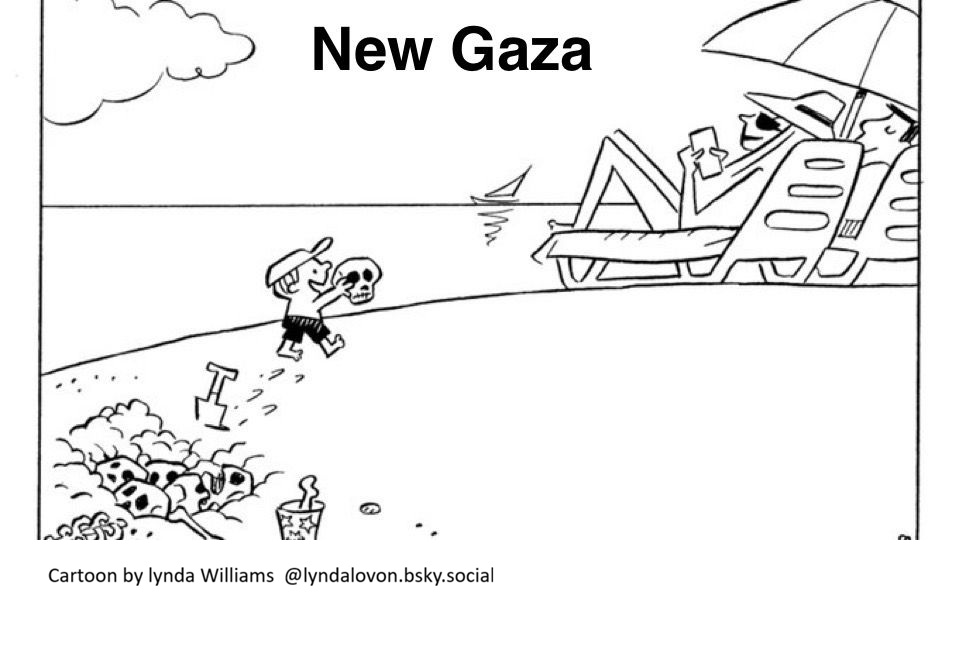

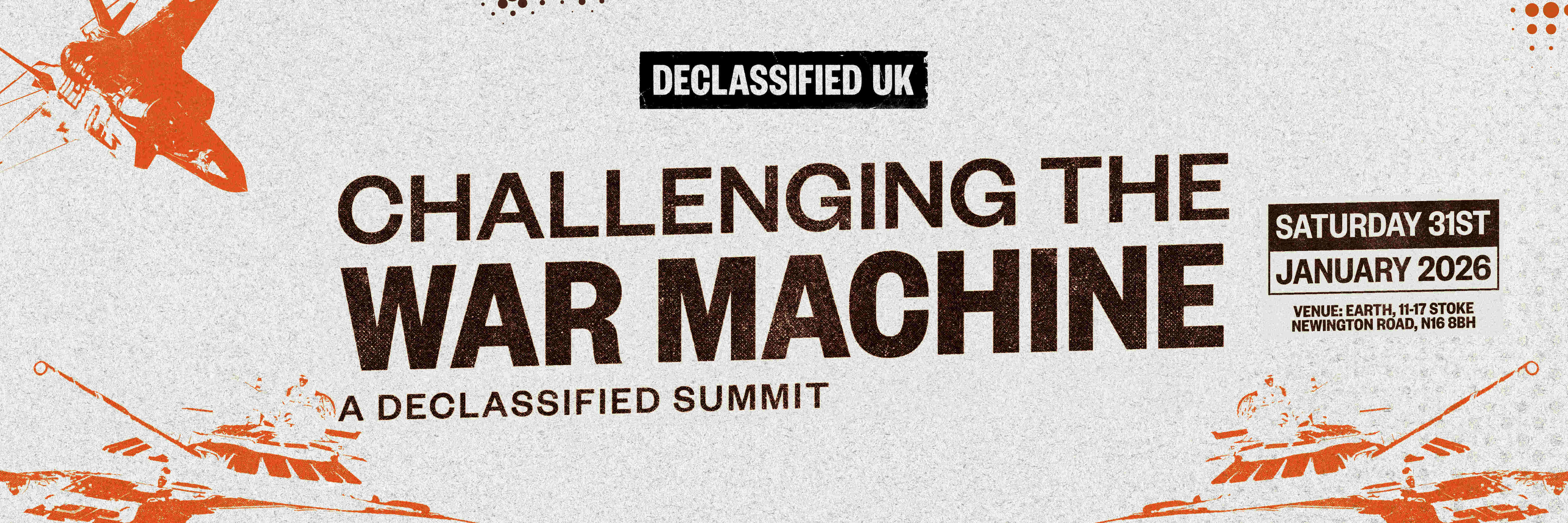
31st January – Challenging the War Machine – a DECLASSIFIED UK SUMMIT


Website of the Week
Now until to February 10, 2026 Radioactive waste storage in France: the debate is finally open! How to participate?
-
Archives
- January 2026 (296)
- December 2025 (358)
- November 2025 (359)
- October 2025 (376)
- September 2025 (258)
- August 2025 (319)
- July 2025 (230)
- June 2025 (348)
- May 2025 (261)
- April 2025 (305)
- March 2025 (319)
- February 2025 (234)
-
Categories
- 1
- 1 NUCLEAR ISSUES
- business and costs
- climate change
- culture and arts
- ENERGY
- environment
- health
- history
- indigenous issues
- Legal
- marketing of nuclear
- media
- opposition to nuclear
- PERSONAL STORIES
- politics
- politics international
- Religion and ethics
- safety
- secrets,lies and civil liberties
- spinbuster
- technology
- Uranium
- wastes
- weapons and war
- Women
- 2 WORLD
- ACTION
- AFRICA
- Atrocities
- AUSTRALIA
- Christina's notes
- Christina's themes
- culture and arts
- Events
- Fuk 2022
- Fuk 2023
- Fukushima 2017
- Fukushima 2018
- fukushima 2019
- Fukushima 2020
- Fukushima 2021
- general
- global warming
- Humour (God we need it)
- Nuclear
- RARE EARTHS
- Reference
- resources – print
- Resources -audiovicual
- Weekly Newsletter
- World
- World Nuclear
- YouTube
-
RSS
Entries RSS
Comments RSS
 nuclear-news