Starmer backs minister accused of embezzling billions in Bangladesh
Tulip Siddiq denies claims that she brokered corrupt deal with Russia to build nuclear power plant.
Keir Starmer has given his full support to Tulip Siddiq, the Treasury
minister, after Bangladesh’s anti-corruption commission accused her and
family members of embezzling billions as part of a deal for a nuclear power
plant. Siddiq, whose role as economic secretary to the Treasury includes
responsibility for tackling financial corruption.
She has denied any involvement in the claims. While Downing Street strongly defended her, it
is another headache for Starmer after a turbulent few months that included
the sudden departure of another minister, the former transport secretary
Louise Haigh.
Guardian 19th Dec 2024m https://www.theguardian.com/politics/2024/dec/19/labour-minister-accused-of-involvement-in-embezzling-billions-in-bangladesh
AI goes nuclear
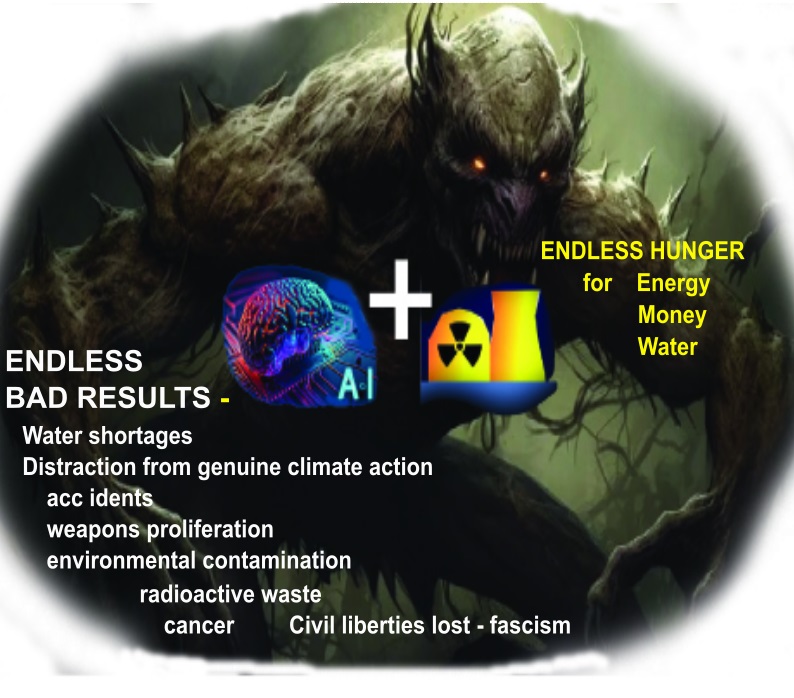
Big tech is turning to old reactors (and planning new ones) to power the energy-hungry data centers that artificial intelligence systems need. The downsides of nuclear power—including the potential for nuclear weapons proliferation—have been minimized or simply ignored.
Bulletin, By Dawn Stover, December 19, 2024
When Microsoft bought a 407-acre pumpkin farm in Mount Pleasant, Wisconsin, it wasn’t to grow Halloween jack-o’-lanterns. Microsoft is growing data centers—networked computer servers that store, retrieve, and process information. And those data centers have a growing appetite for electricity.
Microsoft paid a whopping $76 million for the pumpkin farm, which was assessed at a value of about $600,000. The company, which has since bought other nearby properties to expand its footprint to two square miles, says it will spend $3.3 billion to build its 2-million-square-foot Wisconsin data center and equip it with the specialized computer processors used for artificial intelligence (AI).
Microsoft and OpenAI, maker of the ChatGPT bot, have talked about building a linked network of five data centers—the Wisconsin facility plus four others in California, Texas, Virginia, and Brazil. Together they would constitute a massive supercomputer, dubbed Stargate, that could ultimately cost more than $100 billion and require five gigawatts of electricity, or the equivalent of the output of five average-size nuclear power plants.
Microsoft, Amazon, Apple, Google, Meta, and other major tech companies are investing heavily in data centers, particularly “hyperscale” data centers that are not only massive in size but also in their processing capabilities for data-intensive tasks such as generating AI responses. A single hyperscale data center can consume as much electricity as tens or hundreds of thousands of homes, and there are already hundreds of these centers in the United States, plus thousands of smaller data centers.
In just the past year, US electric utilities have nearly doubled their estimates of how much electricity they’ll need in another five years. Electric vehicles, cryptocurrency, and a resurgence of American manufacturing are sucking up a lot of electrons, but AI is growing faster and is driving the rapid expansion of data centers. A recent report by the global investment bank Goldman Sachs forecasts that data centers will consume about 8 percent of all US electricity in 2030, up from about 3 percent today

Bill Gates, Jeff Bezos, Elon Musk, Mark Zuckerberg, Larry Ellison, and other so-called “tech bros” who also happen to be among the world’s richest men have thought about how the energy industry can—or must, in their view—keep pace with AI’s rapid growth while also enabling Big Tech to meet its climate commitments. They have all come to the same conclusion: Nuclear energy, whatever it costs, is the only viable solution.
In a rash of recent announcements, Big Tech companies have declared that they will either be reviving existing nuclear power plants, developing next-generation nuclear reactors, or both. Dollars are also flowing to nuclear fusion projects—even though many physicists think commercial fusion power plants that generate electricity are at least decades in the future, if they ever can be built. The federal government is not only supporting this nuclear-powered vision but also subsidizing it in the name of “clean energy.” However, both the government and the tech industry are largely ignoring the known and significant downsides of nuclear power—including high costs, long construction times, accidents, nuclear weapons proliferation risks, and environmental contamination from uranium mining and radioactive waste disposal.
Betting on nuclear. Again.

In Pennsylvania, Microsoft has plans to revive Three Mile Island. For people old enough to remember that name, it’s synonymous with the demise of nuclear power in the United States. Forty-five years ago, a partial reactor meltdown at the Three Mile Island nuclear power plant 10 miles south of Harrisburg, Pennsylvania, gripped the nation and exposed nearly two million people to radiation. It was the worst accident in the history of the US commercial nuclear power industry.
The failed reactor never operated again, but a similar reactor built on the same island in the Susquehanna River was restarted six years after the accident and later received a license extension until 2034. That reactor was shut down in 2019 after its owner, Constellation Energy, was unable to secure subsidies from the state of Pennsylvania and deemed the reactor a financial albatross. Now, however, Constellation plans to reopen the reactor and sell 100 percent of the electricity that will be generated by it—enough to power 800,000 homes—to Microsoft………………………………………………………………………………………………..
The sudden interest in nuclear energy is largely due to AI, which is rapidly transforming the tech industry. Electric utilities are forecasting the nation will need the equivalent of 34 new, full-size nuclear power plants over the next five years to meet power requirements that are rising sharply after several decades of falling or flat demand.
Microsoft, Amazon, and other tech giants are not interested only in reviving existing nuclear plants. They are also funding the development of next-generation nuclear reactors. ……………………………………………………………….
Counting “compute”
Globally, electricity demand is also soaring and is now expected to be 6 percent higher in 2035 than the International Energy Agency forecast just a year ago. Electricity consumption by data centers, of which there are already 11,000 worldwide, could reach more than 1 million gigawatt-hours in 2027—about as much total electricity as Japan now uses annually, according to a recent analysis by the agency……………………………………………………………………………………………………………..
An analysis done by OpenAI in 2018 found that the amount of “compute” required to train the largest AI models was doubling every three to four months. An analysis of more recent models reports that the training requirements multiplied by four to five times annually during the past four years………………………………………………………………..
Based solely on current trends, power consumption at US data centers is projected to grow by about 10 percent annually between now and 2030. By one estimate, the exponential growth of AI could consume nearly all the world’s energy production by 2050……………………………………………
In the meantime, data centers are being built faster than energy capacity is expanding. The rapid growth of this sector has not been adequately figured into climate models and is rarely mentioned as a safety concern about AI. In the March 2023 “pause” letter that called on AI labs to stop training the most powerful AI systems for at least six months, tech experts expressed concern about losing jobs—or even control of civilization—but not about climate impacts.
The AI boom is heavily dependent on power-hungry graphics processing units,…………………………………………………………………………………………………………………………………………………………………..
A dirty secret
Whether it’s chip manufacturing or bot training and chatting, where will the energy for AI activity come from? Big tech companies have been prominent in efforts to move toward a carbon-free economy. But with the rise of AI, tech-related emissions are going up.
…………………………………………………… the AI boom has pushed climate goals aside. Microsoft’s emissions, for example, are up by 30 percent since 2020. Google’s emissions have risen by almost 50 percent over the past five years. “As we further integrate AI into our products, reducing emissions may be challenging due to increasing energy demands from the greater intensity of AI compute, and the emissions associated with the expected increases in our technical infrastructure investment,” Google acknowledged in its 2024 environmental report.
………………………………………………………………………………………………………… there is no solid evidence that AI can deliver a quick fix for the climate crisis. In fact, AI is also helping the oil and gas industry increase production of fossil fuels. In Guyana, for example, ExxonMobil is using AI “to determine the ideal parameters for drilling” in deep water. For now, at least, AI’s massive environmental footprint is more of a climate problem than a solution.
Is this the “nuclear renaissance”?
As AI’s energy demands grow more intense, and it becomes increasingly clear that the expansion of wind and solar power cannot keep pace, tech leaders have set their sights on nuclear energy.
So nuclear hype has flowed like champagne at a wedding reception.

Proponents of nuclear power have been predicting a “nuclear renaissance” for nearly a quarter-century. But nuclear has never been cost-competitive with other energy sources, and that is unlikely to change anytime soon. The US Energy Information Administration’s Annual Energy Outlook 2023 projected that renewable power would continue to outcompete nuclear, even in scenarios that predict aggressive cost declines for nuclear.
The Biden administration embraced subsidies to keep existing nuclear power plants online and reopen closed ones—for example, a $1.52 billion loan guarantee from the Energy Department is what made it possible for the owner of the shuttered Palisades nuclear plant to announce plans for a reopening. “In 2022, utilities were shutting down nuclear reactors; in 2024, they are extending reactor operations to 80 years, planning to uprate capacity, and restarting formerly closed reactors,” the Energy Department approvingly noted in a report released at the end of Climate Week NYC in late September.
The White House also recently offered $900 million in new funding for small reactors. In its initiative for AI, the Energy Department waves vaguely at plans to “unlock new clean energy sources, optimize energy production, and improve grid resilience.”

“We’re looking at a chance to build new nuclear at a scale not seen since the ‘70s and ‘80s,” Secretary of Energy Jennifer Granholm said at the opening plenary of the American Nuclear Society annual conference in June.
The Energy Department sees potential for a “commercial liftoff” that could triple US nuclear capacity by 2050 and puts a positive spin on AI’s role in boosting nuclear: “AI and data center load growth is aligning the fundamentals for new nuclear with requirements for 24/7 power, valuing decarbonization, and investment in new generation assets.”
Despite this federal support, the nuclear renaissance so far lacks an order book for new nuclear plants that are actually being constructed. What it does have, as noted in the White House’s “liftoff” report, is “a set of customers who are willing and able to support investment in new nuclear generation assets.” Namely, big tech companies that can afford to pay big electricity bills…………………..
Although tech titans currently have ample funds to invest in energy, the cost curve for AI is going up. The expense of powering chatbots is already climbing so fast that companies are holding back their newest versions from the public.
Existing nuclear power can’t satisfy the demand for energy that is not only more abundant but also cheaper. “We still don’t appreciate the energy needs of this [AI] technology,” lamented OpenAI CEO Sam Altman at the World Economic Forum in Davos in January. “There’s no way to get there without a breakthrough.” Altman, who has warned that AI’s “compute costs are eye-watering,” called for increased investment in nuclear fusion as well as fission.
The fission (and fusion) frenzy

In addition to OpenAI, Altman also chairs Oklo, a nuclear power startup that went public last year when it merged with a special purpose acquisitions company that Altman also chairs. Oklo plans to build its first liquid metal-cooled sodium fast reactor at Idaho National Laboratory in 2027. However, the company’s initial application for a license was denied—for lack of information—by the Nuclear Regulatory Commission in January 2022 and has not yet been re-submitted.
In August 2023, the Pentagon announced an “intent to award” a contract to Oklo for a small modular reactor at an Air Force base in Alaska. However, the deal was quietly revoked a month later.
Despite setbacks like these, Altman sees the future of nuclear energy and AI as inextricably linked. “I don’t see a way for us to get there without nuclear,” he told CNBC last year.
Retired Microsoft co-founder Bill Gates is not as worried about AI’s energy demands as Altman is, but he too is bullish on nuclear energy. Among his multiple investments in nuclear startups is a company called TerraPower, which has received funding from the Energy Department and Los Alamos National Laboratory to develop a sodium-cooled fast reactor similar to Oklo’s.
Gates has invested more than $1 billion in a TerraPower plant that broke ground in Kemmerer, Wyoming, in June. TerraPower says the reactor will be operational by 2030. But construction of the plant’s Natrium reactor has not yet begun, nor has it been approved by the Nuclear Regulatory Commission (NRC), which is still conducting safety and environmental reviews.

Gates issued a celebratory announcement calling the science behind the reactor “super cool.” Not mentioned in the announcement is the estimated price for the 345-megawatt reactor: $4 billion, of which the federal government is contributing half. Even if the project comes in on budget (which would make it exceptional among US nuclear reactors of the past several decades), it will be more expensive than comparable gas or renewable projects.
Microsoft and Google are also placing bets on nuclear. Earlier this year, Microsoft hired a director of nuclear technologies and a director of nuclear development acceleration to lead the company’s strategy for powering AI advances with small, onsite nuclear reactors—as well as buying energy from larger conventional reactors such as Three Mile Island. Microsoft, which has invested $13 billion in OpenAI and owns almost half of its equity, plans to use AI to expedite the process of getting nuclear plants approved and has been training an AI model on regulatory and licensing documents.
Google last month signed an agreement to buy a total of 500 megawatts of generating capacity—about half the output of a conventional nuclear reactor—from six to seven Hermes small modular reactors designed by Kairos Power. Google aims to deploy the reactors next to Google data centers by 2030. This past summer, Kairos broke ground on an NRC-permitted demonstration reactor in Oak Ridge, Tennessee. It was the first non-water-cooled US reactor approved for construction in more than 50 years.
Michael Terrell, senior director for energy and climate at Google, said the agreement with Kairos could help the company support AI technologies and “reliably meet electricity demands with carbon-free energy every hour of every day.”

Wealthy tech companies and individuals are investing in nuclear fusion as well as fission. Peter Thiel, who co-founded PayPal and was the first outside investor in Facebook, joined Altman in backing a fusion startup called Helion, which claims it will begin producing electricity from its first commercial reactor by 2028 and will sell it to Microsoft.
Breakthrough Energy Ventures, a venture capital firm founded by Bill Gates, has invested in Helion and three other fusion startups. One of those ventures, an MIT spinoff company called Commonwealth Fusion Systems, is also backed by Amazon CEO Jeff Bezos and has received $1.8 billion in second-round venture capital. Commonwealth announced earlier this week that it has leased land to build a commercial-scale fusion power plant in Virginia, but the company has not yet secured any permits or customers.
Critics such as Daniel Jassby, the former principal research physicist at the Princeton Plasma Physics Lab, have called the excitement surrounding these fusion projects “over-the-top and unjustified.”………………………………………………………………………………………
The downsides of nuclear
Despite massive infusions of money from corporations, billionaires, and governments, nuclear is not a sure bet. Around the world, large reactors have repeatedly come in over budget and behind schedule, and although they require lower initial capital investment, smaller reactors are likely to be even less economic than the larger ones that now exist, in terms of the cost of the electricity they produce.
“Very few of the proposed SMRs have been demonstrated, and none are commercially available, let alone licensed by a nuclear regulator,” wrote Allison Macfarlane, who chaired the NRC a decade ago and now directs the School of Public Policy and Global Affairs at the University of British Columbia, in an essay published last year by IAI News.The only SMR reactor design certified by the NRC is the NuScale Power reactor, which received more than $200 million in federal support and was slated to be built at the Idaho National Laboratory. But the projected cost of building the reactor ballooned between 2020 and 2023; its only committed utility customer dropped out, and the project was canceled a year ago.
The only new nuclear reactors that have been built in the United States in the past 30 years are Vogtle Units 3 and 4 in Georgia. These Westinghouse AP1000 pressurized water reactors were the nation’s first “advanced” reactors, but they ended up costing $35 billion (more than twice as much as originally projected) and were completed seven years behind schedule.
There are more than 50 designs for new reactors, and the tech giants investing in nuclear do not seem to be working toward a standardized design—something that many nuclear experts recommend as the best way to get plants approved and built quickly and affordably.
Cost and time are not the only obstacles that must be overcome if nuclear is to meet the AI-energy problem. The work force needed to build a host of nuclear projects has dwindled as plants have closed and not been replaced. Also, none of the proposed new projects has included any new ideas for what to do about the radioactive waste generated not only by reactors by also by uranium mining. There is still no permanent repository for long-lived radioactive waste in the United States.
Radioactive waste isn’t just a disposal problem, either. “Bill Gates should be worried about reprocessing and proliferation,” said Alex Glaser, a nuclear security expert at Princeton University and a member of the Bulletin’s Science and Security Board.
Concepts like the Oklo fast reactor would produce fissile material that bad actors could use to make nuclear weapons. Oklo and other nuclear startups propose to reprocess their waste to keep costs down. But that reprocessing produces plutonium that could be diverted for use in nuclear weapons. The United States rejected reprocessing in the 1970s after determining that the potential for proliferation made it too risky for commercial use.
n all the hype about AI and nuclear, there is scant mention of nuclear weapons proliferation to more countries or the risk that fissile material could be acquired by (or provided to) terrorists. Nor is there much attention to the vast amounts of raw materials and water required for the growth of both AI and nuclear energy, or the electronic waste generated by chip manufacturing and data centers.
A conversation of a few dozen questions with an AI chatbot may require a half-liter of water. A large data center consumes more than a million gallons of water daily, and some data centers are being built in places where water is already scarce.
Developers are loathe to reveal how much water they use, but after a legal battle with an Oregon newspaper, Google finally agreed to reveal that its data centers in The Dalles consume 29 percent of the town’s water supplies. Google plans to build two more data centers there.
No roadmap for “responsible” AI
AI has been compared to electricity—a utility that people soon won’t be able to live without. But there is currently no framework for regulating this new utility, and AI’s energy demands have been given short shrift in the many discussions of AI’s safety risks……………………………………………………………………………………….
Both incoming vice president JD Vance and Elon Musk, who have the president-elect’s ear at the moment, are strongly pro-nuclear. “Broligarchs” Musk and Peter Thiel played significant roles in the recent presidential campaign. Thiel reportedly had a hand in pushing for JD Vance, who had previously worked for him, as Trump’s vice presidential pick…………………….
The tech bros now have a clear path to the unfettered growth of AI and are already pressing Trump to review federal AI policy and weed out laws and regulations that “may be unnecessarily impeding AI adoption.”
Silicon Valley’s AI gold rush aligns almost perfectly with aspirations at Mar-a-Lago, where AI is seen as a must-win race with China. But a second race is also afoot, one in which skyrocketing US electricity demand may outpace supplies, perhaps leading to power outages and utility rate increases of up to 70 percent by 2029.
History suggests nuclear will be a slow starter in that race. https://thebulletin.org/2024/12/ai-goes-nuclear/#:~:text=Big%20tech%20is%20turning%20to,that%20artificial%20intelligence%20systems%20need.
SMR – Spending Money Recklessly with Dr. Gordon Edwards (CCNR)
SMR – Spending Money Recklessly with Dr. Gordon Edwards (CCNR). On
November 26 2024 Dr. Gordon Edwards, President of the Canadian Coalition
for Nuclear Responsibility, was featured in the Sustainability Speakers
Series, hosted by the Saskatoon Public Library and the Saskatchewan
Environmental Society. The title of his presentation was SMRs – Spending
Money Recklessly – in Saskatchewan and in Canada. Thus version has a
shortened introduction compared with the original version.
Gordon Edwards 20th Dec 2024 https://www.youtube.com/watch?v=32XKveP01x4
Regulator warns against delays in work on Chernobyl’s shelter
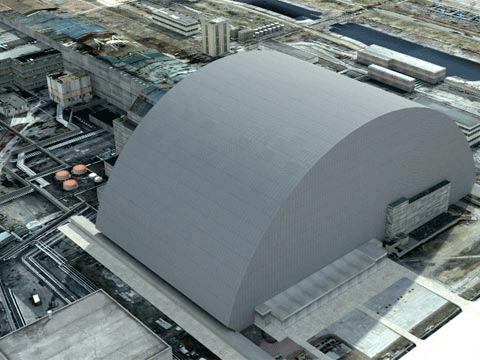
“Further delays in the implementation of the project to dismantle the unstable structures of the Shelter under the NSC shell increase the risk of their collapse, which could lead to extremely negative consequences.“
WNN, 20 December 2024
The head of the State Nuclear Regulatory Inspectorate of Ukraine, Oleg Korikov, has urged against any further delays in the project to dismantle the unstable shelter facility, which was built at speed in 1986 to cover Chernobyl’s damaged unit 4.
He was speaking during a meeting of backers of the International Cooperation Account for Chernobyl, which was established in November 2020 by the European Bank for Reconstruction and Development (EBRD) at the Ukrainian government’s request to support a comprehensive plan for Chernobyl. The EBRD had already led the project to fund and construct the New Safe Confinement building which is now in place covering the whole of the reactor involved in the accident, including the initial shelter built around it in a matter of months.
Korikov said that equipping the New Safe Confinement with the necessary equipment and the dismantling of the unstable structures of the original shelter had already been postponed because of funding issues. This work was an integral part of the three-stage international Shelter Implementation Plan, which was firstly to stabilise it – the 2008 work gave it a design life to 2023 – and secondly to build a larger secure construction to enclose it – the New Safe Confinement (NSC) which was completed in 2017 – which would then pave the way for the dismantling and decommissioning stage.
“Further delays in the implementation of the project to dismantle the unstable structures of the Shelter under the NSC shell increase the risk of their collapse, which could lead to extremely negative consequences. This state of affairs causes serious concern for the State Nuclear Regulatory Inspectorate of Ukraine,” he said.
The Shelter Object – also known as the ‘sarcophagus’ – still contains the molten core of the reactor and an estimated 200 tonnes of highly radioactive material. The stability of the structure has developed into one of the major risk factors at the site.
The licence for the storage of radioactive waste within the shelter was extended last year from 2023 to 2029, with a 2025 deadline for the development of a new design for the dismantling of “unstable structures with an unacceptably high probability of collapse”, and a 31 October 2029 deadline for completion of the dismantling.
In October it was announced that a new study was being funded by the International Chernobyl Cooperation Account which aims to determine the scope of deconstruction work for unstable Shelter structures and provide an initial cost estimate and enable the beginning of design work for the dismantling of the unstable Shelter structures………………………………………………………………………………………………………………
The New Safe Confinement is the largest moveable land-based structure built – with a span of 257 metres, a length of 162 metres, a height of 108 metres and a total weight of 36,000 tonnes equipped…………….. https://www.world-nuclear-news.org/articles/warning-against-delays-in-work-on-chernobyls-old-shelter
U.S. Corporate Land Grab in Ukraine Underlies War With Russia
Heralded as a hero in Western media, Ukrainian President Volodymyr Zelensky has allowed foreign private interests to steal his country’s best land
Jeremy Kuzmarov, Dec 20, 2024 Originally published in CovertAction Magazine
In early November, Barbara Bonte, a Belgian member of the European Union (EU) parliament, raised concern about the sell-off of Ukrainian land on a massive scale to U.S. private equity firms along with some Saudi agro-industrial and investment businesses.
Bonte wrote to the EU parliament that, “according to several disquieting reports, mainly U.S. but also Saudi agro-industrial and investment businesses are purchasing Ukrainian farmland on a massive scale. Cargill, ADM, BlackRock, Oaktree Capital Management and Bunge Limited, for instance, have reportedly gained control over much of Ukraine’s farmland.”
Bonte then posed two questions to the EU parliament as follows:
“1. What is the Commission’s assessment of the impact of this sell-off of European farmland to multinationals serving only U.S. interests on EU strategic food-supply dependence? How does the Commission intend to address that impact?”
“2. This strongly suggests that the United States is seeking to recoup its military support for Ukraine, and ensure a geopolitical presence there in a post-war scenario through control over Ukrainian farmland and the profits it generates. How does the Commission intend to prevent the United States from cherry-picking in Ukraine and Europe from being left to deal with just the handicaps?”
Bonte’s questions are significant ones that point to a hidden, underlying motive to the war in Ukraine and U.S. and European support for Ukrainian President Volodymyr Zelensky.
The bonanza offered to foreign investors resembles past wars where young people were sacrificed on the altar of corporate profits.
War and Theft
A detailed analysis of the land grab in Ukraine by Western corporations was provided in a 2023 report by the Oakland Institute[1] entitled “War and Theft: The Takeover of Ukraine’s Agricultural Land.”
Written by Frédéric Mousseau, a food security consultant, and Eve Devillers, a Ph.D. candidate at Cornell University, the report starts by emphasizing Ukraine’s function as a “breadbasket of Europe” with its 33 million acres of arable land and “large swaths of the most fertile farmland in the world.”
In 2021, Zelensky initiated a land reform program as part of the structural adjustment program begun under the auspices of Western financial institutions that enabled U.S.-based corporations to take over Ukraine’s land.[2]
The structural adjustment program had been opposed by Ukrainian President Viktor Yanukovych, who was overthrown in the 2014 U.S.-backed Maidan coup.
After Zelensky’s “land reform” was initiated, about five million hectares—the size of two Crimeas—were outright “stolen” by private interests.
The thieves included Goldman Sachs, a Wall Street investment firm well represented in the Biden administration, which in April 2022 bought NN Investment Partners Holding N.V., a Netherlands-based company that is a major shareholder in Ukraine’s biggest landowner, Kernel Holding S.A, and in Astarta, another large landowner in Ukraine.[3]
Vanguard Group Inc., which gave $45,473 to Kamala Harris in the 2024 election and $98,551 to Joe Biden in 2020, was another Wall Street firm that bought up Ukrainian land cheaply.[4]
Some large U.S. pension funds, foundations and university endowments are invested in Ukrainian land through NCH Capital—a U.S.-based private equity fund headquartered at Rockefeller Plaza in New York, which is the fifth largest landholder in Ukraine with its possession of 290,749 hectares.[5]
NCH Capital currently faces accusations of unlawful land acquisition, tax evasion, and illicit financial activity. In 2015, its founder and CEO, George Rohr, was part of the high-level meetings involving Ukrainian president Petro Poroshenko and U.S. Commerce secretary Penny Pritzker that led Ukraine to agree to the structural adjustment program of the International Monetary Fund (IMF) as a condition for two $1 billion loan guarantees from the Obama administration.[6]…………………………………………………………………………………………………………………………..
The Oakland Institute report compares the generous financing of multinational corporations and local oligarchs with the inability of Ukrainian small farmers to access loans and their being displaced from their land and plunged into poverty. Some have migrated to the U.S. to seek farm work in the U.S. Midwest, sending remittances back home.[9]
Mousseau and Devillers wrote that “the Partial Credit Guarantee Fund established by the World Bank to support small farmers is only US$5.4 million, a negligible amount compared to the billions channeled to large agribusinesses.” https://jeremykuzmarov.substack.com/p/us-corporate-land-grab-in-ukraine?utm_source=post-email-title&publication_id=2091638&post_id=153373724&utm_campaign=email-post-title&isFreemail=true&r=1r1sdz&triedRedirect=true&utm_medium=email
Final German nuclear power plant enters dismantling phase
World Nuclear News, 20 December 2024
Dismantling work at the shut down Brokdorf nuclear power plant has officially begun, PreussenElektra announced.
PreussenElektra – a subsidiary of EOn Group – applied for approval to decommission and dismantle the 1410 MWe pressurised water reactor in December 2017. The plant was shut down on 31 December 2021.
On 23 October this year, the Schleswig-Holstein Ministry for Energy Transition, Climate Protection, Environment and Nature issued the first decommissioning and dismantling permit to PreussenElektra for the Brokdorf plant. Phase 1 of the plant’s decommissioning and dismantling includes the decommissioning and dismantling of the plant components that are no longer required and subject to nuclear regulatory supervision, with the exception of the reactor pressure vessel and the biological shield. The plant was the last nuclear power plant in Germany that was not yet being dismantled.
On 13 December, all the requirements for using the permit were met when the last documents requiring approval came into force. On the same day, PreussenElektra notified the authorities that it was using the permit, meaning the plant’s post-operation phase had ended and it had entered the dismantling phase.
“We expect that we will now be able to quickly implement the first shutdown of a system in the power plant and thus be able to physically begin dismantling this year,” said Brokdorf plant manager and dismantling programme manager Tammo Kammrath……………………………………………………………………
In December last year, PreussenElektra, together with EOn group companies, announced plans for the construction at the Brokdorf site of the largest battery storage facility in the EU to date. The facility – to store electricity from renewable sources – is to be expanded in two stages to up to 800 MW of power and a storage capacity of up to 1600 MWh. Commissioning could begin as early as 2026. https://www.world-nuclear-news.org/articles/Final-German-nuclear-power-plant-enters-dismantling-phase
Nuclear company Orano seeks arbitration over Niger mining licence

World Nuclear News 20th Dec 2024, https://www.world-nuclear-news.org/articles/orano-seeks-arbitration-over-niger-mining-licence
The French company has opened international arbitration proceedings against the State of Niger following the withdrawal of its mining licence for the Imouraren project in June.
“This move comes after several months of unsuccessful attempts at mediation and conciliation,” the company said.
The Imouraren project is about 80km south of Arlit and about 160km north of Agadez and, with mineral reserves of over 200,000 tU, is one of the largest known uranium reserves in the world. Operating company Imouraren SA – owned 66.65% by Orano Expansion and 33.35% by Niger state interests – was awarded an operating permit to mine the deposit in 2009, but development work was suspended in 2015 due to market conditions at the time.
Earlier this year, the company announced it had restarted preparatory work for the project, but within days the Nigerien authorities withdrew the Orano subsidiary’s operating permit.
“The announcement of the withdrawal of the licence took place when Orano presented the State of Niger with a concrete, technical proposal, which would have allowed the IMOURAREN deposit to be exploited as quickly as possible, and after works had resumed since June 2024,” Orano said today. It has engaged law firm Clay Arbitration as its representative.
In July, the Nigerien authorities also withdrew Canadian company GoviEx Uranium’s mining rights for the Madouela uranium project. Earlier this month, the company and its fully owned subsidiary GoviEx Niger Holdings Ltd started proceedings against Niger under the Convention on the Settlement of Investment Disputes Between States and Nationals of Other States, on the basis the state had breached its legal obligations in withdrawing the permit.
“I don’t care if its tainted money”: Council leader’s telling admission in Nuclear Waste Services cash grab debate

Nuclear Free Local Authorities, 16th Dec 2024
In a busy week for GDF developments, East Lindsey District Councillors were last Wednesday (11th December) engaged in a fractious debate over proposals to accept £3 million in money from the Environment Agency to carry out coastal defence works. The controversy arose because the money originated from the coffers of Nuclear Waste Services.
It is of course in the interests of NWS to invest in coastal defences because they would not want to see any Geological Disposal Facility sited in Mablethorpe or Theddlethorpe inundated in the future by flooding. The surface site would be operable for up to 175 years, receiving regular shipments of high-level radioactive waste shipments. Flood waters could render the facility inoperable far in advance of this end date.
Local members, Cllrs Travis Hesketh and Robert Watson called the proposal “pure blackmail”. Councillor Watson issued a caution that accepting the money will mean the district council “surrenders its independence” to NWS. Councillor Jill Makinson-Saunders echoed this sentiment, which was shared by many opposition members in the chamber, saying “If we are taking money from the nuclear people, we cannot fly the flag for independence”. In response to his critics, Council Leader Craig Leyland said “I don’t care if its tainted money”.
Despite the strength of opposition, the Conservative Minority Administration, with the support of some opposition members, were able to secure sufficient votes to approve the proposal.
The decision must again cast doubt on the supposed impartiality of the district council over the GDF proposal. There is within the report put before Council an admission that this is infact the case; under a section titled ‘Reputation’ it says:
‘There is risk of perception of predetermination for GDF facility due to the source of funding being NWS. This will be mitigated by providing clear information in public domain at all stages of work on full transparency basis’.
In addition, as the proposal will require East Lindsey District Council to find another source of finance to carry out the work were it to disengage from the GDF process, the Council is in effect curtailed from exercising its Right to Withdraw and it will certainly not be inclined to call for a Test of Public Support within twelve months, as agreed by Council at a previous meeting and as just again asked for by local MP Victoria Atkins.
The decision comes hot on the heels of a decision made by the Executive at Lincolnshire County Council to seek a Hosting Agreement with the NWS and government promising millions if a GDF comes to Lincolnshire.
Overnight Israeli Strike In Syria So Large It Caused Earthquake
by Tyler Durden, Tuesday, Dec 17, 2024
Days ago Israel began warning that it will use large bunker buster munitions to begin destroying the former Syrian Army’s underground missile and weapons storehouses.
This has begun in the overnight hours, with Israeli warplanes pummeling air defense systems and ammunition depots in Damascus and the coastal city of Tartous, near where a Russian naval base is located. The strike on Tartous resulted in the single biggest explosion seen in Syria in years, unleashing a fireball and mushroom cloud so large it led to quick speculation it could have been a tactical nuke (which widespread reports are denying).
The London-based Syrian Observatory for Human Rights (SOHR) described that Israeli warplanes hit air defense units and “surface-to-surface missile depots” as part of a bid to degrade and disable Syria’s military capability. SOHR also called it the “the heaviest strikes” on the region in over a decade.
The Telegraph wrote that “A 3.1 magnitude tremor was reported by the Geographic Survey of Israel’s seismology department at 11.49pm on Sunday night in the region of the bombings.”
“The explosions in Tartous were extremely loud,” Al Jazeera’s Resul Serdar, reporting from inside the country, additionally described. “Some experts are saying that might probably mean it was a chemical weapons production house.”
Other sites which were bombed overnight were radar and air defense systems outside of Damascus, around the Qaisioun mountain which dominates the background of the capital.
In total there have been an estimated 600 Israeli strikes over the course of eight days. Some of them began immediately upon Hayat Tahrir al-Sham (HTS) entering the environs of Damascus as President Assad fled the country.
An Israeli broadcast correspondent from Kann previously wrote that “An Israeli source tells me: Israel’s goal is to destroy everything from Assad’s army that could fall into the hands of the rebels – from tanks to missiles. We are destroying the equipment of the Assad army.”
Jets and aerial equipment, and runways at bases are being obliterated. Part of Israel’s aim also seems to be preventing pro-Iranian entities from ever popping up again in Syria, and to finally and definitively dismantle Hezbollah and Shia militias’ arms networks. It’s also unclear what kind of future government will dominate Syria – most likely a hardline Sunni one.
Trump And Israel Can’t Wait To Start Bombing Iran
Caitlin Johnstone, Dec 18, 2024
Both Israel and the incoming Trump administration are reportedly eager to start bombing Iran ASAP now that Assad’s out of the way.
Israeli media reports that the IDF now sees airstrikes on Iran as much easier to execute now that its pilots don’t have to worry about Syrian air defenses along the way, while The Wall Street Journal reports that the Trump team is weighing its options for airstrikes on Iran to prevent it from obtaining a nuclear weapon (which there’s no evidence Iran is currently trying to do).
A new article from The Washington Post titled “Syria’s collapse and Israeli attacks leave Iran exposed” reports that “Israeli Prime Minister Benjamin Netanyahu has signaled a desire to capitalize on gains against Hamas and Hezbollah and take on Tehran more aggressively under a new U.S. administration.” The article notes that Trump has expressed openness to war with Iran, saying that “anything can happen”.
This comes as the al-Qaeda affiliates who captured Damascus assure the world that Syria will no longer allow itself to be used as a launchpad for attacks against Israel.
After Assad was ousted I got a bunch of weirdos in my comments claiming that Israel was somehow sad about this development, because Israel and Assad were secretly on the same side. This is one of the dumbest conspiracy theories I’ve been asked to believe in a long time, and I was asked to believe it not by crazy QAnoners or the liberal mass media but by a sector of pro-Palestine leftoids who also love NATO.
❖
The US hates al-Qaeda, then loves al-Qaeda, then hates al-Qaeda, then loves al-Qaeda. They split up, they get back together, they split up again. “We were on a break!” “We were not on a break!” Will they or won’t they? Keep watching and find out!………………………………………
Israel supporters will tell you antisemitism is one of the biggest problems in the world and then if you ask them for examples of where dangerous antisemitism is occurring in our society they’ll list things like the United Nations, Amnesty International, Ireland, and the pope.
❖
I often see questions like “Why are the billionaires destroying the world like this? What’s the point of amassing all that wealth if you’re just going to spend the rest of your life in some underground bunker?”………………………………………………………………………………………………….
Becoming a billionaire and becoming a heroin addict are both irrational destructive behaviors driven by irrational internal dynamics. The only difference is that the billionaires are taking the rest of us with them. https://www.caitlinjohnst.one/p/trump-and-israel-cant-wait-to-start?utm_source=post-email-title&publication_id=82124&post_id=153285034&utm_campaign=email-post-title&isFreemail=true&r=1ise1&triedRedirect=true&utm_medium=email
‘Long journey ahead’ for nuclear plant clean-up
Piers Hopkirk, BBC News, Dungeness, 16 Dec 24
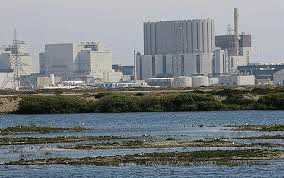
It took about 16 years to build Dungeness B nuclear power station, but to return the site to its original state will take nearly a century.
This is the scale of the task facing EDF as the company continues the process of removing the uranium from this decades-old facility that sits on a remote headland on the Kent coast.
The turbines stopped turning at Dungeness in 2018 and, with the decision taken to cease electricity production, the process of defueling the plant has begun.
In the giant reactor hall the scale of the task becomes apparent.
Buried under the floor are the uranium-filled fuel assemblies that powered the station’s two nuclear reactors.
There are more than 400 rod-filled assemblies in each reactor and it will take six years to safely remove them all.
It is done with the help of a giant 2,000 tonne crane that will carefully lift each one out before moving them into another part of the plant to cool.
Plant Manager, Paul Windle, said: “So far we have removed around 25% of the fuel from one reactor.
“We have got a long journey ahead.”
From the reactor hall the fuel ends up in an area called the ponds.
The fuel, still hot, is stored under water here for 90 days before it is deemed safe enough to be placed into steel flasks which will be moved on to lorries to begin the journey to a nuclear waste facility at Sellafield in Cumbria.
Dungeness B was the first advanced gas cooled nuclear reactor to start construction in the UK.
It was at the vanguard of 20th Century nuclear power generation.
However, in the face of technical challenges that were seen to be too expensive and complicated to address, the decision was taken by EDF to halt energy production………………………………………………………….. https://www.bbc.co.uk/news/articles/cz7qvderej9o
How Washington and Ankara Changed the Regime in Damascus
by Thierry Meyssan, Voltaire Network | Paris (France) | 17 December 2024, Translation
Roger Lagassé
With surprising aplomb, the international press assures us that we are not witnessing a military change of regime in Syria, but a revolution overthrowing the Syrian Arab Republic. The presence of the Turkish army and US special forces is hidden from us. We are bombarded with propaganda that has been denied several times about the crimes attributed to “Bashar”. Cannibal throat-cutters are transformed into respectable revolutionaries. Once again, the international press is consciously lying to us.
In 11 days, the Syrian Arab Republic, which had valiantly resisted attacks by jihadists supported by the largest coalition in history since 2011, was overthrown. So what happened?
First of all, since October 15, 2017, the United States has organized a siege of Syria, prohibiting all trade with it and prohibiting the United Nations from participating in its reconstruction [1]. This strategy was extended, in 2020, to Lebanon with the Caesar Act [2].
We, members of the European Union, have all participated in this crime. The majority of Syrians were malnourished. The pound had collapsed: what was worth 1 pound before the war, in 2011, was worth 50,000 when Damascus fell (the pound was revalued three days later thanks to an injection of Qatari money). The same causes always have the same effects, Syria was defeated like Iraq before it, when Secretary of State Madeleine Albright congratulated herself on having caused the death of half a million Iraqi children from disease and malnutrition.
On the other hand, if it was the jihadists of Hayat Tahrir al-Cham (HTC) who took Damascus, they were not the ones who won militarily. On November 27, HTC, armed by Qatar and supervised by the Turkish army disguised as the “Syrian National Army” (SNA), took control of the M4 highway which served as a ceasefire line. In addition, HTC and Türkiye had very high-performance drones operated by Ukrainian advisers. Finally, HTC took with it the Uighur colony of the Turkestan Islamic Party (TIP) which had been entrenched in al-Zanbaki for 8 years [3]. The Israeli, Russian and Chinese theaters of operation have therefore merged.
Then, these forces attacked Aleppo, until then defended by the Iranian Revolutionary Guards. The latter withdrew without a word, leaving a small garrison of the Syrian Arab Army to defend the city. Faced with the disproportion of forces, the Syrian government ordered its troops to withdraw to Hama, which they did on November 29, after a brief battle.
On November 30, Syrian President Bashar al-Assad went to Russia. Not to attend the exam that his son Hafez was taking at Moscow University where he is continuing his studies, but to call for help. The Russian forces in Syria could only bomb the jihadists’ convoys because they are only airborne. They therefore tried to block the road to HTC and Turkey. They could not intervene on the ground against them. Aleppo was well and truly lost. Moreover, Turkish President Recep Tayyip Erdoğan, following his country’s tradition [4], has never acknowledged the loss of the Ottoman territories of Greece (Thessaloniki), the island of Cyprus, Syria (Aleppo) and Iraq (Mosul).
With dormant jihadist cells having been reactivated by Türkiye, the already exhausted Syrian Arab Army had to fight on all fronts at once. This is what General Maher el-Assad (the president’s brother) tried to do, in vain.
On December 2, General Jasper Jeffers III, commander in chief of the United States Special Forces (UsSoCom), arrives in Beirut. Officially, he comes to monitor the implementation of the oral Israeli-Lebanese ceasefire. Given his functions, it is obvious that this will only be part of his mission. He will supervise the capture of Damascus by the Turks behind HTC.
On December 5, the United States relaunches at the United Nations Security Council their accusations against President Bashar al-Assad of using chemical weapons to repress his own people. They ignore the very many objections, testimonies and investigations that have shown that they are nothing more than war propaganda. ………………………………………………………………………………………………………………………………
The Israeli Defense Forces (IDF) launch an operation to destroy the equipment and fortifications of the Syrian Arab Army. In four days, 480 bombings sink the fleet and set fire to armories and warehouses. Simultaneously, ground teams assassinate the country’s leading scientists.
After showing journalists around the empty Syrian fortifications along the coast, Benny Kata, a local military commander, tells his guests: “It is clear that we will stay here for a while. We are prepared for it.”
The IDF is already invading Syria a little more, beyond the Golan ceasefire line that it occupies. It announces that it will create a new buffer zone on Syrian territory, to protect the current buffer zone, in short to annex it. In addition, they annexed Mount Hermon so that they could monitor the entire region………………………………
Meanwhile, according to the United Nations, more than a million Syrians are trying to flee their country. They do not believe that the HTC jihadists have suddenly become civilized.
The author of this article, Thierry Meyssan, was an advisor to the Libyan and then Syrian authorities for nine years. From this experience, he produced a fundamental work on Western policy in the Middle East: Before Our Very Eyes, Fake Wars and Big Lies: From 9/11 to Donald Trump.
Blinken Confirms the US Is in Direct Contact With al-Qaeda-Linked HTS

By Dave DeCamp / Antiwar.com, December 16, 2024, https://news.antiwar.com/2024/12/15/blinken-confirms-the-us-is-in-direct-contact-with-al-qaeda-linked-hts/
Secretary of State Antony Blinken said Saturday that the US has been in direct contact with Hayat Tahrir al-Sham, a US-designated terror organization that grew out of al-Qaeda in Syria and recently led the offensive that overthrew former Syrian President Bashar al-Assad.
“Yes, we have been in contact with HTS and with other parties,” Blinken said on Saturday, confirming earlier reports that said the US was talking to HTS. “Our message to the Syrian people is this: We want them to succeed, and we’re prepared to help them do so.”
HTS and its leader, Abu Mohammad al-Julani, are overseeing the new “transitional” government in Syria. Blinken and other US officials have celebrated the ouster of Assad and made clear they’re willing to work with Julani despite his past as an ISIS and al-Qaeda leader.
Julani, who has been going by his real name, Ahmad al-Sharaa, has been presenting himself as a moderate in an effort to gain support from the West and began a rebranding campaign in 2016 by claiming his former group, the al-Nusra Front, was cutting ties with al-Qaeda. At the time, he thanked the “commanders of al-Qaeda for having understood the need to break ties.”
In 2017, Julani merged his group with several other Islamist factions to form Hayat Tahrir al-Sham, which the US State Department designated as a foreign terrorist organization in 2018. The US also placed a $10 million bounty on Julani’s head.
The Biden administration is reportedly considering removing the terror designation from HTS, which would allow the US to provide significant aid to an HTS-led government. Blinken released a statement a few days ago outlining conditions for US support.
“The United States reaffirms its full support for a Syrian-led and Syrian-owned political transition. This transition process should lead to credible, inclusive, and non-sectarian governance that meets international standards of transparency and accountability,” Blinken said.
While the US is flexible with HTS’s designation, it frequently points to the terror designations of groups like Hamas and Hezbollah to justify Israeli attacks that slaughter huge numbers of civilians.
Power, control and symbolic masculinity: How Freud might diagnose the pro nuclear lobby
ReNewEconomy, Giles Parkinson, Dec 19, 2024
When faced with arguments for nuclear power in Australia, many in the energy industry scratch their heads and wonder where they are coming from – the fossil fuel lobby, political ideology and other vested interests are often cited as the reasons, along with a hatred of renewables.
On close inspection, nuclear – at least in Australia – makes no sense on an economic, climate or even grid engineering and management perspective.
But maybe the problem runs deeper than that. John Poljak, a founder at Keynumbers and something of a data nerd (it appears) pondered the question and decided to ask ChatGPT for an answer.
“Australia’s nuclear debate is as polarising as it gets, with two starkly opposed camps,” Poljak writes on LinkedIn. “Let’s be honest – facts alone aren’t likely to sway minds here. So why not take a different approach and explore the deeper psychological forces at play?
So he asked ChatGPT why people might prefer nuclear over renewables.
“For a balanced perspective, I’ve also asked ChatGPT to explore the reverse scenario: Why might the ‘patient’ prefer renewables over nuclear? The answer might surprise you!”
Or, may be – if you have met some nuclear boosters – the answer won’t surprise you at all. We decided we couldn’t do any better than simply reprint the answers, as published on LinkedIn by Poljak.
See what you think. Despite the positive prognosis, we’re not convinced the pro-nuclear lobby is going to sign up for the recommended treatment.
Oh, and if you are interested in pursuing the issue further, here is another musical perspective on the Coalition nuclear proposal, from a group that call themselves the NEMChat Singers, Stake it on the Atom.
The subject group demonstrates a pronounced preference for nuclear energy over cheaper renewable alternatives. From a Freudian psychoanalytic perspective, this preference may be interpreted as stemming from underlying unconscious drives, particularly those related to power, control, and symbolic masculinity.
- The Symbolism of Nuclear Power: Nuclear energy serves as a potent phallic symbol – a technological manifestation of potency, authority, and industrial mastery. The size, complexity, and centralization of nuclear facilities mirror the patriarchal ideals of dominance, precision, and order. For individuals navigating the existential anxieties of middle age – such as waning virility, diminishing career dominance, and an encroaching sense of societal irrelevance – nuclear power provides an unconscious projection of strength and continuity.
Fear of Fragmentation (Dispersed Renewables): Renewable energy, particularly solar and wind, is decentralized, diffuse, and perceived as inherently “feminine” in its relationship to nature, fluidity, and “soft power.” To the Freudian psyche, this challenges the hierarchical, centralized models of energy production that resonate with a paternal superego. Renewables may unconsciously symbolize a loss of control and traditional authority, evoking latent anxieties about societal shifts away from rigid masculinity.
- Latency of Childhood Influences: Many members of this cohort were raised during the Cold War era when nuclear technology was framed as an apex of human achievement. Early life exposure to narratives of nuclear power as an emblem of progress and invincibility may resurface as repressed nostalgic idealization, leading to its advocacy in adulthood.
Treatment Recommendation
- Confrontation of Symbolic Associations: A structured exploration of the symbolic meanings attributed to nuclear versus renewable energy may help subjects recognize their emotional attachments. Psychoeducation regarding the symbolic neutrality of energy sources could loosen the phallic projections onto nuclear power.
Embrace of Decentralized Power Structures: Group therapy focused on reimagining control and security within decentralized systems (e.g., community-owned solar power) could facilitate emotional acclimatization to renewables. Subjects may benefit from recognizing renewable energy as a cooperative expression of resilience rather than a threat to hierarchical order.
- Midlife Reorientation Therapy: Addressing unconscious fears surrounding aging and obsolescence through therapy targeting generativity (Erikson’s stage of psychosocial development) can channel these drives into productive societal advocacy. Renewable energy can be framed as a forward-looking, legacy-building effort rather than a diminishment of traditional ideals.
Prognosis
With appropriate intervention, prognosis is favorable. By fostering awareness of the unconscious biases at play, subjects can transition from rigidly defending nuclear power as a symbolic “bulwark” to embracing renewables as an adaptive, generative solution for the future. Such a shift may alleviate underlying anxieties, promoting psychological reconciliation between their self-image and societal change…………………………………………………………………………………………………………………………….. more https://reneweconomy.com.au/power-control-and-symbolic-masculinity-how-freud-might-diagnose-the-pro-nuclear-lobby/
Europe fears nuclear catastrophe: This plant sets off all alarms due to risk of explosion
Eco News by Sanusha S.. 12/14/2024
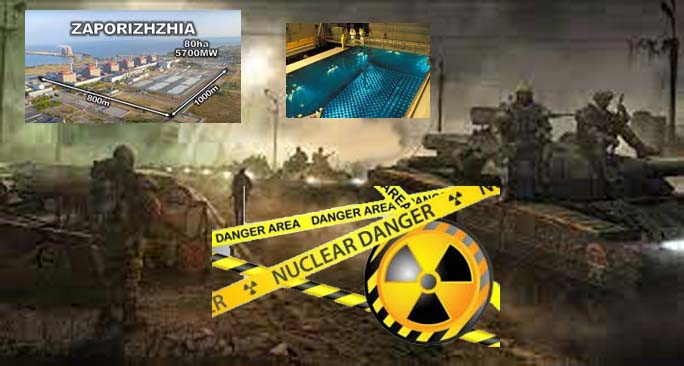
The Zaporizhzhia Nuclear Power Plant (ZNPP), located in eastern Ukraine, has been a focal point of global attention due to the conflict in this country. The Russian troops captured this plant in 2022 and since then have faced a multitude of threats like fire, military action, or damage to infrastructure. Notwithstanding clarifications from nuclear safety experts regarding the safety precautions taken at plants, it has been a severe reminder of the need for urgent global protocols to guard against those facilities during armed conflict.
……………………………………………………………..Zaporizhzhia: A plant which is embattled in a nuclear fire unprecedented conflict
This is the most unprecedented scenario: a nuclear plant turned into military target. Constant shelling, drone strikes and even presence of landmines on the premises intensifies risk of nuclear incident because of the occupation of ZNPP by Russian forces.
The International Atomic Energy Agency (IAEA) has sent inspectors and even suggested creating a demilitarized safety zone around the site, thus, these measures remain unimplemented. The agency has identified that all seven pillars of nuclear safety are compromised at Zaporizhzhia. These include protection of critical infrastructure and prevention of military use of the facility……………………………………….
https://www.ecoticias.com/en/europe-fears-nuclear-catastrophe/9437/
1 This Month
29 Jan. Thursday 7-8 p.m. Webinar – World’s Largest Nuclear Station in Port Hope, ON?
To see nuclear-related stories in greater depth and intensity – go to https://nuclearinformation.wordpress.com/



31st January – Challenging the War Machine – a DECLASSIFIED UK SUMMIT

Website of the Week
Now until to February 10, 2026 Radioactive waste storage in France: the debate is finally open! How to participate?
-
Archives
- January 2026 (296)
- December 2025 (358)
- November 2025 (359)
- October 2025 (376)
- September 2025 (258)
- August 2025 (319)
- July 2025 (230)
- June 2025 (348)
- May 2025 (261)
- April 2025 (305)
- March 2025 (319)
- February 2025 (234)
-
Categories
- 1
- 1 NUCLEAR ISSUES
- business and costs
- climate change
- culture and arts
- ENERGY
- environment
- health
- history
- indigenous issues
- Legal
- marketing of nuclear
- media
- opposition to nuclear
- PERSONAL STORIES
- politics
- politics international
- Religion and ethics
- safety
- secrets,lies and civil liberties
- spinbuster
- technology
- Uranium
- wastes
- weapons and war
- Women
- 2 WORLD
- ACTION
- AFRICA
- Atrocities
- AUSTRALIA
- Christina's notes
- Christina's themes
- culture and arts
- Events
- Fuk 2022
- Fuk 2023
- Fukushima 2017
- Fukushima 2018
- fukushima 2019
- Fukushima 2020
- Fukushima 2021
- general
- global warming
- Humour (God we need it)
- Nuclear
- RARE EARTHS
- Reference
- resources – print
- Resources -audiovicual
- Weekly Newsletter
- World
- World Nuclear
- YouTube
-
RSS
Entries RSS
Comments RSS
 nuclear-news