Nuclear news in the last week of 2024

So often, art gives us hope, points the way ahead. Over 40 years ago, the Australian folk band Redgum had hit songs, especially opposing war. Above is the cover picture of their first album, depicting the USA’s secret military intelligence hub in Central Australia. In this critical year of 2025, with nuclear war and climate catastrophe dangling over us, Redgum’s message about not giving up, is more pertinent than ever.And people, millions of them, are not giving up, with leadership from so many forward-thinking groups, like the
International Campaign to Abolish Nuclear Weapons, and many anti-nuclear, peace and environmental organisations world-wide.
What didn’t happen in 2024 – Success on the ground and in court for the nuclear-free movement.
TOP STORIES
Another expert report finds Israel is committing genocide: The West yawns
Trump suggests Zelensky consider ceding territories – El Pais.
AI bigwigs want to go all-in on nuclear: they also happen to be behind nuclear companies.
New Mexico’s Nuclear-Weapons Boom.
From the archives. Big tech, bigger lies.
Climate. We need to be prepared’: China adapts to era of extreme flooding. A year of extreme weather that challenged billions. Scientists should break the ice.
Noel’s notes. As the Gaza genocide continues, it cannot be a happy 2025. The Australian election as a game of cricket: cost of living is the issue, but does Nature bat last? The good Germans and the good Jews.
***************************
AUSTRALIA. This talk of nuclear is a waste of time: Wind, solar and firming can clearly do the job. More Australian nuclear news at https://antinuclear.net/2024/12/26/australian-nuclear-news-24-30-december/
***************************
NUCLEAR ITEMS
ATROCITIES. Israeli Attacks in Gaza Kill at Least 32 More Palestinians Over 24 Hours. Israel Is Killing Civilians In Gaza On Purpose, And It’s Not Even Debatable.
Gaza babies ‘freezing to death’ amid Israel’s inhumane blockade: UNRWA. All Of Western Civilization Owns This Genocide.
CULTURE and ART. Philosophy Against Nuclear Power.
ECONOMICS. As construction of first small modular reactor looms, prospective buyers wait for the final tally ALSO AT https://nuclear-news.net/2024/12/28/1-a-as-construction-of-first-small-modular-reactor-looms-prospective-buyers-wait-for-the-final-tally/
British energy supplier Centrica is prepared to “walk away” from a planned investment in the Sizewell C nuclear plant. ALSO AT https://nuclear-news.net/2024/12/26/1-b1-british-energy-supplier-centrica-is-prepared-to-walk-away-from-a-planned-investment-in-the-sizewell-c-nuclear-plant/
Labour donor Dale Vince urges ‘rigorous financial scrutiny’ of Sizewell C costs.
Fault puts nuclear power station offline over Christmas.
| ENERGY. Why tech giants such as Microsoft, Amazon, Google and Meta are betting big on nuclear power. |
| ENVIRONMENT. High tide for Holtec |
| INDIGENOUS ISSUES. Ontario First Nation challenging selection of underground nuclear waste site in court |
| OPPOSITION to NUCLEAR . Villagers oppose proposed nuclear plant in Arasinkeri. |
| PERSONAL STORIES. Japan’s fishing town of Suttsu faces nuclear waste dilemma amid population decline. |
| POLITICS. Chris Hedges: How Fascism Came. FRANCE’S NUCLEAR ENERGY POLICY: A CHRONICLE OF FAILURE – FLAMANVILLE 3. Israel to Annex the West Bank – Why Now? And What are the Likely Scenarios? |
| POLITICS INTERNATIONAL and DIPLOMACY. How Ukraine is Helping the HTS Militants Who Overthrew Assad. The rise and fall of Sweden’s nuclear disarmament advocacy. |
RADIATION. Did Israel explode a small nuclear bomb in Syria? Spike in radiation report says…
SAFETY. Jeremy Corbyn speaks out on danger of Trident in Scotland.
There’s a Major Problem With the Nuclear War Bunkers The Rich Are Buying.
Incidents. Workers Seek Shelter As Hanford Nuclear Complex Issues Leak Alert. Earthquake-prone Indonesia considers nuclear power plan as 29 possible plant sites revealed.
| SECRETS and LIES.US-Funded Group Removes Report Warning of Famine in North Gaza After Complaint From US Ambassador.Black Money, Black Flags: How USAID Paved the Way for Syria’s Militant Takeover.No more research for genocide at MIT!Pentagon Admits It’s Been Lying About the Number of Troops in Both Iraq and Syria.’ References to ‘inducing a North Korean attack’ found in ex-military official’s notes. |
| WASTES. Northwestern Ontario nuclear waste site selection raises concerns.Second Fukushima nuclear sample removal eyed for March.Complex plan for dismantling UK’s 27 dead, rusting, radioactive nuclear submarines. |
| WAR and CONFLICT. US Military Supported Syrian Rebel Offensive That Toppled Assad Government.Who’d want to survive a nuclear war?Iranian lawmaker warns Israeli strike could push Tehran toward nuclear weapons. |
| WEAPONS and WEAPONS SALES. The Guardian view on arms control: essential to prevent the total devastation of nuclear war. China sanctions US defense firms. |
Why tech giants such as Microsoft, Amazon, Google and Meta are betting big on nuclear power

Sat, Dec 28, Bradley Hoppenstein, CNBC
Data centers powering artificial intelligence and cloud computing are pushing energy demand and production to new limits. Global electricity use could rise as much as 75% by 2050, according to the U.S. Department of Energy, with the tech industry’s AI ambitions driving much of the surge.
Data centers powering AI and cloud computing could soon grow so large that they could use more electricity than entire cities.
As leaders in the AI race push for further technological advancements and deployment, many are finding their energy needs increasingly at odds with their sustainability goals.
“A new data center that needs the same amount of electricity as say, Chicago, cannot just build its way out of the problem unless they understand their power needs,” said Mark Nelson, managing director of Radiant Energy Group. “Those power needs. Steady, straight through, 100% power, 24 hours a day, 365,” he added.
After years of focusing on renewables, major tech companies are now turning to nuclear power for its ability to provide massive energy in a more efficient and sustainable fashion.
Google, Amazon, Microsoft and Meta are among the most recognizable names exploring or investing in nuclear power projects. Driven by the energy demands of their data centers and AI models, their announcements mark the beginning of an industrywide trend…………………. https://www.cnbc.com/2024/12/28/why-microsoft-amazon-google-and-meta-are-betting-on-nuclear-power.html
Big tech, bigger lies

by beyondnuclearinternational, https://beyondnuclearinternational.org/2024/11/10/big-tech-bigger-lies/

Microsoft, Google and Amazon are bragging they will use nuclear energy to power their energy needs, but it’s mainly hype or worse, writes M.V. Ramana.
In the last couple of months, Microsoft, Google, and Amazon, in that order, made announcements about using nuclear power for their energy needs. Describing nuclear energy using questionable adjectives like “reliable,” “safe,” “clean,” and “affordable,” all of which are belied by the technology’s seventy-year history, these tech behemoths were clearly interested in hyping up their environmental credentials and nuclear power, which is being kept alive mostly using public subsidies.
Both these business conglomerations—the nuclear industry and its friends and these ultra-wealthy corporations and their friends—have their own interests in such hype. In the aftermath of catastrophic accidents like Chernobyl and Fukushima, and in the face of its inability to demonstrate a safe solution to the radioactive wastes produced in all reactors, the nuclear industry has been using its political and economic clout to mount public relations campaigns to persuade the public that nuclear energy is an environmentally friendly source of power.
Tech giants like Microsoft, Amazon, and Google, too, have attempted to convince the public they genuinely cared for the environment and really wanted to do their bit to mitigate climate change. In 2020, for example, Amazon pledged to reach net zero by 2040. Google went one better when its CEO declared that “Google is aiming to run our business on carbon-free energy everywhere, at all times” by 2030. Not that they are on any actual trajectory to meeting these targets.
Why are they making such announcements?
Greenwashing environmental impacts
The reasons underlying these companies investing in such PR campaigns is not hard to discern. There is growing awareness of the tremendous environmental impacts of the insatiable appetite for data from these companies, as well as the threat they pose to already inadequate efforts to mitigate climate change.
Earlier this year, the Wall Street company Morgan Stanley estimated that data centers will “produce about 2.5 billion metric tons of carbon dioxide-equivalent emissions through the end of the decade”. Climate scientists have warned that unless global emissions decline sharply by 2030, we are unlikely to limit global temperature rise to 1.5 degrees Celsius, a widely shared target. Even without the additional carbon dioxide emitted into the air as a result of data centers and their energy demand, the gap between current emissions and what is required is yawning.

But it is not just the climate. As calculated by a group of academic researchers, the exorbitant amounts of water required in the United States “to operate data centers, both directly for liquid cooling and indirectly to produce electricity” contribute to water scarcity in many parts of the country. This is the case elsewhere, too, and communities in countries ranging from Ireland to Spain to Chile are fighting plans to site data centers.

Then, there are the indirect impacts on the climate. Greenpeace documented, for example, that “Microsoft, Google, and Amazon all have connections to some of the world’s dirtiest oil companies for the explicit purpose of getting more oil and gas out of the ground and onto the market faster and cheaper.” In other words, the business models adopted by these tech behemoths depend on fossil fuels being used for longer and in greater quantities.
In addition to the increasing awareness about the impacts of data centers, one more possible reason for cloud companies to become interested in nuclear power might be what happened to cryptocurrency companies. Earlier this decade, these companies, too, found themselves getting a lot of bad publicity due to their energy demands and resulting emissions. Even Elon Musk, not exactly known as an environmentalist, talked about the “great cost to the environment” from cryptocurrency.

The environmental impacts of cryptocurrency played some part in efforts to regulate these. In September 2022, the White House put out a fact sheet on the climate and energy implications of Crypto-assets, highlighting President Biden’s executive order that called on these companies to reduce harmful climate impacts and environmental pollution. China even went as far as to banning cryptocurrency, and its aspirations to reducing its carbon emissions was one factor in this decision.
Crypto bros, for their part, did what cloud companies are doing now: make announcements about using nuclear power. Amazon, Google, and Microsoft are now following that strategy to pretend to be good citizens. However, the nuclear industry has its reasons for welcoming these announcements and playing them up.
The state of nuclear power
Strange as it might seem to folks basing their perception of the health of the nuclear industry on mainstream media, that technology is actually in decline. The share of global electricity produced by nuclear reactors has decreased from 17.5% in 1996 to 9.15% in 2023, largely due to the high costs of and delays in building and operating nuclear reactors.
A good illustration is the Vogtle nuclear power plant in the state of Georgia. When the utility company building the reactor sought permission from the Nuclear Regulatory Commission in 2011, it projected a total cost of $14 billion, and “in-service dates of 2016 and 2017” for the two units. The plant became operational only this year, after the second unit came online in March 2024, at a total cost of at least $36.85 billion.
Given this record, it is not surprising that there are no orders for any more nuclear plants.
As it has been in the past, the nuclear industry’s answer to this predicament is to advance the argument that new nuclear reactor designs would address all these concerns. But that has, yet again, proved not to be the case. In November 2023, the flagship project of NuScale, the small modular reactor design promoted as the leading one of its kind, collapsed because of high costs.

Supporters of nuclear power are now using another time-tested tactic to promote the technology: projecting that energy demand will grow so much that no other source of power will be able to meet these needs. For example, UK energy secretary Ed Davey resorted to this gambit in 2013 when he said that the Hinkley Point C nuclear plant was essential to “keep the lights on” in the country.
Likewise, when South Carolina Electric & Gas Company made its case to the state’s Public Service Commission about the need to build two AP1000 reactors at its V.C. Summer site—this project was subsequently abandoned after over $9 billion was spent—it forecast in its “2006 Integrated Resource Plan” that the company’s energy sales would increase by 22 percent between 2006 and 2016, and by nearly 30 percent by 2019.
This is the argument that the growth in data centres, propped up in part by the hype about generative artificial intelligence, has allowed proponents of nuclear energy to put forward. It remains to be seen whether this hype about generative AI actually materializes into a long-term sustainable business: see, for example, Ed Zitron’s meticulously documented argument for why OpenAI and Microsoft are simply burning billions of dollars and why their business model might “simply not be viable”.
In the case of the V.C. Summer project, South Carolina Electric & Gas found that its energy sales actually declined by 3 percent compared to 2006 by the time 2016 rolled around. Of course, that did not matter, because shareholders had already received over $2.5 billion in dividends and company executives had received millions of dollars in compensation, according to Nuclear Intelligence Weekly, a trade publication.
One wonders which executives and shareholders are going to receive a bounty from this round of nuclear hype.
What about emissions?
Will the investments in nuclear power by companies like Google, Microsoft, and Amazon help reduce emissions anytime soon?
The project expected to have the shortest timeline is the restart of the Three Mile Island Unit 1 reactor, which Constellation Energy projects will be ready in 2028. But if the history of reactor commissioning is anything to go by, that deadline will come and go without any power flowing from it.
Restarting a nuclear plant that has been shutdown has never been done before. In the case of the Diablo Canyon nuclear plant in California, which hasn’t been shut down but was slated for decommissioning in 2024-25 till Governor Gavin Newsom did a volte-face, the Chair of the Diablo Canyon Independent Safety Committee explained why doing so was very difficult: “so many different programs and projects and so on have been put in place over the last half a dozen years predicated on that closure in 2024-25 and each one of those would have to be evaluated and some of them are okay, and some of them won’t be and some are going to be a real stretch and some are going to cost money and some of them aren’t going to be able to be done maybe”.

The cost of keeping Diablo Canyon open has been estimated by the plant’s owner at $8.3 billion and by independent environmental groups at nearly $12 billion. There are no reliable cost estimates for reopening Three Mile Island, but Constellation Energy, the plant’s owner, is already seeking a taxpayer-subsidized loan that would likely save the company $122 million in borrowing costs.

One must also remember that Microsoft already announced an agreement with Helion Energy, a company backed by billionaire Peter Thiele, to get nuclear fusion power by 2028. The chances of that happening are slim at best. In 2021, Helion announced that it had raised $500 million to build its fusion generation facility that would demonstrate “net electricity production” in three years, i.e., “in 2024”. That hasn’t happened so far. But going back further, one can see a similar and unfulfilled claim from 2014: then, the company’s chief executive had told the Wall Street Journal that the company hoped that its product would generate more energy than it would use “in the next three years” (i.e., in 2017). It is quite likely that Microsoft’s decision-makers knew of how unlikely it is that Helion will be able to supply nuclear fusion power by 2028. The publicity value is the most likely reason for announcing an agreement with Helion.
What about the small modular nuclear reactor designs—X-energy and Kairos—that Amazon and Google are betting on? Don’t hold your breath.
X-energy is an example of a high-temperature gas-cooled reactor design that dates back to the 1940s. There have been four reactors based on similar concepts that were operated commercially, two in Germany and two in the United States, respectively, and test reactors in the United Kingdom, Japan, and China. Each of these reactors proved problematic, suffering a variety of failures and unplanned shutdowns. The latest reactor with a similar design was built in China. Its performance leaves much to be desired: within about a year of being connected to the grid, its power output was reduced by 25 percent of the design power capacity, and even at this lowered capacity, it operated in 2023 with a load factor of just 8.5 percent.

Kairos, on the other hand, will be challenged by its choice of molten salts as coolant. These are chemically corrosive, and decades of search have identified no materials that can survive for long periods in such an environment without losing their integrity. The one empirical example of a reactor that used molten salts dates back to the 1960s, and this experience proved very problematic, both when the reactor operated and in the half-century thereafter, because managing the radioactive wastes produced before 1970 continued to be challenging.
Simply throwing money will not overcome these problems that have to do with fundamental physics and chemistry.
Just a dangerous distraction
Although Amazon, Google, and Microsoft claim to be investing in nuclear energy to meet the needs of AI, the evidence suggests that their real motive is to greenwash themselves.
Their investments are small and completely inadequate with relation to how much is needed to build a reactor. But their investments are also very small compared to the bloated revenues of these corporations. So, from the viewpoint of top executives, investing in nuclear power must seem a cheap way to reduce bad publicity about their environmental footprints. Unfortunately, “cheap” for them does not translate to cheap for the rest of us, not to mention the burden to future generations of human beings from worsening climate change and, possibly, increased production of radioactive waste that will stay hazardous for hundreds of thousands of years.
Because nuclear power has been portrayed as clean and a solution to climate change, announcements about it serve as a flashy distraction to focus public attention on. Meanwhile, these companies continue to expand their use of water and draw on coal and especially natural gas plants for their electricity. This is the magician’s strategy: misdirecting the audience’s attention while the real trick happens elsewhere. Their talk about investing in nuclear power also distracts from the conversations we should be having about whether these data centers and generative AI are socially desirable in the first place.
There are many reasons to oppose and organize against the wealth and power exercised by these massive corporations, such as their appropriation of user data to engage in what has been described as surveillance capitalism, their contracts with the Pentagon, and their support for Israel’s genocide and apartheid. Their investment into nuclear technology, and more importantly, hyping it up, offers one more reason. It is also a chance to establish coalitions between groups involved in very different fights.
M. V. Ramana is the Simons Chair in Disarmament, Global and Human Security at the School of Public Policy and Global Affairs, University of British Columbia. His latest book is Nuclear Is Not The Solution. The Folly of Atomic Power In The Age Of Climate Change, available from Verso Books.
Gaza babies ‘freezing to death’ amid Israel’s inhumane blockade: UNRWA
Saturday, 28 December, https://www.presstv.ir/Detail/2024/12/28/739876/Gaza-babies-freezing-death-Gaza-Israel-blocakde
UNRWA is warning that more babies are losing their lives due to a severe temperature drop and lack of shelter in Gaza.
In the past week, at least four infants have died of hypothermia from low temperatures and a lack of warmth while living in tents in the besieged Strip.
On Friday, the head of the United Nations agency for Palestinian refugees, Philippe Lazzarini, said in a message on X that Gaza babies “are freezing to death due to cold weather and a lack of shelter.”
“Blankets, mattresses, and other winter supplies have been stuck in the region for months waiting for approval to get into Gaza.”
Lazzarini once again called for an immediate ceasefire, urging “an immediate flow of much-needed basic supplies, including for winter.”
Such calls are apparently of no use within the international community given Israel’s relentless campaign of genocide in Gaza since October 2023.
Gaza health officials said on December 26 that a newborn baby died from the cold in a tent encampment in the refugee camp of al-Mawasi in southern Gaza.
According to Ahmed al-Farra, the head of pediatrics and obstetrics at Nasser Hospital in Khan Younis, staff in the neonatal ICU see at least five cases of hypothermia per day.
45,300 and counting. That is the number of Palestinians Israel has massacred in Gaza since October 7, 2023. The regime remains emboldened by the rock-solid support it receives from Washington.
Of that figure, more than 17,600 are children, according to Gaza health officials. As many as 17,000 children have been left unaccompanied or separated from their parents and caregivers.
UNICEF has said that babies are being “delivered into hell” in Gaza.
What didn’t happen in 2024 – Success on the ground and in court for the nuclear-free movement.
from Beyond Nuclear 30 Dec 24
For the anti-nuclear movement, success is often measured by what didn’t happen; what got delayed or stopped. These wins don’t necessarily make for an exciting story, but they are no less important.
When we delay, derail or prevent yet another dangerous, expensive and unnecessary nuclear project, it’s a result not only of our own persistence but also your steadfast support. A few of those “wins” in 2024 include:
Still no sign of SMRs! The much hyped and subsidized small modular reactors remain idle boasts on paper, with none built and no hope of any answering the climate crisis effectively or in time. We continue to promote the safer, faster, cheaper renewable energy alternatives.
Still no dumps in W. Texas and New Mexico! Our court battles continue as we support besieged communities in the Southwest who don’t want the country’s high-level radioactive reactor waste dumped where they live, supposedly as an “interim” measure but more likely permanently.
NRC busted on climate! License extension proceedings for currently operating reactors — out to 60 and even 80 years — have stalled as even a US Nuclear Regulatory Commission judge sided with our view that the agency is failing to consider the impact of the worsening climate crisis on a technology unsafe at any age.
There is much more to do in 2025 when we will continue to support community resistance and to face battles in court
China sanctions US defense firms
https://www.rt.com/news/610080-china-sanctions-us-defense-firms/ 27 Dec 24
Beijing has placed restrictions on Washington’s military assistance to Taiwan, the foreign ministry has said.
Beijing has imposed sanctions on seven US defense companies and their executives in response to Washington’s sale of arms to Taiwan in violation of the One-China principle, the Chinese Foreign Ministry announced on Friday.
The move comes after outgoing US President Joe Biden last week authorized a $571.3 million military aid package to Taiwan.
Washington’s actions “interfere in China’s internal affairs, and undermine China’s sovereignty and territorial integrity,” the Chinese Foreign Ministry said as it announced the restrictions.
The companies targeted by the sanctions include Insitu Inc., Hudson Technologies Co., Saronic Technologies, Inc., Raytheon Canada, Raytheon Australia, Aerkomm Inc., and Oceaneering International Inc.
The ministry said “relevant senior executives” of the companies had also been blacklisted, without providing any names.
The sanctions will freeze “movable and immovable” assets belonging to US firms and their executives within China, and ban organizations and individuals in the country from trading or collaborating with them, the ministry stated.
The restrictions, which will contribute to already strained relations between Beijing and Washington, were announced after Biden approved a record $895 billion defense budget, which surpassed last year’s allocation by $9 billion.
The bill does not refer to Ukraine aid, however, it contains measures aimed at strengthening the US presence and defense capabilities in the Indo-Pacific region, primarily to “counter China.” Beijing has already condemned the bill, citing its “negative content on China” and attempts to play up the ‘China threat’ narrative.
Beijing has repeatedly stressed that it considers the self-governing island of Taiwan to be an inalienable part of the country under the One-China principle. It has denounced Washington’s arms sales to Taipei, accusing the US of fomenting tensions over Taiwan.
Iranian lawmaker warns Israeli strike could push Tehran toward nuclear weapons
https://www.iranintl.com/en/202412297185 29 De 24
An Iranian lawmaker backed Tehran’s plans to target Israel and warned that any Israeli attack on Iran’s nuclear facilities would legitimize Tehran advancing toward nuclear weapons development.
“If Israel conducts a military strike against Iran’s nuclear facilities, it effectively grants us the permission to move toward developing nuclear weapons,” Ahmad Bakhshayesh Ardestani, a member of the National Security and Foreign Policy Committee of Iran’s parliament, told Didban news website in Tehran.
High tide for Holtec

The study — Model-Based Study of Near-Surface Transport in and around Cape Cod Bay, Its Seasonal Variability, and Response to Wind — found that contrary to Holtec’s claims, the wastewater would not immediately disperse into the ocean, but would linger potentially for months, and wash up on the shores of area communities.
by beyondnuclearinternational, Linda Pentz Gunter
Tritium dumped into Cape Cod Bay will wash back onto community shores, says a new report
Holtec, the company that has purchased a number of permanently closed nuclear reactors in order to decommission them, has encountered yet another obstacle to its “dilution is the solution to pollution” plans.
One of the reactor sites Holtec has taken over is Pilgrim in Plymouth, Massachusetts, on the Cape Cod Bay, which closed permanently in 2019. Holtec’s not-so-little problem there is what do with what started out as at least 1.1 million gallons of radioactively contaminated wastewater stored at the site.
The company first suggested it would simply release the wastewater into Cape Cod Bay, assuring residents and the immediately alarmed fishing community not to worry because (a) the wastewater isn’t dangerous anyway (b) everyone does this all the time at reactor sites and no one has gotten sick so far and (c) it would quickly disperse into the wider ocean. Holtec chose this disposal method for one reason alone: it is the cheapest.
The proposal was vigorously fought by citizens, the state, and powerful Massachusetts Democrat, Senator Ed Markey. The state of Massachusetts effectively banned the discharge option, a decision Holtec is contesting.
That Final Determination to Deny Application to Modify a Massachusetts Permit to Discharge Pollutants to Surface Waters was issued by the Massachusetts Department of Environmental Protection Division of Watershed Management on July 18, 2024. A month later, Holtec launched its appeal to reverse the decision, something that could take months or longer to find its way to court.
In the meantime, help has come from a new quarter in the form of an in-depth study by the prestigious Woods Hole Oceanographic Institution, also, as it happens, based on the Massachusetts shoreline, near Falmouth.
The study — Model-Based Study of Near-Surface Transport in and around Cape Cod Bay, Its Seasonal Variability, and Response to Wind — found that contrary to Holtec’s claims, the wastewater would not immediately disperse into the ocean, but would linger potentially for months, and wash up on the shores of area communities.
“We found virtually no out-of-the-Bay transport in winter and fall and slightly larger, but still low, probability of some of the plume exiting the Bay in spring and summer,” said Woods Hole study leader and physical oceanographer, Irina Rypina.
The radioactively contaminated wastewater stored at Pilgrim is contaminated with what Holtec and the Massachusetts Department of Public Health have described as “four gamma emitters —Manganese-54, Cobalt-60, Zinc-65 and Cesium-137 along with Tritium, a beta radiation emitter”.
While the Woods Hole Study did not look at the health outcomes of releasing the radioactive water into Cape Cod Bay — only at the plume pathway — there are plenty of data that demonstrate the harmful effects of these radioisotopes on human health, especially women and children…………………………………………………….. https://beyondnuclearinternational.org/2024/12/29/high-tide-for-holtec/
How Ukraine is Helping the HTS Militants Who Overthrew Assad
Scheerpost, December 29, 2024 , By Stavroula Pabst / Responsible Statecraft
As Islamist, al-Qaida-linked group Hayat Tahrir al Sham (HTS) overruns Syria amid President Assad’s sudden ouster, evidence suggesting Ukraine has assisted the group’s triumph continues to mount.
Namely, the Washington Post reported Tuesday that Ukraine sent 150 first-person-view drones and 20 drone operators to Idlib about a month ago.
The New York Times reported earlier this month, moreover, that Ukraine and HTS were coordinating efforts including “countering Russian misinformation and providing medical assistance.” The reporting also highlighted Ukrainian intelligence head Kyrylo Budanov’s repeated suggestions that Ukraine would target its enemy Russia internationally.
Washington Post columnist David Ignatius mused that Ukraine’s intentions for assisting HTS were obvious, writing that the war-torn nation was looking for other ways to “bloody Russia’s nose and undermine its clients.” In turn, a source told the New York Times that the HTS offensive in Syria was likewise timed in part to strike a blow against mutual enemy Russia.
………………………………………. “Ukraine’s alleged assistance to HTS forces is of limited military significance insofar as the SAA was inherently unprepared to resist the rebel offensive,” said Dr. Mark Episkopos, Quincy Institute Research Fellow and Adjunct Professor of History at Marymount University.
“But it is part of Kyiv’s broader effort to court Western support for its NATO accession bid by demonstrating to the US and other stakeholders its effectiveness in countering Russian interests around the world.” https://scheerpost.com/2024/12/29/how-ukraine-is-helping-the-hts-militants-who-overthrew-assad/
A year of extreme weather that challenged billions

Climate change has brought record-breaking heat this year, and with it
extreme weather, from hurricanes to month-long droughts. This year is
expected to be the hottest on record, and new research shows that people
around the world experienced an additional 41 days of dangerous heat due to
climate change. Researchers from the World Weather Attribution (WWA) group
at Imperial College and Climate Central said the study shows “we are living
in a dangerous new era”. From Brazil to Indonesia we take a look back at
the climate events that affected the lives of billions in 2024.
BBC 29th Dec 2024 https://www.bbc.co.uk/news/articles/ckg8dg3ke40o
US-Funded Group Removes Report Warning of Famine in North Gaza After Complaint From US Ambassador
In a statement denouncing the report, the US ambassador to Israel acknowledged Israel’s ethnic cleansing campaign in northern Gazaby Dave DeCamp December 26, 2024
The Famine Early Warning Systems Network, a project funded by the US Agency for International Development (USAID), has removed a report from its website that warned it was “highly likely” famine is occurring in northern Gaza after a complaint by the US ambassador to Israel.
The report noted that Israel has imposed a “near-total blockade of humanitarian and commercial food supplies” on the North Gaza Governorate, which includes the cities of Beit Lahia, Beit Hanoun, and Jabalia. The report said 65,000 to 75,000 civilians remained in the area, “including civilians who have been unable to or prevented from evacuating.”
US Ambassador Jack Lew issued a statement slamming the report, saying there are far fewer civilians in those areas, an acknowledgment of the ethnic cleansing campaign that Israel has been conducting in northern Gaza since early October.
“The report issued today on Gaza by FEWS NET relies on data that is outdated and inaccurate,” Lew said. He claimed that there are somewhere between 7,000 and 15,000 civilians in the North Gaza Governorate.
“At a time when inaccurate information is causing confusion and accusations, it is irresponsible to issue a report like this,” the US ambassador said.
FEWS Net said it used UN numbers from mid-November and that it would update its report with the latest figures. But the group did not withdraw its assessment that famine was likely occurring in north Gaza.
Last month, the Integrated Food Security Phase Classification (IPC) said there was a strong likelihood famine was occurring in north Gaza.
Lew also claimed that the US has worked to ensure more humanitarian access in north Gaza, but the area has been under a total siege, and only 12 aid trucks have been able to make deliveries since October 6. Israel has forcibly displaced civilians from the area under the threat of death, either by shooting, bombing, or starvation, following an outline known as the “general’s plan.”
Complex plan for dismantling UK’s 27 dead, rusting, radioactive nuclear submarines.

Fife Council approve Babcock plans for Rosyth Dockyard
28th December, By Ally McRoberts
A NEW secure compound for the Submarine Dismantling Project at Rosyth Dockyard has been given the green light by Fife Council.
Babcock International had sought a certificate of lawfulness to change the use of a car park on Keith Road – with the loss of 86 spaces – and build a storage facility on it.
The much-delayed project aims to dismantle seven old nuclear subs at Rosyth, remove the radioactive waste and recycle as much of the metal as they can into “tin cans and razors”.
The new facility is needed for phases three and four and will be enclosed by three metres high walls, with new gates and drainage infrastructure.
In the application it was described as a laydown area and contractors’ compound that will be roughly 45 metres by 35 metres in size, and take up around half an acre of
land close to dry dock number three.
Swiftsure is the first vessel being disposed of at Rosyth and it’s scheduled to be recycled by 2026. In total, the project will dispose of 27 nuclear subs. Seven have been laid up at
Rosyth for decades – Dreadnought has been there so long, since 1980, that
most of the low-level radiation has “disappeared naturally” – and there are
15 at Devonport in Plymouth. Five are still in service with the Royal Navy.
The UK Government said earlier this year that the project has already
invested more than £200 million into the dockyard and the wider UK supply
chain and sustains more than 500 jobs.
Dunfermline Press 27th Dec 2024
https://www.dunfermlinepress.com/news/24820505.fife-council-approve-babcock-plans-rosyth-dockyard/
Fault puts nuclear power station offline over Christmas
A reactor at a nuclear power station went offline over Christmas, an
energy provider has confirmed. EDF Energy said the outage at Heysham 2
power station, near Morecambe, on Monday was caused by an issue with the
high voltage transmission system run by National Grid. National Grid
confirmed there was a fault at one of its remote substations that was at
about the time Heysham 2 tripped. EDF said it worked with National Grid
over the Christmas period to fix the issue and safely return the reactor to
service.
BBC 28th Dec 2024
https://www.bbc.co.uk/news/articles/ckgx9p1qll4o
Scientists should break the ice
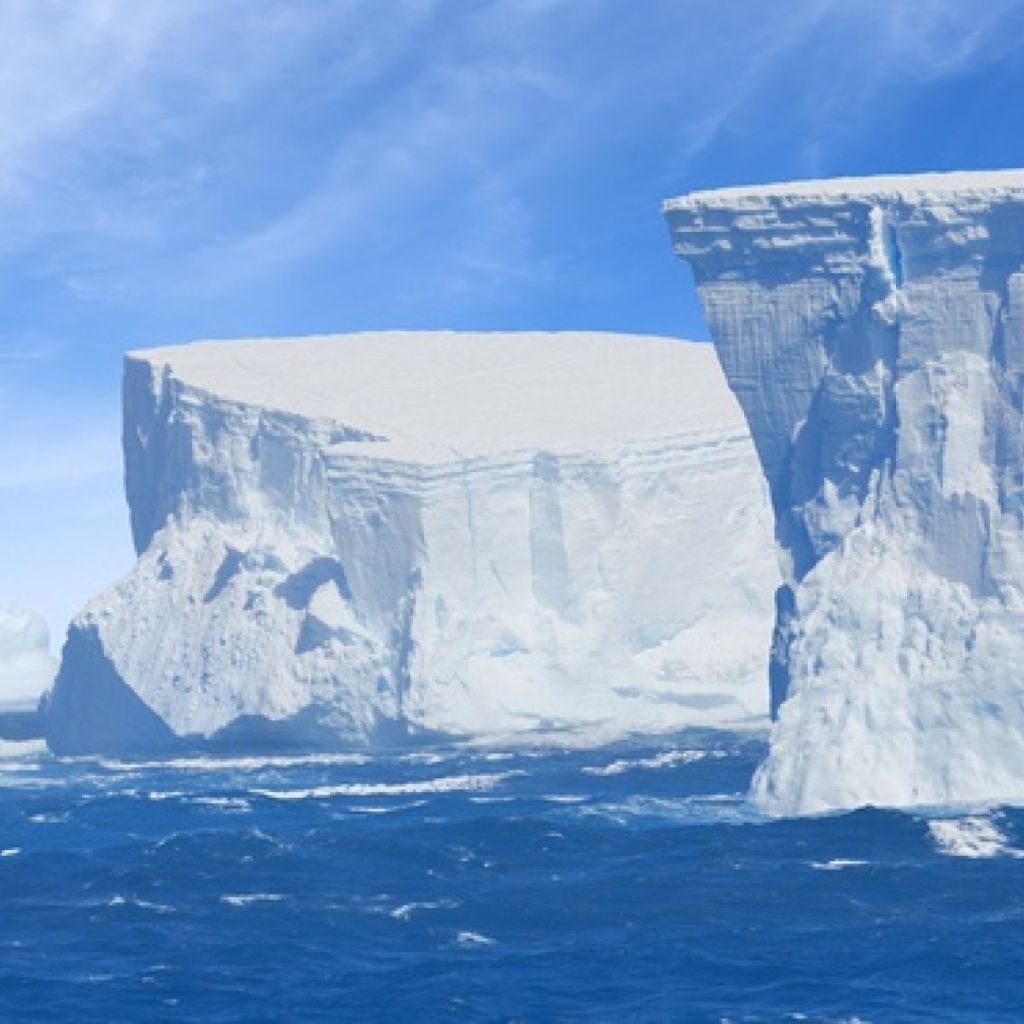
once the ice sheet slides into the ocean, there is no putting it back, even if all carbon emissions ended that day. The ice-sheet holds enough water to raise sea levels by 58 metres. Even if only half of it breaks off, it will be just a waiting game over just a few years for the ice to melt and for us to watch every coastal city on earth to be inundated. In our lifetime.
once the ice sheet slides into the ocean, there is no putting it back, even if all carbon emissions ended that day. The ice-sheet holds enough water to raise sea levels by 58 metres. Even if only half of it breaks off, it will be just a waiting game over just a few years for the ice to melt and for us to watch every coastal city on earth to be inundated. In our lifetime.
Crispin Hull, December 29, 2024
The 2024 award for the biggest disjoin between the importance of a story and the coverage it got must surely go to the science briefing on Antarctica and Sea-Level Rise published by the Australian Antarctic Program Partnership and the ARC Australian Centre for Excellence in Antarctic Science.
It came out in September. The ABC had some coverage, but it seemed to miss some essential points.
Here is what the new science tells us and how it is different from the older science.
The older science tells us that the amount of sea ice in Antarctica is shrinking, but not as badly as in the Arctic. Sea ice expands and contracts quite quickly according to air and sea temperature. So, a gradual reduction in sea ice will mean a gradual and comparatively small rise in sea levels.
This science should be moderately alarming, but the misinformationists in the fossil fuel industry can bat away public fears by saying not much is happening here and it will not happen in your lifetime, so carry on as usual.
This is standard stuff from fossil misinformationists: climate change is not happening, but if it is happening it is part of natural geologic forces and has nothing to do with human-generated carbon, and even if it is caused by human-generated carbon we can develop technologies to capture the carbon and safely store it away.
In short, they base their facts on their desired conclusion that they can continue to make profits from the emission of carbon until ecosystems and economies collapse. When it is too late.
Coming back to Antarctica, earlier science suggested that sea-ice contraction could be reversed if temperatures came down a bit. As it happens sea-ice is an important reflector of solar rays (and heat). Without the sea-ice you have dark ocean which absorbs the rays and increases the heat of the ocean. Nonetheless, it is still a probably reversible process.
Enter the new research. This is about the eastern Antarctic icesheet. Hitherto, this has given climate scientists much less cause for concern. This is because the eastern ice sheet has built up over land. It is anchored.
Unlike sea-ice it is not vulnerable to warmer water melting it.
Picture the land mass and a big thick ice sheet over it. The sea nibbles at the edge and even if the sea is a bit warmer it does not melt much ice. This is not like sea-ice where the warmer water is all around it melting it quickly. So, hitherto scientists have taken some climate solace in the fact that so much ice is safely tied up in the eastern Antarctic ice-sheet (more than 60 per cent of the world’s fresh water) and so will give us more time to slow and reverse the warming of the planet.
Enter the new research. Remove the image of a lump of land mass. Rather picture that the land mass has been forced down by the weight of the ice – heavier at the middle of the land mass and lighter at the edge.
The new science tells us that much of the eastern Antarctic ice-sheet is grounded below sea level. So, one the warmer sea waters get under it, the whole sheet becomes unstable and can slide into the ocean. And even if temperatures are made to fall, the tipping point would have been reached – the warmer sea would have run under the massive ice-sheet, undermining it and making its slide into the ocean inevitable.
And once the ice sheet slides into the ocean, there is no putting it back, even if all carbon emissions ended that day. The ice-sheet holds enough water to raise sea levels by 58 metres. Even if only half of it breaks off, it will be just a waiting game over just a few years for the ice to melt and for us to watch every coastal city on earth to be inundated. In our lifetime.
Once the ice sheet hits the ocean, it is the end of civilisation as we know it.
The ice cannot be put back.
The greater the potential damage the more you should do about it, even if you think the risk is small. This is why people go to a lot of effort to make their houses less exposed to bushfires and cyclones.
It may be that some billionaires might imagine they could set up doomsday retreats to avoid death, injury, and discomfort. They are dreaming. In those circumstances money means nothing and the profit-driven selfishness that drives unnecessarily extending the use of fossil fuel will be brushed aside by the maniac selfishness of those on a desperate if doomed survival mission.
Scientists must change stop their subdued, cautious approach to reporting climate change. It is understandable because scientists do not want to cause panic or unnecessary alarm. But the approach has just given the fossil industry endless free kicks. It is time for alarm and measured panic.
Scientists should stop being scared of publishing scary material in a scary way. It is time to tell people the reality of the biggest security, economic, and existential threat to humans on earth………………………. more http://www.crispinhull.com.au/2024/12/29/scientists-should-break-the-ice/?utm_source=mailpoet&utm_medium=email&utm_campaign=crispin-hull-column
1 This Month


Tell the Ukrainian Government to Drop Prosecution of Peace Activist Yurii Sheliazhenko

Petition to revoke the licensing of the Near Surface Nuclear Disposal Facility (NSDF) at Chalk River. https://www.ourcommons.ca/petitions/en/Petition/Details?Petition=e-7247


of the week – STOP SMALL MODULAR REACTORS IN CANADA
To see nuclear-related stories in greater depth and intensity – go to https://nuclearinformation.wordpress.com
-
Archives
- March 2026 (193)
- February 2026 (268)
- January 2026 (308)
- December 2025 (358)
- November 2025 (359)
- October 2025 (376)
- September 2025 (258)
- August 2025 (319)
- July 2025 (230)
- June 2025 (348)
- May 2025 (261)
- April 2025 (305)
-
Categories
- 1
- 1 NUCLEAR ISSUES
- business and costs
- climate change
- culture and arts
- ENERGY
- environment
- health
- history
- indigenous issues
- Legal
- marketing of nuclear
- media
- opposition to nuclear
- PERSONAL STORIES
- politics
- politics international
- Religion and ethics
- safety
- secrets,lies and civil liberties
- spinbuster
- technology
- Uranium
- wastes
- weapons and war
- Women
- 2 WORLD
- ACTION
- AFRICA
- Atrocities
- AUSTRALIA
- Christina's notes
- Christina's themes
- culture and arts
- Events
- Fuk 2022
- Fuk 2023
- Fukushima 2017
- Fukushima 2018
- fukushima 2019
- Fukushima 2020
- Fukushima 2021
- general
- global warming
- Humour (God we need it)
- Nuclear
- RARE EARTHS
- Reference
- resources – print
- Resources -audiovicual
- Weekly Newsletter
- World
- World Nuclear
- YouTube
-
RSS
Entries RSS
Comments RSS
 nuclear-news