Will the legacy of nuclear power ever disappear from our coasts?
BANNG 17th Dec 2024,
https://www.banng.info/news/regional-life/nuclear-power-legacy/
Andrew Blowers tackles this ongoing question in the December 2024 issue of Regional Life magazine
Back in the last century a fleet of nuclear power stations emerged, their bulky and threatening presence dominating peaceful and often precious, protected coastal environments. Now most have been retired and are in the long process of decommissioning and waste management before all traces of their existence can be erased a century or more from now. Or not…. If plans for new nuclear fructify, then the nuclear presence on our coasts may never disappear.
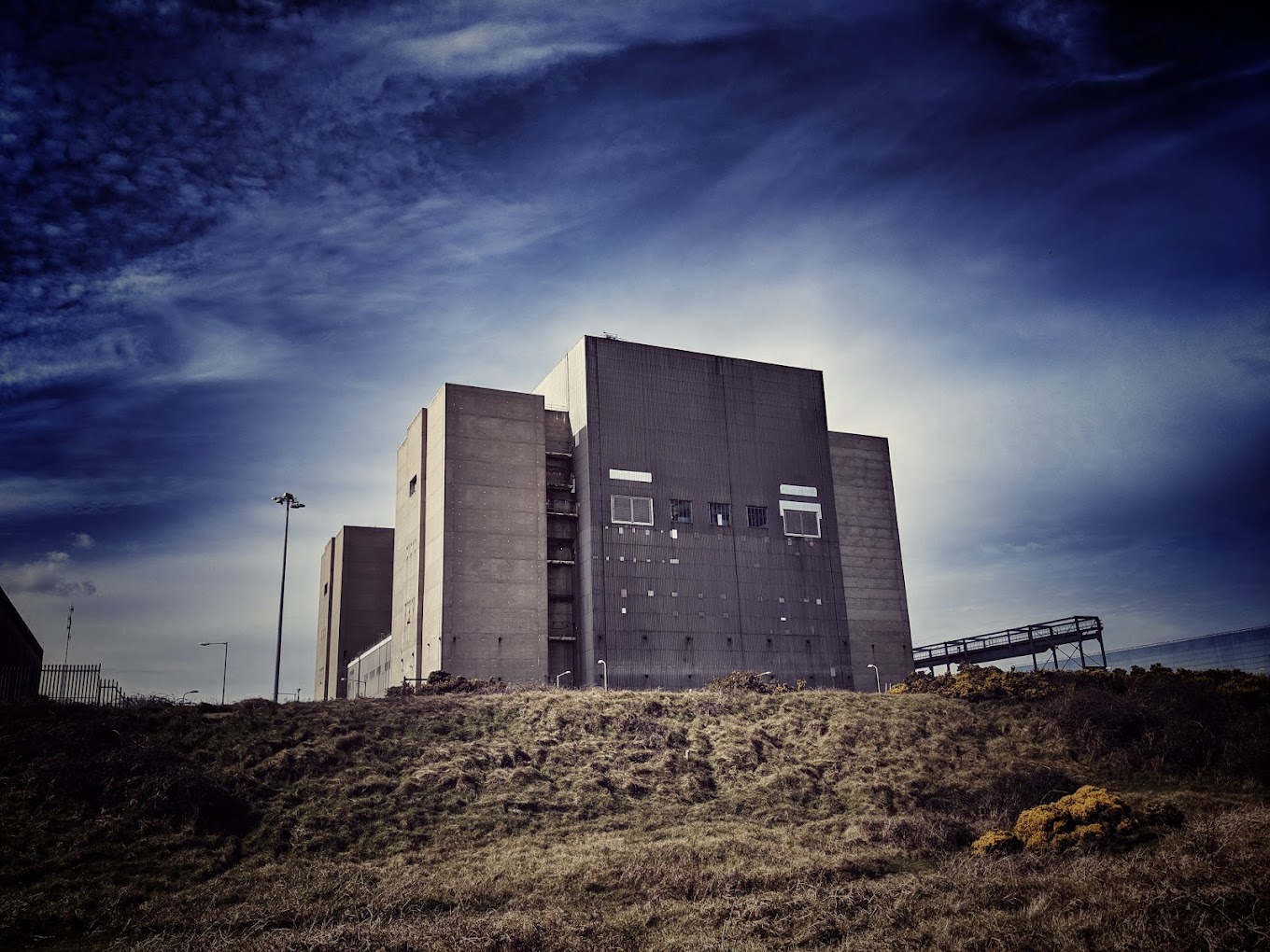
It is a little difficult to recall Bradwell in past times, a sinister presence on the low shoreline, with its silent reactors and the turbines howling throughout the night; its garish lighting polluting the night sky. Today Bradwell power station is silent and in darkness, its turbines demolished and its reactors shrouded within a huge box clad in grey and blue.
The ecological impact of nuclear power stations is both visible and invisible. Within these structures dangerous radioactive wastes are stored for generations and the risks of radioactive releases, accidental or deliberate (cyber, warfare, terrorism) are incalculable. And, in the age of accelerating climate change, these plants are at risk from sea-level rise, storm surges, flooding and erosion which will inflict yet more grief on future populations.
For existing stations and those currently under construction, there are plans to adapt to changing conditions through massive sea defences and removal of the wastes to a deep repository – if a suitable host rock and willing community can be found. This will be a daunting challenge but greatly exacerbated if a fleet of new nuclear stations is built, leaving vast volumes of wastes to be managed indefinitely on vanishing shores into the far future.
Hinkley Point C
The gigantic Hinkley Point C on the Somerset coast is currently the largest construction site in Europe with a 12,000 workforce and drastic shortage of accommodation for local people. Once operating, it will kill millions of fish, sucked in through its cooling water intake pipes. EDF, the developer, is trying to avoid providing mitigating Acoustic Fish Deterrents (AFD), perversely hoping that by the creation of a saltwater marsh, fish and other marine life will automatically migrate there.
New nuclear is already impacting environments in Somerset and the Suffolk coast is afflicted by preparations for Sizewell C.
Sizewell C
The site lies within a designated National Landscape adjacent to the RSPB’s flagship sanctuary at Minsmere as well as to other designated sites. SZC has not yet got the finance to go ahead but the demolition of a treasured woodland and trashing of other areas has already scarred a wide area in preparation for roads, rail lines, transformer buildings. All in advance of a project that may never materialise. These are premature, wanton acts of vandalism.
Fortunately, the destruction already endured in Somerset and that beginning in Suffolk can be avoided in Essex where proposals for a giant, new nuclear power station which would have inflicted untold damage on the marine and terrestrial environments of the Blackwater region were pushed back by BANNG and other stakeholders.
Now nuclear’s moment may be passing and our energy future lies in other directions, far less dangerous and with far less damaging impacts on the environment for future generations to cope with.
No comments yet.
1 This Month

of the week – Shut Down Drone Warfare!


Tell the Ukrainian Government to Drop Prosecution of Peace Activist Yurii Sheliazhenko

Petition to revoke the licensing of the Near Surface Nuclear Disposal Facility (NSDF) at Chalk River. https://www.ourcommons.ca/petitions/en/Petition/Details?Petition=e-7247
To see nuclear-related stories in greater depth and intensity – go to https://nuclearinformation.wordpress.com
-
Archives
- April 2026 (72)
- March 2026 (251)
- February 2026 (268)
- January 2026 (308)
- December 2025 (358)
- November 2025 (359)
- October 2025 (376)
- September 2025 (257)
- August 2025 (319)
- July 2025 (230)
- June 2025 (348)
- May 2025 (261)
-
Categories
- 1
- 1 NUCLEAR ISSUES
- business and costs
- climate change
- culture and arts
- ENERGY
- environment
- health
- history
- indigenous issues
- Legal
- marketing of nuclear
- media
- opposition to nuclear
- PERSONAL STORIES
- politics
- politics international
- Religion and ethics
- safety
- secrets,lies and civil liberties
- spinbuster
- technology
- Uranium
- wastes
- weapons and war
- Women
- 2 WORLD
- ACTION
- AFRICA
- Atrocities
- AUSTRALIA
- Christina's notes
- Christina's themes
- culture and arts
- Events
- Fuk 2022
- Fuk 2023
- Fukushima 2017
- Fukushima 2018
- fukushima 2019
- Fukushima 2020
- Fukushima 2021
- general
- global warming
- Humour (God we need it)
- Nuclear
- RARE EARTHS
- Reference
- resources – print
- Resources -audiovicual
- Weekly Newsletter
- World
- World Nuclear
- YouTube
-
RSS
Entries RSS
Comments RSS
 nuclear-news
Leave a comment