Radioactive sea spray is dosing communities

by beyondnuclearinternational, By Tim Deere-Jones https://beyondnuclearinternational.org/2019/02/17/radioactive-sea-spray-is-dosing-communities/
Governments want to cover it up
I am taking a walk along the path at Manorbier on the south Pembrokeshire coast in Wales. The tomb of King’s Quoit is still in its midwinter shadow. It gets no direct sunlight for 28 days either side of the solstice. And yet the first daffodils and pink campions are already in bloom.
A visit to the tomb on the first day when light returns is a truly amazing sight. It is perched by fresh running water, on the edge of cliffs, just above the sea. You can smell the salt in the air, and feel the mist of sea spray blown in by the prevailing onshore winds.
And yet in some coastal areas such a moment may not be as idyllic as it seems.
It is clear from the available empirical data that coastal populations impacted by prevailing onshore winds and living next to sea areas contaminated with liquid radioactive effluents from nuclear sites, are annually exposed to dietary and inhalation doses of man-made marine radioactivity.
Effluents discharged to the sea by nuclear power stations, fuel fabrication sites and reprocessing facilities are transferred from sea to land in airborne sea spray and marine aerosols (micro-droplets). They come in also during episodes of coastal flooding.
This problem has been particularly pronounced around the UK Sellafield reprocessing and plutonium production site in Cumbria. In 1988, independent empirical research commissioned by a west Wales local authority reported that Sellafield-derived, sea-discharged cesium had been found in pasture grass up to 10 miles inland of the Ceredigion coast.
Clearly, this contributes to human dietary doses via the dairy and beef food chain. The research also implies the inevitability of further dietary doses via arable and horticultural crops. Given that airborne radioactivity is driven at least 10 miles inland, it should be assumed that coastal populations are exposed, on a repeated annual basis, to inhalation doses.
Independent, empirical field research by a team of doctors (general practitioners) in the Hebrides off the Scottish coast, has shown broadly similar, but more detailed results and demonstrated that island and coastal environments are saturated with sea-borne cesium from distant sources.
The GP’s research demonstrated that those who ate more “local” terrestrial produce had higher doses of Sellafield sea discharged cesium-137 than those who ate “non-local” produce.
Some island residents received higher doses of Sellafield derived, sea discharged cesium, from their locally grown terrestrial produce, than from sea foods. The same residents received higher doses from their terrestrial produce than some sea food-eating populations living adjacent to nuclear pipelines discharging liquid waste to the sea.
Given the available evidence of the West Wales study, it is logical to propose that the same would apply in that case.
Early research on this in the UK was initiated by the nuclear industry and pro-nuclear governments, acting through the UK Atomic Energy Agency (UKAEA). In the late 1970s and early ‘80s the agency researched the sea to land transfer of the alpha emitting plutoniums (Pu) 238, 239, and 240 and americium (Am) 241, and the beta emitting cesiums (Cs) 134 and 137, across the Cumbrian coast near Sellafield.
The UKAEA work confirmed that all five radionuclides studied transferred readily from the sea to the land in onshore winds. In wind speeds of less than 10 metres per sec (22 mph) cesium was enriched in spray and marine aerosols with enrichment factors (EFs) of around 2.
However, the alpha emitting plutonium and americium were shown to have EFs, relative to filtered ambient seawater, of up to 800. The alpha emitters were found to be associated (by Ad-sorbtion) with micro particles of sedimentary and organic material suspended in the marine water column and ejected into the atmosphere, as aerosols, by bursting bubbles at sea and at the surf line.
However, once the sea to land transfer of alpha emitters with massive enrichments was confirmed, such studies were rapidly abandoned and virtually no empirical field work on the extent of the inland penetration of spray and aerosols and human doses and exposure pathways has been completed by “official” sources.
Furthermore, of the 70 + radionuclides known to be discharged to sea from UK nuclear sites, only the five named radionuclides have ever been researched for their sea to land transfer potential.
I have no doubt that this is a global phenomenon and that the various mechanisms of sea to land transfer are not unique to the UK. However, I have observed that the scientific literature on the subject appears to be restricted to the output of UK official (pro-nuclear) and independent (non-aligned) researchers and that, to date, no other sources of such research have been identified.
The UK Government and a number of its departments and its environmental regulatory agencies are aware of the concerns discussed above, but appear to prefer a cover-up rather than an open discussion. The UK research itself was terminated within a few years of its inception and, coupled with the absence of any similar research in other “nuclear states”, it is my assumption that the international nuclear community has no interest in promoting such work and is happy to see the whole issue sidelined and downplayed.
Tim Deere-Jones was educated at the Cardiff University (Wales): Department of Maritime Studies, where his research dissertation was on the Sea to Land Transfer of Marine Pollutants. He has been working as a “non-aligned” marine pollution researcher and consultant since 1983 and has worked with major NGOs and campaign groups in the UK, Europe, the US and Australia. Tim has a particular field and research interest in the behavior and fate of anthropogenic radioactivity released/spilled into marine environments.
Read Tim’s full report with citations here.
Netanyahu Takes Credit for Assad’s Overthrow, Israel Seizes Golan Heights ‘Buffer Zone’
December 9, 2024 By Dave DeCamp / Antiwar.com
Israeli Prime Minister Benjamin Netanyahu on Sunday celebrated the overthrow of Syrian President Bashar al-Assad by al-Qaeda-linked militants and confirmed that Israel has seized a buffer zone inside Syria that separates the Israeli-occupied Golan Heights from the rest of Syria’s territory.
“This is a historic day in the history of the Middle East,” Netanyahu said during a visit to the Golan Heights. “The Assad regime is a central link in Iran’s axis of evil — this regime has fallen.”
Netanyahu credited Israel with setting off the process that led to the downfall of Assad. In the months leading up to the offensive launched by Hayat Tahrir al-Sham (HTS), Israel was waging a war against Hezbollah and ramped up airstrikes in Syria.
“This is a direct result of the blows we have inflicted on Iran and Hezbollah, the main supporters of the Assad regime,” Netanyahu said. “This has created a chain reaction throughout the Middle East of all those who want to be free from this oppressive and tyrannical regime.”
The Israeli leader also said he directed the Israeli Defense Forces (IDF) to capture the buffer zone in Syria. “Together with the Defense Minister, and with full backing from the Cabinet, I directed the IDF yesterday to take control of the buffer zone and the dominant positions near it,” he said. “We will not allow any hostile force to establish itself on our border.”
The buffer zone Israel has seized has been patrolled by a UN peacekeeping force, known as UNDOF, since 1974. Netanyahu declared that the agreement establishing the buffer zone and UNDOF has now “collapsed.”
The New York Times later reported that Israeli troops had entered Syrian territory beyond the buffer zone and took control of several locations. Israel also pounded Syria with airstrikes on Sunday, targeting dozens of military and government sites. Israeli officials said the purpose of the attacks was to prevent weapons from ending up in the hands of hostile forces.
There are signs that Israel had been planning to make a move on the buffer zone before the Assad government collapsed. The Associated Press reported that Israel began construction along the buffer zone, citing satellite images. After the report, UNDOF warned that Israel was committing “severe” violations of the deal with Syria that established the buffer zone.
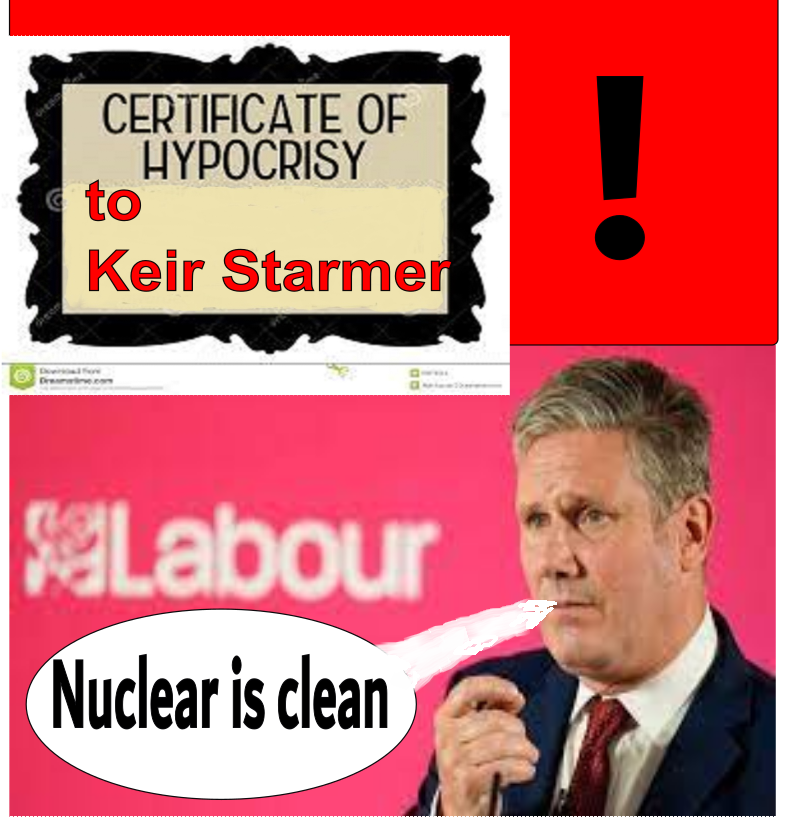
Starmer to court UAE for British nuclear power investment
The Prime Minister is expected to tell sovereign wealth fund bosses ‘you can trust us’ on Sizewell C
Matt Oliver, Industry Editor,
https://www.telegraph.co.uk/business/2024/12/07/starmer-to-court-uae-for-sizewell-c-nuclear-investment/
Sir Keir Starmer will court the powerful bosses of United Arab Emirates’ (UAE) sovereign wealth funds this week as he seeks to raise funding for the Sizewell C nuclear project.
On a tour of the Gulf, the Prime Minister is expected to court investment into British infrastructure, including the proposed nuclear power plant on the coast of Suffolk.
His visit will include a meeting with representatives from Mubadala, one of Abu Dhabi’s sovereign wealth funds, sources told The Telegraph.
Those present are expected to include Khaldoon Al Mubarak, Mubadala’s chief executive and the right-hand man to Sheikh Mansour bin Zayed Al Nahyan, the UAE vice president and Manchester City football club owner.
A source said the message would be “you can trust us”, amid concerns about the long-term commitment of successive UK administrations both to nuclear power and major infrastructure schemes.
Downing Street declined to comment. Mubadala was approached for comment.
It comes as the Government seeks to get more investors on board with Sizewell C, after a capital raise process that has dragged on longer than originally anticipated.
Five potential backers are still in the running officially, the boss of Sizewell C confirmed on Thursday.
They are thought to include British Gas owner Centrica, the Emirates Nuclear Energy Corporation (Enec), Schroders Greencoat and Amber Infrastructure Group.
However, sources familiar with the situation said the Government hoped additional investors may contribute cash by teaming up with those already involved in the process.
Mubadala may channel funds into Sizewell via Enec, for example. The UAE companies have teamed up to invest in numerous other global projects in the past, one industry insider said.
Ministers previously hoped to take a final investment decision on Sizewell C by the end of this year but it was confirmed in the Budget that it would not happen until the spring, with the project’s fate now understood to be tied up with Chancellor Rachel Reeves’s spending review.
A key issue ministers are grappling with is the need to put the full cost of the Sizewell project – which could be anything between £20bn and £40bn – on the public balance sheet, despite the Government’s intention to sell a significant portion of shares in the project to outside investors.
Currently, the Government owns more than 80pc of the equity, with the French state nuclear giant EDF owning the rest.
Hinkley dilemma
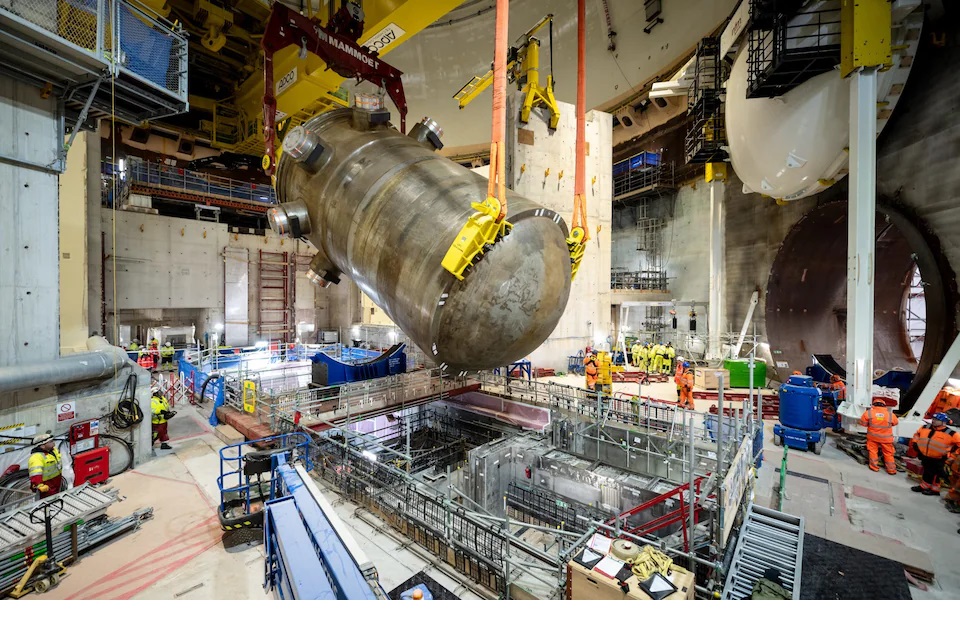
Elsewhere, ministers also face a dilemma over the Hinkley Point C plant in Somerset.
The project, which is majority-owned by EDF, is grappling with a £5bn funding shortfall after co-investor China General Nuclear refused to put in more cash.
That followed the Government’s decision to block Chinese involvement in Sizewell C and other future nuclear projects amid national security concerns.
EDF has called on the UK to step in and help support the project, a suggestion that ministers have so far resisted, with Paris said to be reluctant to put more money into the plant. Hinkley is on course to open years late and cost up to £45bn – far more than planned.
The Telegraph revealed in October that Centrica had emerged as a potential white knight investor in Hinkley, as the electricity supplier looks to replace income generated by other British nuclear plants it owns stakes in as they close.
Assad Is Out, Woke Al-Qaeda Is In
Caitlin Johnstone, Dec 08, 2024
Well it looks like the government of Syrian president Bashar al-Assad is on its way out, likely to be replaced by one or more US puppet regimes depending on whether the nation maintains its current borders or is carved up into separate states. The empire notches another win.
I am not a military analyst, but analysts who are normally supportive and optimistic in favor of Assad like Elijah Magnier and Pepe Escobar are saying this is the end. Assad’s whereabouts are unknown as Turkish-backed fighters and al-Qaeda-linked forces with a history of western backing have swept through the country with alarming speed, and now Russia and Iran have joined with the governments of US-aligned nations like Saudi Arabia, Egypt, Jordan and Turkey in calling for an end to the fighting in favor of a political solution. CNN reports that opposition forces have entered Damascus in search of Assad, and footage reportedly shows Assad forces retreating from the area where the president’s main residence is located.
The US proxy warfare in Lebanon and Ukraine makes a lot more strategic sense now; by tying up Hezbollah and Russia in other conflicts, the path was opened up for another run on Damascus and a chance to further cut off Hezbollah from supplies. Many pundits on my end of the commentary spectrum had been calling those proxy wars self-defeating and framing them as the desperate flailings of a dying empire which will only accelerate its demise, but now here we are watching the empire score a victory it’s been chasing for years, with the western/Israeli stranglehold on the middle east growing tighter than ever.
Meanwhile the press is falling all over itself to support this regime change by promoting the narrative that al-Qaeda is woke now.
CNN just released a coddling softball interview with Abu Mohammed al-Jolani, the former ISIS and al-Qaeda member who leads the Syrian opposition group Hayat Tahrir al-Sham, which is itself a rebranded offshoot of al-Qaeda in Syria. Jolani told CNN that he has reformed from his radical ways of the past, saying, “Sometimes it’s essential to adjust to reality,” adding, “someone who rigidly clings to certain ideas and principles without flexibility cannot effectively lead societies or navigate complex conflicts like the one happening in Syria.”
Now the imperial press are full of headlines like “How Syria’s rebel leader went from radical jihadist to a blazer-wearing ‘revolutionary’” from CNN, “Syria’s rebel leader Golani: From radical jihadist to ostensible pragmatist” from The Times of Israel, and “How Syria’s ‘diversity-friendly’ jihadists plan on building a state” from The Telegraph.
Only a matter of time before we start seeing former ISIS and al-Qaeda members chatting it up on liberal western talk shows with their preferred gender pronouns listed next to their names.
As luck would have it, these “diversity-friendly jihadists” have been telling the Israeli press that they “love Israel” and won’t do anything to harm its interests, so it’s safe to say that this “revolution” has been about as organically grown as a sheet of crystal meth.
One of the many perks of being the world’s dominant superpower is that it gives you the luxury of time. If one regime change operation fails, don’t worry, you can just move some chess pieces around and take another shot at it. If a coup attempt fails in Latin America, relax, there will be other coup attempts. If your efforts to grab Syria fail, you can just smash it with sanctions and occupy its oil fields to impoverish it while overextending its military allies in proxy conflicts elsewhere and grab it later.
A good kickboxer throws many combinations with the understanding that most strikes will miss or be blocked or cause minimal damage, trusting that eventually the one knockout blow will get through.
No empire lasts forever, but there’s no evidence that this one is going away any time in the immediate future. This ugliness could conceivably drag itself out for generations.
How a uranium mine became a pawn in the row between Niger and France

Paul Melly, BBC 8th Dec 2024
In the latest sign of a dramatic deterioration in relations, Niger’s military rulers appear increasingly determined to drive France out of any significant sector in their economy – and particularly uranium mining.
This week the French state nuclear company Orano announced that the junta – which deposed France’s ally, President Mohamed Bazoum, in a coup in July 2023 – had taken operational control of its local mining firm, Somaïr.
The company’s efforts to resume exports have for months been blocked by the regime and it is being pushed into financial crisis.
And the impact could be felt more widely – although Niger accounts for less than 5% of the uranium produced globally, in 2022 it accounted for a quarter of the supply to nuclear power plants across Europe.
So the timing could hardly be more awkward, as Western countries struggle to meet the challenge of climate change and cut their carbon emissions from electricity generation.
For French President Emmanuel Macron, already wrestling with political crisis at home, the potential departure of Orano from Niger is certainly awkward in image terms…………………………………………………………………………………………………………
In this poisonous atmosphere of hostility and mistrust, Orano was an obvious and convenient target for junta retaliation.
The French company’s predominant role in the uranium sector had for years fuelled resentment among many Nigériens, amidst claims that the French company was buying their uranium on the cheap, despite periodic renegotiations of the export deal. Although the mining operations only started years after independence, they were seen as emblematic of France’s ongoing post-colonial influence.
……………….Niger’s junta feels no need to make concessions to Orano because it is now buoyed by a sharp rise in oil exports, thanks to a new Chinese-built pipeline.
With that financial cushion, the regime appears prepared to bear the cost of paralysing and probably dismantling the traditional uranium partnership with France – now its main international opponent.
https://www.bbc.co.uk/news/articles/czjd70mzge2o
Ed Miliband to bring more misery for Brits and send bills skyrocketing

New projects could be launched by Ed Miliband – and they will hit British taxpayers in the pocket.
By Tom Burnett, Dec 7, 2024 ,
https://www.express.co.uk/news/politics/1985657/ed-miliband-nuclear-energy-costs-bills-rising
Ed Miliband could be about to send energy bills soaring – as he confirms plans for new major nuclear projects in the UK.
The Energy and Net Zero Secretary has said nuclear power is vital for Labour’s Net Zero plans, and that his ‘door is open’ to tech companies hoping to build ‘modular’ reactors in Britain.
Mr Miliband has argued these projects could deliver ‘big returns’ for the country, and said the Government is exploring how it can help private developers bring advanced nuclear projects to market and ia consulting on a new nuclear planning framework and siting policy next year.
However, bosses at interested firms are reportedly calling for some assurance of financial support to make sure their projects get a minimum return.
While it is currently unclear precisely how these would be funded, the Telegraph reports that options include ‘regulated asset base scheme’ or contracts for difference that are currently awarded to wind and solar farms.
The ‘regulated asset base’ scheme allows investors to begin clawing costs back via customer bills before a project is completed – leading to concerns people could be hit in the pocket.

Speaking at the Nuclear Industry Association’s Nuclear 2024 conference on Thursday, Mr Miliband said: “Of course, it’s early days but we should be open to the potential of SMRs to power the fourth industrial revolution, just as coal powered the first.
My message is clear: if you want to build a nuclear project in Britain, my door is open. My department is listening.
“We want all your ideas for projects that can work and provide value for money.”
Great British Nuclear, a public body which helps bring forward new nuclear energy projects, has started negotiations with four bidders for the UK’s small modular reactor programme, and final decisions are due in spring.
Mr Miliband he was “delighted” that four of Britain’s five nuclear power stations will stay open longer than previously planned, as announced by their operator EDF.
Heysham Two, in Lancashire, and Torness in East Lothian will keep producing electricity for an extra two years until March 2030, while Heysham One and another station in Hartlepool, north-east England, will produce power until March 2027, a year extension.
Radioactive contamination halts work on SSEN subsea link near Dounreay
By Iain Grant, John O’Groat Journal 6th Dec 2024
Work on part of the mainland link of SSEN Transmission’s new high voltage cable between Orkney and Caithness has been suspended because of the presence of radioactive contamination.
The company has been required to have extra monitoring carried out before it resumes work on its new substation near the Dounreay nuclear plant.
A spokesperson said: “We have identified the need for monitoring for radioactivity to be undertaken at the site where the substation will be constructed.
“The monitoring is needed due to the proximity of the site to Dounreay.
“Following the identification of radium contamination at the site, SSEN has stopped work while it acquires an Environmental Scotland authorisation permit. “A permit is needed due to the presence of radium contamination at depths as the planned excavation work is beyond these depths.”……………………..https://www.johnogroat-journal.co.uk/news/radioactive-contamination-halts-work-on-ssen-subsea-link-nea-368353/
The growing arsenals

by beyondnuclearinternational, https://beyondnuclearinternational.org/2024/12/08/the-growing-arsenals/
We must quickly realign priorities before nuclear weapons are used, writes M.V. Ramana
The relationship between nuclear weapons and human security is similar to that of the relationship between economic inequalities and social justice: if you have the first, the second is very difficult to obtain. Jacqueline Cabassso and Ray Acheson.
For the vast majority of the world’s people, the most important impact of the possession of nuclear arsenals by some of the most powerful countries has been the danger of instant and painful death. In the words of psychologist Robert Jay Lifton: “The central existential fact of the nuclear age is vulnerability.”
This vulnerability has become more apparent in recent years. In the last 16 months, the world has witnessed government officials from Russia (Dmitry Medvedev) and Israel (Amihai Eliyahu) threatening to use, or calling for the use of, nuclear weapons against the people of Ukraine and Gaza respectively. The rulers of these countries have already shown the willingness to kill tens of thousands of civilians.
The ‘uses’ of nuclear weapons
What these recent invocations of nuclear threats illustrate is that nuclear weapons are most ‘useful’ to nuclear-armed aggressors to intimidate those they attack and all who might aid them. All countries possessing nuclear weapons make plans for using nuclear weapons under some contingency or the other. As British historian E. P. Thompson once noted, “It has never been true that nuclear war is ‘unthinkable’. It has been thought and the thought has been put into effect.”
There are other uses for nuclear weapons. In his book, The Doomsday Machine, Daniel Ellsberg, best known for sharing the secret study of the U.S. Department of Defense on the Vietnam War – the Pentagon Papers – with the media, documents twenty-five instances when U.S. presidents have repeatedly used their nuclear weapons to coerce other governments into acting in ways they do not want to. This, Ellsberg argued, was also use of nuclear weapons in the same way “that a gun is used when you point it at someone’s head … whether or not the trigger is pulled.”
Despite countries trying to justify their nuclear weapons by claiming that they are for deterrence, the beneficiaries of any such property are not the people. When the World Court was deliberating on the question of the legality of nuclear weapons in the 1990s, India – before it declared itself to be a nuclear weapon state in 1998 – described the practice of nuclear deterrence as being “abhorrent to human sentiment since it implies that a state if required to defend its own existence will act with pitiless disregard for the consequences to its own and adversary’s people.”
This statement, besides stating how India once upon a time viewed nuclear deterrence, also points to a deeper reality: It is not threats to the people of a country that may result in the use of nuclear weapons; it is threats to the State. And the statement makes it clear that the interests of the State are not the same as that of the people; people can be sacrificed for the State.
Justifications for nuclear weapons often invoke the idea that these are necessary for national security. This ill-defined concept allows those in power to pass on their interests as the interests of the people living in the country.
Nuclear weapons are inimical not just to security but also to democracy. They are deeply implicated in the processes that perpetuate inequalities of power, both among and within states. Nuclear weapons are inherently undemocratic, with layers of secrecy surrounding activities. Decisions – be they about development of nuclear weapons capability, or about how many and what kinds of nuclear weapons to develop, or about how to plan for their utilization, or about their actual use – are never made in consultation with the public. Entities like the scientific and technical laboratories and the military involved in their development and deployment benefit from seemingly unlimited financial resources and overwhelming political power. Any society that desires to be open, or liberal, or progressive will find those values being undermined – or more accurately, further undermined – if it acquires nuclear weapons.
Nuclear weapons and the two freedoms
Nuclear weapons, and all of the multiple layers of violence underlying these means of mass destruction, are clearly inimical to people being free of fear. The rational response to the fact that countries possess these sophisticated means of killing and maiming is to be afraid.
At the same time, merely the absence of fear will not result in real peace or security. In 1945, when the United Nations was being founded, the American secretary of state, Edward R. Stettinius, wrote: “The battle of peace has to be fought on two fronts. The first is the security front where victory spells freedom from fear. The second is the economic and social front where victory means freedom from want. Only victory on both fronts can assure the world of an enduring peace.”
This dual basis of peace is reflected in the concept of human security, as laid out in the 1994 Human Development Report that calls for both ‘freedom from fear’ and ‘freedom from want’. How do nuclear weapons and the many other technologies used to carry out widespread killing affect the latter?
In any country or society that invests heavily in armaments, individuals and communities will necessarily suffer from wants of all kinds. That large amounts of money are spent on such pursuits makes it less likely that there will be resources to meet the basic needs of people so that they can enjoy ‘freedom from want’.
According to the International Campaign to Abolish Nuclear Weapons, the nine nuclear-armed states spent a combined total of over 91 billion US dollars in 2023 on nuclear weapons. The spending has been increasing over the years, with an increase of over 10 billion US dollars just in 2023. The United States alone spent over 51 billion US dollars. The cost is expected to go up in the coming years and the Congressional Budget Office estimates that the United States will spend 756 billion US dollars over the next ten years (2023-2032).
These large amounts of money are being used for developing the most destructive of weapons even as there are pressing human needs around the world. For example, the United Nations World Food Program estimate of the yearly cost “to feed all of the world’s hungry people and end global hunger by 2030” is 40 billion US dollars – just over half of the average annual expenditure of 75.6 billion US dollars projected for the U.S. nuclear arsenal.
Expenditure on nuclear arsenals is not the whole story. Nuclear weapons are not developed or deployed in a vacuum. Countries that possess nuclear weapons, and those that want to possess them, all have bloated militaries too. Although nuclear weapons might be the most destructive in their military arsenals, countries that possess nuclear weapons have far more often used other weapons to kill and maim people. Both of the countries mentioned earlier engaged in active wars, Russia and Israel, have used multiple ways to slaughter Ukrainians and Palestinians (not to mention the Lebanese), while nuclear weapons have only been invoked verbally, at least so far.
Yet again, the amounts of money spent on these weapons is obscenely large. According to the Stockholm International Peace Research Institute (SIPRI), world military expenditures reached over 2,443 billion US dollars in 2023 – the highest it has ever been since the institute began recording data in the last 1980s. Four of the five countries with the largest military budgets, and six of the ten countries with the largest budgets, possess nuclear weapons. The other countries in that obscene list are in military alliances or negotiating one with nuclear weapon states.
These figures only focus on direct military equipment and operations. But today’s wars involve much more. While bombs and missiles are often the proximate cause of death and destruction, their use is guided by sophisticated forms of information technology. For example, artificial intelligence programs like Lavender and Where’s Daddy and Habsora (The Gospel) have been used by Israel to decide which individuals and buildings in Gaza are to be targeted for killing. And the U.S. Department of Defense is spending billions (for example) in having companies apply AI to other aspects of warfare.
What countries and private corporations spend on developing such sophisticated technologies does not contribute to people’s freedom from want either. Because research and development on these technologies cut across government and corporate lines, and because companies and governments rely on claims about civilian applications of these technologies, there are no reliable estimates on how much is spent on such efforts. But without a doubt, there are tremendous opportunity costs resulting from this kind of spending.
Weapons as a reflection of priorities
Notwithstanding these monetary comparisons, the problem of military spending cannot and should not be reduced to a ‘guns versus butter’ question as disarmament activist Andrew Lichterman has emphasized. These reflect much deeper societal and political forces – which are also at the base of the rise of power of authoritarian nationalists in many countries around the world.
The connections between governments developing the means to kill large numbers of people and the drying up of resources for human development remains a subject to be explored more deeply. Pakistani scholar Sadia Tasleem has argued that it is the responsibility of intellectuals “to investigate and bring forth the myriad ways in which nuclear policies are connected to various aspects of social and political life and to uncover the dynamics that perpetuate the already existing grave inequalities of power and wealth undermining human security at multiple levels.” Even among those interested in disarmament, the intellectual effort invested in uncovering these connections, especially at the deeper level of underlying social and political forces, has remained far more meagre than the intellectual effort invested in documenting the real or hypothetical destructive effects of weapons.
Ultimately, nuclear weapons and the development of other means of destroying people is a matter of justice and human security, and a reflection of the priorities of governments and powerful institutions that control decisions on spending. These misplaced priorities are what Martin Luther King warned about in his 1967 Beyond Vietnam speech: “When machines and computers, profit motives and property rights are considered more important than people, the giant triplets of racism, materialism, and militarism are incapable of being conquered.” Those giant triplets are yet to be conquered, because capital, profit, and property continue to be valued more than people are by governments, which prioritize the security of the state above the security of individuals and communities.
Figuring out how to realign priorities is a critical question for our times, dealing as we are with vast social inequalities and multiple cascading ecological crises. Not to mention the possibility of the use of the large nuclear arsenals that are growing in size and destructiveness.
M. V. Ramana is the Simons Chair in Disarmament, Global and Human Security at the School of Public Policy and Global Affairs, University of British Columbia. His latest book is Nuclear Is Not The Solution. The Folly of Atomic Power In The Age Of Climate Change, available from Verso Books.
1 This Month

of the week – Shut Down Drone Warfare!


Tell the Ukrainian Government to Drop Prosecution of Peace Activist Yurii Sheliazhenko

Petition to revoke the licensing of the Near Surface Nuclear Disposal Facility (NSDF) at Chalk River. https://www.ourcommons.ca/petitions/en/Petition/Details?Petition=e-7247
To see nuclear-related stories in greater depth and intensity – go to https://nuclearinformation.wordpress.com
-
Archives
- March 2026 (244)
- February 2026 (268)
- January 2026 (308)
- December 2025 (358)
- November 2025 (359)
- October 2025 (376)
- September 2025 (257)
- August 2025 (319)
- July 2025 (230)
- June 2025 (348)
- May 2025 (261)
- April 2025 (305)
-
Categories
- 1
- 1 NUCLEAR ISSUES
- business and costs
- climate change
- culture and arts
- ENERGY
- environment
- health
- history
- indigenous issues
- Legal
- marketing of nuclear
- media
- opposition to nuclear
- PERSONAL STORIES
- politics
- politics international
- Religion and ethics
- safety
- secrets,lies and civil liberties
- spinbuster
- technology
- Uranium
- wastes
- weapons and war
- Women
- 2 WORLD
- ACTION
- AFRICA
- Atrocities
- AUSTRALIA
- Christina's notes
- Christina's themes
- culture and arts
- Events
- Fuk 2022
- Fuk 2023
- Fukushima 2017
- Fukushima 2018
- fukushima 2019
- Fukushima 2020
- Fukushima 2021
- general
- global warming
- Humour (God we need it)
- Nuclear
- RARE EARTHS
- Reference
- resources – print
- Resources -audiovicual
- Weekly Newsletter
- World
- World Nuclear
- YouTube
-
RSS
Entries RSS
Comments RSS
 nuclear-news