Nuclear energy debate draws stark gender split in Australia ahead of next year’s election.

Lisa Cox, 5 Dec 24, https://www.theguardian.com/environment/2024/dec/04/nuclear-energy-debate-draws-stark-gender-split-in-australia-ahead-of-next-years-election
Survey finds 25 percentage point gender gap across all age brackets on whether nuclear power would be positive for the country, with majority of men saying it would.
New data points to a stark gender split in attitudes towards nuclear energy, with women much more likely to say they don’t support it or think the risks are too great.
Research company DemosAu surveyed 6,000 people on behalf of the Australian Conservation Foundation and found 26% of women thought nuclear energy would be good for Australia, compared with 51% of men.
DemosAu head of research, George Hasanakos, said the 25 percentage point gender gap was “the sharpest divide in attitudes between men and women” that the research firm had seen on any issue.
The polling found the split was pronounced regardless of the age of the people surveyed, with young men and women just as divided as those from older generations.
While 51% of men agreed nuclear energy would be good for Australia, that support dropped when asked if they would be happy to live near a nuclear plant.
A reported 38% of men agreed they would support a nuclear plant being located close to their city, with 44% disagreeing and 18% neutral. Among women, just 18% agreed they would be happy to have a nuclear plant near their city, with 63% disagreeing and 19% neutral.
“Men support nuclear much more than women,” the ACF chief executive, Kelly O’Shanassy, said.
“But as soon as you ask men more details such as ‘Would you be happy to live next door to a plant?’ or ‘Do you think one will be built within the next decade?’ – that level of support really comes down.”
The report found female respondents were more likely to answer “neutral” compared with male respondents. It identified this as both “a risk and opportunity for campaigners on both sides of the issue” as Australia approaches a federal election but said pro-nuclear campaigners would have to contend with widely held safety concerns about nuclear among women.
On the subject of transporting nuclear waste, the poll found 57% of women and 43% of men said it wasn’t worth the risk.
The prime minister, Anthony Albanese, has said the next election will be a referendum on nuclear power.
The Coalition has proposed seven sites where it says it would eventually replace coal-fired power plants with nuclear plants but not how much this would cost. The government has rejected the idea and the federal House of Representatives is conducting an inquiry into the consideration of nuclear power in Australia.
Multiple energy analysts have argued nuclear energy would be more expensive than other options and a nuclear industry would not be possible in Australia until after 2040.
O’Shanassy said among the report’s more interesting findings was that despite the gender gap on many aspects of nuclear, men and women were aligned in the view that renewables were cheaper.
A reported 47% of men agreed renewables would deliver cheaper energy, compared with 31% who disagreed (with 22% neutral).
While 47% of women also agreed renewables would deliver cheaper energy, 20% disagreed and 33% were neutral.
In separate data, the climate advocacy organisation 1 Million Women surveyed an additional 3,351 women among its own supporters and found 93% were concerned about nuclear.
“Nuclear energy is a distraction to meaningful climate solutions and women don’t have the time or patience to entertain the Coalition’s proposal,” its founder, Natalie Isaacs, said.
Tony Blair think tank says UK needs to build new nuclear ‘at pace’.

“The latest example is today’s report for the Tony Blair Institute – which effectively ignores the poor comparative performance, costs and build times, of nuclear compared to zero carbon alternatives.“
“If it is inadvertently deceived by military pressures into ignoring the real growing obsolescence of nuclear power in the face of renewable alternatives, then
democracy itself is at risk.”
By Tom Pashby New Civil Engineer 2nd Dec 2024
The UK needs to build new nuclear “at pace” if it wants to remain competitive against similar countries pursuing nuclear power programmes, according to a report from the Tony Blair Institute for Global Change (TBIGC).
It structured its recommendations to the UK Government around
three main points. The first was that the UK should “create a modernised,
streamlined and efficient planning and regulatory regime for new nuclear
technologies. This would reduce delays and enhance the standardisation
required to unlock new low-cost projects at scale.”
It specifically called out the Office for Nuclear (ONR) Regulation, the UK Government’s
nuclear sector regulator, saying it recommended that the government require
the ONR “to regard approval of a single reactor as the basis for fleet
approval, to standardise design across deployment.” It also suggested:
“Introducing a two-year limit for the ONR and Environment Agency to
license nuclear reactors that are similar to previously licensed
designs.”
The report continued in its recommendations: “Second, the UK
government should use the conclusion of its ongoing SMR competition to help
kick-start the SMR pipeline.” It said this would “create options” for
the government to buy SMR capacity for use on the national grid.
And third, it said: “The government should deepen the UK-US partnership on SMR and
the deployment of advanced modular reactors (AMRs), also known as Gen IV
reactors, including cooperation on fuels, financing and supply-chain
development.”
Nuclear Free Local Authorities (NFLAs) says it is “the
voice for local authorities opposed to civil nuclear power and in favour of
renewables.” NFLAs policy adviser Pete Roche said: “Tony Blair’s
Institute is clearly not keeping up with the latest research which shows
that 100% renewable energy scenarios are perfectly feasible, require less
energy, cost less and create more jobs than business as usual scenarios.
“Instead it has fallen for a fantasy promoted by the nuclear industry
which can only increase our electricity bills and will fail to reduce
carbon emissions in time to protect us from rising temperatures.”
Academic says case for nuclear ‘at its weakest’ University of Sussex
professor of science and technology policy Andy Stirling said: “Whatever
opinion is held on issues around nuclear power, the same simple question
pops up, ‘Why has support for nuclear power grown most noisy, just as the
case is at its weakest?’
“The latest example is today’s report for
the Tony Blair Institute – which effectively ignores the poor comparative
performance, costs and build times, of nuclear compared to zero carbon
alternatives. “Over the past two decades, the relative competitiveness of
nuclear power and renewables-based zero carbon strategies has shifted
massively in favour of the latter.
As a recent Royal Society report
confirms, there is no level of nuclear contribution to UK electricity
supply that does anything other than raise electricity prices.” Stirling
went on to say it is “increasingly only in situations dominated by
entrenched military interests or shadily-funded thinktanks, that the
clamour of emotive nuclear outbursts is most loudly heard. “For media
coverage to become skewed by this noise threatens more than just energy
futures and the future efficacy of climate action.
“If it is inadvertently deceived by military pressures into ignoring the real growing
obsolescence of nuclear power in the face of renewable alternatives, then
democracy itself is at risk.”
New Civil Engineer 2nd Dec 2024
https://www.newcivilengineer.com/latest/tony-blair-think-tank-says-uk-needs-to-build-new-nuclear-at-pace-02-12-2024/
The LA Times Makes the Case for Shutting the Diablo Canyon Nukes

Harvey Wasserman, 4 Dec 24 https://www.counterpunch.org/2024/12/03/the-latimes-makes-the-case-for-shutting-the-diablo-canyon-nukes/?fbclid=IwY2xjawG8YRJleHRuA2FlbQIxMQABHSQ9odEebiUpHvQEucI8G6sh43u-Rh8KUrx7a82De1V7jLHnoraX19z0Dw_aem_NVnlx2KzztXtkLu2amu4_w
In a landmark front page feature, the Los Angeles Times has made a powerful argument for shutting California’s last two atomic reactors.
The forty-year-old Diablo Canyon nukes are being subsidized by statewide ratepayers to the tune of nearly $12 billion in over-market charges slated to enrich Pacific Gas & Electric through 2030. PG&E’s CEO, Patti Poppe, was paid more than $40 million in 2022. The company has been convicted of more than 90 federal manslaughter charges stemming from fatal fires in San Bruno in 2010, and in northern California in 2017
Taking up a quarter of the Times’s November 25 cover, the feature by Melody Peterson reports that a “glut” of solar-generated electricity is regularly shipped out of state at enormous losses to California rate payers. Green energy capable of powering more than a half-million homes is regularly “curtailed.”
But the cost of generating that electricity with solar panels is a fraction of Diablo Canyon’s hyper-expensive “base load power”, which is currently jamming and jeopardizing the California grid.
During most afternoons, photovoltaic cells in the Central Valley regularly produce electricity “too cheap to meter” (wind turbines in west Texas regularly do the same).
As it pours into the grid, the cheap solar juice is often used to charge industrial-scale batteries that power the state into the evening hours after sunset.
During part of virtually every day now, California’s entire electric supply comes from solar, wind and geothermal sources, at far less cost than what comes from Diablo Canyon. Atomic reactors are shut on average 9% of every year.
A landmark plan to phase-out Diablo Canyon by 2024 and 2025 was signed in 2018 by then-Lieutenant Governor Gavin Newsom. Compiled through two-years of intense top-level dialog, involving scores of public hearings and countless hours of research, the plan was signed by then-Governor Jerry Brown. It was endorsed by the state legislature and regulatory agencies, neighboring local governments, the plant’s labor unions, a wide range of public safety and environmental groups, leading ratepayer organizations and PG&E itself.
The Diablo phase-out relied on the projected ability of renewable sources and battery back-ups to replace the reactors’ output. As indicated by the LATimes’s cover piece and more, rapid advances in solar, wind, geothermal and battery technologies have far exceeded expectations for replacing Diablo’s base-load output. They’ve also plummeted far below current nuclear price levels…as well as those projected for future Small Modular Reactors in the unlikely event any should come on line within the next decade.
Battery technologies in particular have hugely advanced, all but eliminating the “periodicity” that comes when the sun doesn’t shine and the wind doesn’t blow. The industry has been largely dominated by lithium ion technology, which has gotten a huge boost from two major finds in California. But Vanadium, iron air and sodium technologies are also booming toward much cheaper, cleaner and more powerful storage systems that are rapidly accelerating the green-powered paradigm, especially when it comes to the large solid state units that will dominate non-vehicular uses in homes, business and factory settings.
This increasing renewable-based flexibility is accelerating the ability of grid operators synchronize supply with fluctuating demand. By contrast, nuclear power’s rigid base-load mode blocks cheaper renewables off the grid, forcing some to be shipped out of state.
California’s backup battery capability—, much of it decentralized and privately owned—has at least twice saved the state from impending blackouts. The Golden State’s battery-based reserves—-still rapidly expanding—-now exceed Diablo’s maximum output by more than 400%.
But in April, 2022, Newsom shredded the nuclear phase-out plan he signed four years earlier. Allowing no public hearings, Newsom strong-armed the legislature into a widely resented 11th hour rubber stamp.
Newsom’s hand-picked Public Utilities Commission then trashed California’s well-established “Net Metering” system that initially helped foster some two million rooftop solar installations. The moves cost the state more than 17,000 of its 70,000 solar installer jobs (about 1500 workers are employed at Diablo Canyon).
Newsom’s pro-nuclear package gifted a “forgivable” $1.4 billion loan to PG&E. Running the two reactors through 2030 could cost the public $11+ billion in over market billings, a gargantuan hand-out to the state’s biggest private utility. Even consumers who get zero power from Diablo are expected to pay.
Thus it’s no surprise that California suffers the US’s second-highest electric rates (behind only Hawaii, which gets much of its electricity from burning oil…but is rapidly now shifting to renewables).
Newsom has issued an executive order to “research” why our electric rates are so high. But as shown by the LATimes’s cover story (entitled “Solar Power Glut Boosts California Electric Bills. Other States Reap Benefit,” by Melody Peterson) much of California’s solar electricity can’t get access to a grid jammed by a rigid, hyper-expensive nuclear base load.
Diablo now faces federal licensing challenges. Like all commercial US reactors, it has no private liability insurance to compensate the public for catastrophic accidents. Shown to be dangerously embrittled in 2002, Unit One has not been tested since. Some 45 miles from the San Andreas, Diablo is surrounded by a dozen known earthquake faults whose impacts a long-time NRC site inspector (among others) says the plant can’t withstand.
Diablo pours radioactive carbon 14 into the atmosphere along with other greenhouse gasses emitted during the mining, milling and fabrication of its fuel rods. Thousands of tons of radioactive waste sit on site in cracked dry casks with nowhere else to go. .
Diablo’s twin cores operate around 560 degrees Fahrenheit, heating Avila Bay and the Earth in violation of state and federal law.. They kill countless marine creatures with thermal, chemical and radioactive emissions.
Despite their huge economic costs, devastating jobs impacts, and bitter public opposition, Newsom has opted to keep Diablo running.
Without a hint of irony, the LATimes’s latest attack blames the “glut” of green power on the success of renewables.
But it underscores (without ever mentioning Diablo) that Newsom’s $11+ billion “nuclear base-load tax” could be avoided by letting the PV industry fill the grid with its far cheaper power.
The Times also confirms that nothing terrifies the fossil/nuclear industry and its monopoly utilities more than the prospect of a global energy economy run on renewable power produced by rooftop solar, delivered through public-owned green grids and decentralized micro-grids, all backed up by a new generation of advanced batteries.
With the Olympics coming to Los Angeles in 2028, the Games could be totally powered by covering the state’s available rooftops with cheap, reliable, battery-backed solar cells.
The epic drop in electric rates and rise in employment and economic well-being could win the Earth’s ultimate, life-sustaining gold medal.
It would also make great copy for yet another LATimes cover story…this one celebrating rather than denigrating the astonishing success of the Golden State’s sustainable energy industries.
Putin’s huge, rusting nuclear battlecruisers symbolise Russian naval decline.
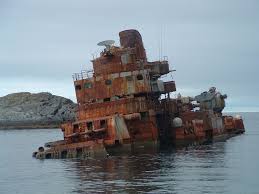
In losing nearly as much tonnage as it built in 2023, the Russian navy joins an exclusive and embarrassing club of stagnating navies that, startlingly, also includes the 886,000-ton – and shrinking – Royal Navy. In recent years, the British fleet has been decommissioning more and bigger vessels than it builds.
Apart from its submarines, the Kremlin will soon have only a coastal navy
David Axe, https://www.telegraph.co.uk/news/2024/12/02/putin-naval-decline-kirov-class-nuclear-battlecruisers/
The hulking Kirov-class nuclear powered battlecruisers were symbols of Moscow’s naval strength during the later Soviet era. A generation later, they’re symbols of Moscow’s slow naval collapse.
The Soviets built four of the 28,000-ton, missile-armed vessels to lead far-ranging battle groups meant to confront Nato warships on the high seas. Three were commissioned in time to see service with the Soviet navy before the Soviet Union collapsed in 1991; the final vessel joined the Russian fleet in 1998 following years of construction delays.
That youngest Kirov, the Northern Fleet’s Pyotr Velikiy, is the only battlecruiser still in active service. She’s one of a dwindling number of big Soviet-vintage warships – including the rusty Admiral Kuznetsov, Russia’s sole aircraft carrier – that sustain Russia’s fading capacity for projecting maritime power across oceans.
A second old battlecruiser, Admiral Nakhimov, has been pierside at Sevmash shipyard in Severodvinsk, in northern Russia, since 1999. The farcical story of her planned return to service is indicative of Russia’s wider naval decline.
The Kremlin decided to return Admiral Nakhimov to service way back in 2008. Refurbishment got underway in 2013. Planned upgrades include the fitting of Kalibr and Oniks cruise missiles plus new sensors and communications. As recently as this fall, photos circulated online showing modest but visible progress with the installations.
But the work has been missing deadlines – for years. In 2014, the plan was for Admiral Nakhimov to return to service in 2020. She didn’t. As of 2018, the battlecruiser was supposed to recommission in 2021. A year later, the recommissioning slipped to 2022. That deadline came and went, as did the next deadline for a 2024 return to service. Now the plan is for Admiral Nakhimov to rejoin the fleet in 2026.
Don’t hold your breath. The costs of Russia’s 33-month wider war on Ukraine have driven up inflation and driven down investment in Russia. The economy is teetering. The costly effort to squeeze a few more years of front-line use from a 38-year-old warship may soon seem like an extravagance.
If and when the effort to reactivate Admiral Nakhimov finally fails, it could signal a new – and humbler – era for the Russian fleet.
In 2023, the Russian navy added just 6,300 tons to its total tonnage, ending the year with warships totalling 2,152,000 tons. The Russians would have added 17,700 tons last year through the new construction of a new frigate, corvettes, a minesweeper and a few submarines, but Ukrainian missiles and drones destroyed vessels together weighing 11,400 tons.
In losing nearly as much tonnage as it built in 2023, the Russian navy joins an exclusive and embarrassing club of stagnating navies that, startlingly, also includes the 886,000-ton – and shrinking – Royal Navy. In recent years, the British fleet has been decommissioning more and bigger vessels than it builds.
For the Russians, it mostly comes down to strategy, money … and engines. Big ships are expensive – and unnecessary for a country whose main strategic ambitions lie along its land border. The Russians still build plenty of modern nuclear-powered submarines and can deploy them to deter direct conflict with a major foe. Given that safeguard, a globally-deploying surface fleet is a luxury.
Which is fortunate for Russia’s leaders, as it’s not clear Russian industry could build big new warships even if it had the money to do so and a clear reason to try. Prior to 2014, Russian shipbuilders imported most of their large maritime engines from Ukraine. It should go without saying they no longer do so.
Lacking a source of new engines, it’s much easier for Russia to restore an old battlecruiser than to build a new one from scratch. It actually helps that Admiral Nakhimov has a nuclear powerplant, as Russian industry still manages to build and maintain those on its own.
When the last big Soviet ships finally sail for the last time, the Russian navy will become a mostly coastal navy – albeit one with a powerful undersea deterrent. Even if Admiral Nakhimov does rejoin the fleet and deploys a few more times, she’ll only delay that inevitability.
Cost of switching off UK wind farms soars to ‘absurd’ £1bn
Britain’s curtailment cost jumps as grid struggles to cope with power
British bill payers have spent an “absurd” £1bn to temporarily switch
off wind turbines so far this year as the grid struggles to cope with their
power.
The amount of wind power “curtailed” in the first 11 months of
2024 stood at about 6.6 terawatt hours (TWh), according to official
figures, up from 3.8 TWh in the whole of last year. Curtailment is where
wind turbines are paid to switch off at times of high winds to stop a surge
in power overwhelming the grid.
Households and businesses pay for the cost
of this policy through their bills. The cost of switching off has reached
about £1bn so far this year, according to analysis of market data by
Octopus Energy which was first reported by Bloomberg. This is more than the
£779m spent last year and £945m spent in 2022.
The jump in curtailment
follows the opening of more wind farms at a time when the country still
lacks the infrastructure needed to transport all the electricity they
generate at busy times. Clem Cowton, the director of external affairs at
Octopus, added:
“The outdated rules of our energy system mean vast
amounts of cheap green power go to waste. “It’s absurd that Britain
pays Scottish wind farms to turn off when it’s windy, while
simultaneously paying gas-power stations in the South to turn on.
Telegraph 2nd Dec 2024,
https://www.telegraph.co.uk/business/2024/12/02/britain-paying-wind-farms-record-1bn-to-switch-off/
Lincolnshire county councillors demand answers on Nuclear Waste Services’ (NWS) proposed Geological Disposal Facility (GDF) at Theddlethorpe
By James Turner, Local Democracy Reporter, 03 December 2024
Lincolnshire county councillors demand answers on Nuclear Waste Services’
(NWS) proposed Geological Disposal Facility (GDF) at Theddlethorpe.
Concerned representatives have criticised the level of communication from
the government body behind a proposed underground nuclear waste facility.
Members of Lincolnshire County Council’s executive raised concerns about a
number of unanswered questions regarding Nuclear Waste Services’ (NWS)
proposed Geological Disposal Facility (GDF) during a meeting on Tuesday
(December 3) – specifically about where it could be built and, crucially,
whether it is safe. NWS was previously considering three sites to locate
the facility, which is estimated to cost between £20 billion and £53
billion, making it the largest planned infrastructure project in the UK.
Lincs Online 3rd Dec 2024 https://www.lincsonline.co.uk/louth/very-poor-communication-slammed-as-members-demand-to-know-9394650/
UK underestimates threat of cyber-attacks from hostile states and gangs, says security chief
New head of National Cyber Security Centre to warn of risk to infrastructure in first major speech
Dan Milmo technology editorTue 3 Dec 2024Share
The UK is underestimating the severity of the online threat it faces from hostile states and criminal gangs, the country’s cybersecurity chief will warn.
Richard Horne, the head of GCHQ’s National Cyber Security Centre, will cite a trebling of “severe” incidents amid Russian “aggression and recklessness” and China’s “highly sophisticated” digital operations.
In his first major speech as the agency’s chief, Horne will say on Tuesday that hostile activity in UK cyberspace has increased in “frequency, sophistication and intensity” from enemies who want to cause maximum disruption and destruction.
In a speech at the NCSC’s London HQ, Horne, who took on the role in October, will point to “the aggression and recklessness of cyber-activity we see coming from Russia” and how “China remains a highly sophisticated cyber-actor, with increasing ambition to project its influence beyond its borders”.
“And yet, despite all this, we believe the severity of the risk facing the UK is being widely underestimated,” he will say.
One expert described the comments as a “klaxon” call to companies and public sector organisations to wake up to the scale of the cyber-threat facing the UK.
Horne will make the warning as the NCSC reveals a significant increase in serious cyberincidents over the past 12 months. Its annual review shows that the agency had responded to 430 incidents requiring its support between 1 September 2023 and 31 August 2024, compared with 371 in the previous 12 months.
It says that 12 of those attacks were at the “top end of the scale” and were “more severe in nature” – a trebling from the previous year.
“There is no room for complacency about the severity of state-led threats or the volume of the threat posed by cybercriminals,” Horne will say. “The defence and resilience of critical infrastructure, supply chains, the public sector and our wider economy must improve.”
Last week the Cabinet Office minister, Pat McFadden, warned that Russia “can turn the lights off for millions of people” with a cyber-attack.
The NCSC review does not reveal the split between state-executed attacks and incidents perpetrated by criminal gangs. However, it is understood that a significant amount of its time is spent supporting organisations responding to ransomware attacks, where criminal gangs paralyse their targets’ IT systems and extract confidential data. The gangs then demand a ransom payment in bitcoin to return the stolen data.
Recent ransomware attacks against high-profile UK targets include the British Library and Synnovis, which manages blood tests for NHS trusts and GP services. The NCSC says it received 317 reports of ransomware activity last year, of which 13 were “nationally significant”.
“The attack against Synnovis showed us how dependent we are on technology for accessing our health services. And the attack against the British Library reminded us that we’re reliant on technology for our access to knowledge,” Horne will say. “What these and other incidents show is how entwined technology is with our lives and that cyber-attacks have human costs.”
Ransomware gangs typically originate from Russia or former Soviet Union countries and their presence appears to be tolerated within Russia, provided they do not attack Russian targets. However, one Russian cybercrime gang, Evil Corp, has carried out attacks against Nato countries at the behest of state intelligence services, according to the UK’s National Crime Agency.
Horne adds: “What has struck me more forcefully than anything else since taking the helm at the NCSC is the clearly widening gap between the exposure and threat we face, and the defences that are in place to protect us.”
“And what is equally clear to me is that we all need to increase the pace we are working at to keep ahead of our adversaries.” It is understood the “underestimated” warning is directed at public and private sector organisations in the UK.
The NCSC says the top sectors reporting ransomware activity this year were academia, manufacturing, IT, legal, charities and construction.
The agency’s review says that the Russian regime, through its invasion of Ukraine, is inspiring non-state actors to carry out cyber-attacks against critical national infrastructure in the west.
The review points to Chinese hackers such as the Volt Typhoon group, which has targeted US infrastructure and “could be laying the groundwork for future disruptive and destructive cyber-attacks” while in the UK Beijing-linked groups have targeted MPs’ emails and the Electoral Commission’s database.
The report also warns that Iran “is developing its cyber-capabilities and is willing to target the UK to fulfil its disruptive and destructive objectives” while North Korean hackers were targeting cryptocurrency to raise revenue and attempting to steal defence data to improve Pyongyang’s internal security and military capabilities.
The NCSC also believes that UK firms are almost certainly being targeted by workers from North Korea “disguised as freelance third-country IT staff to generate revenue for the DPRK regime”.
Alan Woodward, a professor of cybersecurity at Surrey University, said NCSC was warning the private and public sectors not to “take their eye off the ball”.
“The government is trying to sound the klaxon,” he said. “The feeling is that not everybody is listening yet.”
Explore more on these topics
Most viewed
- LiveAustralia news live: Gallagher says she expects Pocock to trump her in ACT Senate race; more ball-shaped ‘debris’ on Sydney beach
- Share with parents or rent forever: ‘I have put life on hold while trying to buy a house’
- Trump’s nominee for secretary of defense should alarm all of usMoira Donegan
- Boris Johnson to cut short Australian book tour due to ‘unforeseen circumstances’
- Agency in charge of Australia’s $368bn submarine program faces staff morale crisis
Most viewed
- Australia
- World
- AU politics
- Environment
- Climate crisis
- Indigenous Australia
- Immigration
- Media
- Business
- Health
- Science
- Tech
- Podcasts
- Newsletters
Original reporting and incisive analysis, direct from the Guardian every morning
- About us
- Information
- Complaints & corrections
- Help
- SecureDrop
- Work for us
- Privacy policy
- Terms & conditions
- Contact us
- All topics
- All writers
- Events
- Digital newspaper archive
- Tax strategy
- YouTube
- Newsletters
Guardian Australia acknowledges the traditional owners and custodians of Country throughout Australia and their connections to land, waters and community. We pay respect by giving voice to social justice, acknowledging our shared history and valuing the cultures of First Nations.
© 2024 Guardian News & Media Limited or its affiliated companies. All rights reserved. (dcr)

UK underestimates threat of cyber-attacks from hostile states and gangs, says security chief
New head of National Cyber Security Centre to warn of risk to infrastructure in first major speech
Dan Milmo technology editor, Guardian, Tue 3 Dec 2024
The UK is underestimating the severity of the online threat it faces from hostile states and criminal gangs, the country’s cybersecurity chief will warn.
Richard Horne, the head of GCHQ’s National Cyber Security Centre, will cite a trebling of “severe” incidents amid Russian “aggression and recklessness” and China’s “highly sophisticated” digital operations.
In his first major speech as the agency’s chief, Horne will say on Tuesday that hostile activity in UK cyberspace has increased in “frequency, sophistication and intensity” from enemies who want to cause maximum disruption and destruction………………………………………………….. https://www.theguardian.com/technology/2024/dec/03/uk-underestimates-threat-of-cyber-attacks-from-hostile-states-and-gangs-says-security-chief
Tony Blair is wrong to love nuclear energy.
there is something rash about the Tony Blair Institute’s case for a massive expansion of the industry
to claim that the world has only seen ‘two major accidents (those at Chernobyl and Fukushima)’, as the TBI claims, does rather ignore Three Mile Island in 1979 and Windscale in 1957, both of which were critical public emergencies.
Blair misses the point about nuclear power and safety.
Ross Clark, 2 December 2024,
https://www.spectator.co.uk/article/tony-blair-is-wrong-to-love-nuclear-energy/
Towards the end of his time in office, Tony Blair came over all nuclear. A new generation of atomic energy plants, he told a CBI conference in 2006, would provide Britain with clean, carbon-free energy as well as boost national energy security. He didn’t last long enough in Downing Street to see it through, but this week he is banging the drum for nuclear energy again. The Tony Blair Institute for Global Change has published a polemic, A New Nuclear Age, which dismisses fears over safety and cost to propose that Britain once more plunges headlong into new nuclear plants.
‘Public perception of the risk of nuclear power is not commensurate with the actual risk,’ it asserts. ‘The world is now paying a price for letting lingering concerns about safety and ideological opposition deter governments from harnessing a key solution to powering economies in a clean way.’ Had the industry not been killed off by irrational fears and carried on expanding at the rate it had been in the 1960s and 1970s, it goes on to claim, the world could have saved 28.9 gigatonnes of carbon dioxide since 1991 – 3.1 per cent of the total emitted in that period and equivalent to 903 coal-fired power stations.
How great it would be to love nuclear power. It is true that nuclear provides a reliable source of low-carbon energy that wind and solar cannot. It is hard to imagine the world getting anywhere close to net zero emissions without a hefty input from nuclear power.
Yet there is something rash about the Tony Blair Institute’s case for a massive expansion of the industry. True, nuclear energy generally has a very safe record – though to claim that the world has only seen ‘two major accidents (those at Chernobyl and Fukushima)’, as the TBI claims, does rather ignore Three Mile Island in 1979 and Windscale in 1957, both of which were critical public emergencies.
Blair misses the point about nuclear power and safety. It isn’t that nuclear accidents have ever killed large numbers of people. The predictions at the time that Chernobyl would go on to kill tens of thousands of people were magnitudes out: the UN’s official death toll – all deaths attributed to the accident to date, including effects of radiation decades later – stands at just 50. [ Ed note This number is very much disputed] . The problem with nuclear is more the economic cost of a serious accident. After Chernobyl, an exclusion zone with a 30 km radius was imposed – still mostly uninhabited today. After Fukushima, a 20 km radius exclusion zone was imposed, putting 600 square km out of bounds – since reduced to 370 km. It required 165,000 people to be evacuated.
Project those zones around Hinkley nuclear power station and a Fukushima-level accident would require the evacuation of Bridgwater, Taunton and much of Exmoor. For a Chernobyl-scale accident you can add on the centre of Cardiff. There would be no more Glastonbury, either. Maybe traffic might still be allowed to transit along the M5, so long as motorists didn’t linger; otherwise the South West would lose its main road connection. Such would be the economic devastation that even a once-in-a-century event on this scale becomes intolerable.
Nuclear power stations have improved a lot over the decades – and western designs were never as dangerous as Soviet ones. Even so, Japan still suffered a devastating accident. Moreover, with safety improvements have come extra layers of cost. The strike price (long-term guaranteed price) offered to the developers of Hinkley C – £92.50/MWh at 2012 prices, rising with inflation – was twice the market price for electricity at the time.
If we are going to have a new nuclear age, the safety aspects will very much still have to be addressed. Small nuclear reactors (SMRs) of around one-tenth the output of Hinkley could have a big role to play here, as the consequences of a serious accident would be much reduced. But the idea that SMRs could bring down the cost of nuclear energy looks a long way from being realised. Tony Blair is of a type: a non-scientist whose messianic belief in whatever science or technology he has discovered tends to run ahead of the reality. With Japan and also now Germany turning their backs on nuclear power, and a lack of enthusiasm from many other countries, a new nuclear age looks a long way away.
Backfilling of Gorleben salt mine (former German nuclear waste dump) starts
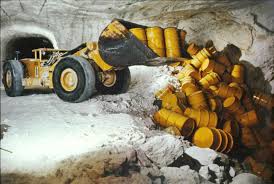
At left, The Gorleben mine was used as the German nuclear waste dump decades ago .
Backfilling has begun of the former salt mine in Gorleben, Lower Saxony –
previously considered a possible site for geological disposal of Germany’s
high-level radioactive waste.
Exploration work on the Gorleben rock salt
formation as a potential radioactive waste repository site began in 1977.
The federal government gave its approval for underground exploration at the
site in 1983, and excavation work began with the sinking of the first of
two shafts in 1986.
Work continued until June 2000 when, alongside plans
for the eventual phaseout of nuclear power in Germany, a three- to ten-year
moratorium was imposed on the Gorleben exploration work. This moratorium
was lifted in March 2010.
World Nuclear News 2nd Dec 2024, https://www.world-nuclear-news.org/articles/backfilling-of-gorleben-mine-starts
Delays to nuclear plants giving Sizewell B a new lease of life

EDF is considering plans to keep the power station in Suffolk going for an extra
20 years to underpin Britain’s net zero ambitions after building new
plants proves tricky. Sizewell B in Suffolk, the nuclear power plant that
provides about 3 per cent of the UK’s electricity and has been in the
midst of a 47-day maintenance outage.
Nuclear power has dwindled to about
14 per cent of the UK’s electricity mix, down from about a quarter in the
late 1990s. Of the five plants still running, all of which are operated by
EDF, the French state-backed power group, only Sizewell B is set to be
still running by the end of the decade.
Efforts to revive the industry have
been beset by delays and soaring costs, with Hinkley Point C, the first
plant to be built in Britain in more than two decades, running up to six
years behind schedule and billions over budget. Sizewell B, which began
generating power in 1995, was the last. It is against this backdrop that
the operators of Sizewell B will make the case to EDF in Paris to extend
the life of the plant, capable of powering two million homes, by another 20
years.
Keeping the plant running until 2055 is set to cost roughly £700
million. The plant has relatively fixed costs and has already forward-sold
the majority of power set to be generated next year. However, the
volatility in power prices since the pandemic, exacerbated by the Russian
invasion of Ukraine, has complicated the business case for keeping Sizewell
B running for longer.
The French energy group, which has an 80 per cent
stake in Sizewell B alongside Centrica’s 20 per cent, is attempting to
pay down a debt pile of almost £45 billion. Here in the UK, it is in talks
with private investors to raise between £4 billion and £5 billion to help
meet the spiralling bill to complete Hinkley Point C. Sizewell C is also
competing for EDF capital, even if the company intends to eventually sell
down its stake in the project from 50 per cent to about 20 per cent. Two
nuclear power stations with identical designs in America — Wolf Creek and
Callaway — have already been granted extensions to their operating
licences that will see them run from 40 years to 60 years, providing a
precedent.
Times 2nd Dec 2024 https://www.thetimes.com/business-money/energy/article/delays-to-nuclear-plants-giving-sizewell-b-a-new-lease-of-life-r6fdzx9j5
1 This Month

of the week – Shut Down Drone Warfare!


Tell the Ukrainian Government to Drop Prosecution of Peace Activist Yurii Sheliazhenko

Petition to revoke the licensing of the Near Surface Nuclear Disposal Facility (NSDF) at Chalk River. https://www.ourcommons.ca/petitions/en/Petition/Details?Petition=e-7247
To see nuclear-related stories in greater depth and intensity – go to https://nuclearinformation.wordpress.com
-
Archives
- April 2026 (68)
- March 2026 (251)
- February 2026 (268)
- January 2026 (308)
- December 2025 (358)
- November 2025 (359)
- October 2025 (376)
- September 2025 (257)
- August 2025 (319)
- July 2025 (230)
- June 2025 (348)
- May 2025 (261)
-
Categories
- 1
- 1 NUCLEAR ISSUES
- business and costs
- climate change
- culture and arts
- ENERGY
- environment
- health
- history
- indigenous issues
- Legal
- marketing of nuclear
- media
- opposition to nuclear
- PERSONAL STORIES
- politics
- politics international
- Religion and ethics
- safety
- secrets,lies and civil liberties
- spinbuster
- technology
- Uranium
- wastes
- weapons and war
- Women
- 2 WORLD
- ACTION
- AFRICA
- Atrocities
- AUSTRALIA
- Christina's notes
- Christina's themes
- culture and arts
- Events
- Fuk 2022
- Fuk 2023
- Fukushima 2017
- Fukushima 2018
- fukushima 2019
- Fukushima 2020
- Fukushima 2021
- general
- global warming
- Humour (God we need it)
- Nuclear
- RARE EARTHS
- Reference
- resources – print
- Resources -audiovicual
- Weekly Newsletter
- World
- World Nuclear
- YouTube
-
RSS
Entries RSS
Comments RSS
 nuclear-news