TODAY. SMRs underground – long drop nuclear toilets? – a chance to use that beaut new word – enshittification

Yes, I learned that Word of the Year 2024 – Macquarie only yesterday, and have been dying to use it. So, thanks to NucNet – Small Modular Reactors / Underground Plants ‘Could Be Built In City Centres’ 27/11/24 – I have now got a most appropriate opportunity.
“Small modular reactors (SMRs) should be built underground, including in city centres, to protect them from military attacks, seismic activity and other natural hazards, according to a new academic study.“
Gee, that’s nice. Deep Fission, a startup based in Berkeley, California, has raised funding to start this idea – “The concept is simple yet groundbreaking: build a small nuclear reactor just 30 inches wide and lower it into a mile-deep drill shaft. This approach could sidestep the immense costs and safety concerns that have long plagued traditional nuclear power.”
Yay! It’s a simple idea – a “small” nuclear reactor, a mile under the city centre, doesn’t need a containment cover – “a cost-effective, scalable solution to the world’s energy needs“.
The International Atomic Energy Agency (IAEA) defines ‘small’ as under 300 MWe, – but that’s got a bit blurry lately. NuScale’s (failed) small nuclear reactor project was for 462 MWe.
But anyway, isn’t it a relief to know that our cities can have the Artificial Intelligence data centres quite handily placed with the “small” nuclear reactors tucked away underneath us? And of course, it’s all going to be so very cheap. Although, If the SMRs are really only 30 inches wide, we might need quite a lot of them, to meet all our energy needs, not just the data centre’s needs. Will that be cheap?
But – wait a minute? Why do they need to be a mile underground? I thought that the beloved, though not yet existing, small nuclear reactors were already so very safe and so cheap.
Safety has been the big selling point for SMRs. The top nuclear marketing body – The International Atomic Energy Agency tells us of their wonderful safety features – Passive cooling systems , Fewer mechanical parts , Auto fail safe , Increased safety margins . Lower power output. The IAEA means that SMRs are safer than big reactors. (Oh dear – it does not mean that they are safer than wind and solar power.!)
So – everybody has been enthused over the safety of these not-yet-existing nuclear gimmicks – but now we’re being told that they might be a target for military or terrorist attacks and natural hazards.
So – underground will be fine? With climate change – what about flooding? Oh dear – the marketing story for the nuclear industry moves further into confusion. Thank you, Macquarie Dictionary for that so applicable term – “enshittification”. And I like their second choice, too – “brainrot”
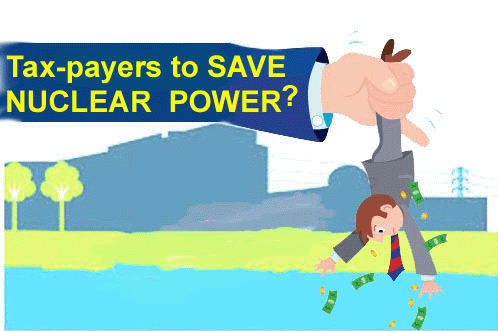
France is weighing zero-interest loan for 6 nuclear reactors, sources say
- Summary
- EDF faces financing challenges due to high debt and project delays
- French government faces no-confidence vote over budget with spending cuts
- EU approval needed for state aid in nuclear projects
PARIS, Nov 27(Reuters) Reporting by Benjamin Mallet; additional reporting by Leigh Thomas; writing by Dominique Patton; editing by Nina Chestney and Tomasz Janowski- https://www.reuters.com/business/energy/france-is-weighing-zero-interest-loan-6-nuclear-reactors-sources-say-2024-11-27/
French officials are drawing up plans to provide an interest-free loan to state-owned power utility EDF to finance a significant portion of the construction of six new nuclear reactors, two people familiar with the matter said.
The financing would clear a major hurdle for one of the country’s biggest public projects in years.
The plans are similar to financing agreed recently for a single reactor in the Czech Republic, and although the size of the loan is not yet known, it shows the growing need for state support in financing new nuclear projects in Europe.
The plans also include a long-term guaranteed price for the power generated, known as a contract for difference (CfD), said the people, who declined to be identified because they are not authorised to speak with media.
The Ministry of Finance and EDF declined to comment.
The discussions on financing the projects that could cost well over 50 billion euros ($52.60 billion) come as the French government faces a potential no-confidence vote over a proposed budget that contains measures to cut spending and raise taxes to contain the country’s soaring debt.
President Emmanuel Macron announced plans in early 2022 for six new reactors with a total production capacity of about 10 gigawatts to partly replace an ageing nuclear fleet and secure future energy supplies.
Construction of the first reactor is due to start in 2027 but Macron has never said who would pay for the project, which at the time was estimated to cost around 52 billion euros. Recent media reports suggest costs may be higher, reaching as much as 67 billion euros.
France’s current 57 nuclear reactors in operation were largely financed by EDF, which was a publicly-listed company until it was fully nationalised last year.
But the company is unlikely to be able to secure private financing for new projects, given its already high debt, and there have been multiple delays and cost overruns at recent projects like Flamanville in France and Hinkley Point in England.
CZECH MODEL
While there is general agreement to provide a zero-interest loan to EDF during the construction phase, the amount is not yet decided and there are still “intense discussions” on matters such as the sharing of risk between the utility and the state from any additional costs and delays, one of the sources said.
The plan also needs approval from the finance minister once EDF submits a final costing for the projects, expected early next year.
As a form of state aid, it also needs to be cleared by the European Commission.
French officials have been encouraged, however, by Brussels’ approval for a similar financing structure for one 1 gigawatt Czech unit at Dukovany, the sources said.
Under the Czech arrangement, interest on a state loan increases to at least 2% after the plant begins operating.
Europe is seeing a resurgence of interest in nuclear power projects, with nations including Poland and the UK planning new plants to shore up their energy self-sufficiency after a major energy crisis in the region.
Financing remains a huge challenge, with construction risks weighing on utilities’ balance sheets and credit ratings.
The British government recently pledged more than 5.5 billion pounds ($6.93 billion) to help fund early development of the 3.2 GW Sizewell C project.
Another project in Britain, EDF’s 3.2 GW Hinkley Point C plant, which is expected to cost between 31 billion pounds and 34 billion pounds based on 2015 values, is also backed by a contract for difference scheme.
($1 = 0.9506 euros)
($1 = 0.7931 pounds)
“Israel Wants Wars”: Gideon Levy on Lebanon Ceasefire, Gaza & Gov’t Sanctions Against Haaretz
Democracy Now, 27 Nov 24
Gideon LevyIsraeli journalist and author. Lina MounzerLebanese writer and editor.
We’re joined by Israeli journalist Gideon Levy as we continue our conversation on the Israeli-Lebanon ceasefire. We take a look at the mood within Israel, where Levy characterizes the Israeli public as “sour” about what is seen as a premature deal. “They would like to see more blood, more destruction in Lebanon,” says Levy. “Israel wants wars.” This retributive stance is still being felt in Lebanon, adds writer Lina Mounzer, who says Lebanese people are “very terrified of the day after” and do not feel that they have been awarded peace, despite the terms of the ceasefire.
Meanwhile, the Israeli government has unanimously voted to sanction the Israeli newspaper Haaretz, claiming that its editorials “have hurt the legitimacy of the state of Israel and its right to self defense.” Haaretz has criticized the move, which comes just months after Israel banned the international media outlet Al Jazeera, as anti-democratic. Levy, a columnist for Haaretz, says the sanction makes it clear that Israelis cannot take the freedom of speech “for granted anymore.”
Media Options
Transcript……………………………………………………………………………………….. more https://www.democracynow.org/2024/11/27/israel_lebanon_ceasefire_haaretz
The United States Raises a Middle Finger to the International Criminal Court
As the International Criminal Court finally issues arrest warrants for Israeli leaders Netanyahu and Gallant, the United States confirms it has no regard for international law or a genuine rules-based order.
28 November 2024 tricontinental,
Finally, before history ends, the International Criminal Court (ICC) issued arrest warrants for Israel’s Prime Minister Benjamin Netanyahu and his former Defence Minister Yoav Gallant for war crimes and crimes against humanity. The indictment stated that there ‘are reasonable grounds to believe that both individuals intentionally and knowingly deprived the civilian population in Gaza of objects indispensable to their survival, including food, water, and medicine and medical supplies, as well as fuel and electricity’. The court found sufficient reasons to believe that the two men ‘bear criminal responsibility’ for the war crime of starvation as a method of warfare, the crimes against humanity of murder, persecution, and other inhumane acts, and the war crime of intentionally directing an attack against a civilian population. Almost immediately, US President Joe Biden condemned the court’s actions, stating that the ‘ICC issuance of arrest warrants against Israeli leaders is outrageous’. The United States, Biden said, ‘will always stand with Israel’………………………………………………………………………………………………………………… more https://thetricontinental.org/newsletterissue/icc-arrest-warrants-israel/
‘Unprecedented’ climate extremes are everywhere. Our baselines for what’s normal will need to change

November 28, 2024 , https://theconversation.com/unprecedented-climate-extremes-are-everywhere-our-baselines-for-whats-normal-will-need-to-change-244298
Extreme temperature and rainfall events are increasing around the world, including Australia. What makes them extreme is their rarity and severity compared to the typical climate.
A region’s “climate” is defined by a 30-year average of mainly rainfall and temperature. Increasingly, these climate definitions have become less appropriate – we need to look at events over shorter time periods to gain a more accurate picture.
We can see this in the recent worldwide proliferation of extreme flooding and prolonged heatwaves.
Using southern Australia as a prime example, our newly published research in Academia Environmental Sciences and Sustainability shows that machine learning techniques can help identify key climate drivers, supporting a redefinition of climate in a warming world.
Increasing ‘flash’ events
In Australia, eastern coastal regions of Queensland and New South Wales continue to receive record downpours and flash floods, interspersed by dry periods of a few months to a few years.
In stark contrast, southern coastal regions are drying and facing more extreme heatwaves. With already parched vegetation and catastrophic fire dangers, this region is experiencing drought conditions due to decreased cool season rainfall and increased temperatures.
Notably, flash droughts and flash floods have adversely affected both agricultural crop yields and grazing pasture quality. Flash droughts greatly reduce moisture for germination. Flash floods ruin crops close to harvest time.
The problem with these “flash” events is just how difficult they are to forecast. To make more accurate seasonal and annual predictions for rainfall and temperatures, we need to update our climate models. But how do we know which climate drivers need to be included?
Seeking a new normal
To keep track of typical climate conditions and provide context for weather and climate forecasts, the World Meteorological Organization uses a set of data products known as climatological standard normals.
They define climate as averages of monthly, seasonal and annual weather-related variables such as temperature and rainfall, over consecutive 30-year periods.
Climate normals can be used to assess how typical of the current climate a particular event was in a given location. It’s how we arrive at temperature anomalies.
For example, to tell whether a year was relatively “hot” or “cool”, we look at the anomaly – the difference between the average temperature for the calendar year in question, compared to the climate normal.
But extreme variations are now occurring in periods of ten years or even shorter. Consequently, multiple increases and decreases can cancel each other out over a 30-year period. This would hide the large changes in statistics of weather variables within that period.
For example, large rainfall changes in average monthly, seasonal and annual amounts can be hidden within 30-year averages. Global warming often amplifies or diminishes the impacts of multiple climate driver phases within approximately ten-year periods. When averaged over 30 consecutive years, some information is lost.
What did we find?
Over the past decade or so, machine learning (where computers learn from past data to make inferences about the future) has become a powerful tool for detecting potential links between global warming and extreme weather events. This is referred to as attribution.
Machine learning techniques are simple to code and are well-suited to the highly repetitive task of searching through numerous combinations of observational data for possible triggers of severe weather events.
In our new study, machine learning helped us untangle the dominant climate drivers responsible for recent flash flood rainfall on the east coast of Australia, and a lack of rainfall on the southern coast.
Along the southern coast, the cool season from May to October is typically produced by mid-latitude westerly winds. In recent years these winds were farther away from the Australian continents, resulting in the recent drought of 2017–19 and flash drought of 2023–24.
In contrast, after the 2020–22 La Niña, the east coast continues to experience wetter conditions. These come from generally higher than average sea-surface temperatures off the east coast and Pacific Ocean, due to the presence of onshore winds.
Machine learning identified the dominant drivers of the scenario above: the El Niño-Southern Oscillation, the Southern Annular Mode, the Indian Ocean Dipole, and both local and global sea surface temperatures.
A key finding was the prominence of global warming as an attribute, both individually and in combination with other climate drivers. Climate drivers and their combinations can change with increasing global warming over shorter periods that contain extremes of climate. Hence, the use of 30-year periods as climate normals becomes less useful.
Finding regional attributes for better forecasting
Climate models often disagree on the climate drivers likely to be relevant to extreme events.
A key feature of machine learning is the ability to deal with multi-source data by identifying regional attributes. We can combine possible climate-driver predictors with high-resolution climate model predictions, especially after the climate model data are downsized to cover specific regions of concern. This can help with extreme event forecasting at a local scale.
Scientists are continuously developing new methods for applying machine learning to weather and climate prediction.
The scientific consensus is that global warming has dramatically increased the frequency of extreme rainfall and temperature events. However, the impacts are not uniform across the world, or even across Australia. Some regions have been more affected than others.
Currently there is no single alternative definition to the traditional 30-year climate normal, given the variable impacts across the planet. Each region will need to determine its own relevant climate time period definition – and machine learning tools can help.
Ceasefire Falters as Israel Launches Airstrikes, Artillery Shelling on Southern Lebanon
Israel says ‘suspects’ in vehicles violate ceasefire by trying to return home
by Jason Ditz November 28, 2024, https://news.antiwar.com/2024/11/28/ceasefire-falters-as-israel-launches-airstrikes-artillery-shelling-on-southern-lebanon/
The Israel-Lebanon ceasefire began Wednesday morning. Less than two days later, it seems to be faltering, with multiple reports of Israeli attacks across southern Lebanon, and claims of violations by both sides.
Israel carried out an airstrike against the outskirts of Baysariyeh, which is near Tyre. They confirmed the attack, saying they were targeting a Hezbollah storage facility after seeing “terrorist activity.” They added in their statement that they were “acting to enforce violations of the ceasefire.”
Though the claims of violations are coming from both sides, so far it is only Israeli forces whose violations actually involve firing. Lebanese people continue to try to return to their homes in the south, despite Israel’s military forbidding them to do so.
There are multiple reports of Israel carrying out artillery shelling against towns and villages across southern Lebanon this afternoon. Strikes were reported against the towns of Halta, Taybeh, Khiam, and Rmeish. In Rmeish the attack damaged a supermarket and a home. Three were injured in Taybeh.
There were also reported Israeli tank shellings in several places, including the village of Markaba. In that incident, a car was attacked and multiple civilians were wounded. Israeli ground troops also opened fire on vehicles multiple times across southern Lebanon, incidents which happened both on Wednesday and Thursday.
Israel presented the people they were shooting at as a “number of suspects,” and said that any vehicles in southern Lebanon amount to a ceasefire violation. There is no indication vehicles are actually forbidden by the terms of the ceasefire. Shooting at people, as Israel has been throughout the day, is plainly a violation, however.
Transfer of nukes to Kiev would be viewed as attack on Russia – Medvedev
Rt.com 26 Nov 24
The former president’s warning follows reports that discussions have been held in the US about Ukraine obtaining a nuclear arsenal .
Moscow will consider any threat of nuclear arms being supplied to Ukraine by the US as preparation for a direct war with Russia, former president Dmitry Medvedev has warned. The actual transfer of nuclear weapons would be tantamount to an attack on the country under Russia’s new nuclear doctrine, he added.
In a Telegram post on Tuesday, Medvedev referenced a recent report in the New York Times. In a piece bylined by four of its journalists, the NYT claimed that US and EU officials are “discussing deterrence as a security guarantee” for Ukraine, claiming a conversation is underway to consider giving Ukraine nuclear weapons.
US politicians and journalists are seriously discussing the consequences of providing Kiev with nuclear weapons, said Medvedev, who serves as the deputy chair of the Russian Security Council…………………………………………………………………………………………………… more https://www.rt.com/russia/608212-medvedev-nukes-transfer-ukraine/
The Antisemitism Awareness Act Is the Death Knell for Free Speech
Mike Whitney • November 21, 2024, The Unz Review
Freedom of speech is the principal pillar of a free government; when this support is taken away, the constitution of a free society is dissolved, and tyranny is erected on its ruins….Ben Franklin.
The Antisemitism Awareness Act is a wrecking ball designed to pulverize the First Amendment. While the alleged intention of the bill is to make Jewish students feel safer on campus, the real purpose is to put an end to the anti-genocide demonstrations that have broken out across the country and to prevent the criticism of Israel. The proposed bill invokes a dodgy legal mechanism to derail the protests and to silence Israel’s critics. By using a broad and ambiguous definition of antisemitism, the bill compels university administrators to crackdown on free speech invoking sketchy claims of discrimination. Political analyst Paul Craig Roberts summed it up like this: “if universities …don’t suppress student protests against Israel’s massacre of civilians in Gaza and Lebanon they will lose their accreditation and federal financial support.” In short, universities are being encouraged to quash the free expression of political ideas to preserve their federal funding. This helps to illustrate how Zionist lobbyists are now engaged in a full-throated assault on constitutionally protected civil liberties, namely free speech.
The bill—which already passed the House with a sizable majority—shows how the charge of antisemitism can be used as a coercive political tool to silence Israel’s critics. That is why civil liberties organizations—like the ACLU, PEN America, the Alliance Defending Freedom and even Jewish groups like Bend the Arc and T’ruah—strongly oppose the bill based on free speech grounds. Even so, this attack on constitutionally protected rights has a good chance of passing the senate due to the arm twisting of powerful interest groups that have their tentacles wrapped tightly around both houses of congress. Here’s a brief summary from political analyst Guy Christensen:
The House just passed the Antisemitism Awareness Act which will shut down college protests against Israel and silence all future criticism of the state of Israel. The law literally redefines antisemitism as criticizing the state of Israel and makes it a violation of Title 6 to do so. The purpose of this is to allow politicians to pull federal funding from colleges who don’t stop these college protests and let their students continue to criticize Israel.
We must speak out against the Antisemitism Awareness Act. This is insanity. These people are full-on Zionists trying to silence free speech here in America, trying to silence criticism of the oppression of the Palestinians, criticism of the state of Israel that murdered 14,000 children.
Like I said, the guy who wrote the bill, Mike Lawler, is funded by AIPAC $180,000 (he said to NBC News when talking about this bill.) When you hear “River to the sea, Palestine will be free” that is calling for the eradication of the Jews in the state of Israel. (They are) Literally trying to make it illegal to criticize Israel.
If you don’t know how Title 6 works, all federally funded programs and institutions must follow it or they won’t receive any more federal funding. This includes US colleges and K through 12 schools who are very strict about following Title 6 because they need that funding. They can’t go without it. So, if we let this become law, it would force US colleges to shut down all these protests immediately.
This contends for the most outrageous bill for Israel the government has ever tried to pass. I will not vote or say a kind word about any politician who voted in favor of this bill…. (your representative ) care more about Israel than they care about your free speech. What they are doing is incredibly dangerous. Zionists are scared because American public opinion is changing. Students across the country are protesting against Israel. You know they’re scared because this is one of the boldest things they’ve ever tried to do…..AIPAC and the pro-Israel lobby is behind all of this. Ban AIPAC Stop the Antisemitism Awareness Act. We have to protect our free speech and our right to protest against evil. YourFavoriteGuy@guychristensen_
Not surprisingly, President Donald Trump—whose campaign was given $100 million by a strident Zionist donor—confirmed that he will aggressively implement the blatantly unconstitutional law by cancelling the funding of any college that tolerates the anti-genocide protests. He further stated that he will prosecute the universities for, what he calls, “violations of the civil rights law.” In other words, it is not the tens of thousands of Palestinian civilians that have been killed by Israel who are the victims, but the Jewish university students who feel “unsafe.” (Note—Trump refers to the protestors views as “antisemitic propaganda”)…………………………………………………………………………………………………………………………………………………more https://www.unz.com/mwhitney/the-antisemitism-awareness-act-is-the-death-knell-for-free-speech/
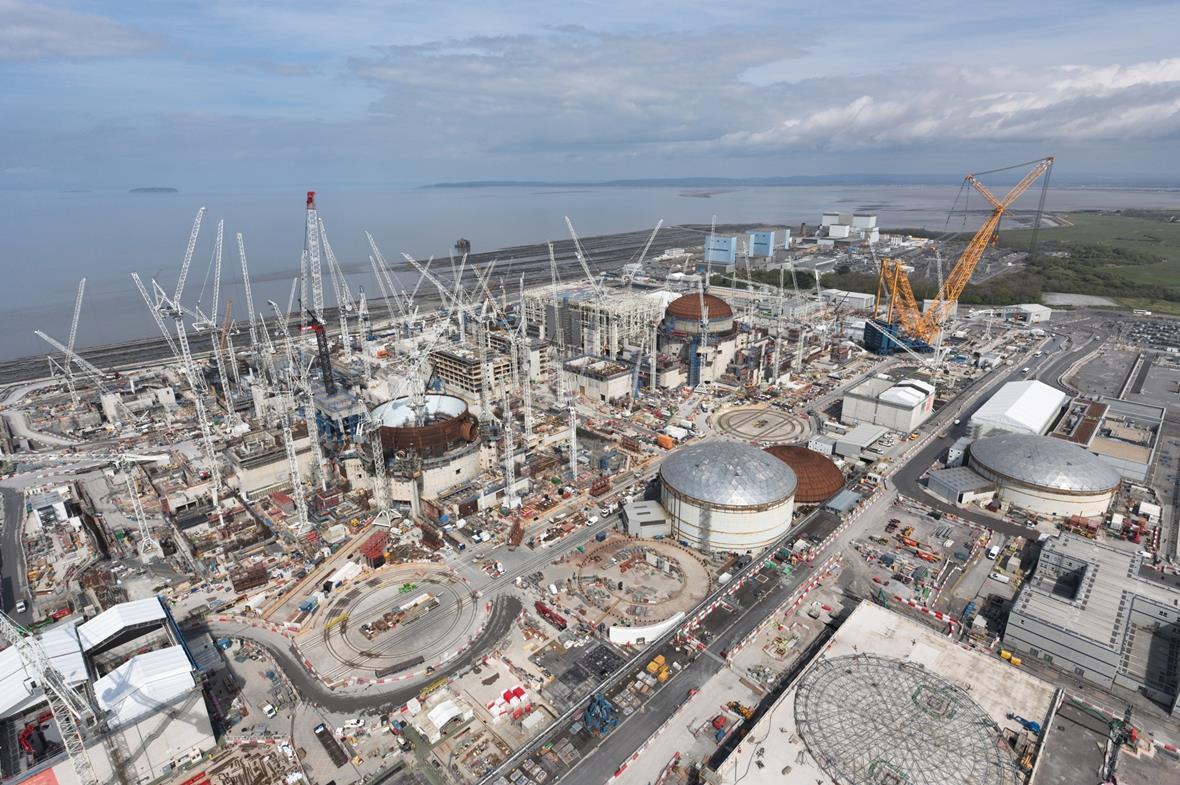
Hinkley Point C: Hundreds down tools over concerns
By Seth Dellow, Bridgwater Mercury 28th Nov 2024
HUNDREDS of workers at Hinkley Point C have stood down today over unresolved concerns.
The action short of strike began at 9am this morning with workers claiming it concerns fingerprint scanners in a small area on site. They have claimed there are only five scanners serving 13,000 workers on site but this is strongly denied by EDF which runs the Hinkley Point site. Electricians, pipe fitters and welders are all said to have walked out.
The number of affected workers could be up to 1,600 as the action only involves some of the MEH workers on site. MEH has contracted staff doing work on the Hinkley Point site.
Earlier, workers claimed between 2,000 and 6,000 workers had walked out.
One electrician, who spoke anonymously to the Bridgwater Mercury, said that workers were “being taken advantage of.”
The nuclear power station is already behind schedule and is expected to be operational between 2029 to 2031.
Workers are planning on taking full strike action on Monday, December 2, 2024, as they say they will be blocked from entering the site because of their actions today.
It follows recent strike action which saw EDF workers walk out over pay concerns. ………………
https://www.bridgwatermercury.co.uk/news/24757425.hinkley-point-c-6-000-workers-walk-concerns/
Why Bunkers Won’t Save The Super Rich
Inside the doomsday culture of the elites.
- Jessica Wildfire, November 26 2024, https://www.the-sentinel-intelligence.net/why-bunkers-wont-save-the-super-rich/?ref=ok-doomer-newsletter
If you ever wonder if you’re taking the end of the world too seriously, you can always google “doomsday bunkers” and see what the billionaires are up to. Also, Germany just started designing an app to help its citizens find a fallout shelter in case Putin ever makes good on his nuclear threats.
Five years…
That’s how long you’d last in the Survival Condo, a luxury bunker built into an abandoned missile silo. It’s what Bradley Garrett describes as a geoscraper, an inverse skyscraper designed to withstand the collapse of civilization. This thing has everything a disaster movie could want.
The operation is run by Larry Hall, a former military contractor and entrepreneur who once designed hardened data centers.
From House Beautiful:
There’s a general store, an indoor pool and spa, a gym, medical first aid center, a library, a classroom, a bar and more.
But features like the direct shooting range, digital weather station, monolithic dome cap, and security command center remind guests of the structure’s war zone history. “The mission is to protect residents from a whole wide range of threats,” Hall said. “Everything from viral or bacterial threats and chemicals to volcanic ash, meteors, solar flares and civil unrest,” he says.
The place also has at least one remote-controlled rifle turret. As the guy in charge says, “You can kill people like it’s a video game.” I wouldn’t be surprised if they’ll have drones and robots soon. This underground fortress also boasts three military-grade air filtration systems, at $30,000 each.
The cost of a suite here runs into the millions.
A Saudi Prince tried to buy one of Hall’s latest projects outright. He turned them down out of principle. As Hall himself admits, any bunker needs social cohesion to ensure survival. Even at the end of the world, people need to feel normal. Otherwise, they go bonkers… inside their bunkers.
Over the last decade, prepping has turned into a multi-billion dollar industry, filled with companies ready to capitalize on everyone’s growing sense of dread about the future. And yet, nobody does it like the rich. They’re spending millions of dollars on bunker palaces with moats, water cannons, and secret tunnels lined with flame throwers. I’m not even kidding.
Read this:
“The client [a business mogul] was saying, ‘I want to make sure that no one can get to my family,’ so we wound up literally building a 30-foot-deep lake [around the compound] skimmed with a lighter-than-water flammable liquid that can transform into a ring of fire.”
When they’re not preparing for the end of the world, the rich can use their water canons to play games or “blow rainbows in the air.”
Yep, some bunkers double as theme parks.
Obviously, it’s no fun to have a bunker if you can’t show it off to all your rich friends. According to a 2017 piece in The New Yorker, that’s exactly what the bankers and hedge fund managers do. They get together over wine.
They brag about their doomsday plans.
Luxury bunkers surged in popularity at the start of the pandemic, but they have a long heritage. Governments around the world have built thousands of them over the last century with hundreds of billions in taxpayer money. As militaries abandon the originals for better designs, the ultra rich have been snatching them up and flipping them. There’s a real booming dooming market for apocalyptic real estate, explored by Garrett in his book Bunker.
Yeah, bunker flipping.
It’s a thing.
If Douglas Rushkoff’s Survival of The Richest whet your curiosity for the doomsday culture of the super rich, then Bunker satisfies it and then some. Toward the end, I was going, “Jeez another one…?”
(That’s a good thing.)
With enough subtility to avoid pissing off his interview subjects, Bradley Garrett answers every question I ever had about bunkers, specifically if they even stood a chance of surviving real doom.
Let’s dig in.
Unidentified drones continue to fly over US military bases in UK
American air force still investigating ‘small unmanned aerial systems’, days
after troops and counter-drone measures were deployed.
Times 27th Nov 2024, https://www.thetimes.com/uk/defence/article/drones-over-uk-us-military-bases-ongoing-vcr3vjtq0
1 This Month

of the week – Shut Down Drone Warfare!


Tell the Ukrainian Government to Drop Prosecution of Peace Activist Yurii Sheliazhenko

Petition to revoke the licensing of the Near Surface Nuclear Disposal Facility (NSDF) at Chalk River. https://www.ourcommons.ca/petitions/en/Petition/Details?Petition=e-7247
To see nuclear-related stories in greater depth and intensity – go to https://nuclearinformation.wordpress.com
-
Archives
- April 2026 (34)
- March 2026 (251)
- February 2026 (268)
- January 2026 (308)
- December 2025 (358)
- November 2025 (359)
- October 2025 (376)
- September 2025 (257)
- August 2025 (319)
- July 2025 (230)
- June 2025 (348)
- May 2025 (261)
-
Categories
- 1
- 1 NUCLEAR ISSUES
- business and costs
- climate change
- culture and arts
- ENERGY
- environment
- health
- history
- indigenous issues
- Legal
- marketing of nuclear
- media
- opposition to nuclear
- PERSONAL STORIES
- politics
- politics international
- Religion and ethics
- safety
- secrets,lies and civil liberties
- spinbuster
- technology
- Uranium
- wastes
- weapons and war
- Women
- 2 WORLD
- ACTION
- AFRICA
- Atrocities
- AUSTRALIA
- Christina's notes
- Christina's themes
- culture and arts
- Events
- Fuk 2022
- Fuk 2023
- Fukushima 2017
- Fukushima 2018
- fukushima 2019
- Fukushima 2020
- Fukushima 2021
- general
- global warming
- Humour (God we need it)
- Nuclear
- RARE EARTHS
- Reference
- resources – print
- Resources -audiovicual
- Weekly Newsletter
- World
- World Nuclear
- YouTube
-
RSS
Entries RSS
Comments RSS
 nuclear-news