Russia’s Revised Nuclear Doctrine and the NATO-Russia Ukrainian War
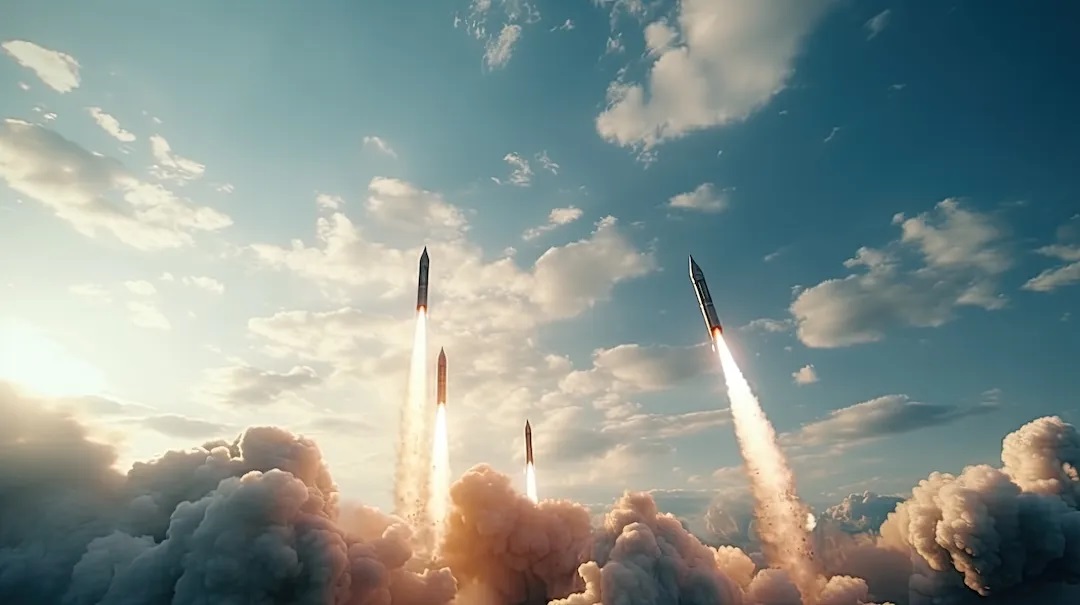
RUSSIAN and EURASIAN POLITICS, by Gordonhahn, November 21, 2024
In response to the escalating NATO-Ukrainian threat to Russia’s national security, embodied most recently and intensively by the U.S., British, and French use of their own missiles on pre-2022 Russian territory (outside Crimea, annexed in 2014), Moscow adopted and activated into law a revised Nuclear Doctrine (ND) on November 19th.
The original decision to revise Russia’s ND and, indeed, lower the threshold for use came in September when NATO countries first began discussing the use of ATACMs, Storm Shadows, Scalp, etc., which can only be fired with the participation of U.S., British, and/or French officers, making them and their countries direct combatants in a war against Russia, as Russian President Vladimir Putin stated at the time and quite logically so.
This and the timing in which the September discussion was revived in November at the same time completion of the ND revisions was expected gives evidence to the fact that this Western course and escalations in the NATO-Russia Ukrainian War is the driver of the ND revisions.
Similarly, NATO-Ukraine’s use on November 18-19 of ATACMs and Storm Shadows by NATO against targets on Russian territory proper (Bryansk and Kursk) internationally recognized demonstrate how several stipulations in the new doctrine are intended by the Kremlin to address the escalation by NATO to direct involvement by its officers’ control over the launch and attack process of such missiles. Moreover, there are indications that conditions are now such that, according to the new doctrine, Russia’s use of nuclear weapons against Ukrainian, American, British, and French targets is justifiable and thus, regretfully, feasible.
Much of the discussion around the ND revisions centers around Articles 9-12. They address the security problem posed to Russia by the NATO-Ukraine alliance and the war it sparked with Russia. Articles 9-10 note: “9. Nuclear deterrence is also carried out against States that provide their controlled territory, air and/or sea space and resources for the preparation and implementation of aggression against the Russian Federation. 10. Aggression of any state from the military coalition (bloc, union) against the Russian Federation and (or) its allies is considered as aggression of this coalition (bloc, union) as a whole” (http://kremlin.ru/events/president/news/75598, pp. 2-3).
These new articles are a result of, and a response to NATO countries various forms of support for Ukraine, particularly its invasion into Kursk as well as drome and missile attacks on numerous Russian regions, aside from Crimea and the four Ukrainian regions annexed by Russia.
Several subsequent Articles in Russia’s revised ND reduce the threshold for the use of nuclear weapons and demonstrate just how close we are approaching said threshold, as far as the Kremlin is concerned. In many ways, these specific Articles constitute the core of the warning that Putin’s decision to revise the ND is; the revision of the ND is an exercise of nuclear deterrence in and of itself.
Much attention has been focused on Article 11 and properly so. It stipulates: “Aggression against the Russian Federation and (or) its allies by any non-nuclear State with the participation or support of a nuclear State is considered as their joint attack” (http://kremlin.ru/events/president/news/75598, p. 3). This is indeed crucial because it attributes joint responsibility to NATO’s non-nuclear states and Ukraine along with NATO’s nuclear powers – the U.S., UK, and France.
Thus, Ukraine is tied to the potential nuclear threat to Russia or Belarus posed by the three leading NATO states. Kiev is placed on the nuclear escalatory ladder and targeted for nuclear deterrence, given the implied nuclear threat it poses by putting Russia into conflict and ever greater conflict with NATO and its nuclear powers.
The November 21st Russian attack on Dnipro, Kiev using a new intermediate range ballistic conventional not nuclear missile among others, was an exercise in deterrence if implied, if you will. This attack was in accordance with Article 11’s attribution of joint responsibility for Ukraine and NATO and its nuclear powers. Article 12 states: “Nuclear deterrence is aimed at ensuring that a potential adversary understands the inevitability of retaliation in the event of aggression against the Russian Federation and (or) its allies” (http://kremlin.ru/events/president/news/75598, p. 3). The invocation of inevitable retaliation is particularly chilling in light of the Russian ND’s Article 11 and the November 21st Russian attack on Dnipro—already a nuclear deterrence attack sans the nuclear warhead.
In response to the use of six ATACMs, the Russians deployed a new hypersonic, intermediate-range missile with a conventional but still unclear explosive charge, as noted above. In seeming proportion to the six ATACMs, the new Russian missile attacked in 6 waves each with 6 missiles, suggesting a multiple conventional warhead. There is speculation that there was no explosive, the attack having been a test, or detonation occurred deep underground (www.youtube.com/watch?v=hVrLEcxI7Wc&t=933s, at the 1:30 mark). Putin addressed the nation and the world after the Dnipro attack to explain Russia’s deterrence goal while again offering negotiations to end the war. He noted: ……………………………………………………………………………………………..
The upshot of all this, again, is that we are moving closer to scenarios in which Putin or a less cautious successor might choose to use a tactical nuclear weapon in order to end such threats as enumerated above or deter their further posing.
I do not think that Putin, who is an extremely rational and cautious actor, will opt to use even a single tactical nuclear weapon, unless a situation, say, like the one in Kursk should drastically deteriorate from the Russian point of view: for example, if by some miracle Ukraine’s forces in Kursk were somehow to regroup and be approaching the Kursk nuclear power plant and/or nuclear weapons storage facility.
But the actual situation on the ground is quite the reverse. Ukrainian forces are being or have been surrounded, depending on which one is talking about, and are likely to be fully destroyed or mostly destroyed during a hasty retreat. Thus, the ATACMs may be a way to ensure an open extraction corridor, and little more when it comes to Kursk.
But the attack on Bryansk suggests a more expansive NATO-Ukraine agenda for the missiles. Since NATO has consistently escalated its involvement in terms of weapons deployments to Kiev, we can expect a similar escalation regarding the use of the ATACMs and other missiles. Putin will match them every step up the way. He may be forced to rise up the escalatory ladder more rapidly, given mounting public and elite pressure to get tough and fight a war instead of his ‘special military operation.’ https://gordonhahn.com/2024/11/21/russias-revised-nuclear-doctrine-and-the-nato-russia-ukrainian-war/
No comments yet.
1 This Month
Chernobyl: The Lost Tapes – A good documentary on Chernobyl on SBS available On Demand for the next 3 weeks– https://www.sbs.com.au/ondemand/tv-program/chernobyl-the-lost-tapes/2352741955560

of the week–London Campaign for Nuclear Disarmament

Tell the Ukrainian Government to Drop Prosecution of Peace Activist Yurii Sheliazhenko
To see nuclear-related stories in greater depth and intensity – go to https://nuclearinformation.wordpress.com
-
Archives
- April 2026 (139)
- March 2026 (251)
- February 2026 (268)
- January 2026 (308)
- December 2025 (358)
- November 2025 (359)
- October 2025 (376)
- September 2025 (257)
- August 2025 (319)
- July 2025 (230)
- June 2025 (348)
- May 2025 (261)
-
Categories
- 1
- 1 NUCLEAR ISSUES
- business and costs
- climate change
- culture and arts
- ENERGY
- environment
- health
- history
- indigenous issues
- Legal
- marketing of nuclear
- media
- opposition to nuclear
- PERSONAL STORIES
- politics
- politics international
- Religion and ethics
- safety
- secrets,lies and civil liberties
- spinbuster
- technology
- Uranium
- wastes
- weapons and war
- Women
- 2 WORLD
- ACTION
- AFRICA
- Atrocities
- AUSTRALIA
- Christina's notes
- Christina's themes
- culture and arts
- Events
- Fuk 2022
- Fuk 2023
- Fukushima 2017
- Fukushima 2018
- fukushima 2019
- Fukushima 2020
- Fukushima 2021
- general
- global warming
- Humour (God we need it)
- Nuclear
- RARE EARTHS
- Reference
- resources – print
- Resources -audiovicual
- Weekly Newsletter
- World
- World Nuclear
- YouTube
-
RSS
Entries RSS
Comments RSS
 nuclear-news
Leave a comment