Power Out at Ukraine Atomic Plants After Russian Missile Strikes

By Jonathan Tirone, November 17, 2024,
https://www.bnnbloomberg.ca/investing/2024/11/17/power-out-at-ukraine-atomic-plants-after-russian-missile-strikes/
(Bloomberg) — Ukraine powered down most of the remaining operational nuclear reactors under its control following a massive overnight Russian missile and drone attack.
Staff from the International Atomic Energy Agency stationed at plants in Ukraine reported that only two of nine reactors were generating electricity at full capacity on Sunday. Generation was dialed down to between 40% and 90% of capacity at the other units, according to a statement from the UN’s nuclear watchdog.
“The country’s energy infrastructure is extremely vulnerable, directly impacting nuclear safety and security,” said IAEA Director General Rafael Mariano Grossi. He added that inspectors are evaluating he full extent of the damage.
Russia launched one of its largest missile barrages against Ukraine on Sunday as the full-scale invasion of its neighbor nears the 1,000-day mark. About 120 cruise, ballistic and aeroballistic missiles and 90 drones were fired by Kremlin forces operating from bomber jets and ships, Ukraine’s air force said.
An IAEA team based at the Khmelnytskyy Nuclear Power Plant reported hearing a loud explosion, while others stationed at the Rivne site reported that high-voltage power lines were unavailable. Both facilities are in western Ukraine.
Ukraine has warned that air strikes against critical power substations could trigger an emergency at one of the three operating nuclear power plants still under Kyiv’s control.
Substations maintain stability by regulating high-voltage transmission on power grids. Unlike fossil fuel or renewable plants, nuclear generation needs a constant flow of electricity to keep safety systems running. Without it, fuel inside a reactor’s core risks overheating, potentially resulting in a dangerous release of radiation.
Ukraine has thousands of electricity substations. But at stake are ten crucial nodes linked to atomic power plants, whose destruction could plunge the country into darkness and provoke a radiological emergency, Ukraine’s Energy Minister German Galushchenko told Bloomberg News in a September interview.
“The IAEA teams visited seven substations – located outside the nuclear power plants across the country – in September and October to assess the damage from attacks in August, and will assess whether further visits are required following today’s military activities,” Grossi said on Sunday.
Pilgrim Worker Claims He Was Poisoned by Radiation

Adam Snyder’s lawsuit says Holtec knew of danger and withheld facts
By Christine Legere Nov 16, 2024, https://provincetownindependent.org/featured/2024/11/16/pilgrim-worker-claims-he-was-poisoned-by-radiation/?fbclid=IwY2xjawGo1QpleHRuA2FlbQIxMQABHWShU5dHZhyKJptDuy4JZpZN9jdHmZc-esBuN4ZA6V8bJ02NZeQ-CWEfnw_aem_o8Hlm0YsDqphDpYEcT3x5g
PLYMOUTH — A 41-year-old worker assigned to the decommissioning of the Pilgrim Nuclear Power Station for several months in 2021 claims he was poisoned by radiation and that Holtec Pilgrim, the plant’s owner, misled workers about safety. He has sued the company for injuries caused by “the release of radioactive, hazardous, and toxic substances.”
Adam Snyder, a resident of Ohio, was employed by William Industrial Services, a company subcontracted by Holtec to work at a handful of nuclear plants the company is decommissioning. According to court documents, Snyder’s job was to remove fuel rods during the decommissioning process.
In an amended complaint filed on Nov. 8 in the U.S. District Court, he claims Holtec knew about the unsafe working conditions.
The complaint was initially filed in Plymouth Superior Court in early September. It was moved to federal court at Holtec’s request. Holtec had also filed a motion to dismiss the complaint, saying it lacked details and had not been filed under the provisions of the Price Anderson Act. That law ensures that there is a substantial pool of money available for those who suffer damage from a nuclear incident.
Snyder’s attorney, Andrew Abraham of Keches Law Group in Milton, provided more details in an amended complaint filed in federal court and in his opposition to Holtec’s motion to dismiss. On Nov. 14, the judge allowed the amended complaint and denied Holtec’s motion, saying it was within the rights of the plaintiff to amend the complaint.
Abraham filed the action under the Atomic Energy Act and the Price Anderson Act, federal laws that regulate commerce in the nuclear industry. The named defendants are Holtec Pilgrim LLC, the subsidiary of Holtec International that owns the plant, and several related limited liability companies formed by Holtec. Snyder has requested a jury trial.
The court documents include inspection reports done at Pilgrim starting in 2020, shortly after Holtec bought the shuttered plant and began decommissioning it. “Throughout decommissioning of this facility, [Holtec] has caused the release of radioactive, hazardous and toxic substances into the jobsite,” Snyder states in the filing.
Snyder’s Claims
Snyder was assigned to Pilgrim from May to December 2021. He states in the court filing that Holtec knew of the unsafe conditions caused by elevated radiation levels at the site but withheld information from those working at the plant. Snyder claims his Holtec supervisor, Leon Johnson, “assured him the jobsite was safe to work at without protective gear or a ventilator and that the site had been tested for radioactive materials.”
Snyder claims he was exposed to nuclear radiation and was poisoned, causing “serious sickness.” During the last several weeks of his assignment at Pilgrim, he started to experience nausea, fatigue, and lack of stamina. Those symptoms grew worse in the six to eight weeks after he left the site, causing chronic nausea and vomiting.
In 2022, he learned of inspections done by the Nuclear Regulatory Commission at Pilgrim, citing violations by Holtec related to improper monitoring and radioactive contamination in the same areas where he had worked.
In March 2023, doctors at WVU Medicine Wheeling Hospital told him that too much time had passed since exposure to put him on medicines for that condition. He was told to get his lymph nodes and blood tested annually. He was prescribed Ondansetron HCL, which he still must take daily for nausea. The medicine is prescribed to patients undergoing cancer treatments including chemotherapy and radiation.
Without the medication, Snyder is too sick to leave his house. In his opposition to Holtec’s motion to dismiss the complaint, attorney Abraham notes that one of Snyder’s co-workers also developed symptoms at about the same time as Snyder and had part of his tongue and esophagus surgically removed.
The experience at Pilgrim “ended my nuclear career,” said Snyder in a recent phone interview. His lawsuit seeks $393,000 for lost wages and medical expenses.
Snyder said he filed the complaint to shine a light on Holtec’s practices. “If it was $5 million or their boardroom going to jail,” he said, he would choose the latter. “What has gone on at that plant is the worst of the worst. All the money in the world doesn’t matter if you’re in a hospice bed.”
Lack of Monitoring
An NRC inspection report, released in late 2022, described a violation that occurred between Aug. 12 and Aug. 24, 2020, four months before Snyder’s arrival at Pilgrim. Holtec did not perform radiation or surface contamination surveys or take radiological air samples in the 23-foot elevation of the dry well where workers were unbolting and removing control-rod drives from the underside of the reactor vessel, which they then removed from the drywell.
The area was posted as an area of high radiation and high contamination, and workers located under the vessel wore plastic air-fed suits to provide protection from water, radioactive contamination, and potential airborne radioactivity. Support workers wore powered air-purifying respirators.
As a result of Holtec’s failure to perform the surveys, six workers received unplanned intakes of radioactive material, according to the inspection report.
Attorney Abraham included in the complaint an NRC inspection report from 2022, shortly after Snyder had left Pilgrim, that described violations related to failures to properly survey radiological conditions in areas where workers were present. In January of that year, a month after Snyder had finished working at the Pilgrim plant, a radiation protection technician performed a survey at the nine-foot elevation of the drywell and posted it as a “high contamination area.”
On April 7, 2022, a survey found three new areas “of loose surface contamination” at the nine-foot elevation of the work area that warranted radiological posting. Despite those readings, Holtec workers failed to conduct surveys of those areas. The 9-foot elevation was therefore inaccessible to the NRC inspector.
In a review of documents related to monitoring, the inspector found that a stop-work should have been executed based on the radiation levels found in areas on elevation 9, yet no such order was made. The NRC documented the violation as a Level IV, of low safety significance, because Holtec entered the deficiency into its corrective action program.
In an inspection done earlier this year and reported by the Independent, a series of mistakes had been made that had resulted in one worker getting an internal dose of 132 millirem and a 43-millirem external dose when surveying the underside of the head of the reactor vessel on April 2. The annual dose limit for the public is 100 millirems per year total, although workers in the nuclear power industry have a considerably higher annual dose limit of 5,000 millirem.
The judge has not yet scheduled any hearings in Snyder’s suit.
Israeli strikes hit ‘component’ of Iran’s nuclear programme: Netanyahu
PM says last month’s attacks hit Tehran’s nuclear capabilities as EU and UK impose more sanctions.
Israeli Prime Minister Benjamin Netanyahu says his country’s air attack on Iran last month hit “a component” of Tehran’s nuclear programme and degraded its defence and missile production capabilities.
“There is a specific component in their nuclear programme that was hit in this attack,” Netanyahu said in a speech in Israel’s parliament, the Knesset, on Monday without providing details on the element hit.
“The programme itself and its ability to operate here have not yet been thwarted,” he added.
On October 26, Israeli fighter jets launched three waves of strikes targeting Iranian military assets, weeks after Iran had fired about 200 ballistic missiles at Israel, saying its attack was in response to Israel’s killings of Hezbollah leader Hassan Nasrallah in the southern suburbs of Beirut and Hamas leader Ismail Haniyeh in Tehran.
At the time of Israel’s attack, Supreme Leader Ali Khamenei said the strikes “should not be exaggerated nor downplayed”. United States President Joe Biden said before the strikes took place that he would not support an attack on Iranian nuclear sites, which would open up the possibility of an even further escalation in the region.
In addition to the claim of an attack on Iran’s nuclear programme, Netanyahu also said in Monday’s speech – which was interrupted by family members of Israeli captives held in Gaza – that three Russian-supplied S-300 surface-to-air missile defence batteries stationed near Tehran had been hit.
Netanyahu said Russia had supplied four of the defence batteries to Iran and the other one had been destroyed during an exchange of direct attacks between Iran and Israel in April.
Iran has not commented on the Israeli claims.
Last week, Iranian President Masoud Pezeshkian told the head of the International Atomic Energy Agency (IAEA), Rafael Grossi, that his government was prepared to address concerns about its nuclear programme before US President-elect Donald Trump’s inauguration in January.
Grossi said achieving “results” in nuclear talks with Iran was vital to avoid a new conflict in the region already inflamed by Israel’s wars on Gaza and Lebanon, stressing that Iranian nuclear installations “should not be attacked”.
Stepping up sanctions
Netanyahu gave his speech as the European Union and the United Kingdom on Monday expanded their sanctions against Iran over its alleged support for Russia’s war on Ukraine……………………………………………………………… more https://www.aljazeera.com/news/2024/11/18/israeli-strikes-hit-component-of-irans-nuclear-programme-netanyahu
‘The sixth great extinction is happening’, conservation expert warns. ‘Window of time to save climate is closing’

Dr Goodall says taking action to slow down the warming of our planet is
more urgent than ever. “We still have a window of time to start slowing
down climate change and loss of biodiversity,” Dr Goodall says. “But
it’s a window that’s closing.” Destruction of forests, and other wild
places, she points out, is intrinsically linked to the climate crisis.
“So much has changed in my lifetime,” she says, recalling that in the
forests of Tanzania where she began studying chimps more than 60 years ago,
“you used to be able to set your calendar by the timing of the two rainy
seasons”. “Now, sometimes it rains in the dry season, and sometimes
it’s dry in the wet season. It means the trees are fruiting at the wrong
time, which upsets the chimpanzees, and also the insects and the birds.”
BBC 17th Nov 2024, https://www.bbc.co.uk/news/articles/c93qvqx5y01o
Biden Ramps Up Nuclear Brinkmanship On His Way Out The Door
Caitlin Johnstone, Nov 18, 2024, https://www.caitlinjohnst.one/p/biden-ramps-up-nuclear-brinkmanship?utm_source=post-email-title&publication_id=82124&post_id=151801494&utm_campaign=email-post-title&isFreemail=true&r=1ise1&triedRedirect=true&utm_medium=email
The New York Times reports that the Biden administration has authorized Ukraine to use US-supplied long-range missiles to strike Russian and North Korean military targets inside Russia — yet another dangerous escalation of nuclear brinkmanship in this horrific proxy war.
The Times correctly notes that authorizing Ukraine to use ATACMS, which have a range of about 190 miles, has long been a contentious issue in the Biden administration for fear of provoking military retaliations against the US from Russia. This reckless escalation has been authorized despite an acknowledgement from the anonymous US officials who spoke to The New York Times that they “do not expect the shift to fundamentally alter the course of the war.”
As Antiwar’s Dave DeCamp notes, Vladimir Putin said back in September that if NATO allows Ukraine to use western-supplied weapons for long-range strikes inside Russian territory, it would mean NATO countries “are at war with Russia.” This is about as unambiguous a threat as you’ll ever see.
NYT reports that Biden’s policy shift “comes two months before President-elect Donald J. Trump takes office, having vowed to limit further support for Ukraine.” And it is here worth noting that last week it was reported by The Telegraph that British PM Keir Starmer and French President Emmanuel Macron had been scheming to thwart any attempt by Trump to scale back US support for Ukraine by pushing Biden to authorize long-range missile strikes in Russian territory.
But it is also true that the day before the US election Mike Waltz, Trump’s next national security advisor, had himself endorsed the idea of authorizing long-range missile strikes into Russia with the goal of pressuring Moscow to end the war. His plan for disentangling the US from the conflict entails ramping up sanctions on Russia and “taking the handcuffs off the long-range weapons we provide Ukraine” in order to pressure Putin into eagerly accepting a peace deal.
So while this is being framed as an administration that’s more hawkish on Russia executing a maneuver that’s designed to hamstring the peacemongering of an incoming administration that’s less favorable to assisting Ukraine, in reality it may just be goal-assisting the next administration in a policy change it had planned on implementing anyway.
Either way, it’s insane. Putin ordered changes to Russia’s nuclear doctrine in September in order to ward off these sorts of escalations by lowering the threshold at which nuclear weapons could be used to defend the Russian Federation, and they’re just barreling right past that bright red line like they barreled over the red lines which led to the invasion of Ukraine. And the fact that they’re adding yet another nuclear-armed state into the mix with North Korea is just more gravy for the nuclear brinkmanship pot roast.
At one point in 2022, US intelligence agencies reportedly assessed that the odds of Russia using a nuclear weapon in Ukraine was as high as fifty percent, but the Biden administration kept pushing forward with this proxy war anyway. These freaks are taking insane risks to advance agendas that stand to yield the slimmest of benefits even by their own assessments.
We are living in dark and dangerous times.
Moscow continues to warn the West about the risk of nuclear escalation

Tensions over the issue of “deep” strikes continue to escalate. Kiev continues to demand permission to strike targets in the Russian Federation’s demilitarized zone, while Moscow continues to make it clear that it will interpret such maneuvers as a declaration of war by NATO. In a recent statement, Maria Zakharova, the spokeswoman for the Russian Foreign Ministry, emphasized how Ukrainians and their partners are “playing with fire” with such threats, promising an “immediate and devastating” response in the event of a long-range strike.
The Russian government has repeatedly stated that the long-range weapons systems supplied by the West to Ukraine cannot be operated without the presence of NATO specialists, who would provide the necessary training and logistical support to the Ukrainians. This is because such weapons are not compatible with the Ukrainian military infrastructure, which depends on continuous intelligence support and strategic guidance provided by the Atlantic alliance. Moscow’s position is clear: authorizing the use of these missiles for strikes outside the official conflict zone, in addition to representing an expansion of Western involvement, would constitute direct NATO intervention in the conflict. Russia would regard any use of these weapons in such circumstances as a direct aggression against its sovereignty by the Western countries themselves, which would require an “immediate and devastating” retaliation.
The discussion about the deployment of Storm Shadow missiles and other advanced weapons systems in “deep” Russian territory is a clear demonstration of the dangerous game the West is playing, ignoring all the limits imposed by Russia. NATO’s role in the war in Ukraine has been a sensitive issue since the beginning of the conflict. Although Western powers insist on their position of supporting Ukraine as a legitimate right to defend it against what they call a Russian “invasion”, many analysts and officials point out that the interventions of the powers of the Atlantic alliance, both in terms of weapons and intelligence, have led to an unnecessary prolongation of the conflict, dragging Ukraine into a proxy war that puts the world on the brink of a nuclear confrontation.
By offering more powerful and sophisticated weapons, the West is not only strengthening Kiev’s military capabilities – which seem to have little strategic relevance at the moment – but also risks turning the local conflict into a war of global proportions. Moscow’s concern is legitimate, considering that the absence of limits on Western involvement in Ukraine could lead to a situation of unrestricted aggression against the Russian people, including even demilitarized cities far from the zone disputed by Kiev.
Indeed, the eventual authorization of the use of long-range missiles against targets deep inside Russia would place Moscow and NATO facing the near inevitability of a nuclear confrontation. As spokeswoman Zakharova has made clear, Russia is on high alert for the use of advanced missiles against its territory. Moscow has repeatedly stated that if such attacks occur, Russia’s response will be strong and decisive. This would not only imply a military escalation, but also a redefinition of relations between Russia and the West, with the possibility of unpredictable consequences for international stability.
The recent changes in Russia’s nuclear doctrine, allowing a nuclear response to deep strikes by non-nuclear powers supported by nuclear states (just like in the Ukraine-NATO case), were a clear attempt by Moscow to de-escalate the current situation through rhetoric and indirect deterrence. At first, the measure seemed sufficient to calm public pressure from some NATO figures for the authorization of the strikes. However, it is difficult to predict what the Democratic “administration” plans to do in its final days in power, and it is possible that Biden and his team will go into “suicide mode” and put the entire global security architecture at risk, despite Russian warnings.
In the end, Western powers need to reconsider their actions before it is too late. The escalation of the conflict and the lack of dialogue only increase the risk of a global catastrophe. Russia, for its part, continues to prepare to defend its people and its sovereignty, knowing that diplomacy, despite difficult, remains the only viable alternative to avoid a total collapse of the international order. However, once diplomatic means have been exhausted, the Russians will take whatever measures are necessary to respond appropriately to the violation of its red lines.
Project Pele: for Hawaii, DoD nuclear project besmirches Pele
November 17, 2024, originally published in the Honolulu Star-Advertiser on October 8, 2024, http://lyndalovon.blogspot.com/2024/11/project-pele-dod-nuclear-project.html?m=1
As residents of Hawaii, we hold a deep connection to culture, land, and the deities that define identity. The decision by the Department of Defense (DoD) to name its new small modular nuclear reactor (SMR) project “Project Pele” raises significant concerns about cultural insensitivity and the appropriation of sacred names for military purposes. This initiative not only disrespects the profound spiritual significance of Pele, but also represents a costly, misguided, and environmentally destructive approach to energy production.
Pele, the Hawaiian goddess of fire, volcanoes, and creation, is not merely a mythological figure; she is a living deity who holds significant cultural and spiritual importance to Native Hawaiians. By naming a nuclear reactor project after her, the DoD not only overlooks the deep respect associated with Pele’s name but also perpetuates a historical pattern of disregard for indigenous beliefs. The name evokes irony given the military’s history of environmental contamination in Hawaii, particularly at the Pohakuloa Training Area, which has suffered from the effects of depleted uranium.
Moreover, the Army’s attempt to renew its lease for the 23,000 acres of state-owned land at Pohakuloa in 2029 should be reevaluated, as this land rightfully belongs to the Hawaiian people. The historical and ongoing environmental degradation caused by military activities in Hawaii, particularly at Pohakuloa, has left lasting scars on the land and its people. Rather than continuing a lease that perpetuates this cycle of exploitation, the military should consider returning the land to Native Hawaiians as a step toward acknowledging past injustices and respecting their sovereignty. The call for this land return aligns with broader movements for Indigenous rights and environmental justice, emphasizing that true reconciliation involves not just better practices but also a commitment to restoring what has been taken.
Critically, the development of SMRs has faced significant scrutiny. Advocates promote them as a solution to energy needs, claiming they are more cost-effective and quicker to build than traditional nuclear reactors. However, recent analyses indicate that SMRs remain “too expensive, too slow, and too risky” to play a significant role in the energy transition. Their deployment cannot keep pace with the pressing climate crisis, and funds diverted to SMR development could be better spent on established renewable energy technologies that are already available.
Additionally, the push for uranium to fuel these reactors poses a serious risk to Indigenous communities, particularly the Navajo Nation. Recent protests have erupted over the transportation of uranium ore through Navajo territory, which is illegal under their laws. The Navajo Nation has long suffered from the toxic legacy of uranium mining, and this renewed interest in uranium extraction threatens to exacerbate existing injustices. President Buu Nygren has condemned the transport, emphasizing that it not only endangers their communities but also violates their sovereign rights to protect their land.
This situation exemplifies a troubling pattern of exploitation by both the DoD and the Department of Energy, which have historically overlooked Indigenous rights in favor of resource extraction and military objectives. The call for uranium to fuel new reactors like Project Pele risks perpetuating the cycle of environmental damage and cultural insensitivity.
In closing, I urge the DoD to cancel Project Pele and cease pursuing small modular reactors (SMRs). At the very least, the name must be changed to something that does not appropriate Native Hawaiian culture. The $300 million allocated to this project would be far better spent on cleaning up unexploded ordnance in Makua Valley, Kahoolawe, and Pohakuloa, areas that continue to suffer from the military’s historical environmental impact.
For more information on the Pele project: https://www.defense.gov/News/Releases/Release/Article/3915633/dod-breaks-ground-on-project-pele-a-mobile-nuclear-reactor-for-energy-resiliency/
Restart of Three Mile Island tests US appetite for nuclear revival
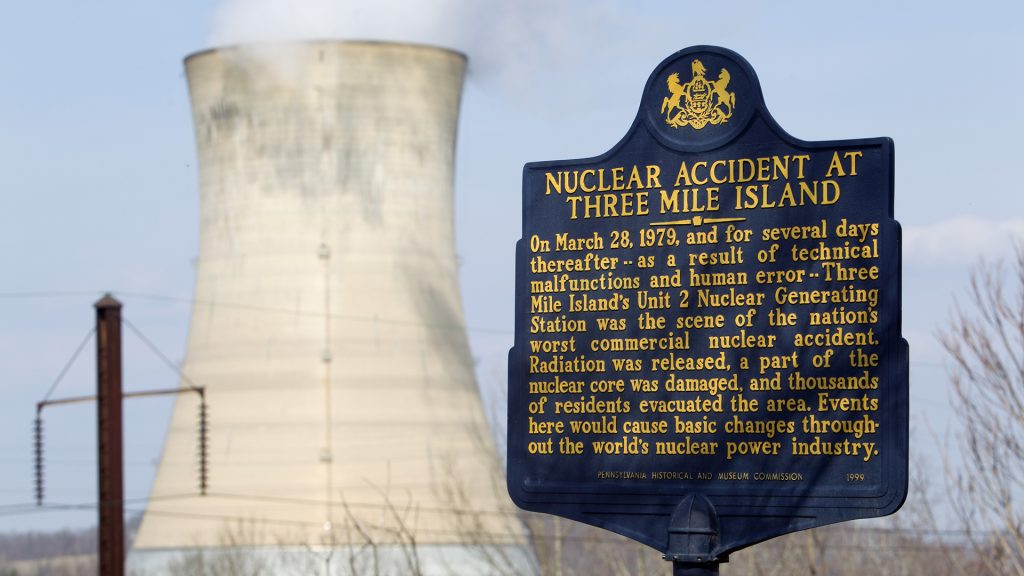
Legal threats, skills shortages and regulatory challenges complicate reopening of plant at site of nuclear accident
Ft.com Jamie Smyth in Middletown, Pennsylvania, 17 Nov 24
A group of veteran community activists is planning legal action to block the reopening of Three Mile Island nuclear plant in a test of whether the American public will back an atomic energy boom financed by Big Tech and US taxpayers. Three Mile Island Alert, a group founded almost half a century ago to lobby for the closure of the plant in Middletown, Pennsylvania — site of the worst nuclear accident in US history — said it would challenge government licences required by operator Constellation Energy, which is targeting a restart in 2028.
The legal threat is one of several obstacles facing the utility as it races to meet the terms of a 20-year power supply deal struck with Microsoft. The $1.6bn project could become a potent symbol of the revival of nuclear energy in the US.
Constellation must obtain numerous regulatory approvals, train hundreds of staff and upgrade equipment at a time when nuclear supply chains are stretched. It must also persuade the local community — and the incoming administration of Donald Trump — that the benefits of restarting the plant outweigh the risks.
“The restart is not going to happen by 2028: that is pure fantasy,” Eric Epstein, a 64-year old former history professor and chair of TMI Alert, told the Financial Times. “We haven’t even cleaned up Three Mile Island unit two, the site of the accident is still highly radioactive . . . and now we’re going to generate more nuclear waste. It’s disappointing and it’s manifestly unfair.”
TMI’s second reactor was closed in 1979 after a partial meltdown caused a radiation leak, prompting a chaotic response from then operator Metropolitan Edison Company and public authorities that dented public trust. The plant’s first reactor was shuttered in 2019 for economic reasons when the US shale revolution produced so much cheap gas that nuclear energy could not compete.
Read more ………… https://www.ft.com/content/b90f6e21-bb8d-4606-9e5e-c4acb56b86ce
: Restart of Three Mile Island tests US appetite for nuclear revival
Trump picks Liberty Energy CEO and Oklo nuclear company board member Chris Wright as Energy secretary
CNBC, Nov 16 2024, Spencer Kimball,
- President-elect Donald Trump picked Liberty Energy CEO Chris Wright to lead the Department of Energy.
- Liberty Energy is an oilfield services company headquartered in Denver, Colorado. Wright also serves on the board of nuclear power startup Oklo.
- Wright has denied that climate change represents a global crisis.
………………………………………………………. https://www.cnbc.com/2024/11/16/trump-picks-liberty-energy-ceo-and-oklo-board-member-chris-wright-as-energy-secretary.html
1 This Month

of the week – Shut Down Drone Warfare!


Tell the Ukrainian Government to Drop Prosecution of Peace Activist Yurii Sheliazhenko

Petition to revoke the licensing of the Near Surface Nuclear Disposal Facility (NSDF) at Chalk River. https://www.ourcommons.ca/petitions/en/Petition/Details?Petition=e-7247
To see nuclear-related stories in greater depth and intensity – go to https://nuclearinformation.wordpress.com
-
Archives
- April 2026 (68)
- March 2026 (251)
- February 2026 (268)
- January 2026 (308)
- December 2025 (358)
- November 2025 (359)
- October 2025 (376)
- September 2025 (257)
- August 2025 (319)
- July 2025 (230)
- June 2025 (348)
- May 2025 (261)
-
Categories
- 1
- 1 NUCLEAR ISSUES
- business and costs
- climate change
- culture and arts
- ENERGY
- environment
- health
- history
- indigenous issues
- Legal
- marketing of nuclear
- media
- opposition to nuclear
- PERSONAL STORIES
- politics
- politics international
- Religion and ethics
- safety
- secrets,lies and civil liberties
- spinbuster
- technology
- Uranium
- wastes
- weapons and war
- Women
- 2 WORLD
- ACTION
- AFRICA
- Atrocities
- AUSTRALIA
- Christina's notes
- Christina's themes
- culture and arts
- Events
- Fuk 2022
- Fuk 2023
- Fukushima 2017
- Fukushima 2018
- fukushima 2019
- Fukushima 2020
- Fukushima 2021
- general
- global warming
- Humour (God we need it)
- Nuclear
- RARE EARTHS
- Reference
- resources – print
- Resources -audiovicual
- Weekly Newsletter
- World
- World Nuclear
- YouTube
-
RSS
Entries RSS
Comments RSS
 nuclear-news