Ratepayers First: The Economic Case Against Nuclear’s Data Center Dreams
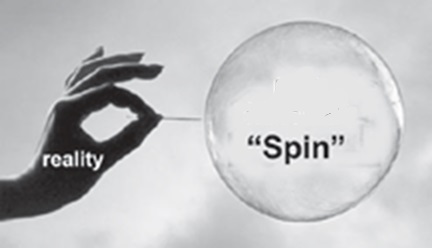
Now that data centers are growing and the climate crisis is accelerating, nuclear power is being positioned as a solution to both crises. Yet, this is deeply flawed.
Nov 6, 2024, Powermag 6th Nov 2024
As an energy professional in Georgia with a front row seat to the construction of Plant Vogtle, I found the October 23 Washington Post editorial endorsing nuclear energy as a tool for combating climate change astonishing. Georgia is the first state to build nuclear power in 30 years and the editorial board profoundly mischaracterized what happened here, and as with nearly all essays in support of nuclear, it never mentioned impacts to ratepayers, those of us who are actually paying for Plant Vogtle.by Patty Durand,
Perhaps the editors did not know that Georgia Power added $11.1 billion to its rate base, the assets on which it earns a profit, for its 45.7% share of the project. That amount of money for just 1,020 MW of generation is a horrible thing to do to ratepayers. Plant Vogtle cost eight to 10 times more than any other type of generation and resulted in a 25% rate increase, the largest in Georgia’s history. Yet, this achieved only a 7.5% expansion in Georgia Power’s capacity.
Glib claims that Vogtle was “FOAK” (first of a kind) and lessons learned will reduce future costs ignore the magnitude of the cost overruns and severity of the management failures. Real reasons for cost overruns include leaving expensive components in fields unprotected from weather and without a chain of custody resulting in a failure rate of 80%, and creating materially inaccurate project schedules for Georgia Public Service Commission (PSC) filings to make it appear that construction milestones had been reached when they had not. These and other deceptive behaviors led to costly construction mistakes that are not related to FOAK.
Georgia Public Service Commissioner Tim Echols, a frequent contributor to POWER magazine, was public in his opinion that the commission should not review Vogtle’s construction costs for prudency and reasonableness throughout the 15-year timeline of the project, saying that would happen at the end. A settlement agreement on Vogtle reimbursements between PSC staff and Georgia Power was made two months before hearings were to begin, so the promised prudency hearings were never held. Thus, a shared understanding of Vogtle’s failures never took place, leaving room for nuclear supporters to make up reasons for Vogtle’s cost overruns that have no basis in fact.
Now that data centers are growing and the climate crisis is accelerating, nuclear power is being positioned as a solution to both crises. Yet, this is deeply flawed. The timeline for building nuclear is too slow, the costs are too high, and the corruption that follows nuclear power because of the big money involved is ignored. Using nuclear energy to address these crises means regulators won’t have to fix the perverse cost-plus business model that encourages utilities to slow walk or block the clean energy transition, and data centers can grow while keeping their climate emissions pledges intact.
This is very convenient for everyone but the ratepayer. Few people realize that most large industrial customers are on marginal rate tariffs, which are different than traditional base tariffs. Marginal tariffs do not include capital costs. Instead of paying $0.15–0.19 per kWh as most residential customers do, industrials like data centers pay only $0.05–0.06 per kWh .
The recent announcement that Microsoft would buy all the power from Constellation Energy’s recommissioning Three Mile Island carefully avoids mentioning who is paying the (unknown) billions of dollars in capital costs. And if Constellation Energy secures the $1.6 billion Department of Energy loan they seek, those repayment costs will flow to residential rates too, via the traditional base tariff.
Nuclear is a deeply flawed choice when climate change can be addressed affordably and rapidly with renewables and modern grid technologies, and numerous reports show a path toward meeting data center energy needs without nuclear………………………………………………………………..
Enormous predictions for data center growth projections made by utilities must be verified by independent third parties, and we already know double counting of data center load growth is happening. The continued use of trade secret protection rules by utilities refusing to disclose their prospective data center clients or allow verification of their enormous growth projections is not acceptable
……………………………………………………………… There are numerous voices calling for a measured response to data center load growth, among them AES President and CEO Andres Gluski, who said during an interview with CNBC that “euphoria” over nuclear energy as a power source for data centers is a “little overblown.” He noted that renewables are cheaper, easier to site, and “the future is going to be renewable energy.”
Ratepayers matter, and it’s time that everyone focuses on what’s best for them. And what’s best for them are affordable electricity bills and rapid decarbonization of the electric grid that does not include paying for expensive nuclear energy to serve data centers.
—Patty Durand is the founder and president of Cool Planet Solutions.
https://www.powermag.com/blog/ratepayers-first-the-economic-case-against-nuclears-data-center-dreams/
No comments yet.
1 This Month

of the week – Shut Down Drone Warfare!


Tell the Ukrainian Government to Drop Prosecution of Peace Activist Yurii Sheliazhenko

Petition to revoke the licensing of the Near Surface Nuclear Disposal Facility (NSDF) at Chalk River. https://www.ourcommons.ca/petitions/en/Petition/Details?Petition=e-7247
To see nuclear-related stories in greater depth and intensity – go to https://nuclearinformation.wordpress.com
-
Archives
- April 2026 (103)
- March 2026 (251)
- February 2026 (268)
- January 2026 (308)
- December 2025 (358)
- November 2025 (359)
- October 2025 (376)
- September 2025 (257)
- August 2025 (319)
- July 2025 (230)
- June 2025 (348)
- May 2025 (261)
-
Categories
- 1
- 1 NUCLEAR ISSUES
- business and costs
- climate change
- culture and arts
- ENERGY
- environment
- health
- history
- indigenous issues
- Legal
- marketing of nuclear
- media
- opposition to nuclear
- PERSONAL STORIES
- politics
- politics international
- Religion and ethics
- safety
- secrets,lies and civil liberties
- spinbuster
- technology
- Uranium
- wastes
- weapons and war
- Women
- 2 WORLD
- ACTION
- AFRICA
- Atrocities
- AUSTRALIA
- Christina's notes
- Christina's themes
- culture and arts
- Events
- Fuk 2022
- Fuk 2023
- Fukushima 2017
- Fukushima 2018
- fukushima 2019
- Fukushima 2020
- Fukushima 2021
- general
- global warming
- Humour (God we need it)
- Nuclear
- RARE EARTHS
- Reference
- resources – print
- Resources -audiovicual
- Weekly Newsletter
- World
- World Nuclear
- YouTube
-
RSS
Entries RSS
Comments RSS
 nuclear-news
Leave a comment