Airstrip One: How Albanese has integrated Australia into Trump’s military machine
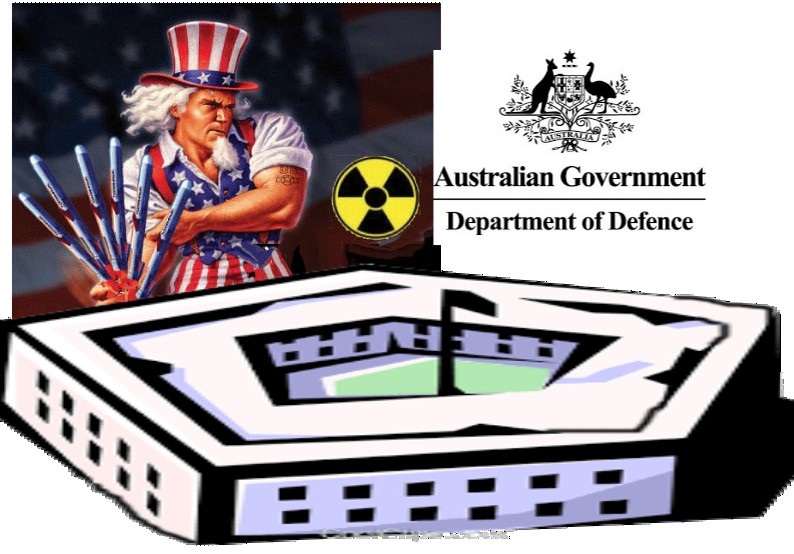
Thanks to the Albanese government, the new Trump administration will find Australia a well-established launch pad for any conflict with China.
Bernard Keane, Nov 11, 2024, https://www.crikey.com.au/2024/11/11/anthony-albanese-australia-us-military-integration-donald-trump/
The next Trump administration will arrive in power to learn that Australia is far more deeply enmeshed in in the US military and intelligence apparatus than in 2020, partly thanks to an eager Albanese government subordinating Australian sovereignty to Washington.
AUKUS is a Biden-era initiative that advocates worry Trump may look askance at, given the pressure it will place on US nuclear submarine production — although the fact that America and the UK can walk away whenever they like, and that Australia is handing $5 billion to each for the privilege of participating, should mitigate Trump’s hostility. That AUKUS will effectively place Australia’s submarine fleet — if it ever arrives — under US control in the 2040s and 2050s may be appealing, but that’s far beyond Trump’s short-term mindset.
But the bigger story of Australian sovereignty under the Albanese government isn’t AUKUS but the steady integration of Australia’s military systems into America’s, and Australia’s transformation into a launch pad for the deployment of American power. The Albanese government has:
- Facilitated “regular and longer visits of US [nuclear submarines] from 2023 to Australia, with a focus on HMAS Stirling. These visits would help build Australia’s capacity in preparation for Submarine Rotational Force-West, an important milestone for the AUKUS Optimal Pathway that would commence as early as 2027”. Submarine Rotational Force-West is the permanent operation of one British and four US nuclear submarines from Perth.
- Allowed US intelligence officials to be embedded in the Defence Intelligence Organisation, a “significant step” toward what Defence Minister (and, as he always insists on being called, Deputy Prime Minister) Richard Marles hailed as “seamless” intelligence ties between the US and Australia.
- Established sharing of satellite imagery “and analysis capability” between Geoscience Australia and the US government.
Established rotation of State Department officials through the Department of Foreign Affairs and Trade “in the areas of technical security, cyber security, and threat analysis”.- Upgraded Top End RAAF airfields to accommodate more US military aircraft, with more upgrades planned, in work hailed by Stars and Stripes as reflecting how “Australians are alarmed at Chinese efforts to gain influence among their South Pacific neighbours”.
- Established facilities for “prepositioning of initial US Army equipment and materiel in Australia at Albury-Wodonga”.
- Continued the Morrison government’s support for the expansion of the Pine Gap surveillance facility, while it is being used, inter alia, to provide intelligence to the Israeli Defence Forces in their genocidal campaign against Palestinians.
- US Marine rotations through Darwin have also been used as “a hub in a lengthy kill web that could protect the region, should Australia face outside threats. ‘Every single day Darwin is becoming more of a hub for us, not just in Australia but through the island chain,’” one American officer says.
In one recent exercise, “Marines set up a bare bones air base on the York Peninsula, Queensland, Australia complete with a fires unit armed with anti-ship missiles and a sensing unit to run air defense … Marines also used their own and Australian aircraft, including C-130s, C-17s and Ospreys to establish an Expeditionary Advanced Base that set up an Osprey maintenance base to extend the aircrafts operations during military exercises. ‘These are real posture gains being made there that will be useful for us in conflict.’”
This demonstrates the validity of Paul Keating’s description of Australia under Albanese as becoming “a continental extension of American power akin to that which it enjoys in Hawaii, Alaska and more limitedly in places like Guam … the national administrator of what would be broadly viewed in Asia as a US protectorate”.
The difference now is that from January, this “continental extension” will be under the control not of a traditional centrist Democrat, but an unstable populist with a deep hostility to China and a stated determination to weaken the country he believes caused the COVID pandemic, as well as an outright hostility to international law and desire to unshackle Israel from any limitations on its mass slaughter of Palestinians. In the event Trump’s proposed trade war with China significantly increases military tensions, Australia will be Airstrip One for the deployment of American power.
America Can’t Afford a New Nuclear Buildup

William Hartung, 11 Nov 24, https://www.forbes.com/sites/williamhartung/2024/11/11/america-cant-afford-a-new-nuclear-buildup/
The return to power of Donald Trump raises serious questions about the future of the U.S. nuclear arsenal. His statements on nuclear weapons have been all over the map, but a 2017 review by Anthony Zurcher of The Guardian of Trump’s statements since the 980s concluded that “his thoughts on atomic weaponry reflect a certain strain of Cold War arms-race enthusiasm and diplomatic brinkmanship.” And in 2016, after he was challenged when he said ‘possibly, possibly” nuclear weapons could be used, Trump went on to say that if they weren’t to be used, “Then why are we making them?” On the flip side, he has also called nuclear war “the ultimate catastrophe.”
As for his actions in office, Trump pulled the U.S. out of the Iran nuclear deal, formally known as the Joint Comprehensive Plan of Action (JCPOA), which by all objective accounts had been working to stop Tehran’s pursuit of a nuclear weapon. And in 2019, the Trump administration withdrew from the Intermediate Nuclear Forces in Europe treaty (INF), which had banned ground-based ballistic missiles and cruise missiles in the range of between 500 and 5,500 kilometers.
On the other hand, Trump was roundly (and unfairly) criticized for his short-lived effort at nuclear negotiations with North Korea. The talks ultimately failed, but critics who slammed Trump for “rewarding” North Korean dictator Kim Jong Un seemed to be ignoring the fact that in the final analysis talking with adversaries is a precondition for any sort of agreement. Criticism of Trump for being ill-prepared or inconsistent was fair game, but slamming him for talking to the North Korean leader at all didn’t make a lot of sense.
The real test of Trump’s stance on all-things nuclear will be his approach to the Pentagon’s multi-year effort to build a new generation of nuclear-armed missiles, bombers, and submarines, plus new warheads to go with them, a plan that some experts suggest could cost up to $2 trillion in the next three decades.
The nuclear plan has already been plagued by major cost overruns, including an 81% increase in the projected cost of the new intercontinental ballistic missile, dubbed the Sentinel, and developed and produced by Northrop Grumman. The cost overrun prompted a government review of the program, but the assessment ended up pronouncing that the program was too important to cancel.
The review of the Sentinel was a missed opportunity. Former secretary of defense William Perry has called ICBMs “some of the most dangerous weapons we have,” because the president would have only a matter of minutes to decide whether to launch them on warning of attack, increasing the risk of a nuclear confrontation sparked by a false alarm.
The Pentagon has a big shopping list – a larger Navy, more combat aircraft, new armored vehicles, drones and other unpiloted vehicles. Even with a Pentagon budget soaring towards $1 trillion per year, something may have to be cut. There’s also a chance that at least a few fiscal conservatives in Congress may seek across-the-board cuts, including the Pentagon, upon news that for the first time interest on the federal debt is larger than the Pentagon budget.
On the other hand, despite the occasional criticism, Trump has come to see weapons contractors as important allies in executing his domestic strategy because of the jobs created by contracts with the Pentagon and foreign buyers. This alliance was on display in Trump’s effort to make a huge weapons deal with Saudi Arabia, which he claimed could create 500,000 jobs in the United States, when a more realistic estimate would be one-tenth to one-twentieth of that figure. The ultimate test came after the Saudi regime’s murder of the U.S.-resident Saudi dissident Jamal Khashoggi, when Trump issued a statement saying that U.S. arms to the Saudi regime would continue, in part because he didn’t want to reduce business for “our wonderful defense companies.”
Donald Trump is nothing if not unpredictable. Will Trump the deal maker pleasantly surprise us by attempting to enter into negotiations to reduce nuclear arsenals, or will he resort to bluster and threats that make negotiations more difficult, even as he helps line the pockets of major weapons makers with billions of dollars of our tax money? To some degree it’s up to what kind of pressure he gets for and against the current buildup, which is a question that can only be answered once he is in office.
Prepping Readers to Accept Mass Slaughter in Lebanese ‘Strongholds’

Belén Fernández, November 9, 2024, https://fair.org/home/prepping-readers-to-accept-mass-slaughter-in-lebanese-strongholds/
Back in May 2015, the New York Times’ Isabel Kershner decided to moonlight as an Israeli military propagandist by penning an alleged exposé (5/12/15)—headlined “Israel Says Hezbollah Positions Put Lebanese at Risk”—in which she diligently conveyed all that Israel had to say about Hezbollah’s infrastructure in south Lebanon.
The minuscule hamlet of Muhaybib, for example, was said to contain no fewer than “nine arms depots, five rocket-launching sites, four infantry positions, signs of three underground tunnels, three anti-tank positions and, in the very center of the village, a Hezbollah command post.” In the village of Shaqra, home to approximately 4,000 people, the Israeli army had meanwhile identified some “400 military sites and facilities belonging to Hezbollah.”
Only after 11 full paragraphs of transmitting the Israeli line did Kershner manage to insert the disclaimer that “the Israeli claims could not be independently verified.” But by that time, of course, the damage had been done, the reader having already been persuaded that south Lebanon was one big Hezbollah military installation, where Israel could not afford to concern itself with civilian lives in any future conflict. Driving the point home was former Israeli national security adviser Yaakov Amidror, who informed Kershner that “many, many Lebanese will be killed” in the next showdown with Hezbollah.
I happened to be in south Lebanon at the time of the article’s publication, and drove over to Muhaybib and Shaqra to check out the fearsome landscape. Though I did not encounter any Hezbollah command posts, I did see some schoolchildren, elderly folks, bakeries, farms, clothing shops and, in Shaqra, a colorful establishment offering “Botox filling.”
Legitimizing destruction
Nine years have now passed since Kershner’s bout of weaponized journalism, and Amidror’s words have certainly rung true: Many, many Lebanese have been killed in Israel’s latest war on Lebanon.
From October 2023 through November 5, more than 3,000 people have been slaughtered in the country—among them 589 women and at least 185 children. The vast majority were killed in September through November of 2024, when Israel ramped up its assault on Lebanese territory as a sideshow to the ongoing genocide in the Gaza Strip.
More than 800,000 people have been displaced. Muhaybib has literally been blown up in its entirety, and much of Shaqra has been pulverized as well. Israel has damaged or destroyed nearly a quarter of all buildings along the entire southern border.
And while the United States newspaper of record and other Western corporate media outlets have not exactly been preemptively calling in the strikes, à la Kershner, they have nonetheless done a fine job of legitimizing mass killing, displacement and destruction in other ways.
For starters, as FAIR has written about recently (10/10/24), there’s the insistence on following the US/Israeli lead in branding Hezbollah a “terrorist” organization and a “proxy” for Iran. Never mind that the Shia political party and armed group emerged as a direct consequence of the 1982 US-backed Israeli invasion of Lebanon that killed tens of thousands of people and constituted a textbook case of terrorism, including the cold-blooded murder of thousands of Palestinian refugees and Lebanese civilians in the Sabra and Shatila massacre.
When Israel in September staged an unprecedented terrorist attack in Lebanon by detonating personal electronic devices across the country — killing 12 people, including two children—CNN (9/17/24) spun the episode thusly: “Exploding Pagers Injure Members of Iran-Backed Terror Group.”
Converting communities into targets
Then there is the matter of the term “Hezbollah stronghold,” to which pretty much every corporate media outlet has proved itself hopelessly addicted when describing the densely populated neighborhood of Dahiyeh in the Lebanese capital of Beirut.
The Guardian (10/4/24) was one of numerous outlets that referred to Dahiyeh, a densely packed Beirut suburb, as a “Hezbollah stronghold”—painting the entire community was a legitimate military target.
Devastated in Israel’s 2006 war on Lebanon, Dahiyeh is now once again under maniacal bombardment by the Israeli military, which on September 27 leveled a whole residential block in order to assassinate Hezbollah secretary general Hassan Nasrallah. Sure enough, the New York Times (9/27/24) was standing by with the headline: “Israel Strikes Hezbollah Stronghold in Attempt to Kill Leader.”
Just google “Hezbollah stronghold” and you’ll see what I mean — that the press is apparently incapable of talking about Dahiyeh any other way. Or, if you’re not in the mood for googling, here are some illustrative links to the Washington Post, Guardian, Wall Street Journal, ABC News, NBC News, Reuters and Associated Press. And that’s just the tip of the iceberg.
To be sure, there is substantial public support in Dahiyeh for Hezbollah—not that support for an anti-Zionist resistance organization should make anyone fair game for extrajudicial slaughter. There is also support for numerous other Lebanese parties and groups in this neighborhood of nearly 1 million people, although the “stronghold” designation tends to erase the diversity that exists.
But the real problem with the terminology is that, when deployed in the context of war, a “stronghold” is more likely to be interpreted as “a fortified place”—the first definition of the word appearing in the Merriam-Webster dictionary. In that sense, then, Dahiyeh is effectively converted into a legitimate military target, its inhabitants dehumanized by the linguistic arsenal of a media establishment that is ultimately committed to validating Israeli massacres of civilians.
And it’s not only Dahiyeh. The press has now expanded its obsessive use of the “stronghold” descriptor in accordance with Israel’s current killing spree in south Lebanon and the Bekaa Valley in the east of the country, both of which regions we are now continuously reminded are also “Hezbollah strongholds.” When the Lebanese health ministry reported 60 killed in airstrikes in Lebanon’s Bekaa Valley on October 29, the BBC noted that “rescue efforts were still under way in the valley, which is a Hezbollah stronghold.”
Back in July, the same outlet had warned that the south Lebanese city of Tyre would “be in the firing line in the event of all-out war, along with the rest of southern Lebanon, a Hezbollah stronghold.” Four months later, Tyre and the rest of southern Lebanon are an unmitigated horrorscape, blunted for a Western audience by media euphemism.
Australia US Alliance: Is It Time to Rethink Our Loyalty?
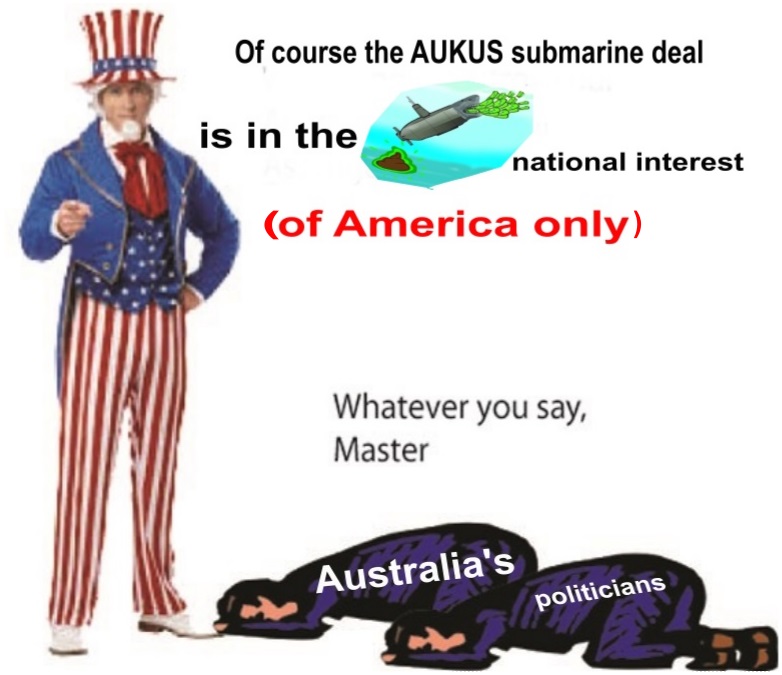
November 10, 2024, by: The AIM Network, By Denis Hay
Australia US alliance has costs. Learn how this impacts Australians and how reallocated funds could benefit citizens.
Introduction
Australia and the United States have been strategic allies for over seventy years. This Australia US alliance, often celebrated with the phrase “old allies and true friends,” is rooted in shared history and mutual defence agreements like the ANZUS Treaty.
However, many Australians are now questioning if the costs of this alliance—both in terms of military and economic impact—outweigh the benefits. This article explores the consequences of Australia’s allegiance to the U.S., the human costs of U.S. interventions, and how Australia’s financial resources might better serve its citizens’ social well-being.
1. The Costly Legacy of the Australia-U.S. Alliance
– Historical Overview: Australia US alliance began formally with the ANZUS Treaty in 1951. Through wars in Korea, Vietnam, Iraq, and Afghanistan, Australia has stood beside the U.S., incurring both financial costs and human losses.
– Casualty Estimates: The human toll of this alliance is staggering. The wars led by the U.S. have resulted in estimated casualties of over 200,000 American troops, 60,000 Australian troops, and millions of civilians globally. For instance, the Iraq War alone caused around 500,000 civilian deaths and displaced over 3 million people.
– The Refugee Crisis: The consequence of U.S.-led wars has been a refugee crisis affecting countless lives. Countries like Syria, Iraq, and Afghanistan have seen millions of citizens fleeing war zones, often with little support from Western nations. Australia’s involvement in these wars contributes to a moral responsibility for the refugee influx, yet the country struggles to support displaced persons adequately.
2. The Social Cost of Alliance-Bound Military Spending
– Military Expenditures at the Cost of Social Welfare: Australia’s defence budget has increased significantly, with estimates of $48.7 billion given in 2023. Much of this spending is tied to keeping military readiness to support the U.S. in conflicts. These funds could otherwise enhance healthcare, education, and housing for Australians.
Military funding without public transparency.
– Impact on Public Services: Redirecting even a part of the defence budget could fund initiatives like universal healthcare, improved mental health services, and housing for the homeless. For example, just 10% of the current defence budget could support building 10,000 public housing units annually or fund a significant expansion of mental health services for underserved communities.
– Consequences of Refugee and Displacement Crises: Australia’s participation in U.S.-led interventions indirectly contributes to refugee crises that strain social services and humanitarian aid. Public sentiment on immigration has also been affected, often creating divisive views within Australian society about who should be supported and who is viewed as a “burden.”
3. A Call for a More Independent and Socially Conscious Foreign Policy
Australia’s alliance with the United States has provided strategic support over the decades, yet many argue that it is time for Australia to pursue a foreign policy that is more reflective of its own interests, values, and the well-being of its citizens.
Despite growing public interest in a more independent, socially conscious approach, Australian governments have hesitated to diverge significantly from U.S.-aligned policies. This reluctance may stem from multiple factors:
1. Fear of Political and Economic Repercussions:
– Australian policymakers often cite strategic security concerns as a reason for adhering closely to U.S. foreign policy, fearing that any independence might jeopardize Australia’s access to American intelligence, technology, and defence resources.
– Economically, a close alliance with the U.S. bolsters trade relations and provides access to powerful American markets. For some politicians, the potential economic fallout of alienating a significant trading and security partner outweighs the call for a more independent stance.
2. Lack of Political Courage and Vision:
– Some critics argue that the Australian government lacks the courage to challenge established norms or take bold steps toward an independent foreign policy. This lack of vision may stem from a longstanding alignment with U.S. interests that has become entrenched in Australia’s political and diplomatic culture.
– Breaking away from such a powerful ally requires a willingness to redefine national priorities, a path that requires courage, strategic foresight, and often a willingness to face criticism from powerful interest groups invested in maintaining the alliance.
3. Disconnect from Public Opinion:
– Surveys show that Australians increasingly favour a more balanced, socially conscious approach to foreign policy, especially as they see the domestic impact of military spending and U.S.-influenced policies. However, successive Australian governments have often ignored this sentiment, raising questions about whether the government genuinely prioritizes the public’s voice in its decisions…………………………..
4. Influence of External Powers and Lobbying:
– Australian foreign policy decisions are also influenced by lobbying from powerful industries, including defence contractors and political think tanks with ties to the U.S. These entities often push for policies that favour a strong alliance with the U.S., as it aligns with their economic and strategic interests.
– The cumulative effect of these influences can stymie efforts for a more independent policy path, effectively sidelining the public’s desire for a foreign policy that prioritizes social well-being and peaceful diplomacy.
In summary, Australia’s reluctance to adopt a more independent, socially conscious foreign policy is a combination of economic dependency, political caution, and a systemic disconnect from the will of the people.
For Australia to shift toward a foreign policy that truly serves its citizens, it would require not only a realignment of political priorities but also a renewed commitment to placing the public’s interests and values at the heart of its foreign relations.
1. The Historical Basis of Australia-U.S. Relations and Its Human Cost……………………………………………….
2. Australia’s Position on U.S. Leaders and Policies
– Unquestioned Loyalty: Australian leaders often affirm support for U.S. presidents and foreign policies without critical evaluation. This approach reflects a hesitancy to challenge U.S. decisions even when they conflict with Australia’s best interests.
– Impact on Australian Sovereignty: The uncritical acceptance of Australia US alliance policies can undermine Australia’s autonomy. For example, Australia’s alignment with U.S. policies on China has strained trade relationships, affecting vital economic sectors like agriculture, tourism, and education. The result is a compromise of national interests to support a symbolic “alliance.”
3. U.S. Military Interventions, Global Casualties, and the Refugee Crisis
– Scope of U.S.-Led Wars: The U.S. has been involved in conflicts worldwide, from the Middle East to Latin America and beyond, often resulting in widespread devastation. These conflicts have had lasting impacts, including millions of civilian deaths and widespread destruction.
– The Refugee Crisis and Australia’s Responsibility: Australia’s support for U.S. interventions creates a moral obligation to help refugees from war-torn countries. However, current refugee policies fall short, leaving many displaced people without adequate support or protection. Accepting more refugees from conflict zones would reflect Australia’s commitment to international human rights and fulfill part of its alliance-driven responsibility.
4. Australia’s Role as a Supporting Partner and Its Consequences
– Participation in Conflicts and Reputational Impact: Australia’s involvement in U.S. wars affects its international reputation, often casting the country as a secondary player rather than an independent, neutral voice in global politics. This alignment can make Australia appear complicit in conflicts driven by U.S. interests, compromising its image as a peaceful nation.
– Economic and Social Impact on Australians: By aligning with U.S. defence priorities, Australia diverts significant public money to defence spending, reducing resources for vital services. Citizens bear the costs through reduced access to affordable healthcare, housing shortages, and an underfunded education system. The pressure to conform to U.S. policies, especially in the Indo-Pacific, risks escalating regional tensions that could directly affect Australians.
5. The Opportunity Cost: How Reallocating Military Spending Could Benefit Australians……………………………………………………………..
Rethinking Australia’s Foreign Policy Approach for the Future
As global dynamics shift, Australia faces a critical juncture in deciding how to position itself on the world stage. A key element of this decision lies in its relationship with China, a rapidly growing economic and political power in the Indo-Pacific region.
While the Australia US alliance has historically shaped much of Australia’s foreign policy, the rise of China presents an opportunity for Australia to pursue a balanced, independent approach that prioritizes regional stability and mutual benefit.
1. China’s Role as Australia’s Major Trading Partner:……………………………………….
2. Promoting Regional Stability and Security:
– As a dominant power in the Indo-Pacific, China’s influence on regional security is substantial. Building a constructive, diplomatic relationship with China could position Australia as a mediator and stabilizer within the region, promoting dialogue over conflict.
– With rising tensions between the U.S. and China, Australia has a unique opportunity to champion a foreign policy that values peace, cooperation, and shared interests, rather than one that escalates division. This approach would reduce the risk of Australia being drawn into potential conflicts that do not serve its national interests.
3. Economic and Diplomatic Benefits of Non-Alignment:………………………….
4. Preparing for a Multipolar World:
– The global power landscape is shifting from U.S.-led dominance to a multipolar world where countries like China, India, and emerging economies play a larger role. For Australia, recognizing and adapting to this reality is crucial for staying relevant and resilient in the international arena…………………………….
Conclusion
Australia US alliance has served strategic purposes in the past, but as global dynamics shift, it’s vital to reassess whether the benefits of this alliance outweigh the costs. The loss of lives, the displacement of millions, and the diversion of public money from critical social services highlight the urgent need for a foreign policy that prioritizes Australia’s long-term interests and humanitarian values.
By adopting a more independent stance, Australia could enhance the social well-being of its citizens and contribute to a more peaceful, stable global community. https://theaimn.com/australia-us-alliance-is-it-time-to-rethink-our-loyalty/
Hinkley Point C ‘using cheap foreign labour’, say striking workers.
Engineers claim colleagues brought in from outside the UK and EU are paid
less than half their wages.
EDF Energy is investigating claims that a
company in its supply chain is using cheap foreign labour to undercut
British engineers working on its Hinkley Point C and Sizewell C nuclear
power station projects.
The allegation was made by cabling and pipework
engineers who went on strike last week after claiming that they had not
received a pay rise in four years. They allege that since beginning their
dispute last year with Alten, their employer, which provides engineering
services for the projects, they have discovered that foreign colleagues
brought in from outside the UK and EU from places such as India and Nigeria
are being paid about half their wages.
Times 11th Nov 2024 https://www.thetimes.com/business-money/energy/article/hinkley-point-c-using-cheap-foreign-labour-say-striking-workers-g3gw20v65
Occupational exposure to radiation among health workers: Genome integrity and predictors of exposure

Mutation Research/Genetic Toxicology and Environmental Mutagenesis
Volume 893, January 2024, Hayal Çobanoğlu, Akın Çayır
Highlights
- •Significant increase of genomic instability biomarkers reflecting long term disease risk
- •Significant association between radiation exposure and NPB, and NBUD frequencies
- •Work-related parameters have the potential to explain increase of genomic instability
- •Higher risk of exposure in plain radiography field
Abstract
The current study aimed to investigate genomic instabilities in healthcare workers who may experience varying levels of radiation exposure through various radiological procedures. It also sought to determine if factors related to the work environment and dosimeter reading could effectively explain the observed genomic instabilities. Utilizing the cytokinesis-block micronucleus assay (CBMN) on peripheral blood lymphocytes, we assessed a spectrum of genomic aberrations, including nucleoplasmic bridge (NPB), nuclear budding (NBUD), micronucleus (MN) formation, and total DNA damage (TDD). The study uncovered a statistically significant increase in the occurrence of distinct DNA anomalies among radiology workers (with a significance level of P < 0.0001 for all measurements). Notably, parameters such as total working hours, average work duration, and time spent in projection radiography exhibited significant correlations with MN and TDD levels in these workers. The dosimeter readings demonstrated a positive correlation with the frequency of NPB and NBUD, indicating a substantial association between radiation exposure and these two genomic anomalies. Our multivariable models identified the time spent in projection radiography as a promising parameter for explaining the overall genomic instability observed in these professionals. Thus, while dosimeters alone may not fully explain elevated total DNA damage, intrinsic work environment factors hold potential in indicating exposure levels for these individuals, providing a complementary approach to monitoring.
Introduction
Ionizing and non-ionizing radiation constitute inevitable forms of environmental exposure, to which a substantial portion of the global population remains consistently subjected. Among those at heightened risk are individuals employed in radiology, who utilize radiation sources for both diagnostic and therapeutic procedures. More than 30 million medical radiology workers are exposed to low level of radiation worldwide [1], [2], which provides the opportunity to understand the health risks of chronic exposure to low-dose ionizing radiation (IR) [3].
It has been observed that there are increased risks for many cancer types, including skin, leukemia, breast, and thyroid, in medical radiology workers who started working before the 1950 s [4], [5], [6], [7], [8]. These results probably reflect higher occupational radiation exposure of medical radiology workers [5], [9]. Today, even if radiation exposure is less than in the past owing to technological advances and radiation safety measures [9], recent studies show that long-term exposure to low-dose IR may still be a significant health risk [10], [11], [12].
Introduction
Ionizing and non-ionizing radiation constitute inevitable forms of environmental exposure, to which a substantial portion of the global population remains consistently subjected. Among those at heightened risk are individuals employed in radiology, who utilize radiation sources for both diagnostic and therapeutic procedures. More than 30 million medical radiology workers are exposed to low level of radiation worldwide [1], [2], which provides the opportunity to understand the health risks of chronic exposure to low-dose ionizing radiation (IR) [3]. It has been observed that there are increased risks for many cancer types, including skin, leukemia, breast, and thyroid, in medical radiology workers who started working before the 1950 s [4], [5], [6], [7], [8]. These results probably reflect higher occupational radiation exposure of medical radiology workers [5], [9]. Today, even if radiation exposure is less than in the past owing to technological advances and radiation safety measures [9], recent studies show that long-term exposure to low-dose IR may still be a significant health risk [10], [11], [12].
Despite the efforts to minimize radiation exposure, radiation-exposed health workers may frequently encounter low levels of ionizing radiation due to various occupational factors, including excessive work hours, inadequate shielding in their work environment, a high volume of daily imaging procedures, and failure to employ personal protective equipment during imaging activities. Although traditional methods such as physical dosimeters and blood-based clinical assessments are routinely used to monitor worker health, these approaches possess limitations when it comes to assessing the long-term effects of low-dose radiation exposure. Consequently, it is imperative to implement more robust biomarkers to routinely monitor radiology workers………………………………………………………………………………………………………………………………… more Link: https://www.sciencedirect.com/science/article/abs/pii/S1383571824000020
Israel Keeps Finding New Ways To Play Victim While Committing Genocide
Caitlin Johnstone, Nov 10, 2024, https://www.caitlinjohnst.one/p/israel-keeps-finding-new-ways-to?utm_source=post-email-title&publication_id=82124&post_id=151441702&utm_campaign=email-post-title&isFreemail=true&r=1ise1&triedRedirect=true&utm_medium=email
Israel is really struggling with how difficult its present circumstances make playing the victim. It keeps having to invent new abuses to be victimized by like the imaginary Amsterdam “pogrom” and the fake mass rape narrative that surfaced months after October 7, because it can’t sit comfortably in the role of victimizer while on trial for genocide in international courts.
Playing victim is too deeply ingrained in the narrative control strategies of Israel and its apologists, so they have to keep coming up with new and innovative ways for Israel to be victimized even when it is very clearly the last state on earth who has any business being viewed as such.
We keep seeing the word “pogrom” used to refer to Israeli hooligans getting their asses kicked for obnoxious behavior in Amsterdam even as Israeli settlers keep committing textbook pogroms in the occupied West Bank.
Just a week ago armed Israeli settlers went on a violent rampage torching Palestinian people’s houses, vehicles and olive trees in order to terrorize them and drive them away. This is the exact type of behavior that the word “pogrom” has historically been used to describe, but you never hear that word used in the mass media to describe Israeli thuggishness. Instead we’re seeing it used to describe Israeli soccer hooligans getting beat up after they tore down Palestinian flags and sang chants about murdering children in Gaza.
So we’re seeing some good news and some bad news about Donald Trump’s potential cabinet picks when it comes to US warmongering and militarism.
The good news is that Trump has publicly ruled out giving psychopathic war hawks Nikki Haley and Mike Pompeo a role in his next administration, explicitly naming them in a post on Truth Social and saying they won’t be invited.
This announcement suggests that Trump is at least trying to win the favor of the more anti-interventionist faction of his base. Pundits like Tucker Carlson have been publicly crusading against both Haley and Pompeo throughout this election cycle, and I mention Carlson specifically because he reportedly has Trump’s ear and was believed to have played a role in talking Trump out of bombing Iran in 2019.
The bad news is that other professional warmongers appear to be working their way into the administration. Reports from both Bloomberg and Fox News say the horrible Mike Rogers is under consideration to be the next secretary of defense. The Ron Paul Institute’s Daniel McAdams has a good thread on Twitter calling Rogers “an utter warhawk neocon” who is “arguably worse than Pompeo and Rubio,” noting that Rogers has promoted insanely hawkish positions on Ukraine/Russia, Israel/Iran, and China.
This news, in addition to Trump’s selection of Iran hawk Brian Hook to help staff the incoming State Department, makes it clear that Trump could still easily wind up with a cabinet packed full of warmongering swamp monsters just like last time. Hopefully he keeps getting pressured not to do so.
In a new article on “the expanding ground occupation of the Gaza Strip by the IDF” about the way Israel has been carving up Gaza and seizing more and more territory, Israel’s Ynet News reports that far right elements within the Israeli government are simply waiting for the Israeli hostages held by Hamas to die so that their deaths can be used to justify continued occupation and the construction of Jewish settlements in Gaza.
It’s like a false flag conspiracy theory, except it’s definitely happening and is being done right out in the open, and is even being announced ahead of time.
Democrats: Oh no the right wing voters we again tried to win over voted Republican again and we lost again.
Leftists: So stop doing that and win over the left instead by promoting immensely popular social policies.
Democrats: No way man, if we do that we’ll lose.
‘Unaffordable, Undesirable and Unachievable’ – NFLAs welcome launch of academic papers exposing ‘nuclear fantasy’

The UK/Ireland Nuclear Free Local Authorities have welcomed the publication
earlier this month by two renowned academics and opponents of nuclear power
of reports exposing the folly of the Labour Government in pursuing an
energy future for Britain which embraces nuclear power.
Professor Andy Blowers OBE is an Emeritus Professor of Social Sciences with the Open
University; a former member of the Committee on Radioactive Waste
Management (CoRWM) and the Radioactive Waste Management Advisory Committee
(RWMAC); and is the author of The Legacy of Nuclear Power. Professor
Stephen Thomas is an Emeritus Professor of Energy Policy at the University
of Greenwich and the Editor-in-Chief of the journal Energy Policy.
Professor Thomas is also a member of the EPA Radiological Protection
Advisory Committee, which plays an advisory role to the Irish Government.
NFLA 8th Nov 2024 https://www.nuclearpolicy.info/news/unaffordable-undesirable-and-unachievable-nflas-welcome-launch-of-academic-papers-exposing-nuclear-fantasy/
-
Archives
- February 2026 (199)
- January 2026 (308)
- December 2025 (358)
- November 2025 (359)
- October 2025 (376)
- September 2025 (258)
- August 2025 (319)
- July 2025 (230)
- June 2025 (348)
- May 2025 (261)
- April 2025 (305)
- March 2025 (319)
-
Categories
- 1
- 1 NUCLEAR ISSUES
- business and costs
- climate change
- culture and arts
- ENERGY
- environment
- health
- history
- indigenous issues
- Legal
- marketing of nuclear
- media
- opposition to nuclear
- PERSONAL STORIES
- politics
- politics international
- Religion and ethics
- safety
- secrets,lies and civil liberties
- spinbuster
- technology
- Uranium
- wastes
- weapons and war
- Women
- 2 WORLD
- ACTION
- AFRICA
- Atrocities
- AUSTRALIA
- Christina's notes
- Christina's themes
- culture and arts
- Events
- Fuk 2022
- Fuk 2023
- Fukushima 2017
- Fukushima 2018
- fukushima 2019
- Fukushima 2020
- Fukushima 2021
- general
- global warming
- Humour (God we need it)
- Nuclear
- RARE EARTHS
- Reference
- resources – print
- Resources -audiovicual
- Weekly Newsletter
- World
- World Nuclear
- YouTube
-
RSS
Entries RSS
Comments RSS
 nuclear-news