The death of Karen Silkwood—and the plutonium economy

The vision first created during World War II—and fostered with tens of billions of dollars of public funds—to establish nuclear power plants fueled by plutonium started to take on a nightmarish quality.

Within the next 10 years following the Indian nuclear explosion and Karen Silkwood’s death, the US Congress pulled the plug on the Liquid Metal Fast Breeder Reactor project, ending the Atomic Energy Commission’s vision of a plutonium economy, and the Supreme Court provided a little bit of justice for Karen’s parents and children, upholding a jury decision that for the first time cast aside the legal shield of the federal government protecting the nuclear industry.
Bulletin, By Robert Alvarez | November 8, 2024
On the evening of November 13, 1974—that is, 50 years ago—Karen Silkwood was driving to a meeting with a New York Times reporter and an official of the Oil, Chemical and Atomic Workers (OCAW) union. Her car flew off the road and hit a culvert on a lonely highway in western Oklahoma, killing her instantly. Karen was a union activist working as a technician at a plutonium fuel fabrication plant in Cimarron, Oklahoma owned by the Kerr-McGee Corp.
Several days before her death, Silkwood’s apartment was purposefully contaminated with highly toxic plutonium—which she had no access to—from the nuclear plant where she worked. Because of her activism, the company had put her and her roommates under constant surveillance. Documents about problems at the plant that two witnesses had seen before Silkwood’s fateful drive were missing. An independent investigation found evidence that her car was run off the road—contradicting official conclusions.
Karen became a whistleblower in large part because Kerr-McGee never bothered to tell workers that microscopic amounts of plutonium in the body can cause cancer. Karen became alarmed after dozens of workers, many fresh out of high school, had breathed in microscopic specks of plutonium and were required to undergo a risky procedure (chelation) to flush the radioactive contaminant from their bodies. It’s a procedure that can, even if successful in removing contaminants from the body, harm the kidneys.
Between 1970 and 1975, two metric tons of weapons-usable plutonium were shipped by truck from the Hanford nuclear production complex in Washington state to the Kerr-McGee plant in Oklahoma, where the plutonium was to be mixed with uranium and placed into 19,000 stainless steel fuel rods. At the time of Karen’s death, the Atomic Energy Commission found that about 40 pounds of plutonium had gone missing—enough to fuel several atomic bombs.
Since then, numerous books, articles, documentaries, and a critically acclaimed Hollywood motion picture have focused on the circumstances surrounding Silkwood’s death. My late wife and I were engaged in efforts for nearly a decade to achieve justice for her parents and children; those efforts were chronicled in some detail in Howard Kohn’s 1981 book, Who Killed Karen Silkwood? Was this an unfortunate accident, or was Karen Silkwood run off the road and killed to stop her from revealing dark secrets? After more than 40 years, the definitive answers to these questions remain unavailable.
The beginnings of the Silkwood saga. Karen Silkwood’s death heralded an end of America’s romance with the atom as a source of limitless cheap energy. There was no doubt on the part of the AEC, then the dominant force behind US energy policy, that commercial nuclear power would expand so rapidly and widely that by the end of the 20th century, the world would exhaust its supplies of uranium. If nuclear power was to thrive thereafter, according to AEC doctrine, a new generation of reactors fueled by plutonium extracted from spent nuclear fuel would have to be built. This new generation of so-called “breeder” reactors held the promise of producing vast amounts of cheap electricity while producing up to 30 percent more plutonium than they consumed. It turned out that the AEC’s nuclear power growth projection was off by an order of magnitude. Even today, world uranium supplies remain more than sufficient to fuel existing and reasonably contemplated commercial power plants.
Were it not for my wife, Kitty Tucker, and our friend, Sara Nelson, the death of Karen Silkwood would have been erased from public memory, like a sand painting blown away by the wind. I am proud to have played a supporting role, working with Karen’s parents and congressional staff, raising funds, reviewing technical documents, helping with the news media, cooking a lot of meals, and recruiting expert witnesses for the trial of a lawsuit over Silkwood’s death that would unfold in the spring of 1979.
Working with little and often no financial resources but a lot of grit, Kitty and Sara organized a national campaign that led to a congressional investigation revealing that Karen’s concerns over nuclear safety at the Kerr-McGee plant were more than justified. The congressional investigation exposed an FBI informant with a long history of spying on US citizens and revealed that enough plutonium to create several nuclear weapons was missing from the plant. These findings set the stage for a lawsuit organized on behalf of Karen’s parents and children.
The nine-week trial before a federal court jury in Oklahoma City resulted in a landmark jury decision that held Kerr-McGee liable for contaminating Silkwood and her home and awarded her estate a multimillion-dollar verdict. But the path to that verdict was long and uncertain and often disorganized and contentious, a David-and-Goliath story that ran from a near-commune of a house in a leafy portion of the District of Columbia through a variety of congressional offices and investigators and into the pages of Rolling Stone magazine. Along the way, a lot of young and idealistic lawyers and activists—led by Kitty and Sara—worked, mostly for free, to make sure Karen Silkwood’s death was not brushed under a bureaucratic rug and forgotten. I feel lucky to have been one of them.
………………………………………………………………………………………………………………………………………………………………… Kitty’s dogged research found that Silkwood was justified in being outspoken in her struggle to stop constant plutonium leaks and worker exposures at the Cimarron, Okla. Kerr-McGee plant. She and several other co-workers suffered from repeated plutonium exposures while on the job. Between 1971 and 1975, in fact, contamination reports show that at least 76 workers were exposed to plutonium at the Cimarron plant,[1] some more than once.[2] About a third of the exposed workers inhaled enough plutonium to require emergency treatment with experimental chelating drugs to help flush the radioactive metal out of the body. By comparison, during that same period, less than one percent of 3,324 employees at the Energy Department’s Rocky Flats nuclear weapons plant in Colorado[3]—which processed tens of tons of plutonium per year and became notorious for its poor plutonium-handling practices—required this extreme emergency measure.[4]
Kerr-McGee’s role in the plutonium economy. Long a leader of domestic uranium mining for US nuclear weapons, Kerr-McGee was among the first corporations to get in on the ground floor of the US government’s push to establish a plutonium fuel economy. The Atomic Energy Commission’s vision for such an energy economy was outlined in 1970 by its chairman, Glenn Seaborg, who discovered plutonium 30 years earlier. By the end of the 20th century, Seaborg estimated, an enormous expansion of nuclear power plants would have all but exhausted world uranium reserves, and new US reactors would require 1,750 tons of plutonium. This would be more than 66 times the amount of this deadly nuclear explosive in today’s worldwide nuclear weapon stockpiles.[5]
Kerr-McGee came in with a low bid to design and operate one of two of the first privately owned plutonium fuel plants that would handle tons of this fissile material. The Kerr-McGee facility was engineered to extract plutonium nitrate liquid from spent nuclear fuel generated at Hanford’s material production reactor and sent by guarded trucks to the Cimarron, Oklahoma plant. Once there it underwent 14 complex processing steps. The first blended liquid plutonium with uranium. The blended material was then sent to a furnace where it was dried into a powdered oxide. The powder was then heated, compressed, and ground into pellets. The pellets were then placed into stainless-steel rods, after which the ends of the rods were welded shut. All told, some 19,000 of these fuel rods were shipped back to Hanford, where they were used in experiments at the Fast Flux Test Facility (FFTF) and another research reactor. These reactor experiments were aimed at the development of the first large-scale liquid metal fast breeder reactor (LMFBR), to be built along the Clinch River near the government’s Oak Ridge nuclear site in eastern Tennessee.
It turned out that Kerr-McGee cut corners at the expense of the health and safety of its workers from the outset of its operation. The company squeezed in as much equipment as possible into its facility, a space about half the size of a typical high-school gymnasium, leading to spills that were often difficult to clean up. Miles of pipes in the cramped workplace were so close together and poorly routed that they would not fully drain, creating excessive radiation levels[6] in the plant.
Cramped piping also made it difficult to account for the plutonium carried through them, which was classified by the government as a Category I strategic special nuclear material—that is, material that “in specified forms and quantities, can be used to construct an improvised nuclear device capable of producing a nuclear explosion.”[7]
Gloveboxes—the laboratory workstations with gloves in their transparent walls, so workers could manipulate plutonium without coming into direct contact with it—became a major source of contamination because the type installed by Kerr-McGee used plastic seals that US weapons plants had long known could degrade and leak. Also, there were few contained connections between gloveboxes, so workers had to transfer radioactive materials in the open, creating greater risks of contamination. The ventilation systems did not permit rooms in the facility to be isolated from one another to minimize the spread of contamination when it occurred. Even the plant’s radiation air filters were configured in a way that made them difficult to replace.[8]
As substandard facilities led to contamination, Kerr-McGee failed to inform workers that plutonium can cause cancer. Managers often claimed that it was harmless. “There has been no lung cancer caused by plutonium exposure,” William Utnage, the plant designer, told employees. “From human experience to date, we have nothing to worry about.” Based on numerous animal studies, the Atomic Energy Commission considered plutonium to be a potent carcinogen.
Read more: The death of Karen Silkwood—and the plutonium economyTurnover was high at the Kerr-McGee Cimarron plutonium plant, with an average of 90 people out of the plant’s total workforce of 150 quitting each year.[9] AEC inspections found that the company could not keep accurate track of radiation doses, making it difficult if not impossible to know the frequency and severity of exposures. Given the need to constantly replace three out of five workers every year, many people were hired fresh out of high school, provided minimal training, and sent on the line to operate a high-hazard nuclear facility.
After being repeatedly exposed to plutonium at the plant that required often painful scrubbing of her skin, Karen Silkwood began documenting dangerous practices at the plant, including the doctoring of X-rays of fuel rod welds by a technician who used a felt-tip pen to hide defects shown in the X-rays.
Days before she died in the car crash, plutonium contamination was found in the home that Silkwood shared with her boyfriend, Drew Stephens, and roommate, Sheri Ellis. The highest concentrations were in lunch meat in her refrigerator and on the toilet seat. Karen, Drew, and Sheri were soon flown to Los Alamos Laboratory, where it was determined that Karen had sustained a significant dose of plutonium in her lungs. Subsequent laboratory analyses concluded that the plutonium in her home came from a batch at the plant to which she did not have access. These revelations all happened within the few days before her fatal drive that night of November 13, 1974.
Congress takes interest. In a way. Just five months before Karen Silkwood’s death, India conducted its first nuclear weapon test; it involved a bomb fueled with plutonium extracted from spent fuel produced by Canadian nuclear reactors. Growing concern in the US Congress about the thought of plutonium circulating in world commerce focused attention on the missing plutonium from the Kerr-McGee plant where Silkwood had worked. Although the amount of the unaccounted-for material was less than a tenth of a percent of the 2.2 tons handled at the plant, it was enough to fuel as many as four nuclear weapons. The Silkwood case also led to greater congressional scrutiny of how the government accounted for and safeguarded its stocks of nuclear materials.
…………………..In the spring of 1975, with our infant daughter Amber in a stroller, my wife Kitty and Sara Nelson met with Tony Mazzochi, legislative director of the Oil Chemical and Atomic Workers (OCAW), and his union colleague Steve Wodka. Both had worked closely with Karen Silkwood in support of efforts to prevent Kerr-McGee from decertifying the union and to strengthen worker safety. The night Silkwood died, Wodka was in a hotel room waiting with New York Times reporter David Burnham for Karen to show up. Shortly after that meeting, Kitty and Sara were recruiting a legal team, led by Daniel Sheehan, to take this case into federal court, on behalf of Karen’s parents.
……….. As I began my work at EPC, one of my first tasks was to serve as a representative on Capitol Hill for Bill and Meryl Silkwood, Karen’s parents. Deeply upset by the suspicious death of their daughter, they approached us in the late fall of 1975 seeking help………………………….. Among the initial appointments I set up for them on Capitol Hill was one in the high-security offices of the Joint Committee on Atomic Energy on a top floor of the US Capitol, accessed by a special elevator. After we went over numerous safety concerns about the Kerr-McGee plant, we were given a polite but frosty response by the committee’s staff director, who curtly advised Bill to go back home and write a letter to his congressman.
The response came as no surprise. Kerr-McGee founder Robert S. Kerr held sway over atomic energy matters as a US senator from the late 1940s until he died in 1963. In 1948, the year Robert Kerr was elected to the U.S. Senate, Kerr-McGee became the first oil company to take advantage of the uranium boom, opening mines on the Navajo reservation to take advantage of the US government’s lucrative price guarantees. By 1954, the company dominated the US uranium market.
By the summer of 1975, Kitty and Sara had collected 8,500 signatures from NOW members and others petitioning Sen. Abraham Ribikoff, chair of the US Senate Committee on Governmental Affairs, to launch an investigation into the circumstances surrounding Karen Silkwood’s death.
On the anniversary of Silkwood’s death—November 13, 1975—during a congressional recess, several NOW members pressed Ribikoff in his home state of Connecticut. Six days later, Ribikoff and his Senate colleague Lee Metcalf of Montana met with a large delegation including Karen’s parents, Kitty, Sara, newly elected NOW President Eli Smeal, religious advocates, and me. Also joining the meeting were Peter Stockton, on loan from Michigan Congressman John Dingell’s staff, and Win Turner. Ribicoff quickly agreed to an investigation and passed the baton to Senator Metcalf……………………………………
In addition to raising serious questions about the investigation of the accident that killed Silkwood, Newman and Stockton revealed that 40 pounds of plutonium was missing and unaccounted for at the Kerr McGee plant. The AEC failed to successfully black out this discrepancy from the document Newman obtained under the Freedom of Information Act. Twenty years later, after the Cimarron plant was dismantled, only 20.2 pounds were recovered from its pipes, leaving enough missing plutonium to fuel two Nagasaki-type atomic bombs.
Turner and Stockton now had a congressional green light to press the Energy Research and Development Administration, the Nuclear Regulatory Commission and especially the FBI for their investigative documents covering the Silkwood case…………………………
………………………….. By this time, pressures were mounting for Turner and Stockton to back off investigating Silkwood’s death. Republican staff on the Governmental Affairs Committee blocked travel funds needed to interview key officials. Turner had to prevail on a less-than-enthusiastic Senator Metcalf to intervene. Eventually, Stockton prevailed on Dingell to pay for his trip to Nashville to try to gain greater cooperation from Srouji.
Shortly thereafter, Metcalf dropped the investigation into Silkwood’s death,[10] but Dingell picked up the ball, thanks in large part to his trust in Stockton, and held two public hearings that showed the disturbing lack of safety working at the plant.
………………………………………..Under the threat of being held in contempt of Congress, Srouji turned over documents she claimed to have obtained from the FBI. The documents indicated that the FBI’s investigation of events surrounding Silkwood’s death was superficial. Most conspicuous by its absence was any documented effort by Olson and the FBI to address the AEC’s concern that Kerr McGee could not account for about 40 pounds of plutonium.[12]
The Silkwood lawsuit begins. By the fall of 1976, congressional investigations had run their course, leaving Karen’s parents only with the option of going to court. ………………………………………..
The complaint had three basic components: Kerr McGee was liable under state law for the contamination of Karen Silkwood in her home; Kerr McGee violated Silkwood’s civil rights to travel on the highway; and finally Kerr McGee conspired to violate Silkwood’s civil rights. It turned out that the contamination of Karen’s home with plutonium from the plant became the anchor for the lawsuit………………………………………………………………………………………………………..
Bill Paul, Kerr McGee’s lead attorney and former president of the Oklahoma Bar Association, seemed determined to stop the case from going to trial by proving we were “outside agitators” in a conspiracy, supposedly run by Ralph Nader and the Communist Party, to stop nuclear power in the United States……………………………………………………… Through the efforts of investigative reporter Howard Kohn and his wife and assistant Diana, Rolling Stone made the Silkwood case a major investigative focus and played an important role in raising funds for the lawsuit.[15]
………………………………………………………………………….As trial approached, Danny and his investigators tried to shine a light on efforts by Kerr-McGee to spy and intimidate Silkwood, possibly to the point of running her off the road, and the FBI’s efforts to conceal Kerr McGee’s wrongdoings. Even though Danny and his colleagues found a considerable amount of evidence to back these claims, the federal judge on the case, Frank Thies, ruled that conspiracies to violate Karen Silkwood’s civil rights were not covered by the law. This left the legal liability against Kerr McGee for contaminating Silkwood in her home as the only issue to be argued in court.
………………………………………………………………………..Kitty and I moved out to Oklahoma City and watched the 47-day trial unfold as Gerry Spence masterfully took apart Kerr-McGee’s defense. Bill Paul, Kerr’s McGee’s lead attorney, had not faced a seasoned court roombrawler like Gerry Spence before. From the outset, Spence, with his large-brimmed cowboy hat sitting on the table and cattle rancher demeanor, and his co-counsel, the much shorter, frizzy-haired Arthur Angel, created a “David vs Goliath” atmosphere. Ranged against them were a half dozen defense attorneys in three-piece suits who immediately became known as the “men in grey.”
After 43 witnesses gave testimony, the case went to the jury, and on May 18, 1979, the jury rendered its verdict. Bill and Merle Silkwood sat beside Kitty and our 4-year-old daughter, Amber. Dean McGee, the president and co-founder of the Kerr-McGee Corp., and leaders of the Oklahoma State Legislature were also present to hear the jury find Kerr McGee liable for $505,000 in actual damages and $10 million in punitive damages. On January 11, 1984, the US Supreme Court upheld the jury’s verdict, but allowed Kerr-McGee to contest the punitive damages in another trial. Not wanting to go through another lengthy trial Karn’s family agreed to a $1.38 million setlement.
Even so, the lawsuit set an important precedent that federal regulation of nuclear safety did not shield nuclear facilities from being held accountable under state tort laws.
The end of the plutonium economy. A highly eventful year followed Karen’s death; those events would impact the future of nuclear energy around the world.
In May 1974, India shocked the world by detonating a nuclear weapon underground in the remote desert region of Rajasthan. Called the “Smiling Buddha,” the weapon was fueled by plutonium produced in a reactor provided by Canada that used heavy water supplied by the United States from the Savannah River Plant, a nuclear weapons material production facility in South Carolina. India extracted the plutonium from spent reactor fuel at a reprocessing plant built with the assistance of the United States and France. The Indian weapons experts who designed Smiling Buddha were trained by the Soviet Union.
India declared its weapon test a “peaceful nuclear explosion.” Between 1961 and 1975, the United States and the Soviet Union set off 35 and 124 “peaceful” nuclear detonations, respectively, in a quest to dig channels, recover minerals, excavate tunnels for highways, store oil and gas, and build dams. Undeterred by the radiological problems peaceful nuclear explosions would cause, the United States actively promoted their use, which made sure that other countries would follow, as an integral part of the “peaceful” uses of nuclear power allowed under the 1970 Nuclear Non-Proliferation Treaty.
In 1976, then-President Gerald Ford responded, suspending reprocessing of spent nuclear fuel to recover plutonium in the United States. The next year, President Jimmy Carter converted the suspension into a ban, issuing a strong international policy statement against establishing plutonium as fuel in global commerce. As the US government continued to refuse to support reprocessing of nuclear fuel, US utilities with nuclear power plants opted to support underground disposal of spent fuel.
The vision first created during World War II—and fostered with tens of billions of dollars of public funds—to establish nuclear power plants fueled by plutonium started to take on a nightmarish quality. Within the next 10 years following the Indian nuclear explosion and Karen Silkwood’s death, the US Congress pulled the plug on the Liquid Metal Fast Breeder Reactor project, ending the Atomic Energy Commission’s vision of a plutonium economy, and the Supreme Court provided a little bit of justice for Karen’s parents and children, upholding a jury decision that for the first time cast aside the legal shield of the federal government protecting the nuclear industry.
Eventually, Kerr-McGee’s destructive practices caught up with it. In April 2014, after fraudulently trying to avoid paying for the cleanup of the massive environmental damage it had wrought throughout the United States, Kerr-McGee entered into a $5.5 billion settlement with the US Justice Department. Kerr-McGee is now a bankrupt legacy of the atomic age, a relic of a plutonium economy that never came to be in the United States.
Notes…………………………………………………………………………………. more https://thebulletin.org/2024/11/the-death-of-karen-silkwood-and-the-plutonium-economy/
No comments yet.
1 This Month
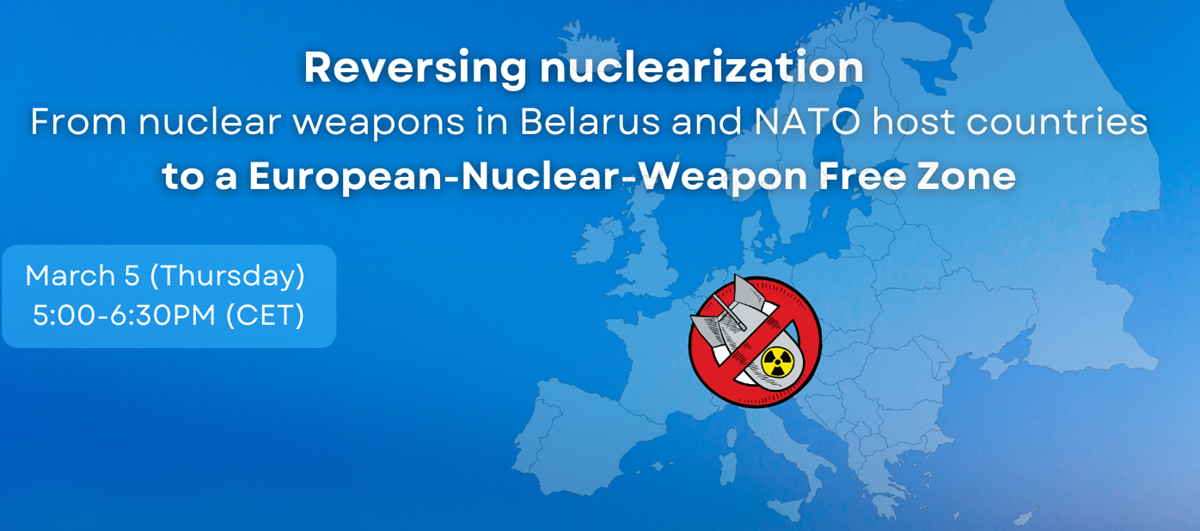
5 March -Online – Reversing nuclearization:
From nuclear weapons in Belarus and NATO host countries to a European-Nuclear-Weapon Free Zone
11am-12:30pm Eastern Time USA / 5pm-6:30pm CET

of the week – Advocating for a
nuclear free beach – https://www.samuellawrencefoundation.org/
The Samuel Lawrence Foundation advocates for a Nuclear Waste Free Beach at San Onofre, join us and take action!

10 March A LIVE WEBINAR THE REAL EFFECTS OF NUCLEAR POWER
What the Industry Isn’t Telling Us
1:00 PM Mountain, 2 pm Central, 3 pm Eastern. Live on the Keepers of the Water Facebook page

18 March Webinar @ 1 PM EST: An Assessment of SMR Projects: The Case of Canada
register for the zoom:
https://us02web.zoom.us/webinar/register/WN_o8BIIOUvQ2ONJR1nta65DQ#/registration

of the week – STOP SMALL MODULAR REACTORS IN CANADA
To see nuclear-related stories in greater depth and intensity – go to https://nuclearinformation.wordpress.com
-
Archives
- March 2026 (51)
- February 2026 (268)
- January 2026 (308)
- December 2025 (358)
- November 2025 (359)
- October 2025 (376)
- September 2025 (258)
- August 2025 (319)
- July 2025 (230)
- June 2025 (348)
- May 2025 (261)
- April 2025 (305)
-
Categories
- 1
- 1 NUCLEAR ISSUES
- business and costs
- climate change
- culture and arts
- ENERGY
- environment
- health
- history
- indigenous issues
- Legal
- marketing of nuclear
- media
- opposition to nuclear
- PERSONAL STORIES
- politics
- politics international
- Religion and ethics
- safety
- secrets,lies and civil liberties
- spinbuster
- technology
- Uranium
- wastes
- weapons and war
- Women
- 2 WORLD
- ACTION
- AFRICA
- Atrocities
- AUSTRALIA
- Christina's notes
- Christina's themes
- culture and arts
- Events
- Fuk 2022
- Fuk 2023
- Fukushima 2017
- Fukushima 2018
- fukushima 2019
- Fukushima 2020
- Fukushima 2021
- general
- global warming
- Humour (God we need it)
- Nuclear
- RARE EARTHS
- Reference
- resources – print
- Resources -audiovicual
- Weekly Newsletter
- World
- World Nuclear
- YouTube
-
RSS
Entries RSS
Comments RSS
 nuclear-news
Leave a comment