TODAY. The Trump period and the use of language
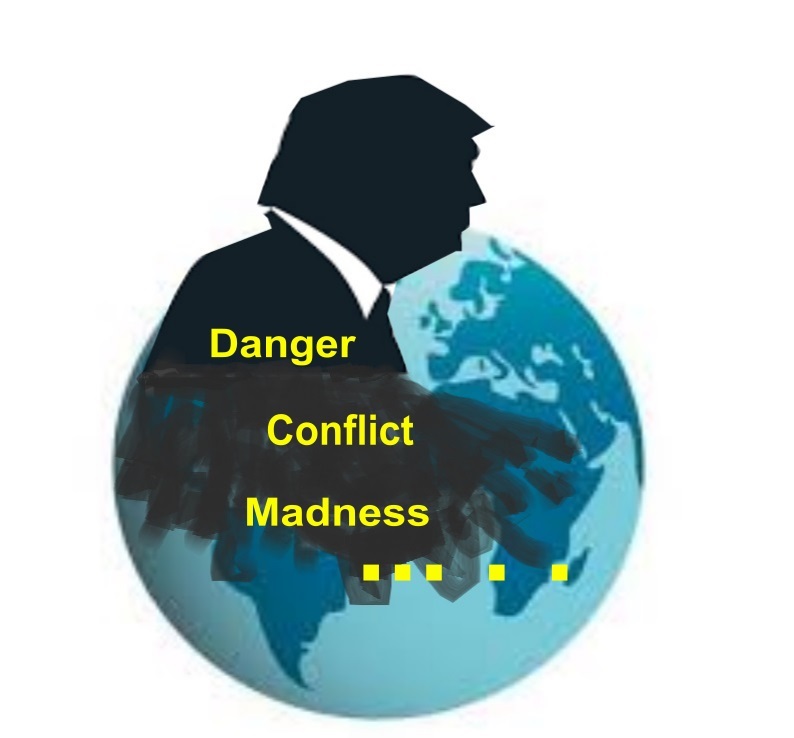
I struggle to think about what language to use.
Today, Caitlin Johnstone writes “The Evil Warmongering Zionist Won” – (No Not That One, The Other One)
I read her article, and agree with every word. But do some readers find this title a “turnoff”? I did, because I was brung up to believe that quieter, less emotive language was the way to go. Now, I’m not sure.
The people of world’s greatest power have elected a foul-mouthed, misogynist, deluded megalomaniac who is a convicted felon, strongly supported by another deluded billionaire megalomaniac the ketamine-and-Mars addled Elon Musk. Trump is surrounded by yes-mean of no integrity whatsoever, and promoted by billionaires of no integrity.
How did it happen?
How did they put it over not only the disgruntled poor of the USA, but many others – to believe that if times are bad now – this despicable sociopath could magically put things right?
By now, some of my very limited reading public will have turned away – because of my use of language. But I’m not as “bad” as Caitlin. Trouble is – we’re actually telling the truth.
It is going to be very hard now, for all of us to weave our way through all the commentaries – all made more difficult by the tsunami of social media, of the ‘respectable mainstream media’ and of AI.
I wish that I could give wonderful advice on how to assess the truth or otherwise, of what we read, see and hear. But there are people of integrity out there, and it is our job to find them and listen to them – and indeed , to avoid emotive language (when possible).
Trump has a strategic plan for the country: Gearing up for nuclear war.


The erosion of the arms control and non-proliferation regime is not a defect of the proposals; it is one of its central goals.
By Joe Cirincione | July 2, 2024, https://thebulletin.org/2024/07/trump-has-a-strategic-plan-for-the-country-gearing-up-for-nuclear-war/
President Joe Biden has a terrible nuclear policy. A re-elected President Donald Trump’s would be much worse.
Biden has authorized the largest nuclear weapons budgets since the Cold War, delayed then squandered his chance to contain Iran’s nuclear program, and apparently has no policy for containing North Korea’s missiles and weapons. But a re-elected Trump would put nuclear weapons programs on steroids, trash what remains of the global arms control regime, and likely trigger new nuclear weapons programs in more other nations than we have seen at any time since the early 1960s.
Trump’s nuclear policy is all spelled out in a new conservative manifesto by Project 2025, a coalition of over 100 far-right groups led by the Heritage Foundation, which is widely seen as the template for a possible Trump 2.0 administration. If readers of the Bulletin have heard of Project 2025, chances are that they did not go through its 900-page book “Mandate for Leadership.” They should. This policy agenda, dubbed the “Conservative Promise,” is a blueprint for the most dramatic take-over and transformation of the US democracy in history.
The Project 2025 coalition members are staffed by over 200 former officials of the first Trump administration. These sophisticated Trump-movement MAGA operatives now know how to work the levers of government and have learned from what they see as their main mistake during Trump’s first term: leaving the “deep state” intact. These conservatives proudly served Donald Trump through his administration and attempted insurrection. They are now ready to help him complete the job and their plan is here for everyone willing to see.
“Our goal is to assemble an army of aligned, vetted, trained and prepared conservatives to work on Day One to deconstruct the Administrative State,” writes Paul Dans, a former chief of staff of the Office of Personnel Management during the Trump administration and now the director of Project 2025, in his foreword to the report. Russ Vought, the chief of staff of the Office of Management and Budget under Trump and now the president of the conservative think tank Center for Renewing America, agrees: “We have to be thinking mechanically about how to take these institutions over.” Vought vows to be “ready on Day One of the next transition,” adding, “Whatever is necessary to seize control of the administrative state is really our task.”
In the nuclear realm, “seizing control” would mean implementing the most dramatic build up of nuclear weapons since the start of the Reagan administration, some four decades ago. If this hawkish political coalition gets its way in November, the scope, pace, and cost of US nuclear weapons programs would increase all at once. Their plan, which seeks to significantly increase budgets and deployments of nuclear weapons and related programs and destroy the remaining arms control agreements, would dramatically increase the risks of nuclear confrontation as a result.
Nuclear proposals. The nuclear proposals are a key part of the Project 2025 coalition’s recommendations to reshape the Defense Department. This chapter is led by Christopher Miller, a former US Army special forces colonel who served as Trump’s last defense secretary. As Michael Hirsch reports in Politico, the agenda “is far more ambitious than anything Ronald Reagan dreamed up.” (In 1980, President Reagan ordered a massive nuclear buildup, which scholars now consider to have greatly escalated the Cold War.)
In condensed and translated form, Project 2025 proposes that a second Trump administration:
- Prioritize nuclear weapons programs over other security programs.
- Accelerate the development and production of all nuclear weapons programs.
- Reject any congressional efforts to find more cost-effective alternatives to current plans.
- Increase funding for the development and production of new and modernized nuclear warheads, including the B61-12, W80-4, W87-1 Mod, and W88 Alt 370.
- Develop a new nuclear-armed, sea-launched cruise missile, even though neither the administration nor the Navy has requested such a weapon, and the Navy has not fielded this type of weapon since they were retired by President George H.W. Bush in 1991.
- Increase the number of nuclear weapons above current treaty limits and program goals, including buying more intercontinental ballistic missiles (ICBMs) than currently planned.
- Expand the capabilities of the National Nuclear Security Administration’s weapons production complex, including vastly increasing budgets, shedding non-nuclear weapons programs at the national laboratories (such as those devoted to the climate crisis) and accelerating production of the plutonium pits that are the cores of nuclear weapons.
- Prepare to test new nuclear weapons, even though the United States has signed the Comprehensive Nuclear Test Ban Treaty that prohibits such tests and has not tested a full-scale nuclear device since 1992.
- Reject current arms control treaties that the coalition considers being “contrary to the goal of bolstering nuclear deterrence” and “prepare to compete in order to secure US interests should arms control efforts continue to fail.”
- Dramatically expand the current national missile defense programs, including deploying as-yet-unproven directed energy and space-based weapons, or as the report puts it: “Abandon the existing policy of not defending the homeland against Russian and Chinese ballistic missiles.”
- Invest in a sweeping, untested “cruise missile defense of the homeland.”
- Accelerate all missile defense programs, national and regional.
These proposals would add unnecessary new weapons to an already expansive nuclear arsenal. If implemented, these new and expanded programs would accelerate the nuclear arms race the United States is already engaged in and encourage the expansion—or initiation—of new nuclear weapons programs in other nations around the globe.
It is not as if the United States needs to spend more on nuclear weapons.
At $70 billion, President Joe Biden’s Fiscal Year 2025 budget request is already the most the country will have spent on nuclear weapons since the Cold War. Under Trump and now Biden, the United States has engaged in a sweeping replacement of nearly all existing nuclear weapons systems, including a new generation of strategic bombers (the B-21), strategic missile submarines (the Columbia class), intercontinental ballistic missiles (the Sentinel), several new warhead programs, and the development of new nuclear weapons, including smaller, “more usable” nuclear warheads and air-launched cruise missiles.
The Congressional Budget Office estimates that the currently planned nuclear weapons programs will cost $750 billion over the next decade (2023-2032). And the costs will rise every year: Biden’s requested $70 billion for the next budget is a 22 percent increase from last year. The total cost of the programs will approach $2 trillion. And there is more. The Biden administration also requested $30 billion for Fiscal Year 2025 for missile defense programs, much of which will be devoted to weapons designed to intercept long-range, nuclear-armed missiles.
The policy recommendations made by the Project 2025 coalition would substantially increase these costs. Unlike other generalized calls for more weapons, these conservative authors have developed a detailed plan for how to implement their apocalyptic vision and minimize any opposition. It is a far more specific plan than any before it, and more developed than anything groups trying to save what remains of the global arms control regime have even attempted.
Implementation plan. In March, the Heritage Foundation detailed the steps necessary to implement these proposals in asking the president to “revitalize the US strategic arsenal.” The authors propose that the next US president—meaning Donald Trump, but never mentioning him—immediately upon assuming office:
- Make a major speech soon after inauguration to “make the case to the American people that nuclear weapons are the ultimate guarantor of their freedom and prosperity.”
- Direct the National Nuclear Security Administration (NNSA), which is charged with producing all nuclear weapons fissile materials and the manufacture of all warheads, to provide monthly briefings in the Oval Office and to submit its budgets separately from the Energy Department, within which department the agency resides.
- Direct the Office of Management and Budget to submit to Congress a supplemental budget request to accelerate key NNSA projects and Defense Department nuclear weapons delivery systems (missiles, bombers, and submarines).
- Increase the number of deployed nuclear warheads by directing the placement of multiple warheads on each of the currently deployed Minuteman III intercontinental ballistic missiles. (Each missile in the current fleet of 400 ICBMs holds one warhead. Under this plan, the next president would order each missile to deploy multiple warheads by 2026. The new, replacement ICBM, the Sentinel, would also be fielded with multiple warheads.)
- Direct the production and deployment of new nuclear weapon types, including the sea-launched cruise missile (SLCM-N) and putting nuclear warheads on Army ground-launched missiles. (Both capabilities were eliminated by President George H.W. Bush in 1991.)
- Add nuclear capabilities to several hypersonic systems currently under development as non-nuclear missiles.
- Direct the Air Force to examine a road-mobile version of the Sentinel ICBM. (President Reagan investigated such a program in the early 1980s and found it to be highly controversial, expensive, and impractical.)
- Direct the expansion and enhancement of US nuclear weapons capability across the globe, including by pre-positioning nuclear bombs and aircraft in Europe and Asia. (The United States currently deploys 100 nuclear bombs abroad at five bases in NATO Europe.)
- Direct the NNSA to “transition to a wartime footing,” including the expansion and construction of facilities to produce plutonium and plutonium cores for nuclear weapons.
Implications for national security. Should these recommendations be implemented, they will result in a sharp decline in the security of Americans and a dramatic increase in the risk of regional and global conflicts. At the very least, the proposed programs will explode the national debt. With the defense budget already at $850 billion for Fiscal Year 2025 and the budget for nuclear weapons and related programs at over $100 billion, these new projects could add hundreds of billions of dollars to weapons development, production, and deployment costs. The Heritage Foundation estimates that these additional programs will cost “tens of billions,” but this is a gross underestimate.
The existing US strategic arsenal already exceeds what is required for any conceivable nuclear mission. The United States currently maintains a stockpile of some 3,708 nuclear warheads for delivery by missiles and aircraft. Of those, approximately 1,770 warheads are deployed, ready for use within minutes of an order to launch. The rest of the operational stockpile (1,938 warheads) is held in reserve for potential use. In addition, the United States has approximately 1,336 retired, intact warheads in storage awaiting dismantlement. The explosive yields of most of these weapons are 10 to 30 times greater than the bombs that destroyed Hiroshima and Nagasaki.
To put the power of this arsenal in perspective, one city destroyed by just one nuclear weapon would be a level of destruction not seen since World War II. Ten weapons burning 10 cities would be a catastrophe unprecedented in human history. One hundred such weapons would destroy not only the targeted nation but likely unleash a nuclear winter and subsequent famine that could destroy virtually all human civilizations—even those far from the conflict.
Increasing the US arsenal at the scale recommended by the Project 2025 would likely compel rival nations—including Russia, China, Iran, and North Korea—to increase their defense budgets, warfighting plans, and nuclear weapons developments and deployments to match what they will see as an increasing threat from the United States. Allied nations will also be caught up in the competition, fueling an already existing nuclear arms race: Japan, South Korea, and even Germany could be pushed over the nuclear line.
This would be the unintended consequence of an unleashed nuclear modernization. While each nuclear-armed state sees its programs as defensive, their adversaries see them as offensive programs striving for a military advantage. Each move engenders a countermove; each nation believes it is responding to the other. That’s how the security dilemma has spiraled since World War II. But the Project 2025’s recommendations go one step further: They are based on the belief that the United States would win any arms contest through superior technology, resources, and political will.
In 2019, former President Trump’s arms control negotiator Marshall Billingslea said: “We know how to win these races and we know how to spend the adversary into oblivion. If we have to, we will.”
But such programs would further weaken nuclear guardrails that are already gutted by the withdrawals from major arms control agreements—including most significantly, Trump’s withdrawal from the Joint Comprehensive Plan of Action that reduced, contained, and controlled the Iranian nuclear program and his withdrawal again from Reagan’s Intermediate Nuclear Forces agreement that eliminated most nuclear weapons deployed by the United States and Russia in Europe.
The erosion of the arms control and non-proliferation regime is not a defect of the proposals; it is one of its central goals. The Project 2025 authors believe that arms control has failed, and that treaties negotiated with both allies and rivals weaken Americans, rather than are protecting them. These views are not shared by most US allies. Those allied nations committed to restraining or eliminating nuclear risks will, therefore, increasingly doubt US leadership in international relations, weakening the alliance system so essential to US national security since the end of World War II.
Importantly, these proposed programs and activities will almost certainly have the United States abandon its commitment not to test nuclear weapons under the 1996 Comprehensive Test Ban Treaty. Should the United States conduct new nuclear tests, other nations will almost immediately follow suit, adding more fuel to the nuclear fire.
Taken together, the policies and programs advocated by the Project 2025’s self-proclaimed “mandate for leadership” would push the United States onto the precipice of an expensive, dangerous, and destabilizing nuclear confrontation—something not seen since the darkest days of the Cold War.
Germany excludes over half of its territory in search for long-term nuclear waste storage

05 Nov 2024, Ruby Russel, GermanyClean Energy Wire / ARD, https://www.cleanenergywire.org/news/germany-excludes-over-half-its-territory-search-long-term-nuclear-waste-storage
The BGE (Federal Company for Radioactive Waste Disposal) has published an interim report on the status of Germany’s search for a final storage site for nuclear waste. The report includes an interactive map of Germany showing areas it has tested so far, and those found to be unsuitable for the repository, which must keep around 28,100 cubic metres of radioactive material safe for hundreds of thousands of years. The latest status report detailed the BGE’s assessment of 13 sub-areas, which ruled out sites that failed to meet safety requirements. This narrows the search to 44 percent of the country’s land, public broadcaster ARD reported.
The BGE began its search in 2017, following Germany’s 2011 commitment to phase out nuclear power. Previously planned repositories at sites such as Gorleben were abandoned after fierce protest from residents. The BGE then began its work by viewing Germany as a “blank map” on which any location with the right geological conditions could be identified as a potential storage site.
BGE chair Iris Graffunder said that from now on, the BGE would publish status reports annually, allowing the public to follow its progress. German environment minister Steffi Lemke welcomed the planned yearly updates as an important measure for transparency. “The regular publications will allow everyone in Germany to see that the BGE is on schedule for the end of 2027,” Lemke said. “We can and must find a final repository site by the middle of the century. We owe this to the people who live in the regions with interim storage facilities.”
The government agency is to complete its Phase 1 tests by 2027, when it is scheduled to submit its final proposal to the Federal Office for the Safety of Nuclear Waste Management (BASE), with a shortlist of suitable sites for further exploration in Phase 2 of the search.
Highly radioactive waste is currently held at 16 interim storage facilities close to Germany’s decommissioned nuclear power plants, the last of which went offline in April 2023. Germany had aimed to select a location for the final repository by 2031, but in 2022 the BGE pushed the deadline until at least 2046. A recent report commissioned by the BASE found that the process could take until 2075, but the environment ministry disputed these findings, saying they did not account for recent progress that has accelerated the search.
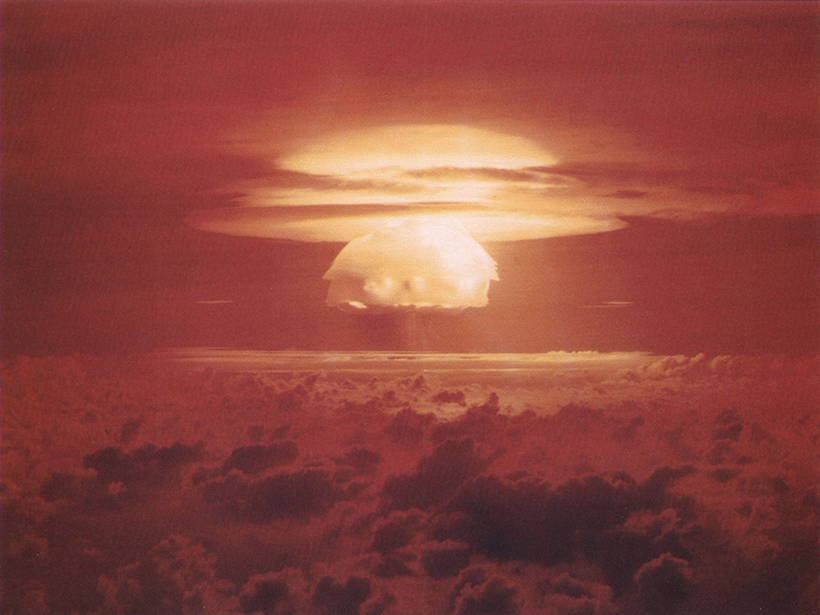
United Nations to study impact of nuclear war for first time since 1989 amid ‘elevated risk’
ABC By Lachlan Bennett, 7 Nov 24
In short:
The United Nations will set up an expert panel to investigate how nuclear war would impact all facets of society.
It’s the first study of its kind since 1989 and has been prompted by concerns about geopolitical tensions.
What’s next?
The panel will deliver its final report in 2027 and make recommendations for future research.
You don’t need to watch too many apocalyptic blockbusters to realise that nuclear war would be devastating.
But when it comes to understanding the impact of a modern nuclear exchange, our data is nearly as old as The Terminator.
The last comprehensive United Nations study into nuclear war was published in 1989, back before the Soviet Union collapsed and before the first internet browser was released.
In the decades since, new nuclear powers have emerged and weapons technology has advanced.
The lack of holistic research into the consequences of nuclear conflict has the scientific community worried.
An atomic fact-finding mission
In light of these concerns, the UN First Committee last week voted to establish a panel of 21 international experts to assess how nuclear war would impact all facets of life, from public health and population to economics and agriculture.
The panel will harness the expertise of UN agencies, such as the International Atomic Energy Agency, while also soliciting data from governments and organisations like the Red Cross.
It will explore the role of new technology, such as artificial intelligence, and new risks, such as cyber-attacks.
And after consulting with “the widest range of scientists and experts”, a final report will be delivered in 2027.
Australia was one of 144 voters to support the move, while 30 abstained and three nuclear-armed nations opposed: the UK, France and Russia.
New Zealand and Ireland introduced the resolution.
“At a time of elevated risk of nuclear conflict, there is a clear need to publicly establish an accurate and up-to-date understanding of the impacts of a nuclear war,” they said.
Is nuclear war more likely today?
Nuclear war may seem a fading relic of the Cold War era, with global stockpiles declining from around 70,000 weapons in the 1980s to just over 12,000 today.
But many disarmament treaties are no longer in force, and new nuclear powers are expanding their arsenals.
Historic rivals India and Pakistan had only just established their nuclear programs when the last UN report was released.
They now have more 300 weapons between them.
……………………………………………………..Nuclear powers ‘don’t want the world to know’ the real risks
Nuclear disarmament advocates have welcomed Australia’s support for the UN study, especially given the opposition of its ally, the UK.
The UK Foreign Office told The Guardian the world did not need an independent scientific panel to know that “nuclear war would have devastating consequences”.
But Dr Hanson said the nuclear powers “don’t want the world to know just how devastating a nuclear war will be”.
“Or indeed the fact that we’ve had numerous close calls,” she said.
One of the most famous close calls occurred in 1983, when a Soviet early-warning system falsely reported missiles flying towards Russia from the US.
Despite Soviet protocol, the officer on duty did not report the false alarm to his superiors, preventing a potential retaliation.
According to the memoirs of former US Secretary of State Mike Pompeo, there was a more recent close call in 2019 when India launched strikes against militants in Pakistan following an attack in Kashmir.
Dr Hanson said the world had been “extremely lucky” to avoid a nuclear conflict.
“Our luck is not going to hold out forever,” she said.
Why do we need another study?
Various governments and institutions have studied aspects of nuclear weapons in recent decades.
But a lot of research has focused on areas of “military relevance”, according to International Campaign to Abolish Nuclear Weapons founding member Tilman Ruff.
“We really understand very little about the psychological, climatic, economic, social, political and infrastructure implications of nuclear weapons in the modern era,” he said.
Dr Ruff said the UN panel would provide authoritative and transparent research, without the “bias or needs of any particular country”.
“It gives it much more credibility and currency. Nations can’t say, ‘Oh, this doesn’t apply to us’,” he said…………………………………more https://www.abc.net.au/news/2024-11-07/un-votes-for-nuclear-weapons-scientific-panel/104564126
This is why nuclear power stocks are falling
FINBOLD, 5 Nov 24
Nuclear power stocks faced a major downturn this week after the Federal Energy Regulatory Commission (FERC) rejected Talen Energy’s proposal to supply additional power to an Amazon Web Services (AWS) data center.
The decision, made late Friday, has reverberated throughout the sector, triggering a sharp sell-off in the nuclear power sector.
The FERC decision: A blow to the sector
On November 1, FERC voted 2-1 against PJM Interconnection’s proposed amendment to increase power supply from Talen’s Susquehanna nuclear plant in Pennsylvania to a nearby AWS data center.
The amendment aimed to boost the center’s power capacity from 300 MW to 480 MW. Commissioners Mark Christie and Lindsay See opposed the amendment, citing concerns over grid reliability and public costs, while Chairman Willie Phillips dissented.
Following the decision, Talen Energy’s stock plunged 8.6% on November 5, while Constellation Energy (NASDAQ: CEG) and Vistra Corp (NYSE: VST) saw declines of 13% and 6.7%, respectively.
These declines reflect investor concerns about the broader implications of the FERC decision, which could hinder future deals between nuclear power providers and large tech firms……………………..
Broader implications for the sector
The FERC decision has broader implications for the burgeoning relationship between nuclear power and AI-driven data centers.
In recent months, tech giants such as Amazon (NASDAQ: AMZN), Microsoft (NASDAQ: MSFT), and Alphabet (NASDAQ: GOOGL) have increasingly turned to nuclear power to meet the rising energy demands of AI data centers while maintaining their climate commitments…………………………………………………………………….
https://finbold.com/this-is-why-nuclear-power-stocks-are-falling/
Seven Canadian environmental groups challenge the nuclear industry’s false claims

Seven Canadians from environmental organizations submitted a complaint to the Competition Bureau on Oct. 16, 2024, asking the Bureau to take action against the Canadian Nuclear Association (CNA) and its members for falsely promoting nuclear energy as “clean” and “non-emitting.” These industry claims constitute misleading and deceptive marketing practices prohibited under Section 9 of the Competition Act.
The complaint demonstrates that the nuclear industry emits radioactive toxic pollutants during uranium mining and milling, and during the routine operation of nuclear reactors. Producing toxic pollutants which must be stored for hundreds of thousands of years is not “clean.” Annual releases from routine operations of all Canadian nuclear facilities are listed on a federal government website, HERE.
The same group of Canadians filed an earlier complaint in February, which the Competition Bureau dismissed, stating that the CNA’s claims of “clean” and “non-emitting” nuclear energy were “political statements” and not a priority for the Bureau. This new complaint makes it clear that the CNA’s false and misleading claims are promotional and aimed at portraying a “green” image to the public. The industry directly targets children with its teachnuclear.ca learning modules designed for schools, teachers and students.
The false “clean” image is intended to generate support for nuclear energy now when there is public concern about climate change. Nuclear energy’s high costs and toxic emissions, and the cost and time over-runs of new reactor builds have led to a declining share of global energy production over the past three decades. However the “clean” rhetoric has gained traction. Branding nuclear as “green” is a crucial step to unfairly gaining access to public funds, tax breaks and subsidies earmarked for real clean energy options.
The October complaint to the Competition Bureau can be downloaded HERE.
Radioactive pollution from bomb plant sparks cancer fears
The Ferret Rob Edwards, November 4, 2024
Radioactive air pollution from the nuclear weapons plant at Coulport, on the Clyde, has more than doubled over the last six years, prompting cancer warnings from campaigners.
Emissions of the radioactive gas, tritium, from the Royal Naval Armaments Depot on Loch Long, have risen steadily between 2018 and 2023 from 1.7 billion to 4.2 billion units of radioactivity, according to the latest official figures.
Campaigners say that tritium is “very hazardous” when it is breathed in, and can increase the risk of cancers. But according to the Scottish Environment Protection Agency (Sepa), the emissions are well within safety limits.
The Ministry of Defence (MoD) has declined to say what has caused the increased pollution. Tritium is known to leak from ageing nuclear submarine reactors, and is also an essential component of nuclear bombs.
Coulport, eight miles from the nuclear submarine base at Faslane on the Gareloch, is where Trident missiles and nuclear warheads are stored. They are loaded on and off Vanguard nuclear-powered submarines at an explosives handling jetty.
The rising tritium emissions from Coulport have been revealed in Sepa’s Scottish Pollution Release Inventory. The inventory was updated in October 2024 to include figures for 2023.
Rising tritium pollution from Coulport
| Year | Tritium emitted to air (MBq) |
|---|
| 2018 | 1,770 |
| 2019 | 2,046 |
| 2020 | 2,298 |
| 2021 | 3,038 |
| 2022 | 3,472 |
| 2023 | 4,224 |
| Total | 16,848 |
Source: Scottish Pollution Release Inventory
The inventory also disclosed that Faslane has discharged liquids contaminated with tritium into the Gareloch, amounting to a total of over 50 billion units of radioactivity from 2018 to 2023. The discharges peaked at 16.6 billion units in 2020.
A report released by Sepa under freedom of information law revealed that in 2019 it changed the rules to allow certain tritium-contaminated effluents from nuclear submarines at Faslane to be discharged into the Gareloch.
“Low levels” of tritium had been discovered in waste, sewage and ballast water from submarines. Sepa agreed a “minor variation” to radioactive waste regulations to allow the continued treatment and disposal of the effluents.
Tritium discharges into the Clyde from Faslane
| Year | Tritium discharged to water (MBq) |
|---|
| 2018 | 5,817 |
| 2019 | 6,510 |
| 2020 | 16,609 |
| 2021 | 13,416 |
| 2022 | 1,582 |
| 2023 | 6,946 |
| Total | 50,880 |
Source: Scottish Pollution Release Inventory
Increasing tritium air pollution from Coulport was described as “worrying” by Dr Ian Fairlie, an expert on radioactivity in the environment and a former UK government advisor. He is now vice-president of the UK Campaign for Nuclear Disarmament.
“First, they are large, more than four billion becquerels per year; second, they are steadily increasing; and third, they are of tritium – which is very hazardous when it’s inhaled or ingested,” he told The Ferret.
The discharges from Faslane into the Gareloch were also of concern, he said. “Any dose of radiation is hazardous to some degree, so that these discharges – especially of tritium – are disquieting.”…………………………………………………………………………………
https://theferret.scot/radioactive-tritium-coulport-cancer/
UK says it voted against UN nuclear war panel because consequences already known
The UK was one of three countries to vote against creating a UN scientific
panel on the effects of nuclear war because, the Foreign Office argued, the
“devastating consequences” of such a conflict are already well known
without the need for a new study. The UK, France and Russia were the only
countries to vote on Friday night against a UN general assembly committee
resolution drafted by Ireland and New Zealand to set up an international
scientific inquiry to take a fresh look at the multifaceted impact of
nuclear weapons use.
Guardian 4th Nov 2024 https://www.theguardian.com/world/2024/nov/04/uk-joins-russia-and-france-in-voting-against-un-nuclear-war-inquiry
Hinkley Point and Sizewell nuclear plant engineers go on strike.
Specialist workers say they have not had a pay rise in four years and that cheap
foreign labour from India and Nigeria is being used to undercut British
workers. The cabling and pipework engineers, represented by the
professional trade union Prospect, work on the Hinkley Point C nuclear
power station being built in Somerset by EDF, as well as the Sizewell C
project planned for Suffolk.
They claim that since beginning their dispute
last year with their employer Alten, which provides engineering services
for the projects, they have discovered foreign colleagues brought in from
outside the UK and EU, from places such as India and Nigeria, are being
paid about half their wages. A source told The Times: “We started the
dispute about pay rises before it emerged that foreign colleagues were
being brought in on vastly lower wages.
“We are all on between £50,000
and £75,000 but it has since emerged that these foreign colleagues are
being paid less than £30,000. That is absolutely ridiculous for the type of
work they are doing and it is being done to drive down costs and the
internal market rate for these roles.”
The Times 5th Nov 2024 https://www.thetimes.com/business-money/energy/article/hinkley-point-and-sizewell-nuclear-plant-engineers-go-on-strike-xv0fk93dl
1 This Month


18 March Webinar @ 1 PM EST: An Assessment of SMR Projects: The Case of Canada
register for the zoom:
https://us02web.zoom.us/webinar/register/WN_o8BIIOUvQ2ONJR1nta65DQ#/registration


of the week – STOP SMALL MODULAR REACTORS IN CANADA
To see nuclear-related stories in greater depth and intensity – go to https://nuclearinformation.wordpress.com
-
Archives
- March 2026 (138)
- February 2026 (268)
- January 2026 (308)
- December 2025 (358)
- November 2025 (359)
- October 2025 (376)
- September 2025 (258)
- August 2025 (319)
- July 2025 (230)
- June 2025 (348)
- May 2025 (261)
- April 2025 (305)
-
Categories
- 1
- 1 NUCLEAR ISSUES
- business and costs
- climate change
- culture and arts
- ENERGY
- environment
- health
- history
- indigenous issues
- Legal
- marketing of nuclear
- media
- opposition to nuclear
- PERSONAL STORIES
- politics
- politics international
- Religion and ethics
- safety
- secrets,lies and civil liberties
- spinbuster
- technology
- Uranium
- wastes
- weapons and war
- Women
- 2 WORLD
- ACTION
- AFRICA
- Atrocities
- AUSTRALIA
- Christina's notes
- Christina's themes
- culture and arts
- Events
- Fuk 2022
- Fuk 2023
- Fukushima 2017
- Fukushima 2018
- fukushima 2019
- Fukushima 2020
- Fukushima 2021
- general
- global warming
- Humour (God we need it)
- Nuclear
- RARE EARTHS
- Reference
- resources – print
- Resources -audiovicual
- Weekly Newsletter
- World
- World Nuclear
- YouTube
-
RSS
Entries RSS
Comments RSS
 nuclear-news