The global nuclear industry has no idea how to decommission Fukushima nuclear plant, but hopes that a tiny robot might help
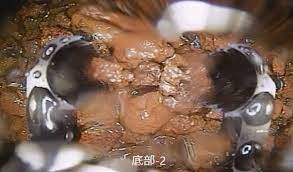
Robot retrieves radioactive fuel sample from Fukushima nuclear reactor site
Plant’s owners hope analysis of tiny sample will help to establish how to safely decommission facility
Kevin Rawlinson and agency, Sun 3 Nov 2024
A piece of the radioactive fuel left from the meltdown of Japan’s tsunami-hit Fukushima Daiichi nuclear power plant has been retrieved from the site using a remote-controlled robot.
Investigators used the robot’s fishing-rod-like arm to clip and collect a tiny piece of radioactive material from one of the plant’s three damaged reactors – the first time such a feat has been achieved. Should it prove suitable for testing, scientists hope the sample will yield information that will help determine how to decommission the plant.
The plant’s manager, Tokyo Electric Power Company Holdings (Tepco), has said the sample was collected from the surface of a mound of molten debris that sits at the bottom of the Unit 2 reactor’s primary containment vessel.
The “telesco” robot, with its frontal tongs still holding the sample, returned to its enclosed container for safe storage after workers in full hazmat gear pulled it out of the containment vessel on Saturday. But the mission is not over until it is certain the sample’s radioactivity is below a set standard and it is safely contained.
If the radioactivity exceeds the safety limit then the robot must return to find another piece, but Tepco officials have said they expect the sample will prove to be small enough.
The mission started in September and was supposed to last two weeks, but had to be suspended twice.
A procedural mistake held up work for nearly three weeks. Then the robot’s two cameras, designed to transmit views of the target areas for its operators in the remote control room, failed. That required the robot to be pulled out entirely for replacement before the mission resumed on Monday.
Fukushima Daiichi lost its cooling systems during the 2011 earthquake and tsunami, causing meltdowns in three of its reactors. An estimated 880 tons of fuel remains in them, and Tepco has carried out several robotic operations.
Tepco said that on Wednesday the robot successfully clipped a piece estimated to weigh about 3 grams from the area underneath the Unit 2 reactor core, from which large amounts of melted fuel fell during the meltdown 13 years ago.
The plant’s chief, Akira Ono, said only the tiny sample can provide crucial data to help plan a decommissioning strategy, develop necessary technology and robots and retroactively establish exactly how the accident had developed.
The Japanese government and Tepco have set a target of between 30 and 40 years for the cleanup, which experts say is optimistic. No specific plan for the full removal of the fuel debris or its final disposal has been decided.
No comments yet.
1 This Month


18 March Webinar @ 1 PM EST: An Assessment of SMR Projects: The Case of Canada
register for the zoom:
https://us02web.zoom.us/webinar/register/WN_o8BIIOUvQ2ONJR1nta65DQ#/registration


of the week – STOP SMALL MODULAR REACTORS IN CANADA
To see nuclear-related stories in greater depth and intensity – go to https://nuclearinformation.wordpress.com
-
Archives
- March 2026 (138)
- February 2026 (268)
- January 2026 (308)
- December 2025 (358)
- November 2025 (359)
- October 2025 (376)
- September 2025 (258)
- August 2025 (319)
- July 2025 (230)
- June 2025 (348)
- May 2025 (261)
- April 2025 (305)
-
Categories
- 1
- 1 NUCLEAR ISSUES
- business and costs
- climate change
- culture and arts
- ENERGY
- environment
- health
- history
- indigenous issues
- Legal
- marketing of nuclear
- media
- opposition to nuclear
- PERSONAL STORIES
- politics
- politics international
- Religion and ethics
- safety
- secrets,lies and civil liberties
- spinbuster
- technology
- Uranium
- wastes
- weapons and war
- Women
- 2 WORLD
- ACTION
- AFRICA
- Atrocities
- AUSTRALIA
- Christina's notes
- Christina's themes
- culture and arts
- Events
- Fuk 2022
- Fuk 2023
- Fukushima 2017
- Fukushima 2018
- fukushima 2019
- Fukushima 2020
- Fukushima 2021
- general
- global warming
- Humour (God we need it)
- Nuclear
- RARE EARTHS
- Reference
- resources – print
- Resources -audiovicual
- Weekly Newsletter
- World
- World Nuclear
- YouTube
-
RSS
Entries RSS
Comments RSS
 nuclear-news
Leave a comment