Banning United Nations Relief and Works Agency (UNRWA) is a new way to kill children, aid groups warn

Electronic Intafada, Maureen Clare Murphy 30 October 2024
Palestinian human rights groups say that new Israeli legislation banning a UN agency from providing services to Palestinians under occupation “aligns with a broader pattern of Israel’s genocidal intent.”
On Monday, Israel’s parliament, the Knesset, passed into law – with near unanimity – two bills that would effectively ban UNRWA, the UN agency for Palestine refugees, from operating in the West Bank and Gaza Strip.
One of the laws bars state authorities from having any contact with UNRWA, which provides health, education and other basic services to millions of Palestinian refugees in the occupied Palestinian territories as well as Jordan, Syria and Lebanon.
“The legislation also terminates the 1967 agreement between Israel and UNRWA with immediate effect,” according to three prominent Palestinian human rights groups: Al-Haq, Al Mezan and the Palestinian Center for Human Rights.
The second law bans the agency from operating in so-called Israeli territory and “will go into effect three months after the passing of the laws – approximately by the end of January 2025,” the rights groups said.
If enacted, the new laws will shutter UNRWA’s headquarters in eastern Jerusalem, which Israel has unlawfully occupied since 1967 and annexed in violation of international law. UNRWA’s Jerusalem headquarters are the administrative hub for its operations across the West Bank and Gaza Strip.
According to media reports, Israel plans to build settlements on the site of UNRWA’s headquarters, which state authorities ordered vacated in May.
Benjamin Netanyahu, Israel’s prime minister, has the authority to block the legislation. But he is unlikely to do so, despite international pressure, especially after his foreign minister declared António Guterres, the UN secretary-general, persona non grata.
Israel’s unbridled hostility toward the United Nations will only escalate with every attempt towards accountability through the world body’s organs.
On Wednesday, the UN Security Council issued a statement declaring its support for UNRWA and warning “against any attempts to dismantle or diminish UNRWA’s operations and mandate.”
“Criminalization of humanitarian aid”
Three prominent Palestinian human rights groups – Al-Haq, Al Mezan and the Palestinian Center for Human Rights – said that the passage of the laws is part of a “calculated, decades-long campaign to dismantle UNRWA and undermine the inalienable right of return” of Palestinian refugees.
“Now more than ever, amid Israel’s ongoing genocide in Gaza, UNRWA’s role is not only essential but irreplaceable,” the groups added.
The new legislation “amounts to the criminalization of humanitarian aid and will worsen an already catastrophic humanitarian crisis,” Agnès Callamard, the head of Amnesty International, said on Tuesday………………………………………………
UNRWA is the agency with the largest humanitarian footprint in the West Bank and Gaza and one of the largest employers in the occupied Palestinian territories.
“Dismantling UNRWA will have a catastrophic impact on the international response to the humanitarian crisis in Gaza,” Philippe Lazzarini, the head of UNRWA, told the president of the General Assembly in a letter on Tuesday. “It will also sabotage any chance of recovery.”
In the absence of any other entity to provide government-like services, the effective ban on UNRWA will leave more than 660,000 children in Gaza without an education. “An entire generation of children will be sacrificed,” Lazzarini said.
The Palestinian rights groups observe that 2.4 million Palestinian refugees in the West Bank and Gaza “will be deprived of essential services – particularly education and healthcare – that only UNRWA has the mandate and capacity to deliver.”
UNRWA staff killed and tortured
Addressing Israel’s allegations, Lazzarini said that UNRWA provided Israel with a list of its staff on an annual basis for 15 years. Personnel that Israel never raised concerns over are now included in its lists of alleged fighters, he said.
Repeated requests to the Israeli government appealing for evidence regarding its allegations against UNRWA staff have gone without a reply, he added.
“UNRWA is therefore in the invidious position of being unable to address allegations for which it has no evidence, while these allegations continue to be used to undermine the agency,” Lazzarini said.
He added that at least 237 UNRWA staff have been killed in Gaza and more than 200 of its facilities have been damaged or destroyed in attacks that have killed more than 560 people “seeking UN protection.” Meanwhile, “dozens of UNRWA staff have been detained and report being tortured,” Lazzarini said.
Israel has abused UNRWA employees detained in Gaza in order to extract forced confessions incriminating the agency.
Israel’s attacks on UNRWA “are an integral part” of the crumbling of “the rules-based international order … in a repetition of the horrors that led to the establishment of the United Nations,” Lazzarini added………………………………………………………………………………………………………………………..
At the time that Israel’s Knesset voted to ban UNRWA, some 100,000 Palestinians were under siege in the northern Gaza areas of Beit Hanoun, Beit Lahiya and Jabaliya refugee camp without food, water or medical supplies.
“The entire population of north Gaza is at risk of dying,” Joyce Msuya, the acting UN relief chief, stated two days before the vote. https://electronicintifada.net/blogs/maureen-clare-murphy/banning-unrwa-new-way-kill-children-aid-groups-warn
Israel kills the journalists. Western media kills the truth of genocide in Gaza
Western publics are being subjected to a campaign of psychological warfare, where genocide is classed as ‘self-defence’ and opposition to it ‘terrorism’
Jonathon Cook, Middle East Eye – 25 October 2024
Israel knew that, if it could stop foreign correspondents from reporting directly from Gaza, those journalists would end up covering events in ways far more to its liking.
They would hedge every report of a new Israeli atrocity – if they covered them at all – with a “Hamas claims” or “Gaza family members allege”. Everything would be presented in terms of conflicting narratives rather than witnessed facts. Audiences would feel uncertain, hesitant, detached.
Israel could shroud its slaughter in a fog of confusion and disputation. The natural revulsion evoked by a genocide would be tempered and attenuated.
For a year, the networks’ most experienced war reporters have stayed put in their hotels in Israel, watching Gaza from afar. Their human-interest stories, always at the heart of war reporting, have focused on the far more limited suffering of Israelis than the vast catastrophe unfolding for Palestinians.
That is why western audiences have been forced to relive a single day of horror for Israel, on October 7, 2023, as intensely as they have a year of greater horrors in Gaza – in what the World Court has judged to be a “plausible” genocide by Israel.
That is why the media have immersed their audiences in the agonies of the families of some 250 Israelis – civilians taken hostage and soldiers taken captive – as much as they have the agonies of 2.3 million Palestinians bombed and starved to death week after week, month after month.
That is why audiences have been subjected to gaslighting narratives that frame Gaza’s destruction as a “humanitarian crisis” rather than the canvas on which Israel is erasing all the known rules of war.
While foreign correspondents sit obediently in their hotel rooms, Palestinian journalists have been picked off one by one – in the greatest massacre of journalists in history.
Israel is now repeating that process in Lebanon. On Thursday night, it struck a residence in south Lebanon where three journalists were staying. All were killed.
In an indication of hiw deliberate and cynical Israel’s actions are, it put its military’s crosshairs on six Al Jazeera reporters this week, smearing them as “terrorists” working for Hamas and Islamic Jihad. They are reportedly the last surviving Palestinian journalists in northern Gaza, which Israel has sealed off while it carries out the so-called “General’s Plan”.
Israel wants no one reporting its final push to ethnically cleanse northern Gaza by starving out the 400,000 Palestinians still there and executing anyone who remains as a “terrorist”.
These six join a long list of professionals defamed by Israel in the interests of advancing its genocide – from doctors and aid workers to UN peacekeepers.
Sympathy for Israel
Perhaps the nadir of Israel’s domestication of foreign journalists was reached this week in a report by CNN. Back in February whistleblowing staff there revealed that the network’s executives have been actively obscuring Israeli atrocities to portray Israel in a more sympathetic light.
In a story whose framing should have been unthinkable – but sadly was all too predictable – CNN reported on the psychological trauma some Israeli soldiers are suffering from time spent in Gaza, in some cases leading to suicide.
Committing a genocide can be bad for your mental health, it seems. Or as CNN explained, its interviews “provide a window into the psychological burden that the war is casting on Israeli society”.
n its lengthy piece, titled “He got out of Gaza, but Gaza did not get out of him”, the atrocities the soldiers admit committing are little more than the backdrop as CNN finds yet another angle on Israeli suffering. Israeli soldiers are the real victims – even as they perpetrate a genocide on the Palestinian people.
One bulldozer driver, Guy Zaken, told CNN he could not sleep and had become vegetarian because of the “very, very difficult things” he had seen and had to do in Gaza.
What things? Zaken had earlier told a hearing of the Israeli parliament that his unit’s job was to drive over many hundreds of Palestinians, some of them alive.
CNN reported: “Zaken says he can no longer eat meat, as it reminds him of the gruesome scenes he witnessed from his bulldozer in Gaza.”………………………………………………………………………………………………….
The media do not want their reporters to become chief witnesses for the prosecution in the future trials of Israeli prime minister Benjamin Netanyahu and his defence minister, Yoav Gallant, at the International Criminal Court. The ICC’s prosecutor, Karim Khan, is seeking arrest warrants for them both.
After all, any such testimony from journalists would not stop at Israel’s door. They would implicate western capitals too, and put establishment media organisations on a collision course with their own governments.
The western media does not see its job as holding power to account when the West is the one committing the crimes.
Censoring Palestinians
Journalist whistleblowers have gradually been coming forward to explain how establishment news organisations – including the BBC and the supposedly liberal Guardian – are sidelining Palestinian voices and minimising the genocide.
…………………………………………………………………………………………… Even officials from one of the biggest rights group in the world, the New York-based Human Rights Watch, became persona non grata at the BBC for their criticisms of Israel, even though the corporation had previously relied on their reports in covering Ukraine and other global conflicts.
Israeli guests, by contrast, “were given free rein to say whatever they wanted with very little pushback”, including lies about Hamas burning or beheading babies and committing mass rape.
An email cited by Al Jazeera from more than 20 BBC journalists sent last
……………………………………………………………………………………... Crushing dissent
Israel is the one dictating the coverage of its genocide. First by murdering the Palestinian journalists reporting it on the ground, and then by making sure house-trained foreign correspondents stay well clear of the slaughter, out of harm’s way in Tel Aviv and Jerusalem.
And as ever, Israel has been able to rely on the complicity of its western patrons in crushing dissent at home. …………………………………………………………………………………………………… more https://www.jonathan-cook.net/2024-10-25/israel-kill-journalists-genocide-gaza/
Will Susan Holt’s new government continue New Brunswick’s nuclear fantasies?

despite the governments’ support, after more than six years of trying, the companies have been unable to entice private investors.
Keeping the Point Lepreau and SMR fantasies alive will require considerable effort from the new government. Susan Holt’s handling of the nuclear file will be an early test—both of her leadership and her commitment to wishful thinking.
BY SUSAN O’DONNELL | October 31, 2024, The Hill Times https://www.hilltimes.com/story/2024/10/31/will-susan-holts-new-government-continue-new-brunswicks-nuclear-fantasies/439671/
Successive New Brunswick governments have been bewitched by two nuclear fantasies: first, that its beleaguered public utility NB Power can connect two experimental reactors to the electricity grid, and second, that the small province can successfully run a nuclear power reactor.
Both fantasies will confront Susan Holt early in her new Liberal government’s tenure. Will she break the spell and end the province’s nuclear delusions? Nuclear energy was not raised during the recent election campaign, but a 2023 CBC interview with Holt offers clues.
The biggest fantasy is connecting two experimental “small modular nuclear reactors” (SMRs) to New Brunswick’s electricity grid. In 2018, Holt was a business adviser to then-premier Brian Gallant when his Liberal government invited two nuclear start-up companies from the U.K. and the U.S. to set up shop in the province and promote their SMR designs, although it’s unknown if she was involved in that decision.
The Gallant government had chosen two “advanced” reactor designs—molten salt and sodium-cooled— that have never operated successfully in a commercial setting. The government gave each company a $5-million incentive and support to apply for federal funding to develop their designs. A recent expert report from the U.S. Academies of Sciences predicted that such designs would have difficulty reaching commercial viability by 2050.
During the subsequent reign of PC premier Blaine Higgs, the province gave $25-million more to the start-ups and the federal government added grants totalling $57.5-million. Both governments also invested in building an SMR business supply chain in New Brunswick and encouraged some First Nations to support the projects.
The Higgs government further supported its plan to have the experimental designs built and connected to the grid by 2035 by passing legislation forcing NB Power to buy electricity, at any price, from SMRs if they are ever built and actually work.
However, despite the governments’ support, after more than six years of trying, the companies have been unable to entice private investors. Each company claims to need $500-million to develop its reactor design to the point of applying for a licence to build one. Where this money will come from is an open question.
This summer, the CEO of one SMR company, ARC Clean Technology, left suddenly and some staff at the Saint John office received layoff notices. The second company, Moltex, was notably absent from an Atlantic energy symposium in Fredericton this September. Until Moltex secures matching funds for its three-year-old $50.5-million federal grant, further federal funding is unlikely.
In her CBC interview last year, Holt said SMRs must be part of the energy transition, but: “I don’t think it needs the province to subsidize the businesses … buying power produced by an SMR is different than putting money into a company building SMR technology.”
The second fantasy—the Point Lepreau nuclear reactor on the Bay of Fundy—has been offline for repairs since April. Cost overruns for its original build and refurbishment represent two-thirds of NB Power’s $5.4-billion debt and crippling (94 per cent) debt-to-equity ratio. The reactor’s poor performance is the main reason the utility loses money almost every year.
Around the globe, it is hard to find an electrical grid as small as NB Power’s with a nuclear reactor. The province’s oversize nuclear ambitions were identified early. In 1972, a federal Department of Finance official warned against subsidizing a power reactor for a utility with “barely enough cash flow to finance its present debt,” calling New Brunswick’s nuclear plans “the equivalent of a Volkswagen family acquiring a Cadillac as a second car.”
New Brunswick lacks even the internal capacity to operate its reactor. When the plant re-opened in 2012 after refurbishment, NB Power first contracted a management team from Ontario Power Generation (OPG) and later hired a manager living in Maine who billed the utility for travel expenses in addition to his salary which reached $1.3-million despite no improvement in the reactor’s performance. In 2023, NB Power ditched the American, and contracted OPG management again.
In her 2023 CBC interview, Holt’s statement that the province’s energy strategy needs to include “wind energy, solar energy, SMR energy, hydro energy, nuclear energy” suggests that her government will continue to support the Point Lepreau plant. However, new developments may give her pause to reconsider.
A recent expert report linked the poor performance of NB Power’s nuclear reactor to the utility’s failure since refurbishment to spend enough on maintenance. If this trend continues, “It is likely that performance could drop even further in the late 2030s into the 2040s.”
The plant’s shutdown for maintenance and upgrades on April 6 this year was originally planned for three months, but the work uncovered serious problems with the main generator. In July, NB Power suggested the plant would re-open in early September and then in August, pushed that date to mid-November.
Energy watchdogs expect the Lepreau plant to remain off-line longer than November due to the serious nature of the generator malfunction. NB Power will be looking to the new government to reassure the public that the utility has its nuclear operations under control. New Brunswickers are facing a 19.4 per cent increase in electricity rates, due in large part to the poor performance of its nuclear reactor, although Holt has already promised to eliminate the 10 per cent PST on NB Power bills to ease the pain.
Holt plans to re-convene the New Brunswick Legislature before the end of November. At that point the Point Lepreau reactor will likely still be mothballed, and the two SMR start-ups will be on life support.
Keeping the Point Lepreau and SMR fantasies alive will require considerable effort from the new government. Holt’s handling of the nuclear file will be an early test—both of her leadership and her commitment to wishful thinking.
Dr. Susan O’Donnell is adjunct research professor and primary investigator of the CEDAR project in the Environment and Society program at St. Thomas University in Fredericton.
Half of world’s biggest cities to face severe climate risks by 2050, LSEG finds.

Edie 31st Oct 2024
Dozens of populous cities including Dubai, which hosted last year’s
international climate summit, will face high physical risks from the
climate crisis by 2050, the London Stock Exchange Group (LSEG) has warned.
LSEG’s new Net-Zero Atlas projects that half of the world’s largest 49
cities will be at high risk of one or more climate hazards by 2050—up
from just one in five today.
Hazards covered in the analysis include
floods, cyclones, heatwaves and water stress. Cities in the Middle East and
Southeast Asia are particularly vulnerable to multiple hazards, the Atlas
explains. Jakarta is expected to experience at least quadruple the number
of extreme heat days in 2050 as it did last year. And cities including
Singapore, Surabaya, Dubai, Riyadh, and Jeddah face similar heatwave risks,
which would be compounded by water stress.
This does not mean that cities
in other geographies are immune to physical climate risks. LSEG predicts
that, by 2050, London will experience a 133% increase in heatwave days and
a 22% rise in water stress, and Manchester will face a 93% increase in
heatwaves and a 45% rise in water stress.
https://www.edie.net/half-of-worlds-biggest-cities-to-face-severe-climate-risks-by-2050-lseg-finds/
WILL THE 2024 U.S. PRESIDENTIAL ELECTION BRING AN END TO THE WAR IN UKRAINE?
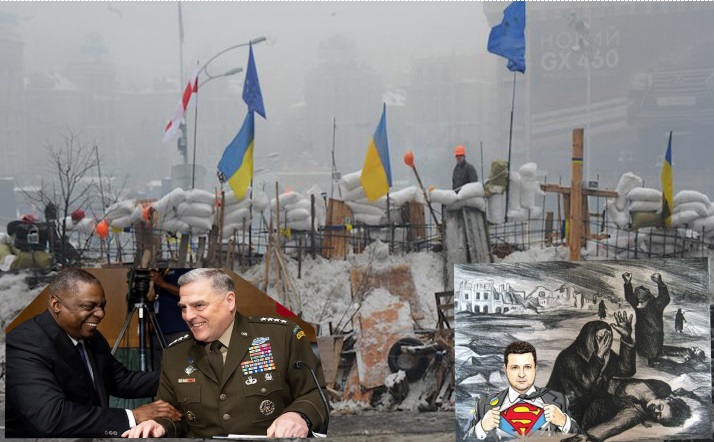
In March-April 2022, first in Minsk and later in Istanbul delegates ultimately came close to an agreement. A previsional document was initialled with more work envisioned being done to reach a final comprehensive agreement. At that point a visit to Kiev by Boris Johnson, then prime minister of Britain, ended the entire process.
https://aearnur.substack.com/p/will-the-2024-us-presidential-election, 1 Nov 24
Who wants to see more war? Very few. But when those few occupy the highest political positions… more war is exactly what we get.
The question is no longer whether the Ukrainian regime will win against Russia. The question now is how long the western powers will sustain the regime until it loses. The secondary question related to this is how will the western powers react when their narratives about this conflict begin to collapse, as they are in the process of doing now. ‘Project Ukraine’ is crucial to these powers in their dedication to weakening first Russia, then China. Could it be that the upcoming presidential election in the USA will bring about the end of the Ukrainian war and ultimately, an end to the West’s determination to achieve global hegemony.
The prospects for an eventual global peace via multipolarity rests in the present day upon the conclusion to the Ukrainian war, the West’s ‘Project Ukraine’ and all that goes with it, including the prospective war of the West against China. The upcoming election in the USA is a crucial element regarding the western neocon elite to whom there never was such a thing as a bad war. To defeat and permanently defeat this way of thinking will involve a massive change. The result of the 2024 presidential election in the USA has the potential to be crucial in this respect. The fixed policy of the current western political elite is embedded within its ‘Project Ukraine’. The task involved in terminating it will involve immense effort and dedication due to its importance as seen by the neocons who have achieved ascendancy in the West since 9/11.
The pressure on Russia was unrelenting by the western powers as they sought to drive it into a war with the Ukrainian regime. The preparations were meticulous as we have seen through the length of time the Russian military has taken to break through the 1,000+ km line of Ukrainian fortifications. The West developed the Ukrainian army to NATO standards as the vital complementary component to man them. Along with the sanctions regime against Russia and what they thought would be the entire world on their side, it was believed Russia and its authorities would crumble.
With successive Ukrainian regimes since the US-fomented Maidan coup in 2014, the western nations drove Russia into the only viable course of action left to it if it wished to maintain its security and long term sovereign stability. Every possibility to resolve the Ukraine problem was taken to its full conclusion by Russia in a near decade-long attempt via the Minsk process to find a diplomatic solution whereby peace and reconciliation could be accomplished. As we now know from statements by Angela Merkel and Petro Poroshenko the entire process was merely a sham to give the West time to build the Ukrainian army and the fortifications across the entire line of contact with the Russian-speaking republics of the Donbass.
In addition to Minsk, in a last gasp attempt to persuade the western powers that peace was possible, Russia offered to negotiate a new security architecture for Europe which would safeguard the security of all. Missives on this basis were sent to both NATO and the western powers. These were dismissed out of hand, especially so by NATO whose stance was that they could do whatever they wished in accepting nations into their organisation and Russia had no say in this whatsoever.
Then, after Russia was left with zero good choices having tried everything possible to avoid war, it began its special military operation, a limited strategy designed to bring the Ukrainian regime to its senses and to implement the Minsk agreements that had been ratified at the UN, the two sides held negotiations seeking a way forward. In March-April 2022, first in Minsk and later in Istanbul delegates ultimately came close to an agreement. A previsional document was initialled with more work envisioned being done to reach a final comprehensive agreement. At that point a visit to Kiev by Boris Johnson, then prime minister of Britain, ended the entire process.
The history of western leaders seeking to attack Russia in almost every possible way short of outright military attack is a long one. The verbal abuse had been constant for decades. Then came the economic war against Russia through sanctions that has been the most unrelenting economic attack on a nation ever seen. Yet Russia has stood resiliently determined to see things through and its economy has in fact grown stronger rather than weaker over these years. The second arm of the attack against Russia whereby all nations would cut ties with it, also failed. The third arm, the massively prepared siege line the West built facing the Donbass and the professional army designed to defeat Russia by NATO is now in the process of collapse. The West’s entire plan has backfired in all its parts, leaving the western war powers scrambling for any means to reverse this, including desperately promulgating continuously false narratives.
The most blatant false narrative created by the western powers was that Russia’s entry into Ukraine was “unprovoked”. The hymn sheet instructing every western official of any note to use this word went out very early. Saying Russia made an “unprovoked” attack on and invasion of Ukraine was meant to discourage anyone from looking at the genesis of the conflict. As anyone with an independent frame of mind can easily see, Russia was massively provoked, and over and over again constantly since 2008 when the Bush administration twisted European arms to support Ukraine’s entry into NATO. The provocations against Russia during the entire time leading up to its special military operation begun on February 24th 2022 have been massive and continuous.
The lie that Russia made an unprovoked attack on Ukraine is being exposed now as never before. This is due to the fact that as the war in Ukraine has dragged on it has stimulated ever more people to look deeper than the headlines. Online commentators who have demonstrated their trustworthiness over these years such as Alexander Mercouris of The Duran website have been available to relate in detail the true origins of the Ukraine conflict. Besides Alexander there have been others such as Larry Johnson, Scott Ritter, Ray McGovern, Daniel Davis, Colonel Douglas Macgregor and an increasing number of others. Now we can see more and more politicians both in Europe and in the USA who are refusing to mouth the agreed-upon narratives insisted on by others. Viktor Orban in Hungary, Robert Fico in Slovakia and those around Donald Trump in the USA are no longer willing to support the distortions that have been rife in the West for almost three years of war in Ukraine. They seek peace in Ukraine, not the continuous war, with all its massively tragic consequences, sought by the elite neocon cabal of the West.
The lying narratives promulgated by the top echelon of the western powers are being exposed as never before. Just as Zelensky’s corrupt and inhuman regime is crashing and burning before us, so too are the utterly false narratives of the warmongering western neocon elites. The politicians who have been telling these lies about Putin, Russia and the genesis of the Ukraine war are being exposed as never before. What will they do in response? Certainly they will attempt to cancel those among them who have chosen to broadcast the truth, to degenerate them, call them traitors and any other pejorative term possible. I suspect their chances of succeeding as the Ukrainian regime goes down are slim. The humiliation awaiting those who chose to lie for war rather than seek peace is approaching fast.
Campaigners slam chancellor Rachel Reeves for £2.7 billion pledge to nuclear power station

Rachel Reeves pledged £2.7 billion to nuclear power station
31st October, By Dominic Bareham, https://www.eadt.co.uk/news/24689882.rachel-reeves-pledged-2-7-billion-nuclear-power-station/
Campaigners opposed to the new Sizewell C nuclear power station have slammed chancellor Rachel Reeves for continuing to back the project in her budget. In her first budget, she pledged a further £2.7 billion of government funding for the new dual reactor power station, which is expected to cost £20 billion.
But campaign groups opposed to the project, including Together Against Sizewell C (TASC) and Stop Sizewell C, were “appalled” at the news.
TASC chair Jenny Kirtley said: “TASC find this decision appalling – Labour promised ‘change’ but there is no change here as they quietly splurge a further £2.7 billion on Sizewell C, a Boris Johnson vanity project, despite the poor state of this country’s finances and the lack of transparency surrounding the full cost of the project.”
And Alison Downes, from Stop Sizewell C, said: “For a government that criticised the opposition for playing fast and loose with the nation’s finances, the Chancellor is surprisingly happy to do the same, allocating another £2.7 billion of taxpayers’ money on risky, expensive Sizewell C, without making any guarantee of a Final Investment Decision being taken.
“Including £2.5 billion already spent, this means £5.2 billion of our money will be spent on a project that cannot even help Labour achieve its energy mission and is looking increasingly toxic to private investors.”
The campaigners are opposed to Sizewell C because they fear the impact the new power station will have on the surrounding environment, particularly nearby Areas of Outstanding Natural Beauty and Sites of Special Scientific Interest.
They also fear for the nature reserve at RSPB Minsmere.
Congress Must Investigate Corruption in Nuclear Energy Industry
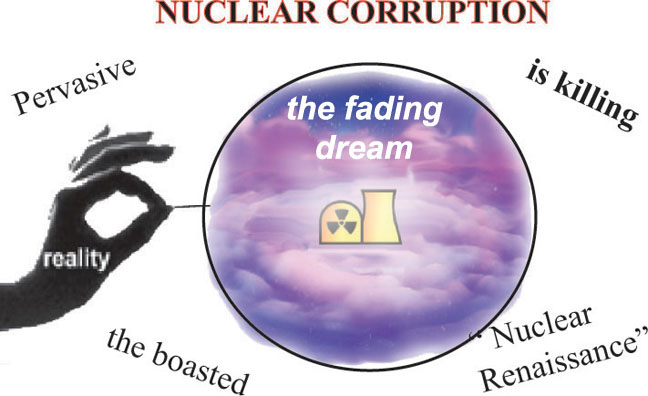
Real Clear Energy, By Craig Shirley, April 10, 2024
In their zeal to achieve a carbon-free environment, Democrats have done a big turnaround to promote nuclear energy as a safe, clean energy source. Some states are moving as fast they can to reactivate idle reactors. In 2022, Congress passed the Inflation Relief Act (IRA) to grant $30 billion for nuclear subsidies.
Scandals involving bribery over nuclear energy have toppled high-level state officials and corporate executives in Ohio, Illinois and other places.
In 2020, federal prosecutors brought charges against officials on Commonwealth Edison (ComEd), an Illinois company, for offering jobs and favors to friends of the Speaker of the Illinois House of Representatives in exchange for a bill to bailout the company’s nuclear division.
At nearly the same time, Ohio-based FirstEnergy executives were charged with paying $60 million in bribes to state legislators. Former Ohio Speaker of the House Larry Householder is currently serving a 47 year prison sentence.
Floodlight, a non-profit environmental news service, wrote a piece that appeared in the liberal magazine Mother Jones that perfectly encapsulates the corruption in the nuclear industry:
“Utility fraud and corruption—in Florida, Illinois, Mississippi, Ohio, and South Carolina—have cost electricity customers at least $6.6 billion, according to Floodlight’s analysis. Ratepayers have bankrolled nuclear plants that never got built, transmission systems that were over-engineered to beef up profits, and aging coal facilities that couldn’t compete with cheaper plants powered by methane, which the industry calls natural gas.”
Before these scandals erupted, and before Congress passed the Inflation Recovery Act, the nuclear industry had become so unpopular, it was a tempting target for political corruption.
According to the Bulletin of Atomic Scientists:
“Changes in the economics of electricity markets are threatening the profitability of nuclear power plants, a shifting reality driving a demand for these financial bailouts. As the New Jersey-based energy company Public Service Enterprise Group (PSEG) explained in October 2020, across the nation “nuclear plants continue to struggle economically to survive. Since 2018, three nuclear plants have closed in the eastern US, all for economic reasons, and the impact has had a ripple effect.”
Over the past several years, the Justice Department and the courts have done their jobs in prosecuting and sentencing bad actors in the nuclear industry. It is time for Congress to investigate the root causes of the corruption. Executives and experts alike must be brought before congressional committees to explain why the nuclear industry has been allowed to fall into corruption at the expense of the taxpayer and the consumer……………………………………….
https://www.realclearenergy.org/articles/2024/04/10/congress_must_investigate_corruption_in_nuclear_energy_industry_1024272.html
Lest we forget – Nuclear Power Runs on Dirty Money: The Corporate Scandal of the Proposed National Nuclear Subsidy
August 5, 2021
A few days ago, we published a piece showing the cost of federal nuclear bailout proposals. It’s a big, big number — $50 billion. But all of that money would not create a single new job, nor reduce greenhouse gas emissions by a single pound. In fact, as a new report released last month found, investing that $50 billion in wind, solar, and efficiency instead would accelerate our transition to a zero-emissions electricity system. And, as we showed last week, a national nuclear bailout would prevent the creation of 60,000 new jobs in renewable energy, efficiency, and other clean energy infrastructure.
So with all of these strikes against it, why are members of Congress pushing so hard to give a slate of old, uneconomical nuclear power plants so much money out of a large, but still limited, budget for energy investments needed for a just transition to a carbon-free future?
There’s one tried-and-true way to answer that question: follow the money. We wondered: who would actually receive the money proposed to bail out nuclear reactors? The answer is revealing.
From our analysis, we found that there are 33 reactors at 19 nuclear power plants, located in eight states, which would qualify for the proposed bailouts. Those power plants are owned and operated by only eight large power companies (along with four smaller companies that are minority co-owners of three of the plants). Note: because both proposed bailouts would subsidize the same group of reactors, we combined the amounts for our calculations. As a result, nearly the entire $50 billion–94% of the total–would go to these eight corporations.
However, because ownership of nuclear reactors is highly concentrated, over $35 billion of the bailout (70%) would go to just three of those corporations:
- Exelon $24.5 billion (49%)
- Energy Harbor $5.5 billion (11%)
- PSEG $5.1 billion (10%)
All three of these companies have been lobbying for subsidies for their nuclear reactors for years. As we speak, Exelon is pushing for a nuclear subsidy in Illinois and threatening to close four reactors within the next few months if the state legislature does not convene a special session and enact a new law with at least $700 million in nuclear subsidies within weeks.
In fact, both Exelon and Energy Harbor (a spinoff of FirstEnergy), are the subjects of federal corruption cases over billion-dollar nuclear bailouts for which they lobbied in Illinois and Ohio, respectively. In both cases, prosecutors have indicted former company lobbyists and staff to the Speakers of the House of Representatives in each state. Also in both cases, Exelon and FirstEnergy have signed deferred prosecution agreements with federal prosecutors to pay fines and restitution and to cooperate with the prosecutions. As the investigations proceed, more corporate executives, legislators, and lobbyists could be indicted.
In the case of FirstEnergy and Energy Harbor, there are also multiple state-level investigations of these nuclear bailout scandals. At the heart of that case, FirstEnergy made $61 million in bribes and payments to former House Speaker Larry Householder’s political action committee. Through the scheme, FirstEnergy helped win Householder the speakership after the 2018 election, by also buying the support of Republican legislators and Ohio Gov. Mike DeWine. As a result, FirstEnergy was able to get Ohio to enact a $1 billion nuclear bailout, which was key in winning the support of the corporation’s creditors in a major bankruptcy proceeding. The bankruptcy settlement resulted in FirstEnergy spinning off its power plants into Energy Harbor, a new, unaffiliated corporation that only owns the unprofitable nuclear and coal power plants. As a result of the federal corruption case, Ohio legislators repealed the nuclear bailout earlier this year, leaving Energy Harbor without the subsidies its creditors were assured it would have when they agreed to the bankruptcy settlement.
In addition to the federal corruption case, states where FirstEnergy operates want to know where the $61 million in bribes came from. In April, under pressure in the federal case, FirstEnergy filed a report with the Federal Energy Regulatory Commission indicating that “all 14 of its power-providing companies” in five states misappropriated ratepayer monies for a decade. State utility commissions in three of those states–Maryland, New Jersey, and Ohio–are investigating how much money the corporation misappropriated from state residents’ power bills to fund the nuclear bailout corruption scheme.
Back to Exelon
The corruption investigation in Illinois stems from two bills that have cost electricity consumers billions of dollars: a 2011 “smart grid” law, and a 2016 energy law. The latter awarded Exelon a 10-year, $2.35 billion subsidy for three uneconomical reactors that Exelon threatened to close without the bailout. Consumers have already paid out $1 billion over the last four years. Exelon awarded jobs to associates and relatives of former House Speaker Michael Madigan and other legislators, in exchange for lucrative legislative outcomes. Despite the ongoing investigation, Exelon is now pursuing subsidies in Illinois for its other eight reactors in Illinois, which it claims are also under economic pressure.
In the same year as the Illinois bailout, Exelon won a massive 12-year, $7.6 billion subsidy for four reactors in New York, and won final approval of a deal that has made it the largest utility company in the country. In those cases, there were eyebrow-raising reports of backroom lobbying, employment favors, and political contributions. And in 2018, Exelon and PSEG (the other big winner from a federal bailout) got New Jersey to enact a $300 million/year subsidy for three reactors in that state. Exelon pulls in about $85 million/year through its ownership stake in two of the New Jersey reactors.
In total, Exelon is receiving nearly $11 billion in nuclear subsidies at the state level. $24.5 billion in federal subsidies may assist Exelon in winning investors’ support for its plan to spin off its nuclear business, as FirstEnergy did. But how is any of this going to help the country solve the climate crisis?
With $30 billion of a federal nuclear subsidy accruing to two companies that are the subject of federal corruption cases over state-level nuclear subsidy laws, this could become an even larger scandal. President Biden and Congressional leaders should not risk the American Jobs and Families Plan being derailed over corporate corruption cases. And as we’ve shown, the infrastructure bills will do more for climate, jobs, and justice without a nuclear bailout, and by simply investing in the transition to 100% renewable energy.
There are many reasons why we cannot afford to sacrifice the climate to a nuclear bailout. Our economic future, justice for all communities impacted by climate chaos and the nuclear fuel chain, and our environment all depend on real action and true investment in clean energy, good jobs, and a just transition. Short-sighted corporate interests–once again–block the path towards the liveable, just, and equitable future. We cannot allow the pockets of nuclear corporations and their shareholders to grow as our window for climate action shrinks.
[Tables of subsidies etc included here on original]
Take Action!
We can’t let our leaders sacrifice the economy and environment to a corporate nuclear bailout scandal! Tell President Biden, Vice-President Harris, and your representatives in Congress: “No Corrupt Nuclear Bailouts in the American Jobs and Families Plan – Invest in American Jobs and a Just Transition to 100% Renewable Energy by 2035”
IEA: Global clean tech market set to be worth $2tr a year by 2035.
Business Green 30th Oct 2024
The global market for clean technologies such as solar panels, wind
turbines, and electric vehicles (EVs) is set to triple to more than $2tr a
year over the next decade, eclipsing the value of the oil and gas markets
in the process, according to the International Energy Agency (IEA).
In a “first of its kind” analysis today, the IEA estimates the global market for
six leading mass-manufactured clean technologies – solar PV, wind turbines,
EVs, batteries, heat pumps, and green hydrogen electrolysers – is set to
surge in the coming years.
The report estimates that based on today’s
policy settings the global market for these technologies is set to rise
from $700bn in 2023 to more than $2tr by 2035, which would put it on a
similar level to the value of the global crude oil market in recent years.
https://www.businessgreen.com/news/4374453/iea-global-clean-tech-market-set-worth-usd2tr-2035
Czech watchdog prohibits nuclear power contract signing amid appeals
PRAGUE, Oct 30 (Reuters) – The Czech anti-monopoly office UOHS put a temporary block on the conclusion of a contract with South Korea’s KHNP for the construction of a new nuclear power unit following challenges by Westinghouse and EDF.
UOHS said that the preliminary measure to prohibit the conclusion of the contract was not indicative of how the case will be decided and was standard procedure in such a case.
The measure comes after the office started official proceedings work in September on appeals from U.S. group Westinghouse and France’s EDF against the country’s choice in July of Korea Hydro & Nuclear Power Company (KHNP) as preferred bidder to build new nuclear reactors.
The Czech government and majority state-owned utility CEZ (CEZP.PR), opens new tab aim to conclude negotiations with KHNP and sign contracts by next March, and complete the first reactor by 2036.
CEZ said it believed the preliminary measure would not impact the tender’s schedule. “(The company) is convinced it acted in accordance with the applicable laws from the first moment in the selection of the preferred bidder,” it said.
Legal disputes are a potential sticking point in the country’s largest-ever energy procurement deal, expected to be worth up to $18 billion at current prices.
The Czechs plan to use the new nuclear power units, together with small modular reactors and renewable sources, to replace a fleet of coal-fired plants as well as some older nuclear reactors that are nearing the end of their lifespan.
($1 = 23.4270 Czech crowns) Reporting by Jason Hovet; editing by Philippa Fletcher
1 This Month


18 March Webinar @ 1 PM EST: An Assessment of SMR Projects: The Case of Canada
register for the zoom:
https://us02web.zoom.us/webinar/register/WN_o8BIIOUvQ2ONJR1nta65DQ#/registration


of the week – STOP SMALL MODULAR REACTORS IN CANADA
To see nuclear-related stories in greater depth and intensity – go to https://nuclearinformation.wordpress.com
-
Archives
- March 2026 (138)
- February 2026 (268)
- January 2026 (308)
- December 2025 (358)
- November 2025 (359)
- October 2025 (376)
- September 2025 (258)
- August 2025 (319)
- July 2025 (230)
- June 2025 (348)
- May 2025 (261)
- April 2025 (305)
-
Categories
- 1
- 1 NUCLEAR ISSUES
- business and costs
- climate change
- culture and arts
- ENERGY
- environment
- health
- history
- indigenous issues
- Legal
- marketing of nuclear
- media
- opposition to nuclear
- PERSONAL STORIES
- politics
- politics international
- Religion and ethics
- safety
- secrets,lies and civil liberties
- spinbuster
- technology
- Uranium
- wastes
- weapons and war
- Women
- 2 WORLD
- ACTION
- AFRICA
- Atrocities
- AUSTRALIA
- Christina's notes
- Christina's themes
- culture and arts
- Events
- Fuk 2022
- Fuk 2023
- Fukushima 2017
- Fukushima 2018
- fukushima 2019
- Fukushima 2020
- Fukushima 2021
- general
- global warming
- Humour (God we need it)
- Nuclear
- RARE EARTHS
- Reference
- resources – print
- Resources -audiovicual
- Weekly Newsletter
- World
- World Nuclear
- YouTube
-
RSS
Entries RSS
Comments RSS
 nuclear-news