Meltdown nightmares: silent spring for climate change

“Dirty Secrets of Nuclear Power in an Era of Climate Change,” strips away the myth that nuclear energy solves climate change
By Choi Hee-jin, October. 29. 2024, Korea Times: https://m-koreatimes-co-kr.cdn.ampproject.org/c/s/m.koreatimes.co.kr/pages/article.amp.asp?newsIdx=384891—
Asia is buzzing with the 2024 Nobel Prize announcements. The Nobel Prize in literature was awarded to a Korean author, Han Kang, and the Peace Prize to the Japanese organization Nihon Hidankyo, formed by Hibakusha in 1956 to improve support for victims and lobby governments to abolish nuclear weapons. Today, I would like to introduce a timely book that came out this summer on the topic of the Nobel Peace Prize.
In 1962, Rachel Carson published “Silent Spring,” a landmark book that ignited the modern environmental movement by exposing the hidden and devastating effects of widespread pesticide use. Her message raised public awareness about the harmful effects of DDT and led to the establishment of the Environmental Protection Agency in 1970. Consequently, it contributed to banning DDT in the United States in 1972 and internationally in 2004.
Like Carlson’s book, the recently released “Dirty Secrets of Nuclear Power in an Era of Climate Change,” strips away the myth that nuclear energy solves climate change and calls our attention to nuclear power. Its authors are Doug Brugge, professor and chair of the Department of Public Health Sciences at the University of Connecticut, and Aaron Datesman, visiting professor at the University of Virginia and engineer at NASA’s Goddard Space Flight Center.
Before delving into the book, some fundamental questions about climate change should be addressed. Is climate change real? Yes, it is happening. As temperatures continue to rise swiftly, the melting of glaciers and polar ice is becoming more pronounced, serving as a visible and reliable sign of climate change. What is the cause? There is much debate on this topic, but human activity — particularly our reliance on fossil fuels in built environments, cities, and infrastructure — is the main culprit. What is crucial in addressing climate change? Time. It depends on how quickly we switch from fossil fuels to other energy sources. Nuclear power, even in “highly developed” countries, takes a significant amount of time to implement as a solution.
Hidden Costs
Brugge and Datesman conclude that the effects of nuclear power may be more severe and longer lasting because some radioactive materials have such long half-lives, and nuclear accidents are so catastrophic. It exposes the hidden problems of the nuclear industry by looking at its impacts on people and the environment, with a focus on uranium mining, waste management and the dangers of nuclear proliferation.
Uranium mining disproportionately impacts Indigenous communities, leaving a legacy of pollution and health problems. The waste dilemma poses another challenge, with no permanent storage solution for high-level nuclear waste, potentially poisoning water, food chains and ecosystems for thousands of years.
The history of Fukushima and Chernobyl still haunts us and reminds us of the danger of nuclear accidents. The authors say even well-designed reactors are prone to failure due to human error, natural disaster or terrorism. These types of accidents would be a national security issue and would require massive long-term clean-up, and the communities affected would continue to live with the effects.
Economic realities of nuclear power
The economics of nuclear are also covered. Supporters point to the financial benefits of nuclear. But the book shows that the actual costs still need to be added in. Recent numbers bear this out: between 2010 and 2020, the cost of utility-scale solar and onshore wind fell 85 percent and 56 percent, respectively, while nuclear costs increased. The economics are shifting and making nuclear look less and less like a solution to climate change. The authors argue that renewable energy technologies offer a safer and more viable path to a decarbonized future.
A call for responsible energy choices
Nuclear power is being promoted as a solution in many countries and regions. Still, its inherent risks and unsolved problems mean there are better options for achieving net zero emissions and a carbon-free world. “Dirty Secrets of Nuclear Power in the Age of Climate Change” calls for global action to transition to more sustainable and equitable energy solutions. No one knowingly leaves a ticking time bomb in their house when there are safer alternatives.
In industrial history, miners would take small canaries deep into the earth, their delicate respiratory systems acting as an early warning system for toxic gases. A canary’s song, or its silence, could mean the difference between life and death for miners. While we continue to grapple with the ever-present dangers of invisible nuclear radiation and the consequences of its hazardous waste, we seem to treat future generations as unwitting canaries.
Perhaps the debate over nuclear power is outdated. It is essential to envision a completely new society with a carbon-free economy that ensures sustainable prosperity. We need to invest boldly in new alternatives and develop innovative technologies that harness nature’s limitless energy before it’s too late.
Choi Hee-jin is the author of “Future Cities” in The Routledge Handbook for Sustainable Cities and Landscapes in the Pacific Rim (2022), Salzburg Global Seminar Fellow (2023), and founder and CEO of RestFullness(restfullness.net), a platform for rest. She leads vocational formation and leadership sessions and coaches young leaders at METES Institute(metes.io).
No comments yet.
1 This Month
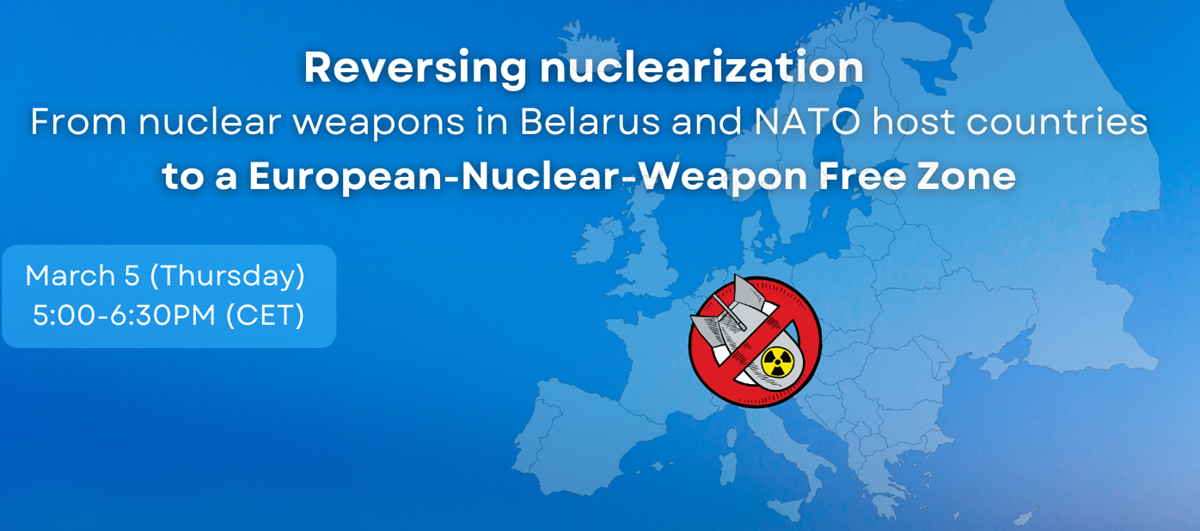
5 March -Online – Reversing nuclearization:
From nuclear weapons in Belarus and NATO host countries to a European-Nuclear-Weapon Free Zone
11am-12:30pm Eastern Time USA / 5pm-6:30pm CET

of the week – Advocating for a
nuclear free beach – https://www.samuellawrencefoundation.org/
The Samuel Lawrence Foundation advocates for a Nuclear Waste Free Beach at San Onofre, join us and take action!
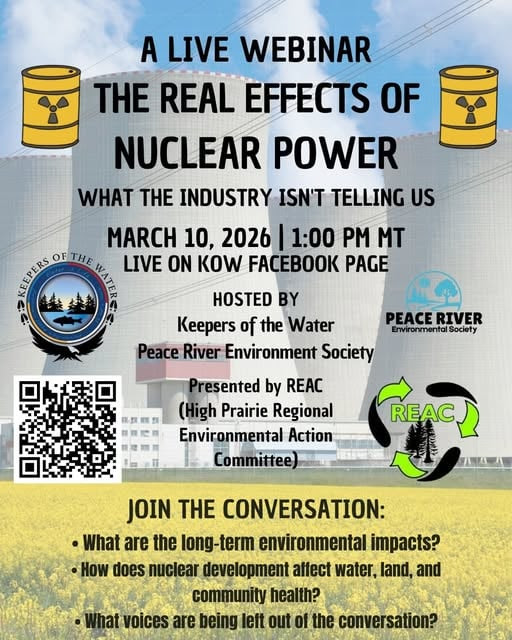
10 March A LIVE WEBINAR THE REAL EFFECTS OF NUCLEAR POWER
What the Industry Isn’t Telling Us
1:00 PM Mountain, 2 pm Central, 3 pm Eastern. Live on the Keepers of the Water Facebook page
18 March Webinar @ 1 PM EST: An Assessment of SMR Projects: The Case of Canada
register for the zoom:
https://us02web.zoom.us/webinar/register/WN_o8BIIOUvQ2ONJR1nta65DQ#/registration

of the week – STOP SMALL MODULAR REACTORS IN CANADA
To see nuclear-related stories in greater depth and intensity – go to https://nuclearinformation.wordpress.com
-
Archives
- March 2026 (51)
- February 2026 (268)
- January 2026 (308)
- December 2025 (358)
- November 2025 (359)
- October 2025 (376)
- September 2025 (258)
- August 2025 (319)
- July 2025 (230)
- June 2025 (348)
- May 2025 (261)
- April 2025 (305)
-
Categories
- 1
- 1 NUCLEAR ISSUES
- business and costs
- climate change
- culture and arts
- ENERGY
- environment
- health
- history
- indigenous issues
- Legal
- marketing of nuclear
- media
- opposition to nuclear
- PERSONAL STORIES
- politics
- politics international
- Religion and ethics
- safety
- secrets,lies and civil liberties
- spinbuster
- technology
- Uranium
- wastes
- weapons and war
- Women
- 2 WORLD
- ACTION
- AFRICA
- Atrocities
- AUSTRALIA
- Christina's notes
- Christina's themes
- culture and arts
- Events
- Fuk 2022
- Fuk 2023
- Fukushima 2017
- Fukushima 2018
- fukushima 2019
- Fukushima 2020
- Fukushima 2021
- general
- global warming
- Humour (God we need it)
- Nuclear
- RARE EARTHS
- Reference
- resources – print
- Resources -audiovicual
- Weekly Newsletter
- World
- World Nuclear
- YouTube
-
RSS
Entries RSS
Comments RSS
 nuclear-news
Leave a comment