TODAY. Behind the really nasty “NICE” nuclear energy push to control the November COP Climate Change Conference.
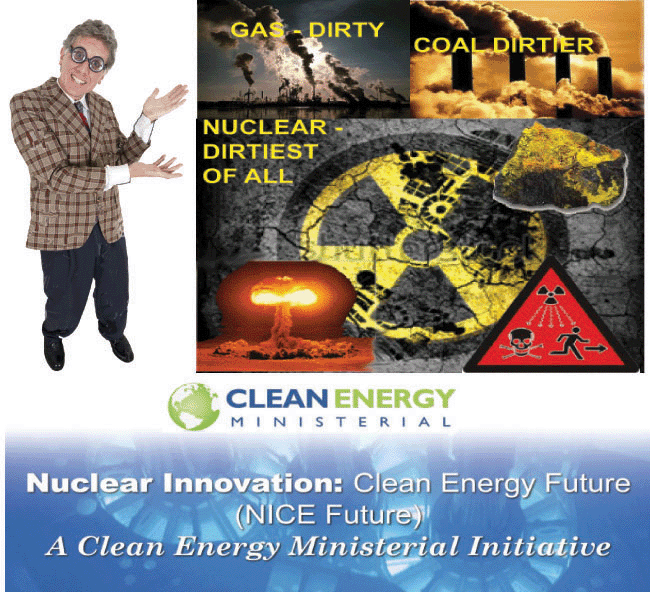
Prepare to be dangerously greenwashed.”
The billionaires and other manipulators have been planning this for years
Their goal is to direct United Nations policy, and the finances for climate action, towards the nuclear industry . Their motives are mixed, but MONEY is the big one.
The 2024 United Nations Climate Change Conference or Conference of the Parties of the UNFCCC, more commonly known as COP29, will be held in Baku, Azerbaijan from 11 to 22 November, 2024.
The nuclear push is led by a relatively small phalanx of wealthy, powerful individuals – not many in number, compared to the many thousands of people who have qualms about the nuclear lobby running the show at Azerbaijan . But of course, the nuke lobby will be helped along by the fossil fuel giants. If nuclear is accepted as the cure for climate change, there will be a delay of decades for nuclear power to get going again – which means that oil, gas, coal will have full sway.
Nuclear and fossil fuel energies are partners in this crime against our planet.

Even at the 2015 COP Paris Climate Agreement, nuclear ‘influencers’ like Ernest Moniz and Bill Gates were touting the plan – nuclear as the cheap way to fund climate action. A plan quickly taken up by Jeff Bezos (Amazon), Marc Benioff (Salesforce), Michael Bloomberg, Richard Branson, Jack Ma (Alibaba), David Rubenstein (Carlyle Group), Tom Steyer, George Soros, and Mark Zuckerberg – forming the Breakthrough Institute
Now it was time to really go for the tax-payers’ money, as Bill Gates launched Mission Innovation – to “increase government support” for new generation nuclear technologies. Mission Innovation involves 24 national governments, including the USA, Canada, China and India, the World Economic Forum, the International Energy Agency, and the World Bank.
Joyce Nelson has outlined the development of this “nuclear for climate” push, kicking off the new enthusiasm for small nuclear reactors, especially in Canada, around 2018. No surprise that the scandal-ridden company SNC-Lavalin jumped onto this bandwagon, forming a consortium the Canadian National Energy Alliance (CNEA)
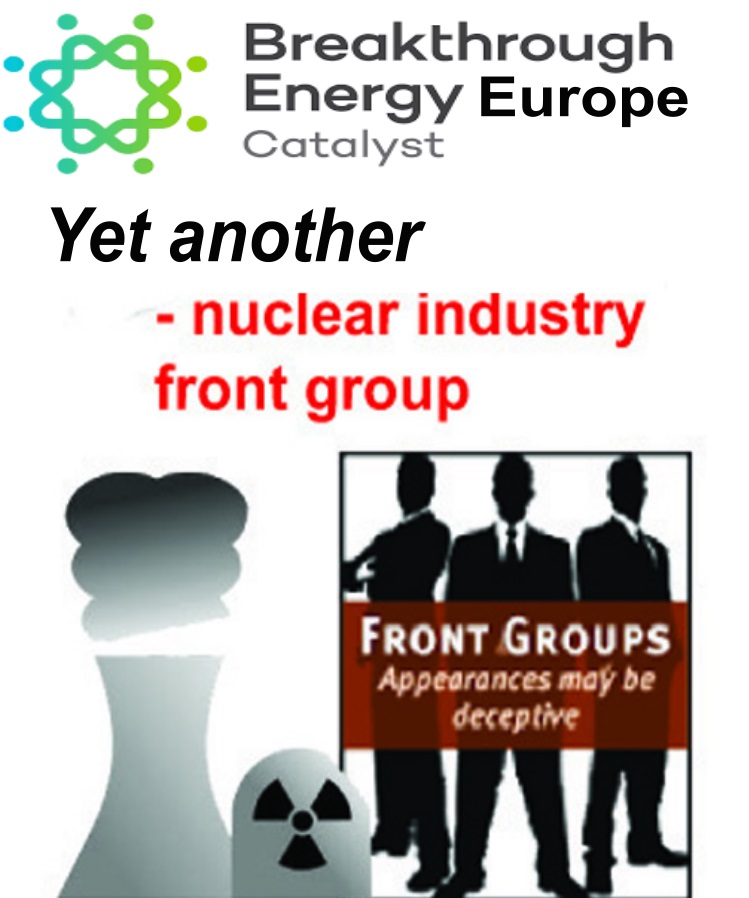
By 2018, Gates was launching Breakthrough Energy Europe, a collaboration with the European Commission. In 1919 Canada hosted the Clean Energy Ministerial/Mission Innovation summit launching NICE -the “Nuclear Innovation Clean Energy Future”
M.V. Ramana warned in advance of the summit, “Note to Ministers from 25 countries: Prepare to be dangerously greenwashed.”
I doubt that the COP 29 summit has any credibility with intelligent people. Held in Azerbaijan, one of the world’s worst petrochemical autocracies, this supposed climate action meeting will be one blatant front for the fossil fuel lobby, as well as the nuclear one.
Sad to have the United Nations sponsoring this pack of liars.
Sellafield cleanup cost rises to £136bn amid tensions with Treasury

National Audit Office questions value for money as predicted bill for decommissioning increases by £21bn
Alex Lawson and Anna Isaac, Wed 23 Oct 2024 , https://www.theguardian.com/business/2024/oct/23/sellafield-cleanup-cost-136bn-national-audit-office
The cost of cleaning up Sellafield is expected to spiral to £136bn and Europe’s biggest nuclear waste dump cannot show how it offers taxpayers value for money, the public spending watchdog has said.
Projects to fix buildings containing hazardous and radioactive material at the state-owned site on the Cumbrian coast are running years late and over budget. Sellafield’s spending is so vast – with costs of more than £2.7bn a year – that it is causing tension with the Treasury, the report from the National Audit Office (NAO) suggests.
Officials from finance ministry told the NAO it was “not always clear” how Sellafield made decisions, the report reveals. Criticisms of its costs and processes come as the chancellor, Rachel Reeves, prepares to plug a hole of about £40bn in her maiden budget.
Europe’s most hazardous industrial site has previously been described by a former UK secretary of state as a “bottomless pit of hell, money and despair”. The Guardian’s Nuclear Leaks investigation in late 2023 revealed a string of cybersecurity problems at the site, as well as issues with its safety and workplace culture.
The NAO found that Sellafield was making slower-than-hoped progress on making the site safe and that three of its most hazardous storage sites pose an “intolerable risk”.
The site is a sprawling collection of buildings, many never designed to hold nuclear waste long-term, now in various states of disrepair. It stores and treats decades of nuclear waste from atomic power generation and weapons programmes, has taken waste from countries including Italy and Sweden, and is the world’s largest store of plutonium.
Sellafield is forecast to cost £136bn to decommission, which is £21.4bn or 18.8% higher than was forecast in 2019. Its buildings are expected to be finally torn down by 2125 and its nuclear waste buried deep underground at an undecided English location.
The underground project’s completion date has been delayed from 2040 to the 2050s at the earliest, meaning Sellafield will need to build more stores and manage waste for longer. Each decade of delay costs Sellafield between £500m and £760m, the NAO said. Meanwhile, the government hopes to ramp up nuclear power generation, which will create more waste.
Sellafield is owned by the Nuclear Decommissioning Authority (NDA), a taxpayer-owned and -funded quango. The NDA believes the cost of decommissioning Sellafield could range from £116bn to £253bn, depending on the length and complexity of the cleanup.
Plans to clean up three of its worst ponds – which contain hazardous nuclear sludge that must be painstakingly removed – are running six to 13 years later than forecast when the NAO last drew up a report, in 2018. The NAO said deteriorating buildings, Covid restrictions, staffing and equipment breaking down were to blame. Sellafield had “retrieved much less waste than it had planned” since 2020, it said.
Sellafield could spend more on demolishing buildings earlier to be more efficient and offer better value for money, the NAO said.
One pond, the Magnox swarf storage silo, is leaking 2,100 litres of contaminated water each day, the NAO found. The pond was due to be emptied by 2046 but this has slipped to 2059. The Guardian investigation revealed it could continue leaking until 2050.
The NAO said: “Sellafield has demonstrated that it can remove safely the most hazardous waste, but is not progressing quickly enough to meet its plans.”
Last year, Sellafield defied the Treasury and without consultation increased its headcount from 11,200 to 12,000, despite previous commitments to reduce its employee numbers by becoming more efficient, the report said.
In one blunder, Sellafield paid out £2.1m more in staff bonuses than it should have done – about £200 a person – in 2023. This was paid after a management decision that the NAO suggests was questionable.
Sellafield had expected to replace a testing facility that is more than 70 years old and in “extremely poor condition”, but after racking up £265m over more than seven years the project is under review amid concerns over delays and the condition of buildings on the site. The NAO said this was the single biggest risk to Sellafield’s future, as workers needed to carry out many different regular scientific tests.
Gareth Davies, the head of the NAO, said: “Despite progress achieved since the NAO last reported, I cannot conclude Sellafield is achieving value for money yet, as large projects are being delivered later than planned and at higher cost, alongside slower progress in reducing multiple risks.”
He added: “Continued underperformance will mean the cost of decommissioning will increase considerably, and ‘intolerable risks’ will persist for longer.”
This month, Sellafield was fined £332,500 for cybersecurity failings and the chief magistrate in the case, Paul Goldspring, said it fell into a category “bordering on negligence”.
The NAO said the nuclear site had again admitted that its cybersecurity efforts were falling short.
David Peattie, the NDA’s chief executive, said: “Sellafield is one of the most complex environmental programmes in the world. We’re proud of our workforce and achievements being made, including the unprecedented retrieval of legacy waste from all four highest hazard facilities.
“But as the NAO rightly points out there is still more to be done. This includes better demonstrating we are delivering value for money and the wider significant societal and economic benefits through jobs, the supply chain and community investments.”
Mini-Nukes, Big Bucks: The Interests Behind the SMR Push
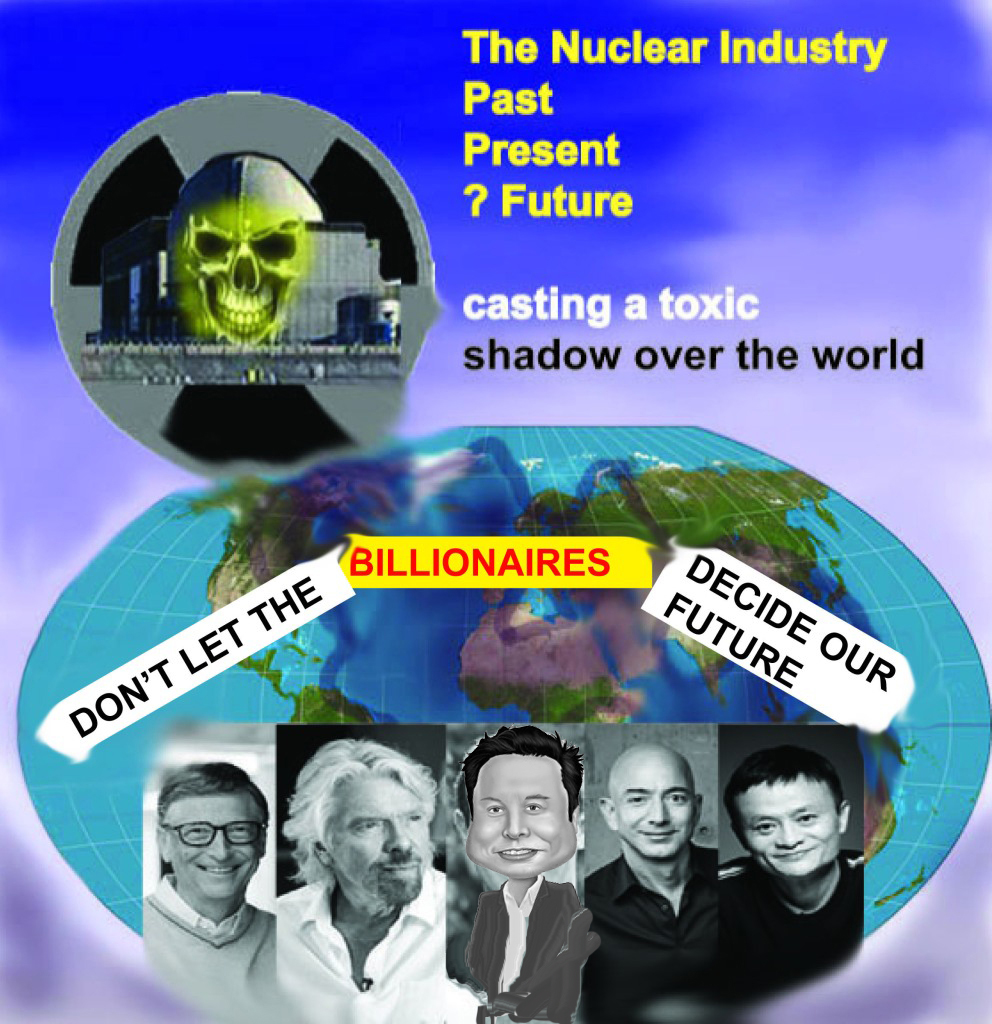
The “billionaires’ nuclear club”
The 2015 Paris climate talks featured what cleantechnica.com called a “splashy press conference” by Bill Gates to announce the launch of the Breakthrough Energy Coalition (BEC) – a group of (originally) 28 high net-worth investors, aiming “to provide early-stage capital for technologies that offer promise in bringing affordable clean energy to billions.”
Though BEC no longer makes its membership public, the original coalition included such familiar names as Jeff Bezos (Amazon), Marc Benioff (Salesforce), Michael Bloomberg, Richard Branson, Jack Ma (Alibaba), David Rubenstein (Carlyle Group), Tom Steyer, George Soros, and Mark Zuckerberg. Many of those names (and others) can now be found on the “Board and Investors” page of Breakthrough Energy’s website.
Why Canada is now poised to pour billions of tax dollars into developing Small Modular Reactors as a “clean energy” climate solution
by Joyce Nelson, January 14, 2021, story. Mini-Nukes, Big Bucks: The Interests Behind the SMR Push | Watershed Sentinel
Back in 2018, the Watershed Sentinel ran an article warning that “unless Canadians speak out,” a huge amount of taxpayer dollars would be spent on small modular nuclear reactors (SMRs), which author D. S. Geary called “risky, retro, uncompetitive, expensive, and completely unnecessary.” Now here we are in 2021 with the Trudeau government and four provinces (Saskatchewan, Ontario, New Brunswick, and Alberta) poised to pour billions of dollars into SMRs as a supposed “clean energy” solution to climate change.
It’s remarkable that only five years ago, the National Energy Board predicted: “No new nuclear units are anticipated to be built in any province” by 2040.
So what happened?
The answer involves looking at some of the key influencers at work behind the scenes, lobbying for government funding for SMRs.
The Carney factor
When the first three provinces jumped on the SMR bandwagon in 2019 at an estimated price tag of $27 billion, the Green Party called the plan “absurd” – especially noting that SMRs don’t even exist yet as viable technologies but only as designs on paper.
According to the BBC (March 9, 2020), some of the biggest names in the nuclear industry gave up on SMRs for various reasons: Babcock & Wilcox in 2017, Transatomic Power in 2018, and Westinghouse (after a decade of work on its project) in 2014.
But in 2018, the private equity arm of Canada’s Brookfield Asset Management Inc. announced that it was buying Westinghouse’s global nuclear business (Westinghouse Electric Co.) for $4.6 billion.
“If Wall Street and the banks will not finance this, why should it be the role of the government to engage in venture capitalism of this kind?”
Two years later, in August 2020, Brookfield announced that Mark Carney, former Bank of England and Bank of Canada governor, would be joining the company as its vice-chair and head of ESG (environmental, social, and governance) and impact fund investing, while remaining as UN Special Envoy for Climate Action and Finance.
“We are not going to solve climate change without the private sector,” Carney told the press, calling the climate crisis “one of the greatest commercial opportunities of our time.” He considers Canada “an energy superpower,” with nuclear a key asset.
Carney is an informal advisor to PM Trudeau and to British PM Boris Johnson. In November, Johnson announced £525 million (CAD$909.6 million) for “large and small-scale nuclear plants.”
SNC-Lavalin
Scandal-ridden SNC-Lavalin is playing a major role in the push for SMRs. In her mid-December 2020 newsletter, Elizabeth May, the Parliamentary Leader of the Green Party, focused on SNC-Lavalin, reminding readers that in 2015, then-PM Stephen Harper sold the commercial reactor division of Atomic Energy of Canada Ltd. (AECL) “to SNC-Lavalin for the sweetheart deal price of $15 million.”
May explained, “SNC-Lavalin formed a consortium called the Canadian National Energy Alliance (CNEA) to run some of the broken-apart bits of AECL. CNEA has been the big booster of what sounds like some sort of warm and cuddly version of nuclear energy – Small Modular Reactors. Do not be fooled. Not only do we not need new nuclear, not only does it have the same risks as previous nuclear reactors and creates long-lived nuclear wastes, it is more tied to the U.S. military-industrial complex than ever before. That’s because SNC-Lavalin’s partners in the CNEA are US companies Fluor and Jacobs,” who both have contracts with US Department of Energy nuclear-weapons facilities.”
But, states May, “Natural Resources Minister Seamus O’Regan has been sucked into the latest nuclear propaganda – that ‘there is no pathway to Net Zero [carbon emissions] without nuclear’.”
Terrestrial Energy
Then there’s Terrestrial Energy, which in mid-October 2020 received a $20 million grant for SMR development from NRCan’s O’Regan and Navdeep Bains (Minister of Innovation, Science and Industry). The announcement prompted more than 30 Canadian NGOs to call SMRs “dirty, dangerous, and distracting” from real, available solutions to climate change.
The Connecticut-based company has a subsidiary in Oakville, Ontario. Its advisory board includes Stephen Harper; Michael Binder, the former president and CEO of the Canadian Nuclear Safety Commission; and (as of October) Dr. Ian Duncan, the former UK Minister of Climate Change in the Dept. of Business Energy and Industrial Strategy (BEIS).

Perhaps more important, Terrestrial Energy’s advisory board includes Dr. Ernest Moniz, the former US Secretary of the Dept. of Energy (2013-2017) who provided more than $12 billion in loan guarantees to the nuclear industry. Moniz has been a key advisor to the Biden-Harris transition team, which has come out in favour of SMRs, calling them “game-changing technologies” at “half the construction cost of today’s reactors.”
In 2015, while the COP 21 Paris Climate Agreement was being finalized, Moniz told reporters that SMRs could lead to “better financing terms” than traditional nuclear plants because they would change the scale of capital at risk. For years, banks and financial institutions have been reluctant to invest in money-losing nuclear projects, so now the goal is to get governments to invest, especially in SMRs.
That has been the agenda of a powerful lobby group that has been working closely with NRCan for several years.
The “billionaires’ nuclear club”
The 2015 Paris climate talks featured what cleantechnica.com called a “splashy press conference” by Bill Gates to announce the launch of the Breakthrough Energy Coalition (BEC) – a group of (originally) 28 high net-worth investors, aiming “to provide early-stage capital for technologies that offer promise in bringing affordable clean energy to billions.”
Though BEC no longer makes its membership public, the original coalition included such familiar names as Jeff Bezos (Amazon), Marc Benioff (Salesforce), Michael Bloomberg, Richard Branson, Jack Ma (Alibaba), David Rubenstein (Carlyle Group), Tom Steyer, George Soros, and Mark Zuckerberg. Many of those names (and others) can now be found on the “Board and Investors” page of Breakthrough Energy’s website.
“As long as Bill Gates is wasting his own money or that of other billionaires, it is not so much of an issue. The problem is that he is lobbying hard for government investment.”
Writing in Counterpunch (Dec. 4, 2015) shortly after BEC’s launch, Linda Pentz Gunter noted that many of those 28 BEC billionaires (collectively worth some $350 billion at the time) are pro-nuclear and Gates himself “is already squandering part of his wealth on Terra Power LLC, a nuclear design and engineering company seeking an elusive, expensive and futile so-called Generation IV traveling wave reactor” for SMRs. (In 2016, Terra Power, based in Bellevue, Washington, received a $40 million grant from Ernest Moniz’s Department of Energy.)
According to cleantechnica.com, the Breakthrough Energy Coalition “does have a particular focus on nuclear energy.” Think of BEC as the billionaires’ nuclear club.
By 2017, BEC was launching Breakthrough Energy Ventures (BEV), a $1 billion fund to provide start-up capital to clean-tech companies in several countries.
Going after the public purse
Bill Gates was apparently very busy during the 2015 Paris climate talks. He also went on stage during the talks to announce a collaboration among 24 countries and the EU on something called Mission Innovation – an attempt to “accelerate global clean energy innovation” and “increase government support” for the technologies. Mission Innovation’s key private sector partners include the Breakthrough Energy Coalition, the World Economic Forum, the International Energy Agency, and the World Bank.
An employee at Natural Resources Canada, Amanda Wilson, was appointed as one of the 12 international members of the Mission Innovation Steering Committee.
In December 2017, Bill Gates announced that the Breakthrough Energy Coalition was partnering with Mission Innovation members Canada, UK, France, Mexico, and the European Commission in a “public-private collaboration” to “double public investment in clean energy innovation.”
Canada’s Minister of Natural Resources at the time, Jim Carr, said the partnership with BEC “will greatly benefit the environment and the economy. Working side by side with innovators like Bill Gates can only serve to enhance our purpose and inspire others.”
Dr. M.V. Ramana, an expert on nuclear energy and a professor at the School of Public Policy and Global Affairs at UBC, told me by email: “As long as Bill Gates is wasting his own money or that of other billionaires, it is not so much of an issue. The problem is that he is lobbying hard for government investment.”
Dr. Ramana explained that because SMRs only exist on paper, “the scale of investment needed to move these paper designs to a level of detail that would satisfy any reasonable nuclear safety regulator that the design is safe” would be in the billions of dollars. “I don’t see Gates and others being willing to invest anything of that scale. Instead, they invest a relatively small amount of money (compared to what they are worth financially) and then ask for government handouts for the vast majority of the investment that is needed.”
Kevin Kamps, Radioactive Waste Specialist at Beyond Nuclear, told me by email that the companies involved in SMRs “don’t care” if the technology is actually workable, “so long as they get paid more subsidies from the unsuspecting public. It’s not a question of it working, necessarily,” he noted.
Gordon Edwards, President of the Canadian Coalition for Nuclear Responsibility, says governments “are being suckers. Because if Wall Street and the banks will not finance this, why should it be the role of the government to engage in venture capitalism of this kind?”
“Roadmap” to a NICE future
By 2018, NRCan was pouring money into a 10-month, pan-Canadian “conversation” about SMRs that brought together some 180 individuals from First Nations and northern communities, provincial and territorial governments, industry, utilities, and “stakeholders.” The resulting November 2018 report, A Call to Action: A Canadian Roadmap for Small Modular Reactors, enthusiastically noted that “Canada’s nuclear industry is poised to be a leader in an emerging global market estimated at $150 billion a year by 2040.”
At the same time, Bill Gates announced the launch of Breakthrough Energy Europe, a collaboration with the European Commission (one of BEC’s five Mission Innovation partners) in the amount of 100 million euros for clean-tech innovation.
Gates’ PR tactic is effective: provide a bit of capital to create an SMR “bandwagon,” with governments fearing their economies would be left behind unless they massively fund such innovations.
NRCan’s SMR Roadmap was just in time for Canada’s hosting of the Clean Energy Ministerial/Mission Innovation summit in Vancouver in May 2019 to “accelerate progress toward a clean energy future.” Canada invested $30 million in Breakthrough Energy Solutions Canada to fund start-up companies.
A particular focus of the CEM/MI summit was a CEM initiative called “Nuclear Innovation: Clean Energy (NICE) Future,” with all participants receiving a book highlighting SMRs. As Tanya Glafanheim and M.V. Ramana warned in thetyee.ca (May 27, 2019) in advance of the summit, “Note to Ministers from 25 countries: Prepare to be dangerously greenwashed.”
Greenwash vs public backlash
While releasing the federal SMR Action Plan on December 18, O’Regan called it “the next great opportunity for Canada.”
Bizarrely, the Action Plan states that by developing SMRs, our governments would be “supporting reconciliation with Indigenous peoples” – but a Special Chiefs Assembly of the Assembly of First Nations passed a unanimous 2018 resolution demanding that “the Government of Canada cease funding and support” of SMRs. And in June 2019, the Anishinabek Chiefs-in-Assembly (representing 40 First Nations across Ontario) unanimously opposed “any effort to situate SMRs within our territory.”
Some 70 NGOs across Canada are opposed to SMRs, which are being pushed as a replacement for diesel in remote communities, for use in off-grid mining, tar-sands development, and heavy industry, and as exportable expertise in a global market.
Whether SMRs work or not, Mission Innovation members will be throwing tax-dollars at them like there is no tomorrow.
On December 7, the Hill Times published an open letter to the Treasury Board of Canada from more than 100 women leaders across Canada, stating: “We urge you to say ‘no’ to the nuclear industry that is asking for billions of dollars in taxpayer funds to subsidize a dangerous, highly-polluting and expensive technology that we don’t need. Instead, put more money into renewables, energy efficiency and energy conservation.”
No new money for SMRs was announced in the Action Plan, but in her Fall Economic Statement, Finance Minister Chrystia Freeland touted SMRs and noted that “targeted action by the government to mobilize private capital will better position Canadian firms to bring their technologies to market.” That suggests the Canada Infrastructure Bank will use its $35 billion for such projects.
It will take a Herculean effort from the public to defeat this NICE Future, but along with the Assembly of First Nations, three political parties – the NDP, the Bloc Quebecois, and the Green Party – have now come out against SMRs.
Award-winning author Joyce Nelson’s latest book, Bypassing Dystopia, is published by Watershed Sentinel Books. She can be reached via www.joycenelson.ca.
How data centres will cut carbon emissions, not increase them

It should be noted that low carbon waste heat from electricity is increasingly renewable in source and this will substitute for natural gas consumption. As a result, carbon emmisions will be lowered.
Hence not only can data centres reduce energy consumption overall by the indirect effects described above, it can also reduce them directly by substituting the low carbon waste heat for natural gas consumption that is normally used for heating
David Toke, Oct 23, 2024
https://davidtoke.substack.com/p/how-data-centres-will-cut-carbon
Yes, you read that headline the right way. Despite the torrents of nonsense you will hear from lots of places (and a lot of energy nonsense these days seems to be concentrated in the Daily Telegraph) data centres and that fellow monster AI is unlikely to bust the electricity grid. Indeed, it is, on balance, more likely to reduce total energy demand.
Nevertheless, lurid tales of the data centre/AI monster devouring power have been spreading, and, they have even been linked to companies such as Meta, Amazon and Amazon issuing press releases about how they are going to source power from another monster, new nuclear power plants. However, as in horror stories in general, these monsters are, at least in almost all cases, entirely mythical.
As a point of fact, despite the seemingly rapidly rising number of data centres in the USA electricity demand in the first half of 2024 was the same as it was two years previously. The UK’s electricity demand has been on a downward path for some time. The International Energy Agency has recently published an analysis saying that data centres will be a small proportion of future growth energy demand (see HERE). Now, there is a very strong case for saying that electricity demand will increase to a greater or lesser extent. However, it rests on increased electrification of transport (starting with Electric Vehicles) and also heat pumps. But I don’t suppose many Daily Telegraph readers are very interested in that.
In the USA lots of data centres are being built in Texas. In the UK London is the biggest hub, housing over 40 per cent of the data centres sited in the UK. Not many people seem to realise that they will not consume gigantic amount of power. Even fewer people know that the alleged super-monstrous AI (which is said to ravenously consume this data centre energy) may, in fact, actually reduce energy demand in various indirect ways.
In fact AI and data centres that feed AI are likely to generate economic growth in service industries – business applications – that have a low energy intensity. GDP is likely therefore to become less energy intensive, replacing output that would otherwise be more energy intensive. Moreover the energy usage of these less energy- intensive applications will be itself reduced through better energy management organised through AI. Goldman-Sachs (see here) estimates that AI will see ‘the economy benefiting, from enhancing office productivity and sales efforts, to the design of buildings and manufactured parts, to improving patient diagnosis in healthcare settings,’ etc This means that as the efficient use of energy in the economy increases faster than the demand for energy services, then energy usage will decline, not increase. AI processing centres will themselves reduce the power they use as they take advantage of new tools that are becoming available to reduce power consumption. See HERE.
One way in which energy efficiency is going to be increased is directly as a result of the application of AI itself to improve the way that energy is managed, especially in buildings. Andrew Warren, the Chair of the British Energy Efficient Federation (BEEF), says in the October issue of the Energy In Buildings Newsletter ‘According to management consultants McKinsey, AI has the potential to deliver energy savings of up to 20% in buildings and 15% in transport systems. Additionally, AI-driven solutions can help businesses reduce CO₂ emissions by up to 10% and cut energy costs by 10-20% – particularly so in the field of industrial energy management.’
The overall effect of AI-driven increases in data centre consumption is visualised using the chart below. The demand for energy servicesA (green line) represents increasing energy demand under conditions of earlier industrial periods, whilst the demand for energy servicesB (orange line) represents the demand for energy services under a AI influenced services dominated economy. As can be seen also the green line represents the trend towards energy efficiency improvements that occurs as the economy refines its equipment, buildings, plant etc to use energy more efficiently. The orange line represents the increase for energy services in a AI influenced services economy. The key point is that it grows at a slower rate than overall energy efficiency improvements. This leads to a decline in energy consumption overall.
Of course this chart [on original] assumes that the energy economy is structured as before in its energy supply technologies. Of course energy will be increasingly supplied by electricity technologies. This chart ignores this effect, but is constructed so that we can focus on the effects of AI and data centre.
On top of all of this there are opportunities for data centres to sell otherwise waste heat to neighbouring businesses and housing estates in district heating systems. Indeed, it was reported last year that ‘The UK Government has awarded £36 million ($44.5m) to a district heating system in West London which will share data center waste heat with up to 10,000 new homes’. This development is taking place in Ealing.
We should make this the norm rather than the exception with data centres. We should take a leaf from German practice. Under the German Energy Efficiency Act (approved in 2023) data centres are required to re-use an increasing amount of waste heat – at least 20 per cent for those data centres which come into operation from 2028. It should be noted that low carbon waste heat from electricity is increasingly renewable in source and this will substitute for natural gas consumption. As a result, carbon emmisions will be lowered. Hence not only can data centres reduce energy consumption overall by the indirect effects described above, it can also reduce them directly by substituting the low carbon waste heat for natural gas consumption that is normally used for heating.
The reaction in some circles to the (it seems) mythical monster of the threatening data centres and AI becomes all the more stranger when it comes to nuclear power’s role in the story. Mythical nuclear power stations (that is ones that are unlikely to be built) are hypothesised as the answer to this (non-) problem. US companies such as Google, Amazon and Meta have been sounding their support for new nuclear power. In fact their support seems to consist of usually of vague announcements of future support. You would think of course, that if more electricity is needed, then we need to issue more contracts for renewable energy. This is especially as nuclear power plant seem very difficult to organise. However, such thoughts do not feature strongly in the minds of many Daily Telegraph readers.
The only definite support new nuclear power is actually getting in the wake of the imaginary AI monster seems to come from Amazon who has pledged $500 million towards a 300 MW small modular reactor (maybe the sort of offering that can please Trump supporters). Quite how a smaller type of nuclear reactor is going to deliver much of an increase in power supplies compared to the booming construction of wind and solar plant does not seem to compute with the Trumpists either. But it falls in with the ever-mythical notion that cheap nuclear power is (again) just around the corner story that we have heard for so many decades. What’s changed now? Really, not very much in fact – but the mixture of monster AI power demands and nuclear power coming to the rescue is really like something out of a 1950s science fiction story. And that’s all it is likely to remain.
When The Holocaust Returned It Came Denouncing Anti-Semitism And Wearing A Star Of David
People assume what’s happening in Gaza can’t be an actual genocide, because the news media keep assuring everyone that’s not what we’re looking at, and so do the politicians in both parties.
“This can’t possibly be what it looks like,” people say. “If it was, we would have heard about it in the news.”
Caitlin Johnstone, Oct 23, 2024
It was never going to look how we were expecting. It wasn’t going to show up in its old familiar costume with the bent cross and the tiny mustache, blaming all the problems on the Jews.
It had to look different. If it didn’t look different, we never would have let it in the door.
And that’s still what’s throwing a lot of people off: it looks different. It doesn’t look like what all all the World War II movies and Holocaust novels conditioned us to watch out for. In fact, it looks so different that the victims in the last story have the same religion as the antagonists in the new one.
That old aphorism “History doesn’t repeat itself, but it often rhymes” is true because people don’t tend to make the exact same mistake in the same way twice, but the conditioning which led them to make the first mistake will often lead them to make a second similar one.
We’ve all been made far too familiar with the Nazi extermination program to ever consent to Jews being rounded up and loaded onto trains again, but we also didn’t purge from our civilization all the murderousness, hatred and tyranny which made it possible. That’s why this new Holocaust has been allowed to happen.
We’ve all been conditioned to watch out for the next Hitler, but there’s never going to be another Hitler. We’ve been so focused on looking out for the Hitler who never comes that many of us missed when we started singing verses that rhyme with the ones we were hearing in Germany eight decades ago.
People assume what’s happening in Gaza can’t be an actual genocide, because the news media keep assuring everyone that’s not what we’re looking at, and so do the politicians in both parties.
“This can’t possibly be what it looks like,” people say. “If it was, we would have heard about it in the news.”
The villains in this new story don’t look like the villains in the old story, and, if you are a properly indoctrinated westerner, they might not look like villains at all. They might just look like Jews defending themselves from terrorists and western governments rightly defending their dear ally — which is exactly what they should do if they want to prevent another Holocaust!
But it’s that very misperception which is making today’s Holocaust possible. This mass atrocity is being tolerated by huge parts of the population exactly because we see it as intolerable for large numbers of Jews to be killed by those who hate them, not understanding that the people who were killed on October 7 were killed not because of their religion, but because they were part of a settler-colonialist project which is premised on the perpetual abuse of a preexisting indigenous population.
People defend Israel’s actions on the grounds that Israel has reasons for doing things the way it’s doing them. They have to bomb Gaza — they suffered an unprovoked attack from a bunch of evil terrorists. They have to bomb all the hospitals and schools and mosques — that’s where Hamas are hiding. They have to bomb areas that are packed full of children — Hamas are using those children as human shields.
But those who commit mass atrocities always justify their actions. They always have reasons for doing them. They always frame it as a necessary act of self-preservation.
That was always what the next Holocaust was going to look like. It was never going to feature new bad guys who cackle and twist their mustaches saying “Haha, we are evil! Let’s kill a bunch of people because we are evil!” They were always going to frame themselves as the heroes and victims, and the other side as the villains and victimizers. They were always going to offer a bunch of reasons why what they’re doing is actually good and righteous, even though it looks evil on its face.
If we are to prevent genocidal atrocities, we need to be able to recognize what’s happening in real time, and we can’t do that if we’re expecting them to show up in familiar and instantly recognizable packaging. We need to be able to see through the manipulations and justifications in the here and now so we can stop it in its tracks instead of waiting for history to judge it in our rearview mirror after it’s already happened.
This is important to recognize when it comes to saving Gaza, and it’s important to recognize when it comes to preventing the Holocausts of the future as well. They will never look identical to the Holocausts of the past. Their form will be unprecedented, and they will have different justifications for their orchestration. But they will rhyme. And we need to be able to pick up on that as it happens.
Nuclear lobby propagandises to kids AGAIN!


They did this in the past – with rather pathetic little comics and posters
Like this one, from Canadian uranium company Cameco
Department of Energy Goes Nuclear with New Comic Book – Office of Nuclear Energy, 23 Oct 24
What does dodgeball have to do with nuclear power?
You can find out in a new comic book released by the U.S. Department of Energy (DOE) that’s geared toward young readers.
The Spark Squad Nuclear comic book follows middle schoolers Jasmine, Aria and Thomas on their quest to collect enough “joules” to qualify for the regional power fair.
The students quickly find out just how “energy dense” uranium fuel is after meeting Aria’s old friend Dakota at a nearby coal facility, which was recently converted to a nuclear power plant.
Dakota then asks for the Spark Squad’s help to initiate a chain reaction by getting enough uranium particles to play dodgeball with “neutron balls” to split apart other Uranium-235 atoms.
This epic game of dodgeball results in a sustained nuclear reaction AND more than enough joules for the students to qualify for regionals!………….
Spark-ing Interest in Nuclear Energy
The Spark Squad comic book and video were created by DOE to make nuclear power more accessible to younger audiences.
We developed a special activity called “Dodgeball Fission” and also worked with our national labs to create a STEM toolkit for the comic book to help engage learners of all ages. It can be used both in-school and out-of-school with standards-aligned, ready-to-use activities for educators.
Nuclear and STEM
The United States operates the largest fleet of reactors in the world with 94 units located at 54 sites across the country.
And, if you don’t live near one of these plants, then you might not know just how good of a neighbor nuclear can be.
These plants support thousands of high-paying jobs with salaries that are typically 30 percent higher than the local average.
Nuclear plants also contribute millions of dollars each year to their communities through federal and state taxes that are used to improve local infrastructure projects and schools.
DOE estimates our nuclear capacity could triple by 2050 to help meet our rising energy demand with clean power.
That means hundreds of thousands of new jobs could be created in the sector as current nuclear plants work to extend their operations and new plants come online.
To help cultivate this future workforce, it’s important to engage youth at an early age with activities like this comic book and the accompanying activities to spark their interest in future STEM careers.
You can also check out earlier Spark Squad comic books as the team explores hydropower.
The Spark Squad comic books were produced through a collaborative effort between the Office of Nuclear Energy, the Office of Energy Efficiency and Renewable Energy, the National Renewable Energy Laboratory, and Chromosphere Studio.
To explore more STEM activities related to nuclear power, check out our Navigating Nuclear Curriculum or visit our full suite of DOE STEM resources.
President Biden’s depraved last 15 months enables Israel’s genocidal destruction of Gaza.

November 7th marks 52 years since Joe Biden was first elected to national office as Senator from Delaware. During that time as Senator, Vice President, President, he’s supported every US military intervention sowing havoc around the world from Vietnam thru Iraq, Afghanistan, Iraq again, Yemen, Syria, Libya and Ukraine to name eight.
He’s also been a self-proclaimed Zionist. On October 21, 2023 he met with Israeli Prime Minister Benjamin in Israel and told him “I don’t believe you have to be a Jew to be a Zionist, and I am a Zionist.” This was at the beginning of Netanyahu’s scorched earth policy of genocidal ethnic cleaning to remove all 2,300,000 Palestinians from Gaza.
Biden pledged America’s military treasure for Netanyahu to complete his decades’ long dream of expelling Palestinians from Gaza for Israeli settlement. Of course, Biden was careful to couch the so far $17.9 billion in US weaponry as purely defensive to complete the destruction of Hamas following their October 7, 2023 attack.
But in the ensuing year, Netanyahu has used our treasure to utterly destroy Gaza as a habitable land. He’s dropped Biden’s 2,000 lb. blockbuster bombs to obliterate most of Gaza’s infrastructure including schools, hospitals, water and sewage treatment facilities along with tens of thousands of Palestinians moms and kids. The death toll likely exceeds a hundred thousand with virtually every remaining Palestinian suffering starvation and illness from Netanyahu’s preventing most food, water and medicine from reaching Gaza.
All of this grotesque carnage is financed and enabled by President Joe Biden.
What Biden calls defense, the Israelis call Palestinian Removal. Was he even aware of this week’s Israeli conference on Israeli resettlement of Gaza titled ‘Preparing to Resettle Gaza’ organized by Netanyahu’s government and settler organization Nachala? The topic was not defense against Hamas. It was about removing the remaining 2,200,000 Palestinians trapped in the moonscape created by Biden’s bombs. Israeli National Security Minister Itamar Ben Gvir told attendees “We will encourage the voluntary transfer of all Gazan citizens. We will offer them the opportunity to move to other countries because that land belongs to us.” What Ben Gvir didn’t articulate was that those not leaving voluntarily will be killed.
Joe Biden has been a career long supporter of Israeli colonial Apartheid control of the Palestinian people. He’s never taken a significant action to advance Palestinian statehood much less recognize Palestinians’ humanity. But in his last 15 months as president, he’s gone over the abyss into depravity, enabling the most grotesque genocide in this century.
Alas, Joe Biden is not leaving the presidency on a high note.
Secrecy over radioactive pollution from nuclear bases

The Ferret, Rob Edwards, October 22, 2024
The Ministry of Defence has blocked the Scottish Government’s environmental watchdog from releasing information about radioactive pollution from the Clyde nuclear bomb bases for the last nine years.
Emails released under freedom of information (FoI) law reveal that the Ministry of Defence (MoD) asked the Scottish Environment Protection Agency (Sepa) not to publish information about “environmental issues with radioactivity” at Faslane and Coulport near Helensburgh to protect “national security”.
In response to FoI requests from The Ferret, Sepa has refused to release more than 20 files about radioactive problems at the bases since 2016, and redacted others. We have appealed to the Scottish Information Commissioner, David Hamilton…………………………………………………………………………………………………………………..
Sepa’s refusal to release the files is under investigation by the Scottish Information Commissioner, following two appeals by The Ferret in August and September 2024.
‘Difficult’ to withhold information about radioactive pollution
Now, in response to another FoI request, Sepa has released email correspondence with the MoD about The Ferret’s FoI requests on Faslane and Coulport. These show that the MoD asked Sepa not to publish certain files.
Sepa emailed the MoD in October and November 2023 with files it proposed to release asking whether they “should be disclosed”. The MoD replied on 27 November saying that “HQ colleagues” wanted information withheld, though exactly how much or what has been redacted……………………………………………………………………………………………………………………………………………………………..
Secrecy over radioactive pollution ‘unacceptable’
Professor Campbell Gemmell was Sepa’s chief executive between 2003 and 2012 when it released more than 400 pages about safety at Faslane and Coulport. The MoD were “very challenging to deal with”, he recalled.
He said: “The UK ministry applied pressure repeatedly on radioactive waste issues seeking to keep relevant environmental information out of the public domain. Putting similar effort into remedy would be better.”………………………….
The Scottish Campaign for Nuclear Disarmament pointed out that it was well known that the four nuclear-armed Vanguard-class submarines based on the Clyde were ageing and overstretched. They were more likely to leak, argued the group’s co-vice chair, David Kelly.
“This information is not a threat to national security. But it is a threat to the image of a responsible Ministry of Defence, that pollutes our environment with ever-increasing amounts of radioactive isotopes in the name of keeping us safe.”………………………………………………………………………………………………………
https://theferret.scot/radioactive-pollution-clyde-nuclear-bases/
Cop29 host Azerbaijan set for major fossil gas expansion, report says
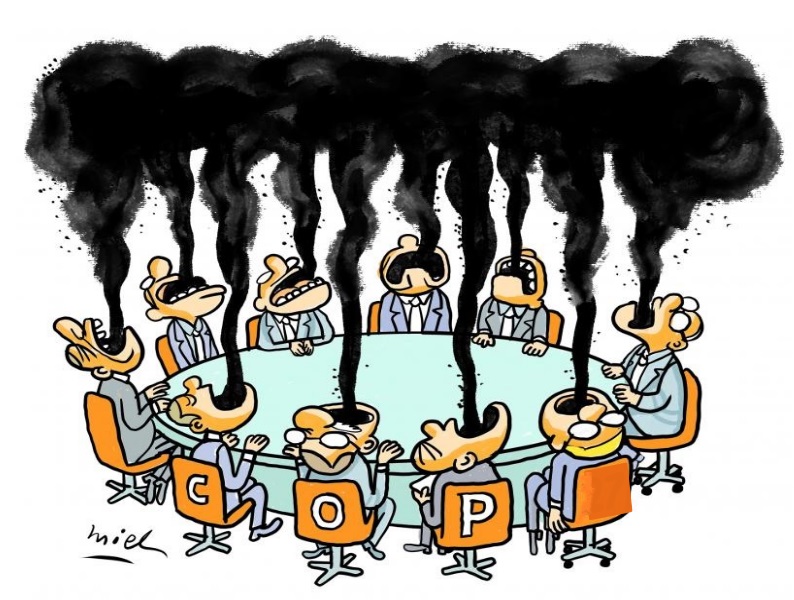
Exclusive: Those with ‘interest in keeping world hooked on fossil fuels’ should not oversee climate talks, say report authors
Guardian, Damian Carrington Environment editor, 23 Oct 24
Azerbaijan, the host of the Cop29 global climate summit, will see a large expansion of fossil gas production in the next decade, a new report has revealed. The authors said that the crucial negotiations should not be overseen by “those with a vested interest in keeping the world hooked on fossil fuels”.
Azerbaijan’s state-owned oil and gas company, Socar, and its partners are set to raise the country’s annual gas production from 37bn cubic metres (bcm) today to 49bcm by 2033. Socar also recently agreed to increase gas exports to the European Union by 17% by 2026.
The Cop29 summit, starting on 11 November, comes as scientists say that continued record carbon dioxide emissions means “the future of humanity hangs in the balance”. The International Energy Agency said in 2021 that no new fossil fuel exploitation should take place if CO2 emissions were to fall to zero by 2050.
But in 2023 Socar pushed 97% of its capital expenditure into oil and gas projects, the report found. The company launched a “green energy division” a few weeks after Azerbaijan was appointed as Cop29 host, promising investments in wind, solar and carbon capture technologies. But according to the report, Socar’s renewable operations remain insignificant.
Azerbaijan’s climate action plan was rated “critically insufficient” by Climate Action Tracker (CAT) in September. “Azerbaijan is among a tiny group of countries that has weakened its climate target [and] the country is doubling down on fossil fuel extraction,” said the CAT analysts.
Azerbaijan and Socar had also been accused of human rights violations, the report said. The authors said defeating the climate crisis required civil society to have freedom of speech and protected human rights.
“Given Socar’s pivotal role in Azerbaijan’s economy and its close ties to the country’s political elite, its influence will surely be felt throughout the climate negotiations in Baku,” said Regine Richter at the German NGO Urgewald, lead author of the report. “As we prepare for Cop29, we cannot but ask ourselves: did we put the fox in charge of the henhouse?”
Azerbaijan’s president, Ilham Aliyev, told a climate conference in April: “Having oil and gas deposits is not our fault. It’s a gift from God.” Aliyez appoints Socar’s management board and was vice-president of Socar until he succeeded his father as the country’s president in 2003. Azerbaijan’s ecology and natural resources minister, Mukhtar Babayev, will run Cop29. He previously worked for Socar for 26 years until 2018. Rovshan Najaf, the president of Socar, is part of the Cop29 organising committee.
………………………………………………………………………….. Socar works with some of the world’s biggest fossil fuel companies, including BP, TotalEnergies, the Russian oil giant Tatneft and the United Arab Emirates’ state oil company Adnoc. The CEO of Adnoc, Sultan Al Jaber, was president of Cop28 in Dubai, where nations failed to agree to “phase out” fossil fuels, as many wanted, instead choosing the weaker ambition of “transitioning away from fossil fuels”.
Socar also receives substantial financial backing from major international institutions, totalling $6.8bn in loans and underwriting between 2021 and 2023, according to research by the Banking on Climate Chaos coalition. https://www.theguardian.com/environment/2024/oct/23/cop29-host-azerbaijan-set-for-major-fossil-gas-expansion-report-says
Three Mile Island nuclear plant gears up for Big Tech reboot

Reuters, By Laila Kearney, October 23, 2024
Summary
Companies
Activists say they will challenge licensing for the plant
Restart work is expected to begin in Q1 2025
Constellation has ordered major equipment
Microsoft would consider similar contracts to restart nuclear power plants
Work includes refurbishing cooling towers and millions of feet of scaffolding
THREE MILE ISLAND, Pennsylvania, Oct 22 (Reuters) – Giant cooling towers at Constellation Energy’s (CEG.O), opens new tab Three Mile Island nuclear plant in Pennsylvania have sat dormant for so long that grass has sprung up in the towers’ hollowed-out bases and wildlife roam inside.
Armed guard stations at an entrance to the shut concrete facility, surrounded by barbed wire, sit empty. The plant, which would run so loud when operating that workers were required to wear hearing protection, is nearly silent.
“It’s still eerie walking in here and it’s, just, quiet,” Constellation regulatory assurance manager Craig Smith said during a tour of the plant last week. Smith, who worked at Three Mile Island when Constellation shut the site’s remaining reactor in 2019, is now preparing for a restart.
Constellation announced last month that it would revive the half-century-old Three Mile Island with the purpose of fueling Microsoft’s (MSFT.O), opens new tab data centers. Microsoft is expected to pay at least $100 a megawatt-hour, nearly double the typical cost of renewable energy in the region, as part of the 20-year power contract.
The agreement shows the dramatic lengths Big Tech is willing to go to procure electricity for its artificial intelligence expansion and the undertaking by the U.S. power industry to meet that demand.
The effort to restore Unit 1 at Three Mile Island is expected to take four years, at least $1.6 billion, and thousands of workers to complete the unprecedented task of restarting a retired nuclear plant.
Constellation has already ordered costly equipment for the site and identified fuel for the unit’s reactor core, with work expected to start early next year, according to Reuters’ interviews with company executives, contractors and a tour of the site.
Successfully resurrecting Three Mile Island, which is widely known for a 1979 partial meltdown that cast a pall over the U.S. nuclear sector for decades, would put the plant at the front edge of an industry revival…………………………………………………..
A restart of the plant, however, is not certain. Three Mile Island, which will be renamed the Crane Clean Energy Complex, still requires licensing modifications and permitting. Local activists have also vowed to fight the project over safety and environmental concerns.
If the plan suffers the same lengthy delays and cost overruns that have plagued nearly every nuclear build in the country’s history, it could stymie other deals and set back Big Tech’s quest to rapidly expand, power experts say.
………………………………………………………………..The company has commissioned the fuel design for the reactor’s core, said Constellation Chief Generation Officer Bryan Hanson. The core holds the enriched uranium, the fuel source for the plant, stacked in pellets and sealed in tubes.
Constellation, which is the biggest U.S. operator of nuclear plants, will tap into fuel from its existing enriched uranium reserves as one of the final steps before starting up.
………………………………………………Not everyone is enthused about the prospect of a nuclear comeback. The power plants produce waste that can remain radioactive for thousands of years.
About a tennis court-size amount of spent nuclear fuel from Unit 1 is stored on Three Mile Island, which sits on a strip of land in the Susquehanna River. The decommissioning of Unit 2 is still underway about 45 years after the partial meltdown.
Local activist Eric Epstein, who remembers the March 1979 incident, said he will fight Constellation’s request to resume operating and water use licenses.
“It’s going to be a protracted battle,” Epstein said.
The first chance for the challenges comes on Oct. 25, when the Nuclear Regulatory Commission has scheduled its initial public hearing on Constellation’s plan to restart Unit 1.
Reporting by Laila Kearney Editing by Marguerita Choy
https://www.reuters.com/business/energy/three-mile-island-nuclear-plant-gears-up-big-tech-reboot-2024-10-22/
Ontario town starts voting today on willingness to host ‘forever’ nuclear waste storage site

$418 million in subsidies from Canada’s nuclear industry
“When you look at the money, I don’t think it’s really significant when you look at the scope of this project,“
Teeswater, north of London, and northern Ontario site being considered for massive facility
Andrew Lupton · CBC News · Posted: Oct 21, 2024
The small farming community of Teeswater, Ont., faces a massive decision. Starting today, its 6,000 residents will vote in a referendum on whether or not they’re willing to host Canada’s largest underground storage facility of spent nuclear fuel.
For Anja Vandervlies, who operates a 1,300-goat dairy farm nearby, it’s a monumental decision for her town in the municipality of South Bruce, and an easy choice for her.
“If we vote yes, we’re stuck with this nuclear waste in the ground forever,” said Vandervlies, a member of the opposition group Protecting Our Waterways – No Nuclear Waste. “This is the only time that we, as residents, are going to get a say in this whole process.”
A two-hour drive from London but less than 45 minutes from the Bruce Nuclear Generating Station on Lake Huron, Teeswater is one of two locations being considered to host Canada’s largest permanent underground storage facility for spent nuclear fuel.
Also under consideration is Ignace, a community of about 1,200, located 245 kilometres northwest of Thunder Bay. Voters there have already said they’re willing hosts; now it’s Teeswater’s turn to have its say.
Voting will be conducted online and by phone over seven days. To be binding, a yes vote of 50 per cent plus one is required. If Teeswater votes yes, the board of the Nuclear Waste Management Organization (NWMO) will make a final decision between Teeswater and Ignace, likely before the end of this year.
Once the site is decided, the $26-billion storage facility would be built in stages, with plans to begin accepting waste in the 2040s and continue storing it away underground for the next 175 years.
The process also requires consultation from First Nations groups in both communities. Neither has officially made a decision. The Wabigoon Lake Ojibway First Nation will vote in November. Opposition from Indigenous groups to the northern Ontario site is growing.
Wherever it’s located, the facility, which the NWMO calls a “deep geological repository” that would be located 600 metres underground, will take spent nuclear fuel from Canadian Candu reactors located as far away as Winnipeg.
Running counter to the safety concerns is the significant windfall awaiting whichever of the two communities winds up hosting the storage facility.
The host town would not only benefit from high-paying jobs, but also $418 million in subsidies from Canada’s nuclear industry over the the course of the project.
South Bruce Coun. Ron Schnurr didn’t want to say how he’s voting, opting instead to give the community its say this week.
However, he said the money would be a massive boost to a rural community with big infrastructure needs and a small tax base to pay for them. ……………………….
To Vandervlies and others in the group opposing the facility, the risk far outweighs the potential reward of hosting the site.
“When you look at the money, I don’t think it’s really significant when you look at the scope of this project,” she said.
The question
Voters will decide yes or no to the following question:
- Are you in favour of the Municipality of South Bruce declaring South Bruce to be a willing host for the Nuclear Waste Management Organization’s proposed Deep Geological Repository (DGR)?
Information about how to vote, how to get on the voters list and where to find a voter assistance centre is posted here. Voting closes on Oct. 28 at 8 p.m. ET.
https://www.cbc.ca/news/canada/london/teeswater-nuclear-waste-storage-site-vote-1.7356267
‘Millions of fish could die’ under current Hinkley Point C plan
Environmental advocates demand EDF takes action
By Lewis Clarke, Somerset Live , 22nd Oct 2024
A solutions-focussed, scientifically backed answer to the critical environmental situation at Hinkley Point C has been released by a coalition of scientists, engineers, and innovators, showing that the Acoustic Fish Deterrent (AFD) is both a necessary and feasible requirement for the builders of Hinkley Point C – EDF Energy – to apply.
An AFD Delivery Report, launched on October 16, gives evidence that the AFD can be installed safely and effectively in the Severn Estuary. It highlights the innovations in technical ability, technology, logistics, and science which will reduce maintenance times from 72 days per year down to just 19. The report debunks common misconceptions about noise levels, diving time, and more with scientifically backed evidence, and urges EDF to ensure the system is installed, tested, and operational before the station starts to abstract cooling water.
In light of the critical environmental situation at Hinkley Point C, a parliamentary debate led by Sir Ashley Fox MP was held last week on Wednesday 9th October 2024. During the debate, Sir Ashley Fox addressed that EDF Energy’s mosaic of mitigation measures, specifically the proposed saltmarsh plans, are a completely illogical choice.
The saltmarsh plans are a proposed alternative to the Acoustic Fish Deterrent (AFD), a system designed to protect aquatic life by deterring fish from entering the cooling systems of the power plant, and was included in the initial design plans of Hinkley Point C.
The AFD system remains mandated in the Development Consent Order (DCO). It is also considered best practice for screening estuarine intakes in the UK by the Environment Agency, and has been scrutinised by a Welsh Government Report (2021), a Public Inquiry (2022), and the ruling by Secretary of State Kwasi Kwarteng (2022) which all stated that the AFD must be installed. EDF Energy has been working to remove this vital environmental protection measure for nearly eight years, arguing on the grounds of health and safety concerns, noise pollution and effect on mammals, and further delay of the completion of Hinkley Point C.
The AFD Delivery Report provides a solution to the current impasse, but without the AFD, it has been warned by the Welsh Government Commission that approximately 182 million fish would be killed annually, including sensitive species like shad, sprat, Atlantic salmon, and herring.
In the AFD Delivery Report, Professor Mark Everard, University of West of England says “There can in my scientific view be no justification for removal of AFD. It makes absolutely no sense to permit very substantial damage to marine biodiversity and hope then that modest mitigation entailing a degree of recruitment only of species reliant on the saltmarsh can offset it.
“Cost reduction is cited by EDF as one element of its plan to remove the mandated AFD and would appear to be its principal consideration, but one that obviously overlooks the vital purpose of deflecting fish from the intake. Ideally, saltmarsh restoration should be implemented ADDITIONALLY to the AFD to mitigate the still substantial likely entrainment of multiple life stages of fish and invertebrates, even with deflection from the intake.”
South Gloucestershire Council understands that EDF will make another application to the Secretary of State to remove the requirement for an AFD in the new year, and so has written to the Secretary of State for Energy, Security & Net Zero, the Rt Hon Ed Milliband, requesting that he upholds the existing requirement to install an AFD.
Councillors Maggie Tyrrell and Ian Boulton, said in their letter to the Secretary of State: “We are writing to express our gravest concern regarding the scale of impact on the migratory fish populations of the Severn Estuary Special Area of Conservation (SAC) which will result from the massive water abstraction at Hinkley Point C of 120,000 litres of seawater a second for 60 years once the power station is operational.
“This impact would be made significantly worse by the proposed application for a change to the 2013 Development Consent Order to remove the required Acoustic Fish Deterrent (AFD).
“A Welsh Government report on the AFD cites evidence that removal of the AFD would capture at least 182 million fish per year, a significant proportion of which would be killed. Put simply, removing the AFD would cause critical levels of wildlife destruction.”
The council is also concerned that EDF are approaching local landowners about a plan to create new salt marshes, which they would propose as alternative compensation habitat for fish in place of the AFD. It is understood that local landowners are deeply concerned about the idea, which has been turned down in other areas when raised by EDF, and experts query EDFs claims that new saltmarshes would offer suitable habitat for fish killed by the water intake of the new power station.
The council’s letter also highlighted that even with the AFD, that compensation will still be needed as some fish will still be drawn into the intake and killed. Alongside the letter, the Secretary of State was also provided with information about priorities to deliver improvements for fish passage in the Bristol Avon river and Coastal Catchments……………………
https://www.somersetlive.co.uk/news/somerset-news/millions-fish-could-die-under-9641529
Navy ‘Innovation’ Center for “warfighting capabilities” will harm the Monterey Peninsula and ocean
Nina Beety
California Carmel Pine Cone, Monterey 23 Oct 24
The planned Navy Innovation Center for “warfighting capabilities” will
cause irreparable harm to the Monterey Peninsula and ocean. The Navy’s
track record of environmental damage is well-known – wanton disregard
for life, health, and safety, including its own personnel, maiming and
killing whales and dolphins, poisoning ocean, land, and drinking water –
while refusing accountability and transparency.
In its scant environmental assessment for the center, the Navy refused
to evaluate coastal zone management, hazardous materials and waste,
public health and safety, or recreation impacts, or existing local
impacts – [Navy] groundwater contamination from the airport flowing into
Laguna Grande, radioactive contamination under NPS, killing historic
trees along Del Monte Avenue, sonar, new 5G on the beach, and violating
federal laser limits. Its microwave emissions harm surrounding
residential areas and forests, and those emissions will increase with
the new center. The Navy’s nuclear waste dumps near the Farallons and
Half Moon Bay impact the bay.
This center is incompatible with the viability and health of this
community and the Earth. Please oppose it.
1 This Month


18 March Webinar @ 1 PM EST: An Assessment of SMR Projects: The Case of Canada
register for the zoom:
https://us02web.zoom.us/webinar/register/WN_o8BIIOUvQ2ONJR1nta65DQ#/registration


of the week – STOP SMALL MODULAR REACTORS IN CANADA
To see nuclear-related stories in greater depth and intensity – go to https://nuclearinformation.wordpress.com
-
Archives
- March 2026 (139)
- February 2026 (268)
- January 2026 (308)
- December 2025 (358)
- November 2025 (359)
- October 2025 (376)
- September 2025 (258)
- August 2025 (319)
- July 2025 (230)
- June 2025 (348)
- May 2025 (261)
- April 2025 (305)
-
Categories
- 1
- 1 NUCLEAR ISSUES
- business and costs
- climate change
- culture and arts
- ENERGY
- environment
- health
- history
- indigenous issues
- Legal
- marketing of nuclear
- media
- opposition to nuclear
- PERSONAL STORIES
- politics
- politics international
- Religion and ethics
- safety
- secrets,lies and civil liberties
- spinbuster
- technology
- Uranium
- wastes
- weapons and war
- Women
- 2 WORLD
- ACTION
- AFRICA
- Atrocities
- AUSTRALIA
- Christina's notes
- Christina's themes
- culture and arts
- Events
- Fuk 2022
- Fuk 2023
- Fukushima 2017
- Fukushima 2018
- fukushima 2019
- Fukushima 2020
- Fukushima 2021
- general
- global warming
- Humour (God we need it)
- Nuclear
- RARE EARTHS
- Reference
- resources – print
- Resources -audiovicual
- Weekly Newsletter
- World
- World Nuclear
- YouTube
-
RSS
Entries RSS
Comments RSS
 nuclear-news