TODAY. Media enthusiasm for dodgy “cutting edge Lego-like micro-nuclear power plants” , (but doubts creep in).

modules assembled “like a LEGO kit” and designed to be fabricated, transported, and assembled within 24 months”
BUT -“the tech is still in the early stages and faces a myriad of hurdles.”
“has yet to obtain licensing and planning approvals“
“How the new fleet of SMRs will be funded has yet to be established. The technology is not yet generating power anywhere in the world”
I am fascinated with the way that the media continues to obediently trot out the official dogma that small nuclear reactors are the new great white hope – for everything – jobs, reduce carbon emissions, revitalise the economy, cheap, clean, plentiful energy, – blah blah. The interesting thing is that, in the midst of their enthusiasm, some respectable news outlets occasionally now slip in a little bit of doubt.
A couple of examples of doubt from the UK.:
Guy Taylor, Transport and Infrastructure Correspondent at City A.M. enthuses over a “hotly anticipated tender“ surrounding the development of Small Modular Reactors (SMR)’s in the UK. A micro reactor project in Wales will bring energy for 244,000 UK homes – “will pump around £30m into the local economy”.
But he also mentions that “the tech is still in the early stages and faces a myriad of hurdles.”
Ian Weinfass, in Construction News gives a positive, optimistic, story on this micro nuclear reactor development, but clearly states that the company (Last Energy) “has yet to obtain licensing and planning approvals for its technology.“ He tellingly concludes “How the new fleet of SMRs will be funded has yet to be established. The technology is not yet generating power anywhere in the world”
However, don’t fret, little nuclear rent-seekers! Most of the media is still obedient, and they know which side their bread is buttered on . Sion Barry, writing in Wales Online, describes the same “24/7 clean energy” project as “of national significance“. There’s a reassuring note about wastes, and the barest mention of “planning and licensing approvals“. Business Green discusses the Last Energy plan as “clean energy” – modules assembled “like a LEGO kit” and designed to be fabricated, transported, and assembled within 24 months”
News media, on the whole, are happy to uncritically trot out a nuclear company’s line – as we find this same project touted in Reuters, in Power, Sustainable Times, in New Civil Engineer. On Google News today, there are 15 similar articles, with only Yahoo! News including a tad of doubt about local public reaction.
And by the way, Tom Pashby in New Civil Engineer also adds to the joy by telling us that the company involved, Last Energy is working with Nato on military applications of micro-reactors.
Israel attacks the United Nations
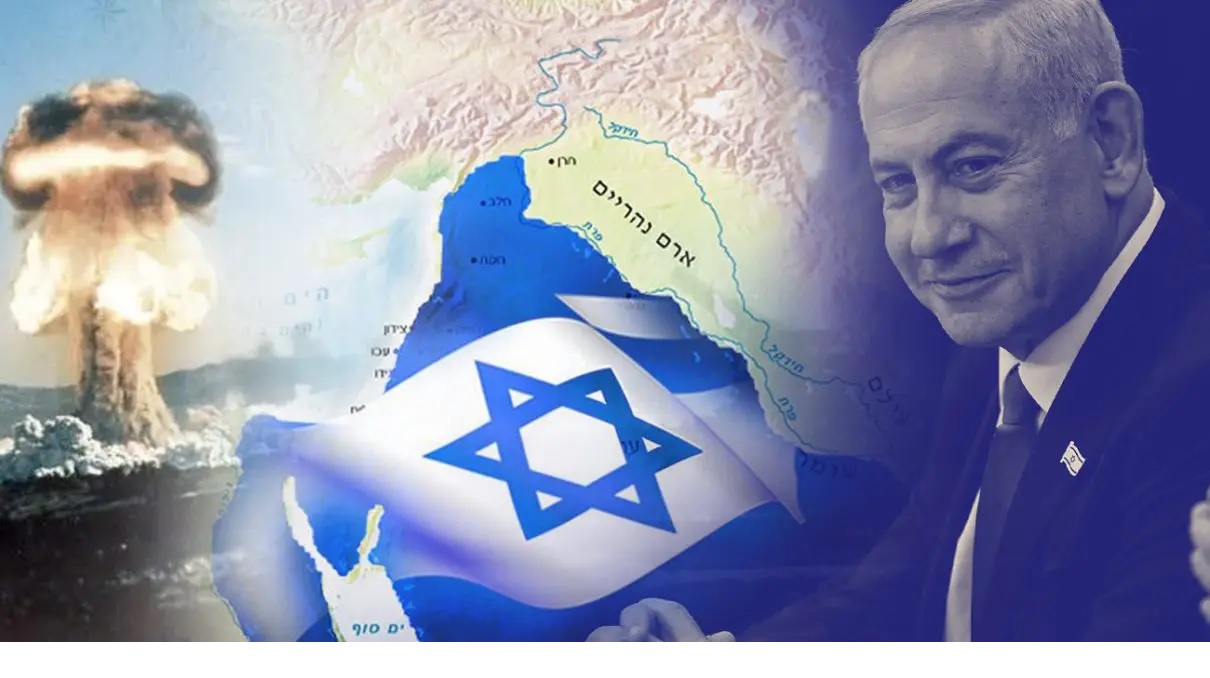
Contrary to popular belief, the United Nations General Assembly has only accepted Israel’s membership conditionally (resolution 273). However, Tel Aviv has never respected its commitments. It refuses to implement 229 resolutions of the Security Council and the General Assembly. It has just declared a UN agency a “terrorist organization,” called for its headquarters in New York to be razed, designated its Secretary General António Guterres persona non grata, and has just attacked four times UN peacekeepers in Lebanon (UNIFIL), wounding two blue helmets.
Voltaire Network | Paris (France) | 15 October 2024 by Thierry Meyssan, https://www.voltairenet.org/article221376.html
Israel has just attacked a position of the UN peacekeepers in Lebanon. When the British withdrew from Mandatory Palestine (i.e. Palestine placed by the League of Nations under the provisional administration of the United Kingdom) on May 14, 1948, the Zionist General Council, an offshoot of the Haganah (i.e. the main militia of the immigrant Jewish community), unilaterally proclaimed the independence of the State of Israel. It was announced by the chairman of the Jewish Agency (i.e. the executive of the World Zionist Organization).
It is important to note here that the British occupier withdrew from only about a quarter of Mandatory Palestine. It had already officially left the other three quarters, constituting Mandatory Transjordan, the future Jordan.
After a few days of reflection, the United Nations General Assembly decided to recognize the new state, not without having emphasized that in principle, it was not up to a militia, the Haganah, to proclaim a state, even if this proclamation came to fill the void left by the departure of the mandatory authority, that is to say the British. The General Assembly had noted that the proclamation of independence said nothing about the regime of this state (theocracy or republic), nor about its borders. It intended to pursue its plan for the creation of a binational state, both Arab and Jewish, without territorial continuity between the two entities (Jerusalem and Bethlehem having an international status). It had been reassured by the new state’s reference to “complete equality of social and political rights for all citizens without distinction of belief, race and sex.”
The day after independence, Egypt, Iraq, Transjordan, Lebanon, Syria and Yemen sent their armies to Palestine. Official history today assures that these six countries (the “Arabs”, understand the “Muslims”) did not accept a Jewish state, while five of them opposed Jewish colonization after British colonization and the sixth supported Israel. Religion was a problem only for Izz al-Din al-Qassam, the Muslim Brotherhood and the Nazi mufti Mohammed Amin al-Husseini.
Identicaly, propaganda assures that these armies were defeated by the valiant Israeli army, implying “from the first day, the Jews are morally superior to the Arabs”. The reality was quite different. The world war had just ended and none of these countries, except Transjordan, had an army worthy of the name.
Their troops were exclusively formed of volunteers. In addition, the Transjordanian army, which ended the conflict, fought on the side of Israel against the other Arabs. Indeed, Transjordan, still under British influence, hoped to prevent the creation of a Palestinian state and annex its territory. Its army was none other than that of the British (the “Arab Legion”) and was still placed under the command of General John Bagot Glubb (alias “Glubb Pasha”). It was the Transjordanians (in fact the British) and not the Israelis who defeated the other Arab armies.
During the conflict, its sovereign, King Abdullah I was also proclaimed “King of Palestine.” During this conflict, the Israeli forces let the British of Transjordan fight against the Arabs and applied Plan D (in Hebrew: Plan “Dalet”). The Haganh intended to share as little territory as possible with Transjordan. Israeli forces illegally imported weapons from Czechoslovakia (already ruled by the communists), probably with the agreement of the USSR, supposedly to fight against British colonization, in reality to expel the Palestinians. This is the Nakhba (catastrophe). 750,000 Palestinians (between 50 and 80% of the population) were forcibly displaced.
Israel requested and obtained, the following year, its membership in the United Nations. At that time, no decolonized state was part of it. The countries under Anglo-Saxon influence were in the majority. However, they only accepted Israel under conditions. In its resolution 273, the UN General Assembly referred to a written commitment by the Minister of Foreign Affairs of the provisional government of Israel, Moshe Shertok, by which he “accepts without any reservation the obligations arising from the Charter of the United Nations and undertakes to observe them from the day it becomes a Member of the United Nations” [1].
To date, Israel has failed to uphold this commitment and has failed to comply with 229 Security Council and General Assembly resolutions. Its membership could therefore be suspended at any time.
In recent months,
• Israeli Foreign Minister Israel Katz said on March 23 that the UN had become “an anti-Semitic and anti-Israeli organization that harbors and encourages terrorism.”
• Israel has campaigned against a UN agency, the United Nations Relief and Works Agency for Palestine Refugees in the Near East (UNRWA), accusing it of serving Hamas. Last July, the Knesset passed three laws (1) banning UNRWA from operating on Israeli territory (2) stripping its staff of diplomatic immunities (3) declaring it a terrorist organization.
• Israel’s permanent representative to the United Nations, Gilad Erdan, declared at the end of his term last August, speaking from the UN headquarters in New York, that “this edifice must be razed from the face of the Earth.”
• Israeli Foreign Minister Israel Katz declared UN Secretary-General António Guterres persona non grata.
• The Israel Defense Forces (IDF) deliberately targeted French, Italian and Irish soldiers of the United Nations Interim Force in Lebanon (UNIFIL).
The bottom line:
• Israel was not created by its people, but by its army.
• The first Arab-Israeli war was not won by the Israelis, but by the Arabs of Transjordan under British command.
• By joining the United Nations, Israel committed itself to respecting all its resolutions, which it has violated 229 times.
• After Palestine, Lebanon, Syria, Iraq, Yemen and Iran, the Netanyahu government has opened an eighth front against the United Nations.
What does Google’s move into nuclear power mean for AI – and the world?
” tech companies operate: as supranational organisations that manage to bend countries’ regulation to their will,”

In today’s newsletter: Google will soon use nuclear reactors to run its AI datacentres. What are the economic, ethical and environmental implications?
Archie Bland, Wed 16 Oct 2024
Good morning. If you were looking for an inkblot test for your view of big tech’s investment in artificial intelligence, you could hardly do better than the news that Google is ordering the construction of at least six small nuclear reactors to power the growth of the technology.
Here, in one view, is an enlightened business leveraging its size to invest in infrastructure that could change the world for the better. Here, in another, is a poorly regulated corporation ignoring democratic objections in the brutal race for control of an innovation with great potential to do harm – and leaving the rest of us with little say in its development.
Google is making this eye-catching move because the datacentres that power the explosive growth of generative AI consume huge amounts of electricity – more than the existing grid in the US or other western nations can readily supply. For today’s newsletter, I spoke to technology journalist Chris Stokel-Walker, author of How AI Ate the World, about why the demand for power is growing so quickly – and whether we can trust big tech to handle the consequences. Here are the headlines.
In depth: Why AI needs so much power – and what big tech will do to get it
They might be called “small nuclear reactors”, but don’t be fooled: the 500MW Google is buying from Kairos Power is enough to power a midsize city. To begin to understand the scale of the demand AI puts on the electricity grid, keep in mind that this is only enough to cover one datacentre campus equipped to handle the growing demands of AI. One company alone, OpenAI, is trying to get the White House to sign off on building at least five datacentres, needing 5GW each of power – 10 times as big.
The reason for this nuclear power rush: the vast energy consumption of the computer chips (called graphics processing units or GPUs) that power the training of the large language models crucial to the development of AI. Meanwhile, a ChatGPT query needs nearly 10 times as much electricity to process as a Google search.
“GPUs are more advanced and more powerful than the CPUs [central processing units] of the previous generation of datacentres,” Chris Stokel-Walker said. “So there’s more demand there immediately. But we are also starting to see massive ‘megaclusters’ of GPUs. It’s not just the individual chips getting bigger and needing more power: it’s the race to get as many together to amplify their power as possible.”
How much impact will AI’s demand for power have?
“The challenge in estimating this is that the companies are pretty coy about telling us their power usage,” said Chris. “But there is a settled understanding that the energy used by datacentres is going to increase hugely as AI becomes layered into everything we do.”
The increase in demand already is significant: where the average datacentre drew 10MW of power a decade ago, they need 100MW today. And the biggest can already demand more than 600MW each.
The New York-based Uptime Institute, which has created a benchmarking system that is now industry standard, predicts that whereas AI only accounts for 2% of global datacentres’ power use today, that will reach 10% by next year. “The growth in power consumption is not linear,” Chris said. “In the same way that we used to have whacking great transistors behind our TVs and now we have flatscreens with eco-friendly modes, they are getting more efficient. But that doesn’t mean it’s not going upwards – just that it’s going up more slowly.”
How are tech companies trying to get the power to meet their needs?
By building it or paying others to do so. And because most governments expect that control of AI will be crucial to their ability to compete globally in the future, tech firms have a very strong hand when negotiating what to build and where.
“The argument tech companies are making, and that they’re trying to cement in the minds of decision-makers around the world, is: you either buy into this and sign up, or you run the risk of falling behind,” Chris said.
This New York Times piece lays out a case study of how that plays out in practice. It reports that as part of a recent fundraising effort, OpenAI’s CEO, Sam Altman, told executives at a Taiwanese semiconductor company that it would cost about $7tn (£5.6tn) to fulfil his vision of 36 semiconductor plants and additional datacentres. That’s about a quarter of the total US annual economic output. OpenAI denies that claim, and says that its plans run to the hundreds of billions of dollars.
Meanwhile, Altman has also been considering building these centres in other countries, including the United Arab Emirates. But there are fears in Washington that placing the centres there could give China a back door to American AI advances, because of the links between Chinese and Emirati universities. And at the same time, Altman is exploring plans for centres within the US.
“The warning is being used as a stick alongside the carrot,” Chris said. “They’re saying: if you don’t do this, we will go elsewhere, and you will not just lose the investment, but face a national security risk.”
What is the potential impact on the climate?
Big tech companies insist they are leaning into renewable sources of power as much as possible – and argue that AI could ultimately be a crucial tool to limit the damage caused by the climate crisis.
It is true that tech firms’ investment in renewable sources of energy has played an important part in their growth. But claiming that AI will help defeat the climate crisis is a theoretical benefit that won’t be seen until some point in the fairly distant future. And there are claims that emissions caused by current energy usage from datacentres owned by the likes of Google, Microsoft and Meta are much higher than they admit publicly.
In this piece published last month, Isabel O’Brien reported that big tech firms are using renewable energy credits – which may not actually be used to power the datacentres themselves and which may not even reduce emissions – to artificially deflate their reported emissions. That means the actual figures could be more than seven times higher than the numbers they report.
What about the use of nuclear power?
Google says its experiment makes it the first company in the world to buy nuclear energy from small nuclear reactors. But Amazon and Microsoft have already struck deals with conventional, larger nuclear power plants in the US this year. Don’t panic, but Microsoft’s deal will for the first time in five years activate a nuclear reactor at Three Mile Island in Pennsylvania – the site of the worst nuclear meltdown in US history. Sensibly, they’re emphasising its history of safe operation since the 1979 disaster at another reactor there – and renaming it.
With datacentres estimated to be on track to produce about 2.5bn tonnes of carbon-dioxide equivalent emissions by 2030, there is an environmental argument for the use of nuclear power. But that is a highly controversial case, which, because of the associated risks, has been the subject of charged democratic debate for many years. Wherever you stand on that question, it is remarkable that these companies appear to be able to simply decide on their own.
“One of the things that’s really striking here is what it says about how tech companies operate: as supranational organisations that manage to bend countries’ regulation to their will,” Chris said.
On the other hand, Google argues its investment in small nuclear reactors could be a necessary boost to a technology that has struggled to get off the ground. “In the end, some of this does trickle down,” said Chris. “They tend to commercialise technologies in a safe way. But it takes a long time, and the benefits are unequally distributed.”
Can governments bring these changes under control?
There are well-documented issues with regulating tech firms: without globally enforced agreements, there will always be another country ready to offer a better deal. See, for example, Ireland’s status as the European home of many big techfirms because of its favourable tax regime.
Regulation does not necessarily need to be globally agreed to be effective, however: in California, for example, new legislation intended to combat greenwashing will soon require all private companies with global revenue above $1bn to publish details of their carbon footprint. Since any big tech firm is bound to want to maintain operations in California, that could have much wider ramifications.
The impact of attempts at regulation and better data collection on the growth of AI may also depend on whether tech firms willingly cooperate – and if not, whether there is an appetite to force them to. The controversy over renewable energy credits is an example of how vexed even apparently positive steps can be.
And big tech firms have a valuable card in their hand: the desperate desire among governments around the world to win the AI race. “These companies point to astronomical figures of expected improvements in GDP and they say, this is the wave that is coming,” Chris said. “You can either ride it, or drown.”
An Israeli attack on Iran’s nuclear facilities could backfire
And recent Iraqi history can tell us how.
Ibrahim Al-Marashi, Associate Professor of Middle East History at California State University San Marcos, Aljazeera, 16 Oct 24,
Since Iran’s October 1 missile attack on Israel in response to the killing of Hezbollah leader Hassan Nasrallah in Beirut and Hamas leader Ismail Haniyeh in Tehran, there has been much speculation about how Tel Aviv will retaliate. Some observers have suggested that it could hit Iranian oil installations, and others, its nuclear facilities.
US President Joe Biden’s administration seems to oppose both options, but it has approved the deployment of a Terminal High Altitude Area Defense (THAAD) missile defence system and United States troops to Israel, possibly in anticipation of an Iranian response to an Israeli strike.
Biden says he would not back Israeli strike on Iran’s nuclear sites
Iran’s President Pezeshkian says Tehran ready to improve ties with West
Iranian president says ‘ready to engage’ on nuclear deal
Iran ready to resume nuclear negotiations immediately: Foreign minister
Meanwhile, Biden’s political adversary, Republican presidential candidate Donald Trump, has egged on Israel to “hit the nuclear first”. Trump’s son-in-law Jared Kushner has also suggested the same.
While Trump, Kushner and other staunch Israel supporters are happy to cheer on an Israeli strike on Iran’s nuclear facilities, they likely know very little about the consequences of another such Israeli attack that targeted an Iraqi nuclear site.
Israel’s destruction of Iraq’s French-built Osiraq nuclear reactor in 1981 actually pushed what was largely a peaceful nuclear programme underground and motivated Iraqi leader Saddam Hussein to invest in the pursuit of a nuclear weapon. An aggressive act against Iran’s nuclear programme will likely have a similar effect.
A ‘pre-emptive’ strike
Iraq’s nuclear programme started in the 1960s with the USSR building a small nuclear research reactor and providing it with some know-how. In the 1970s, Iraq purchased a bigger reactor from France – called Osiraq – and expanded its civilian nuclear programme with significant French and Italian assistance.
The French government had made sure that technical measures were in place to prevent any possible dual use of the reactor and it shared this information with the US, Israel’s closest ally. Iraq, which was a signatory to the Nuclear Non-Proliferation Treaty and had its nuclear sites inspected regularly by the International Atomic Energy Agency (IAEA), was not “on the brink of” developing a nuclear weapon, as Israel falsely asserted.
Nevertheless, the Israeli government, which was facing growing discontent domestically and a potential loss at the approaching legislative elections, decided to proceed with the “pre-emptive” strike…………………………………………………
A trove of declassified US documents released in 2021 demonstrates that Israel’s strike did not eliminate Iraq’s programme, but rather made Saddam more determined to acquire a nuclear weapon………………………………..
The consequences of a strike on Iran
…………………….assassinations may have killed key cadres, they have inspired a new generation of Iranians to pursue nuclear science, part of an Iranian “nuclear nationalism” emerging as a result of the constant attacks on Iran’s nuclear programme.
…………………………….. Israel’s actions so far are only increasing Iranian determination to continue its nuclear programme. A strike on any of its nuclear facilities would make that determination even stronger. And if we are to go by the Iraqi example, it may drive the Iranian nuclear programme underground and accelerate it towards the development of a nuclear weapon.
………. what Netanyahu is doing in Gaza and Lebanon now and will do in Iran will not bring victory to Israel. His strategy produces resentment in these countries and across the Middle East, which will help Iran and its allies rebuild swiftly whatever capabilities they lose to reckless Israeli strikes. https://www.aljazeera.com/opinions/2024/10/14/an-israeli-attack-on-irans-nuclear-facilities-could-backfire
Competition Bureau asked to address nuclear industry’s false and misleading claims of “clean” and “non-emitting” energy.

| Ottawa, 16 October 2024 .- A complaint to the Competition Bureau under Section 9 of the Competition Act was presented this Tuesday by seven Canadian citizens from environmental organizations, asking the Bureau to take action to stop the Canadian Nuclear Association (CNA) and its members from falsely promoting nuclear energy as “clean” and “non-emitting”. The complaint demonstrates that the CNA claims are false and misleading because of nuclear energy’s constant emission of large quantities of Group 1 carcinogenic liquids and gases, and its production of toxic radioactive byproducts and wastes which long outlive fuel production and energy generation, burdening current and future generations with safety and health risks. This new complaint follows an earlier one presented in February of this year by the same applicants, which the Competition Bureau dismissed stating that CNA claims of “clean” and “non-emitting” nuclear energy were “political statements” and were therefore not a priority for the Bureau. This complaint makes it clear that the alleged false and misleading claims by the CNA are promotional in nature, aimed at portraying a “clean” image to the broadest public. The industry directly targets children with its teachnuclear.ca learning modules designed for schools, teachers and students. |
The “clean” image appears intended to generate public support for nuclear energy despite its high costs and toxic emissions. It is also a necessary step to gain access to public funds earmarked for clean energy options. This false image provides an unfair advantage over cheaper and cleaner renewable options in the national electricity supply market, currently valued at approximately $50 billion/year and growing.
Quotes:
“Recently strengthened legislation against “greenwashing” should prompt the Competition Bureau to find against the misuse of terms like “clean” and “non-emitting”. These false and misleading claims are repeated and amplified by ill-informed government officials.” – Dr. Ole Hendrickson.
“The constant emission of large amounts of carcinogenic gases and liquids by Canadian nuclear reactors, and the production of extremely long-lived radioactive wastes that remain far beyond energy production, make it impossible to consider nuclear energy clean or non-emitting.” – J. P. Unger, science writer and policy analyst. “The only way an energy source as dirty and dangerous as nuclear energy can compete is by convincing the public it’s a safe environmental choice and gaining its support for large subsidies and license to pollute.”
A copy of the complaint submitted to the Competition Bureau can be obtained at the following link: https://www.ccnr.org/Competition_Bureau_submission_Oct_15_2024.pdf
We’re Basically Being Asked To Believe That The Palestinians Are Genociding Themselves
Caitlin Johnstone, 16 Oct 24
One of the dumbest things we are asked to believe about Israel’s genocide in Gaza is that all these civilians are being butchered because the Palestinians are evil and not the Israelis. That it’s the victims doing evil things and not the perpetrators.
That’s all this gibberish about “human shields” and “self-defense” is meant to do, you know. To make it look like the victims of siege warfare and carpet bombing are the ones responsible for all the death and destruction we are seeing and not the people who are actually doing it.
Can you think of anything more insulting to your intelligence? So self-evidently counter to common sense? They’re seriously asking you to believe that the people who are being starved, shot and bombed to death are the perpetrators of their own genocide, and that the side which has attacked every hospital in Gaza are just the innocent bystanders responding to unprovoked acts of aggression in the most ethical and responsible way they can manage.
Off the top of my head I really can’t think of anything more absurd.
❖
Everyone who reacted with more sympathy or outrage over October 7 than they have over the last year of Israeli atrocities has just spent a year confessing that they don’t see Palestinians as human beings.
I am not a dog person or a cat person, but if I saw dogs or cats being treated the way Palestinian human beings are being treated I would care more than the average western liberal cares about Palestinians.
A liberal is someone who thinks the moderate position between being pro-Israel and being pro-Palestine is giving Israel everything it needs to genocide the Palestinians and then watching the genocide and saying “Oh how heartbreaking and tragic, this is all very complicated.”
Israel to continue blocking humanitarian aid from Gaza on the grounds that the aid could fall into the hands of Palestinian civilians.
❖
Imagine getting into journalism school thinking you’ll change the world for the better, finally graduating and making your family proud, getting into a prominent news outlet, spending years working your way up to editor, only to wind up spending your days writing headlines like “Gaza children perish after chance encounter with missile.”……………………………………………………… more https://www.caitlinjohnst.one/p/were-basically-being-asked-to-believe?utm_source=post-email-title&publication_id=82124&post_id=150287267&utm_campaign=email-post-title&isFreemail=true&r=1ise1&triedRedirect=true&utm_medium=email
NATO Announces Nuclear Drills as Nobel Goes to Atomic Weapon Abolitionists

Disarmament advocate Beatrice Fihn stressed that the exercise is practice for “wiping out hundreds of thousands of civilians” with weapons that would also “flatten cities and poison survivors.”
Common Dreams, Jessica Corbett, Oct 11, 2024
The NATO military block announced Friday that its annual nuclear exercise is set to begin next week—news that arrived just as Japanese atomic bomb survivors who advocate for disarmament received the Nobel Peace Prize.
“There is bad timing, there is dropping a brick… and then there is this. Nice work,” the Geneva Nuclear Disarmament Initiative said in response to NATO Spokesperson Farah Dakhlallah on social media.
Dakhlallah shared a NATO statement explaining that “Steadfast Noon,” the two-week military drills scheduled to start Monday, will include 2,000 soldiers from eight air bases and more than 60 “nuclear-capable jets, bombers, fighter escorts, refueling aircraft, and planes capable of reconnaissance and electronic warfare” flying over western Europe……………………………………………
Beatrice Fihn, director of Lex International and a senior fellow at the United Nations Institute for Disarmament Research, stressed on social media Friday that NATO exercise is practice for “wiping out hundreds of thousands of civilians” with weapons that would also “flatten cities and poison survivors.”…………………………………………………………….. more https://www.commondreams.org/news/nato-nuclear-exercises?fbclid=IwY2xjawF72b9leHRuA2FlbQIxMQABHbdEtEt3u1G3K6vFGqSUwlo0GYYZISJscIk8fgwESepw2hUlLNbiSvjdcg_aem_mtsxSBbbl4fVS7RmjAzK_w
200+ Jewish-Led Protesters Arrested at NY Stock Exchange Say ‘Stop Arming Israel’

“The U.S. war economy is profiting from genocide,” said Jewish Voice for Peace. “The 50+ members of Congress who invest in arms companies get richer every day.”
Jessica Corbett, 14 Oct 24, https://www.commondreams.org/news/israel-wall-street
As the Israeli assault of the Gaza Strip and Lebanon continued on Monday, over 200 Jewish-led protesters, including descendants of Holocaust survivors, were arrested at the New York Stock Exchange while demanding that the United States “stop arming Israel and profiting from genocide.”
Jewish Voice for Peace (JVP)—which has led several anti-genocide protests across the country over the past year of war—said that hundreds of people joined the action in New York City. The advocacy group shared photos and videos on social media of participants in red T-shirts with messages including “Not in Our Name” and “Stop Arming Israel.”
They sat in rows outside the iconic NYC building with banners that said, “Jews Say Stop Arming Israel,” “Arms Embargo Now,” “Jews Say Divest From Israel,” “Gaza Bombed, Wall Street Boomed,” and “Fund FEMA Not Genocide,” a reference to the Federal Emergency Management Agency, which is responding to damage from hurricanes in the Southeast.
As NBC Newsreported on Monday:
Individuals representing Jewish Voices for Peace, a Jewish-led pro-Palestinian group, arrived at the exchange at 85 Broad St. as part of an “unscheduled protest” just before the stock market’s official 9:30 am opening, according to a New York Police Department spokesperson.
A number of arrests were made, the spokesperson said, but an exact figure could not immediately be obtained. An NYSE representative said at least one person had handcuffed himself between an interior and exterior door.
JVP, which said that over 200 people were arrested, posted footage of multiple protesters in red shirts chained to a door and a fence and of officers carrying away demonstrators. The group said that “police are dragging Jewish protesters by their arms and legs as they refuse to leave the global epicenter of capital on Wall Street.”
As the Israeli assault of the Gaza Strip and Lebanon continued on Monday, over 200 Jewish-led protesters, including descendants of Holocaust survivors, were arrested at the New York Stock Exchange while demanding that the United States “stop arming Israel and profiting from genocide.”
Jewish Voice for Peace (JVP)—which has led several anti-genocide protests across the country over the past year of war—said that hundreds of people joined the action in New York City. The advocacy group shared photos and videos on social media of participants in red T-shirts with messages including “Not in Our Name” and “Stop Arming Israel.”
They sat in rows outside the iconic NYC building with banners that said, “Jews Say Stop Arming Israel,” “Arms Embargo Now,” “Jews Say Divest From Israel,” “Gaza Bombed, Wall Street Boomed,” and “Fund FEMA Not Genocide,” a reference to the Federal Emergency Management Agency, which is responding to damage from hurricanes in the Southeast.
As NBC Newsreported on Monday:
Individuals representing Jewish Voices for Peace, a Jewish-led pro-Palestinian group, arrived at the exchange at 85 Broad St. as part of an “unscheduled protest” just before the stock market’s official 9:30 am opening, according to a New York Police Department spokesperson.
A number of arrests were made, the spokesperson said, but an exact figure could not immediately be obtained. An NYSE representative said at least one person had handcuffed himself between an interior and exterior door.
JVP, which said that over 200 people were arrested, posted footage of multiple protesters in red shirts chained to a door and a fence and of officers carrying away demonstrators. The group said that “police are dragging Jewish protesters by their arms and legs as they refuse to leave the global epicenter of capital on Wall Street.”
“As Gaza is bombed, Wall Street booms,” the group said. “The stock prices of weapons manufacturers have skyrocketed this year. The U.S. war economy is profiting from genocide. The 50+ members of Congress who invest in arms companies get richer every day.”
As Common Dreams has reported, stocks of American war profiteers—including Lockheed Martin, Northrop Grumman, and RTX, formerly known as Raytheon—soared in response to Israel launching its assault on Gaza after the Hamas-led October 7, 2023 attack as well as earlier this month, after Israeli forces began a ground invasion of Lebanon and Iran fired off ballistic missiles.
“Remember that members of Congress are permitted to own stock in war manufacturing, so when they vote to send more bombs or send our loved ones to war, they profit personally,” U.S. Rep. Rashida Tlaib (D-Mich.) said in early October.
Tlaib, the only Palestinian American in Congress, has introduced the Stop Politicians Profiting from War Act, which would prohibit federal lawmakers along with their spouses and dependent children from trading defense stocks or having financial interests in companies that do business with the U.S. Department of Defense.
“Politicians should not be allowed to profit from genocide,” said MacArthur fellow Ros Petchesky, an 82-year-old JVP member who was active in the movement to end the war in Vietnam, and the oldest person chained to the Wall Street gates on Monday. “There can be no business as usual while the U.S. arms Israel and profits from genocide. We’re here to demand an arms embargo now.”
Open AI Wants to Build Data Centres That Would Consume More Electricity Per Year Than the Whole of the U.K.
The Daily Sceptic, by David Turver, 14 October 2024
Over the past few months, the newswires have been hot with stories about the large-scale data centres that will be required to meet the needs of the forthcoming revolution in Artificial Intelligence (AI). How much electricity will these new data centres consume and what does that mean for the electricity demand forecasts underpinning the plans for Net Zero?
Recent Date Centre Announcements.
To give a flavour of the scale of data centre developments that are coming, it is helpful to look at recent announcements from large tech companies. Back in March, it was announced that Amazon had bought a 960MW data centre that is powered by an adjacent nuclear power station. In April, Mark Zuckerberg CEO of Meta that owns Facebook and Instagram said energy requirements may hold back the build out of AI data centres. He also talked about building data centres that would consume 1GW of power.
Last month, Oracle chairman Larry Ellison announced that Oracle was designing a data centre that would consume more than 1GW that would be powered by three small modular nuclear reactors (SMRs). Then Microsoft also got in on the act when it announced it had done a deal with U.S. utility Constellation to restart the 835MW Three Mile Island (TMI) Unit 1 nuclear power plant to power its data centres. Anxious not to be left out, Sundar Pichai, CEO of Google said they too were working on 1GW data centres and saw money being invested in SMRs.
Finally, Sam Altman of OpenAI, the creator of ChatGPT has trumped them all by pitching the idea of 5GW data centres to the White House. Altman has been heard talking of building five to seven of these leviathans…………………….
Scale of AI Energy Demand
When companies bandy about such large numbers it is sometimes difficult to visualise just how big they are. For context, consider that a 1GW data centre would consume 8.76TWh of electricity each year. Seven of Altman’s enormous 5GW data centres would consume 306.6TWh. According to DUKES data (Table 5.6) the UK generated 292.6TWh in 2023. The plans for ChatGPT alone would consume more electricity in a year than the U.K., the sixth largest economy in the world, managed to generate. Now consider what the total demand is going to be when you add in the requirements the likes of Amazon, Oracle, Microsoft, Meta, Google and X…………………………………………..
Open Letter to the Department for Energy Security -new nuclear power ‘a catastrophically poor bargain’.
1 Open Letter to the Department for Energy Security and Net Zero. Senior
academics, former civil servants, nuclear regulators, and NGOs write to
ESNZ, NAO, PAC, saying new nuclear power ‘a catastrophically poor bargain’………………………………………. signatures,
Bylines Scotland 14th Oct 2024
https://bylines.scot/environment/open-letter-to-the-department-for-energy-security-and-net-zero/
Campaigners welcome international investors to UK summit but urge them to boycott “toxic investment” Sizewell C 14.10.24
Campaigners opposed to Sizewell C unfurled two banners saying “Sizewell
C is a Toxic Investment” this morning outside the City of London’s
Guildhall. The protest took place as world business leaders gathered for
Labour’s first International Investment Summit, and the Labour government
launched its Industrial Strategy consultation.
A Sizewell C Final Investment Decision (FID) has been delayed and rumours are swirling around about which, if any, of the small pool of private investors reported to be
taking part in the equity raise are still involved. Alison Downes of Stop
Sizewell C said “It’s fantastic that Britain is open for business, but
we’re here to tell international investors that, unless they want to find
themselves embroiled in another HS2, they should put their money into
renewables instead of slow, risky, expensive, “toxic” Sizewell C. The
reality is that Sizewell C cannot help the Labour government achieve its
Energy Mission, and if UK investors won’t touch it, neither should
international ones, nor the taxpayer.” https://tasizewellc.org.uk/campaigners-welcome-international-investors-to-uk-summit-but-urge-them-to-boycott-toxic-investment-sizewell-c-14-10-24/
Stop Sizewell C 14th Oct 2024
Report: Israel Plans To Strike Iran Before US Presidential Election

Officials told The Washington Post that Netanyahu told Biden he plans to target military sites inside Iran
by Dave DeCamp October 14, 2024, https://news.antiwar.com/2024/10/14/report-israel-plans-to-strike-iran-before-us-presidential-election/#gsc.tab=0
Israel is planning to launch its expected attack on Iran before the US presidential elections are held on November 5, The Washington Post reported on Monday.
An unnamed official told the Post that waiting any longer could be perceived as weakness and that the planned strike “will be one in a series of responses” to the Iranian ballistic missile barrage that was fired at Israel on October 1, which came in response to a series of Israeli escalations.
A source close to Israeli Prime Minister Benjamin Netanyahu told the Post that while Israel was coordinating with the US to some extent on its plans to attack Iran, it wouldn’t wait for a green light from the US. “The person who will decide on the Israeli response to Iran will be [Netanyahu],” the official said.
The report said that when Netanyahu spoke with President Biden last week, he said that Israel planned to hit military infrastructure inside Iran, not oil or nuclear facilities. The conversation was a factor in Biden’s decision to deploy a Terminal High-Altitude Area Defense (THAAD) missile battery to Israel.
The Pentagon announced Sunday that it was deploying the THAAD and about 100 troops to operate it “to support the defense of Israel.” Iran has vowed that it would respond to any Israeli attack on its territory, and the US deployment makes US troops a potential target of Iranian missiles.
The Post report noted how the Biden administration has been fully supportive of Israel’s invasion of Lebanon and its dramatic escalation of airstrikes against the country. A former Israeli official said the US was “giving Israel and the Netanyahu government a bear hug, but for Hezbollah.”
“It is sending THAAD and promising all kinds of weapons that we need to finish off Hezbollah, saying that we can deal with Iran later,” the former official added.
US military and diplomatic support for Israel over the past year has fueled the genocidal slaughter in Gaza and emboldened Israeli escalations across the Middle East, and has now brought the US and Iran to the brink of war. Brown University’s Costs of War project recently released a report that supporting Israel has cost the US $22.76 Billion in just one year.
1 This Month

of the week – Shut Down Drone Warfare!


Tell the Ukrainian Government to Drop Prosecution of Peace Activist Yurii Sheliazhenko

Petition to revoke the licensing of the Near Surface Nuclear Disposal Facility (NSDF) at Chalk River. https://www.ourcommons.ca/petitions/en/Petition/Details?Petition=e-7247
To see nuclear-related stories in greater depth and intensity – go to https://nuclearinformation.wordpress.com
-
Archives
- April 2026 (34)
- March 2026 (251)
- February 2026 (268)
- January 2026 (308)
- December 2025 (358)
- November 2025 (359)
- October 2025 (376)
- September 2025 (257)
- August 2025 (319)
- July 2025 (230)
- June 2025 (348)
- May 2025 (261)
-
Categories
- 1
- 1 NUCLEAR ISSUES
- business and costs
- climate change
- culture and arts
- ENERGY
- environment
- health
- history
- indigenous issues
- Legal
- marketing of nuclear
- media
- opposition to nuclear
- PERSONAL STORIES
- politics
- politics international
- Religion and ethics
- safety
- secrets,lies and civil liberties
- spinbuster
- technology
- Uranium
- wastes
- weapons and war
- Women
- 2 WORLD
- ACTION
- AFRICA
- Atrocities
- AUSTRALIA
- Christina's notes
- Christina's themes
- culture and arts
- Events
- Fuk 2022
- Fuk 2023
- Fukushima 2017
- Fukushima 2018
- fukushima 2019
- Fukushima 2020
- Fukushima 2021
- general
- global warming
- Humour (God we need it)
- Nuclear
- RARE EARTHS
- Reference
- resources – print
- Resources -audiovicual
- Weekly Newsletter
- World
- World Nuclear
- YouTube
-
RSS
Entries RSS
Comments RSS
 nuclear-news