This week’s news – not from the nuclear-military-industrial-complex

Some bits of good news – Australia quadruples the size of marine reserve near Antarctica. The world’s spending to fight global lead poisoning just doubled. Seoul’s Han River is being restored
************************************
TOP STORIES
Michael Hudson and Richard Wolff: Middle East Exploding, Ukraine Crumbling, US to Take Action? – https://www.youtube.com/watch?v=LXDz1PdMWao.
“Escalation dominance” and the new nuclear threat: We face more than 1,000 Holocausts.
Israeli retaliation threat sparks call in Iran for nuclear weapons.
Japanese anti-nuclear organisation awarded 2024 Nobel Peace Prize – https://www.youtube.com/watch?v=iCm3CStSao8
Radiation: Updated findings provide insights into radiation exposure’s impact on cancer risk.
Renewable Energy Surge Lowers UK Blackout Risk.
********************************
Climate. Unprecedented peril: disaster lies ahead as we track towards 2.7°C of warming this century. The climate crisis threatens societal collapse—how many more hurricanes will it take for us to wake up?
Biodiversity. WWF: Average wildlife populations have fallen 73 per cent in 50 years.
Noel’s notes. Vitriolic hatred of Arabs and Russians versus THINKING and practical military strategy. The “tech bros” are going to have a global party with AI in warfare. Should we let them be in control?. How in the hell do you cope with Facebook?
*****************************************
AUSTRALIA. Albanese and Dutton team up on toxic AUKUS nuclear waste deal. One of Australia’s largest unions, the ETU, questions Australia’s billion-dollar nuclear price tag. Australia’s evolving nuclear posture: avoiding a fait accompli (Part 1 of 2).
Labor springs surprise nuclear power committee to call Coalition bluff on energy policy. John Hewson –The opposition leader’s nuclear bullshit. More Australian nuclear news at https://antinuclear.net/2024/10/10/australian-nuclear-news-headlines-oct-7-14/
NUCLEAR ITEMS
ART and CULTURE. One Horrible Year on from October 7 2023, a Bleak Reflection. ATROCITIES. Israel: Simply no red lines at all. Let’s remember the365 days of genocide as well as October 7 attack. Israeli Snipers Routinely, Deliberately Shoot Palestinian Kids In The Head. As Israel Extends Its Genocide Into the West Bank, It Targets and Kills Children. Patrick Lawrence: Truths That Come Out Like the Sun. ECONOMICS. Rolls-Royce mini nuke arm posts wider £78mln loss. Rolls-Royce suffers £78m loss on mini-nukes amid UK rollout delays. EDF Seeks to Raise Up to £4 Billion to Help Fund Construction of UK’s Hinkley Nuclear Plant.
EDF reportedly seeking up to £4bn from investors to finish Hinkley Point C.
EDUCATION. Financing new nuclear. Governments paying the price?- ALSO AT https://nuclear-news.net/2024/10/12/1-b1-financing-new-nuclear-governments-paying-the-price/
Nuclear lobby takes over tertiary education, with blatant lies about “clean” “green” nuclear.ENERGY. Nuclear – not the way ahead.
Renewables based systems are reducing blackouts in UK and USA!
China to head green energy boom with 60% of new projects in next six years.
Japan PM Ishiba eyes more renewables, less nuclear in energy mix.ENVIRONMENT. Farmers warn over Hinkley Point C’s saltmarsh plan. EDF bosses grilled over River Severn salt marsh plans at ‘prickly’ meeting. Nuclear plant ‘will decimate fish stocks’.
LEGAL. Are DOE and NNSA Complying with the National Environmental Policy Act?. MEDIA. “The First Live-Streamed Genocide”: Al Jazeera Exposes War Crimes Filmed by Israeli Troops Themselves.US-Backed Israeli Military Forces Have Executed Numerous Journalists Since October 7.
Brutal lessons of 1984 nuclear bomb drama Threads. BBC viewers urge everyone to watch ‘bleak’ war film that has only ever been shown four times. “Threads” brings nuclear war fears to a new audience. https://www.youtube.com/watch?v=vgT4Y30DkaA&t=11sOPPOSITION to NUCLEAR . Planned nuclear plant in a Kenyan top tourist hub and home to endangered species sparks protest. Nuclear power stations are neither wanted nor needed in Scotland.
PEACE. UK and Ireland partners congratulate 2024 Nobel Peace Prize winner. PERSONAL STORIES. Palestine Talks | Medea Benjamin ( https://www.youtube.com/watch?v=PB_OxrjJsRA) POLITICS. As Milton bears down on Floridians, Joe and Bibi bear down on Iranians. Israeli Protesters Call for Ceasefire in Anti-War Demonstrations – https://www.youtube.com/watch?v=KGw3XTLhIpk.
Kamala Harris’ foreign policy agenda music to war party, anathema to swing state voters.
Hinkley Point C saltmarsh plans ‘a disaster‘, say MPs.
POLITICS INTERNATIONAL and DIPLOMACY. Biden Officials Say Ceasefire Talks Are Suspended as Harris Names Iran Top Enemy. Biden Allowing Israel to March US Into War With Iran.
IAEA Missing in action, on Israeli nuclear strike threats, Iranian outlet argues.
NATO state’s PM pledges to block Ukrainian membership.SAFETY. Canada’s false ‘solution’ for used nuclear fuel waste. Canada’s nuclear watchdog green-lights operation of aging Pickering reactors to 2026 – ALSO AT https://nuclear-news.net/?s=Canada%E2%80%99s+nuclear+watchdog+green-lights
Ukraine wants UN nuclear watchdog to place foreign observers near all its nuclear plants.SECRETS and LIES. Is This The Last October 7 Where We’ll Be Able To Speak The Truth?Fulsome bribery to communities – from Canada’s Nuclear Waste Management Organization (NWMO).
SPINBUSTER. Sellafield’s “Social Impact Multiplied” Wins Greenwash Award for “The Edge” Water Sports Centre in Contaminated Harbour. TECHNOLOGY. On Army bases, nuclear energy can’t add resilience, just costs and risks. URANIUM. DoE awards next-gen nuclear fuel contracts backwards. WASTES. Securing a nuclear waste disposal site for the future. A desire to leave not a ‘compelling need’ under nuke dump compo scheme say Nuclear Waste Services.
WAR and CONFLICT. Slaughter In Gaza And Lebanon As War With Iran Approaches. Report: US Considers Launching Airstrikes Against Iran To Support Israeli Attack.
Carnegie nuclear expert James Acton explains why it would be counterproductive for Israel to attack Iran’s nuclear program.Israel may attack Iran’s nuclear sites to target weapons: See map.
Blinken approved Israeli attacks on Gaza aid convoys: Report. “Greater Israel:” Cabinet Minister Plots Seizure of Territory from 6 Neighbors, including Lebanon.
‘Russia doesn’t want to use nuclear weapons’: The view from wartime Moscow.WEAPONS and WEAPONS SALES. US arms dealers witness ‘record profits’ from Israel’s year-long genocide in Gaza, war on Lebanon.
US’ next-gen nuclear submarines suffer delay with costs soaring past $130 billion.
Could small modular reactors be used to create nuclear warheads?.
Will Israel cross the red line of targeting Iran’s nuclear sites?
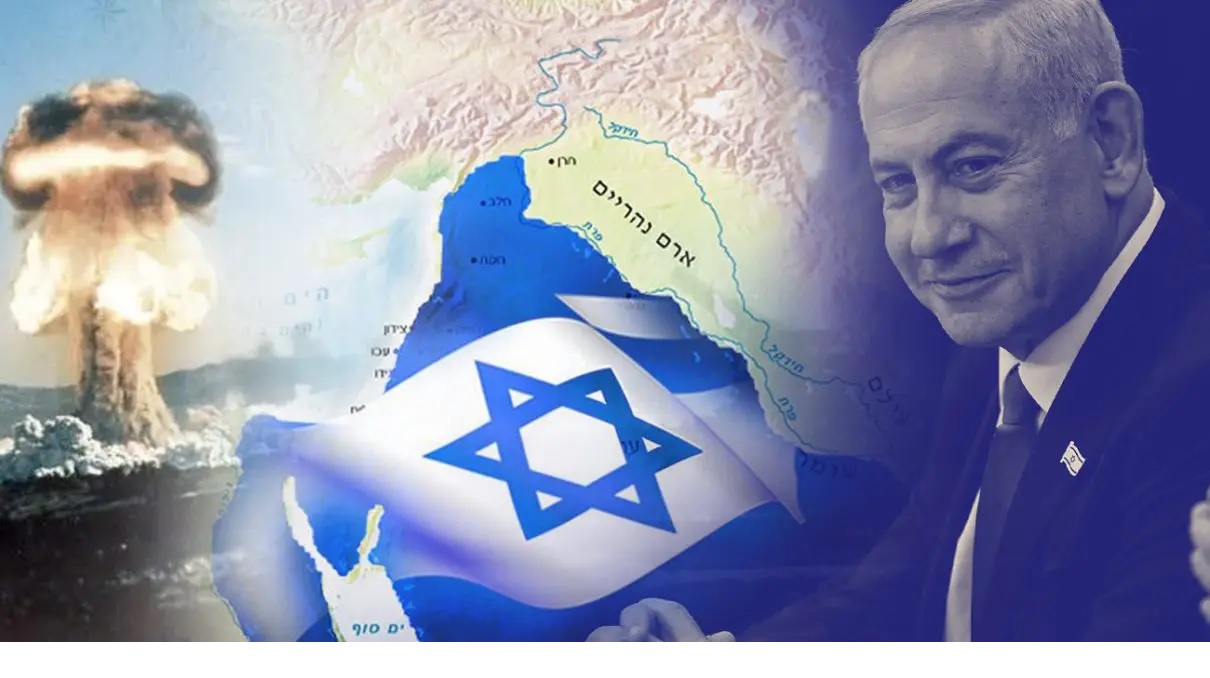
Ultimately, that reality as to whether or not Israel decides to strike Iran’s nuclear programme or other targets in response to recent missile attacks on the Jewish state will come down to Netanyahu and his government. That in itself, say some observers, should be cause for real concern.
Iran’s new president Masoud Pezeshkian has said he wants to re-engage with the west to resolve the nuclear standoff and secure sanctions relief to boost his country’s economy. But clearly any Israeli strike would almost certainly result in a total shift in Iran’s nuclear doctrine.
Tehran may see the actual weaponisation of its nuclear programme as the only option left that can guarantee the security of the Iranian regime,”
DAVID PRATT, 13th Oct 2024
https://www.heraldscotland.com/politics/24648329.will-israel-cross-red-line-targeting-irans-nuclear-sites/
As speculation mounts over Israel’s next move, Foreign Editor David Pratt examines that most dangerous of retaliatory options
Even just a few weeks ago, the idea of crossing such a red line in the Middle East conflict would have been considered unlikely.
But as the war in the region this past year has repeatedly shown, such boundaries and limits have become increasingly meaningless.
Talk of a potential Israeli attack on Iran’s nuclear facilities is a case in point.
Certainly there’s no shortage right now of hawkish analysts and commentators who think that this is the ideal moment for Israel to destroy the Islamic Republic’s nuclear programme.
“The country’s breakout time to a bomb is down to one to two weeks,” claimed American political scientist and national security strategist Matthew Kroenig, writing in Foreign Policy magazine last week.
“Hamas and Hezbollah are in no position to retaliate. And the Islamic Republic just asked for it. In fact, this may be the last best chance to keep Tehran from the bomb,” Kroenig concluded, in a rather alarmist if not entirely inaccurate assessment.
His view is typical of the kind that has found traction in certain quarters of late, including in an editorial in the Wall Street Journal (WSJ) earlier this month.
“If there were ever cause to target Iran’s nuclear facilities, this is it… the question for American and Israeli leaders is: If not now, when?” the newspaper asked.
For the moment, though, the execution of such a direct attack is not a strategy favoured by US President Joe Biden. Asked last week whether he would support a strike on Iran’s nuclear sites by Israel, Biden was seemingly unequivocal in his response
“The answer is no,” he told journalists, adding that the US will be “discussing with the Israelis what they’re going to do”.
The problem with Biden’s answer, however, as recent events in the region have starkly shown, is that Washington hasn’t exactly overexerted itself when it comes to reining in Israel on previous red-line issues in Gaza and Lebanon. And even if it did, evidence to date suggests that Israel would pay little or no heed.
US election
The Biden administration’s reluctance to use serious leverage on Netanyahu, is compounded by the fact that we are barely a few weeks out from a knife-edge US presidential election.
In short, the last thing the President wants is to upset some Jewish voters at home and scupper the chances of his potential Democratic Party successor Kamala Harris, while letting Donald Trump back into the White House.
For the current US administration these domestic electoral priorities are blurring the urgency of this arguably very consequential moment between Israel and Iran – but that doesn’t change its undeniable reality.
Ultimately, that reality as to whether or not Israel decides to strike Iran’s nuclear programme or other targets in response to recent missile attacks on the Jewish state will come down to Netanyahu and his government. That in itself, say some observers, should be cause for real concern.
To begin with, it’s not as if Israel hasn’t done so before.
The Stuxnet cyber-attacks in 2010, said to be codenamed “Operation Olympic Games”, saw what was allegedly a joint Israeli-US effort using a computer virus that temporarily halted Iran’s nuclear programme.
Assassinations of Iran’s nuclear scientists and sabotage bombings, such as the 2021 explosion that caused a power failure at the vast fuel-enrichment plant at Natanz built deep underground, are other examples of such efforts.
But such attacks have never succeeded in stopping Iran’s nuclear ambition indefinitely.
As an article complied by two researchers from the Royal United Services Institute (RUSI) defence and security think tank recently highlighted, such indirect attacks “allowed Israel to repeatedly roll the clock back on Iran’s nuclear progress while maintaining some level of credible deniability and avoiding further military escalation”.
In doing so it has allowed both sides to largely remain within the “rules” established by Israel and Iran in conducting their “shadow war”, the RUSI experts concluded in their assessment published in the online Bulletin of the Atomic Scientists.
But events of the past year have moved that “shadow war” much more into the open and the stakes have never been higher for both sides and others caught up in the region and beyond.
So, are we perhaps on the brink of seeing a direct attack on Iran’s nuclear facilities of the kind that the Israeli military and security establishment has planned and rehearsed for over two decades now?
According to a recent analysis in The Economist magazine, at least twice in the past, in 2010 and 2011, Israel’s generals have been ordered by prime minister Benyamin Netanyahu to prepare for imminent strikes on Iran.
In both cases, however, the security chiefs questioned the legality of the order, given without the necessary cabinet authorisation, and Israel stepped back from going to war with Iran.
But today there is a very different mood in Israel’s corridors of power.
With a coalition government and cabinet laced with ultranationalist right-wing politicians itching for a showdown with Israel’s arch enemy, garnering political approval for a direct attack on Iran’s facilities these days is almost a given.
Momentum
ON the ground also, whether it be its erosion of Iran’s Hezbollah proxy in Lebanon or onslaught against Hamas in Gaza, some of Israel’s military chiefs sense they have momentum and now is the moment to deal a blow as Iran stands on the threshold of producing a nuclear weapons capacity.
Writing recently on social media, Naftali Bennett, a hardline Israeli nationalist and former prime minister who once described himself as to the right of Netanyahu, added his unequivocal voice to the chorus of hawks wanting to strike now.
“Israel has now its greatest opportunity in 50 years, to change the face of the Middle East,” insisted Bennett.
“We must act to destroy Iran’s nuclear programme, its central energy facilities, and to fatally cripple this terrorist regime.”
Bennett added: “We have the justification. We have the tools. Now that Hezbollah and Hamas are paralysed, Iran stands exposed.”
But many analysts maintain that a direct strike on such targets would be a step too far. Hitting the likes of the Natanz enrichment facility, for example, would constitute an outright act of war by Israel.
And even if Israel took the decision to go ahead, such an operation is fraught with logistical challenges. To begin with there is the issue of distance. It is more than 1,000 miles from Israel to Iran’s main nuclear bases, and to reach them Israeli planes would have to cross the sovereign airspace of Saudi Arabia, Jordan, Iraq, Syria, and potentially Turkey.
Fuel, too, poses problems given that flying to the targets and back would take all of Israel’s aerial refuelling capability and leave little or no margin for error, according to a report by the US Congressional Research Service (CRS).
Then there is the question of Iranian air defence. According to the CRS report, Israeli bombers would need to be protected by fighter jets. That would require a strike package totalling about 100 aircraft, according to the CRS report, equivalent to almost one-third of the Israeli air force’s 340 combat-capable aircraft.
Many of Iran’s nuclear facility sites are also dispersed around the country in heavily fortified locations deep underground including the biggest at Natanz and the second-biggest plant at Fordow.
Doing significant damage would require large numbers of bunker-busting bombs and missiles. As the recent strikes in Beirut that killed Hezbollah chief Hassan Nasrallah showed, Israel does have such weapons but they are not necessarily powerful enough to destroy the more heavily protected Iranian nuclear facilities.
Military analysts say that the only conventional weapon capable of destroying such underground facilities is the giant precision-guided bomb GBU-57A/B Massive Ordnance Penetrator (MOP) that can plough through 190 feet of earth before detonating, according to the US military.
Given that US help and supply of this weapon would not appear forthcoming for now, the question then is whether Israel itself has such capabilities. While never openly acknowledging it has its own nuclear capacity, it’s widely accepted that Israel does and therefore most likely would have the ability to produce the sort of bunker-buster bombs needed to destroy Iran’s underground enrichment plants.
But weaponry and operational capacity aside, it remains the geopolitical implications that will be at the forefront of any decision to carry out such strikes.
Missile bases
Some reports suggest that several Israeli security chiefs are counselling caution and would much prefer any strikes to focus on other targets such as Iran’s missile bases from where the recent attacks on Israel were launched.
Iran’s main ports, specifically the oil terminals, could also be a target, weakening an already shaky economy impacted by international sanctions.
But the US is wary of this given its potential effect on oil prices, especially with a presidential election looming.
Israel, of course, might also choose to go for Iran’s political leaders or senior military figures in the Islamic Revolutionary Guard Corps (IRGC), with some analysts indicating that perhaps a repeat of the devastating pager bomb-type operation used to kill Hezbollah leaders in Lebanon might be deployed.
All of these are retaliatory options but the nuclear facilities strike is by far the most extreme, and one that would likely provoke an all-out war with Iran and throw the region ever deeper into chaos and uncharted political territory.
Iran’s new president Masoud Pezeshkian has said he wants to re-engage with the west to resolve the nuclear standoff and secure sanctions relief to boost his country’s economy. But clearly any Israeli strike would almost certainly result in a total shift in Iran’s nuclear doctrine.
As RUSI analysts concluded in their recent assessment published in the online Bulletin of the Atomic Scientists, Tehran could well double down on its decision to build nuclear weapons in response to a limited Israeli strike on its nuclear facilities.
“Tehran may see the actual weaponisation of its nuclear programme as the only option left that can guarantee the security of the Iranian regime,” the analysts said.
As if to confirm that assessment, just last week a hardline Iranian MP was reported to have said that 39 of the country’s politicians had signed a letter addressed to Iran’s Supreme National Security Council, saying the country should strengthen its defence doctrine by including nuclear weapons.
A possible shift in Iran’s nuclear doctrine was also underscored by a senior adviser to Iran’s supreme leader Ayatollah Ali Khamenei in an interview he gave to an Iranian news agency.
“Some politicians have already raised the possibility of changes in [Iran’s] nuclear strategic policies,” said Brigadier General Rasoul Sanaei-Rad.
“Moreover, such actions (an Israeli strike on Iran’s nuclear plants) would cross regional and global red lines … any potential response from Iran would undoubtedly reflect on this and have an impact,” warned Sanaei-Rad, hinting that Iran could retaliate by targeting Israel’s nuclear facilities. As all this dangerous brinkmanship plays out between Israel and Iran, US political dynamics remain the constant backdrop. While the Biden administration – for now – has made clear that it doesn’t support a strike on Iran’s nuclear facilities, the mood could well change were Donald Trump re-elected in the coming months.
Trump presidency
ISRAEL is already emboldened by its military and intelligence successes against Iran’s proxy Hezbollah. Its resolve might be further strengthened were there to be a Trump presidency willing to support an Israeli strike on the Islamic Republic’s nuclear programme.
A Trump win, of course, is far from certain and even if it did come to pass, his taking over of the White House is sometime off yet. Meanwhile, the pressure on Israel to respond decisively to Iran grows by the day.
Many analysts still maintain that Iran’s nuclear facilities are – for now – a step too far in Israel hitting back.
But if Israel’s military strategy to date is anything to go by then only the naïve or foolish would dismiss the notion that it’s best to expect the unexpected in this widening conflict.
The only thing certain here is that Israel’s retaliation is coming and as defence minister Yoav Gallant made clear last week, it will be “deadly, precise and above all surprising”. Those words in themselves are ominous enough to ponder for the moment.
Renewable Energy Surge Lowers UK Blackout Risk

The risk of blackouts in the winter months in the U.K. has fallen to its lowest in four years thanks to the rise of the country’s renewable energy capacity.
To ensure a steady supply of electricity to households, Neso will encourage consumers to reduce their energy use during peak times by offering financial incentives through its demand flexibility scheme.
By Felicity Bradstock – Oct 12, 2024
https://oilprice.com/Alternative-Energy/Renewable-Energy/Renewable-Energy-Surge-Lowers-UK-Blackout-Risk.html
- The UK has significantly reduced its blackout risk by increasing renewable energy capacity and diversifying its energy sources.
- The closure of the UK’s last coal-fired power plant marks a major milestone in the country’s transition to clean energy.
- The government is actively encouraging energy conservation during peak times to further enhance grid stability.
The U.K. has been gradually boosting its energy security by increasing its renewable energy capacity while continuing to produce natural gas. It has done this while also moving away from the ‘dirtiest’ fossil fuel, coal. The diversification of the U.K.’s energy mix is helping the island country to develop its resilience and help it accelerate the green transition. Now, the government must ensure that the country’s transmission infrastructure is prepared for an influx of new clean energy projects in the coming years, and can reliably deliver clean energy to tens of millions of households across the U.K.
The risk of blackouts in the winter months in the U.K. has fallen to its lowest in four years thanks to the rise of the country’s renewable energy capacity. The National Energy System Operator predicts that the U.K.’s winter power supplies will outpace demand by nearly 9 percent this year. Neso is the new company in charge of keeping the lights on, which was bought by the government in September from National Grid for $825.5 million. The boost in the power supply margin is supported by the recent deployment of large-scale battery storage projects, small-scale renewables and imported electricity, according to Neso.
As well as producing greater quantities of clean energy at home, the U.K. has also begun importing renewable energy from Denmark through the world’s longest high-voltage power cable – the Viking power link. This cable now provides clean electricity for around 2.5 million U.K. homes, showing the significant potential for clean power sharing across countries.
The optimistic forecast comes in spite of the closure last month of the U.K.’s last coal-fired power plant. At the beginning of the year, the Ratcliffe-on-Soar coal plant was used to provide 2.3 percent of the country’s electricity supply during a period of cold weather. Britain kept its coal facilities on standby following the Russian invasion of Ukraine and subsequent sanctions on Russian energy, mainly natural gas, to ensure there would be power even in the face of severe gas shortages. However, there will be no such backup this year, and, according to Neso, no such need for a backup.
Gas reserves across Europe have been restored to around 95 percent full. The U.K. is no longer dependent on Russia for its gas, having doubled down on its long-standing relationship with Norway for its LNG supply. Britain will now import gas via Norwegian pipelines and tanker from the U.S. and Qatar during the winter months to use in its power plants, factories and residential buildings. To ensure a steady supply of electricity to households, Neso will encourage consumers to reduce their energy use during peak times by offering financial incentives through its demand flexibility scheme.
The U.K. was finally able to close its last coal-fired power plant in September, a target which was stated during the COP26 climate summit in Glasgow in 2021, after 142 years of reliance on coal. The U.K. was the birthplace of coal power, and it is the first G7 country to end coal production. The rapid transition away from a dependence on coal is impressive given that coal contributed 39 percent of the U.K.’s power in 2012. The U.K. established its first legally binding climate targets in 2008, which supported the phasing out of coal. In 2015, the then-energy and climate change secretary, Amber Rudd, stated that the country would stop using coal within the next decade. This has been made possible by the rapid expansion of the U.K.’s renewable energy capacity, with green energy rising to contribute over half of the country’s power in the first half of 2024, from just 7 percent in 2010.
Most of the U.K.’s electricity came from renewable energy sources for the first time in 2020, at around 43 percent. The green energy mix consists mainly of wind, solar, bioenergy and hydroelectric sources. In 2023, wind power contributed 29.4 percent of the U.K.’s total electricity generation, biomass contributed 5 percent, solar power accounted for 4.9 percent and hydropower added 1.8 percent of the mix. While the U.K. is currently depending on a mix of homegrown green and fossil fuel energy, as well as imports of energy from renewables and natural gas, the government plans to dramatically increase its renewable energy capacity by the end of the decade to solidify the country’s energy security. This includes increasing offshore wind output to 50 GW and solar capacity to 70 GW, as well as developing new nuclear plants.
Investing in the diversification of the U.K.’s energy mix has helped the country boost its energy security, as well as move away from a heavy reliance on fossil fuels. As the U.K. undergoes a green transition, the government is working in collaboration with utilities and regulators to ensure that the country does not face shortages, particularly in the winter months. This is further supported by strong energy agreements with other countries in Europe, North America and the Middle East, which will help to alleviate the burden of instability associated with renewable energy sources.
Book: THE FALL OF ISRAEL: The Degradation of Israel’s Politics, Economy & Military

“Israel is in deep trouble at home and abroad. It has become an apartheid state that is executing a genocide in Gaza. The Fall of Israel does an outstanding job explaining the causes and the evolution of the disastrous path that Israel is on.
Dan Steinbock, https://www.claritypress.com/product/the-fall-of-israel/ 15 Oct 24
The path to the obliteration of Gaza was paved by the confluence of a set of longstanding forces. This great conjuncture has transformed Israel and the occupied Palestinian territories while driving the region to the edge. In The Fall of Israel, Dr Dan Steinbock connects the dots among these lethal headwinds. What makes The Fall of Israel unique is its comprehensive scope. It covers Israel’s political, economic, social and military changes, the shifts in the Palestinian struggle for sovereignty, Israel’s degradation into apartheid rule, the attendant atrocities, the regional and global reverberations and the human and economic costs, both prior and subsequent to Israel’s fatal war on Gaza. There, its nightmarish actions have led to the engagement of the International Court of Justice and the International Criminal Court, renewed international boycotts, and massive domestic and international protests.
“Israel is in deep trouble at home and abroad. It has become an apartheid state that is executing a genocide in Gaza. The Fall of Israel does an outstanding job explaining the causes and the evolution of the disastrous path that Israel is on. This book deserves to be widely read by anyone interested in understanding contemporary Israel.”—JOHN MEARSHEIMER, R. Wendell Harrison Distinguished Service Professor of Political Science, University of Chicago and co-author of The Israel Lobby and U.S. Foreign Policy
“This impressive book provides a comprehensive and incisive answer to the question how we got to where we are in Israel and Palestine today. In a very accessible manner, Steinbock narrates the making of a messianic and theocratic Israel which is a menace for the Palestinians, the region and no less important, to itself. Its downfall as the book predicts is neigh, but on the way, it wreaks havoc and destruction. This is the picture world leaders must be aware of and challenge before it is too late.” —ILAN PAPPE, Professor of History, Director of the European Centre for Palestine Studies, Author of The Ethnic Cleansing of Palestine
“Eight years ago I said that Israel would not be a state in 20 years; today I reaffirm that prognosis adding only that it won’t take 12 more years. Many of my reasons for reaching that conclusion — and indeed far more — are elaborated in The Fall of Israel. Apparently, not many Americans want to know these truths — they’re too nuanced, complex, and damning; but if you happen to be in that group of us who believe strongly in the rule of law — U.S. domestic law and international humanitarian and criminal law in particular — and in democracy, then you need to read this book. When you finish, I hope you will understand that our current national path leads us straight to hell. “—LAWRENCE WILKERSON, Col, USA (Ret) and former chief of staff to Secretary of State Colin Powell
The Fall of Israel is one of the most comprehensive academic books on the Palestinian crisis. . .This book thoroughly and accurately explains significant facts about the objectives and crimes of Zionism, the likes of which are rarely found in previous academic works.”—SEYED HOSSEIN MOUSAVIAN, Middle East Security and Nuclear Policy Specialist, Princeton University
“Dr. Steinbock’s research illuminates what the public is reluctant to digest: Namely that Israel operates in open rebellion against international law, refusing to live in peace with Palestine’s native population and with neighboring States.”—ALFRED DE ZAYAS, Former UN Independent Expert on the Promotion of a Democratic and Equitable International Order
“Dr Steinbock’s book The Fall of Israel is an illuminating and intelligent contribution to our understanding of the events in the Middle East.”—DR. ERKKI TUOMIOJA, Historian and longest serving Minister for Foreign Affairs, Finland, who had a prominent role as the spokesman for European foreign policy
“The Fall of Israel explains excellently how 76 years of repression and suffering for the Palestinians has been facilitated by the unconditional American support for Israelf.”—MOGENS LYKKETOFT, Former Danish Foreign Minister and President of the United Nations General Assembly 2015-2016
“Vital reading for anyone concerned with this issue, and provides perceptive insight that is sorely needed.” —JONATHAN KUTTAB, international human rights attorney, co-founder of Nonviolence International and co-founder of the Palestinian human rights group Al-Haq
Israel intensifies genocide in Gaza and deepens killings in Lebanon

Mike Head @MikeHeadWSWS, 12 October 202, https://www.wsws.org/en/articles/2024/10/12/qbdw-o12.html
Armed to the teeth by the Biden-Harris administration in the US, the Israeli regime is re-intensifying its slaughter in refugee camps, schools and hospitals in northern and central Gaza, even as it expands its invasion and bombardments in Lebanon, including the centre of Beirut.
In the most recent attacks in Gaza, at least 22 people were killed yesterday in an air strike in Jabalia—the largest of Gaza’s eight historic refugee camps—in northern Gaza. Dozens were injured, with some ambulances unable to help rescue efforts due to fuel shortages.
The Israel Defense Forces (IDF) issued virtually impossible orders for residents, hospitals and healthcare centres across the area to evacuate, placing thousands of people, including healthcare workers and their maimed patients, directly in danger.
A strike on a school sheltering displaced people in the central Gaza city of Deir al-Balah also killed at least 28 people, including a child and seven women, according to the Al-Aqsa Martyrs Hospital, where bodies were taken. It said several other people were wounded.
Gaza’s Health Ministry said 61 Palestinians were killed and 231 were wounded in the latest 24-hour reporting period.
Thousands of people are trapped in Jabalia as Israeli forces continue to attack the area, Doctors Without Borders (MSF) said. “Nobody is allowed to get in or out, anyone who tries is getting shot,” Sarah Vuylsteke, MSF project coordinator, said in a post on X.
The Israeli army issued evacuation orders for residents in the camp on October 7, “while carrying out attacks at the same time, preventing people from leaving the area safely,” MSF said.
Forced evacuations and bombing of neighbourhoods are turning Gaza’s north into “unhabitable ruins,” MSF added.
Haydar, an MSF driver inside the camp, said: “We were staying at the Al-Yemen Al-Saeed Hospital, but they bombed it. About 20 people were killed. I don’t know what to do, at any moment we could die. People are starving. I am afraid to stay, and I am also afraid to leave.”
United Nations officials voiced concerns yesterday that the Israeli offensive, as well as evacuation orders in northern Gaza, might affect the second phase of a polio vaccination campaign set to start next week.
Aid groups carried out an initial round of vaccinations last month after a baby was partially paralysed by the Type 2 polio virus in August, the first such case in the territory in 25 years.
“I am, of course, concerned about the developments in the north, and specifically with these evacuation orders,” the World Health Organization’s representative in occupied Palestinian territory, Rik Peeperkorn, told reporters in Geneva.
Peeperkorn said three attempts by the UN health agency and its partners to assist and evacuate patients from northern Gaza hospitals under evacuation orders have been thwarted this week.
This renewed Israeli offensive, combined with systematic starvation and denial of medical access, underscores the genocidal intent of the Netanyahu government. By the official Gaza health statistics, the IDF has killed more than 42,000 people, mostly women and children over the past 12 months, but the true toll may be closer to 200,000, counting the unrecovered bodies beneath the rubble.
Israel’s assault on Lebanon is widening and deepening at the same time. On Thursday night, 22 people were killed and 139 wounded in strikes in the heart of Beirut, Lebanon’s capital, said caretaker Prime Minister Najib Makati.
Videos published by local news channels showed chaotic scenes following the attacks on Ras el-Nabaa and al-Nuweiri in Beirut. The strikes hit densely-populated residential areas. Many residents left their apartments in the high-rise blocks in the area and gathered in courtyards as emergency services rushed to the scene.
Israel did not issue evacuation warnings ahead of the strikes, which were the deadliest on central Beirut since the IDF offensive began last month. The area is outside the city’s southern suburbs, which Israeli forces have already pulverised.
The bombardments allegedly targeted Wafiq Safa, who heads Hezbollah’s liaison and coordination unit working with the Lebanese government, and is therefore considered a political figure rather than a military one. That marks a heightening of the Israeli aggression.
A US-made munition was used in the strikes, the Guardian reported. The newspaper found remnants of a US-manufactured joint direct attack munition (JDAM) amid the debris of a building that was reduced to rubble.
According to the report, “JDAMs are guidance kits built by the US aerospace company Boeing that attach to large ‘dumb bombs’ ranging up to 2,000 lbs (900kg), converting them into GPS-guided bombs.”
Earlier in the day, Israel warned Lebanese civilians not to return to their homes in the south of the country. The IDF soldiers were pushing on with their ground “incursion” inside Lebanon, as its fighter jets attacked more than 110 targets in the country in a single day.
Israeli strikes have killed at least 2,169 people, wounded more than 10,000 and displaced more than 1.2 million people in Lebanon over the past year, the Lebanese government said in its daily update.
Israel’s flagrant assault on Lebanon, which it last invaded in 2006, was further demonstrated when an Israeli airstrike killed two Lebanese soldiers and wounded three others. That was just hours after the Israeli military fired on the headquarters of UNIFIL, the UN peacekeeping force in southern Lebanon, for the second time in as many days.
Two UNIFIL soldiers were also injured on Friday by an Israeli strike near their monitoring watchtower.
In the statement posted to X, UNIFIL also said an IDF bulldozer knocked over barriers at a UN position near the “Blue Line,” the unofficial demarcation line between Israel and Lebanon.
“Any deliberate attack on peacekeepers is a grave violation of international humanitarian law,” the statement concluded.
UNIFIL has some 10,000 personnel, with Italy, France, Malaysia, Indonesia, Sri Lanka and India among the biggest contributors. It was created to oversee the withdrawal of Israeli troops from southern Lebanon after Israel’s 1978 invasion and was expanded after the 2006 Israeli invasion, allowing its troops to deploy along the Israeli border.
Various imperialist governments, including the US, UK, France, Italy and Spain, issued statements condemning the attacks on UNIFIL as serious violations of humanitarian international law and UN Security Council Resolution 1701, which ruled that UNIFIL personnel would replace the Israeli forces occupying southern Lebanon.
But the same governments are continuing to facilitate and arm Israel’s barbarism.
US President Joe Biden reaffirmed his “ironclad” support for Israel during a 30-minute phone call with Netanyahu on Wednesday, the White House said. Vice President Kamala Harris, the Democratic Party’s presidential candidate, joined the call, which reportedly discussed Israel’s plans to strike Iran.
“The president affirmed Israel’s right to protect its citizens from Hezbollah, which has fired thousands of missiles and rockets into Israel over the past year alone, while emphasizing the need to minimize harm to civilians, in particular in the densely populated areas of Beirut,” the White House said.
The latter phrase is another desperate bid, in the face of widespread opposition among workers and youth in the US and globally, to cover up US imperialism’s responsibility for the ongoing slaughter in Lebanon, as well as Palestine. The US provides Israel at least $3.8 billion in military aid annually, and the Biden-Harris administration has authorised $14 billion in further assistance to its proxy to help fund the genocide and a wider war for domination over the resource-rich and strategic Middle East, directed against Iran, Russia and China.
On Wednesday, the Socialist Equality Party in the US hosted a live-streamed discussion to mark the one-year anniversary of the Gaza genocide, analysing the historical roots of the US-Israeli rampage in the Middle East and advancing a socialist strategy to stop it.
The event, featuring SEP National Secretary Joseph Kishore, WSWS Labor Editor Jerry White and WSWS International Editorial Board Chairman David North, referenced the centuries of colonial rule in the Middle East, the ethnic cleansing of Palestine, Israel’s illegal occupation of Palestinian territory since 1967, and the brutal US wars throughout the region since 1991.
U.S. to Deploy Missile Defense System and About 100 Troops to Israel

The Pentagon announced it would send the Terminal High Altitude Area Defense battery and its crew as Israel considered retaliatory attacks against Iran.
NY Times, By Helene Cooper, Reporting from Washington, Oct. 13, 2024
The United States is sending an advanced missile defense system to Israel, along with about 100 American troops to operate it, the Pentagon announced on Sunday. It is the first deployment of U.S. forces to Israel since the Hamas-led attacks there on Oct. 7, 2023.
President Biden directed Defense Secretary Lloyd J. Austin III to deploy the Terminal High Altitude Area Defense system, or THAAD, and its crew, Maj. Gen. Patrick Ryder, the Pentagon press secretary, said in a statement on Sunday.
The move will put American troops operating the ground-based interceptor, which is designed to defend against ballistic missiles, closer to the widening war in the Middle East. It comes after Iran launched about 200 missiles at Israel on Oct. 1 and as Israel plans its retaliatory attack.
The THAAD battery, a mobile defense system, will give the Israel Defense Forces another layer of protection to defend cities, troops and installations from short- and intermediate-range ballistic missiles like those deployed by Iran in its last attack…………………………………………………………………………………
late last month, the Pentagon said that it would send a “few thousand” American troops to the Middle East as Israel intensified its attacks on Hezbollah in Lebanon, with one official putting the figure between 2,000 and 3,000. The United States also sent a THAAD battery along with other air defense systems to the region weeks after the attacks on Oct. 7, 2023. https://www.nytimes.com/2024/10/13/us/politics/us-missile-defense-iran-israel.html?unlocked_article_code=1.R04.e14E.qqRr91Mg9WWs&smid=em-share—
We’re Spending 2 Trillion Dollars on Weapons That Must Never Be Used

By Donald A. Smith, PhD. Using my lyrics and Udio.com for the music, I created this military march about the risk and costs of the nuclear modernization program. 14 Oct24
Audio on original https://progressivememes.org/war/We-are-Spending-Two-Trillion-Dollars-on-Weapons-That-Must-Never-Be-Used.html
We are spending two trillion dollars
on weapons that must never be used.
Nuclear missile modernization they call it.
The waste and risks cannot be excused.

Two trillion dollars, and what does it buy?
Weapons of extinction to light up the sky.
Corruption and greed keep the war machine alive.
If the weapons are ever used, no one will survive.

Politicians grin, saying "jobs will be made"
While the truth is that we're all being played.
For every job made building weapons of war,
Money spent elsewhere creates two or three times more.

We’re spending 2 trillion dollars on death's quiet plan,
Building bombs in the shadows, buried deep in the land.
Sentinel missiles standing ready to fly.
If they ever launch, we’ll watch the world die.


We tore up arms treaties, walked away from the deals.
Now the money flows faster, greased by power’s appeal.
What’s the true cost when we flirt with the flame?
It’s humanity’s end, in this high-stakes game.

Cost overruns soar and the profits are high.
Politicians line pockets, with kickbacks that satisfy.
What are the opportunity costs? And who’s made more safe?
The end of the world is the risk that we face.

We are pawns in a system that’s broken and blind,
Building weapons of war that will wipe out mankind.
For some jobs and for profit, for power and gain,
We face a future of deprivation, death and pain.

We are spending 2 trillion dollars, but it’s all for the few.
As we edge toward the brink, what can we do?
A system so broken, with the darkest design,
Where we gamble existence, for the sake of their bottom line.
“Israel must be expelled from the United Nations”

International legal expert Fabio Marcelli makes the case that, following the attack on UN peacekeepers, the conditions are ripe for a UN General Assembly vote on Israel’s expulsion from the latter
Thomas Fazi, Oct 13, 2024, https://www.thomasfazi.com/p/israel-must-be-expelled-from-the—
Israel must be expelled from the United Nations: the conditions are ripe
by Fabio Marcelli, international legal expert, research director of the Institute for International Legal Studies of the Italian National Research Council and member of the International Association of Democratic Lawyers
Originally published in Italian on the website of Il Fatto Quotidiano.
The deliberate and criminal attack on the Italian Sassari Brigade and other UNIFIL (United Nations Interim Force in Lebanon) international contingents marks a new and unprecedented stage in Netanyahu’s efforts to devastate the neighbouring peoples of Israel, threaten global peace, and lead his own country to self-destruction, which now seems closer than ever.
[Italian Defense] Minister Crosetto’s condemnation of the attack as a war crime is commendable, as is his commitment that UNIFIL will not yield to blackmail or threats and will continue to carry out its mission. His assertion that Italy does not take orders from Israel is also notable.
However, it is crucial to closely monitor the fulfilment of this commitment, especially given the contradictory stance of the Meloni government, which has consistently supported Israel’s crimes. This contradiction becomes even more apparent when Western-supplied weapons, including a significant contribution from Italy’s military-industrial complex, are used against Italian forces. Unfortunately, Crosetto’s position seems unlikely to bring about meaningful consequences, especially given the silence from other Italian leaders, such as prime minister Giorgia Meloni and president Sergio Mattarella — a silence that must be harshly criticised considering the severity of the affront to Italy and the dangers to global peace.
UNIFIL must remain on the ground and, indeed, should be strengthened and equipped with appropriate equipment and weapons to effectively respond to any potential Israeli aggression. Similarly, steps should be taken to establish a comparable military protection force in Gaza and the West Bank to ensure the safety of the Palestinian people, who have paid a huge price in blood and continue to pay it every day in terms of civilians killed, mutilated and subjected to starvation, thirst and lack of medical supplies, denied by the genocidal occupation.
At the core of the expanding conflict, which now poses a serious threat to global peace, lies the persistent violation of the Palestinian people’s right to self-determination. This ongoing crisis stems from over fifty years of impunity granted to Israeli governments that have continually defied international law and the UN — and are now brutally attacking the organisation, declaring Secretary-General Guterres persona non grata and bombing his peacekeeping forces, including the cream of the Italian Armed Forces.
Given such sustained and repeated criminal behaviour, there are grounds for Israel’s expulsion from the United Nations. According to Article 6 of the UN Charter, “a Member of the United Nations which has persistently violated the Principles contained in the present Charter may be expelled from the Organization by the General Assembly upon the recommendation of the Security Council”.
However, it is clear that Western states in the Security Council, particularly the United States — complicit in Netanyahu’s criminal actions — will use their veto power to block such a proposal, once again obstructing the proper functioning of the international organisation and the enforcement of international law. Nonetheless, it would be equally important for the UN General Assembly to vote on such a resolution, giving free expression to the condemnation of Israel that now comes from the vast majority of the world’s countries as well as from international public opinion.
Such a declaration of principle should be followed by the imposition of sanctions under Article 41 and, if these measures prove insufficient, it could lead to multilateral military action under Article 42. This would complete the procedural steps outlined in Chapter VII of the Charter to end threats to international peace and security.
The adoption of these measures by the General Assembly and by a large number of states represents a necessary response to the grave threat to world peace posed by the criminal policies of the Netanyahu government, determined to provoke a nuclear conflict to avoid legal accountability, as well as by the equally criminal complicity of Western nations, led by the United States, today headed by a president who is a shadow of himself and therefore the shadow of a shadow.
Moreover, there are significant precedents in international law since World War II, such as the “Uniting for Peace” resolution adopted by the General Assembly when the Security Council failed to act. Such measures must now be considered in the face of the current danger to international peace.
Japan PM Ishiba eyes more renewables, less nuclear in energy mix
New leader plans stimulus package for ‘structural transformation of the economy’
Prime Minister Shigeru Ishiba on Saturday stressed Japan’s potential to
develop renewable energy sources and vowed to raise their share in the
country’s overall power supply, indicating he will prioritize
decarbonization as his government prepares an economic stimulus plan.
“Japan has large untapped potential for renewable energy development,
including geothermal, wind and small-scale hydroelectric power,” Ishiba
said in an interview with Nikkei Asia.
Nikkei Asia 12th Oct 2024 https://asia.nikkei.com/Editor-s-Picks/Interview/Japan-PM-Ishiba-eyes-more-renewables-less-nuclear-in-energy-mix
Google Pivots to Nuclear Reactors to Power Its Artificial Intelligence
Science Alert, 15 October 2024, Glenn Chapman,
Google on Monday signed a deal to get electricity from small nuclear reactors to help power artificial intelligence.
The agreement to buy energy from reactors built by Kairos Power came just weeks after word that Three Mile Island, the site of America’s worst nuclear accident, will restart operations to provide energy to Microsoft………………………………………..
Insatiable AI
Tech giants like Microsoft, Amazon, and Google are rapidly expanding their data center capabilities to meet the AI revolution’s computing needs while also scouring the globe for sources of electricity………………………………….
However, the technology is still in its infancy and lacks regulatory approval, leading companies to seek out existing nuclear power options……………………………..
Is it safe?
………………………………… This area faces severe strain from data centers’ massive energy consumption, raising concerns about grid stability as AI demands increase.
Amazon’s AWS agreed in March to invest $650 million in a data center campus powered by another Pennsylvania nuclear plant.
Nuclear energy has staunch opponents due to concerns about radioactive waste disposal, the potential for catastrophic accidents, and the high costs associated with plant construction and decommissioning……….. https://www.sciencealert.com/google-pivots-to-nuclear-reactors-to-power-its-artificial-intelligence
1 This Month

of the week – Shut Down Drone Warfare!


Tell the Ukrainian Government to Drop Prosecution of Peace Activist Yurii Sheliazhenko

Petition to revoke the licensing of the Near Surface Nuclear Disposal Facility (NSDF) at Chalk River. https://www.ourcommons.ca/petitions/en/Petition/Details?Petition=e-7247
To see nuclear-related stories in greater depth and intensity – go to https://nuclearinformation.wordpress.com
-
Archives
- April 2026 (103)
- March 2026 (251)
- February 2026 (268)
- January 2026 (308)
- December 2025 (358)
- November 2025 (359)
- October 2025 (376)
- September 2025 (257)
- August 2025 (319)
- July 2025 (230)
- June 2025 (348)
- May 2025 (261)
-
Categories
- 1
- 1 NUCLEAR ISSUES
- business and costs
- climate change
- culture and arts
- ENERGY
- environment
- health
- history
- indigenous issues
- Legal
- marketing of nuclear
- media
- opposition to nuclear
- PERSONAL STORIES
- politics
- politics international
- Religion and ethics
- safety
- secrets,lies and civil liberties
- spinbuster
- technology
- Uranium
- wastes
- weapons and war
- Women
- 2 WORLD
- ACTION
- AFRICA
- Atrocities
- AUSTRALIA
- Christina's notes
- Christina's themes
- culture and arts
- Events
- Fuk 2022
- Fuk 2023
- Fukushima 2017
- Fukushima 2018
- fukushima 2019
- Fukushima 2020
- Fukushima 2021
- general
- global warming
- Humour (God we need it)
- Nuclear
- RARE EARTHS
- Reference
- resources – print
- Resources -audiovicual
- Weekly Newsletter
- World
- World Nuclear
- YouTube
-
RSS
Entries RSS
Comments RSS
 nuclear-news