TODAY: How in the hell do you cope with Facebook?

This what happened today.
- Oct 14, 2024 We removed your post
Noel Christina Wauchope
Oct 14, 2024
https://www.nuclearpolicy.info/news/uk-and-ireland-partners-congratulate-2024-nobel-peace-prize-winner/
You shared this on your profile
2. Facebook removed my post about “Threads” brings nuclear war fears to a new audience- . https://www.bbc.co.uk/news/articles/c2dp8197y3eo
Noel Christina Wauchope, Oct 14, 2024
3 . Face book removed this one (hardly surprising – they can’t cope with criticism.
FACEBOOK hits a new low – removing a post that congratulated the Nobel Peace Prize winners ! I didn’t read their “reasons”. But I guess, as usual, I have “offended community standards” by saying something negative about nuclear. Oct 14, 2024 We removed your post Noel Christina Wauchope Oct 14, 2024 https://www.nuclearpolicy.info/news/uk-and-ireland-partners-congratulate-2024-nobel-peace-prize-winner/ You shared this on your profile
You shared this on your profile
This goes against our Community Standards on spam.
So – now I have put up a new post – in the hopes they won’t expel me.
I am thinking of becoming a very sweet nice person. How could I have, all these years, said things unpleasant about the most successful new technologies? Sorry, everyone. I won’t offend again. Because I really would like to stay on this lovely social media.

And guess what? Facebook has not removed this one, and have not yet kicked me out!
Can we possibly beat these bastards with humour?
The climate crisis threatens societal collapse—how many more hurricanes will it take for us to wake up?
As a new scientific report warns that the world is on the ‘brink of an irreversible climate disaster’, why do politicians and the media seem so uninterested?

By Alan Rusbridger, October 11, 2024, https://www.prospectmagazine.co.uk/world/environment-news/climate-change/68197/how-many-more-hurricanes-before-we-wake-up-to-the-climate-crisis
It took a dangerous category 3 hurricane in Florida to force climate change onto some, but not all, newspaper front pages. Normally this is a subject for gentle condescension.
You’ll have read a dozen such pieces. Climate change is genuine—there’s no denying that—but let’s be real about so-called “net zero”. We need to be “financially prudent as well as environmentally responsible”, as the Times intoned this week in endorsing BP’s retreat from agreed targets. We must stand against the politicisation of the weather, as Florida governor Ron De Santis is fond of speechifying. Blah, blah, blah, as Greta Thunberg would say.
A mega storm lashing into Florida is difficult to ignore: well-off Americans as victims, lots of vivid film footage etc. And so Hurricane Milton will receive many more eyeballs and clicks than, say, the 1,700 people killed in 2022 when torrential flooding hit Pakistan, submerging a third of the country and affecting 33m people. For some reason this was considered not so newsworthy.
News judgements over such things can be fickle. The day before Milton made landfall a group of respected scientists issued a report which warned that “the future of humanity hangs in the balance” and that we could be facing “partial societal collapse”.
Now, it’s been some time since I worked in daily news, but this feels like what we call “a story”. Not just a story, but what is known in the trade as a “marmalade-dropper”—a story so gripping that it could lead to a distracted breakfast accident. The internal machinations of the Conservative party are important, sure, but how do they compare with the future of humanity?
The report was barely covered. Did any news editor deign to glance at this academic paper, in the journal Bioscience? If they had, they might have been struck by the very startling language of the scientists who wrote it.
“We are on the brink of an irreversible climate disaster,” it began. “This is a global emergency beyond any doubt. Much of the very fabric of life on Earth is imperilled. We are stepping into a critical and unpredictable new phase of the climate crisis.”
Let’s imagine a range of news desk reactions to this alarming news. The first might be a stifled yawn—as in “we’ve heard all this before, tell us something new.” The second might be to question: “Who are these so-called experts?”
There’s something in the first reaction: we have, indeed, heard dire warnings before—albeit not always in such stark terms. As to the second, the 14 authors are easily Googled: they come from top-notch universities around the world. The journal, published by Oxford University Press, comes from the American Institute of Biological Sciences. I think we can call this kosher.
But there are two deeper problems with the way the media thinks about climate change. The first is that it has become the subject of ideology more than science. Our imaginary news editor will have to factor in any prejudices his/her editor, or proprietor, may have in regard to the climate crisis. If the general newsroom feeling—arrived at by a process of mysterious osmosis—is that it’s all a load of overblown woke nonsense, then our news editor will ignore the story. The science doesn’t stand a chance.
The second problem is that journalism is most comfortable when looking in the rearview mirror. Something that happened yesterday is news: something that might, or might not, happen in 30 years’ time is prediction.
How can journalism adapt so that it can—with the assistance of experts—look forward as well as back? “I think journalism has to help us imagine and comprehend the true scale of what will happen if we don’t change course,” is how Wolfgang Blau, who created an Oxford University programme in climate journalism, puts it. It is sometimes referred to as “anticipatory journalism”.
But there are plenty of things in the here and now to be covered. One question might be, “Who is funding Kemi Badenoch?” The information is hiding in plain sight. Her register of interests shows that she’s accepted £10,000 for her leadership campaign from the chair of a climate science denial group.
Let’s make this really easy. Google the excellent research outfit desmog.com and you’ll find that climate campaigners have done the heavy lifting already, investigating the donation from Neil Record, a millionaire Tory donor and founder of the investment firm Record Financial Group. He is chair of Net Zero Watch (NZW), the campaign arm of the Global Warming Policy Foundation (GWPF).
“Based in 55 Tufton Street, Westminster, the GWPF is the UK’s leading climate science denial group,” reports desmog. The GWPF’s director Benny Peiser has suggested it would be “extraordinary anyone should think there is a climate crisis”, while the group has also expressed the view that carbon dioxide has been mischaracterised as pollution, when in fact it is a “benefit to the planet”.
What’s more, it turns out—and thanks to Bloomberg for this nugget of information—that Badenoch has been running her leadership campaign from Mr Record’s home. While she has declared the £10,000 donation from Mr Record, the use of the house has not been declared. A spokesman for the candidate suggested she had done nothing wrong.
Badenoch has previously criticised the UK’s climate targets, calling them “arbitrary” in a 2022 interview. Badenoch has previously suggested that she would be in favour of delaying the UK’s commitment to reach net zero by 2050. She argued that new fossil fuel licences were compatible with the UK’s climate targets.
Badenoch’s rival for the Tory leadership, Robert Jenrick, has also been examined by desmog, which found a growing record of attacks on climate action. He denounces “net zero zealotry” and has labelled the UK’s net zero target as “dangerous fantasy green politics unmoored from reality.” He has supported the opening of new coal mines.s previously critic.
Worth covering? Perhaps by the same newshounds who have so enthusiastically gone in search of the generous donors who have kept Labour’s top team in smart suits, Taylor Swift tickets and football freebies?
Hurricane Milton will soon be off the front pages. Normal service will resume. But it’s hard, once you’ve read it, to dislodge the spectre of “partial societal collapse” if we continue to pretend climate change isn’t an urgent threat to our way of life. We will all have to adapt—including politicians and journalists.
Alan Rusbridger is the editor of Prospect and the former head of Lady Margaret Hall, Oxford. He was editor of the Guardian from 1995 to 2015.
Patrick Lawrence: Truths That Come Out Like the Sun

This is official abuse. I am abused. You are abused. And as we are abused we watch Palestinians, other human beings, suffer.
l it makes you conclude there is simply no lower limit to the Zionists’ depravity while you wonder—as many of us have this past year—what it means to be human.
October 13, 2024 , https://scheerpost.com/2024/10/13/patrick-lawrence-truths-that-come-out-like-the-sun/
I read the other day the latest paper put out by those good people who run the Costs of War Project at Brown University’s Watson Institute. It is called “United States Spending on Israel’s Military Operations and Related U.S. Operations in the Region, October 7, 2023–September 30, 2024” and has all sorts of information in it. Since the Zionist state began its latest assault on the Palestinians of Gaza a year ago, the Biden regime has spent $22.76 billion financing it, and this is a very conservative figure even by the three authors’ reckoning.
That same paper has a remarkable graph showing the growth of U.S. military aid to Israel (grants and loans, in constant 2024 dollars) during the 65 years from 1959, when it was zero, to this year, when it reached $18 billion. There was a sharp spike in the years following the 1967 war, when the policy cliques in Washington began to consider the Zionist state a strategic asset in the region.
And then I read a related paper the people at Watson finished recently. “The Human Toll: Indirect Deaths from War in Gaza and the West Bank, October 7, 2023 Forward” measures and analyzes, as the introduction explains, “the impact on population health of the destruction of public infrastructure, livelihood sources, reduced access to healthcare, water, and sanitation, and environmental damage.” Then, beginning with the next sentence, the paper starts to hit you hard:
For instance, 96 percent of Gaza’s population (2.15 million people) faces acute levels of food insecurity. According to an October 2, 2024, letter to President Biden from a group of U.S. physicians, 62,413 people in Gaza have died of starvation.
As it happens I had already read the letter the Watson report mentions, an open letter that 99 physicians and other American medical professionals wrote to President Biden and Vice–President Harris after serving in Gaza this past year. It reads in part:
This letter and the appendix show probative evidence that the human toll in Gaza since October is far higher than is understood in the United States. It is likely that the death toll from this conflict is already greater than 118,908….
With only marginal exceptions, everyone in Gaza is sick, injured, or both. This includes every national aid worker, every international volunteer, and probably every Israeli hostage: every man, woman, and child.
The physicians’ letter seems to be one of numerous put out by this group under the title, “Gaza Healthcare Letters.” Among the organizers is Feroze Sidhwa, a West Coast trauma surgeon who has been energetically getting out the truth of the Gaza crisis for some time. This newest letter arrived (and my thanks to both) via John Whitbeck, an American attorney who puts out an informative blog from his home in Paris, and Dave DeCamp’s excellent piece in Antiwar.com.
Well, right after I read the physicians’ letter and the DeCamp piece and the Costs of War material, I watched the documentary Al Jazeera’s investigative unit put out Oct. 3 as a sort of one-year-on project. “Investigating war crimes in Gaza” is an hour and 20 minutes of gut-turning footage so powerful it makes you conclude there is simply no lower limit to the Zionists’ depravity while you wonder—as many of us have this past year—what it means to be human.
My advisory: The Al Jazeera documentary is very difficult to watch but we must, as a matter of conscience and, for those who have spent the year flinching, as a rite of passage. We must let the truth push itself in our faces. My partner’s advisory: Don’t watch it before you go to bed.
Read more: Patrick Lawrence: Truths That Come Out Like the SunA day or so after I saw the Al Jazeera film, having already read the Watson reports, the open letter, and the DeCamp commentary, I read Brett Murphy’s latest piece in ProPublica. “Inside the State Department’s Weapons Pipeline to Israel” lays out the whole awful tale: Here, by way of leaked diplomatic cables, email, and Murphy’s interview work, we see how obsessed all those corrupt flunkies at State were (and are) to get weapons and more weapons to terrorist Israel, at times under pressure from the arms lobbies, while ignoring vast accretions of evidence that these supplies should have been blocked by law because of the Israelis’ genocidal crimes. By the time I read of this I had already seen Murphys’ earlier report that Secretary of State Blinken had suppressed and then lied to Congress about two State Department reports on some of these derelictions.
This is official abuse. I am abused. You are abused. And as we are abused we watch Palestinians, other human beings, suffer.
You have to admire Brett Murphy for his perspicacity in delivering these truths to us. Even a few years ago I would have said I hope The New York Times picks this guy up. No more of that. I hope for Murphy’s sake, and the sake of his readers, The Times keeps its befouled hands off a fine journalist—and for the sake, I will add, of his fineness.
A day or so after I saw the Al Jazeera film, having already read the Watson reports, the open letter, and the DeCamp commentary, I read Brett Murphy’s latest piece in ProPublica. “Inside the State Department’s Weapons Pipeline to Israel” lays out the whole awful tale: Here, by way of leaked diplomatic cables, email, and Murphy’s interview work, we see how obsessed all those corrupt flunkies at State were (and are) to get weapons and more weapons to terrorist Israel, at times under pressure from the arms lobbies, while ignoring vast accretions of evidence that these supplies should have been blocked by law because of the Israelis’ genocidal crimes. By the time I read of this I had already seen Murphys’ earlier report that Secretary of State Blinken had suppressed and then lied to Congress about two State Department reports on some of these derelictions.
This is official abuse. I am abused. You are abused. And as we are abused we watch Palestinians, other human beings, suffer.
You have to admire Brett Murphy for his perspicacity in delivering these truths to us. Even a few years ago I would have said I hope The New York Times picks this guy up. No more of that. I hope for Murphy’s sake, and the sake of his readers, The Times keeps its befouled hands off a fine journalist—and for the sake, I will add, of his fineness.
On Friday morning I awakened to a report in Middle East Monitor—again courtesy of John Whitbeck, who likes to make sure we get off to a bushy-tailed start—that one Matthew Brodsky, a former adviser to the White House, has just called for the Israelis to carpet-bomb an Irish contingent of U.N. peacekeepers in southern Lebanon “and then drop napalm over it.” Altogether sound. And in keeping, too: The day of the Middle East Monitor’s report the Israelis shelled—knowingly, with intent—buildings in southern Lebanon from which U.N. peacekeepers operate.
Matthew Brodsky now survives in the Zionist reaches of Think Tank Land in Washington. He is said no longer to advise the White House. Whether he still briefs Congress, the State and Defense Departments and the National Security Council, as he has in the past, is unclear. Either way, as Chas Freeman, the distinguished former ambassador, points out, this is the kind of person who climbs through the bureaucratic scene in Washington and ends up in advisory roles by dint of extremism dressed up as expertise.
After thinking about all this reading and viewing in so short a time I didn’t want to think about anything for a while. Then I thought of a famous adage of Aeschylus that I used to keep on my desk: “He who learns must suffer. And even in our sleep pain, which cannot forget, falls drop by drop upon the heart, until, in our own despair, against our will, comes wisdom through the awful grace of God.”
Suffering, pain, despair. Then I thought of something else. Failing in my recall, I thought of whoever it was who said “The truth is like the sun.. It always comes out.”
The Israelis are not at war with the Palestinians of Gaza, just as the Reich was not at war with the Jews of Europe. Genocide is something different, and it is always important to name things properly if we are to understand them as they are. But there has indeed been a war raging this past year. It is not as bloody as what Palestinians now endure, and what the Lebanese now seem to be in for, but it is arguably just as consequential. This is our war for the truth against those who would bury it in the cause of distorting events, burying reality itself and, specifically, of shielding those who conduct the genocide in Gaza. It is a war in the cause of lifting a heavy lid so that the truth can do its work, the work it always does, its work in defense of the human cause.
“Our war,” “we.” I am wary of these words. Who are “we” in any given case? But there is a “we” now, a very big, crowded “we.” And we are getting there. We are winning our war. This is what I draw from the past week’s journalism as I have reviewed it. A solidly documented true story takes shape out of all the day-to-day reporting of the past year. It is all in the record now, or will be, a coherent whole—this while all the official lies and the corporate media lies are exposed. Let us not miss the significance here. Can we not conclude the truth is proving once again as persistent as the sun?
A case in point: On Oct. 10, The Times published a piece I found reviving of the spirit under the headline, ‘Relentless’ Israeli Attacks on Gaza Medical Workers Are War Crime, U.N. Panel Says. Beneath this was an account of a U.N. commission’s report that found Israel guilty of “relentless and deliberate attacks” on hospitals and other medical facilities, on doctors and other medical professionals, and on civilian patients. The pithy passage in the statement of Navi Pillay, formerly the U.N.’s high commissioner for human rights and the director of the commission:
Israel has perpetrated a concerted policy to destroy Gaza’s health care system as part of a broader assault on Gaza, committing war crimes and the crime against humanity of extermination with relentless and deliberate attacks on medical personnel and facilities.
This is the truth rising to the surface. Do you think Pillay’s commission would have studied conditions in Gaza and drawn its conclusions without the prompt of the medical people now speaking out, chiefly via independent media? Do you think The Times would have published this piece if circumstances, an accumulation of truths too large to inter or ignore, had not forced it to do so?
At the end of Atrocity Inc., Max Blumenthal urges those who viewed the footage to speak out and to continue doing so as long as this is possible—until the law, he means to say, prohibits free speech. Implicit in this, if I read him correctly, is the conclusion I have just suggested: It matters, our war is going well, and it is no use waiting for The Times to tell us so.
Will the truths now emerging at an increasing and encouraging rate reach some critical mass such that either Israel or the U.S. will change policy? It may seem bitter to ask this question, given Israel’s escalating barbarities and Washington’s indifference even to common decency. But we must not miss the extent to which Israel is destroying itself before our eyes and dragging the U.S. down with it—both in large part because the truth of this crisis has turned world opinion against these two rogue states.
There are the yet-to-be-written histories of our time to be considered. We all know George Orwell’s line in “1984”: “Who controls the past controls the future: who controls the present controls the past.” It is essential, then, to get the record of our time set down accurately, truthfully, such that the way can open to proceeding in a new direction. Let us appreciate the power of the truthful work being done now, some of which I have reviewed, with this in mind.
Planned nuclear plant in a Kenyan top tourist hub and home to endangered species sparks protest

Daily Mail. By Associated Press, 12 October 2024
KILIFI, Kenya (AP) – Dozens rallied against a proposal to build Kenya’s first nuclear power plant in one of the country’s top coastal tourist hubs which also houses a forest on the tentative list of the UNESCO World Heritage site.
Kilifi County is renowned for its pristine sandy beaches where hotels and beach bars line the 165-mile-long coast and visitors boat and snorkel around coral reefs or bird watch in Arabuko Sokoke forest, a significant natural habitat for the conservation of rare and endangered species, according to the U.N. organization.
The project, proposed last year, is set to be built in the town of Kilifi – about 522 kilometers (324 miles) southeast of the capital, Nairobi. Many residents have openly opposed the proposal, worried about what they say are the negative effects of the project on people and the environment, leading to a string of protesters which at times turned violent.
Muslim for Human Rights (MUHURI) led the march Friday in Kilifi to the county governor´s office where they handed him a petition opposing the construction of the plant.
Some chanted anti-nuclear slogans while others carried placards with “Sitaki nuclear”, Swahili for “I don´t want nuclear.”
The construction of the 1,000MW nuclear plant is set to begin in 2027 and be operational by 2034, with a cost of 500 billion Kenyan shillings ($3.8 billion).
Francis Auma, a MUHURI activist, told the Associated Press that the negative effects of the nuclear plant outweigh its benefits.
“We say that this project has a lot of negative effects; there will be malformed children born out of this place, fish will die, and our forest Arabuko Sokoke, known to harbor the birds from abroad, will be lost,” Auma said during Friday´s protests.
Juma Sulubu, a resident who was beaten by the police during a previous demonstration, attended Friday’s march and said: “Even if you kill us, just kill us, but we do not want a nuclear power plant in our Uyombo community.”
Timothy Nyawa, a fisherman, participated in the rally out of fear that a nuclear power plant would kill fish and in turn his source of income. “If they set up a nuclear plant here, the fish breeding sites will all be destroyed.”
Phyllis Omido, the executive director at the Centre for Justice Governance and Environmental Action, who also attended the march, said Kenya´s eastern coastal towns depended on eco-tourism as the main source of income and a nuclear plant would threaten their livelihoods.
“We host the only East African coastal forest, we host the Watamu marine park, we host the largest mangrove plantation in Kenya. We do not want nuclear (energy) to mess up our ecosystem,” she said.
Her center filed a petition in Nov. 2023 in parliament calling for an inquiry and claiming that locals had limited information on the proposed plant and the criteria for selecting preferred sites. It also raised concerns over the risks to health, the environment and tourism in the event of a nuclear spill, saying the country was undertaking a “high-risk venture” without proper legal and disaster response measures in place. The petition also expressed unease over security and the handling of radioactive waste in a country prone to floods and drought.
The Senate suspended the inquiry until a lawsuit two layers filed in July seeking to stop the plant´s construction, claiming public participation meetings were rushed and urging the Nuclear Power and Energy Agency (Nupea) not to start the project, was heard………………………. https://www.dailymail.co.uk/wires/ap/article-13952403/Planned-nuclear-plant-Kenyan-tourist-hub-home-endangered-species-sparks-protest.html
Canada’s nuclear watchdog green-lights operation of aging Pickering reactors to 2026
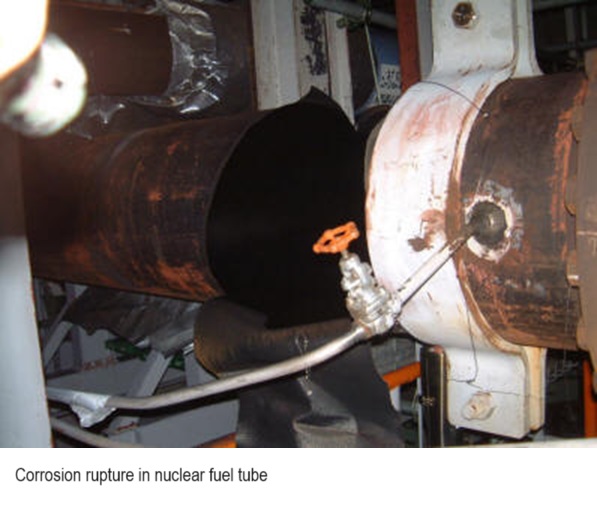
Pressure tubes, which are six-metre-long rods that contain fuel bundles of uranium, are regarded as the major life-limiting component in CANDUs. They deteriorate as they age, gradually increasing their propensity to fracture, an event which could lead to a serious accident.
Matthew McClearn, October 11, 2024 https://www.theglobeandmail.com/business/article-canadas-nuclear-watchdog-green-lights-operation-of-aging-pickering/
Canada’s nuclear safety regulator again extended a crucial permit for the country’s oldest nuclear power plant on Friday, allowing it to continue operating beyond its original design life.
On Friday the Canadian Nuclear Safety Commission authorized its owner, Ontario Power Generation, to operate the Pickering Nuclear Generating Station for an additional two years, to Dec. 31, 2026. The extended permit applies only to its newest four reactors, Units 5 through 8, which are collectively known as Pickering B. Those reactors entered service between 1983 and 1986.
The licence extension was granted by commissioners Timothy Berube, Marcel Lacroix and Andrea Hardie, who decided OPG would make adequate provisions for protecting the environment and public safety.
Canada’s homegrown reactor, the CANDU, was originally assigned a design life of 30 years, which had been incorporated into CNSC licensing requirements. If followed, they would have dictated that all four reactors shut down for major overhauls or decommissioning years ago. The CNSC, though, amended those rules and extended the station’s licence three times, while imposing more thorough inspection requirements on key components. The Pickering B reactors are now around 40 years old.
Pickering Station, located roughly 30 kilometres northeast of downtown Toronto, employs about 3,000 people and until recently supplied about 11 per cent of Ontario’s electricity. Nuclear power plants play a crucial role in the province’s grid, but their output has declined: Pickering Unit 1 shut down permanently last month, and Unit 4 is scheduled to follow in December. (The other two Pickering A units were idled permanently decades ago.)
OPG said Pickering B’s continued operation is needed because reactors at other stations are offline for overhauls.
Pressure tubes, which are six-metre-long rods that contain fuel bundles of uranium, are regarded as the major life-limiting component in CANDUs. They deteriorate as they age, gradually increasing their propensity to fracture, an event which could lead to a serious accident. Pressure tubes and related components are collectively known as fuel channels.
The main cause of that deterioration is called deuterium ingress, which is measured in parts per million (ppm) of hydrogen equivalent concentration. Previously, Pickering’s licence contained a condition that effectively capped hydrogen concentrations at 120 parts per million.
But in recent years a small number of pressure tubes in Canada have been found to have greatly exceeded that limit. The CNSC removed the 120 ppm limit from Pickering Station’s licence on Friday, and introduced a new requirement that OPG “implement and maintain an enhanced fitness for service program” for its fuel channels.
Familiar patterns of support and opposition emerged during public hearings held by the CNSC in June, with host municipalities emphasizing the plant’s economic importance. A deluge of submissions from nuclear industry contractors, lobbyists and unions also supported the plant’s continued operation, including the Society of United Professionals and the Canadian Nuclear Association.
The CANDU Operators Group, which represents utilities that use those reactors, wrote in a statement that experimental work had confirmed that the station’s fuel channels could operate safely until 2026, and that OPG “will continue with its exemplary safety record in every aspect of its operations.”
Environmental activists such as the Canadian Environmental Law Association recommended the CNSC reject the permit, partly owing to risks associated with the plant’s aging equipment.
“Old nuclear plants are particularly susceptible to accidents,” it wrote in its submission, adding that the dangers of allowing the plant to continue operating are “high and increasing.”
Sunil Nijhawan, a nuclear safety consultant and frequent intervenor before the CNSC, said that OPG’s own estimates showed “that the degradation of fuel channels is widespread; a number of component and system failure mechanisms are fast converging to put the reactor into unsafe operation territory.”
Several First Nations asserted that the plant’s continued operations required their consent, and some also raised concerns about aging pressure tubes. The Mississaugas of Scugog Island First Nation declared in a written statement that it was “not comfortable with the risk management methods being employed by the CNSC and OPG.”
The CNSC found that the licence extension “does not present any novel adverse impact on any potential or established Aboriginal claim or right.”
A second life is planned for the Pickering B reactors following the planned 2026 shutdown: In January, the Ontario government authorized OPG to begin a refurbishment that would return them to service in the mid-2030s.
Kamala Harris’ foreign policy agenda music to war party, anathema to swing state voters

Walt Zlotow, West Suburban Peace Coalition, Glen Ellyn IL 13 Oct 24
It’s standard procedure for presidential candidates to promote bellicose US foreign policy in their campaigns. When the weapons makers, career generals, Congressional Hawks and pro war pundits pounce on candidates promoting peace over war, the warning is clear: don’t mess with US unipolar dominance.
But Kamala Harris has taken that to another level with her positions that are furthering the Israeli genocide in Gaza, destruction of Ukraine, looming war with Iran, and endless war provocations in the Far East with China.
She calls the $17.9 billion in US weapons obliterating Palestinian moms and kids “defense” and vows to continue it in a Harris administration. That alone disqualifies her to serve as president. That is not an endorsement of Trump, who’s even more ravenous for Israel to “to finish the job (genocide) in Gaza”
Harris remains in complete denial that US provocations made the Russian invasion of Ukraine inevitable. She’s committed to providing Ukraine with war weapons, already exceeding $150 billion, that have largely destroyed Ukraine as a functioning state. She calls negotiations to end the war “surrender”, something she will never do.
Harris’ claim that Iran is “America’s greatest adversary” is preposterous. She’s cool with Israel bombing folks in Tehran, but when Iran bombed back in protest, Harris got on the phone with Israeli Prime Minister Benjamin Netanyahu, to discuss US help in Israel’s planned reprisals. That is not stateswomanship . That is criminal warmongering.
Harris is also on board endless US provocations against China in the Far East that could provoke war with the third largest nuclear power. Why? Harris says “The US must “win the competition for the 21st century with China.” A competition that ends in war is not winning. It is self destruction.
Harris may be pleasing the US war party, but not voters in swing states. They are not supporting endless US wars sucking up US treasure needed for the Homeland. They favor Trump’s approach to ending them (however unrealistic) over Harris’ bellicose stance by a margin of 58% to 42%. That alone could cost Harris the electoral votes she needs for victory November 5. Her foreign policy is not just wrong…it is stupid.
On domestic issues Kamala checks all the right boxes. On foreign policy issues she my be leading America and the world to ruin.
Biden, Netanyahu Closer to Consensus on Attacking Iran

Netanyahu convened his war cabinet on Thursday to approve plans
by Dave DeCamp October 10, 2024 https://news.antiwar.com/2024/10/10/biden-netanyahu-closer-to-consensus-on-attacking-iran/#gsc.tab=0
President Biden and Israeli Prime Minister Benjamin Netanyahu moved closer to an understanding on Israel’s plans to attack Iran during their phone call on Wednesday, Axios reported on Thursday.
The report, which cited US and Israeli officials, said that the US had accepted Israel is going to launch a major attack on Iran soon and is only concerned that striking certain types of targets could dramatically escalate things. However, Iran has vowed it will respond to any type of Israeli attack, and the situation could easily turn into a full-blown war that would involve the US.
An Israeli official told Axios that the Israeli plans are still a bit more aggressive than the US would like. The US has been warning against striking nuclear facilities or oil infrastructure, and recent media reports have said Israel will likely target military infrastructure.
Netanyahu convened his security cabinet on Thursday to brief them on the situation with the US and is expected to get approval for him and Israeli Defense Minister Yoav Gallant to set a timeline for the Israeli attack. The Times of Israel reported that the US and Israel will continue conversations on the plans in the coming days, signaling the attack is not imminent.
NBC News reported on Tuesday that the US was considering supporting Israel’s attack with direct airstrikes of its own, although US officials said intelligence support was more likely.
The Jerusalem Post reported that the US was offering Israel a “compensation package” of military aid and full diplomatic support if it only hits US-approved targets in Iran. The US has also committed to defending Israel from any Iranian response.
Iran fired nearly 200 ballistic missiles at Israel last week in response to a string of Israeli escalations, including the assassination of Hamas’s political chief, Ismail Haniyeh, in Tehran. Immediately after the attack, National Security Advisor Jake Sullivan said the US would work with Israel to ensure Iran suffers “severe consequences.”
Renewables based systems are reducing blackouts in UK and USA!

David Toke, Oct 11, 2024, https://davidtoke.substack.com/p/renewables-based-systems-are-reducing
The truth is gradually emerging that far from threatening electricity systems with blackouts, renewable energy-based systems are preventing them for occurring! This has a lot to do with the fact that the installation of batteries to deal with renewable output variability has the side-effect of improving grid resilience. Solar power is also reducing possibilities for blackouts in hot places.
Batteries stopped widespread blackouts just three days ago, on October 8th in the UK, when, the UK-Norwegian electricity interconnector suddenly crashed leading to a loss of 1.4 GW of power. Without rapid action, frequency levels would have fallen leading to widespread blackouts as the system tried to preserve grid stability. But 1.5 GW of batteries rapidly clicked into service saving the day (see HERE). Of course the build-up of batteries in the UK is only happening because of the growth of renewable energy!
Similar stories of how blackouts are being averted are coming from other places with growing renewables penetration, including Texas and California in the USA. In both cases, earlier blackouts were caused by conventional power system problems, but widely blamed on renewables by anti-renewables lobbies. But now as renewables, and battery systems, proliferate further, blackout rates are actually being reduced.
Speaking about the October 8th UK incident, Roger Hollies from the ARENCO Group, who originally posted about the outage response on linkedin (HERE) commented: ‘It’s exciting to see batteries casually keeping the lights on whilst delivering diversity of activity to maximise revenue. I count 9 markets and services being participated in by these 12 batteries during this 50 min window alone! This complexity is only going to continue with Quick Reserve coming online later this year, local markets expanding, more renewables coming online and we STILL are not using the +/-3Gvar of reactive power the installed BESS fleet can supply!’
In California, the number of blackouts has been dramatically reduced over the last couple of years. ‘Batteries were the biggest reason California didn’t see the power go out’ says Benjamin Storrow (see HERE). There has been a very big increase in battery installation in California. This has been driven partly by a State-led investment programme. In addition, the increase in battery capacity follows on from the new opportunities in spreading production from the increasing quantity of solar panels over longer periods of the day.
Texas has been saved from a summer power blow-out by a combination of solar pv and batteries. Climate-change inspired hotter summers have put a strain on the Texas grid to cope with the rising demands for air conditioning to meet the summer heat spikes. Once again, solar pv and batteries have come to the state’s rescue. See HERE.
Of course a lot of work still needs to be adapt the electricity from its traditional centralised dispatch mode to a decentralised way of operation. These include incentivising longer duration batteries, something encouraged by a ‘cap and floor’ incentive system for batteries announced by the Government today. See HERE. Initiatives to replace the inertial load system provided by traditional centralised power plant with new inertial sources needed to support variable renewable energy are also in play, for instance promoted by Statkraft’s Guy Nicolson HERE.
Acknowledgement to Dave Andrews from the Claverton Group for the alert on the Norway link tripping event.
Threads brings nuclear war fears to a new audience
“It is only in the last couple of years that the world is lurching towards world war three, that people start thinking about it again”
“the power station was a key target”
Julia Bryson, BBC News, 11 Oct 24
A television drama about a fictional nuclear attack on the city of Sheffield had a profound effect on many who watched it in the 1980s. Now it has aired once again, we spoke to some first and second-time viewers to gauge their reaction.
First broadcast in 1984, Threads has only been repeated a handful of times since – but having gained something of a cult following, it was repeated on BBC Four on Wednesday night to mark its 40th anniversary.
Andrea Cattermole, 56, from Sowerby Bridge, West Yorkshire, said she loved the realism – but it made her “really anxious that it could really happen”.
She said: “It made me think if it did happen, I’d rather be one of the first to die and not have to live through it, with all the effects it has on everyone in the long term.
Ms Cattermole said she thought everyone should watch Threads to “understand the dreadful problems it causes to everyone and the planet for many years after the event”.
The post-apocalyptic film was created by Kes author Barry Hines, and watching it has become something of a rite of passage for people in his home city of Sheffield.
Val Yates, from Retford, Nottinghamshire, remembered watching Threads for the first time in the 1980s, because it was around the time of her 16th birthday.
Now 56, she said watching it for a second time was “like going back to being 16”.
“When we grew up in the 80s we lived with the threat of nuclear war,” she said.
“It has suddenly become poignant again, it’s happening again now but for a new generation.”
As a teenager, Ms Yates lived in the village of Clarborough, which was only about five miles from West Burton power station, where her father worked.
“I think I probably watched it on my own in my bedroom first time round, my dad worked at the power station, so it was even more scary,” she said.
“There was a lot of propaganda around at the time, even in schools we learned about the Cold War and the Cuban missile crisis, it was very realistic.
“We were told the power station was a key target because it’s infrastructure.
“They said if a bomb went off in Sheffield it would take 11 minutes to reach us – there was a graphic which showed how quickly it would sweep the area and it terrified me.”
She added: “Everything settles down and today’s kids have no idea what it was like.
“It is only in the last couple of years that the world is lurching towards world war three, that people start thinking about it again,” she said……
The story is focused around two families who live in Sheffield when a nuclear bomb is detonated.
In the aftermath of the blast, increasingly desperate people are seen trying to seek medical help and food, and civilised society eventually breaks down. Within a generation, language has died out and survivors live in medieval conditions…………………………..
“It remains the most accurate depiction of what nuclear winter would look like,” said Mr Mann – whose documentary “Survivors – The Spectre of Threads” is set to be released next year.
“Nothing has ever captured what the consequences would be, and I think that is what the producer Mick Jackson intended to do.
“He made a stark warning of what that would look like. It is accurate and I think that is why it continues to scare people,” he added.
“It is not something at the immediate forefront of the consciousness at all times but it could still happen and I think that is why people find it so scary.”
Threads is now available to watch on BBC iPlayer. https://www.bbc.co.uk/news/articles/c2dp8197y3eo
UK and Ireland partners congratulate 2024 Nobel Peace Prize winner
Nuclear Free Local Authorities, 11 Oct 24,
On hearing the news that the Japanese Hibakusha survivor network Nihon Hidankyo (No More Hibakusha) has been awarded this year’s Nobel Peace Prize, NFLA and Mayors for Peace Chapter Secretary Richard Outram lost no time in sending the worthy winners our congratulations.
The Nobel Peace Prize Committee made their customary announcement on 11 October, two months before the formal award ceremony takes place in Oslo.
Founded on August 10, 1956, Nihon Hidankyo is the only Japanese national organisation of A-bomb survivors of Hiroshima and Nagasaki (Hibakusha). It has branches in all 47 Japanese prefectures, thus representing almost all organized Hibakusha. Impressively, its officials and members are all Hibakusha. Although most Hibakusha live in Japan, several thousand more live in Korea and in other parts of the world.
The website states that the organisation’s main objectives are:
1) The prevention of nuclear war and the elimination of nuclear weapons, including the signing of an international agreement for a total ban and the elimination of nuclear weapons. The convening of an international conference to reach this goal is also part of Hidankyo’s basic demand.
2) State compensation for the A-bomb damages. The state responsibility of having launched the war, which led to the damage by the atomic bombing, should be acknowledged, and the state compensation provided.
3) Improvement of the current policies and measures on the protection and assistance for the Hibakusha.
Although the Nihon Hidankyo website records that in March 2016 there were 174,080 Hibakusha living in Japan, since that time these numbers are fast dwindling as many are in their eighties or above. Doubtless this factor, and the fact that the organisation will be the holder of the current Nobel Peace Prize throughout 2025 when the world remembers and commemorates the 80th anniversary of the atomic bombings, have played their part in their worthy selection as this year’s winners.
More information can be found on the organisation’s website:
The text of the letter of congratulation follows…………………………………………….more https://www.nuclearpolicy.info/news/uk-and-ireland-partners-congratulate-2024-nobel-peace-prize-winner/
A desire to leave not a ‘compelling need’ under nuke dump compo scheme say Nuclear Waste Services

Residents no longer able to live under the continued threat of a potential nuclear waste dump will be unable to avail themselves of compensation if they simply sell up at a loss under the terms of the scheme recently announced by Nuclear Waste Services.
Last month, Nuclear Waste Services launched the Property Value Protection Scheme to compensate homeowners who sell their properties in the three GDF Search Areas in West Cumbria and East Lincolnshire for a sum that is lower than the ‘market price’ because the market has been blighted by the threat of a Geological Disposal Facility.
Given that a big factor in determining property price is ‘location, location, location’, future residency in an area hosting a GDF which we described as ‘a massive mining project akin to building the Channel Tunnel, into which the UK’s most deadly stockpile of radioactive waste would be deposited for eternity’, must inevitably result in blight, particularly in quiet, seaside retirement communities and those with no historic association with the nuclear industry.
In response, the NFLAs published a critique of the scheme as overly complex and too restrictive.[1]
Eligibility for compensation requires the applicant to hurdle five key conditions and supply complex evidence. One key hurdle is the need to demonstrate a ‘compelling need’ to sell.
On reading our critique, a Cumbrian resident and local Parish Councillor set out for the NFLAs their circumstances:
“I currently live in a rural hamlet with open countryside surrounding me, with far reaching views over the countryside to the mountains beyond. It is quiet and peaceful. This is the type of property and lifestyle I have chosen. I did not choose to live near a 1 KM square head works for a GDF with the long-term build and operating life with the noise, visual disturbance and general impact the development would bring. I would not live in that environment.”
The Secretary read out this scenario to NWS officials at the Nuclear Decommissioning Authority’s Stakeholder Summit in September and asked them if the desire to escape the prospect of a future GDF development would be accepted as a ‘compelling need’’.
After a follow up exchange of emails, the response was a resounding No: ‘A desire to move away from an area being considered to host a potential GDF would not meet the “compelling” need criteria of the PVP scheme.’
Although on the face of it, the NWS reply represents for people wishing to move a massive disappointment, the actual position may – as per usual with the GDF process – be more nuanced. For under the published guidance, ‘Section 3.5 – Criteria 5: Compelling need to sell’ it states that a compelling need includes ‘a significant change in health’.
It is clear from public questions posed at recent meetings of the East Lindsey District Council that the continued uncertainty is taking a toll on the emotional, mental and physical health of some residents. Surely then, in circumstances where they have had to obtain related professional medical treatment, the need to move must constitute a ‘compelling need?’ To the NFLAs taking a counterview would be inhumane.
Regrettably they will be unable to rely on any sympathy from any member with local residency and knowledge of the situation on the ground; for it has been made clear to the NFLAs that only specialists with relevant experience of administering similar compensation schemes used with other large national infrastructure projects will be eligible for appointment as ‘independents’ to the five-member panel that will consider applications. Tellingly no positions will be reserved for members of the Community Partnerships.
For more information, please contact Richard Outram, NFLA Secretary by email to richard.outram@manchester.gov.uk
Nuclear lobby takes over tertiary education, with blatant lies about “clean” “green” nuclear

X-energy plans fleet of 40 Xe-100 reactors across the UK. More than 100
businesses from across Teesside and the UK met to learn how they can work
with X-energy on its proposed nuclear new build project. X-energy, along
with deployment partner Cavendish Nuclear, discussed the potential fleet
production of its Xe-100 advanced modular nuclear reactors, likely
timescales, scope of contracts for companies of all sizes across multiple
sectors, and what is required to win business. The event at Hartlepool
College of Further Education was followed by a workshop…………… https://www.thenorthernecho.co.uk/news/24645271.x-energy-plans-fleet-40-xe-100-reactors-across-uk/
Hartlepool College of Further Education hosts 70 businesses to set out opportunities for X-energy’s multi-billion pound Hartlepool nuclear reactor project
By Madeleine Raine, 8 October 24
More than 100 representatives from local and national companies are meeting in Hartlepool to hear about the opportunities offered by X-energy’s proposed nuclear reactor project.
On Tuesday, October 8, businesses from across the UK are coming together at Hartlepool College of Further Education to find out about the role regional and British engineering, manufacturing and construction companies can have in building the next generation of [?] clean power production nationwide.
X-energy and deployment partner Cavendish Nuclear are going to be discussing the potential production of advanced modular nuclear reactors…………………………………………
“What X-energy is proposing with its AMR technology will make Hartlepool the epicentre of this country’s transition to a [?] green energy superpower with billions of pounds worth of generational investment”………………………….. https://www.hartlepoolmail.co.uk/news/people/hartlepool-college-of-further-education-hosts-70-businesses-to-set-out-opportunities-for-x-energys-multi-billion-pound-hartlepool-nuclear-reactor-project-4814707
Nuclear power stations are neither wanted nor needed in Scotland.
I REFER to the letter headed “Vote Sarwar if you want broken nuclear future” (Sunday National, Oct 6) from Leah Gunn Barret in which she summarises why Scotland doesn’t need nuclear power as proposed by the Labour government.
This is a position adopted by HANP (Highlands
Against Nuclear Power) since our formation. It appears that a lot more
lobbying and campaigning is needed, as the position taken by, for example,
environmental campaigner George Monbiot, is that nuclear is a clean energy
and needs to be “part of the mix” of energy sources.
Long-standing and new supporters of nuclear seem to ignore the reasons for nuclear not
needing to be “part of the mix” including: Generating electricity
through nuclear is twice as expensive as through renewables, and when
construction costs can’t be raised from the private sector the taxpayer
will pick up the bill.
Nuclear is not “carbon-free” or green, as uranium
has to be mined as the raw material required and there are high CO2
emissions during the average 15-year build period. All nuclear power
stations pose a risk to health and the environment both during operation
and decommissioning. Years after the fast breeder at Dounreay closed, there
are still radioactive particles being found on the foreshore around
Dounreay and there have been leaks of radioactive sodium.
The National 10th Oct 2024
The National 10th Oct 2024 https://www.thenational.scot/community/24644810.nuclear-power-stations-neither-wanted-needed-scotland/
1 This Month

Petition to revoke the licensing of the Near Surface Nuclear Disposal Facility (NSDF) at Chalk River. https://www.ourcommons.ca/petitions/en/Petition/Details?Petition=e-7247


of the week – STOP SMALL MODULAR REACTORS IN CANADA
To see nuclear-related stories in greater depth and intensity – go to https://nuclearinformation.wordpress.com
-
Archives
- March 2026 (153)
- February 2026 (268)
- January 2026 (308)
- December 2025 (358)
- November 2025 (359)
- October 2025 (376)
- September 2025 (258)
- August 2025 (319)
- July 2025 (230)
- June 2025 (348)
- May 2025 (261)
- April 2025 (305)
-
Categories
- 1
- 1 NUCLEAR ISSUES
- business and costs
- climate change
- culture and arts
- ENERGY
- environment
- health
- history
- indigenous issues
- Legal
- marketing of nuclear
- media
- opposition to nuclear
- PERSONAL STORIES
- politics
- politics international
- Religion and ethics
- safety
- secrets,lies and civil liberties
- spinbuster
- technology
- Uranium
- wastes
- weapons and war
- Women
- 2 WORLD
- ACTION
- AFRICA
- Atrocities
- AUSTRALIA
- Christina's notes
- Christina's themes
- culture and arts
- Events
- Fuk 2022
- Fuk 2023
- Fukushima 2017
- Fukushima 2018
- fukushima 2019
- Fukushima 2020
- Fukushima 2021
- general
- global warming
- Humour (God we need it)
- Nuclear
- RARE EARTHS
- Reference
- resources – print
- Resources -audiovicual
- Weekly Newsletter
- World
- World Nuclear
- YouTube
-
RSS
Entries RSS
Comments RSS
 nuclear-news