Greenpeace warns of flooding risks at France’s biggest nuclear plant
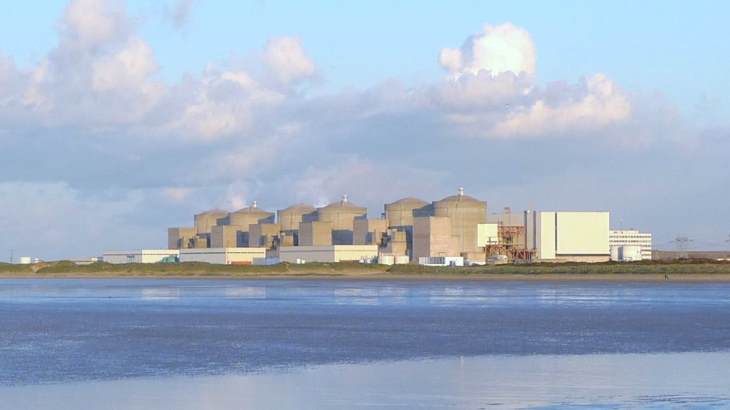
Greenpeace is urging French energy giant EDF to abandon its plans to build two new reactors at its Gravelines nuclear plant, citing the risk of flooding due to rising sea levels. The environmental group accuses the French nuclear industry of underestimating the threat to the coastal site.
04/10/2024 By:RFI
With six 900MW reactors, the Gravelines nuclear power plant on the Channel coast is already the most powerful in Western Europe.
EDF’s proposal to build two additional new generation pressurised water reactors (EPR2) of 1600 MW each is part of President Emmanuel Macron’s nuclear revival programme.
The new reactors are currently the subject of public debate. If they pass safety criteria laid down by France’s nuclear safety authority (ASN), construction would begin in 2031 and they could be on stream by 2040.
While they would be built on a 11-metre-high platform, Greenpeace claims there is a significant safety risk.
“The entire power plant site could find itself – during high tides and when there is a 100-year surge – below sea level” by 2100, it warned in a report published Thursday.
EDF refutes their calculations.
“The height of the platform chosen for the EPR2 reactors at Gravelines provides protection against “extreme” flooding, taking into account the effects of IPCC [Intergovernmental Panel on Climate Change] scenarios, which are among the most penalising with regard to sea-level rise”, EDF said in a statement to RFI.
Protective measures
Greenpeace argues that EDF’s calculations are outdated and do not fully account for the realities of global warming.
“We can’t think as if the current situation were going to remain stable and that sea levels were just going to rise a little”, says Pauline Boyer, Greenpeace’s energy transition campaigner.
The NGO has therefore based its projection on the IPCC’s most pessimistic scenario, which assumes that no action will be taken to reduce greenhouse gas emissions by 2100……………………….
Boyer believes a comprehensive risk study, factoring in climate change, “should govern the choice of site”, and be carried out before the public debate ends on 17 January.
While Greenpeace’s report centres on Gravelines, Boyer warned that climate change threatens other nuclear plants, with risks tied to rising temperatures and extreme weather events like storms.
She also pointed to potential conflicts over access to river water needed to cool reactors. https://www.rfi.fr/en/france/20241004-greenpeace-warns-of-flooding-risks-at-france-s-biggest-nuclear-plant
No comments yet.
1 This Month

of the week – Shut Down Drone Warfare!


Tell the Ukrainian Government to Drop Prosecution of Peace Activist Yurii Sheliazhenko

Petition to revoke the licensing of the Near Surface Nuclear Disposal Facility (NSDF) at Chalk River. https://www.ourcommons.ca/petitions/en/Petition/Details?Petition=e-7247
To see nuclear-related stories in greater depth and intensity – go to https://nuclearinformation.wordpress.com
-
Archives
- March 2026 (244)
- February 2026 (268)
- January 2026 (308)
- December 2025 (358)
- November 2025 (359)
- October 2025 (376)
- September 2025 (257)
- August 2025 (319)
- July 2025 (230)
- June 2025 (348)
- May 2025 (261)
- April 2025 (305)
-
Categories
- 1
- 1 NUCLEAR ISSUES
- business and costs
- climate change
- culture and arts
- ENERGY
- environment
- health
- history
- indigenous issues
- Legal
- marketing of nuclear
- media
- opposition to nuclear
- PERSONAL STORIES
- politics
- politics international
- Religion and ethics
- safety
- secrets,lies and civil liberties
- spinbuster
- technology
- Uranium
- wastes
- weapons and war
- Women
- 2 WORLD
- ACTION
- AFRICA
- Atrocities
- AUSTRALIA
- Christina's notes
- Christina's themes
- culture and arts
- Events
- Fuk 2022
- Fuk 2023
- Fukushima 2017
- Fukushima 2018
- fukushima 2019
- Fukushima 2020
- Fukushima 2021
- general
- global warming
- Humour (God we need it)
- Nuclear
- RARE EARTHS
- Reference
- resources – print
- Resources -audiovicual
- Weekly Newsletter
- World
- World Nuclear
- YouTube
-
RSS
Entries RSS
Comments RSS
 nuclear-news
Leave a comment