At last – one corporate newsmedia admits there is no “cloud” – only dirty great steel structures
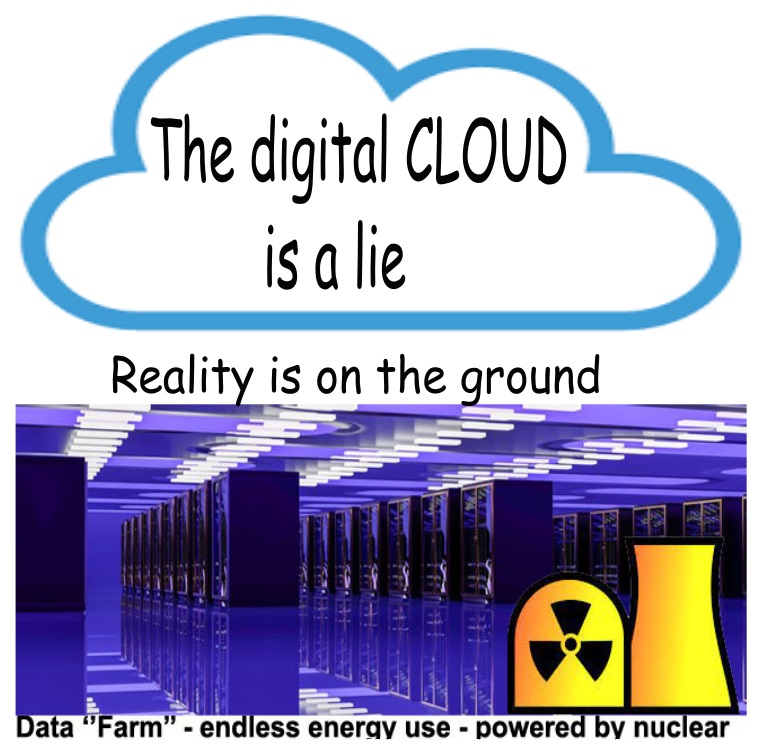
Stopping the great AI energy squeeze will need more than data centres
Amazon Web Services is currently rolling out €30bn of investments in
Europe amid a boom in artificial intelligence, according to Neil Morris,
its Irish head. But none of that bonanza is going to Ireland, because
Amazon officials worry about future energy constraints.
Indeed, there are reports that the company has already been rerouting some cloud activity
because of this. And while the Irish government has pledged to expand the
grid, mostly via wind farms, this is not happening fast enough to meet
demand. The water infrastructure is creaking too. Yes, you read that right:
an (in)famously wet and windy country is struggling to sustain tech with
water and wind power. There are at least four sobering lessons here. First,
this saga shows that our popular discourse around tech innovation is, at
best, limited and, at worst, delusional.
More specifically, in modern
culture we tend to talk about the internet and AI as if it they were a
purely disembodied thing (like a “cloud”). As a consequence,
politicians and voters often overlook the unglamorous physical
infrastructure that makes this “thing” work, such as data centres,
power lines and undersea cables.
But this oft-ignored hardware is essential
to the operation of our modern digital economy, and we urgently need to pay
it more respect and attention. Second, we need to realise this
infrastructure is also increasingly under strain. In recent years the
energy consumption of data centres has been fairly stable, because rising
levels of internet usage were offset by rising energy efficiency.
However, this is now changing fast: AI queries use around 10 times more energy than
existing search engines. Thus the electricity consumption of data centres
will at least double by 2026, according to the International Energy Agency
— and in the US they are expected to consume nine per cent of all
electricity by 2030. In Ireland the usage has already exploded to over a
fifth of the grid — more than households.
FT 4th Oct 2024,
https://www-ft-com.ezphost.dur.ac.uk/content/4fd66b27-f51b-4029-af3a-f5521368046f
No comments yet.
1 This Month
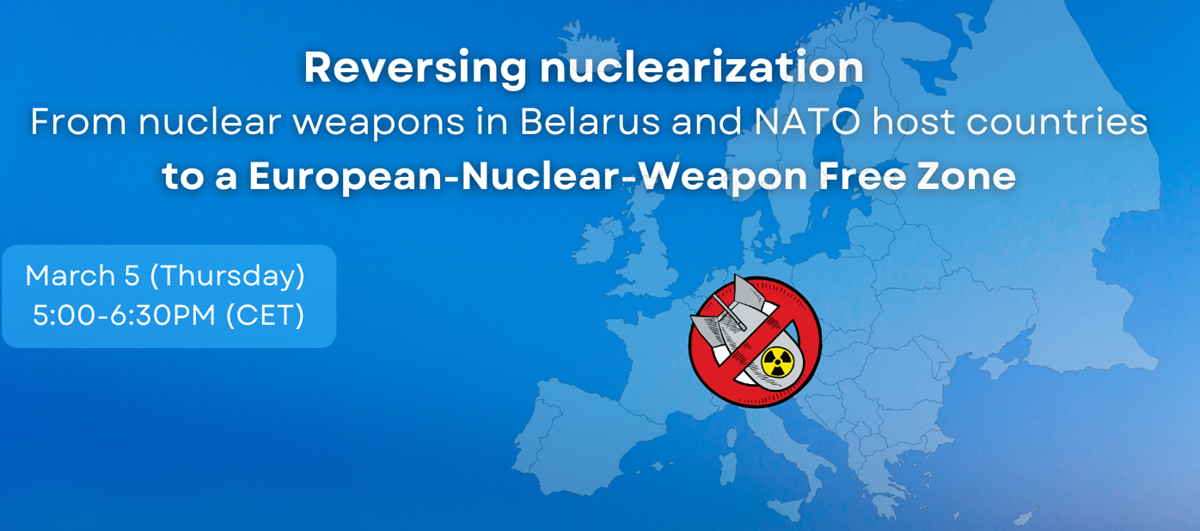
5 March -Online – Reversing nuclearization:
From nuclear weapons in Belarus and NATO host countries to a European-Nuclear-Weapon Free Zone
11am-12:30pm Eastern Time USA / 5pm-6:30pm CET

of the week – Advocating for a
nuclear free beach – https://www.samuellawrencefoundation.org/
The Samuel Lawrence Foundation advocates for a Nuclear Waste Free Beach at San Onofre, join us and take action!

10 March A LIVE WEBINAR THE REAL EFFECTS OF NUCLEAR POWER
What the Industry Isn’t Telling Us
1:00 PM Mountain, 2 pm Central, 3 pm Eastern. Live on the Keepers of the Water Facebook page

18 March Webinar @ 1 PM EST: An Assessment of SMR Projects: The Case of Canada
register for the zoom:
https://us02web.zoom.us/webinar/register/WN_o8BIIOUvQ2ONJR1nta65DQ#/registration

of the week – STOP SMALL MODULAR REACTORS IN CANADA
To see nuclear-related stories in greater depth and intensity – go to https://nuclearinformation.wordpress.com
-
Archives
- March 2026 (51)
- February 2026 (268)
- January 2026 (308)
- December 2025 (358)
- November 2025 (359)
- October 2025 (376)
- September 2025 (258)
- August 2025 (319)
- July 2025 (230)
- June 2025 (348)
- May 2025 (261)
- April 2025 (305)
-
Categories
- 1
- 1 NUCLEAR ISSUES
- business and costs
- climate change
- culture and arts
- ENERGY
- environment
- health
- history
- indigenous issues
- Legal
- marketing of nuclear
- media
- opposition to nuclear
- PERSONAL STORIES
- politics
- politics international
- Religion and ethics
- safety
- secrets,lies and civil liberties
- spinbuster
- technology
- Uranium
- wastes
- weapons and war
- Women
- 2 WORLD
- ACTION
- AFRICA
- Atrocities
- AUSTRALIA
- Christina's notes
- Christina's themes
- culture and arts
- Events
- Fuk 2022
- Fuk 2023
- Fukushima 2017
- Fukushima 2018
- fukushima 2019
- Fukushima 2020
- Fukushima 2021
- general
- global warming
- Humour (God we need it)
- Nuclear
- RARE EARTHS
- Reference
- resources – print
- Resources -audiovicual
- Weekly Newsletter
- World
- World Nuclear
- YouTube
-
RSS
Entries RSS
Comments RSS
 nuclear-news
Leave a comment