“Hit Iran’s Nuclear Sites First”: Donald Trump’s Advice To Israel

The former president, speaking at a campaign event in North Carolina, referred to a question posed to Democratic President Joe Biden this week about the possibility of Israel targeting Iran’s nuclear program.
Agence France-Presse, Oct 05, 2024, https://www.ndtv.com/world-news/donald-trump-says-israel-should-hit-irans-nuclear-facilities-6719212
Washington:
Republican White House hopeful Donald Trump said Friday he believes Israel should strike Iran’s nuclear facilities in response to the Islamic republic’s recent missile barrage.
The former president, speaking at a campaign event in North Carolina, referred to a question posed to Democratic President Joe Biden this week about the possibility of Israel targeting Iran’s nuclear program.
“They asked him, what do you think about Iran, would you hit Iran? And he goes, ‘As long as they don’t hit the nuclear stuff.’ That’s the thing you want to hit, right?” Trump told a town hall style event in Fayetteville, near a major US military base.
Biden was asked on Wednesday whether he would support strikes against Iranian nuclear sites and the US president told reporters: “The answer is no.”
“I think he’s got that one wrong,” Trump said Friday, in response to a participant’s question about the issue. “Isn’t that what you’re supposed to hit? I mean, it’s the biggest risk we have, nuclear weapons,” he said.
“When they asked him that question, the answer should have been, hit the nuclear first, and worry about the rest later,” Trump added.
“If they’re going to do it, they’re going to do it. But we’ll find out whatever their plans are.”
Biden on Wednesday expressed his opposition to such strikes against Iran’s nuclear facilities, in response to the firing of nearly 200 Iranian missiles towards Israel.
We’ll be discussing with the Israelis what they’re going to do,” he said, adding that all G7 members agree Israel has “a right to respond, but they should respond in proportion.”
Trump, locked in a tooth-and-nail presidential election battle with US Vice President Kamala Harris, the Democratic nominee, has spoken little about the recent escalation in tensions in the Middle East.
He issued a scathing statement this week, holding Biden and Harris responsible for the crisis.
What reports got wrong about China’s ‘sunken nuclear submarine’
Western news organizations often miss crucial context—and even the real news—about Chinese military modernization.
Defense One, By J. Michael Dahm and Peter W. Singer 4 Oct 24
The purported sinking of a Chinese nuclear submarine at a Wuhan shipyard pier is the latest example of Western reporting on military developments in China that overlooks important details and context, or even takes the wrong lessons from the fragments of stories they tell.
The incident, which took place in June, drew some mention the following month on social media and even in the defense press, but it went viral after a Sept. 26 report in the Wall Street Journal touched off coverage from Fox News to CBS. What apparently lit up the U.S. media landscape were the assertions, attributed to unnamed U.S. defense officials, that the submarine was nuclear-powered. Many of the subsequent reports suggested that the incident revealed safety concerns about a new class of PLA Navy nuclear submarine and a serious setback for China’s military modernization.
These are mischaracterizations. Moreover, the reporting actually buried the lead. The shipyard accident tells us very little about the future of PLA naval modernization, but the submarine itself does.
The afflicted boat was said to be a “Type 041 Zhou-class submarine” powered by a nuclear reactor. But tracing that claim to its origins reveals the importance of context and of using varied sources………………………………………………………………………………………………………………………………….
The point is that a preponderance of public sourcing indicates there is far more uncertainty about the ship itself than the headlines would have it. Indeed, there is nothing in the available reporting that indicates an actual nuclear incident. The satellite photos showed four crane barges that may have been deployed to raise a sunken object, but no nuclear-response efforts were detected. This was not Chernobyl.
……………………………….. This story also underlines a larger problem in Western media reporting on China’s military in recent years: too often, it swings between two extremes that portray the PLA as either comically inept or ten feet tall……………………………………
…………… The issues in U.S.-China security are of growing domestic interest and political importance, especially during an election season. As such, it is ever more vital that mass media reporting on PLA capabilities avoids the temptation to hunt for “clicks” and “eyeballs” and instead seeks out the details and context necessary to fully understand the implications of China’s military modernization.
J. Michael Dahm is a Senior Associate with BluePath Labs, a Senior Fellow at the Mitchell Institute for Aerospace Studies, and a Lecturer in International Affairs at the George Washington University.
P.W. Singer is a best-selling author of such books on war and technology as Wired for War, Ghost Fleet, and Burn-In; senior fellow at New America; and co-founder of Useful Fiction, a strategic narratives company. https://www.defenseone.com/ideas/2024/10/chinas-sunken-nuclear-sub-was-likely-nothing-sort/400001/
Corrosion exceeds estimates at Michigan nuclear plant US wants to restart, regulator says
By Timothy Gardner, October 3, 2024, WASHINGTON, Oct 2 (Reuters) –
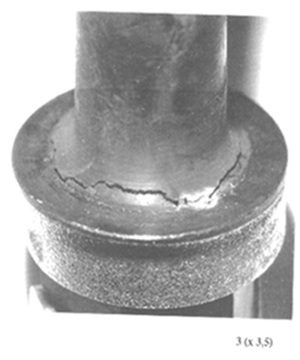
Holtec, the company wanting to reopen the Palisades nuclear reactor in Michigan, found corrosion cracking in steam generators “far exceeded” estimates, the U.S. nuclear power regulator said in a document published on Wednesday.
President Joe Biden’s administration this week finalized a $1.52 billion conditional loan guarantee to the Palisades plant. It is part of an effort to support nuclear energy, which generates virtually emissions-free power, to curb climate change and to help satisfy rising electricity demand from artificial intelligence, electric vehicles and digital currency.
Palisades, which shut under a different owner in 2022, is seeking to be the first modern U.S. nuclear power plant to reopen after being fully shut.
A summary of an early September call between the U.S. Nuclear Regulatory Commission and Holtec published on Wednesday said indications of stress corrosion cracking in tubes in both of Palisade’s steam generators “far exceeded estimates based on previous operating history.” It found 1,163 steam generator tubes had indications of the stress cracking. There are more than 16,000 tubes in the units.
Steam generators are sensitive components that require meticulous maintenance and are among the most expensive units at a nuclear power station.
Holtec wants to return the plant to operation late next year. Patrick O’Brien, a company spokesperson, said the results of the inspections “were not entirely unpredicted” as the standard system “layup process”, or procedure for maintaining the units, was not followed when the plant went into shutdown…………………….
Holtec still needs permits from the NRC. “Holtec must ensure the generators will meet NRC requirements if the agency authorizes returning Palisades to operational status,” an NRC spokesperson said.
The NRC said last month that preliminary results from inspections “identified a large number of steam generator tubes with indications that require further analysis and/or repair.”
Steam generator issues can pose problems for nuclear power plants. Parts of the San Onofre Nuclear Generating Station in California were shut in 2012 after steam generators that had a design flaw leaked. Problems with new generators led to the closure of the plant in 2013. https://www.reuters.com/business/energy/us-report-says-corrosion-michigan-nuclear-plant-above-estimates-2024-10-02/
Construction of Ontario nuclear reactor should move forward despite incomplete design, ! regulator says

https://www.theglobeandmail.com/business/article-though-its-design-is-incomplete-nuclear-safety-regulator-says-the/ Matthew McClearn, 4 Oct 24
Canada’s nuclear safety regulator has recommended that the country’s first new power reactor in decades should receive the go-ahead to begin construction, even though its design is not yet complete.
At a hearing Wednesday, staff from Ontario Power Generation argued that the Canadian Nuclear Safety Commission should grant a licence to construct a 327-megawatt nuclear reactor known as the BWRX-300 at OPG’s Darlington Nuclear Generating Station in Clarington, Ont., about 70 kilometres east of Toronto.
he application received unequivocal support from the CNSC’s staff, despite the fact that several safety questions remain unresolved.
“The level of design information needed for CNSC staff to recommend a licence to construct is not the final design, but the information must be sufficient to ensure that the regulations have been met,” Sarah Eaton, the CNSC’s director-general ofits Directorate of Advanced Reactor Technologies, said before the commission.
It would be the first small modular reactor built in a G7 country and among the first globally – although its output would exceedthe informal 300-megawatt cutoff for SMRs.
The BWRX-300 is currently being developed by U.S. vendor GE Hitachi Nuclear Energy. Someaspects of its design are based on the Economic Simplified Boiling Water Reactor (ESBWR), which was licensed by the U.S. Nuclear Regulatory Commission in 2014 but never built. The CNSC said the 1,600-megawattESBWR underwent significant testing that is “mostly applicable” to its smaller cousin.
OPG, which submitted its application two years ago, is seeking a 10-year licence andplans to build three additional BWRX-300s at Darlington.
A second part of the CNSC hearing, scheduled for January, will hear interventions from the public, including Indigenous communities. OPG has already partly prepared the site – building roads and moving earth – under an earlier licence granted by the CNSC.
David Tyndall, OPG’s vice-president of new nuclear engineering, said the reactor’s design had advanced sufficiently to meet Canada’s regulatory requirements.
One significant unresolved issue, though, is its emergency shutdown systems.
Typically, reactors are required to have two independent shutdown systems. The BWRX-300would have 57 control rods that could be inserted rapidly into its coreby high-pressure water in an emergency to halt reactivity. Should that hydraulic method fail, electric motors would drive them in instead.
Mr. Tyndall assured the commission that the BWRX-300 was designedin such a way that all safety systems “are guaranteed to be fully independent and redundant, which ensureshigh reliability and fail-safe operation.”
CNSC staff, however, questioned whether the shut-off systems were truly independent because both systems rely on the same control rods. That remained unresolved at Wednesday’s hearing.
To address unresolved issues, CNSC staff proposed that the commission impose three “regulatory hold points” during the reactor’s construction at which work would halt until OPG provided sufficient information to satisfy CNSC staff. Ramzi Jammal, the commission’s executive vice-president and chief regulatory operations officer, would administer the hold points.
Throughout an assessmentrunning more than 1,000 pages, published by the CNSC this summer, staff repeatedly noted missing information in OPG’s submission that they vowed to review once it becomes available.
“In many cases, there is a discussion about a topic, and it’s noted that the design is not complete,” commissioner Jerry Hopwood observed at the hearing.
“It’s not entirely clear to what extent the design has been completed in such a way that the conclusions that support a licence to construct are then justified.”
M.V. Ramana, a professor at the University of British Columbia’s School of Public Policy and Global Affairs who specializes in nuclear power, said the CNSC doesn’t have enough information to answer key safety questions necessary to grant a construction licence. He added that, as the first of its kind, the Darlington SMR’s design is likely to require further significant changes during construction.
“What it does tell me is that OPG really has rushed through this,” he said. “It may be that they don’t feel they know enough about the design and are waiting for information from GE Hitachi, or that OPG is under its own self-imposed deadline to submit this application by a certain date.”
Prof. Ramana said the CNSC’s role as a safety regulatoris in conflict with statements its leadership has made in recent years promoting SMRs.
“The CNSC has acted as a cheerleader for small modular reactors,” he said. “This is completely at odds with what a good regulator ought to be doing.”
Jane Fonda: Nuclear power at Three Mile Island is no climate solution

Nuclear power is slow, expensive — and wildly dangerous, the actor and activist writes. Why would anyone tempt fate by reactivating a facility that suffered the worst nuclear accident in U.S. history?
by Jane Fonda, For The Inquirer, Oct. 2, 2024,
The recent news about restarting the Three Mile Island nuclear power plant 75 miles west of Philadelphia hit me hard.
My heart sank as I thought back to The China Syndrome, a nuclear disaster movie I starred in with Jack Lemmon and Michael Douglas in 1979. Why, I wondered, would anyone tempt fate by reactivating a facility that suffered the worst nuclear accident in U.S. history?
The China Syndrome was about a nuclear power reactor potentially melting down and unleashing a cloud of deadly radioactivity across the surrounding region. Two weeks after the movie hit theaters, real life imitated art with a vengeance.
One of the two reactors at Three Mile Island suffered what investigators termed “a partial meltdown.” As industry officials and federal regulators tried to determine the extent of the damage and whether to evacuate people, a terrifying drama played out on TV screens across Pennsylvania and around the world.
I realize that today, some people regard nuclear power as a necessary tool in the fight against climate change. As someone who is devoting my life to that fight, I understand the temptation to embrace nuclear power. We absolutely need to phase out oil, gas, and coal — the fossil fuels overheating our planet — and fast. Any means of achieving that goal deserves consideration.
The latest sign of our climate peril came last week as Hurricane Helene, amped by super-hot sea water, battered Florida, Georgia, and the Carolinas. Helene’s destructiveness, however, is also a reminder that climate change can endanger nuclear power facilities.
As the Perry World House at the University of Pennsylvania has noted, “As temperatures rise and climate hazards, such as drought, sea level rise, and extreme precipitation intensify, nuclear infrastructure is put at risk.”…………………………………………………………………………………………………………….
Ironically enough, the main reason nuclear power is so expensive is also the main reason it isn’t much help against climate change. It’s simply too slow — no nuclear reactor of any kind has been built in less than 10 to 20 years. What’s more, that extra-long construction time translates into massive borrowing costs for the capital needed to finance the plants, boosting their eventual cost.
And yes, that’s true even of the new generation of smaller, modular reactors Bill Gates, Microsoft’s founder, is so fond of. Every time I speak in public about the climate crisis, someone asks if the modular reactors can’t be a solution. So I’ve spent time researching the issue because I think when celebrities presume to speak about public issues, we have an obligation to know the facts.
With climate change, we don’t have the kind of time needed to get a nuclear plant licensed, built, and supplying power to the grid. Scientists are clear: Humanity has to limit global warming to 1.5 degrees Celsius (about 2 degrees Fahrenheit) above the preindustrial level if we’re to avoid catastrophic destruction and human suffering.
That means, scientists say, emissions of heat-trapping pollution must fall by half over the next five years. So simply as a matter of timing, nuclear is not a good climate solution.
By contrast, solar plants take about four years to get up and running. Wind turbines about the same. And boosting energy efficiency — designing our buildings and vehicles so they use much less energy but deliver the same comfort and performance — is the fastest, most powerful tool of all for displacing fossil fuels.
None of these renewable energy sources risk a nuclear meltdown. None guzzle billions of gallons of fresh water like nuclear plants do — water whose supply will become ever more uncertain as climate change unleashes deeper droughts in the years ahead. None burden our descendants with vast amounts of waste that remains dangerously radioactive for hundreds of thousands of years, with a $400 million annual bill for disposal that the public must pay.
That radioactivity, by the way, is one reason why it’s simply inaccurate to call nuclear power “clean energy.” It may be non-carbon energy, but anything that stays fatally poisonous for millennia is not clean.
If people want to support genuine solutions to climate change, I invite them to help the Jane Fonda Climate PAC elect climate champions to local, state, and national offices in November.
In Philadelphia, my political action committee has endorsed Nikil Saval in Pennsylvania Senate District 1 and Andre Carroll in Pennsylvania House District 201. You’ll find a complete list of our candidates, in Pennsylvania and across the U.S., here: janepac.com/?home#endorsements.
All of our candidates shun campaign contributions from the fossil fuel industry. They work to accelerate the deployment of solar, wind, and other genuinely clean energy sources. And they oppose nuclear.
Like two people trying to get through a narrow doorway at the same time, there isn’t room for both nuclear and renewables in our energy future. It’s an obvious choice, no?
Jane Fonda is a veteran political activist, two-time Academy Award-winning actor, and the principal of the Jane Fonda Climate PAC. https://www.inquirer.com/opinion/commentary/three-mile-island-restart-nuclear-energy-microsoft-jane-fonda-20241002.html?fbclid=IwY2xjawFsioJleHRuA2FlbQIxMQABHbLqJVZNISHHrY1j7l9JH_V4zF1kKMk155YvjJxBjwMmDYUFQ7FylW0fIQ_aem_oGsEOADg7faINQnGbVTQ4w
Sellafield ordered to pay nearly £400,000 over cybersecurity failings

Nuclear waste dump in Cumbria pleaded guilty to leaving data that could threaten national security exposed for four years, says regulator
Guardian, Anna Isaac and Alex Lawson, Thu 3 Oct 2024
Sellafield will have to pay almost £400,000 after it pleaded guilty to criminal charges over years of cybersecurity failings at Britain’s most hazardous nuclear site.
The vast nuclear waste dump in Cumbria left information that could threaten national security exposed for four years, according to the industry regulator, which brought the charges. It was also found that 75% of its computer servers were vulnerable to cyber-attack.
Sellafield had failed to protect vital nuclear information, Westminster magistrates court in London heard on Wednesday. Chief magistrate, Paul Goldspring, said that after taking into account Sellafield’s guilty plea and its public funding model, he would fine it £332,500 for cybersecurity breaches and £53,200 for prosecution costs.
The state-owned company has already apologised for the cybersecurity failings. It pleaded guilty to the charges – which relate to IT security offences spanning a four-year period from 2019 to 2023 – when they were brought by the Office for Nuclear Regulation (ONR) in June.
Goldspring said the case fell into a category “bordering on negligence” and a “dereliction of responsibilities”.
Sellafield might also “foreseeably have caused harm” and a loss of data could “have had huge risk adverse consequences for workers, the public and the environment”, he said.
Sellafield, which has a workforce of about 11,000 people, is a sprawling rubbish dump on the Cumbrian coast that stores and treats decades of nuclear waste from atomic power generation and weapons programmes. It is the world’s largest store of plutonium and is part of the Nuclear Decommissioning Authority, a taxpayer-owned and -funded quango.
Late last year, the Guardian’s Nuclear Leaks investigation revealed a string of IT failings at the state-owned company, dating back several years, as well as radioactive contamination and a toxic workplace culture. The Guardian reported that the site’s systems had been hacked by groups linked to Russia and China, embedding sleeper malware that could lurk and be used to spy or attack systems.
The Guardian investigation revealed that Sellafield’s computer servers were deemed so insecure that the problem was nicknamed “Voldemort”, after the Harry Potter villain, because it was sensitive and dangerous. It also revealed concerns about external contractors being able to plug memory sticks into its system while unsupervised.
In sentencing, Goldspring added that the prosecution did not offer any evidence of a successful cyber-attack, even if it asserted that it was impossible for Sellafield to prove that the nuclear site had not been “effectively attacked”.
As a result, the court could only sentence Sellafield on the basis that there was no evidence of “actual” harm arising from any attacks.
The fine was reduced by one-third as the nuclear site pleaded guilty at the first opportunity. The judge also noted that Sellafield has sought to improve its cybersecurity in recent months. The fine was further reduced as it is ultimately dependent on public funding to operate as a not-for-profit business.
At an earlier hearing in August, Goldspring had said that, while all parties said the failings were very serious, he would need to balance the cost to the taxpayer with the need to deter others in the sector from committing similar offences in deciding the size of the fine.
At that hearing, the court heard that a test had found that it was possible to download and execute malicious files on to Sellafield’s IT networks via a phishing attack “without raising any alarms”, according to Nigel Lawrence KC, representing the ONR.
An external IT company, Commissum, found that any “reasonably skilled hacker or malicious insider” could access sensitive data and insert malware that could then be used to steal information at Sellafield.
Euan Hutton, chief executive of Sellafield, has apologised for the failing and said he “genuinely” believes that “the issues which led to this prosecution are in the past”.
Paul Fyfe, senior director of regulation at the ONR, said: “We welcome Sellafield Ltd’s guilty pleas.
“It has been accepted the company’s ability to comply with certain obligations under the Nuclear Industries Security Regulations 2003 during a period of four years was poor.
“Failings were known about for a considerable length of time but despite our interventions and guidance, Sellafield failed to respond effectively, which left it vulnerable to security breaches and its systems being compromised.”
There have, however, been “positive improvements” at Sellafield during the last year under new leadership, the ONR added…………………………………….. https://www.theguardian.com/business/2024/oct/02/sellafield-ordered-to-pay-nearly-400000-over-cybersecurity-failings
Biden Says US and Israel Are Discussing Strikes on Iranian Oil Facilities
The president previously said he wouldn’t support strikes on nuclear facilities
by Dave DeCamp October 3, 2024, https://news.antiwar.com/2024/10/03/biden-says-us-and-israel-are-discussing-strikes-on-iranian-oil-facilities/#gsc.tab=0
President Biden said Thursday that the US and Israel were discussing the possibility of striking Iran’s oil facilities in retaliation for the Iranian missile barrage that targeted Israel on Tuesday, which was a response to multiple Israeli escalations.
When asked by a reporter if he would support Israeli strikes on Iranian oil sites, Biden said, “We’re discussing that. I think that would be a little… anyway.” The comments sent oil prices spiking.
Striking Iran’s oil facilities is supported by the ultra-hawkish Sen. Lindsey Graham (R-SC). “These oil refineries need to be hit and hit hard because that is the source of cash for the regime to perpetrate their terror,” Graham said in a statement on Tuesday.
On Wednesday, Biden said he wouldn’t support Israeli strikes on Iranian nuclear sites, but the US is vowing to ensure Tehran faces “severe consequences.” Israeli officials have told Axios that they plan to hit Iran hard and believe their attack could lead to a major regional war.
Options being considered besides striking oil facilities are targeting Iran’s air defenses or carrying out a targeted assassination inside Iran. Israeli officials have said that if Iran responds to their next attack, then any option is on the table, including strikes on nuclear facilities.
Israel is coordinating its plans to attack Iran with the US because it wants the US to come to its defense in the event of another significant Iranian attack. If Israel wants to carry out a significant strike inside Iran, it may also need support from the US military.
Iran fired about 180 ballistic missiles at Israel in response to the Israeli assassination of Hamas political chief Ismail Haniyeh in Tehran and the Israeli killing of Hezbollah Secretary-General Hassan Nasrallah and Abbas Nilforoushan, an IRGC commander who was killed alongside Nasrallah.
Israel has given no assurances it won’t target Iran’s nuclear facilities, top State Department official tells CNN
By Kylie Atwood and Jennifer Hansler, CNN, Fri October 4, 2024, Washington
Israel has not given assurances to the Biden administration that targeting Iran’s nuclear facilities is off the table in retaliation for the Iranian ballistic missile strikes earlier this week, a top US State Department official told CNN on Friday.
The official added that it is “really hard to tell” if Israel will use the anniversary of Hamas’ October 7 attacks to retaliate.
“We hope and expect to see some wisdom as well as strength, but as you guys know, no guarantees,” the official said when asked by CNN if Israel has assured the US that Iran’s nuclear sites are off the table.
US officials have voiced support for Israel responding to Iran’s missile attack earlier this week, with multiple officials publicly saying there must be consequences. At the same time, officials have also voiced concerns about a regional conflagration as they grapple with an increasingly volatile Middle East.
President Joe Biden said earlier this week the US would not support Israel targeting Iran’s nuclear program.
“If I were in their shoes, I’d be thinking about other alternatives than striking oil fields,” Biden said at a press briefing Friday. https://edition.cnn.com/2024/10/04/politics/state-department-israel-no-assurances-irans-nuclear-facilities/index.html
US Supreme Court to hear nuclear waste storage dispute
By Nate Raymond, October 5, 2024, https://www.reuters.com/legal/us-supreme-court-hear-nuclear-waste-storage-dispute-2024-10-04/
- Summary
- Biden administration appeals lower court ruling
- Nuclear waste storage facility planned for Texas
- U.S. agency sued by Texas, New Mexico, oil interests
Oct 4 (Reuters) – The U.S. Supreme Court agreed on Friday to decide whether the Nuclear Regulatory Commission has the authority to license nuclear waste storage facilities following a judicial ruling that upended decades of practice by declaring it does not.
The justices took up appeals by President Joe Biden’s administration and a company that was awarded a license by the NRC to build a waste storage facility in western Texas of the lower court’s ruling. The license was challenged by the states of Texas and New Mexico, as well as oil industry interests.
The Supreme Court will hear arguments in the case in its new term, which begins on Monday, and a decision is expected by the end of June.
The Supreme Court, which has a 6-3 conservative majority, has shown skepticism toward the authority of federal regulatory agencies in several major rulings in recent years.
The NRC, the federal agency tasked with regulating nuclear energy in the United States, issued the license in 2021 to Interim Storage Partners, a joint venture of France-based Orano and Dallas-based Waste Control Specialists.
While two other federal appeals courts rejected legal challenges to the license, the New Orleans-based 5th U.S. Circuit Court of Appeals ruled in favor of the plaintiffs and decided that the NRC lacked authority under a federal law called the Atomic Energy Act of 1954 to issue the license at all.
The administration has said the ruling would disrupt the nuclear energy sector.
The NRC has issued licenses like the one at issue in this case for the temporary storage of spent fuel produced by nuclear reactors since 1980 in recognition that the nuclear-power industry would need more space for the off-site storage of the radioactive waste.
It did so pursuant to its authority under the Atomic Energy Act to issue licenses to possess nuclear material. Such sites have continued to be licensed, with a proposal to permanently store the nation’s radioactive waste at Yucca Mountain north of Las Vegas stalled following decades of opposition in Nevada.
In the 5th Circuit ruling against the license, Judge James Ho, an appointee of Republican former President Donald Trump, cited a different law, the Nuclear Waste Policy Act, that was amended in 1987 to designate Yucca as the sole permanent storage site for such radioactive waste.
Interim Storage Partners planned to operate its nuclear storage facility in Andrews County, Texas. The plan drew opposition from oil- and gas-related organizations because the facility would be operated within the Permian Basin, the highest-producing oil field in the country.
Texas and New Mexico were joined in the litigation challenging the license by Fasken Land and Minerals, a Texas-based oil and gas extraction organization, and a nonprofit group called the Permian Basin Coalition Of Land And Royalty Owners And Operators.
The plaintiffs argued that allowing the proposed facility to be built posed environmental risks to watersheds covering nearly all of New Mexico and Texas, and that a radiation leak could be economically disastrous for oil and gas operations.
“For years, the Nuclear Regulatory Commission and two private corporations have attempted to force Texas and New Mexico into accepting stockpiled radioactive waste,” Monica Perales, an attorney for Fasken Oil & Ranch, said on Friday.
The commission “lacks the authority to issue licenses for consolidated interim storage of spent nuclear fuel in a region hundreds and even thousands of miles away from the reactors that generated the waste,” Perales added.
Royal Navy chief apologises for ‘intolerable’ misogyny in Submarine Service
Ben Key confirms several personnel have been sacked, demoted or disciplined as a result of investigations
Guardian, Alexandra Topping, 5 Oct 24
The head of the Royal Navy has issued an unreserved apology for “intolerable” misogyny in the Submarine Service, after a series of investigations across the navy exposed sexual harassment, bullying and assault of women within its ranks.
First Sea Lord Adm Sir Ben Key said he was “truly sorry” to the women who had suffered “misogyny, bullying and other unacceptable behaviours” while serving their country. “We must be better than this and do better than we have,” he said.
The long-awaited findings from an investigation into sexual harassment and abuse onboard the UK’s nuclear-armed submarines come almost two years after a whistleblower described a “constant campaign of sexual bullying” during her time in the elite Submarine Service.
Three navy personnel have been sacked and a fourth disciplined as a result of the investigation into complaints brought by Sophie Brook, who became one of the first women to be allowed to serve in the Submarine Service in 2014 and made history when she became its first female warfare officer.
In October 2022 she spoke out about sustained and aggressive sexual harassment during her time in the navy, which she said resulted in her self-harming to the extent that on one occasion she required stitches.
Brook’s story, which was first published by the Daily Mail, led to a number of other women, who make up just over 10% of the service, to come forward. The Guardian understands that the navy has carried out 28 investigations into sexual misconduct and unacceptable behaviour in the past two years, resulting in 18 personnel being sacked, four demoted and six disciplined.
Brook said submariners had simulated sex acts on her, left naked pictures of models in her cabin and told her she was on a “crush death rape list” if the submarine got into trouble. She described one crew mate attempting to distract her from her duty on the submarine’s periscope by putting his penis in her pocket and being punched in the kidneys if she took her eyes off the mast………………………….
An investigation into her case included 71 allegations and found “evidence to prove misogyny, bullying or unacceptable behaviour had occurred among a range of ranks”.
A heavily redacted report published on Friday obscures the detailed conclusions for every allegation.
Allegations of misogyny included:……………………………… more https://www.theguardian.com/uk-news/2024/oct/04/royal-navy-chief-apologises-for-intolerable-misogyny-in-submarine-service
Heatwaves caused cuts in France’s nuclear power production.
(Montel) Heatwaves in July and August provoked a 430 GWh cut in nuclear output at four EDF nuclear power plants – double last summer’s amount but slightly below the nine-year median, a French consultancy said on Tuesday.
EDF summer heat cuts double but below 9-year median
Reporting by: Sophie Tetrel, 01 Oct 2024 .
https://montelnews.com/news/70ed2eeb-e06c-4494-abca-42207139db11/edf-heat-cuts-double-from-summer-2023-but-stay-below-9-yr-median
This summer’s cut represented less than 1% of the country’s total atomic generation and was below the 600 GWh median recorded over the 2015-2023 period, said Thibault Laconde, head of analysis consultancy Callendar.
Last year’s climate-related cuts amounted to only 217 GWh due to several reactors being offline for maintenance, he added.
He said the noteworthy aspect of this year was that high temperature levels caused the outages, rather than a lack of water supply due to drought.
Production cuts or stoppages were concentrated between 29 July-3 August and 11-15 August, corresponding with the summer heatwaves, he said.
The cuts amounted to 279 GWh at Golfech, 93 GWh at Bugey, 55 GWh at St Alban and 7 GWh at Tricastin.
However, they were well below the 3 TWh record seen in 2020, Laconde added.
Many French nuclear plants use river water to cool reactors and EDF is required to reduce their output if river temperatures or low flows break legal limits.
1 This Month

of the week – Shut Down Drone Warfare!


Tell the Ukrainian Government to Drop Prosecution of Peace Activist Yurii Sheliazhenko

Petition to revoke the licensing of the Near Surface Nuclear Disposal Facility (NSDF) at Chalk River. https://www.ourcommons.ca/petitions/en/Petition/Details?Petition=e-7247
To see nuclear-related stories in greater depth and intensity – go to https://nuclearinformation.wordpress.com
-
Archives
- April 2026 (91)
- March 2026 (251)
- February 2026 (268)
- January 2026 (308)
- December 2025 (358)
- November 2025 (359)
- October 2025 (376)
- September 2025 (257)
- August 2025 (319)
- July 2025 (230)
- June 2025 (348)
- May 2025 (261)
-
Categories
- 1
- 1 NUCLEAR ISSUES
- business and costs
- climate change
- culture and arts
- ENERGY
- environment
- health
- history
- indigenous issues
- Legal
- marketing of nuclear
- media
- opposition to nuclear
- PERSONAL STORIES
- politics
- politics international
- Religion and ethics
- safety
- secrets,lies and civil liberties
- spinbuster
- technology
- Uranium
- wastes
- weapons and war
- Women
- 2 WORLD
- ACTION
- AFRICA
- Atrocities
- AUSTRALIA
- Christina's notes
- Christina's themes
- culture and arts
- Events
- Fuk 2022
- Fuk 2023
- Fukushima 2017
- Fukushima 2018
- fukushima 2019
- Fukushima 2020
- Fukushima 2021
- general
- global warming
- Humour (God we need it)
- Nuclear
- RARE EARTHS
- Reference
- resources – print
- Resources -audiovicual
- Weekly Newsletter
- World
- World Nuclear
- YouTube
-
RSS
Entries RSS
Comments RSS
 nuclear-news