Today. In praise of Joe Biden – an unfashionable opinion.

Yeah. We’ve all gotta agree. Joe Biden is silly, demented, – blah blah.
Well, I don’t agree. I watched that famous debate, after which everyone affirmed that Biden was a disaster.
The thing is – Biden made a couple of obvious glitches – mixing up names – during this debate (something that could happen to anybody, in the stress of the moment).
So the media, and the rest of the world, blindly agreed on how badly Biden debated. Never mind the fact that he gave a clear and lucid discussion on the achievements and policies of his government.
Meanwhile – the media coverage of the more colourful Trump was much more fun. There was definite disagreement about it between media outlets. The big question was exactly how many lies did Trump tell? Was it 32? No – some argued that it was only 28.
So – now that we’re all convinced that Biden doesn’t matter -we can ignore what he says and does about current urgent issues?
On the present Israeli military crisis – how will Israel punish Iran for its attacks on Israel? There’s this great idea that I’m sure that Netanyahu would love – to attack Iran’s nuclear site. But the Israelis do need the USA’s blessing to do that. But President Biden has said that while he is working with Israel he wouldn’t support strikes on Iran’s nuclear facility.
On the present Ukraine military crisis, the Western media seems to be in complacent agreement that Ukraine can defeat Russia, and all that Ukraine needs is long-range missiles – supplied by USA/NATO. These missiles could strike deep inside Russia, could potentially strike Moscow. Russia’s President Putin has repeatedly warned against this. Now Putn has changed Russia’s doctrine on using nuclear weapons, making it clear that he is prepared to use them, in the event of Ukrainian attacks deep within Russia.

President Biden, while allowing Ukraine some use of long-range missiles in areas near Ukraine, continues to rule out strikes deep within Russia.
For this attitude, Biden gets criticism, near to ridicule, from the media, almost universally – summed up by the Washington Post editorial board – “Mr. Biden needs to give permission and set the ground rules quickly.”
Donald Trump has come out with a very sensible-sounding policy on Ukraine. Trouble is – (a) you cannot trust a word that this man says, and (b) Trump’s record as president promotes nuclear war – undoing the Iran nuclear deal and the Intermediate-Range Nuclear Forces treaty with Russia.
It is now perhaps only President Joe Biden who is stalling and preventing the rush to nuclear Armageddon.
I can only conclude that the Western media in general (some exceptions):
*doesn’t do its homework – check on the facts.
*likes to please its nuclear-military-industrial-complex sponsors
*finds Trump much more entertaining to write about.
I am grateful to Julie Hollar, who clearly set out the case for questioning the corporate media’s judgement in covering this issue of the risk of Ukraine using long-range missiles.
Media Urge Expansion of Ukraine War—Nuclear Risk Be Damned
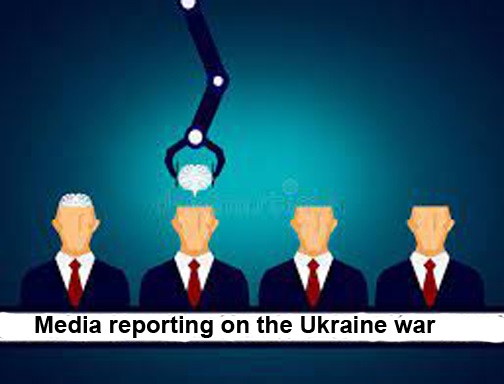
Julie Hollar, 3 Oct 24, https://fair.org/home/media-urge-expansion-of-ukraine-war-nuclear-risk-be-damned/
Ukraine has for months been asking the Biden administration for permission to use long-range US, British and French weapons to strike deeper in Russian territory, which would be a clear escalation in the war. Meanwhile, Russian President Vladimir Putin warned that the move would cross a red line for him, and recently announced that he was loosening Russia’s nuclear doctrine for using nuclear weapons.
Despite the risks of such escalation—and a lack of evidence that it would shift the war in Ukraine’s favor—Biden’s public reluctance to loosen his limits has been met in the war-hungry media primarily with derision.
Lowering the bar
The US, Britain and France have all supplied Ukraine with long-range missiles, including Army Tactical Missile Systems (ATACMS). But Biden has thus far limited their use to border areas. Britain and France are following Biden’s lead on range limitations.
Last month, in response to further advances by Russia into Ukraine, Ukraine launched a surprise invasion into Russian territory in Kursk. Since then, as Ukrainian President Volodymyr Zelenskyy has pressed the US for more and longer-range missiles, Putin has increasingly raised the specter of nuclear retaliation.
Under its 2020 nuclear doctrine, Russia could respond with nuclear strikes to nuclear or conventional attacks it deemed a “threat to its existence,” if they came from a nuclear power. His new doctrine lowers the bar, so that a “critical attack” on Russia carried out with the “participation or support of a nuclear power” would be grounds for launching a nuclear response—including against the supporting power.
In other words, if Ukraine used long-range missiles supplied by a NATO power to launch an attack on Russia that it deemed “critical,” Putin could respond with a nuclear strike, against either Ukraine or against that NATO country.
Dismissing the nuclear risk
In the opinion pages of US corporate media, the risk of nuclear war or other retaliation by Putin was quickly dismissed, as outlets pressed Biden for further escalation.
The Washington Post editorial board (9/22/24) urged Biden to acquiesce to Zelenskyy under the headline, “Ukraine Needs Long-Range Missiles Before Winter’s Onset.” The board argued that since Putin has issued “red lines” in the past that could prompt nuclear war, and “has not followed through on his threats,” therefore –
there’s no reason to think now he would risk a wider war with the North Atlantic Treaty Organization at a time when his forces are already severely depleted.
The board suggested that Putin is more likely to “align himself with Iran or its proxies to strike at US forces in the Middle East.” Though it deemed that “a risk worth weighing,” it didn’t discuss it any further. It concluded: “Mr. Biden needs to give permission and set the ground rules quickly.”
Politico editor-at-large Matthew Kaminski (9/18/24) called Zelenskyy’s request “a fair ask.” He made a similar argument to the Post editors that Putin’s “threatening noises” after each “allegedly escalatory step” from the US never turn into actions.
The Wall Street Journal editorial board (8/28/24) simply dismissed worries of escalation out of hand:
The Biden administration fears Mr. Putin might escalate his war if Ukraine puts more of his military at risk, but the war isn’t winding down. Ukraine has been attacking Russian targets with domestically produced drones, and on Sunday President Volodymyr Zelenskyy announced the “first successful combat use of our new weapon—a Ukrainian long-range rocket drone” designed “to destroy the enemy’s offensive potential.”
The Hill published a column by Joseph Bosco (10/1/24) that sneered, “Biden is clearly intimidated by Putin’s threats of retaliation, as stated again last week regarding Zelenskyy’s request for longer strike authority.” Apparently readers were supposed to just dismiss those threats, because Bosco didn’t even try to make an argument about them.
Barely bothering to justify
When it came time to justify the escalation, pundits seemed content to make noises about the need for victory, barely bothering to offer actual arguments about why long-range missiles in particular would achieve that goal.
The Journal editors wrote that Biden’s “latest bad excuse” for not giving Zelenskyy what he wants “is that such strikes wouldn’t make much of a difference.” They cited the neoconservative, military industry–funded Institute for the Study of War, which suggested that even if Russia has already moved 90% of its military aircraft out of reach of those missiles, as Biden officials argued, there were plenty of other things a trigger-happy military could hit. The Journal concluded with the vague claim that “the US can strengthen Ukraine’s position and make negotiations to end the war more likely.”
The Post also cited the ISW, and wrote weakly that the long-range missiles “could” hit Russian “arms depots, air fields and military bases,” which “perhaps…might force Mr. Putin to draw back his deadly cache further from Ukraine’s borders.”
Politico‘s Kaminski simply argued that Ukrainians need “a morale and momentum shift,” and “lowering the restrictions on missile use could help.”
Dubious experts
Establishment media’s news sections were sometimes little better than their opinion sections. The New York Times (9/12/24) splashed on its front page an article about the pressure on Biden to give Ukraine the green light that suggested a growing consensus among experts that Biden’s reluctance is nonsensical:
To a growing number of military analysts and former US officials, the administration’s reticence makes no sense, especially since, they say, Ukraine’s incursion into Kursk has yet to elicit an escalatory response from Moscow.
“Easing the restrictions on Western weapons will not cause Moscow to escalate,” 17 former ambassadors and generals wrote in a letter to the administration this week. “We know this because Ukraine is already striking territory Russia considers its own—including Crimea and Kursk—with these weapons and Moscow’s response remains unchanged.”
Two weeks later—and buried on page 9—the Times (9/26/24) reported quite a different story:
US intelligence agencies believe that Russia is likely to retaliate with greater force against the United States and its coalition partners, possibly with lethal attacks, if they agree to give the Ukrainians permission to employ US-, British- and French-supplied long-range missiles for strikes deep inside Russia, US officials said.
The intelligence assessment, which has not been previously reported, also plays down the effect that the long-range missiles will have on the course of the conflict, because the Ukrainians currently have limited numbers of the weapons and it is unclear how many more, if any, the Western allies might provide.
‘Silver bullet or powder keg’?
The same day, a USA Today headline (9/26/24) read, “Why Long-Range Missiles Could Be Either a Silver Bullet or a Powder Keg for Ukraine/Russia War.” The promised “silver bullet” never fully materialized in the text, but the paper’s sole quoted source—who was given several paragraphs—skewed the article entirely in that direction.
That source was Fred Kagan of the neoconservative, military industry–funded American Enterprise Institute. Kagan is also affiliated with the Institute for the Study of War (which was founded by his wife, Kimberly Kagan) and was an influential proponent of “surges” in both Iraq and Afghanistan—in other words, he’s about as hawkish as they come.
Under the subhead, “How the weapons could help Ukraine fight Russia,” the paper quoted Kagan explaining that long-range missile strikes could “reduce the effectiveness of Russian military action.” It also paraphrased an anonymous “senior Defense official” who, unlike their administration, seemed to favor the move, noting that one “strategic effect” would be that “the war would drag on even longer.” (The official presented this as a positive development, in that it would force Moscow to “to reconsider its costs.”)
USA Today also gave Kagan the last word, to argue that Putin’s threats are “hollow”:
“The burden thus far has been put on those advocating for allowing Ukraine to strike legitimate military targets in Russia,” Kagan said. “But I think the burden really needs to shift now to those who say that some fear of an unspecified escalation should continue to cause us to hold the Ukrainians back.”
Contrary opinions hard to find
It’s been hard to find voices calling for restraint in major corporate media—with a few notable exceptions. One came in a Hill column (9/17/24) under a byline shared by Robert F. Kennedy, Jr., and Donald Trump, Jr. They warned that “nuclear war would mean the end of civilization as we know it, maybe even the end of the human species.” The op-ed took the opportunity to plug candidate Donald Trump as the one “who has vowed to end this war.”
Trump, of course, argued in his televised debate with Kamala Harris that “we’re playing with World War III” in Ukraine. What he and his Hill proxies neglected to mention is that Trump, while in office, pulled out of the Iran nuclear deal and the Intermediate-Range Nuclear Forces treaty with Russia, both of which greatly increased the likelihood of nuclear war or “World War III.”
Another pro-restraint take came from longtime Post columnist David Ignatius, who just over a year ago reported being compelled by Ukraine’s “moral argument” for using cluster bombs (FAIR.org, 7/8/23). Ignatius (9/30/24) struck a markedly less hawkish tone recently, writing that “the Ukraine conflict is probably as close as we’ve come to the brink of all-out superpower war since the October 1962 Cuban missile crisis.” He concluded: “We’re very lucky, on balance, that [Biden] doesn’t play a reckless game.”
Otherwise, one mostly had to look to outlets in the tank for Trump, or independent outlets like the Nation (9/18/24) and Current Affairs (9/25/24), for skepticism of military escalation.
As Current Affairs‘ Nathan Robinson points out, even if Biden resists the pressure,
with the foreign policy “blob” so willing to risk all of our lives, the next president, whether Trump or Harris, may well be less resistant to the pressures that push presidents toward taking extraordinarily risky gambles that imperil all of humanity.
We could sure use a media more skeptical of that blob, rather than one that gleefully joins in.
Biden says he would not back Israeli strike on Iran’s nuclear sites
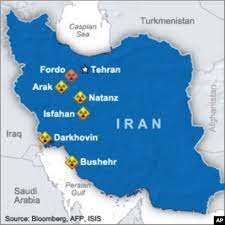
Any Israeli response to Iran’s missile barrage should be ‘proportional’, says the US president.
By Al Jazeera Staff, 2 Oct 2024 https://www.aljazeera.com/news/2024/10/2/biden-says-he-would-not-back-israeli-strike-on-irans-nuclear-sites
United States President Joe Biden has voiced opposition to any strikes on Iran’s nuclear sites in response to Tehran’s missile attack on Israel.
When asked by reporters on Wednesday whether he would back such retaliation, Biden stated “the answer is no”.
Biden’s comments come a day after Iran fired some 180 ballistic missiles at Israel, its second attack on the country since April. Iran’s most recent attacks on Israeli military sites have come in response to the assassination of key Iran-allied figures, including Hamas leader Ismail Haniyeh and Hezbollah leader Hassan Nasrallah.
Israel’s Prime Minister Benjamin Netanyahu vowed Iran would “pay” for the strike, which reportedly did not cause any serious casualties in Israel but killed one Palestinian in the occupied West Bank.
Analysts warned Israel may seize the chance to launch attacks on Iran’s nuclear facilities, a target its leaders have long eyed.
“The risk of an [Israeli] attack on the nuclear programme is particularly high because Iran’s defensive shield Hezbollah is on its knees,” Ali Vaez, the Iran Project director at the International Crisis Group think tank, told Al Jazeera.
“US forces are already in the region shielding Israel, and for Israel, this is potentially a once-in-a-generation opportunity to take care of a major threat that it has perceived from Iran over the past few decades,” he said.
Former Israeli Prime Minister Naftali Bennett explicitly called for such an attack in a post on X, saying Israel must “act now to destroy Iran’s nuclear program”.
“We have the justification. We have the tools”, Bennett said.
Biden calls for ‘proportional’ response
In the wake of Iran’s attack, Biden emphasised that the US is “fully supportive of Israel”.
Other US officials warned Iran would face “severe consequences”, with State Department spokesman Matthew Miller telling reporters he was not “ruling anything out”.
On Wednesday, after Biden spoke with allied leaders, he said he would not support an attack on Iran’s nuclear facility. Any Israeli response to Iran, he told reporters, should be “proportional”, a position shared by all nations part of the G7 grouping, including Canada, France, Germany, Italy, Japan and the United Kingdom.
The White House also said Biden and G7 leaders spoke about coordinating a new round of sanctions against Iran.
Whole Middle East at risk
Iranian President Masoud Pezeshkian said that the attack was warranted, but that Tehran did not seek war with Israel.
Iran’s armed forces warned that Israel would face “vast destruction” if it retaliated.
The escalation between two of the Middle East’s strongest militaries – while war continues to rage in Gaza and Lebanon – has stoked fears of an even broader conflict in the region.
“The idea of Iran and Israel going after each other under the auspices of the United States will burn everyone in the Middle East and beyond,” said Al Jazeera’s senior political analyst Marwan Bishara.
Donald Trump encourages Israel to strike Iran’s nuclear sites
During a rally in North Carolina, Republican presidential nominee Donald Trump took the opposite approach to Joe Biden, encouraging Israel to strike Iran’s nuclear sites.
“They ask him (Joe Biden) what do you think about Iran? Would you hit Iran? And he goes as long as they don’t hit the nuclear stuff – that’s the thing you want to hit,” Mr Trump said.
“I think he’s got that one wrong – isn’t that what you’re supposed to hit?”
Ukraine kills nuclear plant’s pro-Russian security chief with car bomb
Politico, October 4, 2024, By Seb Starcevic
The security chief at a Russia-controlled nuclear power plant in southern Ukraine was killed in a car bombing Friday, according to Russian and Ukrainian authorities.
Andriy Korotkyy, head of security at the Zaporizhzhia nuclear power plant, died after his car exploded on Friday morning in the Russian-occupied Ukrainian city of Enerhodar.
“A homemade explosive device was planted under the vehicle of the head of the security,” Russia’s Investigative Committee said in a statement on Telegram.
“When the man got into the car, it detonated. The victim died in the hospital from his injuries,” the committee said, adding that it was opening a murder investigation.
Ukraine’s Military Intelligence Directorate, also known as GUR, seemingly took responsibility for the blast that killed Korotkyy, calling him a “war criminal” and posting a video of a white SUV exploding on Telegram………………………………………………………………….
Moscow took control of the Zaporizhzhia nuclear power plant, the largest such facility in Europe, shortly after it invaded Ukraine in early 2022. It is located about 50 kilometers southwest of the city of Zaporizhzhia, home to more than 700,000 people.
There is widespread concern about the safety of the plant, with shelling and drone strikes nearby prompting the United Nations’ nuclear watchdog in August to issue a warning about a nuclear disaster.
Korotkyy is not the first Russian-allied official to die in a car bombing by Ukrainian intelligence. Mikhail Filiponenko, a pro-Russian lawmaker and ex-militiaman in occupied eastern Ukraine, was killed in a similar attack last November, with the GUR promising to punish other high-profile collaborators. https://www.politico.eu/article/ukraine-russia-andriy-korotkyy-car-bomb-nuclear-plant-zaporizhzhia/
Israel may launch symbolic attack on Iran nuclear-related facilities, says Ehud Barak
Israeli former prime minister says in interview it is too late to significantly set back Tehran’s nuclear ambitions, and that a ‘massive’ attack on Iran’s oil facilities is likely.
Julian Borger, Fri 4 Oct 2024 , https://www.theguardian.com/world/2024/oct/04/israel-may-launch-symbolic-attack-on-iran-nuclear-facilities-says-ehud-barak
Israel is likely to mount a large-scale airstrike against Iran’s oil industry and possibly a symbolic attack on a military target related to its nuclear programme, former Israeli prime minister Ehud Barak has predicted.
Barak said there was no doubt there would be an Israeli military response to Iran’s assault on Tuesday with over 180 ballistic missiles, most of which were intercepted, but some landed on and around densely populated areas and Israeli military bases.
“Israel has a compelling need, even an imperative, to respond. I think that no sovereign nation on Earth could fail to respond,” Barak said in an interview.
The former prime minister, who also served as defence minister, foreign minister and army chief of staff, said the model for the Israeli response could be seen in Sunday’s reprisal airstrikes against Houthi-controlled oil facilities, power plants and docks in the Yemeni port of Hodeidah, a day after Houthi fired missiles aimed at Israel’s international airport outside Tel Aviv.
“I think we might see something like that. It might be a massive attack, and it could be repeated more than once,” he told the Guardian. Joe Biden said on Thursday there had been discussions in Washington about a possible Israeli attack on Iran’s oil sector, but it not give any details or make clear whether the US would support such an assault.
Barak, now aged 82, said there had also been suggestions in Israel that it should make use of this opportunity, in reprisal for the Iranian attack, to bomb Iran’s nuclear facilities, but he argued it would not significantly set back the Iranian programme.
When Barak served as defence minister from 2007 to 2013, under both Ehud Olmert and Benjamin Netanyahu, he was among Israel’s most vociferous advocates for bombing the Iranian nuclear facilities, trying and failing to convince presidents George Bush and then Barack Obama, to contribute US military might to the campaign.
On Wednesday, Biden followed Obama in voicing his opposition to any Israeli strikes against Iranian nuclear sites. And Barak himself now accepts the Iran nuclear programme is too far advanced for any bombing campaign to set it back significantly.
“There are some commentators and even some people within the defence establishment who raised the question: Why the hell not hit the nuclear military programme?” Barak said. “A little bit more than a decade ago, I was probably the most hawkish person in Israeli leadership arguing that it was worth considering very seriously, because there was an actual capability to delay them by several years.
“That’s not the case right now, because Iran is a de facto threshold country,” he argued. “They do not have yet a weapon – it may take them a year to have one, and even half a decade to have a small arsenal. Practically speaking, you cannot easily delay them in any significant manner.”
Under a 2015 multilateral nuclear agreement, Tehran accepted tight restrictions on its uranium enrichment and other elements of its programme in exchange for sanctions relief, but that agreement has steadily fallen apart since the US withdrawal under Donald Trump in 2018.
Iran now has a stockpile of enriched uranium that is 30 times higher than the agreed 2015 limit, and it is enriching uranium to up to 60% purity, which in terms of the additional processing required, is very close to 90% weapons grade fissile material. Under the 2015 agreement, Iran’s “breakout time” – the period it would need to produce a nuclear bomb – was at least a year. Now it is a few weeks.
Barak believes there is pressure within the Netanyahu government for at least some symbolic strike against the Iranian programme, even though the former prime minister sees such a gesture as futile.
“You can cause certain damage, but even this might be perceived by some of the planners as worth the risk because the alternative is to sit idly by and do nothing,” Barak said. “So probably there will be even an attempt to hit certain nuclear-related targets.”
While Barak believes that a significant Israeli military response to Tuesday night’s Iranian military attack is now unavoidable and justifiable, he argues the drift to a regional war could have been averted much earlier, if Netanyahu had been open to a US-promoted plan to rally Arab support for a postwar Palestinian government in Gaza to replace Hamas. Instead, Israel’s incumbent prime minister opposed any political “day after” solution that recognised Palestinian sovereignty.
“I think that a strong response is inevitable. That doesn’t mean it was written in heaven a year ago that it’s going to happen,” Barak said. “There were probably several opportunities to limit this conflict before it turned into something like a full-scale Middle East clash. For reasons that cannot be explained under any strategic thought, Netanyahu rejected any kind of discussion of what we call ‘the day after’.
“I do not put the blame for the whole event on Netanyahu. This is basically the fault of Hamas and Hezbollah and Iran behind them,” Barak said. “But having said that, we have a responsibility to take action under a certain innate logic that understands the situation, the opportunity, and the constraints. There is an old Roman saying: ‘If you don’t know which port you want to reach, no wind will take you there.
Hey Australia, Ontario is no model for energy and climate policy
Energy and climate strategy should prioritize options with lowest economic, environmental, technological and safety risks. Ontario’s does the opposite.
by Mark Winfield October 4, 2024, https://policyoptions.irpp.org/magazines/october-2024/ontario-energy/
Over the past few weeks, word has begun to reach Ontario of a series of stories in the Australian media in which the province is being held up as a model for climate and energy policy Down Under.
It seems that Peter Dutton, the leader of the federal opposition Liberal (the conservative party in Australian politics), has been promoting Ontario’s nuclear heavy energy plans as a pathway for Australia.
For those in the province familiar with the ongoing saga of its energy and electricity policies, the reactions to the notion of Ontario being an example of energy and electricity policymaking have ranged from “bizarre” to “you couldn’t make this up.”
Poor maintenance and operating practices led to the near-overnight shutdown of the province’s seven oldest reactors in 1997, leading to a dramatic rise in the role of coal-fired generation and its associated emissions of greenhouse gases (GHGs) and smog precursors. The refurbishment of the “laid-up” reactors themselves went badly. Two ended in write-offs, and the others ran billions over budget and years behind schedule, accounting for a large portion of the near doubling of electricity rates in the province between the mid-2000s and 2020.
Towards a $100-billion nuclear binge?
Only two other provinces followed Ontario’s lead on nuclear. Quebec built two reactors and New Brunswick one, each of them completed in the 1970s or the early 1980s. The Gentilly-1 facility in Quebec was barely ever operational and closed in 1977. The Gentilly-2 facility was shut down in 2012, and assessed as uneconomic, particularly in light of Ontario’s experiences in attempting to refurbish its own. The construction and then refurbishment of the Point Lepreau facility has repeatedly pushed New Brunswick Power to the brink of bankruptcy.
The current government of Ontario, led by Conservative Premier Doug Ford, has seemed determined to ignore the nuclear experiences of these provinces, and its own history of failed nuclear megaprojects. The government’s July 2023 energy plan includes the refurbishment of six reactors at the Bruce nuclear power facility (owned by OPG), and four reactors at the OPG’s Darlington facility. It subsequently added the refurbishment of four more reactors at OPG’s Pickering B facility, an option that had previously been assessed as unnecessary and uneconomic. The plant had originally been scheduled to close in 2018. There are also proposals for four new reactors totaling 4,800 MW in capacity at Bruce and four new 300MW reactors at Darlington. (The current capacity is 6,550 MW at Bruce, and 3,512 MW at Darlington.)
The total costs of these plans are unknown at this point, but an overall estimate in excess of $100 billion would not be unrealistic:
- $13 billion for the refurbishment at Darlington;
- approximately $20 billion for the refurbishment at Bruce;
- $15 billion for Pickering B (based on Darlington costs and plant age for both this case and Bruce);
- about $50 billion for the new build at Bruce, based on previous new build proposals;
- and the Darlington new build (unknown, but likely $10 billion or more).
Even this 100$-billion figure would assume that things go according to plan, which rarely happens with nuclear construction and refurbishment projects.
The government’s ambitious nuclear plans have not been subject to any form of external review or regulatory oversight in terms of costs, economic and environmental rationality, or the availability of lower-cost and lower-risk pathways for meeting the province’s electricity needs. Rather, the system now runs entirely on the basis of ministerial directives that agencies in the sector, including the putative regulator, the Ontario Energy Board, are mandated to implement.
The province’s politically driven policy environment is very advantageous to nuclear proponents. When previous nuclear expansion proposals had been subject to meaningful public review, the plans collapsed in the face of soaring cost estimates and unrealistic demand projections. This was the case in the early 1980s with the Royal Commission on Electric Power Planning – aka the Porter commission, at the turn of the 1990s with the Ontario Hydro demand and supply plan environmental assessment, and in the late 2000s, with the Ontario Power Authority’s integrated power system plan review.
A halt to renewable energy
There is a second dimension to Ontario’s electricity plans that also should not be overlooked. Upon arriving in office the Ford government promptly terminated all efforts at renewable energy development, including having completed wind turbine projects quite literally ripped out of the ground at a cost of hundreds of millions of dollars. It then scrapped the province’s energy efficiency strategy for being too effective at reducing demand. Repeated offers of low-cost electricity from the hydropower-rich neighbouring province of Quebec were ignored. The results of studies by the province’s own electricity system operator on energy efficiency potential and the possible contributions of distributed generation, like building and facility-level solar photovoltaics (PV) and storage, have been largely disregarded.
These choices have left the province with no apparent option but to rely on natural gas-fired generation to replace nuclear facilities that are being refurbished or retired. With existing facilities dramatically ramping up their output, and new facilities being added, GHG and other emissions from gas-fired generation have more than tripled since 2017, and are projected to continue to increase dramatically over the next years. On its current trajectory, gas-fired generation will constitute a quarter of the province’s electricity supply, the same portion provided by coal-fired plants before their phase-out, completed in 2013. The province has recently announced a re-engagement around renewable energy, but the seriousness of this interest has been subject to considerable doubt.
Given all of this, it would be difficult to see Ontario as a model for Australia or any other jurisdiction to follow in designing its energy and climate strategy. The province has no meaningful energy planning and review process. Its current nuclear and gas-focussed pathway seems destined to embed high energy costs and high emissions for decades to come. And it will leave a growing legacy of radioactive wastes that will require management of timescales hundreds of millennia.
A rational and transparent process would prioritize the options with the lowest economic, environmental, technological and safety risks. Higher-risk options, like new nuclear, should only be considered where it can be demonstrated that the lower-risk options have been fully optimized and developed in the planning process. Ontario’s current path goes in the opposite direction. To follow its example would be a serious mistake.
Russia intercepts drone near Kursk, no damage to nuclear plant, governor says
By Reuters, October 4, 2024
MOSCOW, Oct 3 (Reuters) – Russian forces intercepted a Ukrainian drone on Thursday near the Russian town of Kurchatov but there was no damage to the nearby Kursk nuclear power plant, the regional governor said.
Governor Alexei Smirnov said debris from the drone caused explosions in a building unrelated to the plant.
Several Russian Telegram channels earlier reported the alleged Ukrainian attack, which they said had been thwarted by air defences but had resulted in a fire several miles from the nuclear plant…………………………
Rafael Grossi, head of the U.N. nuclear watchdog, visited the nuclear plant on Aug. 27 and said it was especially vulnerable to a serious accident because it lacks a protective dome that could shield it from missiles, drones or artillery. https://www.reuters.com/world/europe/russia-intercepts-drone-near-kursk-no-damage-nuclear-plant-governor-says-2024-10-03/
UN Nuclear Watchdog Warns on Ukraine Plant After Power Failure
By Patrick Donahue, October 04, 2024, https://www.bnnbloomberg.ca/investing/2024/10/04/un-nuclear-watchdog-warns-on-ukraine-plant-after-power-failure/
(Bloomberg) — The United Nations atomic watchdog reinforced warnings on safety risks in Russia’s war on Ukraine after Europe’s largest nuclear power plant lost a back-up power link for 36 hours earlier this week.
The International Atomic Energy Agency said the Russian-occupied Zaporizhzhia Nuclear Power Plant in southern Ukraine lost supply from its only remaining back-up power line before it was restored late Wednesday.
“The off-site power situation remains a deep source of concern,” IAEA Director General Rafael Mariano Grossi said in a statement. The disruption “shows that the situation is not improving in this regard, on the contrary.
The agency and Ukrainian authorities have repeatedly warned that fighting around the plant in Zaporizhzhia poses an urgent risk, particularly to substations that feed the nuclear plant with power needed to keep systems running.
The plant has lost external power eight times during the conflict, forcing engineers to maintain electricity supplies with diesel generators, the IAEA said.
An IAEA team found that shelling at a substation in nearby Enerhodar had destroyed a transformer and had damaged a nearby power line earlier in the week, the agency said. The IAEA last month took the unusual step of expanding its monitoring mission to include substations.
‘Environmental impact’ of Hinkley Point C debate due
2nd October, By Seth Dellow https://www.somersetcountygazette.co.uk/news/24624674.environmental-impact-hinkley-point-c-debate-due/
A PARLIAMENTARY debate has been secured by Bridgwater’s MP Ashley Fox to address the ‘environmental impact’ of the proposed salt marshes at Pawlett Hams and other sites.
The Westminster Hall Debate will take place in Parliament on Wednesday, October 9 at 11am. It will enable concerns to be raised about the impact of Hinkley Point C’s water intake system. The securing of the debate follows ongoing concerns about the recently scrapped proposal to create a 800-acre salt marsh at Pawlett Hams, as part of mitigation efforts for marine life in the Severn Estuary.
Hinkley Point C requires effective environmental measures to protect fish from being harmed by its water intake pipes, which are located 2km offshore. Originally, a range of mitigation efforts were agreed upon, including the installation of an Acoustic Fish Deterrent (AFD). However, after years of study, EDF Energy deemed the AFD impractical due to safety concerns.
Therefore, as an alternative, the creation of a salt marsh was proposed, with Pawlett Hams identified as a potential site. But this plan has since been halted following strong local opposition.
Ashley Fox will use the debate to recognise the efforts of residents in advocating for the protection of Pawlett Hams, question why the AFD was recommended without precedent, and to urge the Environment Agency to commit to maintaining vital flood defences along the River Parrett. Mr Fox will also caution against environmental measures that may cause unintended damage to local ecology.
The debate will compel a government minister to respond to these concerns and can be watched live on October 9 online at Parliament TV.
Ashley Fox said: “I supported the campaign to protect Pawlett Hams when I was running to be the local MP. I am pleased to have this opportunity to highlight the effective advocacy of the action group at the highest level.”
Trial in New Hampshire of protesters against Elbit Systems – supplier of weapons for Israel.
(the above video is actually from a few months ago when Bruce (alone) was arraigned.
Here’s a link to the video about this week’s trial of all the Elbit 8: https://www.wmur.com/article/protesters-guilty-elbit-systems-merrimack-100124/62474455)
Space for Peace – Organizing Notes, Thursday, 3 Oct 24 Bruce Gagnon – Bruce Gagnon is coordinator of the Global Network Against Weapons & Nuclear Power in Space.
On Monday eight of us stood trial before a judge in a New Hampshire District Court. The nature of our charges (Trespass and Resisting Arrest) under N.H. law do not allow a jury trial.
The first several hours of the trial were dominated by local, county and state police officers testifying about the nature of the March 22 action by our protest group that blocked the entrance of Elbit Systems. The early morning blockage, prior to workers arriving, lasted about five hours before cops (from various N.H. police departments) cleared the protest.
(Elbit makes weapons for Israel’s genocidal attacks on Palestine, Lebanon and others. Elbit has weapons facilities in dozens of nations around the world. This is likely done to create jobs in the host country in hopes of ‘buying international support’ for Israel’s colonial apartheid system.)
After lunch the defense team began our case. The judge would not allow the full testimony of one expert witness who tried to make the case about the rights and impacts of protest movements
Then came the testimony of an Iraqi immigrant young doctor who attended medical school in New Hampshire and now works in Portland, Maine. Yusuf was arrested with us at Elbit and spoke beautifully about the human toll of Israeli’s genocidal attacks on the Palestinian people – thus his reason for joining the action. Surprisingly the judge let him talk so Yusuf was able to make many strong moral statements.
I testified next and talked about my role that day as police liaison. I described how I had previously taken this role at large protests in Portland and at the BIW naval shipyard (the destroyers built there are attacking Yemen in support of Israel). I noted that the Portland Chief of Police thanked me for playing that role in a protest where arrests were made. Sadly the Merrimack police had no interest in communication with me once I introduced myself. I was quickly arrested, hours before the others were.
………………………………………………………………………………………………………. I closed by saying that I know that the Nuremberg Law Principles have been adopted as international law. This legal framework resulted from Hitler’s WW2 army having committed genocide against the Jewish people across Europe. Nuremberg proclaims that all citizens have the legal right and duty to intervene to prevent such crimes when they are happening before our eyes. Still on the witness stand, I turned to the judge and said ‘Even this court is required to honor Nuremberg Law’. The judge didn’t buy this offer to join the resistance against US-UK-Israel-NATO war crimes.
Another of our expert witnesses (Lisa Savage was to talk about what Elbit does at the Merrimack facility) was pulled when the judge made it clear that he didn’t wish to listen to another expert witness.
Once the closing statements were done, by the state prosecutor and our defense lawyer, the judge took a 15 minute break. When he returned to the courtroom the verdicts were announced. He held all of us guilty of trespass and declared that three of us were not guilty of Resisting Arrest (RA) but the other five were. I was one of the three that beat the RA rap.
We will have a sentencing meeting with the judge via zoom-type tech on October 7. We are facing considerable fines to cover costs of Merrimack police on the day of the protest event.
Since I was the first arrested (early in the protest) I sat in a cop car hands cuffed behind my back for two hours listening to the police radio and heard calls for the ‘bomb squad’, paddy-wagons to take protesters away and reports of more police arriving from other nearby cities. During my testimony I described how I counted at least 50 cops and our attorney asked what they did. I answered that they stood around enjoying the ‘show’ and often laughing. One local reporter in Merrimack once told me that he’d worked for his media outlet for 20 years, ‘but had never seen anything like this [protest] before’. ……………………………………
https://space4peace.blogspot.com/2024/10/elbit-systems-protest-trial-in-new.html
Sellafield Ltd fined £332,500 for cyber security shortfalls

Office for Nuclear Regulation, 2 October 2024
Sellafield Limited was today fined £332,500 for cyber security shortfalls during a four-year period following a prosecution brought by the Office for Nuclear Regulation (ONR).
The offences relate to Sellafield Ltd’s management of the security around its information technology systems between 2019 to 2023 and its breaches of the Nuclear Industries Security Regulations 2003.
An investigation by ONR, the UK’s independent nuclear regulator, found that Sellafield Ltd failed to meet the standards, procedures and arrangements, set out in its own approved plan for cyber security and for protecting sensitive nuclear information.
Significant shortfalls were present for a considerable length of time, said ONR.
It was found that Sellafield Ltd allowed this unsatisfactory performance to persist, meaning that its information technology systems were vulnerable to unauthorised access and loss of data.
However, there is no evidence that any vulnerabilities at Sellafield Ltd have been exploited as a result of the identified failings.
In 2023, an ONR inspector noted that a successful ransomware attack could impact on important ‘high-hazard risk reduction’ work at the site with a subsequent return to normal IT operations potentially taking up to 18 months.
Internally, Sellafield Ltd themselves had also observed how a successful phishing attack or malicious insider might trigger the loss or compromise of key systems of data.
A successful attack could have disrupted operations, damaged facilities and delayed important decommissioning activities.
At a hearing in June at Westminster Magistrates Court, the company pleaded guilty to three offences:………………………………………………………………………….
…………………..As part of the sentencing determination, District Judge Goldspring ruled the breaches represented a medium culpability (high end).
Sellafield in Cumbria is one of Europe’s largest industrial complexes, managing more radioactive waste in one place than any other nuclear facility in the world…………………………………… https://www.onr.org.uk/news/all-news/2024/10/sellafield-ltd-fined-332-500-for-cyber-security-shortfalls/
Sizewell C nuclear project hit by fresh delays as investment talks drag on.
UK ministers have made contingency arrangements to fund the Sizewell C
nuclear power project in case a final agreement with potential investors is
delayed by as much as two years.
A £5.5 billion subsidy scheme envisages a
scenario where there is no agreement until mid-2026. Several industry and
Whitehall figures said no deal is expected before spring 2025.
FT 3rd Oct 2024
https://www.ft.com/content/2a5d9462-b921-4577-82c1-4eb508775624
1 This Month


18 March Webinar @ 1 PM EST: An Assessment of SMR Projects: The Case of Canada
register for the zoom:
https://us02web.zoom.us/webinar/register/WN_o8BIIOUvQ2ONJR1nta65DQ#/registration


of the week – STOP SMALL MODULAR REACTORS IN CANADA
To see nuclear-related stories in greater depth and intensity – go to https://nuclearinformation.wordpress.com
-
Archives
- March 2026 (139)
- February 2026 (268)
- January 2026 (308)
- December 2025 (358)
- November 2025 (359)
- October 2025 (376)
- September 2025 (258)
- August 2025 (319)
- July 2025 (230)
- June 2025 (348)
- May 2025 (261)
- April 2025 (305)
-
Categories
- 1
- 1 NUCLEAR ISSUES
- business and costs
- climate change
- culture and arts
- ENERGY
- environment
- health
- history
- indigenous issues
- Legal
- marketing of nuclear
- media
- opposition to nuclear
- PERSONAL STORIES
- politics
- politics international
- Religion and ethics
- safety
- secrets,lies and civil liberties
- spinbuster
- technology
- Uranium
- wastes
- weapons and war
- Women
- 2 WORLD
- ACTION
- AFRICA
- Atrocities
- AUSTRALIA
- Christina's notes
- Christina's themes
- culture and arts
- Events
- Fuk 2022
- Fuk 2023
- Fukushima 2017
- Fukushima 2018
- fukushima 2019
- Fukushima 2020
- Fukushima 2021
- general
- global warming
- Humour (God we need it)
- Nuclear
- RARE EARTHS
- Reference
- resources – print
- Resources -audiovicual
- Weekly Newsletter
- World
- World Nuclear
- YouTube
-
RSS
Entries RSS
Comments RSS
 nuclear-news