Plutonium vs Democracy: A Necessary Debate
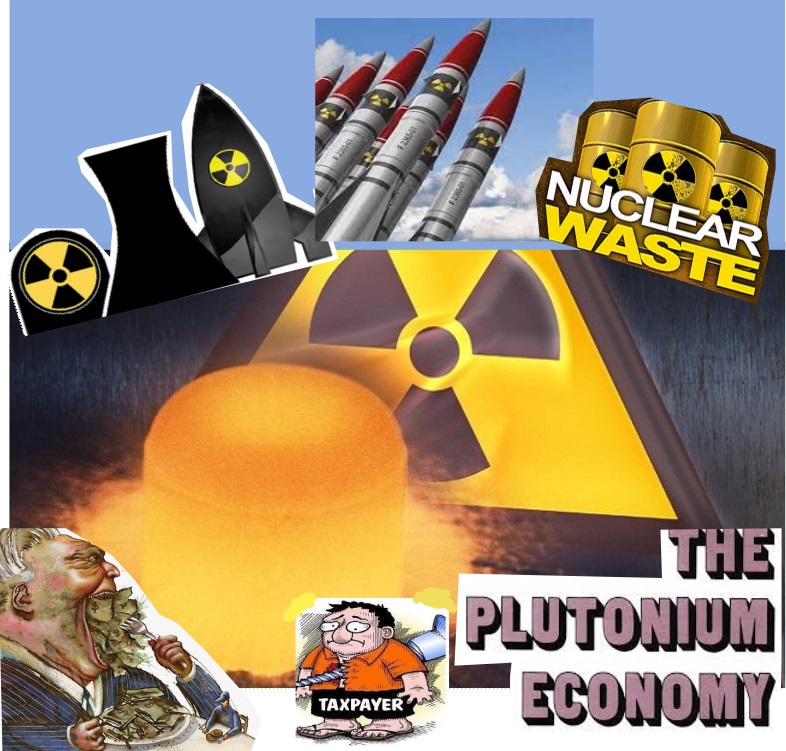
by Gordon Edwards and Susan O’Donnell submitted to the CNSC on September 30 2024
www.ccnr.org/CCNR_CNSC_Plutonium_Paper_Sept_30_2024.pdf
The following appeal was inserted into the document:
An Appeal for Public Consultation
There is a growing pressure on the government of Canada to allow the civilian use of plutonium as a commercial reactor fuel. Such a move requires extracting plutonium from used nuclear fuel, thereby making it accessible. Once accessible, plutonium can be used as a nuclear fuel or as a nuclear explosive. Even a crude explosive device using plutonium is capable of causing enormous destruction and killing thousands.
The security measures needed to safeguard society from the threat of nuclear terrorism when plutonium becomes an article of commerce are so severe that our democratic way of life will be seriously threatened. Enforced secrecy, intrusive surveillance, and privately maintained security forces equipped with military-style weapons, are not what Canadians have come to expect from their energy suppliers.
In the last two decades, Canada has seen the wisdom of eliminating weapons-usable uranium entirely from civilian use, thereby obviating the need for extreme security measures otherwise needed to keep that material out of the hands of criminals and terrorists. In the same way, keeping plutonium out of circulation is the best way to prevent the further growth of a powerful nuclear security regime that is becoming increasingly militarized, with access to prohibited weapons under Bill C-21.
We urge CNSC to advise Parliament that there is a need in Canada for a broad public consultation or debate on the social desirability of moving toward the civilian use of plutonium in Canada or choosing to avoid that option altogether. As in the case with highly enriched uranium, we believe that there is no demonstrable need for plutonium with or without an expanded nuclear industry. Given the stakes, it is up to the people of Canada to decide the issue by democratic means. That requires a mechanism of consultation that goes far beyond public hearings.
Rumina Velshi, a past president of CNSC, has said ““Reprocessing is going to be a huge, huge deal for this country. We need to be clear: If this is not an area that this country is interested in pursuing, put a stop to it. And if there is a possibility, then let’s at least start that conversation”
As an Agency whose legal mandate is to serve the public interest rather than the interests of the industry, we urge the CNSC to speak out publicly on this important matter so that Canadians are not blindly led into a future that they may live to regret.
Gordon Edwards and Susan O’Donnell, September 30 2024.
No comments yet.
1 This Month

of the week – Shut Down Drone Warfare!


Tell the Ukrainian Government to Drop Prosecution of Peace Activist Yurii Sheliazhenko

Petition to revoke the licensing of the Near Surface Nuclear Disposal Facility (NSDF) at Chalk River. https://www.ourcommons.ca/petitions/en/Petition/Details?Petition=e-7247
To see nuclear-related stories in greater depth and intensity – go to https://nuclearinformation.wordpress.com
-
Archives
- April 2026 (19)
- March 2026 (251)
- February 2026 (268)
- January 2026 (308)
- December 2025 (358)
- November 2025 (359)
- October 2025 (376)
- September 2025 (257)
- August 2025 (319)
- July 2025 (230)
- June 2025 (348)
- May 2025 (261)
-
Categories
- 1
- 1 NUCLEAR ISSUES
- business and costs
- climate change
- culture and arts
- ENERGY
- environment
- health
- history
- indigenous issues
- Legal
- marketing of nuclear
- media
- opposition to nuclear
- PERSONAL STORIES
- politics
- politics international
- Religion and ethics
- safety
- secrets,lies and civil liberties
- spinbuster
- technology
- Uranium
- wastes
- weapons and war
- Women
- 2 WORLD
- ACTION
- AFRICA
- Atrocities
- AUSTRALIA
- Christina's notes
- Christina's themes
- culture and arts
- Events
- Fuk 2022
- Fuk 2023
- Fukushima 2017
- Fukushima 2018
- fukushima 2019
- Fukushima 2020
- Fukushima 2021
- general
- global warming
- Humour (God we need it)
- Nuclear
- RARE EARTHS
- Reference
- resources – print
- Resources -audiovicual
- Weekly Newsletter
- World
- World Nuclear
- YouTube
-
RSS
Entries RSS
Comments RSS
 nuclear-news
Leave a comment