Week to 30 September- countering the nuclear-military-industrial-political spin.

Some bits of good news.
– Women Wage Peace . Countries’ climate obligations could be legally defined at top UN court in December.Vertical Greening Brings Nature to Urban ‘Heat Islands’ Quickly and Easily.
TOP STORIES. How civilisation could end – an all-too-possible nuclear scenario.
The Israeli nuclear risk no one is talking about.
Cold War II: US Congress passes 25 anti-China laws in 1 week, funds propaganda campaign. https://www.youtube.com/watch?v=Tix5L5qDaNw
Ukraine’s Zelensky arriving in US….to pitch WWIII.
The Madness of Antony Blinken. Antony Blinken LIED?! State Dept Caught WITHHOLDING Humanitarian Aid From Gaza https://www.youtube.com/watch?v=hb30Sn6WR-s
Nuclear finance will rely on consumers’ stomach for risk. ALSO AT …… https://nuclear-news.net/2024/09/27/2-a-nuclear-finance-will-rely-on-consumers-stomach-for-risk/
From the archives. Questions still remain on the suspicious death of nuclear worker Karen SilkwoodWeek to 30 September.
Climate. Green campaigners lambast UN climate summit hosts for clinging to fossil fuels .
Noel’s notes. Hurricane Helene : when global heating collides with our dependence on digital systems. I would rather have tough-guy macho men, than slimy sweet-talk hypocrites.
***************************************
AUSTRALIA.
Defence Minister Marles, with all pretension, flogging a dead seahorse.
Nuclear Concerns – Hiroshima, Maralinga and Dutton’s Australia.
Climate Change Authority head Matt Kean contradicts Peter Dutton’s claim on nuclear and renewables working together.
Australians are installing batteries at a record rate, as rooftop solar heads for major new milestone. Renewable and Energy storage jobs will soon overtake those in coal and gas.
More Australian news headlines at https://antinuclear.net/2024/09/24/australian-nuclear-news-headlines-23-30-september/
***************************************
NUCLEAR ITEMS
ATROCITIES. Israel’s Tally of War Crimes in Lebanon Increases in Wake of Exploding Pagers.
CLIMATE.
Hurricane Helene Floods Closed Duke Nuclear Plant in Florida.
ECONOMICS. Nuclear fuel costs soar as conversion and enrichment bottleneck strains supply.
US company eliminated from race to build Britain’s first mini-nuclear. ALSO AT https://nuclear-news.net/2024/09/29/2-b1-us-company-eliminated-from-race-to-build-britains-first-mini-nuclear-plant/ Why NuScale Power Stock Dropped Today.
EDUCATION. “Peaceful” and war-making nuclear industries get together in tertiary education.
| ENERGY. Microsoft’s Three Mile Island deal: How big tech is snatching up nuclear power. US nuclear plants won’t power up Big Tech’s AI ambitions right away. |
| ENVIRONMENT. Charities call for greater transparency over Sizewell C. |
ETHICS and RELIGION
Cardinal Parolin: ‘World threatened by irreversible nuclear destruction’.
EVENTS. Sleepwalking into War? IPAN Conference 2024 –– October 4-6 in Perth,Australia or attend online The Independent and Peaceful Australia Network.
| HUMAN RIGHTS. Assange to Testify at Council of Europe. |
MEDIA. Losing The Narrative War: Israel Illegally Raids and Shuts Down Al Jazeera’s West Bank Bureau. Going From “The Civilian Buildings Are Hamas” To “The Civilian Buildings Are Hezbollah“. The Looming Catastrophe in the Middle East (w/ Gideon Levy) | The Chris Hedges Report.
PLUTONIUM. Japan and 11 other countries call for early start of fissile material ban talks.
POLITICS. A push for compensation for U.S. nuclear testing fallout resumes on Capitol Hill. . Mistaking Militarism for Statecraft, Empire for Democracy and Debt for Prosperity.
Nuclear Weapons and the U.S. Presidential Elections.
Weatherwatch: UK Labour’s stance on nuclear power is worryingly familiar. Scottish National Party blasts Labour for ‘frittering away’ money on nuclear plant instead of winter fuel payment.
POLITICS INTERNATIONAL and DIPLOMACY.
- Iran ready for nuclear talks at UN ‘if other parties willing‘, foreign minister says.
- Walking a fraying nuclear tightrope. The UN won’t protect Gaza, but can adopt a ‘Pact for the Future?’. Biden would rather defend Israeli impunity than stop a regional war.
- Julian Assange’s Interview with the Late Hezbollah Leader Hassan Nasrallah – https://www.youtube.com/watch?v=3M1fHfKenTM
- Public scrutiny of UK-US nuclear pact is essential.
- Indonesia, Solomon Islands join countries banning nuclear weapons, putting Australia at odds with neighbours
SAFETY.
- IAEA chief says situation tense around Russia’s Kursk plant, but no permanent mission planned.
- Swarm of over 100 earthquakes hits Hanford nuclear site near Tri-Cities in Washington.
- U.S. Outgoing French nuclear safety chief warns of 25% budget cut.
- Incident. China’s Newest Nuclear Submarine Sank, Setting Back Its Military Modernization.
SECRETS and LIES
Blinken Lied To Congress About Israeli War Crimes Because He Knows He’ll Get Away With It. https://www.youtube.com/watch?v=AYEBm0eKuo0
Karen Silkwood and Kerr-McGee: A Reinvestigation.
SPACE. EXPLORATION, WEAPONS. NASA’s uncrewed Artemis mission highlights radiation risk to astronauts.
Woomera Manual: International Law Meets Military Space Activities.
WASTES. Despite vastly different social and political contexts, Finland, Germany and France are all grappling with the question of safe nuclear waste disposal.
Spent nuclear fuel shipped to Japan’s 1st interim storage facility in Aomori.
New developments at Sellafield for endless storage of ever-increasing amounts of highly radioactive spent nuclear fuel.
WAR and CONFLICT. After destroying Ukraine and Gaza, Biden seeks a destroyed nation trifecta in Lebanon.
The Illusion of a Solution: Killing Hassan Nasrallah. Netanyahu: Israel Is Fighting a War on Seven Fronts . Israel: ‘Escalate to De-escalate’.
Putin outlines new rules for Russian use of vast nuclear arsenal. Ukraine army attacks nuclear plant substation: Russia.
Ambassadors called upon to refrain from military action involving nuclear plants. Wars, Propaganda Wars and Funding Them.
WEAPONS and WEAPONS SALES. US Gives Israel $8.7 Billion in Military Aid for Operations in Gaza and Lebanon. War Forever, Everywhere, War Doesn’t End When It “Ends“.
Japan’s new Prime Minister calls for deployment of US nuclear weapons.
Pentagon “goes to school” -William Hartung, The Battle for the Soul of American Science
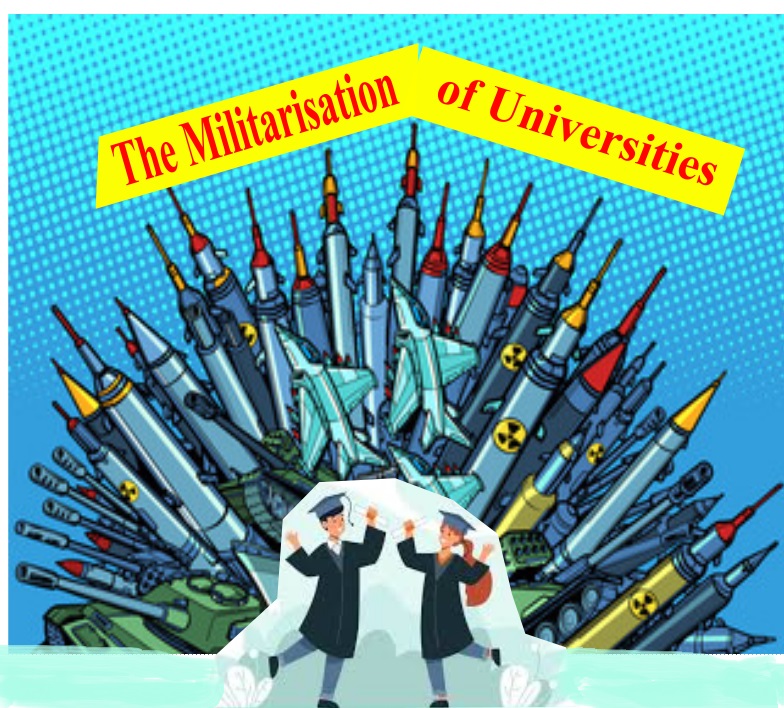
“……………………………………………. Hartung, a Pentagon expert, has focused on this strange reality of ours: no matter how many wars the United States loses, it only pours yet more taxpayer dollars into the Pentagon budget and into the coffers of those giant weapons-making companies of the military-industrial-congressional complex.
September 29, 2024, Tomgram
………………………………………………… Yet, after all these years, what couldn’t be more striking today is that, in the same spirit as those older pieces, Hartung focuses (as he so often has) on a different aspect entirely of the Pentagon’s distinctly over-funded world, one that, amid all the news coverage in this country, gets little or no attention: how the Pentagon, as he puts it, “goes to school” to enlist American science in the battle to create yet more horrific weaponry.
Pentagon expert William Hartung first wandered into TomDispatch in March 2008, less than seven years after this country’s Global War(s) on Terror were launched, full-scale disasters that were already costing the American taxpayer a fortune and a half — or perhaps, given the subject, all too literally an arm and a leg. As he wrote then, “How much, for instance, does one week of George Bush’s wars cost? Glad you asked. If we consider the wars in Iraq and Afghanistan together — which we might as well do, since we and our children and grandchildren will be paying for them together into the distant future — a conservative, single-week estimate comes to $3.5 billion. Remember, that’s per week! By contrast, the whole international community spends less than $400 million per year on the International Atomic Energy Agency, the primary institution for monitoring and preventing the spread of nuclear weapons; that’s less than one day’s worth of war costs.”
Only $650 million or so of that weekly sum, he estimated, was “spent on people.” So, he wondered, “where does the other nearly $3 billion go?” The answer he offered then: “It goes for goods and services, from tanks and fighter planes to fuel and food. Most of this money ends up in the hands of private companies like Boeing, Lockheed Martin, and the former Halliburton subsidiary, Kellogg, Brown and Root.” And knowing about that expense of $3.5 billion a week “and counting” on America’s wars, he added sarcastically, “Doesn’t that make you feel safer?”
Ever since then, Hartung, a Pentagon expert, has focused on this strange reality of ours: no matter how many wars the United States loses, it only pours yet more taxpayer dollars into the Pentagon budget and into the coffers of those giant weapons-making companies of the military-industrial-congressional complex. Even the titles of a few of his pieces over the years catch the grim spirit of his all-too-striking analysis: “There’s No Business Like the Arms Business, Weapons ‘R’ Us (But You’d Never Know It)” (July 2016); “The Urge to Splurge, Why Is It So Hard to Reduce the Pentagon Budget?” (October 2016); “The American Way of War Is a Budget-Breaker, Never Has a Society Spent More for Less” (May 2017); “Merger Mania, The Military-Industrial Complex on Steroids” (July 2019); “America Dominant Again (in Arms Sales), And Again… and Again… And Again” (May 2021); “Fueling the Warfare State, America’s $1.4 Trillion ‘National Security’ Budget Makes Us Ever Less Safe” (July 2022); “Spending Unlimited, The Pentagon’s Budget Follies Come at a High Price” (March 2024).
And of course, that’s just a small dip into the pieces he’s written for TomDispatch. Yet, after all these years, what couldn’t be more striking today is that, in the same spirit as those older pieces, Hartung focuses (as he so often has) on a different aspect entirely of the Pentagon’s distinctly over-funded world, one that, amid all the news coverage in this country, gets little or no attention: how the Pentagon, as he puts it, “goes to school” to enlist American science in the battle to create yet more horrific weaponry. And so it goes, again and again and again. Tom
The Pentagon Goes to School. The Battle for the Soul of American Science. Bringing the Militarization of University Research Back to Earth
The divestment campaigns launched last spring by students protesting Israel’s mass slaughter in Gaza brought the issue of the militarization of American higher education back into the spotlight.
Of course, financial ties between the Pentagon and American universities are nothing new. As Stuart Leslie has pointed out in his seminal book on the topic, The Cold War and American Science, “In the decade following World War II, the Department of Defense (DOD) became the biggest patron of American science.” Admittedly, as civilian institutions like the National Institutes of Health grew larger, the Pentagon’s share of federal research and development did decline, but it still remained a source of billions of dollars in funding for university research.

And now, Pentagon-funded research is once again on the rise, driven by the DOD’s recent focus on developing new technologies like weapons driven by artificial intelligence (AI). Combine that with an intensifying drive to recruit engineering graduates and the forging of partnerships between professors and weapons firms and you have a situation in which many talented technical types could spend their entire careers serving the needs of the warfare state. The only way to head off such a Brave New World would be greater public pushback against the military conquest (so to speak) of America’s research and security agendas, in part through resistance by scientists and engineers whose skills are so essential to building the next generation of high-tech weaponry.
The Pentagon Goes to School
Yes, the Pentagon’s funding of universities is indeed rising once again and it goes well beyond the usual suspects like MIT or Johns Hopkins University. In 2022, the most recent year for which full data is available, 14 universities received at least — and brace yourself for this — $100 million in Pentagon funding, from Johns Hopkins’s astonishing $1.4 billion (no, that is not a typo!) to Colorado State’s impressive $100 million. And here’s a surprise: two of the universities with the most extensive connections to our weaponry of the future are in Texas: the University of Texas at Austin (UT-Austin) and Texas A&M.
In 2020, Texas Governor Greg Abbott and former Army Secretary Ryan McCarthy appeared onstage at a UT-Austin ceremony to commemorate the creation of a robotics lab there, part of a new partnership between the Army Futures Command and the school. “This is ground zero for us in our research for the weapons systems we’re going to develop for decades to come,” said McCarthy.
Not to be outdone, Texas A&M is quietly becoming the Pentagon’s base for research on hypersonics — weapons expected to travel five times the speed of sound. Equipped with a kilometer-long tunnel for testing hypersonic missiles, that school’s University Consortium for Applied Hypersonics is explicitly dedicated to outpacing America’s global rivals in the development of that next generation military technology. Texas A&M is also part of the team that runs the Los Alamos National Laboratory, the (in)famous New Mexico facility where the first nuclear weapons were developed and tested as part of the Manhattan Project under the direction of Robert Oppenheimer.
Other major players include Carnegie Mellon University, a center for Army research on the applications of AI, and Stanford University, which serves as a feeder to California’s Silicon Valley firms of all types. That school also runs the Technology Transfer for Defense (TT4D) Program aimed at transitioning academic technologies from the lab to the marketplace and exploring the potential military applications of emerging technology products.
In addition, the Pentagon is working aggressively to bring new universities into the fold. In January 2023, Secretary of Defense Lloyd Austin announced the creation of a defense-funded research center at Howard University, the first of its kind at a historically black college.
Given the campus Gaza demonstrations of last spring, perhaps you also won’t be surprised to learn that the recent surge in Pentagon spending faces increasing criticism from students and faculty alike. Targets of protest include the Lavender program, which has used AI to multiply the number of targets the Israeli armed forces can hit in a given time frame. But beyond focusing on companies enabling Israel’s war effort, current activists are also looking at the broader role of their universities in the all-American war system.
For example, at Indiana University research on ties to companies fueling the killings in Gaza grew into a study of the larger role of universities in supporting the military system as a whole. Student activists found that the most important connection involved that university’s ties to the Naval Surface Warfare Center, Crane Division, whose mission is “to provide acquisition, engineering… and technical support for sensors, electronics, electronic warfare, and special warfare weapons.” In response, student activists have launched a “Keep Crane Off Campus” campaign.
A Science of Death or for Life?
Graduating science and engineering students increasingly face a moral dilemma about whether they want to put their skills to work developing instruments of death. Journalist Indigo Olivier captured that conflict in a series of interviews with graduating engineering students. She quotes one at the University of West Florida who strongly opposes doing weapons work this way: “When it comes to engineering, we do have a responsibility… Every tool can be a weapon… I don’t really feel like I need to be putting my gifts to make more bombs.”
By contrast, Cameron Davis, a 2021 computer engineering graduate from Georgia Tech, told Olivier about the dilemma faced by so many graduating engineers: “A lot of people that I talk to aren’t 100% comfortable working on defense contracts, working on things that are basically going to kill people.” But he went on to say that the high pay at weapons firms “drives a lot of your moral disagreements with defense away.”
The choice faced by today’s science and engineering graduates is nothing new. The use of science for military ends has a long history in the United States. But there have also been numerous examples of scientists who resisted dangerous or seemingly unworkable military schemes……………………………………………………………………………………………
Scientists have also played a leading role in pressing for nuclear arms control and disarmament, founding organizations like the Bulletin of the Atomic Scientists (1945), the Federation of American Scientists (1945), the global Pugwash movement (1957), the Council for a Livable World (1962), and the Union of Concerned Scientists (1969). To this day, all of them continue to work to curb the threat of a nuclear war that could destroy this planet as a livable place for humanity.

A central figure in this movement was Joseph Rotblat, the only scientist to resign from the Manhattan Project over moral qualms about the potential impact of the atomic bomb. In 1957, he helped organize the founding meeting of the Pugwash Conference, an international organization devoted to the control and ultimate elimination of nuclear weapons. In some respects Pugwash was a forerunner of the International Campaign to Abolish Nuclear Weapons (ICAN), which successfully pressed for the U.N. Treaty on the Prohibition of Nuclear Weapons, which entered into force in January 2021.
Enabling Endless War and Widespread Torture
The social sciences also have a long, conflicted history of ties to the Pentagon and the military services. Two prominent examples from earlier in this century were the Pentagon’s Human Terrain Program (HTS) and the role of psychologists in crafting torture programs associated with the Global War on Terror, launched after the 9/11 attacks with the invasion of Afghanistan.
………………………………………………An even more controversial use of social scientists in the service of the war machine was the role of psychologists as advisors to the CIA’s torture programs at Abu Ghraib in Iraq, the Guantánamo Bay detention center in Cuba, and other of that agency’s “black sites.” ……………………………………………………………
today, resistance to the militarization of science has extended to the growing use of artificial intelligence and other emerging military technologies. For example, in 2018, there was a huge protest movement at Google when employees learned that the company was working on Project Maven, a communications network designed to enable more accurate drone strikes. More than 4,000 Google scientists and engineers signed a letter to company leadership calling for them to steer clear of military work, dozens resigned over the issue, and the protests had a distinct effect on the company. That year, Google announced that it would not renew its Project Maven contract, and pledged that it “will not design or deploy AI” for weapons.
Unfortunately, the lure of military funding was simply too strong. Just a few years after those Project Maven protests, Google again began doing work for the Pentagon,…………………………………….
The Future of American Science
……………………………………………………………………The stakes are particularly high now, given the ongoing rush to develop AI-driven weaponry and other emerging technologies that pose the risk of everything from unintended slaughter due to system malfunctions to making war more likely, given the (at least theoretical) ability to limit casualties for the attacking side. In short, turning back the flood of funding for military research and weaponry from the Pentagon and key venture capital firms will be a difficult undertaking. After all, AI is already performing a wide range of military and civilian tasks. Banning it altogether may no longer be a realistic goal, but putting guardrails around its military use might still be.
Such efforts are, in fact, already underway. The International Committee for Robot Arms Control (ICRAC) has called for an international dialogue on “the pressing dangers that these systems pose to peace and international security and to civilians.”………………………………….
The Future of Life Institute has underscored the severity of the risk, noting that “more than half of AI experts believe there is a one in ten chance this technology will cause our extinction.”
Instead of listening almost exclusively to happy talk about the military value of AI by individuals and organizations that stand to profit from its adoption, isn’t it time to begin paying attention to the skeptics, while holding back on the deployment of emerging military technologies until there is a national conversation about what they can and can’t accomplish, with scientists playing a central role in bringing the debate back to earth?
https://tomdispatch.com/the-pentagon-goes-to-school/
Nuclear power for AI: what it will take to reopen Three Mile Island safely
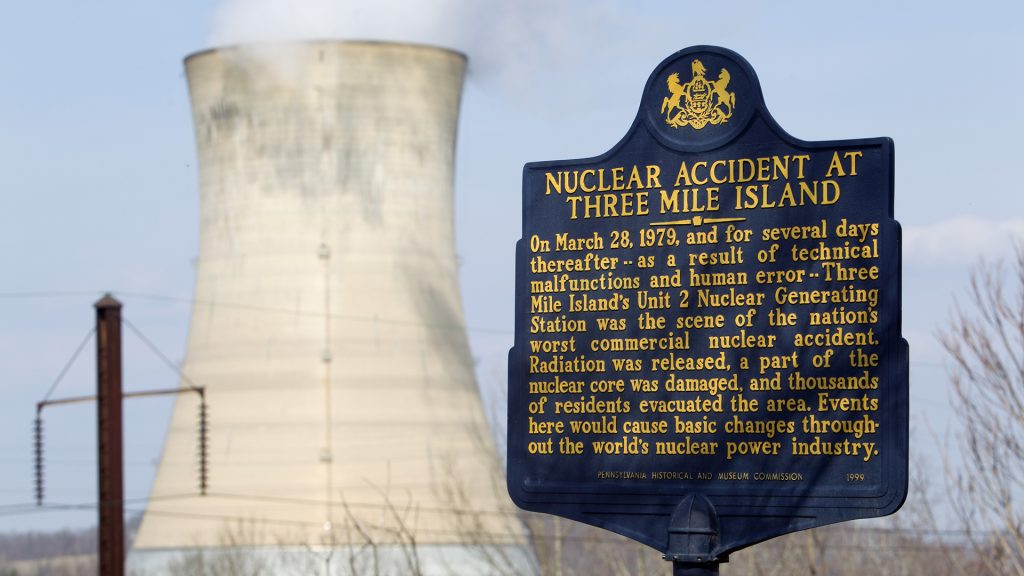
As Microsoft strikes a deal to restart a reactor at the notorious power station, Nature talks to nuclear specialists about the unprecedented process.
Michael Greshko, https://www.nature.com/articles/d41586-024-03162-2 30 Sept 24
Microsoft announced on 20 September that it had struck a 20-year deal to purchase energy from a dormant nuclear power plant that will be brought back online. And not just any plant: Three Mile Island, the facility in Londonderry Township, Pennsylvania, that was the site of the worst-ever nuclear accident on US soil when a partial meltdown of one of its reactors occurred in 1979.
The move, which symbolizes technology giants’ need to power their growing artificial-intelligence (AI) efforts, raises questions over how shuttered nuclear plants can be restarted safely — not least because Three Mile Island isn’t the only plant being brought out of retirement.
Palisades Nuclear Plant, an 805-megawatt facility in Covert, Michigan, was shut down in May 2022. But the energy company that owns it, Holtec International, based in Jupiter, Florida, plans to reopen it. This reversal in the facility’s fortunes has been bolstered by a US$1.5-billion conditional loan commitment from the US Department of Energy (DoE), which sees nuclear plants — a source of low-carbon electricity — as a way of helping the country to meet its ambitious climate goals. The Palisades plant is on track to reopen in late 2025.
“It’s the first time something like this has been attempted, that we’re aware of, worldwide,” says Jason Kozal, director of the reactor safety division at a regional office of the US Nuclear Regulatory Commission (NRC) in Naperville, Illinois, and the co-chair of a regulatory panel overseeing the restart of Palisades.
Here, Nature talks to nuclear specialists about what it will take to restart these plants and whether more are on the way as the world’s demand for AI grows.
A change in fortunes
Since 2012, more than a dozen nuclear plants have been shut down in the United States, in some cases as a result of unfavourable economics. Less cost-effective plants — such as those with only a single working reactor — struggled to remain profitable in states with deregulated electricity markets and widely varying prices. Three Mile Island, owned by the utility company Constellation Energy in Baltimore, Maryland, is a prime example. Today, 54 US plants remain in operation, running a total of 94 reactors.
Nuclear energy, which accounts for about 9% of the world’s electricity, has seen some resurgence internationally, but is also competing with other energy sources, including renewables. After the 2011 Fukushima Daiichi disaster, Japan suspended operations at all of its 48 remaining nuclear plants, but these are gradually being brought back online, in part to cut dependence on gas imports. By contrast, Germany announced a phase-out of its nuclear plants in 2011, and shut down its last three in 2023.
In the United States, nuclear energy’s fortunes might be turning as technology companies race to build enormous, energy-gobbling data centres to support their AI systems and other applications while somehow fulfilling their climate pledges. Microsoft, for instance, has committed to being carbon negative by 2030.
It’s further confirmation of the value of nuclear, and, if the deal is right — if the price is right — then it makes business sense, as well,” says Jacopo Buongiorno, the director of the Center for Advanced Nuclear Energy Systems at the Massachusetts Institute of Technology in Cambridge.
A new start
This isn’t the first time that the United States has brought a powered-down reactor back online. In 1985, for example, the Tennessee Valley Authority, a federally owned electric utility company, took the reactors at its Browns Ferry Nuclear Power Plant in Athens, Alabama, offline. After years of refurbishment, they were brought back online, with the final reactor restarted in 2007.
The cases of Palisades and Three Mile Island are different, however. When those plants closed, their then-owners made legal statements that the facilities would be shut down, even though their operating licenses were still active. Three Mile Island, which will be renamed the Crane Clean Energy Center under the proposed restart, shut down its single remaining functional reactor in 2019.
Because the plants were slated for shutdown and safety checks were therefore stopped, regulators and companies must now navigate a complex licensing, oversight and environmental-assessment process to reverse the plants’ decommissioning.
Safety checks will be needed to ensure, among other things, that the plants can operate securely once uranium fuel rods have been replaced in their reactors. When these plants were decommissioned, their radioactive fuel was removed and stored, so the facilities no longer needed to adhere to many exacting technical specifications, says Jamie Pelton, also a co-chair of the Palisades restart panel, and a deputy director at the NRC’s Office of Nuclear Reactor Regulation in Rockville, Maryland.
It will be no small feat to reinstate those safety regulations: to meet the standards, infrastructure will need to be inspected carefully. According to Buongiorno, any metallic components in the plants that have corroded since the shutdowns, including wires and cables used in instrumentation and controls, will need to be replaced.
The plants’ turbine generators, which make electricity from the steam produced as the plants’ fuel rods heat up water, will also get a close look. After sitting dormant for years, a turbine could develop defects within its shaft or corrosion along its blades that would require refurbishment. In the case of Palisades, the NRC announced on 18 September that the plant’s steam generators would need further testing and repair, following inspections conducted by Holtec.
Nuclear’s prospects
As the plants near their restart dates, their operators will also have to contend with a challenge faced by even fully operational plants: the need to source fresh nuclear fuel. US nuclear utility companies have long counted on the international market to buy much of the necessary raw yellowcake uranium and the services that separate and enrich uranium-235, the isotope used in nuclear reactors’ fuel rods. Russia has been a major international supplier of these services, even after the country’s 2022 invasion of Ukraine, because US and European sanctions have not targeted nuclear fuel. But to minimize its reliance on Russia, the United States is building up its own supply chain, with the DoE offering $3.4 billion to buy domestically enriched uranium.
There probably won’t be too many other restarts of mothballed nuclear plants in the United States, however, even as demand for low-carbon electricity grows. Not every US plant that has been shut down is necessarily in good enough condition to be easily refurbished — and the idea of reopening some of those would meet with too much resistance. As an example, Buongiorno points to New York’s Indian Point Energy Center, which was closed in 2021. The plant’s proximity to New York City had long provoked criticism from nuclear-safety advocates.
But that doesn’t mean that all of these sites will remain unused. One option is to build advanced reactors — including large reactors with upgraded safety features and small modular reactors with innovative designs — on sites where old nuclear plants once stood, to take advantage of existing transmission lines and infrastructure. “We might see interest in the US in building more of these large reactors, whether that’s fuelled by data centres or some other applications,” Buongiorno adds. “Utilities and customers are exploring this at the moment.”
Julian Assange’s Interview with the Late Hezbollah Leader Hassan Nasrallah
19 Jan 2017, The Julian Assange Show Episode 1: Nasrallah (2012): A freedom fighter to some, a terrorist to others, this is Hassan Nasrallah’s his first interview in the West since 2006. From a secret location in Lebanon, Nasrallah gives Assange a rare and frank insight into his vision for the future of the Middle East.
“This is exactly what America and Israel want for Syria”, Nasrallah insists. He also blames Al Qaeda for “trying to turn Syria into a battleground”. He’s certainly not holding back, and with Assange throwing the questions the revelations keep on coming. He believes in Bashar al Assad: “I personally found that President Assad was very willing to carry out radical and important reforms. But the opposition needs to agree to dialogue.” But it’s not only Syria that’s on the agenda. He vehemently denies allegations of corruption pointed at Hezbollah. “This is part of the rumours that they wanted to use to discredit Hezbollah and distort its image. It’s part of the media war against us.” What about Hezbollah’s violent past? “Hezbollah resorted to bombing civilians only to prevent Israel from shelling our civilians” he says. So what is next for Hezbollah’s campaign against Israel? And what does Nasrallah really want for the future of the region?
Nuclear Priesthood, and Police Repression: Feminist Confrontations of Violent Industries, and Movements to Abolish Them

This report investigates the nexus between the nuclear and fossil fuel industries, and state repression of activism against these industries.
‘Petrobromance,’ Nuclear Priesthood, and Police Repression: Feminist Confrontations of Violent Industries, and Movements to Abolish Them analyses, from a feminist and gender-transformative perspective, trends and parallels in how the nuclear and fossil fuel industries operate and entrench their power; their impacts on communities, including gendered impacts; and the ways in which resistance against these industries is suppressed by police, militaries, and private military and security companies. Drawn from research and consultation with activists, organisers, academics, and members of impacted communities, this research aims to create a shared knowledge base and illuminate paths forward for deeper collaboration across movements, including, but not limited to, among antinuclear, environmental, and land and water defence movements.
Authors: Ray Acheson, Katrin Geyer, Genevieve Riccoboni, Laura Varella
Editor: Ray Acheson
Research support: Emma Murray and Michelle Benzing
Copy review: Genevieve Riccoboni and Zarin Hamid
Design: Nadia Joubert
Credit: The term “petrobromance” was coined by Joni Seager
This report was made possible with support from the Ploughshares Fund.
We are delighted to offer the online version for free, but please consider making a donation to Reaching Critical Will to help us cover the costs the other materials and information services that Reaching Critical Will provides.
Huge Arctic wildfires release 100m tonnes of greenhouse gas in a year

Scientists are alarmed at how extreme the blazes have become as the climate
changes, and 2024 ranks as the fourth worst year for emissions from Arctic
fires. Huge wildfires have blazed across the Arctic this summer, releasing
almost as much carbon dioxide into the atmosphere as the petrostate Kuwait
emits annually.
Fires in the carbon-rich frozen soils in the north of
Russia, Canada and other countries occur naturally as a result of lightning
strikes. Sometimes they spread south into the ring of boreal forests.
Scientists are alarmed at how extreme the blazes have become in recent
years as the climate changes. The Arctic’s worst year on record was 2020,
followed by 2019 and 2004.
Times 30th Sept 2024, https://www.thetimes.com/uk/environment/article/huge-arctic-wildfires-release-100m-tonnes-of-greenhouse-gas-in-a-year-ncb8cmdfq
In the Woomera Manual, International Law Meets Military Space Activities

by David A. Koplow, September 12, 2024, https://www.justsecurity.org/100043/woomera-manual-international-law-military-space/
The law of outer space, like so much else about the exoatmospheric realm, is under stress. The prodigious growth in private-sector space activities (exemplified by SpaceX’s proliferating Starlink constellation, and other corporations following only shortly behind) is matched by an ominous surge in military space activities – most vividly, the creation of the U.S. Space Force and counterpart combat entities in rival States, the threat of Russia placing a nuclear weapon in orbit, and China and others continuing to experiment with anti-satellite weapons and potential techniques. The world is on the precipice of several new types of space races, as countries and companies bid for first-mover advantages in the highest of high ground.
The law of outer space, in contrast, is old, incomplete, and untested. A family of foundational treaties dating to the 1960s and 1970s retains vitality, but provides only partial guidance. Space is decidedly not a “law-free zone,” but many of the necessary guard rails are obscure, and few analysts or operators have ventured into this sector.
A new treatise, the Woomera Manual on the International Law of Military Space Activities and Operations, has just been published by Oxford University Press to provide the first comprehensive, detailed analysis of the existing legal regime of space. As one of the editors of the Manual, I can testify to the long, winding, and arduous – but fascinating – journey to produce it, and the hope that it will provide much-needed clarity and precision about this fast-moving legal domain.
Military Manuals
This Manual follows a grand tradition of prior efforts to articulate the applicable international military law in contested realms, including the 1994 San Remo Manual on Naval Warfare, Harvard’s 2013 Humanitarian Policy and Conflict Research Manual on Air and Missile Warfare, and the 2013 and 2017 Tallinn Manuals on Cyber Operations. The Woomera Manual was produced by a diverse team of legal and technical experts drawn from academia, practice, government, and other sectors in several countries (all acting in their personal capacities, not as representatives of their home governments or organizations). The process consumed six years (slowed considerably by the Covid-19 pandemic, which arrested the sequence of face-to-face drafting sessions).
The Manual is co-sponsored by four universities, among other participants: the University of Nebraska College of Law (home of Professor Jack Beard, the editor-in-chief), the University of Adelaide (with Professor Dale Stephens on the editorial board), the University of New South Wales—Canberra, and the University of Exeter (U.K.) The name “Woomera” was chosen in recognition of the small town of Woomera, South Australia, which was the site of the country’s first space missions, and in acknowledgement of the Aboriginal word for a remarkable spear-throwing device that enables greater accuracy and distance.
Comprehensive Coverage of a Broad Field
Three features of the Woomera Manual stand out. The first is the comprehensive nature of the undertaking. The Manual presents 48 rules, spanning the three critical time frames: ordinary peace time, periods of tension and crisis, and during an armed conflict. There may be a natural tendency to focus on that last frame, given the high stakes and the inherent drama of warfare, but the editors were keen to address the full spectrum, devoting due attention and analysis to the background rules that apply both to quotidian military space activities and to everyone else in space.
Complicating the legal analysis is the fragmentation of the international legal regime. In addition to “general” international law – which article III of the Outer Space Treaty declares is fully applicable in space – two “special” areas of law are implicated here. One, the law of armed conflict (also known as international humanitarian law) provides particularized jus in bello rules applicable between States engaged in war, including wars that begin in, or extend to, space. But the law of outer space is also recognized as another lex specialis, and it accordingly provides unique rules that supersede at least some aspects of the general international law regime. What should be done when two “special” areas of international law overlap and provide incompatible rules? The Woomera Manual is the first comprehensive effort to unravel that riddle.
The Law as It Is
A second defining characteristic of this Manual is the persistent, rigid focus on lex lata, the law as it currently is, rather than lex ferenda, the law as it may (or should) become. The authors, of course, each have their own policy preferences, and in their other works they freely opine about how the international space law regime should evolve (or be abruptly changed) to accommodate modern dangers and opportunities. But in this Manual, they have focused exclusively on describing the current legal structure, concentrating on treaties, customary international law, and other indicia of State practice. This is not the sort of manual in which the assembled experts “vote” on their competing concepts of the legal regime; instead, Woomera addresses what States (the sources and subjects of international law) say, do, and write. The authors have assembled a monumental library of State behaviors (including words as well as deeds, and silences as well as public pronouncements), while recognizing that diplomacy (and national security classification restrictions) often impede States explaining exactly why they did, or did not, act in a particular way in response to some other State’s provocations.
One feature that enormously facilitated the work on the Manual was a phase of “State engagement.” In early 2022, the Ministries of Foreign Affairs and Defense of the government of the Netherlands circulated a preliminary draft of the Woomera Manual to interested national governments and invited them to a June 2022 conference in The Hague to discuss it. Remarkably, two dozen of the States most active in space attended, providing two days of sustained, thoughtful, constructive commentary. The States were not asked to “approve” the document, but their input was enormously valuable (and resulted in an additional several months of painstaking work in finalizing the manuscript, as the editors scrambled to take into account the States’ voluminous comments and the new information they provided).
Space as a Dynamic Domain
Third, a manual on space law must acknowledge the rapidly-changing nature and scope of human activities in this environment, and the great likelihood that even more dramatic alterations are likely in the future. Existing patterns of behavior may alter abruptly, as new technologies and new economic opportunities emerge. The Manual attempts to peer into the future, addressing plausible scenarios that might foreseeably arise, but it resists the temptation to play with far-distant “Star Wars” fantasies.
The unfortunate reality here is that although the early years of the Space Age were remarkably productive for space law, the process stultified shortly thereafter. Within only a decade after Sputnik’s first orbit, the world had negotiated and put into place the 1967 Outer Space Treaty, which still provides the cardinal principles guiding space operations today. And within only another decade, three additional widely-accepted treaties were crafted: the 1968 astronaut Rescue Agreement, the 1971 Liability Convention, and the 1975 Registration Convention, as well as the 1979 Moon Convention (which has not attracted nearly the same level of global support and participation). But the articulation of additional necessary increments of international space law has been constipated since then – no new multilateral space-specific treaties have been implemented in the past four decades, and none is on the horizon today.
Sources and Shortcomings of International Space Law
The corpus of international space law is not obsolete, but it is under-developed. We have the essential principles and some of the specific corollaries, but we are lacking the detailed infrastructure that would completely flesh out all those general principles. Some important guidance may, however, be found in State practice, including the understudied negotiating history of the framework treaties for space law, particularly the Outer Space Treaty. The Manual provides important insights in this area, notably with respect to several ambiguous terms embedded in the treaties.
The authors of the Woomera Manual, therefore, were able to start their legal analysis with the framework treaties – unlike, for example, the authors of the Tallinn Manuals, covering international law applicable to cyber warfare, who had to begin without such a structured starting point. Still, the Woomera analysis confronted numerous lacunae, where the existing law and practice leave puzzling gaps. The persistent failure of the usual law-making institutions to craft additional increments of space arms control is all the more alarming as the United States, NATO, and others have declared space to be an operational or war-fighting domain.
Conclusion
It is hoped that the process of articulating the existing rules – and identifying the interstices between them – can provide useful day-to-day guidance for space law practitioners in government, academia, non-governmental organizations, the private sector, and elsewhere. The prospect of arms races and armed conflict in space unfortunately appears to be growing, and clarity about the prevailing rules has never been more important. It is a fascinating, dynamic, and fraught field.
Biden would rather defend Israeli impunity than stop a regional war

As Israel intensified its deadly attacks on Lebanon, the U.S. moved more troops to the Middle East. The move shows Joe Biden’s priority is not to avoid escalation but to ensure that Israel has full impunity.
Mondoweiss. By Mitchell Plitnick September 27, 2024
As Israel was intensifying its deadly attacks on Lebanon, the United States decided to move more troops to the Middle East. The number of soldiers was not announced, but the force was said to be small.
The stated purpose was to protect Americans stationed in the region, but the more likely reason was to send a message to Iran, Ansarallah, and other allies of Hezbollah that the United States would protect Israel in the event of escalation, regardless of who was responsible for that escalation.
U.S. President Joe Biden might hope that such a message would deter escalation, but his decision to communicate it by increasing the U.S. military presence rather than acting to restrain Israel demonstrates that, just as with Gaza, Biden’s priority is not to avoid escalation, but to ensure that Israel has full impunity to act as it wants.
Confronting Iran is Israel’s endgame
In fact, this response plays right into the tactics Israel is pursuing in its attack on Lebanon. The Israeli right doesn’t have a real strategy, but it has long clung to an ideological belief that Israel should throw off the “restraints” placed on it by the United States and Europe and fully exercise its military might to utterly destroy its enemies.
This is what has played out in Gaza since last October. The genocidal campaign is meant not to destroy Hamas, but rather to destroy the Palestinian national movement. That’s why it was inevitable that the genocide would expand to the West Bank, despite the fact that there were virtually no Palestinian actions there in response to the horror in Gaza.
The Israeli right believes it must decisively defeat Iran, not merely deter it. Israel’s provocative actions such as its bombing of the Iranian embassy in Syria and assassinating Hamas leader Ismail Haniyeh in Tehran were meant to force a response from Iran that would escalate regional tensions. Iran didn’t take the bait, despite the fact that its lack of response to Israel’s activities invites more and greater provocative Israeli actions.
The latest Israeli escalation indicates that Israel is making good on its promise to shift its attention from Gaza to Lebanon. That won’t mean the slaughter in Gaza will stop, but it will mean that Israel will focus its forces more in the north once it feels it is ready to engage Hezbollah on the ground, an eventuality its current activities are an attempt at paving the path toward.
Both Israeli and American military leaders are less enthusiastic about escalation with Lebanon……………………………………………………………………
A potential Iranian diplomatic response
Iran has been an obsession for Israeli Prime Minister Benjamin Netanyahu from his earliest days in the public eye. Few in Israel disagree with that obsession, but past governments had significant internal dissent from the idea of provoking a conflict with the Islamic Republic.
This government is much more willing to take bold steps to provoke that confrontation. Worse, successive American administrations have raised Israeli hopes that they can get the support from Washington that they would need to effectively fight Iran. ……………………………………………………………………………………… more https://mondoweiss.net/2024/09/biden-would-rather-defend-israeli-impunity-than-stop-a-regional-war/
Cardinal Parolin: ‘World threatened by irreversible nuclear destruction’
The Vatican Secretary of State reiterates the moral imperative of the total elimination of nuclear weapons and reaffirms the Holy See’s condemnation of the use or threat of use of such weapons.
By Lisa Zengarini, https://www.vaticannews.va/en/vatican-city/news/2024-09/parolin-world-threatened-by-irreversible-nuclear-destruction.html
“The only way to avoid a nuclear war is the total elimination of nuclear weapons.” Cardinal Pietro Parolin strongly reaffirmed this point in a statement he addressed on 26 September at a High-Level UN Meeting in New York commemorating the International Day for the Total Elimination of Nuclear Weapons.
Wars and arms race dangerously increasing risk of nuclear conflict
The Vatican Secretary of State grounded his speech on the current state of global affairs and the relentless arms race which is dramatically increasing the risk of nuclear conflict. He, again, decried that States are strengthening their nucleararsenals with resources that, as Pope Francis has emphasized several times, “could be more effectively used to address pressing development needs.”
This trend he said “underscores a troubling reliance by nuclear-weapons States on nuclear deterrence, rather than on fulfilling their obligation under Article VI of the Nuclear Non-Proliferation Treaty (NPT).”
Nuclear deterrence does’t work
Echoing Pope Francis’ tireless appeals on this crucial issue, Cardinal Parolin insisted on the need to “go beyond nuclear deterrence” thus reiterating the Holy See’s call on all States to accede to the Treaty on the Prohibition of Nuclear Weapons (TPNW).
States, he added, must also renew their commitment to other disarmament measures, such as the revitalization of bilateral arms control processes, the entry into force of the Comprehensive Nuclear Test Ban Treaty (CTBT) and the opening of negotiations on fissile material and negative security assurance treaties.
Holy See committed to building bridges of trust to free world from nuclear weapons
Concluding, Cardinal Parolin reaffirmed that the goal of a world free of nuclear weapons can only be achieved through discussions based on mutual trust. For its part, he said, the Holy See will continue to build bridges of dialogue with every State, “with the aim of safeguarding the common good rather than individual interests.”
South Australia sets spectacular new records for wind, solar and negative demand

Giles Parkinson, Sep 30, 2024, https://reneweconomy.com.au/south-australia-sets-spectacular-new-records-for-wind-solar-and-negative-demand/
Records continue to tumble across Australia’s main grids as the spring weather boosts the output of wind and solar and mild weather moderates demand, but none are as spectacular as those being set in South Australia.
The state’s unique end-of-the-line grid already leads the country, and arguably the globe, in the integration of variable wind and solar, with an average of more than 70 per cent of its demand over the last year and a world-first target of 100 per cent net renewables by 2027.
On Sunday, at 9.35 am, the state set a new milestone, setting a new record share of wind and solar (as a percentage of state electricity demand) of 150.7 per cent, beating a record set on Christmas Day last year, when – for obvious reasons – there was little electricity demand.
As Geoff Eldridge, from GPE NEMLog, notes, this means that the rooftop PV, along with large scale wind and solar farms, were generating 50.7 per cent more power than the state’s total electricity demand at the time.
The scale of excess output was further crystallised later in the day with a new minimum record for instantaneous residual demand, which hit minus 927 megawatts at 12.35pm.
Eldridge says residual demand is what’s left for other generators to supply after wind and solar have met a share of the demand. A negative residual demand means wind and solar were producing more electricity than SA needed, resulting in excess renewable generation which can be managed by exporting and battery charging. The remainder is curtailed.
Of the surplus 927 MW, the state was exporting 685 MW to Victoria, while another 163 MW was being soaked up by the state’s growing fleet of battery storage projects, and 730 MW of output was curtailed. Prices at the time were minus $47/MWh, a good opportunity for batteries to charge.
A further 84 MW was being produced by a couple of gas generators – not because their power output was needed, but because the state, at least for the moment, relies on them for essential grid services such as system strength and fault current.
That will be reduced considerably when the new link to NSW is completed in a few years, and it will allow the state to both export more, and import more when needs be.
“Balancing the system with such high renewable penetration is challenging but necessary as the energy transition progresses,” Eldridge says. “Managing excess generation through exports, storage, and curtailment is critical to keeping the grid stable and efficient.”
It wasn’t the only record to fall over the weekend. In Queensland, the country’s most coal dependent state in terms of annual share of demand and generation, large scale solar hit a record share of 34 per cent, and coal output – in megawatt terms – hit a record low of 2,882 MW.
The Queensland coal fleet capacity is more than 8,000 MW, so that is about as low as it can run until more units are closed down.
In Victoria on Saturday, just before the AFL grand final, rooftop solar also hit a new record output of 3,164 MW – although it did not push operational demand down low enough for the market operator to enact Minimum System Load protocols and possibly switch off some rooftop solar panels to maintain grid stability.
It had flagged a potential MSL event on Friday but cancelled it in the morning. Those events will likely occur at other times in spring and over the summer holidays, although the market operator is now working on new rules for big batteries to avoid a potentially unpopular and unwieldy solar switch off.
Chinese nuclear-powered attack submarine sank earlier this year, says senior US defence official
ABC News, 27 Sept 24
In short:
China’s newest nuclear-powered attack submarine sank earlier this year, according to a senior US defence official.
A series of satellite images from Planet Labs from June appear to show cranes at the Wuchang shipyard, where the submarine would have been docked.
What’s next?
China’s submarine force is expected to grow to 65 by 2025 and 80 by 2035, the US Department of Defense has said.
A senior US defence official has said that China’s newest nuclear-powered attack submarine sank earlier this year, marking a potential embarrassment for Beijing as it seeks to expand its military capabilities.
China already has the largest navy in the world, with over 370 ships, and it has embarked on production of a new generation of nuclear-armed submarines.
The US defence official, speaking on condition of anonymity on Thursday, local time, said China’s new first-in-class nuclear-powered attack submarine sank alongside a pier sometime between May and June.
A Chinese embassy spokesperson in Washington said they had no information to provide.
“In addition to the obvious questions about training standards and equipment quality, the incident raises deeper questions about the PLA’s internal accountability and oversight of China’s defence industry — which has long been plagued by corruption,” the official said, using an acronym for the People’s Liberation Army.
“It’s not surprising that the PLA Navy would try to conceal the sinking,” the official added………………………………………………. more https://www.abc.net.au/news/2024-09-27/one-of-china-submarine-sank-says-us-defence-official/104406362
1 This Month


18 March Webinar @ 1 PM EST: An Assessment of SMR Projects: The Case of Canada
register for the zoom:
https://us02web.zoom.us/webinar/register/WN_o8BIIOUvQ2ONJR1nta65DQ#/registration


of the week – STOP SMALL MODULAR REACTORS IN CANADA
To see nuclear-related stories in greater depth and intensity – go to https://nuclearinformation.wordpress.com
-
Archives
- March 2026 (141)
- February 2026 (268)
- January 2026 (308)
- December 2025 (358)
- November 2025 (359)
- October 2025 (376)
- September 2025 (258)
- August 2025 (319)
- July 2025 (230)
- June 2025 (348)
- May 2025 (261)
- April 2025 (305)
-
Categories
- 1
- 1 NUCLEAR ISSUES
- business and costs
- climate change
- culture and arts
- ENERGY
- environment
- health
- history
- indigenous issues
- Legal
- marketing of nuclear
- media
- opposition to nuclear
- PERSONAL STORIES
- politics
- politics international
- Religion and ethics
- safety
- secrets,lies and civil liberties
- spinbuster
- technology
- Uranium
- wastes
- weapons and war
- Women
- 2 WORLD
- ACTION
- AFRICA
- Atrocities
- AUSTRALIA
- Christina's notes
- Christina's themes
- culture and arts
- Events
- Fuk 2022
- Fuk 2023
- Fukushima 2017
- Fukushima 2018
- fukushima 2019
- Fukushima 2020
- Fukushima 2021
- general
- global warming
- Humour (God we need it)
- Nuclear
- RARE EARTHS
- Reference
- resources – print
- Resources -audiovicual
- Weekly Newsletter
- World
- World Nuclear
- YouTube
-
RSS
Entries RSS
Comments RSS
 nuclear-news