‘An Act of Terror’: Israel Behind Pager Explosions That Killed 11, Wounded Thousands
“Each explosion constitutes an indiscriminate attack,” argued Heidi Matthews, an associate professor at the Osgoode Hall Law School of York University.
Jake Johnson, Common Dreams, 17 Sept 24
Sep 18, 2024
Several news outlets confirmed late Tuesday what was widely suspected: Israel’s military and intelligence services were behind the explosions of pagers recently purchased by the Lebanese political party and militant group Hezbollah.
The explosions, reportedly set off earlier Tuesday by a message that appeared as if it was from Hezbollah’s leadership, killed at least 11 people—including an 8-year-old girl—and wounded thousands more.
Citing both an unnamed former Israeli official with knowledge of the operation and an anonymous U.S. official, Axiosreported that “Israeli intelligence services planned to use the booby-trapped pagers it managed to ‘plant’ in Hezbollah’s ranks as a surprise opening blow in an all-out war to try to cripple Hezbollah.”
“But in recent days, Israeli leaders became concerned that Hezbollah might discover the pagers,” the outlet continued. “Israeli Prime Minister Benjamin Netanyahu, his top ministers, and the heads of the Israel Defense Forces and the intelligence agencies decided to use the system now rather than take the risk of it being detected by Hezbollah, a U.S. official said.”
A spokesperson for the U.S. State Department publicly denied that the Biden administration was involved in the attack or aware of the operation in advance.
Heidi Matthews, an associate professor at the Osgoode Hall Law School of York University, wrote Tuesday that “each explosion constitutes an indiscriminate attack,” pointing to video footage of a pager detonating in a crowded market.
“Under these circumstances,” Matthews added, “this is an act of terror.”
The New York Timesreported Tuesday that Hezbollah ordered thousands of pagers from the Taiwanese manufacturer Gold Apollo, but the company denied making the devices. According to the Times, which cited unnamed officials, Israeli operatives “tampered with” the devices “before they reached Lebanon,” planting in them “as little as one to two ounces” of explosive material and a switch “that could be triggered remotely to detonate the explosives.”…………………………………………………………. https://www.commondreams.org/news/hezbollah-pager-explosions
Turkey needs to acquire nuclear arms to stop Israel, urges Erdogan’s chief fatwa giver
September 19, 2024, Abdullah Bozkurt/Stockholm, Nordic Monitor
Hayrettin Karaman, the 90-year-old Islamic jurist and chief fatwa (religious edict) giver for Turkish President Recep Tayyip Erdogan and a prominent ideologue for the Turkish Muslim Brotherhood, has said Turkey must pursue nuclear capabilities to counter Israel and establish deterrence against its adversaries.
In an article published September 8 in the Islamist Yeni Şafak daily, Karaman argued that Turkey’s current efforts are insufficient to stop Israel. He urged that “either the Islamic world must unite and collaborate with China and Russia, or Turkey must move forward by acquiring nuclear warheads and weapons.”…………………………………………………………………………………………………
Recalling his 1995 trip to Israel and Palestine, Karaman said he personally observed how Jews envision a “Greater Israel,” known as the “promised land” (Arz-ı Mev’ud). He claimed that Jews are advancing toward this goal with support from the West.
The so-called “promised land” conspiracy allegedly extends to parts of southeastern Turkey. President Erdogan has echoed this claim in public speeches, alleging that Israel seeks to annex Turkish territory. Erdogan has also praised Hamas, saying the group defends not only the rights of Palestinians but also those of Turks…………………………………………………………………………………………………………………………………………………….. more https://nordicmonitor.com/2024/09/turkey-needs-to-acquire-nuclear-arms-to-stop-israel-urges-erdogans-chief-fatwa-giver/
Unrealistic expectations for So-Called Novel Nuclear Reactor Concepts
Analysis and Evaluation of the Development Status, Safety and Regulatory
Framework for So-Called Novel Reactor Concepts.
For all technology lines considered, extensive research and development work has been taking place for several decades, in some cases since the middle of the last century.
Depending on the technology line, technical test stands for individual
phenomena have been built and operated, and so have smaller experimental
reactors (for SFR, for example, the U.S. EBR-I and II plants or the Russian
BR-10 and Bor-60) and larger demonstration reactors (for SFR, for example,
the French Phoenix and Super-Phoenix plants or the Russian BN-350 or BN-600
plants).
Nevertheless, until today no commercially competitive reactor
concept exists in the field of SNR. To plan, license, construct and operate
such experimental and demonstration reactors, a period of at least one to
two decades must be assumed for each reactor project, probably
substantially more based on historical experience. The knowledge gained
with these facilities needs to be evaluated and incorporated into the
technical design of an eventual prototype reactor.
The expectation, often expressed in public discourse and by developers themselves, that SNR
concepts can make a significant contribution to solving today’s problems in
nuclear technology cannot be considered realistic in view of the current
state of development of these systems and the actually proven and expected
advantages and disadvantages of the individual technology lines.
German Federal Office for the Safety of Nuclear Waste Management
(accessed) 18th Sept 2024
Israel Admits It Probably Killed Israeli Hostages in Gaza Airstrike in November
The Israeli military told the captives’ families at the time that they were killed by Hamas forces.
By Sharon Zhang , Truthout, September 17, 2024, https://truthout.org/articles/israel-admits-it-probably-killed-israeli-hostages-in-gaza-airstrike-in-november/
he Israeli military has admitted that one of its own airstrikes is likely responsible for killing three Israeli captives whose bodies were recovered from Gaza last year, confirming what Hamas officials had said about the hostages’ deaths at the time.
In a release on Sunday, the Israeli military said that an investigation into the deaths of the three captives found there was a “high probability” that they were killed by an Israeli strike carried out on November 10. This finding is based on the location of their bodies in relation to that of the strike and analysis of the strike itself. The military claims the strike targeted and killed a Hamas commander.
Two of the captives were soldiers, Corporal Nick Beiser and Sergeant Ron Sherman. The military also recovered the body of Eliya Toledano. They were all captured amid the October 7 attack, and their bodies were recovered in December.
At the time, Israeli forces told the captives’ families that they were killed by Hamas. But the results of the investigation confirms Hamas’s assertion that they were killed by the Israeli military.
Israeli forces have killed numerous hostages amid their genocide in Gaza, and released hostages have said that their top fear while in captivity was that they would be killed by Israeli strikes.
In December, Israeli forces shot and killed three Israeli captives who were traveling together in northern Gaza. Though the captives were shirtless and waving a white flag, Israeli soldiers opened fire on them. The military later claimed that the soldiers acted correctly to the best of their understanding, as they interpreted the captives’ cries for help as a ruse.
These captives could have been alive today if Israel had agreed to ceasefire agreements early on. Just days after Israel’s genocidal assault of Gaza commenced, Hamas had offered to release all of the captives if the Israeli military didn’t enter Gaza, former political adviser and leader of an advocacy organization for the captives’ families Haim Rubinstein told Times of Israel earlier this year.
Since then, Israel has rejected ceasefire deal after ceasefire deal, with Israeli leaders openly expressing their contempt for the very idea of stopping their genocide in Gaza at any point. There is widespread unrest among Israelis for the government’s failure to secure a hostage release, but Israeli leaders’ actions in the ceasefire negotiations have made it clear that a hostage release is not a top priority for them.
Just earlier this month, Israeli media reported that three captives whose bodies were recently recovered from Gaza were actually slated for release in a ceasefire deal discussed in July. But Israeli Prime Minister Benjamin Netanyahu effectively single handedly killed that deal, introducing a number of last-minute demands that he knew Hamas and other countries’ negotiators would reject — like a permanent Israeli occupation of Gaza’s border with Egypt.
Additionally, Israeli media have reported this week that Netanyahu is reportedly considering dismissing his defense minister Yoav Gallant and replacing him with a political leader whose party has helped cement Netanyahu’s power amid the genocide. Gallant has been a critic of Netanyahu, and recently called for a ceasefire after being in favor of the genocidal invasion last year.
Netanyahu’s insistence that Israel continue its genocide, even at the expense of the lives of Israeli captives, has led many in Israeli society to conclude that Netanyahu doesn’t care about the captives; rather, he relishes in their deaths as new opportunities to demonize Hamas and justify his genocide of Palestinians, as some commentators have noted.
It is clear, then, that Israel’s main goal in Gaza is death and occupation. UN Special Rapporteur for Palestine Francesca Albanese has warned that Israel is on track to wipe out the entire population of Gaza if it continues along this path, and that the true death toll of Palestinians could be estimated at 335,500 as of this month — with no end to Israel’s invasion in sight.
TEPCO again halts work to collect melted nuclear fuel
By KEITARO FUKUCHI/ Staff Writer, September 17, 2024
https://www.asahi.com/ajw/articles/15429866
Once again, Tokyo Electric Power Co. has been forced to halt its project to collect melted nuclear fuel debris at the stricken Fukushima No. 1 nuclear power plant.
On Sept. 17, TEPCO could not confirm camera images of equipment being used to remove the debris from the No. 2 reactor of the plant, bringing a stop to the project, the utility said.
TEPCO had planned to pick up melted fuel debris from the bottom of the reactor’s containment vessel that day.
The cause of the problem is under investigation, and there are no prospects of soon resuming the fuel-collecting operation, TEPCO said.
The company had earlier planned to start the fuel-removal work on Aug. 22. But the project was suspended after it was discovered that equipment for the operation had been installed in an incorrect order.
The work resumed on Sept. 10 after TEPCO took measures to prevent a recurrence.
After the fuel-removal device was pushed inside the reactor containment vessel, TEPCO checked the operation of the camera on the tip of the device. It was working on Sept. 13.
Workers had been checking the equipment from the morning of Sept. 17.
But a glitch occurred in the remote control room, about 400 meters away from the site, and the camera images could not be checked, the utility said.
Because of this, workers were unable to pick up the fuel debris.
Hinkley Point C must deploy mandated protections for fish
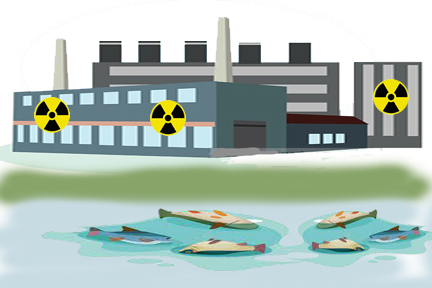
For Hinkley Point C to deliver on its environmental claims, the project must install its mandated Acoustic Fish Deterrent (AFD) system, writes Fish Guidance Systems’ Lewis English.
Can we truly call energy “clean” if it
causes significant environmental harm? This question becomes particularly
pertinent when examining the situation at Hinkley Point C, a new generation
nuclear power plant under construction in Somerset.
For nearly eight years,
EDF Energy has been working to remove a vital environmental protection at
Hinkley Point C, the Acoustic Fish Deterrent (AFD). The AFD system is
designed to protect aquatic life by deterring fish from entering the
cooling systems of the power plant, and was included in the initial design
plans of Hinkley Point C. Despite its importance, the removal of the AFD
has been a contentious issue.
The Welsh Government Commission has warned
that its absence could lead to the death of approximately 182 million fish
annually, including sensitive species like shad, sprat, Atlantic salmon,
and herring, which are crucial to local ecosystems, and Secretary of State
Kwasi Kwarteng ruled in a Public Inquiry that the measure must be applied.
Still, EDF continues to contest it, arguing that it would further delay the
completion of Hinkley Point C and hold up the UK’s net zero plans.
The Engineer 16th Sept 2024
A Suffolk wildlife and conservation charity has called for “greater transparency” from Sizewell C in relation to its wildlife compensation schemes.
Earlier in September, developers of the new Sizewell C nuclear
power station announced a new partnership with the nature restoration
movement WildEast to promote the return of land to nature across the
region. In announcing the partnership, Sizewell C flagged up how it had
pledged to return a large part of the land to nature during the
construction of the new power station. Its involvement in leading on a
wildlife habitat scheme at Wild Aldhurst nature reserve in Leiston was
mentioned, along with plans for wetland habitat creation at three nature
reserves at Benhall, Halesworth and Pakenham.
However, in a joint statement
with the Royal Society for the Protection of Birds (RSPB), the Suffolk
Wildlife Trust spoke of its “real disappointment” that Sizewell C had
included the work at the three nature reserves, which is part of its legal
duty to compensate for the impacts of the power station’s construction on
wildlife. The charities said the projects were a “minimum requirement,” but
were being “misrepresented” as examples of the developers going the extra
mile for nature.
East Anglian Daily Times 16th Sept 2024
https://www.eadt.co.uk/news/24585320.suffolk-wildlife-trust-rspb-speak-sizewell-c-nature/
The UK’s nuclear waste problem
“more nuclear power means more nuclear waste”
By Chas Newkey-Burden, The Week UK, 16 Sept 24 https://theweek.com/environment/the-uks-nuclear-waste-problem
Safety concerns as ‘highly radioactive’ material could be buried in the English countryside
“Not in my backyard” is a term normally used in conversations about proposed new housing or rail lines, but a version of it could soon be heard about one of the most dangerous materials on the planet.
Nuclear power stations are filling up with radioactive waste, so “swathes” of the highly dangerous material are set to be “buried in the English countryside”, said The Telegraph. For local communities, it isn’t so much “not in my backyard” as “not under my backyard”, said the Financial Times.
‘100,000 years of hazard’
Sellafield, in Cumbria, is the “temporary home to the vast majority of the UK’s radioactive nuclear waste”, said the BBC, “as well as the world’s largest stockpile of plutonium”. It’s stuck there because no long-term, high-level waste facilities have been created to deal with it.
The “highly radioactive material” releases energy that can infiltrate and damage the cells in our bodies, Claire Corkhill, professor of radioactive waste management at the University of Bristol, told the broadcaster, and “it remains hazardous for 100,000 years”.
The permanent plan to handle the waste currently at Sellafield is to first build a designated 650ft-deep pit to store it. Although the contentious matter of its location has yet to be agreed, the facility will hold some of the 5 million tonnes of waste generated by nuclear power stations over the past seven decades. Then, in the second half of the century, a much deeper geological disposal site will be dug, which will hold the UK’s “most dangerous waste”, such as plutonium, said The Telegraph.
The problem is only going to get bigger because nuclear power is a central part of the government’s mission for “clean power by 2030” and “more nuclear power means more nuclear waste”, said the BBC.
With at least three new nuclear power stations planned, said The Telegraph, the country will quickly be “at odds with” the 1976 review of nuclear waste policy by the Royal Commission on Environmental Pollution, which warned the UK was amassing nuclear waste so fast that it should stop building reactors until it had a solution.
‘Poison portal’
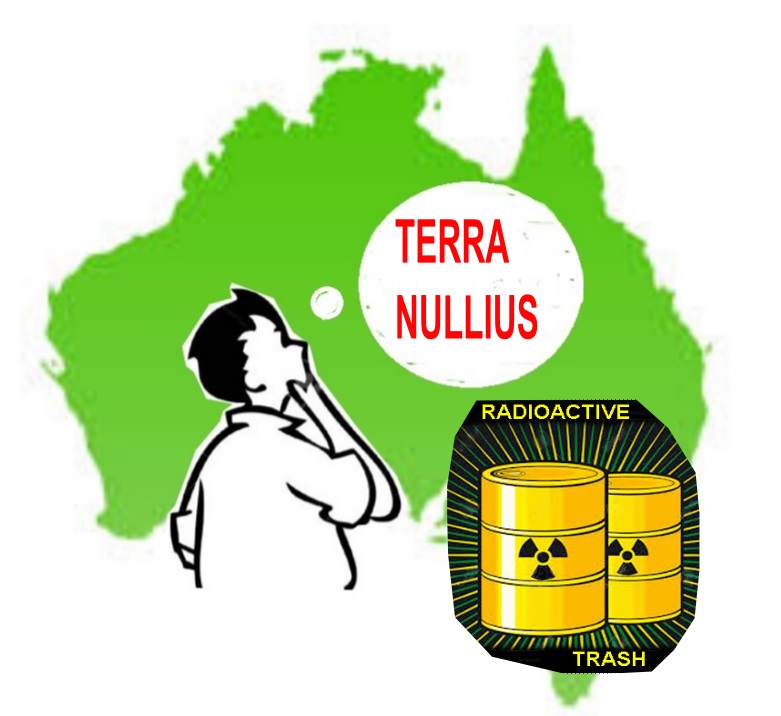
Some believe part of that solution will be found overseas. Earlier this year, there were warnings that Australia could become a “poison portal” for the UK and US as a result of a new three-nation defence pact called Aukus. The original wording of the agreement would allow for facilities to be created to dispose of waste from “Aukus submarines”, which could have included UK and US vessels.
Dave Sweeney, the Australian Conservation Foundation’s nuclear free campaigner, warned at the time that Aukus partners could see Australia as “a little bit of a radioactive terra nullius”.
After pushback, the Australian government added a loophole to the legislation to “ensure Australia will not become a dumping ground for nuclear waste”, said The Guardian.
But the Australian Greens’ defence spokesperson, David Shoebridge, said the changes did not go far enough. The amendment only addresses high-level radioactive waste, he said, and “still allows the US and UK to dump intermediate-level waste, and Australian high-level waste, anywhere in Australia”.
New logo for Geological Disposal Facility (GDF) represents a costly conversation
‘£4,600 excluding VAT’ was the answer to the query posed to Nuclear
Waste Services by NFLA Secretary Richard Outram who asked about the cost of
commissioning a new logo for the GDF Theddlethorpe Community Partnership.
With two speech bubbles signifying a conversation, the new logo was
conceived by House 337, who are ‘experts at building brands across many
sectors’. House 337 is an arm of NWS’s ‘contracted strategic delivery
partner’, MHP. Wags might suggest that a single speech bubble signifying
a one-sided conversation or a deaf ear signifying an inattentive NWS might
have been more appropriate.
NFLA 16th Sept 2024
TODAY. The West embraces SOCIALISM – first of the nuclear kind, -and then?

Proud defenders of individual liberty, private enterprise , and of the free market solving everything, the West has run into a spot of bother over the nuclear industry.
Good old dictatorships don’t have this problem. Russia , North Korea and China can develop government-run nuclear power programmes faster and cheaper, (though sadly, China is falling behind, due to the success of its renewable energy industry). Saudi Arabia has its Saudi National Atomic Energy Project (SNAEP). The Saudi one should do very well, as they don’t have pesky women in power, raising objections.
But never fear – things are looking up for nuclear power in the “free” West.
For one thing, everybody’s now realising that the “peaceful” nuclear industry is absolutely essential for the weapons nuclear industry. And as defence, (and attack) are a government responsibility, well, then, the tax-payer must cough up to help the “commercial” unclear industry.
And if we’re going to do the job properly, let’s take up the faster ?cheaper methods of Russia, North Korea, – maybe not China as they’re too much into renewable energy. Saudi Arabia’s system sounds promising – we don’t want silly emotional women bleating about cost and safety.
France has always recognised that the government should run all things nuclear – right from the days of its toxic nuclear bomb tests in the Pacific, and even today, despite a bit of trouble with costs, and the impacts of climate change causing rivers to overheat.
The USA government has always found devious ways to prop up its supposedly private nuclear industry.
Britain has come up with its system of “Regulated Asset Base” . This means that electricity customers are charged a fee from day one of the construction of the nuclear project, and cop the burden of cost overruns (as happened in the USA with the Vogtle nuclear fiasco). The UK government, rather than the developer, underwrites the risk of construction cost overrun “above a remote threshold” – referred to as the “Funding Cap”. – (more https://www.fieldfisher.com/en/insights/rab-and-go-getting-new-nuclear-underway)
The previous Tory UK government set up “Great British Nuclear” – with the tax-payer supporting the nuclear industry. Keir Starmer’s Labour government continued this , with – a new, publicly owned, energy company, “Great British Energy “.
In Australia, the Liberal-National Coalition Party, led by Peter Dutton, stands for private enterprise, individual freedom, and total opposition to socialism
In 2023 this Party had an amazing success, in turning Australian public opinion around towards an anti-indigenous stance in a referendum intended to give indigenous people a Voice to Parliament. This very right-wing party was helped by the Murdoch media, and also by a powerful social media campaign, and by the Atlas Network – to gain quite a degree of control over public opinion.
Again with the help of the Murdoch media, and the Atlas Network, the global nuclear lobby could have a resounding tax-payer funded success.
So – ironically – it will be a party dedicated to private enterprise and individual liberty that could bring in completely government-run nuclear industry to a whole Western democratic continent.
Opening Pandora’s Electronic Box
Assassination without Representation
Dennis Kucinich, Sep 18, 2024, https://denniskucinich.substack.com/p/opening-pandoras-electronic-box?utm_source=post-email-title&publication_id=1441588&post_id=149073793&utm_campaign=email-post-title&isFreemail=true&r=puo10&triedRedirect=true&utm_medium=email
With assassination by pagers and electronic devices occurring in Lebanon, the weaponization of things electronic, the world has entered into a sphere of activity where there is no refuge, no safety, no security, and no privacy.
This weaponization, the booby trapping of, the hacking of all things electronic can make phones, laptops, computers, television and radios vulnerable to being blown up.
It affects all modes of communication, transportation, utilities, all local and state law enforcement, all national defense installations, including nuclear sites, the entire infrastructure of modern life. Nothing is protected and nothing is safe. Everything electronic is a weapon.
We have journeyed from the Internet of Things to the destruction of all things and all people connected to the internet. Turning electronics into personal bombing devices will have major economic and social consequences. It is both discriminate and indiscriminate, personal and impersonal, mass murder and mass injuries, calculated to induce fear, to break communication between people, to bring about a system of control by government(s) and to ultimately undermine our freedoms. We have just witnessed the opening of Pandora’s Electronic Box.
Who developed this technology? Where was it tested? How was it implemented? Why? Where will it be used next? That such murderous technology was employed, and detonated remotely, against the people of Lebanon, in the name of attacking Hezbollah echoes the genocidal fury against the people of Gaza in the name of wiping out Hamas. It is a mission which will only embolden the enemies of Israel and will erode its support in the civilized world.
This is appropriately a matter for the world community. But as an American and as a potential Member of the next United States Congress, I want it made known that if the United States is involved in either the development of, or the sharing of this technology, or in the attacks in Lebanon using devices booby trapped through an illicit incursion into a supply chain, I will seek the indictment for war crimes of every individual involved, no matter their rank or station. The world and everyone in it is at risk from a new type of terrorism.
Sizewell C now: from farce to drama

To ensure that the terrain of the site is strong enough to withstand the pressures and forces of such a mammoth construction and future climate change challenges, ground anchor trials have been ordered. The results of these trials are not yet known, but that has not deterred the Office of Nuclear Regulation from issuing a nuclear site licence.
Construction of Sizewell C is already under way in Suffolk. The promise is for cheap, clean and safe energy, but what is the reality?
by Peter Wilkinson, 17 September 2024, https://eastangliabylines.co.uk/energy/sizewell-c-now-from-farce-to-drama/
As time passes and the land is prepared for the Sizewell C development, the impact of this massive undertaking is finally and painfully revealing itself to residents.
Sizewell C: here we go again
Vegetation has disappeared from large tracts of land. A 100-year-old forest has been felled. Huge lay-down areas are being created to store the equipment required for construction work. The presence of large numbers of aggregate tipper lorries on the small roads around the site has become routine. Footpaths have been closed. Deer have been driven out of their traditional habitat and wander bemused onto roads. Worker campuses are appearing and already, some workers have been charged with driving offences, causing one resident who has seen it all before – and worse – during the construction of Sizewell B to comment, “And so it begins”.
EDF is stamping its imprint all over East Suffolk, making its intentions crystal clear. The trickle of inconvenience will quickly become the intolerability of an invasion of workers, noise, industrialisation and disruption over the next few years.
How do we define ‘safe’ when it comes to nuclear power?
Nuclear power is often cited as being ‘safe’. A quick search of the internet will disabuse anyone of that view. Many reported accidents are trivial, but some are significant and bring with them the contradiction of the term ‘safe’. It is difficult to quantify or qualify the level of safety we can expect from the operation of nuclear power plants, largely because the regulatory authorities – let alone the mere mortals in the communities who are required to host these nuclear facilities – are unaware precisely what those impacts are in relation to exposure to radioactivity.
The Environment Agency itself cannot give a figure on the volume of uranium dust particles that are routinely, and with regulatory knowledge, discharged from an operating nuclear power station and, therefore, cannot – or will not – calculate the associated health impact. These potentially lethal specks of alpha-radiation-emitting dust are dismissed by the regulators as ‘insignificant’. Their presence in the atmosphere and in the sea, however – from accidents such as Chernobyl, Fukushima, Windscale in the 1950s, from atmospheric nuclear weapons testing as well as from the routine operation of nuclear facilities – cannot be denied.
Future risks and threats
The more conventional aspects of threats to our safety presented by nuclear power plants should concern us too. At Sizewell, for example, the site is considered to be too small to accommodate the planned twin EPR reactor development and is also highly vulnerable to rising sea levels and storm surges. So great is this threat, that the entire site is to be surrounded by a curtain wall 14 metres high, requiring foundations 50 metres deep – deep enough to prevent sea water ingress from below as well as solid enough to resist another ‘Beast from the East’ as experienced in 2018.
To ensure that the terrain of the site is strong enough to withstand the pressures and forces of such a mammoth construction and future climate change challenges, ground anchor trials have been ordered. The results of these trials are not yet known, but that has not deterred the Office of Nuclear Regulation from issuing a nuclear site licence.
Sizewell C, like all nuclear plants, needs a daily supply of potable water (rather than salt water from the sea). Sizewell C needs an average of 2.2 million litres a day. Suffolk is the driest county in the country and dramatic reductions in domestic requirements have been suggested as ways in which to balance supply and demand, leaving the fate of water supply in the area uncertain and possibly at the mercy of energy-intensive, polluting and chemicals-reliant desalination plants.
Spent fuel
All nuclear plants are required to host nuclear fuel once it has been ‘spent’ or ‘fissioned’ in the reactor core. It emerges as intensely hot and lethally radioactive and is required to be stored for years in what is effectively an on-site swimming pool before being transferred – in the case of Sizewell B spent fuel – to an on-site dry fuel store where it awaits the identification, construction and transfer to a ‘geological disposal facility’.
EDF/SZC Co estimate that the amount of spent fuel generated by Sizewell C’s two EPR reactors over their lifetimes of a notional 60 years will amount to around 4,000 tonnes. The radioactivity associated with that fuel is unimaginable. As we have seen in the Ukraine with the Zaporizhzhia nuclear power plant, in times of conflict the temptation for an adversary to ‘weaponise’ nuclear facilities is difficult to resist. The aspiration for the UK to treble its nuclear-generated electricity output will require, in addition to proposed ‘gigawatt-sized’ Hinkley Point C and Sizewell C, the deployment of up to 50 ‘small modular reactors’ around the country, each of which is capable of being weaponised.
The hidden nuclear agenda
From the difficulty of crossing roads clogged with construction traffic, to the threat posed by a catastrophic accidental or malicious failure of nuclear containment, the impact of transforming Suffolk’s heritage coast to the energy coast without so much as a public debate about the wisdom or desirability of such a colossal change, is already arriving in many forms.
The questionable stability of the terrain upon which the development is designed to stand, and the need to renew the electricity grid pylon network – characterised by National Grid Electricity Transmission as being from “Norwich to Tilbury to reinforce the high voltage power network in East Anglia between the existing substations at Norwich Main in Norfolk, Bramford in Suffolk, and Tilbury in Essex” – add to the level of anxiety and uncertainty many express about the future of their county.
The actual justification for Sizewell C – not the one used by government of energy security – is to ensure the maintenance of the skills base, the material and the supply chain for Trident renewal. And the purpose of Trident is to maintain our security by threatening the murder of tens of thousands of men, women and children we will never meet.
We have to question what sort of world we are knowingly allowing to be created for future generations. And we have to question what right the government has to ignore what Keir Starmer recently said would be applied across all government departments – ‘a duty of candour’. But perhaps he has already forgotten he said that, or wishes he had not.
Postscript
On the afternoon of Friday 30 August, a popular time to release unwelcome news with the weekend approaching, the Department of Energy Security and Net Zero announced that the government had allocated a further £5.5bn to the investment-averse Sizewell C (SZC) project, taking the total of public money sunk into this scheme to £8bn at a time when the new Labour administration is claiming a lack of public finances with which to help millions of pensioners and children with benefits to keep them warm and fed.
Patrick Lawrence: The ‘War Party’ Makes Its Plans
The stipulation Biden and Blinken now purport to insist upon is that they will not assent to letting Kiev use weapons provided by the U.S. — which seems to be different from weapons made by the U.S.—against targets in the Russian interior.
These proposals, if confirmed as Zelensky makes his next trip to Washington, all align in one direction: The Kiev regime’s running theme remains dragging the West further into the war rather as the Netanyahu regime in Israel is forever trying to do the same in West Asia. Zelensky, the Israeli prime minister, Biden: The world’s problem right now, or one of them, is that none of these people can afford to lose the wars their hubris led them to start.
SCHEERPOST, September 18, 2024 , By Patrick Lawrence
The Biden White House and the Democratic Party machine trying to advance Kamala Harris from No. 2 in the regime to No. 1 gets more interesting by the week, I have to say. The Harris campaign has at last, two months after the party’s elites and financiers railroaded her candidacy past any semblance of a democratic process, published a platform it calls A New Way Forward, and I will get to this in due course. I am less interested now in words posted on a website than in two recent developments we ought to consider together even if no one has yet thought to do so.
Slowly and very surely, it becomes clear by way of these weekly turns how a new Democratic regime, should Harris win on Nov. 5, proposes to manage the imperium’s business. And however many foolish voters may be illusioned otherwise, if Harris takes the White House her business will be neither more nor less than managing the imperium—the wars, the provocations, the illegal sanctions and other collective punishments, the terrorist clients in Israel, the neo–Nazis in Kiev.
Last Wednesday, Sept. 4, Liz Cheney surprised Washington and, I suppose, most of the rest of us when she announced she would support Harris’s run for the presidency. The onetime Wyoming congresswoman, a coup-cultivating warmonger who remains among the hawkiest of right-wing foreign-policy hawks, was not the first Republican to jump across the aisle this political season, and she was also not the last: Two days later, Liz’s pop did the same. Dick Cheney, of course, needs no introduction.
Instantly, the Harris campaign declared its delight in having the support of these courageous patriots, as the organization called them in its official statements.
A week after all this high-caliber politicking, President Biden convened in the Oval Office with Keir Starmer, the new British prime minister, to consider Ukraine’s proposal to fire Western-supplied missiles at targets well inside Russian territory. The Brits are ready to oblige the Kiev regime, as are the French, but everyone—London, Paris, Kiev—needs Biden’s permission to widen the war in this fashion.
At the moment, Biden and Secretary of State Blinken are in their “Well, maybe” phase, and we are meant to be on the edges of our seats wondering whether they will assent to these plans. But haven’t we seen this movie before and don’t we know how it ends? Wasn’t it, “Maybe we will send HIMARS rocket systems,” “Maybe M–1 tanks,” “Maybe Patriot missiles,” “Maybe F–16s”? Even before the Biden–Starmer encounter last week, Blinken and David Lammy, the British foreign secretary, during a visit to Kiev for talks with Volodymyr Zelensky, were already dropping heavy hints that Biden will once again acquiesce to the plans the Ukrainian president and the British PM were choreographed to present to him.
The stipulation Biden and Blinken now purport to insist upon is that they will not assent to letting Kiev use weapons provided by the U.S. — which seems to be different from weapons made by the U.S.—against targets in the Russian interior. This is no more than one of those hair-splits in which the Biden White House trades when it wants to look thoughtful and cautious but is neither. Will someone tell me what damn difference it will make to Russia if Moscow takes a hit from a missile sent from Britain, France or the United States?
These people are convening to plan the Western powers’ reckless escalation of a proxy war they have no way of winning and know they have no way of winning. Desperation is as desperation does: This is my simple read of these deliberations.
Between the war-planning and the shifting political loyalties, what have we witnessed over these past couple of weeks? This is our question. …………………………………………………………………
There is a lot of politics in the Democrats’ exuberant greeting of the Cheneys, of course. Harris’s people want to make the most of divisions among Republicans, and, in the case of Liz Cheney, to exploit the animus that has arisen between her and Donald Trump. But we must look more closely than this fully to understand this political ballet. Liz Cheney once had a public spat with Rand Paul over who was “Trumpier.” Dick Cheney is guilty of more war crimes, crimes against humanity and war-profiteering than Donald Trump could dream of in his sweetest dreams.
No mention of this as we think about these two political defections? I have read or heard of none from within the Harris hive.
Stephen Cohen used to joke, except that he wasn’t joking, that there is one party in Washington and it is rightly called the War Party. ……………………..
Read A New Way Forward, a 13–page document. The one and a half pages given to national security and foreign affairs amount to a screed dedicated to Russophobia, Sinophobia, NATOphilia and “the most lethal fighting force in the world,” which seems to be Harris’s idea of a diplomatic corps. This is how Steve Cohen’s War Party thinks and what it sounds like. As a statement of intent, the Harris–Walz platform is entirely accommodating of the Biden White House’s very likely decision to escalate the Ukraine conflict to the point of risking the World War III Biden pretends not to want. …………………………………………………………..
Among the Biden regime’s purported concerns as it considers authorizing Ukraine to widen the war is what difference attacks on the Russian interior would make. The White House and the Pentagon want to see a plan, it has been reported. It is a good question, asking about the point of this kind of escalation, but I am not sure an answer matters much to those who sit at the table in the White House cabinet room. As I have argued severally in this space, the Biden regime has foolishly cast this war as one between democracy and autocracy. Accordingly, it can afford to risk all manner of precipitous escalations, but it cannot afford to lose.
Entering stage right, possibly on cue, Volodymyr Zelensky now says he wants to show Biden, and subsequently Harris and Trump, his “plan for victory over Russia.” The Washington Post reported last Friday this will consist of very few parts. “All the points depend on the decision of Biden,” the Ukrainian president said at a recent forum in Kiev.
As The Post noted, Zelensky is to date shy of revealing these points, but there are reports, well short of confirmed, that there are three of them. The first is the missile authorization, the second is an assurance that NATO will deploy air-defense systems to protect western Ukraine, and the third—get a load of this—is a guarantee that NATO will dispatch ground troops to rear areas of the conflict so that the Armed Forces of Ukraine can deploy more of its own troops to the front.
These proposals, if confirmed as Zelensky makes his next trip to Washington, all align in one direction: The Kiev regime’s running theme remains dragging the West further into the war rather as the Netanyahu regime in Israel is forever trying to do the same in West Asia. Zelensky, the Israeli prime minister, Biden: The world’s problem right now, or one of them, is that none of these people can afford to lose the wars their hubris led them to start.
The Anglos and the Americans are likely to make an official announcement about the use of long-range missiles against Russia after the U.N. General Assembly concludes its business on Sept. 28. Starmer has recently indicated as much. In the best outcome we will find that Putin has rattled Washington and London such that they will step back from this latest plan to escalate. It is possible. But the U.S. and the other NATO powers have not done much stepping back to date, we are well to remind ourselves. …………………………………………………….
The Americans and the Brits can be said to be playing, unserious as they are, but the Russians are not. https://scheerpost.com/2024/09/18/patrick-lawrence-the-war-party-makes-its-plans/
2nd Wave of Explosions Hits Communications Devices Across Lebanon
By Owen Evans and Ryan Morgan, 9/18/2024
A Hezbollah official says walkie-talkies used by the group exploded across Beirut, a day after pagers blew up.
Electronic devices detonated across southern Lebanon and in Beirut’s southern suburbs for the second day in a row on Sept. 18, according to Lebanese officials and witnesses who spoke with Reuters.
Lebanon’s Health Ministry says at least 14 people were killed and more than 450 were injured in the second wave of explosions.
Several of the Wednesday blasts were reported at funerals organized for those killed in a wave of exploding handheld electronic pagers the day prior. The Wednesday funerals processions were being held for slain members of Hezbollah; an Iranian-aligned Shia Islamist Lebanese faction designated as a terrorist organization by the United States and Israel. The funeral processions were also reportedly being held on behalf of a young girl and a young boy who were caught up in the wave of pager blasts.
Hezbollah’s Al Manar TV reported explosions in multiple areas of Lebanon, which it said were caused by detonating walkie-talkies.
Local reports indicated at least one car and a mobile phone shop were also damaged after devices exploded inside of them on Wednesday. A woman was also reportedly hurt when a home solar energy system blew up in southern Lebanon.
The Epoch Times has not been able to independently corroborate these claims.
Scottish nuclear base staff using pagers adds to Trident fears
National security concerns have been raised about the use of the antiquated technology in sites where nuclear weapons are stored and maintained.
Two sources have confirmed to this paper that the use of pagers, which appear to have been tampered with to cause explosions across Lebanon in attacks which have injured thousands, remains common at bases in Coulport and Faslane.
Pagers, also known as bleepers, are almost entirely redundant in most walks of life having been superseded by mobile phones decades ago – but they are still used on Ministry of Defence (MoD) sites in Scotland and by the Islamist militant group Hezbollah, which has blamed Israel for the attacks.
NHS workers in England were told to stop using pagers in hospitals in 2019 though it is thought some still use them.
Concerns about their use have been raised in light of Tuesday and Wednesday’s deadly attacks, which have killed at least 21 people including two children, in a move which threatens to escalate tensions between Israel and Lebanon into all-out war.
One source told The National that staff at a Scottish nuclear base who were on call or on duty used pagers.
Alba general secretary Chris McEleny, who previously worked at Royal Naval Armaments Depot Coulport where nuclear warheads are stored, told The National “people will be astounded that the safety of the UK’s nuclear deterrent is still supported by a network of 1980s and 1990s-style handheld pagers”.
He added: “The Hezbollah attack should result in the MoD now assessing the vulnerability of where the country’s stockpile of nuclear weapons are stored because pager holders are highly likely to be in close proximity the most critical possible systems and materials on site but then the pagers go offsite overnight.”
The revelation will add to fears about the state of Britain’s nuclear fleet, which is believed to be “rotting”.
Former Tory special adviser Dominic Cummings last year lifted the lid on what he said was the “nightmare” issue of Trident.
He wrote that nuclear weapons infrastructure was “a dangerous disaster and a budget nightmare of hard-to-believe and highly classified proportions”.
The UK Government was approached for comment.
1 This Month.
5 January -Webinar-What is Trump’s Golden Dome?
REGISTER AT Massachusetts Peace Action Education


New book – https://www.amazon.com/dp/1923372157?utm_source=substack&utm_medium=email
Now until to February 10, 2026 Radioactive waste storage in France: the debate is finally open! How to participate?
-
Archives
- December 2025 (293)
- November 2025 (359)
- October 2025 (377)
- September 2025 (258)
- August 2025 (319)
- July 2025 (230)
- June 2025 (348)
- May 2025 (261)
- April 2025 (305)
- March 2025 (319)
- February 2025 (234)
- January 2025 (250)
-
Categories
- 1
- 1 NUCLEAR ISSUES
- business and costs
- climate change
- culture and arts
- ENERGY
- environment
- health
- history
- indigenous issues
- Legal
- marketing of nuclear
- media
- opposition to nuclear
- PERSONAL STORIES
- politics
- politics international
- Religion and ethics
- safety
- secrets,lies and civil liberties
- spinbuster
- technology
- Uranium
- wastes
- weapons and war
- Women
- 2 WORLD
- ACTION
- AFRICA
- Atrocities
- AUSTRALIA
- Christina's notes
- Christina's themes
- culture and arts
- Events
- Fuk 2022
- Fuk 2023
- Fukushima 2017
- Fukushima 2018
- fukushima 2019
- Fukushima 2020
- Fukushima 2021
- general
- global warming
- Humour (God we need it)
- Nuclear
- RARE EARTHS
- Reference
- resources – print
- Resources -audiovicual
- Weekly Newsletter
- World
- World Nuclear
- YouTube
-
RSS
Entries RSS
Comments RSS
 nuclear-news