UK unveils GBP 5.5bn subsidy plan for 3.2 GW nuclear plant

The UK government has approved a GBP 5.5bn subsidy scheme aimed at getting the planned 3.2 GW Sizewell C nuclear power plant in southeast England to a final investment decision (FID) later this year.
Reporting by: Kelly Paul, 30 Aug 2024 ,
https://montelnews.com/news/4f3631b9-b370-4dda-a878-61850539b094/uk-unveils-gbp-55bn-subsidy-plan-for-32-gw-nuclear-plant
The so-called Sizewell C Development Expenditure (Devex) Scheme will enable the government to increase equity injections into the project, giving it greater flexibility to cover development costs up to and including an FID, it said in a statement on Friday.
Funding for the Devex scheme will be subject to the Labour government’s forthcoming spending review.
The UK is targeting 50 GW of nuclear capacity by 2050 as part of its plans for energy security. Currently, the country’s eight nuclear power sites have a total combined capacity of about 6.5 GW.
The government is seeking private investors for Sizewell C via a regulated asset base (RAB) financing mechanism.
Sizewell C received a nuclear site licence from the country’s Office for Nuclear Regulation in May.
White elephant?
However, in the wake of today’s announcement, campaign group Stop Sizewell C questioned where the money was going to come from.
“Sizewell C has already chewed through GBP 2.5bn and now we learn that there is the potential for a staggering GBP 5.5bn more of our taxpayers’ money to be thrown at this white elephant,” it said in a statement.
“Labour complained about a black hole in the country’s finances, yet now they are proposing to dig still further. Where would this cash come from?”
‘No,’ Kamala Harris Says to Withholding Arms From Israel
“Harris is saying she will reject 77% of Democrats, 61% of Americans, international law, domestic U.S. law, and basic humanity to continue the flow of weapons to Israel while it stands accused of genocide,” said one analyst.

Common Dreams. Jake Johnson, Aug 30, 2024
Democratic presidential nominee Kamala Harris said in a CNN interview that aired late Thursday that, if elected in November, she would not change the Biden administration’s policy of steadfast military support for Israel, rejecting widespread calls for an arms embargo to help bring about an end to the devastating assault on Gaza.
“I’m unequivocal and unwavering in my commitment to Israel’s defense and its ability to defend itself, and that’s not gonna change,” said Harris, recounting the horrors of the Hamas-led October 7 attack. “Israel had a right, has a right to defend itself.”
Acknowledging that “far too many innocent Palestinians have been killed,” the vice president responded “no” when CNN‘s Dana Bash asked whether a Harris administration would implement a “change in policy in terms of arms” and withhold even “some” weapons shipments to Israel………………………………………………………………………………………………………………………….
“Poll after poll after poll tells us that a majority of Americans and even more key Democratic constituencies want the US to stop giving arms to Israel that it’s using to kill and displace Palestinian families,” Lieberman added. “Not sending bombs to Israel is politically expedient and—quite obviously!—the morally correct thing to do for anyone reading the daily headlines of Israeli massacres being done with U.S. weapons.”
Democratic presidential nominee Kamala Harris said in a CNN interview that aired late Thursday that, if elected in November, she would not change the Biden administration’s policy of steadfast military support for Israel, rejecting widespread calls for an arms embargo to help bring about an end to the devastating assault on Gaza.
“I’m unequivocal and unwavering in my commitment to Israel’s defense and its ability to defend itself, and that’s not gonna change,” said Harris, recounting the horrors of the Hamas-led October 7 attack. “Israel had a right, has a right to defend itself.”
Acknowledging that “far too many innocent Palestinians have been killed,” the vice president responded “no” when CNN‘s Dana Bash asked whether a Harris administration would implement a “change in policy in terms of arms” and withhold even “some” weapons shipments to Israel.
Watch:
The CNN appearance marked Harris’ first major television interview since becoming the Democratic nominee, a change at the top of the party’s 2024 ticket that Palestinian rights advocates hoped would open the door to a fundamental shift away from the Biden administration’s Gaza policy—which has been to arm Israel to the teeth while tepidly pressuring the country’s far-right government to protect civilians and agree to a cease-fire deal.
“The vice president’s statement was morally indefensible and politically shortsighted as the lack of American consequences for Netanyahu’s horrific assault on Palestinian civilians in Gaza has emboldened Israel to now invade the West Bank,” Layla Elabed and Abbas Alawieh, co-founders of the Uncommitted National Movement, said in a statement Friday. “Vice President Harris must turn the page from one of the most glaring foreign policy failures of our time by aligning with the American majority that opposes sending weapons to Israel’s assault on Gaza.”
Despite Bash’s characterization of calls for an arms embargo against Israel as a demand from the “progressive left,” survey data has shown that a majority of U.S. voters oppose sending weapons to Israel as it commits appalling war crimes in Gaza and the West Bank. Since October, the U.S. has sent Israel over 50,000 tons of weaponry.
“Harris is saying she will reject 77% of Democrats, 61% of Americans, international law, domestic U.S. law, and basic humanity to continue the flow of weapons to Israel while it stands accused of genocide,” Middle East scholar Assal Rad said late Thursday, citing the results of a recent CBS News/YouGov poll.
A separate poll commissioned by the IMEU Policy Project suggested that voters in key U.S. battleground states would be more likely to vote for a Democratic nominee who pledged to withhold weapons from Israel.
The CNN interview aired as Israel continued its multi-day assault on the West Bank, a deadly military campaign that the head of the United Nations and others warned could become an extension of the nearly 11-month war on Gaza, during which Israel has killed more than 40,600 people, displaced 90% of the enclave’s population, and sparked famine across the territory.
On Thursday, Israel’s military killed five Palestinians in an airstrike on a vehicle convoy of the Washington, D.C.-based American Near East Refugee Aid (ANERA) agency. It is a violation of U.S. law to provide weaponry to a country obstructing the delivery of American humanitarian aid.
The attack on the ANERA convoy came a day after Israeli forces opened fire on a World Food Program vehicle, forcing the U.N. agency to suspend employee movement in Gaza.
Harris’ refusal to express openness to an arms embargo against a military that has repeatedly targeted aid and healthcare workers, journalists, and other civilians sparked immediate backlash from Palestinian rights advocates, including at least one member of Congress.
Rep. Rashida Tlaib (D-Mich.), the only Palestinian American in the U.S. Congress, said Harris’ answer signaled that “war crimes and genocide will continue.”
Yonah Lieberman, co-founder of IfNotNow, called the Democratic nominee’s answer on Gaza “terrible” and “out of touch with voters, especially those in key battleground states who Harris needs to feel motivated to go to the polls.”
“Poll after poll after poll tells us that a majority of Americans and even more key Democratic constituencies want the US to stop giving arms to Israel that it’s using to kill and displace Palestinian families,” Lieberman added. “Not sending bombs to Israel is politically expedient and—quite obviously!—the morally correct thing to do for anyone reading the daily headlines of Israeli massacres being done with U.S. weapons.”
In an op-ed for Common Dreams on Friday, RootsAction national director Norman Solomon warned that “time is running out for Kamala Harris to distance herself from U.S. policies that enable Israel to continue with mass murder and genocide in Gaza.”
“Polling shows that a pivot toward moral decency would improve her chances of defeating Donald Trump,” Solomon wrote. “But during her CNN interview Thursday night, Harris remained in lockstep with President Biden’s unconditional arming of Israel.” https://www.commondreams.org/news/kamala-harris-arms-embargo
Last Energy nabs $40M to realize vision of super-small nuclear reactors
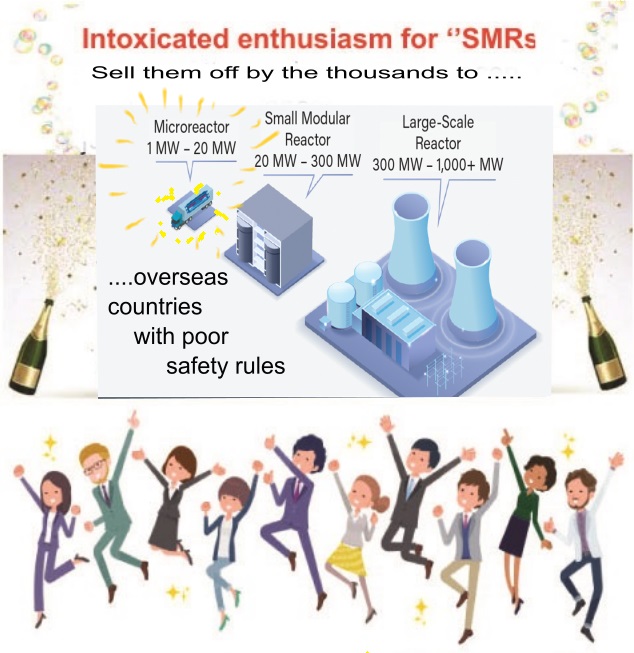
These investors are joining the wave in public and private financing of nuclear energy that has swelled to $14 billion so far this year — double last year’s total, according to Axios. Investment in new fission technologies, such as microreactors, has increased tenfold from 2023.
The startup wants to mass-manufacture 20MW nuclear reactors that can be built and shipped within 24 months. It’s looking to get its first reactor online in Europe.
By Eric Wesoff, 29 August 2024
A startup looking to build really small nuclear reactors just announced a big new funding round.
Last Energy, a Washington, D.C.–based next-generation nuclear company, announced that it closed a $40 million Series B funding round, a move that will add more financial and human capital to the reinvigorated nuclear sector.
The startup aims to eventually deploy thousands of its modular microreactors, though to date it has not brought any online. The first reactor might appear in Europe as soon as 2026, assuming Last Energy manages to meet its extremely aggressive construction, financial, and regulatory timelines — not a common occurrence in the nuclear industry. Venture capital heavyweight Gigafund led the round, which closed early this year but was revealed only today. The startup has raised a total of $64 million since its 2019 founding.
Last Energy is part of a cohort of companies betting that small, replicable, and mass-produced reactors will overcome the economic challenges associated with building emissions-free baseload nuclear power — and restore the moribund U.S. nuclear industry to its former glory. But the microreactor dream has yet to be realized; few of these small modular reactors (SMRs) have been built worldwide. None have been completed in the U.S., though one design from long-in-the-tooth startup NuScale Power has gotten regulatory approval.
The 20-megawatt size of Last Energy’s microreactor stands in stark contrast to that of a conventional nuclear reactor like the recently commissioned Vogtle units in Georgia, which each generate about 1,100 megawatts. A Last Energy microreactor, the size of about 75 shipping containers, might power a small factory, while a Vogtle unit can power a city.
Instead of the cathedral-style stick-built construction of modern large reactors, SMRs and microreactors are meant to be manufactured at scale in factories, transported to the site, and assembled on location. Rather than develop an advanced reactor design with exotic fuels — an approach taken by other SMR hopefuls, including the Bill Gates–backed TerraPower — Last Energy chose to scale down the well-established light-water reactor technology that powers America’s 94 existing nuclear reactors.
“We came to the conclusion that using the existing, off-the-shelf technology was the way to scale,” CEO Bret Kugelmass said in a 2022 interview with Canary Media. “We don’t innovate at all when it comes to the nuclear process or components — we do systems integration and business-model innovation.”
The startup claims that its microreactor is designed to be fabricated, transported, and built within 24 months, and is the right size to serve industrial clients. Under its business model, Last Energy aims to build, own, and operate its power plant at the customer’s site, avoiding the yearslong wait times to plug a new generation project into the power grid.
Like an independent power producer, Last Energy doesn’t sell power plants; instead, it sells electricity to customers through long-term power-purchase contracts.
“Data centers and heavy industry are trying to grapple with a very complex set of energy challenges, and Last Energy has seen them realize that micro-nuclear is the only capable solution,” said Kugelmass, who claims in today’s press release that the startup has inked commercial agreements for 80 units — with 39 of those units destined to serve power-hungry data center customers.
Last Energy isn’t the only microreactor company attracting venture funding. There are several other examples from this month alone: Aalo Atomics raised $27 million from 50Y, Valor Equity Partners, Harpoon Ventures, Crosscut, SNR, Alumni Ventures, Preston Werner, Earth Venture, Garage Capital, Wayfinder, Jeff Dean, and Nucleation Capital to scale up a 85-kilowatt design from the U.S. Department of Energy’s MARVEL program. While Deep Fission, a startup aiming to bury arrays of microreactors 1 mile underground, just raised $4 million led by 8VC, a venture firm founded by Joe Lonsdale.
These investors are joining the wave in public and private financing of nuclear energy that has swelled to $14 billion so far this year — double last year’s total, according to Axios. Investment in new fission technologies, such as microreactors, has increased tenfold from 2023.
Investors happen to be backing startups in a heavily subsidized market. Tens of billions of dollars from the Bipartisan Infrastructure Law, the U.S. DOE’s Loan Programs Office, and the Inflation Reduction Act support the development of a non-Russian supply of enriched uranium; the IRA also introduced a ridiculously generous $15-per-megawatt-hour production tax credit, meant to keep today’s existing nuclear fleet competitive with gas and renewables, as well as a similarly charitable investment tax credit to incentivize new plant construction.
The flood of funding comes as nuclear power enjoys the most public support it has had in years. Nuclear now has a favorable public opinion, with the majority of Americans supporting atomic energy and its record of safety and performance. And nuclear energy is one of the few topics that Democrat and Republican politicians have been able to agree on in recent memory.
Still, despite the rising financial, political, and public support, the U.S. nuclear industry remains frozen, plagued by a legacy of cost and timeline overruns for conventional reactors and regulatory challenges around new designs. It’s unclear when the country will get another nuclear reactor online — as of last year, the leading contender was an SMR project from NuScale, but that fell apart due to cost. In all likelihood, the next reactor to plug into the grid will be the mothballed Palisades nuclear plant in Michigan, which won government support for an unprecedented effort to recommission the plant by the end of next year.
For its part, Last Energy is not banking on the U.S. to lead the charge; it’s targeting industrial customers in Poland, Romania, and the U.K. for its initial sites, in the hopes that it will find a more favorable regulatory and financial environment.
Ryan McEntush of investment firm a16z suggests in an essay that “the success of nuclear power is much more about project management, financing, and policy than it is cutting-edge engineering or safety.”
That’s Last Energy’s philosophy too — and it’s going to need more money and more years to prove it’s the right one.
Israel Launches Major West Bank Raid as Israeli Minister Vows Gaza-Like Attack

it is clear that Israel is aiming to do what it has done in Gaza to the occupied West Bank.
Israel is cutting off the northern West Bank, destroying roads, surrounding hospitals and implementing curfews there.
By Sharon Zhang , Truthout, August 28, 2024
Israel has embarked on its largest raid of the occupied West Bank in decades, launching attacks from the land and air against areas home to 80,000 Palestinians as Israel’s foreign minister is pledging “war” using the same genocidal tactics the Israeli military has used on Gaza.
Israel has attacked the West Bank with drone strikes and deployed military vehicles on the ground, with troops opening fire on Palestinians. Israeli forces are shutting down and destroying roads with bulldozers leading to Jenin, Tulkarem and Tubas in the northern West Bank, effectively cutting the cities off from the rest of the West Bank. Jenin has a population of roughly 39,000 Palestinians.
The raid is especially sinister as it comes amid Israel’s genocide in Gaza, which experts say has been an opportunity for Israeli forces to test and hone violence against Palestinians. Alarmingly, Foreign Affairs Minister Israel Katz pledged that Israeli forces would handle the occupied West Bank the same way it has Gaza — where it has isolated the population and then carried out a genocide and ethnic cleansing campaign of unprecedented proportions.
………………….Experts warn it is clear that Israel is aiming to do what it has done in Gaza to the occupied West Bank. “What’s happening is absolutely horrifying, because what we see here is Israel trying to transfer the genocide war that is conducted in Gaza and the war of ethnic cleansing from Gaza to the West Bank,” Mustafa Barghouti, Palestinian physician, general secretary of the Palestinian National Initiative and West Bank resident, told Democracy Now!. “Their goal is very clear. It’s as the Israeli minister of foreign affairs said: it’s ethnic cleansing of Palestinians.”…………………………………….. more https://truthout.org/articles/israel-launches-major-west-bank-raid-as-israeli-minister-vows-gaza-like-attack/
The US presidential candidates are not confronting the nuclear threat that haunts the world

Bulletin, By Robert Jay Lifton | August 29, 2024
The candidates in the coming election in the United States have said little, certainly nothing coherently, about nuclear weapons. Yet those weapons continue to haunt us, even as they move in and out of our conscious awareness.
We are reminded of this disconnect by the recent revelation of a shift in the American strategy of “nuclear deterrence” to give greater emphasis to China because of evidence of its rapid build-up of the weapons.1 That strategy change suggests China has been granted the dubious status of player in the game of bringing an end to humanity.
This “nuclear end,” as we came to call it in the antinuclear movement, was oddly treated in the recent Musk interview of Trump. Trump spoke vaguely of “nuclear warming,” though he has constantly dismissed the danger of climate change. Musk referred to the relatively rapid rebuilding of Nagasaki as a thriving city, failing to recognize that reconstruction was possible only because of the existence of an outside world to bring the necessary energy and know-how for such rebuilding. The use of contemporary nuclear weapons would allow for no such outside world. And the statement also ignores the residual pain and nuclear fear brought on by the atomic bombing of that city.2
And in her Democratic National Convention acceptance speech, Kamala Harris committed herself to a military that “always has the strongest, most lethal fighting force in the world.”3 We do not know whether she had nuclear weapons in mind.
What are the nuclear truths that are still rarely taken into account?
Nuclear weapons represent a revolution in the human capacity for destructiveness. Whether it begins with battlefield use of relatively small nuclear weapons or with larger ones, a nuclear war is likely to bring about a “nuclear winter”—the blocking of the sun’s rays by soot and other debris blown into the stratosphere—bringing about the lowering of Earth’s temperature to an extent that agriculture and human life could no longer be sustained. There is also more recent research suggesting that even a “limited” nuclear war could bring about worldwide starvation, affecting hundreds of thousands or even millions of people.
From this standpoint, Robert Oppenheimer’s brilliant success in guiding his fellow scientists at Los Alamos to the creation of nuclear weapons was his also tragedy. He could never decide whether to go along with the society’s rendering him a hero or to insist on his guilt, as he did when he told President Harry Truman, “I have blood on my hands.”
The larger US society has the same conflict. It is unable to decide whether the weapons are crucial to keeping the peace and even keeping the world going—the US addition to what I call nuclearism—or whether their very existence, not just their use but their stockpiling, is what threatens our future. The latter idea is central to the treaty put forward by the United Nations banning the “use, possession, testing, and transfer of nuclear weapons under international law.”4 Recently 150 medical journals, including The New England Journal of Medicine, Journal of the American Medical Association, Lancet, and the British Medical Journal made a joint call for the elimination of nuclear weapons with an editorial statement: “The nuclear arms states must eliminate their nuclear arsenals before they eliminate us.”5
That reasonable advocacy of nuclear abolition could not of course abolish our capacity to rebuild the weapons. But such re-creation would be highly demanding, and abolition would make the world a much safer place even if the possibility of building new nuclear weapons existed………………………………………………………………………………..more https://thebulletin.org/2024/08/the-us-presidential-candidates-are-not-confronting-the-nuclear-threat-that-haunts-the-world/?utm_source=Newsletter&utm_medium=Email&utm_campaign=ThursdayNewsletter08292024&utm_content=NuclearRisk_LiftonNuclear_082024
Iran urges elimination of atomic weapons, end to nuclear tests
Friday, 30 August 2024, https://www.presstv.ir/Detail/2024/08/30/732332/Iran–elimination-of-atomic-weapons
Iran’s ambassador and permanent representative to the United Nations Office in Geneva has called on the international community to work towards ending nuclear tests and eliminating atomic weapons.
Ali Bahreini made the remarks in an X post on Thursday, on the occasion of the International Day against Nuclear Tests.
“Nuclear testing is a threat to our planet and future generations,” he said.
“On the International Day against Nuclear Tests, let’s pledge to protect our world by advocating for a complete end to nuclear tests and total elimination of NWs,” he added, referring to nuclear weapons.
“Each nuclear explosion is a step backward in the journey towards a world free of nuclear weapons. Today, more than ever, we need a global commitment to the complete elimination of nuclear weapons,” Bahreini wrote in a separate post on X in Persian.
In 2009, the UN General Assembly declared August 29 the International Day against Nuclear Tests by unanimously adopting Resolution 64/35.
The document calls for increasing awareness and education “about the effects of nuclear weapon test explosions or any other nuclear explosions and the need for their cessation as one of the means of achieving the goal of a nuclear-weapon-free world.”
The United States is the only country on Earth that has used nuclear weapons in wartime.
On August 6, 1945, the US dropped the world’s first atomic bomb on the Japanese city of Hiroshima, killing thousands instantly and about 140,000 by the end of the year. Three days later, it dropped a second bomb on Nagasaki, killing another 70,000.
International Physicians for the Prevention of Nuclear War (IPPNW). Co-President Carlos Umaña Explores Making Nuclear Weapons Taboo

August 30th, 2024 https://nuclearactive.org/ippnw-co-president-carlos-umana-explores-making-nuclear-weapons-taboo/
“When the Cold War ended in 1991 and the Doomsday Clock was at its furthest from midnight, the world sighed in relief… . It was a moment of hope where many believed this low tension between the military and economic powers of the world would lead to peace talks and nuclear disarmament.. . . So, why didn’t nuclear disarmament happen when
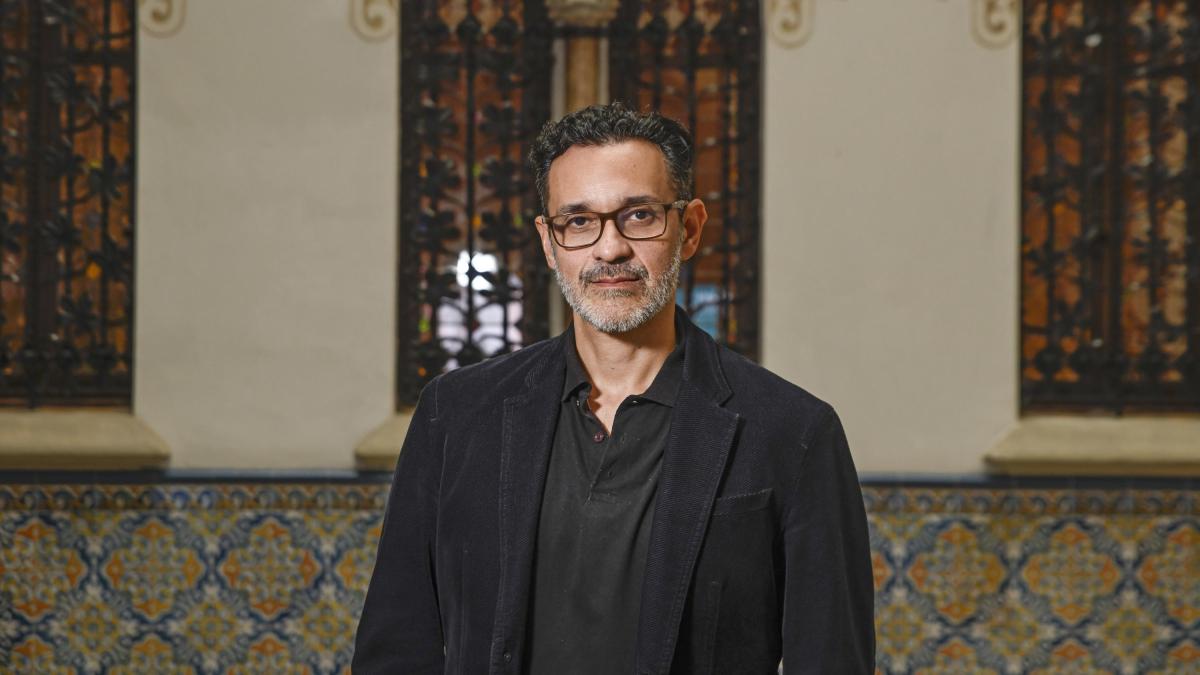
the iron curtain fell?. . .” This question is at the center of “Making Nuclear Weapons Taboo,” an August 2024 address by Dr. Carlos Umaña, Co-President of International Physicians for the Prevention of Nuclear War (IPPNW).
Dr. Umaña answers the question by saying, “Simply put, nuclear weapons had become a status symbol. . . . Nukes had become the currency of power, and this did not change when the so-called superpowers lost their main reason to threaten each other.” Dr. Umaña proposes that possession of nuclear weapons has a social value that society can alter. He uses the example of a bag of gold coins found in a forest to show that society bestows arbitrary value or “currency” on things. He says,
“. . .we hold on to them [the coins] because we have learned that they have value, and once we find our way to civilization, they will allow us to do a great deal of things. . .Their inherent value, what they can do for us by themselves, isn’t great, but their given value, what we have decided they can do for us, is very high.”
Dr. Umaña goes on to say that the belief that nuclear weapons are advantageous is international. The way to abolish weapons is to stigmatize them, make them taboo. This method has changed other human behavior, like slavery, and also some weapons of mass destruction such as chemical and biological weapons. He says, “[W]e will be able to get rid of nuclear weapons when they are universally condemned, when the nuclear status is not a subject of praise, but of scorn.”
To discuss how values can be changed in practice, Dr. Umaña adopts the image of concentric circles that he attributes to Professor Treasa Duckworth, Associate Professor in the Faculty of Law of the University of Auckland, in conversation with Tim Wright of the International Campaign to Abolish Nuclear Weapons (ICAN): progress against nuclear weapons being held in esteem can occur first in the outer ring of weapon-free countries, then in countries under the “nuclear umbrella,” and finally in the center ring, the U.S. and Russia.
Dr. Umaña concludes, “The international community will be able to get rid of nuclear weapons when the world finally agrees to see nuclear weapon states not as nuclear powers, but as nuclear liabilities.”
IPPNW Co-President Carlos Umaña is a general practitioner, former local health director, and epidemiological surveillance officer with the Costa Rican Ministry of Health. Dr. Umaña is on the ICAN International Steering Group and is president of IPPNW Costa Rica.
To read Dr. Umaña’s full speech, go to: https://peaceandhealthblog.com/2024/08/26/making-nuclear-weapons-taboo/
Acid discharge and risk assessment shortfall at Cheshire nuclear-site
Companies on a nuclear site were served improvement notices following an
acid leak and a risk assessment shortfall. Watchdog, the Office for Nuclear
Regulation (ONR), told a tenant and contractor on the Urenco UK site they
must improve the safety of its operations.
It follows two separate and
unconnected issues on the site in Capenhurst, near Ellesmere Port, in May
and July which were investigated by ONR inspectors. The first improvement
notice was issued to Urenco ChemPlants, a tenant organisation on the site,
after acid was discharged from a pipework leak at the Tails Management
Facility in May.
Liverpool Echo 30th Aug 2024
https://www.liverpoolecho.co.uk/news/liverpool-news/toxic-acid-leak-nuclear-site-29831937
1 This Month
23 April – WEBINAR – Why new nuclear reactors are the wrong tools for decarbonization Thursday, April 23 • 1 AM – 2 AM AEST

Pine Ridge Uranium is the real threat, not Tehran- Tell Burgum: Stop the Extraction.
Chernobyl: The Lost Tapes – A good documentary on Chernobyl on SBS available On Demand for the next 3 weeks– https://www.sbs.com.au/ondemand/tv-program/chernobyl-the-lost-tapes/2352741955560
To see nuclear-related stories in greater depth and intensity – go to https://nuclearinformation.wordpress.com
-
Archives
- April 2026 (241)
- March 2026 (251)
- February 2026 (268)
- January 2026 (308)
- December 2025 (358)
- November 2025 (359)
- October 2025 (376)
- September 2025 (257)
- August 2025 (319)
- July 2025 (230)
- June 2025 (348)
- May 2025 (261)
-
Categories
- 1
- 1 NUCLEAR ISSUES
- business and costs
- climate change
- culture and arts
- ENERGY
- environment
- health
- history
- indigenous issues
- Legal
- marketing of nuclear
- media
- opposition to nuclear
- PERSONAL STORIES
- politics
- politics international
- Religion and ethics
- safety
- secrets,lies and civil liberties
- spinbuster
- technology
- Uranium
- wastes
- weapons and war
- Women
- 2 WORLD
- ACTION
- AFRICA
- Atrocities
- AUSTRALIA
- Christina's notes
- Christina's themes
- culture and arts
- Events
- Fuk 2022
- Fuk 2023
- Fukushima 2017
- Fukushima 2018
- fukushima 2019
- Fukushima 2020
- Fukushima 2021
- general
- global warming
- Humour (God we need it)
- Nuclear
- RARE EARTHS
- Reference
- resources – print
- Resources -audiovicual
- Weekly Newsletter
- World
- World Nuclear
- YouTube
-
RSS
Entries RSS
Comments RSS
 nuclear-news