Ed Miliband considers scrapping planned nuclear plant

Move will fuel concerns that Britain’s ambitions for industry are being scaled back
Telegraph UK, Matt Oliver, Industry Editor7 September 2024
Plans to build a large nuclear power station in Wales are at risk of being scrapped as Ed Miliband seeks to accelerate Britain’s switch to a net zero electricity grid.
The Energy Secretary has told officials to review future nuclear plans in a move that has thrown into doubt plans for a third new gigawatt-scale plant to be built at Wylfa, in Anglesey.
The review will also reconsider the official target, announced under Boris Johnson, to deploy at least 24 gigawatts of nuclear capacity by 2050, The Telegraph understands.
It comes amid concerns that the plans set out under the Conservatives were rushed out ahead of the general election and not properly thought through.
On Friday, Whitehall sources stressed no final decisions had been made and that Mr Miliband remained strongly supportive of expanding British nuclear capacity.
However, the move will fuel concerns that Britain’s ambitions are being scaled back, with the Conservatives accusing him of turning his back on the industry.
Wylfa was only confirmed in May by the previous Conservative government to follow similar projects at Hinkley Point, in Somerset, and Sizewell, in Suffolk.
The Welsh site is capable of hosting up to four large reactors and has attracted keen interest from major international firms including US-based Westinghouse and South Korea’s Kepco.
It is understood that ministers remain committed to making a final investment decision on the £20bn Sizewell C power plant before the end of this year, as well as to the programme to develop the first mini nuclear power stations known as small modular reactors (SMRs).
But sources said that the Government’s future commitments were being reviewed in the round as part of wider plans to transition to a net zero energy system.
Possible revisions could still include building multiple SMRs at Wylfa instead of a large power station. Another large plant could still also be built elsewhere.
Great British Nuclear (GBN), the government agency tasked with preparing nuclear sites, is carrying out the review for Mr Miliband and is said to favour building SMRs at Wylfa because officials believe they could be built and switched on more quickly, by the mid-2030s. They are also considering which option provides the best value for money.
Because preparatory work on any large plant would need to begin soon, Whitehall sources said the question of what to do at Wylfa must be resolved as part of the upcoming Easter spending review, which will see departments agree multi-year settlements with the Treasury.
GBN acquired both the Wylfa site and another in Oldbury-on-Severn, Gloucestershire, in a £160m deal in March. Both sites are seen as good options for the first generation of SMRs.
A government spokesman said: “No decisions have yet been taken on the projects and technologies to be deployed at sites and any decision will be made in due course.”
However, the revelation that ministers may scrap plans for a large plant at Wylfa – seen as one of the most promising undeveloped nuclear sites in Europe – will raise fresh concerns that Britain’s promised “nuclear renaissance” is being scaled back.
Claire Coutinho, the shadow energy secretary, said: “Ed Miliband is shutting down the North Sea and now it seems he’s turning his back on nuclear. …………………..
Industry insiders also warned that basing plans for future expansion after Sizewell on SMRs alone could be risky, with the technology still unproven commercially. This contrasts with existing, proven large reactor technologies.
Talks about the future of Wylfa come as GBN prepares for the final stages of the UK’s SMR design competition. The current shortlist of five companies – Rolls-Royce, GE-Hitachi, Westinghouse, Holtec and NuScale – is expected to be reduced to four later this month. …………………………………………………………………. https://www.telegraph.co.uk/business/2024/09/07/ed-miliband-considers-scrapping-planned-nuclear-plant/
Boris Johnson faces ‘serious questions’ over new business with uranium entrepreneur

Former prime minister also under fire for hiring ex-aide Charlotte Owen as VP despite her lack of energy sector experience
Guardian, Carole Cadwalladr, 8 Sept 24
Boris Johnson failed to disclose that he met a uranium lobbyist while prime minister before entering into a new business with a controversial Iranian-Canadian uranium entrepreneur, the Observer can reveal.
Johnson’s new company Better Earth Limited also employs Charlotte Owen, a junior aide with just a few years work experience whom he elevated to the House of Lords last year at the age of 29, sparking intense controversy.
Transparency campaigners say there appear to be “serious public interest questions to be answered” over the nature and timeline of Johnson’s relationship with his co-director, Amir Adnani, the founder, president and CEO of Uranium Energy Corp, a US-based mining and exploration company, championed by former Trump adviser Steve Bannon.
Amir Adnani, a Canadian citizen who is the director of a network of offshore companies based in the British Virgin Islands, incorporated Better Earth in December last year. On 1 May, Companies House filings reveal, “The Rt Hon Alexander Boris de Pfeffel Johnson” was added as a director and co-chairman. And this summer, Charlotte Owen – now Baroness Owen of Alderley Edge – joined the company to work alongside him as its vice-president.
The Advisory Committee on Business Appointments (Acoba), which oversees ex-ministerial appointments, explicitly warned Johnson in April 2024 that the “broad overlap” between his roles in office and at Better Earth may entail “unknown risks” because of the lack of transparency over the firm’s clients. A statement from the Cabinet Office noted the potential for a conflict of interests particularly because of “the unknown nature of Better Earth’s clients – specifically that there is a risk of a client engaging in lobbying the UK government.” The committee also told the former prime minister it feared “that you could offer Better Earth unfair access and influence across government”.
Acoba was reassured that Johnson “did not meet with, nor did you make any decisions specific to Better Earth during your time in office”. But the Observer can reveal that Johnson met Scott Melbye, the executive vice-president of Uranium Energy Corp – Adnani’s company – in the House of Commons in May 2022 when he was still prime minister.
Adnani’s social media post about the event claimed that Melbye and Johnson spoke about “nuclear power and uranium”.
Neither Johnson or Adnani have responded to press inquiries about this encounter or when they first met. The encounter was not recorded in the prime minister’s official diary.…………………………………………………………………………………………
Baroness Margaret Hodge, the former Labour MP who led parliament’s Public Accounts Committee from 2010-2015 said there were “at least four very serious public interest questions” to be answered about the appointment.skip past newsletter promotion
“What on earth is an ex-prime minister of the United Kingdom doing, working for a company with an opaque structure? In my experience those who choose to have a UK company owned by a foreign entity only do that because they may have something to hide. What is it in this case? Given the sensitivities around nuclear capabilities we should know who he is in business with, where the money is coming from and why he is using a financial structure that appears to hide the beneficial ownership of the company.”
Better Earth, Amir Adnani and Boris Johnson declined to respond to the Observer’s inquiries about Better Earth’s line of work, funding or any other matters…………………………………………………. https://www.theguardian.com/politics/article/2024/sep/07/boris-johnson-faces-questions-uranium-business-charlotte-owen-aide
New images raise concerns over state of UK nuclear submarines
The National By Xander Elliards 8th September 24
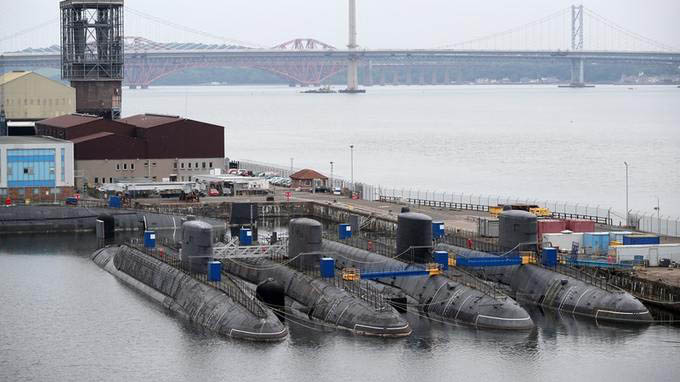
CONCERNS have been raised that the deteriorating state of the UK’s nuclear submarines is “potentially putting the vessel and her crew at risk”.
Alarm bells were rung after the Ministry of Defence (MoD) announced last week that Defence Secretary John Healey had joined one of the UK’s four Vanguard-class submarines as it returned to dock at Faslane.
An image shared by the MoD showed Healey looking at the submarine, which appeared covered in algae, slime and rust along its entire length.
Further photos taken by locals living near the HM Naval Base Clyde showed the submarine was missing numerous patches of anechoic tiles – which line the exterior to help hide the submarine from sonar.
The submarine is thought to have been on patrol since mid-March, meaning it had spent around 160 days underwater.
In March, HMS Vengeance returned to Faslane after 201 days underwater – reported to be the second-longest patrol ever – directly following a mission which lasted 195 days. Patrols on the previous Polaris generation of nuclear submarines averaged 60-70 days, according to the Campaign for Nuclear Disarmament (CND)
HMS Vengeance is one of four Vanguard-class submarines, which were each built with a 25-year lifespan – a limit imposed by the lifespan of major components – and either commenced sea trials or saw their reactor go critical in 1992, 1994, 1996, and 1999. The UK Government noted in 2007 that it “should be possible” to extend these lifespans by five years to a total of 30.
At least one submarine is meant to be patrolling the oceans at any time in order to deliver a nuclear strike if the UK Government orders it. However, the ageing fleet meant that essential works had to be carried out to keep the submarines seaworthy, placing higher pressure on the remaining boats.
In January, alarm bells had been rung after Dominic Cummings, a key adviser during Boris Johnson’s time in Downing Street, said there was a hidden “scandal of nuclear weapons infrastructure” which he called a “dangerous disaster and a budget nightmare of hard-to-believe and highly classified proportions”.
Issues with ageing equipment nearly led to a major disaster in 2022 after a broken depth gauge meant one nuclear submarine was continuing to descend despite unknowingly approaching “crush depth”.
On Saturday, the Daily Mail reported that none of the UK’s attack submarines are currently at sea, and the majority (16 out of 25) of the country’s warships are broken down, being modified, or undergoing trials. Retired rear admiral Chris Parry called the situation “utterly dire”.
In May 2023, HMS Vanguard finally completed a seven-and-a-half-year refit, and in March 2024, work on HMS Victorious was also completed. The final boat in the fleet is called HMS Vigilant, but it is not clear which of the four were greeted by Defence Secretary Healey at Faslane last week.
Responding to the nuclear-armed submarine returning to Faslane, Chris McEleny, Alba Party’s general secretary and a former MoD employee, said: “The latest sight of a Vanguard-class submarine returning to base caked in algae is very concerning. And, yet again we see anechoic tiles are missing, potentially putting the vessel and her crew at risk.
“The lengthy patrols should also spark concerns as to whether or not subs are going out on patrol with increased payloads due to concern over the half-life.
“The MoD have, as usual, failed to provide basic guarantees in regards to the safety-critical implications of these prolonged patrols.”…………………………..
Lynn Jamieson, the chair of the Scottish CND, claimed that the “UK’s nuclear weapons system is a shambles but that does not capture the absurdity and seriousness of its dangers”.
“The longer at sea, the more mental and physical stress on the crew and the more chance of accidents,” she went on. “The older the submarine the more the risks of unplanned radioactive leaks and other such incidents.
“The cost of keeping the ageing nuclear weapon system going and simultaneously building a replacement grows while public services are drastically cut. In 2023 alone, it cost £6.5 billion [according to a report from the independent Nuclear Information Service] and it will be even more this year.”……….
Jamieson said the UK Government should show “true leadership [and] scrap the old system and its replacement rather than continuing to valorise a capacity for genocide that puts the world in peril, a target on our backs and risks in our backyard”.
SNP MSP Bill Kidd, the co-president of Parliamentarians for Nuclear Non-Proliferation and Disarmament (PNND), said Scotland was the “dumping ground for nuclear leaks and discharges into our waters and coasts and we are the target for any potential nukes an enemy would fire at”.
“Nothing is planned to change in all this as far as Westminster is concerned – and that means Labour every single bit as much as Tories”, he said……………………………….. https://www.thenational.scot/news/24568990.new-images-raise-concerns-state-uk-nuclear-submarines/
NuScale Power: Cash Burn, Dilution And Insider Selling

Seeking Alpha, George Theodosi Sep. 06, 2024
Summary
Sell-side analysts expect rapid YoY revenue growth, which assumes the RoPower Project progresses and/or more contract wins with new customers.
NuScale is a Small-Modular Reactor designer, which is expected to see significant growth in the years ahead but competes in a crowded field of new and developing SMR technologies.
With 20% short interest, positive project announcements could trigger a short squeeze, but I recommend selling due to financial instability and ongoing dilution risks (20% dilution already past 12 month).
Introduction and Background
NuScale (NYSE:SMR) is an overhyped but well-timed 2022 SPAC which raised $380m from a $1.9bn valuation at the time. On a fully dilutive basis, the company trades around $1.85bn (Market cap) currently with shares priced around $7.59. The company designs “NuScale Power Modules” which are uranium fed light water reactors for nuclear power plants.
These are SMRs (Small Modular Reactors) which have been newly implemented by some global superpowers as part of their clean energy mix. The US has over 50 nuclear power plants with over 90 nuclear reactors but no SMRs. NuScale is one of the few US OEMs at the forefront of winning a US SMR project………………………..
NuScale is now waiting for a design approval on a 77mw SMR, which is expected to be approved in 2025. This was upgraded from the originally approved 50mw SMR, where NuScale engineers realised they could increase the power to 77mw without any significant design changes.
The modules can be used in an array of 4, 6 and 12 modules.
- VOYGR-4 = 308mw
- VOYGR-6 = 462mw
- VOYGR-12 = 924mw (design expected to complete EOY) – competes with large reactor technologies such as Vogtle electric

- plant modules in Georgia which put out more than 1000mw+ per reactor.
NuScale is yet to build and install a project. In 2014, NuScale announced they’d been selected by UAMPS (Utah Associated Municipal Power Systems) to build the first SMR project in the US, known as the Carbon Free Power Project in Idaho.
After 7 years and several design changes, in November 2023 the project was cancelled. UAMPS and NuScale mutually agreed to end the project, seeing too much financial risk as costs surged 53%.
This is a common theme in nuclear energy, the new reactors at Vogtle in Georgia faced extreme delays (7yrs longer than expected) and were way over their original budget. This has likely worsened post-2020 due to supply chain shortages and higher commodity costs. Today, NuScale’s key project is the RoPower nuclear power project in Romania. The project is considering 6 NuScale reactor modules and is in the Feed (Front-End Engineering Design) phase, which can last several years……………………………………………………
Without a nuclear engineering background, it’s hard to draw comparisons between different SMRs. There are more than 80 SMR technologies in development globally. Unfortunately, I cannot comment on how NuScale is positioned vs. competitors, however in speaking with analysts it seems potential customers are waiting to see how SMR technology evolves before talking with OEMs. In the short term, it doesn’t seem new customer commitments are imminent.
Some Concerning Signs
Overall, NuScale is interesting; however, there is reason to believe this company is struggling under the hood. Even if they are successful, years of cash burn could force the business to become over leveraged or dilutive for shareholders. The current cash level is $130m, but analysts are suggesting FCF burn of $123m this year and $85m in FY25…………………………….
What makes this more concerning is the continuous aggressive selling from insiders after the rally from a low 2023.
Also, the lifecycle of taking a project from Pre-FEED to having a site operation is the best part of the decade. Without NuScale having scaled up manufacturing, at what point do they become profitable?
……………………………………….. While the NuScale’s technology certainly deserves merit, there’s a large difference between developing an SMR and successfully selling/negotiating back-and-forth with US states or municipalities for a nuclear project.
I question the balance sheet health of the company as the path to profitability appears vague, with the quarterly cash burn and highly active insider selling I would recommend investors “sell” as this pattern (especially for SPACs) usually signals even more dilution (20% dilution already over LTM).
https://seekingalpha.com/article/4719640-nuscale-power-cash-burn-dilution-and-insider-selling
America’s New Nuclear War Plan: Time to Panic? Amb. Jack Matlock, Col. Larry Wilkerson, Ted Postol
Biden’s new secret Nuclear Employment Guidance is a plan to fight and “win” a nuclear war against Russia, China, and North Korea at the same time.
Dr. Postol explains how the new “super fuze” being installed in 1600 US 100-kiloton warheads will allow US subs to preemptively hit and destroy — with 100% confidence — the silo-based ICBMs of Russia, China, and North Korea, leaving the larger yield US warheads for buried command centers, military-industrial targets, political targets and their corresponding cities.
Biden and the neocons are relentlessly moving us towards nuclear war and the destruction of civilization; most certainly the destruction of the United States.
-Dr. Ted Postol, MIT Professor Emeritus and one of the world’s leading experts on nuclear weapons – Col. (ret.) Lawrence Wilkerson, retired United States Army Colonel and former chief of staff of Secretary of State Colin Powell -Ambassador Jack Matlock, a scholar of Russian history and culture who was President Reagan’s choice for the …
The scientific nature of the linear no-threshold (LNT) model used in the system of radiological protection
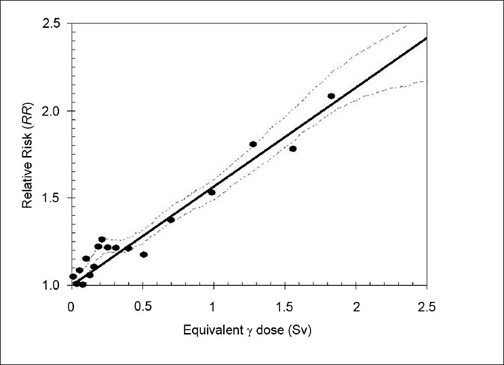
the LNT concept can be tested in principle and fulfils the criteria of a scientific hypothesis. The fact that the system of radiological protection is also based on ethics does not render it unscientific either
attempts to discredit the LNT approach as being non-scientific lack any sound basis, and are in fact counterproductive with respect to the aims of radiological protection, because they preclude any constructive debate.
Radiation and Environmental Biophysics , 02 September 2024, Andrzej Wojcik & Friedo Zölzer https://link.springer.com/article/10.1007/s00411-024-01092-1—
During the first half of the 20th century, it was commonly assumed that radiation-induced health effects occur only when the dose exceeds a certain threshold. This idea was discarded for stochastic effects when more knowledge was gained about the mechanisms of radiation-induced cancer.
Currently, a key tenet of the international system of radiological protection is the linear no-threshold (LNT) model where the risk of radiation-induced cancer is believed to be directly proportional to the dose received, even at dose levels where the effects cannot be proven directly.
The validity of the LNT approach has been questioned on the basis of a claim that only conclusions that can be verified experimentally or epidemiologically are scientific and LNT should, thus, be discarded because the system of radiological protection must be based on solid science.
The aim of this publication is to demonstrate that the LNT concept can be tested in principle and fulfils the criteria of a scientific hypothesis. The fact that the system of radiological protection is also based on ethics does not render it unscientific either. One of the fundamental ethical concepts underlying the LNT model is the precautionary principle
We explain why it is the best approach, based on science and ethics (as well as practical experience), in situations of prevailing uncertainty.
Introduction
A basic assumption of the international system of radiological protection, as recommended by the International Commission on Radiological Protection (ICRP), is that the risk of radiation-induced cancer is directly proportional to the dose received, without any dose level (threshold) below which the risk is zero (ICRP_99 2005). This so-called linear no-threshold (LNT) model is strongly criticized by, on the one hand, researchers claiming that it underestimates the actual risk, because it does not consider, among other possible modifying factors, bystander effects according to which the relationship is more properly described by a supralinear curve (Mothersill and Seymour 2004).
On the other hand, some researchers claim that adaptation processes reduce the radiation-related risk at low doses, resulting in a threshold dose below which there is either no effect or even health benefit (hormesis) (Sacks et al. 2016; Janiak and Waligorski 2023).
Yet others claim that both mechanistic evidence coming from radiobiology and observational evidence coming from epidemiology suggest that a dose threshold, if any, could not be greater than a few tens of mGy and, thus, the LNT model has a solid basis in results from experimental studies (Laurier et al. 2023). Also, UNSCEAR in a review of biological data, concluded that there remains good justification for the use of a non-threshold model for risk inference given the robust knowledge on the role of mutation and chromosomal aberrations in carcinogenesis (UNSCEAR 2021).
Why is it not possible to reach a consensus regarding the shape of the dose response? At low radiation doses, defined as below 0.1 Gy (UNSCEAR 2012), biological effects are very weak so they are easily influenced by random environmental factors making results difficult to reproduce. A good example are the variable results of adaptive response experiments (Wojcik and Streffer 1994; Wojcik et al. 1996; Wojcik and Shadley 2000). In general, despite new, suggestive epidemiological data (Laurier et al. 2023), mechanistic, experimental approaches with both cell and animal models are unable to provide unequivocal evidence for the existence of a dose threshold below which radiation carries no risk to human health. There is still insufficient knowledge about the sequence of events from the deleterious alteration of biomolecules to the diagnosable disease, i.e. to stochastic cancer or non-cancer effects (UNSCEAR 2021). Also, epidemiological studies mostly lack the necessary statistical power to detect effects at doses below 0.1 Gy (Ruhm et al. 2022).
Disagreement about the interpretation of results is an essential element of science and many famous scientific discoveries were accompanied by controversy and disputes (Sarewitz 2011). Consequently, it is desirable that the debate around LNT continues. However, its validity has been questioned on the basis that it is not a scientific concept and should thus be discarded because the system of radiological protection must be based on solid science (Waltar et al. 2023).
This line of argumentation precludes any constructive debate: no researcher will waste time on a non-scientific concept. More importantly, it is flawed because the system of radiological protection, as designed by the ICRP, is “based on scientific knowledge, ethical values, and more than a century of practical experience” (ICRP_138 2018). It relies wholly on state-of-the art science, understood broadly as knowledge (as distinguished from ignorance or misunderstanding), and the LNT model, being an element of the system, is a scientific concept. The aim of this publication is to demonstrate this.
LNT as a scientific concept
The authors of the recent LNT critique (Waltar et al. 2023) write that LNT lacks a solid scientific base because there are no “actually proven radiation effects at low-doses”. The risk of cancer induced by high doses of radiation, they argue, can be derived from frequentist probabilities which “are based on evidence; namely, on the truthful and verifiable existence of an increase in the frequency of radiation health effects in a cohort of exposed people and are defined as the limit of the relative frequency of incidence of the effect in a series of certifiable epidemiological studies on such cohorts”. In contrast, the risk of cancer in the low dose region is assessed based on “subjective probabilities (sometimes also confusedly termed “Bayesian”), which are conjectured for the low-dose area, expressed as a possible expectation that radiation health effects might occur, and are quantified by a personal belief or expert’s judgement; that is, not necessarily substantiated by the frequency or propensity that the effects actually occur at such levels of dose”. In short: the assumption of no threshold dose for the risk of cancer is not scientific because it cannot be proven.
The claim that whatever cannot be proven in experimental or epidemiological studies is not scientific may be based on a particular reading of Karl Popper´s “critical rationalism”, which suggests a method to distinguish between science and non-science. But if the authors had that approach in mind, their reading of it is wrong: lack of proof does not, in Popper’s view, make a hypothesis unscientific. On the contrary, Popper maintains that nothing whatsoever can really be proven; there are no verifiable truths. What scientists can do is to test a given hypothesis over and over again. If they find satisfactory evidence against it, the hypothesis is “falsified”.
If they do not find evidence against it, it is “corroborated”. The more “corroboration” we have, the more certain we can be of that particular hypothesis, but we can still not consider it “verified”. So, the criterion of “scientific” vs. “unscientific” is not “verifiability”, but “falsifiability” (Popper 1961). Popper´s method has been severely criticized for reasons that will not be discussed here. The interested reader is referred to relevant publications (Maxwell 1972; Feyerabend 2010). Despite this ongoing discussion in science theory, however, there is no doubt that the lack of positive proof for a certain model does not render it unscientific. This is true for the LNT model as well. It can, in principle, be tested. For instance, recent epidemiological studies with large numbers of people undergoing medical radiology did not show any indication of a threshold for cancer induction by radiation (Laurier et al. 2023). The latest addition to this growing body of evidence is the EPI-CT study, in which almost a million children who had to undergo a CT examination were followed for several years and their risk of hematological malignancies was quantified. A significant increase was found in the dose group of 10–15 mGy (Bosch de Basea Gomez et al. 2023). With even larger numbers, and more precise and consistent methods of dosimetry as well as diagnosis of disease, it will be possible to corroborate the LNT model even more convincingly. Of course, this will always apply to particular dose ranges and particular effects, but with those caveats in mind, the model can certainly be considered “falsifiable” and, therefore, scientific. To summarize: epidemiological studies have, until now, not been able to falsify LNT (Laurier et al. 2023). Let us have a look at attempts to falsify LNT by other approaches.
Conclusions from UNSCEAR reports on the shape of the dose response for cancer and derivation of dose limits by the ICRP
In developing its recommendations, the ICRP relies on results from the field of natural science on mechanisms and levels of health effects induced by ionising radiation. These are regularly summarised by UNSCEAR (www.unscear.org). As stated above, the epidemiological evidence on the shape of the dose response curve in the dose range relevant for planned exposure scenarios of people does not falsify LNT, but does not allow drawing firm conclusions due to lack of statistical power.
Since 1994, UNSCEAR has published four reports that look into biological effects induced by low dose exposure, with the aim of examining whether they support the assumption of the LNT concept. The 1994 report focused on adaptive responses in cells, experimental animals and humans and concludes that evidence does not exist to support the assumption that adaptive responses convey beneficial effects to the organism that would outweigh the detrimental effects of exposure to radiation (UNSCEAR 1994).
The 2000 report did not specifically focus on adaptive responses but aimed at providing an overview of data available on the relationship between radiation exposure and the induction of cancer and hereditary disease (UNSCEAR 2000). It concludes that, although mechanistic uncertainty remains, studies on DNA repair and cellular/molecular processes of radiation tumorigenesis provide no good reason to assume that there will be a low-dose threshold for the induction of tumours in general.
In support of this, the authors of the report discuss DNA double strand breaks (DSB) originating from single ionizing tracks of radiation that occur in the low dose range. Although their incidence is low, they may arise from the more likely single strand lesions, when these occur in close proximity on opposed DNA strands. Furthermore, the report points out that single ionization tracks were shown to induce locally multiply damaged sites (LMDS). LMDS pose a particular problem for the cellular DNA repair system and will most likely be misrepaired, leading to a mutation and potentially – cancer. This evidence is important in view of existing opinions that low doses of radiation merely increase the level of the naturally occurring oxidative damage that has no negative consequences because cells are well equipped to cope with it (Tubiana 2005). Of course, oxidative damage does occur naturally and appropriate repair processes exist, but its spatial distribution is different from that caused by the ionisation tracks of photons and particles in the form of locally multiply damaged sites.
The aim of the next report, published in 2006, was “to evaluate how non-targeted effects may affect risks associated with radiation exposure, the understanding of radiation-induced carcinogenesis, and the mechanistic basis for interpreting epidemiological data on radiation effects” (UNSCEAR 2006). The report concludes that data currently available do not require changes in radiation risk coefficients for cancer and hereditary effects of radiation in humans.
The last report was published in 2021 (UNSCEAR 2021). Its focus is on biological mechanisms of radiation actions at doses mostly in the low to moderate range relevant for cancer risk inference. Consequently, it looks at available knowledge on DNA damage and repair, chromatin remodelling and epigenetics, gene and protein expression, non-targeted effects, the immune system and modelling of cancer mechanisms. In accordance with the previous reports, it concludes that accumulated knowledge on mechanisms of effects directly related to cancer induction imply a dose-risk relationship without a threshold at least down to 10 mGy and that “little in the way of robust data could be identified that would prompt the need to change the current approach taken for low-dose radiation cancer risk inference as used for radiation protection purposes and for the purpose of comparison with other risks”. In summary, neither epidemiological nor mechanistic studies provide unequivocal evidence for the shape of the dose-response curve, although they confirm that the LNT concept is falsifiable in principle – at least for certain dose ranges.
The ethical basis of radiological protection as a scientific concept
If it is not possible to quantify the risk of stochastic effects at low doses, how did the ICRP arrive at the dose limits that are currently recommended? A historical reconstruction of the considerations underlying the setting of dose limits was recently published by one of us (Zolzer 2022). Here, as well as elsewhere in radiological protection, assumptions about risks at small doses need to be made. If recommendations for radiological protection would have to be based on scientific evidence alone, one might point to the (undeniable and undenied) uncertainties about the LNT concept and remain doubtful as to its applicability. As stated above, however, the ICRP’s system is “based on scientific knowledge, ethical values, and more than a century of practical experience” (ICRP_138 2018). Usually, of course, ethics and practice per se are not considered scientific (which in itself is open to debate), but it needs to be emphasised that the role which they play for the system of radiological protection does not render that system unscientific.
“Ethics” can mean different things. It can denote a set of beliefs and values regarding what is right and what is wrong, and as such can be used in combinations like “the ethics of a particular individual”, “the ethics of a particular group”, or “the ethics of a particular society, culture, or religion“. The same word, however, can also designate a branch of philosophy, sometimes called “moral philosophy”, which systematically studies this kind of beliefs and values. “Ethics” in this sense is clearly a rational endeavour. It examines standards of rightness and wrongness, and their application to practical problems, but it does not single out a concrete standard, i.e. it does not become prescriptive.
What is right and what is wrong can only be established within the context of a particular ethical system. Utilitarian ethics, for instance, recognizes as the criterion of right and wrong nothing but the “greatest happiness of the greatest number” (Bentham 1776), whereas in deontological ethics everything depends on “treating humanity, whether in your own person or that of another, never merely as a means to an end” (Kant 1785). There are other systems, of course. Virtue ethics, for instance, has recently received renewed interest (Aristotle being an early proponent). It is concerned not so much with actions and their consequences, but with people’s characters and dispositions. Consistent ethical judgement is possible on the basis of either of these theories, but they do not always lead to the same result. Thus, there is no such thing as an ethics which is universally applicable and binding for all.
Coming back to radiological protection, it may be interesting to note that around the turn of the 21st century several authors, among them members of ICRP, argued that the three principles of radiological protection – justification, optimization, and dose limitation – are based on one or the other classical theory of Western moral philosophy as outlined above. The ICRP itself in its first publication fully dedicated to the topic of ethics (ICRP_138 2018) has discussed this kind of arguments in an appendix to that publication. In the main body of the report, however, they took a different approach. Recognizing that radiological protection is a world-wide endeavour, it was decided to take as a point of departure a certain set of moral values which are common (or at least acceptable) to people from different cultural backgrounds. These values did not have to be invented from scratch but had been referred to implicitly or explicitly in earlier publications of the IRCP.
The approach is similar to an ethical theory suggested in 1979 by Beauchamp and Childress and widely applied in medicine, called the “principles of biomedical ethics” (Beauchamp 1979). The authors originally worked on quite different basic assumptions, one being a utilitarian, the other a deontological ethicist, but they realised that in spite of belonging to different schools of thought, they could still agree on a number of “principles” which allowed them to solve most ethical dilemmas in clinical practice. They identified these principles as Respect of autonomy, Non-maleficence, Beneficence, and Justice. All of them, they maintained, had prima facie validity, i.e. all of them seem applicable at first sight without any particular ranking, but in certain clinical situations not all of them can be applied in the same way, one or the other having to take precedence. This they called “balancing the principles” and they discussed many examples of how to determine the relative importance of each principle in particular situations.
What the ICRP proposed in Publication 138 is very similar, but it does not copy the Beauchamp and Childress approach one-to-one. The fundamental concepts are called “values” instead of “principles”, because that term is already used for justification, optimization and dose limitation, and more importantly, the four “core values” are slightly different: Beneficence/Non-maleficence, Prudence, Justice, and Dignity. Their application in different contexts, as well as the necessity to “balance” them against each other, is discussed in Publication 138, as well as Publication 153 on “Radiological Protection in Veterinary Practice” and in the up-coming publication on “Ethics in Radiological Protection for Medical Diagnosis and Treatment”. We will not go into any detail here, but just state again that the ethics of radiological protection, as practiced by the ICRP, is not a promotion of subjective convictions or preferences, or a reflection of “personal beliefs”, but is well in line with current trends in moral philosophy.
Prudence is not part of the Beauchamp and Childress set of principles, or values, but does play an important role for radiological protection. The ICRP itself has pointed this out. The 1956/57 amendment to the 1954 recommendation (ICRP_1958, 1958) already stated that ‘it is prudent to limit the dose of radiation received by gametes (…) to an amount of the order of the natural background’, and a similar statement appeared in Publication 1 (ICRP_1 1959), where prudence again played an important role in the justification of dose limits. The ICRP recognised that its recommendations could no longer be based on well-documented tissue reactions, but had to take account of stochastic effects for which there was no more than a certain plausibility. And even though the risks were hard to quantify for the time being, one had to make an attempt to weigh them against the expected benefits of activities involving radiation exposure. This is why ICRP recommended early on ‘that every effort be made to reduce exposure (…) to the lowest possible level’ (ICRP_1955, 1955), ‘that all doses be kept as low as practicable’ (ICRP_1 1959), or ‘that all doses be as low as readily achievable, economic and social consequences being taken into account’ (ICRP_9 1966). All three formulation are obviously early formulations of the ALARA principle, “doses should all be kept as low as reasonably achievable, taking into account economic and societal factors” (ICRP_103 2007). ICRP also suggested that dose limitation ‘necessarily involves a compromise between deleterious effects and social benefits’ (1959) (ICRP_1 1959) and that one has to find ‘a level at which the assumed risk is deemed to be acceptable to the individual and to society in view of the benefits derived from such activities’ (ICRP_9 1966).
In the latest general recommendations (ICRP_103 2007), the ICRP states that “it is prudent to take uncertainties (…) into account”, even when it comes to the estimates of threshold doses for deterministic effects. More importantly, the “so-called linear-non-threshold (LNT) model is considered by the Commission to be the best practical approach to managing risk from radiation exposure… The Commission considers that the LNT model remains a prudent basis for radiological protection at low doses and low dose rates.” Furthermore, in spite of lacking evidence in humans for radiation effects on offspring and next generations, “the Commission prudently continues to include the risk of heritable effects in its system of radiological protection” and “considers that it is prudent to assume that life-time cancer risk following in-utero exposure will be similar to that following irradiation in early childhood, i.e., at most, about three times that of the population as a whole.” In Appendix A, the stress is again on practicality: “The LNT model is not universally accepted as biological truth, but rather, because we do not actually know what level of risk is associated with very-low-dose exposure, it is considered to be a prudent judgement for public policy aimed at avoiding unnecessary risk from exposure.”
In one of the passages just quoted, the ICRP mentions that its emphasis on prudence is “commensurate with the ‘precautionary principle’ (UNESCO 2005)” (for further information on the principle, see (Martuzzi and Bertollini 2004; Tallacchini 2005). This has raised red flags for some, who tend to think that radiological protection is overdone anyway and actually “crippling the beneficial effects that controlled radiation offers to a modern society” (Waltar et al. 2023). It cannot be emphasized enough, however, that the precautionary principle is often (willingly or unwillingly) misinterpreted. It does not say that with the slightest suspicion of a risk, however small it may be, all related activities should be stopped. It does not, as some have put it, provide blanket authorization for technophobia. One of the most widely used versions of the principle states: “When an activity raises threats of harm to human health or the environment, precautionary measures should be taken even if some cause and effect relationships are not fully established scientifically.” This is the so-called ”Wingspread Statement”, issued in 1998 by a diverse group of scientists, philosophers, lawyers and environmental activists from the United States, Canada and Europe. . The wording is similar to that of the “Rio Declaration” six years earlier, which says, “Where there are threats of serious or irreversible damage, lack of full scientific certainty shall not be used as a reason for postponing cost-effective measures to prevent environmental degradation.”
Note that the “Rio Declaration” calls for “cost-effective measures”, which suggests a similar weighing of risks and benefits as the recommendation to keep doses “as low as reasonably achievable, taking into account economic and societal factors” (see above). Admittedly, not every version of the ‘precautionary principle’ contains this qualification. Quite often, the emphasis is very much on avoiding risks. This is perhaps the main reason why the ICRP preferred prudence as a core value: it contains the notion of a careful consideration of both, the negative as well as the positive consequences of an action or practice. In a way, it is precaution combined with solidarity, if by the latter we understand (for want of a better term) “taking into account economic and societal consequences”.
As this brief discussion also indicates, the precautionary principle is not beyond criticism, and may need further explication (Hansson 2020). That does not mean, however, that its substance would be controversial. In our context it may mean this: those in charge of setting the rules of radiological protection cannot excuse themselves on the grounds of uncertainties in our scientific knowledge; they have to act upon plausible indications of risks, while not losing sight of the reasonability of their actions, taking into account economic and societal factors. This requires critical evaluation of the existing evidence, as well as exercising their responsibilities in terms of the “core values” mentioned above. The ICRP itself (ICRP_138 2018) has put it as follows: “Neither prudence nor the precautionary principle should be interpreted as demanding zero risk, choosing the least risky option, or requiring action just for the sake of action. The experience of over half a century of radiological risk management applying the optimisation principle can be considered as a reasoned and pragmatic application of prudence and/or the precautionary principle”. It is not impossible, of course, that at some point a revision of the system of radiological protection will become necessary, perhaps even a reassessment of the LNT model, but that must be left to rational analysis and discussion and cannot be pushed through by sowing doubts regarding the scientific anchoring of radiological protection as it is practised now.
Conclusions
There is no doubt that, in order to be accepted by stakeholders and society at large, the system of radiological protection must be based on solid science. A common misconception, however, is that only conclusions that can be positively “proven” experimentally or epidemiologically are “scientific”. Notably, the assumption of direct proportionality with radiation dose for certain health effects (the linear no-threshold model) has been called unscientific because results describing effects after very low doses are inconclusive.
Here we argue that it is not positive “proof” which renders a hypothesis “scientific”, but its fundamental “testability”. Currently, direct evidence in support of the LNT model is available down to a few tens of mSv. Testing it at even smaller doses seems possible in principle, but such studies are not available yet and must be left for the future. In situations like this, ethical considerations take on special importance – which does not render the whole system unscientific either.
Here we argue that it is not positive “proof” which renders a hypothesis “scientific”, but its fundamental “testability”. Currently, direct evidence in support of the LNT model is available down to a few tens of mSv. Testing it at even smaller doses seems possible in principle, but such studies are not available yet and must be left for the future. In situations like this, ethical considerations take on special importance – which does not render the whole system unscientific either.
Ynys Môn MP calls for UK Government clarity on Wylfa site
Ynys Môn MP Llinos Medi has called on the UK Government to provide clear
commitments and timelines regarding the future of the Wylfa site and the
broader energy strategy for Wales.
Speaking during a debate on the Great
British Energy (GBE) Bill on Thursday (5 September), Ms Medi highlighted
the island’s rich natural energy potential and criticised the ongoing
political uncertainty surrounding the future of the Wylfa nuclear site.
She also accused the previous Conservative government of playing a “political
game” and offering local communities a “false dawn” regarding the
future of the site. In May, the Conservative Government had confirmed Wylfa
as the preferred site for a major new nuclear power development.
Nation Cymru 6th Sept 2024,
https://nation.cymru/news/ynys-mon-mp-calls-for-uk-government-clarity-on-wylfa-site/
White House pushes for AUKUS to move to ‘pillar two’ weapons focus
SMH, By Peter Hartcher, September 9, 2024
The US is pushing for the AUKUS partnership to launch some world-leading new military technology projects before Joe Biden’s presidency ends, amid signs of growing impatience with the initiative.
The US National Security Adviser, Jake Sullivan, revealed in an interview at the White House that he wanted to see “two or three signature projects launched and under way by the time the administration finishes” on January 20.
While he expressed satisfaction with progress on so-called pillar one of AUKUS, the submarine program, his timeline for pillar two’s cutting-edge tech scheme puts new pressure on the three countries’ military and scientific agencies to deliver in the next five months.
It is three years ago this month that the leaders of the US, UK and Australia announced the joint technology initiative. In the meantime, China has extended its advantage in critical technologies, according to a report last week by the Australian Strategic Policy Institute.
A former senior official in the Trump administration expressed frustration: “On the science and technology side, I think there are problems because we’re not moving fast enough,” said Nadia Schadlow, Deputy National Security Adviser to the former president.
“If AUKUS doesn’t perform, if it doesn’t do what it’s supposed to do and what we said it would do, we almost might be better off without it because if we can’t fulfil our objectives, we almost look weaker.”
Pillar two of AUKUS was assigned eight priority research fields: advanced cyber, artificial intelligence, quantum technologies, undersea capabilities, hypersonics, electronic warfare, innovation, and information sharing……………………
officials said privately that there were problems of co-ordination, that each of the country’s systems was different and moved at different speeds…………………………. https://www.smh.com.au/politics/federal/white-house-pushes-for-aukus-to-move-to-pillar-two-weapons-focus-20240908-p5k8s5.html
Nuclear Roulette: The U.S. Nuclear Employment Guideline

CounterPunch, by Mark Muhich, 6 Sept 24
The U.S. Nuclear Employment Guideline Report, according to Department of Defense websites, appears to be a detailed target menu in the event the president orders a nuclear attack. It is required of the executive by Congress, Section 491, when the president alters the nuclear weapons strategy of the U.S. As alluded to by top-ranking administration leaders and reported in the New York Times, the revised Nuclear Employment Guideline signed by President Biden reflects China’s expanding nuclear arsenal.
The president sets the nation’s nuclear strategy and the Joint Chiefs of Staff develop the tactical plans to achieve the president’s strategy, according to DOD literature.
As China, People’s Republic of China, has increased its manufacture of nuclear weapons in the past five years much faster than defense analysts had predicted, the U.S. has turned the focus of its nuclear guideline toward the PRC. China now possesses around 500 nuclear warheads. And while the U.S. and Russia each currently deploy around 1,700 nuclear warheads each, China is on pace to equal that number by 2035.
Similarly threatening to the U.S. is the prospect of China coordinating its nuclear capability with that of Russia, and even with North Korea, now harboring around 60 nuclear warheads and a growing fleet of intercontinental missiles to deliver them.
China has also made aggressive territorial claims to the South China Sea and vows to gain control of Taiwan by any means necessary, definitively by 2049. This July China suspended nuclear weapons control talks with the U.S. citing increased military arms sales to Taiwan by the U.S.
Yet, China has recently dissuaded Russia from threatening the use of nuclear weapons against Ukraine, or against western states that might deploy soldiers to Ukraine. And China repeated its call for the “denuclearization” of the Korean Peninsula in joint meetings with Japan and South Korea in May of this year.
Significantly, China maintains its posture of No First Use of nuclear weapons and repeated calls last week for the other leading nuclear-armed nations, Russia, France, U.K and the U.S. to adopt a No First Use nuclear policy. India and China are the only nuclear-armed nations to affirm NFU.
One of the architects of the revised U.S. Nuclear Employment Guidelines is Vipin Narang, Acting Assistant Director of Department of Defense Space Agency. During his retirement speech from DOD this August, Narang blamed China and Russia for failed arms control talks. Before returning to lecture at M.I.T. Narang said China’s expansion of its nuclear arsenal was threatening, and that moving its nuclear-armed missiles to “launch on warning” status was provocative.
Narang did not share that the U.S. possesses more than ten times the number of nuclear warheads, 5,580, as China has. Nor that the entire fleet of U.S. Air Force Minuteman missiles has been on “launch on alert” status for sixty years.
Failing arms control negotiations with Russia result from Russia’s invasion of Ukraine and Russia’s announced withdrawal from the NewSTART nuclear weapons treaty in 2026, according to Narang. NewSTART is the only remaining arms control treaty now in effect between Russia and the U.S. It successfully decommissioned thousands of nuclear warhead and missile launchers from each arsenal since its ratification in 2010. For the deteriorating state of U.S. Russia talks, Narang did not cite the failure of the U.S. to ratify the Comprehensive Nuclear Test Ban Treaty, 1996, the U.S. withdrawal from the Anti-Ballistic Missile Defense Treaty in 2001 or withdrawal from the Intermediate-Range Nuclear Forces Treaty, INF in 2019.
Narang’s bleak address to his DOD colleagues warned them to “prepare for a world where constraints on nuclear weapons arsenals disappear entirely”……………………………………………………………….
Missing from Narang’s calculus, is the decision many countries have already made to forgo nuclear arsenal all together. Indeed, the majority of nation-states, pursuant of their own security, have rejected the deployment of nuclear weapons on their soil. The majority of humankind regard nuclear weapons as inherently destabilizing and dangerous and of no military value.
When 193 countries voted for the Non-Proliferation of Nuclear Weapons Treaty, NPT, in 1970, they agreed not only to halt the spread of nuclear weapons but to reduce nuclear weapons stockpiles, and “cease the nuclear arms race”. The NPT places the onus on the nuclear powers to eliminate all nuclear weapons at an “early date”. All nuclear weapons would eventually come under the control of an international agency as agreed in the NPT’s Article VI.
The international control of military arms and especially nuclear weapons was the lifelong goal of Albert Einstein…………………………………………………………………………..
Even more consequential is the growing effort begun in the United Nations General Assembly to outlaw nuclear weapons, the Treaty on the Prohibition of Nuclear Weapons, TPNW. Endorsed by 122 countries in the United Nations General Assembly in 2017 is now ratified or acceded to by 70 countries, banning nuclear weapons from their jurisdictions.
As the U.S. and the other nuclear powers drift further and further from the goal of nuclear disarmament, they double down on their nuclear arsenals and invest in new platforms to deliver their nuclear payloads. Is it too late to build credible assurances that these awful weapons will never be used? It will never be too late to eschew these horrible weapons, unless or until some brilliant leader orders a nuclear attack.
……………………………………………………………………………………………… “Nuclear weapons are totally irrational”, said Ronald Reagan, they are “totally inhumane, good for nothing but killing people, possible destruction of life on Earth and civilization.” There is no theory that will change the brutal absurdity of nuclear weapons nor transform them into logical agents of peace and security.
In Thomas Schelling’s application of game theory to nuclear weapons the object of deterrence is to convince the adversary not to use their weapons and vice versa. If nuclear deterrence is the stated goal of the U.S. nuclear posture, then adopting a No First Use of nuclear weapon either by treaty or unilaterally is the clear choice. China and India have done so for decades. No First Use makes perfect sense. Repelling conventional assaults should not be part of the nuclear employment equation. Nuclear weapons are not just more powerful conventional weapons. If they are ever used in war again the consequences are unpredictable and beyond any risk assessment.
It is past time to end the U.S.’ “nuclear ambiguity”. Take the nuclear option off the table. Abide by the Non-Proliferation Treaty; refuse to renew the nuclear arms race. We cannot win security or freedom in a game of nuclear roulette. But we can and will lose everything if we continue to bet on nuclear weapons. What folly. https://www.counterpunch.org/2024/09/06/nuclear-roulette-the-u-s-nuclear-employment-guideline/
Seismic Showdown Coming at Diablo Canyon

Environmental groups have successfully petitioned for “enforcement action” by the US Nuclear Regulatory Commission (NRC) to conduct a review of the earthquake risks and the potential nuclear accident threat with the continued operation of California’s two-unit Diablo Canyon nuclear power plant near San Luis Obispo.
The March 4, 2024 petition was filed to the NRC Commissioners’ Office calling for the revocation of the nuke’s operating license by Mothers For Peace, the Environmental Working Group and Friends of the Earth. The May 15, 2024 initial assessment by an impaneled NRC Petition Review Board (under 10 CFR 2.206) was that the petition should be denied because it did not present significant new information. Enough information was provided however that the Board offered the Petitioners the opportunity for a pre-hearing meeting to supplement their request.
On July 17, 2024, the Petitioners’ presented their seismic expert, Dr. Peter Bird, Professor Emeritus of Geosciences at UCLA, who in testimony to the NRC argued that Pacific Gas & Electric’s (PG&E) most recent publicly-cited seismic risk analysis was seriously deficient. Dr. Bird’s testimony finds that PG&E’s 2018 Seismic Probabilistic Risk Assessment for Diablo Canyon’s “seismic core damage frequency” (SCDF) is currently estimated to be 3×10⁻⁵, when it should be 1.4×10⁻³ per year.
Dr. Bird warns that PG&E has significantly underestimated the earthquake-related nuclear accident frequency because of flawed assumptions that the Diablo Canyon meltdown risk chiefly comes from strike-slip earthquakes. Dr. Bird charges that PG&E’s analysis disregards the more recent January 1, 2024 earthquake in Japan. He asserts that the earthquake centered on the Noto Peninsula (7.5 Magnitude) is a dramatic demonstration and analogous to the significant risk contribution from the “thrust fault” earthquake potential underneath the Diablo Canyon reactor site and in the adjacent Irish Hills.
Based on Dr. Bird’s supplemental information and testimony, the NRC Petition Review Board announced on August 27, 2024 that it reconsidered its preliminary judgment and “As provided by 10 CFR 2.206, we will take action on your request within a reasonable time.”
9700 Ukrainian Soldiers Killed Invading Russia.

Attempt to Sabotage Kursk Nuclear Power Plant Failed.
Ariel Ky, Sep 05, 2024, https://arielky.substack.com/p/9700-ukrainian-soldiers-killed-invading?utm_source=post-email-title&publication_id=282593&post_id=148533310&utm_campaign=email-post-title&isFreemail=true&r=c9zhh&triedRedirect=true&utm_medium=email
The latest report from Russian military expert, Dr. Vladimir Kozin.
Report # 316. AROUND 81% OF UKRAINIAN GIs IN THE KURSK REGION BECAME KIA, September 4, 2024
Over the last 24 hours between September 3 and 4, 2024, the AFU losses have amounted to up to 450 troops and 17 armored units, including a tank, an infantry fighting vehicle and 15 armored combat vehicles, 40 motor vehicles, four artillery guns, including three French-made Caesar self-propelled artillery systems, a US-made M777 artillery system, as well as two launch pads of US-made multiple launch rocket systems or MLRS, including an M142 HIMARS and an M270 MLRS.
Overall, since the onset of combat in the region, the adversary has lost over 9,700 personnel that is around 80% of the entire invading force.
Other losses include: 81 tanks, 39 infantry fighting vehicles, 70 armored personnel carriers, 576 armored combat vehicles, 313 motor vehicles, 72 artillery guns, 22 launch pads of multiple launch rocket systems, including seven HIMARS and three other MLRS, eight launch pads of air defense systems, two transport-loading vehicles, 17 radio-electronic warfare stations, seven counterbattery radars, two air defense radars, eight units of engineering equipment as well as two obstacle-clearing vehicles and one UR-77 mine-clearing vehicle.
Russian aviation delivered strikes on enemy reserves in dozens of locations in the Ukrainian Sumy Region, bordering Russian Kursk Region.
Earlier, former president Zelensky who has lost its presidential powers in May 2024 said that the Ukrainian incursion into Russia was part of a plan to end the hostilities. However, his statement is an utter lie. It has been exposed by a Ukrainian POW who admitted on the Russian Vesti FM federal radio station on September 4, 2024 that the main task of his sabotage group was to seize the Kursk NPP and to
On August 6, 2024 the Ukrainian AFU attacked Russia’s Kursk Region. Local residents living near the border areas have been evacuated to safer territories inside Russia where they are staying in 200 temporary shelters across 31 Russian regions.
According to President Vladimir Putin, the Ukrainian provocation in the Kursk Region is doomed to failure, and after it, Russia’s opponents “will have a desire to really – not in words, but in deeds – to move to peaceful negotiations and settle these issues peacefully,” he said on September 2.plant high-explosive mines there to blackmail the USA and NATO for extra arms.
Israel’s Plan for Gaza Comes Into View
The Unz Review Mike Whitney • August 28, 2024
Unit 601 of the IDF’s Combat Engineering Corps is clearing a vast swath of land across central Gaza splitting the 25-mile-long territory into two parts. The so-called Netzarim corridor (Highway 749)—which crosses Gaza from east to west—will provide faster transport for IDF troops operating in the area and will also function as vital part of Israel’s security cordon separating the north from the south. There is no doubt that military outposts will be established along the corridor as well as in locations along the western coast. The aim of these actions is to protect the development of new settlements that will be built north of the corridor. In short, the Israeli government is using its war on Hamas to divert attention from its real objective which is the expansion of the Jewish state on Palestinian land.
Not surprisingly, Israel’s activities in the north have resulted in mass evacuations that have intensified the suffering of the traumatized population. According to the Palestinian Chronicle:
The United Nations announced on Tuesday that Israel issued three fresh evacuation orders for over 19 neighborhoods in the north of Gaza and Deir Al-Balah, bringing the number of massive evacuation orders to 16 in August alone, which leaves only 11 percent of the Gaza Strip untouched by the evacuation orders.
Only 11% of Gaza Spared – 16 Israeli Evacuation Orders in August Alone, Palestinian Chronicle
As we noted earlier, the Palestinians are being driven from the north to make room for new settlements that will be built sometime in the near future. The Netzarim corridor serves as a critical buffer zone separating these new colonies from potential attack by Palestinian militants. Israel intends to maintain control over Gaza by putting restrictions on movement and by designating areas where Palestinians can gather. In other words, Palestinians will be refugees in their own country. This is an excerpt from an article at the World Socialist Web Site:
Gaza’s population, which stood at over 2 million before the start of the genocide, is now crammed into an area that is just 41 square kilometers, or 11 percent of Gaza’s total area, with the remaining 89 percent being placed on evacuation orders by the Israeli Defense Forces.
The United Nations warned, “The area is lacking critical infrastructure and basic services, while aid provision is limited due to access and security issues. The severe overcrowding, with a density of 30,000 to 34,000 individuals per square kilometer has exacerbated the dire shortage of essential resources such as water, sanitation and hygiene supplies, health services, protection and shelter.” UN forced to suspend food distribution as Israel places 89 percent of Gaza under evacuation orders, World Socialist Web Site
This is Netanyahu’s plan in a nutshell:
- Shrink the Gaza concentration camp to a mere 11 percent of its original size.
- Transfer the population to the designated location.
- Partition the territory to allow for settlement activity and the expropriation of gas reserves off the coast.
- Neutralize any opposition to Israeli expansion
Surprisingly, an article posted Wednesday at CNN confirms our analysis and admits that Israel’s postwar plans involve “cutting the strip in two” and maintaining a permanent “operational foothold in the area”. And while the author does not verify our theory on settlement development, readers can draw their own conclusions. Israel would never put so much money and effort into an operation that didn’t extend the borders of the Israeli state. Here’s CNN:…………………………………………………………………
Keep in mind, that these developments are taking place while Israeli diplomats are currently conducting ceasefire negotiations in Cairo. Why would Hamas agree to a deal with Israel when Israel is in the process of seizing more Palestinian land and tightening the occupation?
They won’t, which means the bloodbath will continue for the foreseeable future. Hamas has no other choice. Here’s an excerpt from a post by author Anthony Lowenstein:
…. Israel’s goal in Gaza is long-term occupation and the building of small settlements, slowly building into something far more substantial. The editor of @haaretzcom outlines the grim state of play:
“The public discourse in Israel is focused on the hostages and their fate, but Netanyahu considers them to be a media nuisance, a battering ram by his political opponents, and a distraction from the goal: A prolonged occupation of the Gaza Strip, or – as he has repeatedly declared since the outbreak of the war – “Israeli security control. “Control of the Philadephi route and the “security corridor” along the border allows Israel to surround Gaza’s land borders and isolate it from Egypt. Control of the Netzarim road route in practice divides northern Gaza, where few Palestinian remain with destroyed homes and infrastructures, from the southern part of the coastal enclave, overflowing with refugees from the entire Strip.
“In practice, a long-term arrangement for “the day after” is being drawn up. Israel will control the northern Gaza Strip and drive out the 300,000 Palestinian still there. Maj.-Gen. (res.) Giora Eiland, the war’s ideologue, proposes starving them to death, or exiling them, as a lever with which to defeat Hamas. The Israeli right envisions a Jewish settlement of the area, with vast real estate potential of convenient topography, a sea view, and proximity to central Israel.
“The 57-year experience of the occupation of the West Bank and East Jerusalem indicates that this is a long process that requires a lot of patience and diplomatic maneuvering capability. No large Jewish city will be built in Gaza tomorrow, but progress will be made acre by acre, mobile home by mobile home, outpost by outpost – just like in Hebron, Elon Moreh, and Gilad Farm. “The southern Gaza Strip will be left for Hamas, which will have to care for the destitute residents under Israeli siege, even after the international community loses interest in the story and moves on to other crises. Netanyahu believes with certainty that, after the U.S. elections, the influence of pro-Palestinian demonstrators on American politics will wane, even if Vice President Kamala Harris wins.” Haaretz
………………………………….. So, maybe, Netanyahu scrapped his original ethnic cleansing plan in order to avoid a full-blown conflagration with Egypt? We don’t know for sure. But what we do know is that Israel’s endgame for Gaza is now in full view. The area north of the corridor will be occupied by Israeli settlers committed to the Zionist ideal while the native population will be left to languish in grinding poverty in makeshift tent cities cut off from the outside world. https://www.unz.com/mwhitney/israels-plan-for-gaza-comes-into-view/
Indian nuclear weapons, 2024
By Hans M. Kristensen, Matt Korda, Eliana Johns, Mackenzie Knight | September 5, 2024
India continues to modernize its nuclear arsenal, with at least four new weapon systems and several new delivery platforms under development to complement or replace existing nuclear-capable aircraft, land-based delivery systems, and sea-based systems. Several of these systems are nearing completion and will soon be fielded.
We estimate that India may have produced enough military plutonium for 130 to 210 nuclear warheads but likely has produced only around 172, although the country’s warhead stockpile is likely growing. The Nuclear Notebook is researched and written by the staff of the Federation of American Scientists’ Nuclear Information Project: director Hans M. Kristensen, associate director Matt Korda, senior research associates Eliana Johns and Mackenzie Knight.
This article is freely available in PDF format in the Bulletin of the Atomic Scientists’ digital magazine (published by Taylor & Francis) at this link.
…………………..India continues to modernize its nuclear weapons arsenal and operationalize its nascent triad. We estimate that India currently operates eight different nuclear-capable systems: two aircraft, five land-based ballistic missiles, and one sea-based ballistic missile. At least five more systems are in development, most of which are thought to be nearing completion and to be fielded with the armed forces soon.
Research methodology and confidence
The Indian government does not publish numbers about the size of its nuclear weapon stockpile. The analyses and estimates made in the Nuclear Notebook are therefore derived from a combination of open sources: (1) state-originating data (e.g. government statements, declassified documents, budgetary information, military parades, and treaty disclosure data); (2) non-state-originating data (e.g. media reports, think tank analyses, and industry publications); and (3) commercial satellite imagery. …………………………………………………………….
…………Fissile material and warhead inventory estimates
India is one of only a handful of countries believed to be producing both highly enriched uranium (HEU) and weapons-grade plutonium, although its HEU production is largely assumed to be focused on producing fuel for its growing number of nuclear-powered vessels and submarines (Frieß et al. 2024).
………………..Nuclear doctrine
Tensions between India and Pakistan constitute one of the most concerning nuclear hotspots on the planet. These two nuclear-armed countries engaged in open hostilities as recently as November 2020, when Indian and Pakistani soldiers exchanged artillery and gunfire over the Line of Control, resulting in at least 22 deaths. ……………………………………………………………………………………………………………………………………………………………………………………………………………………………………………………. more https://thebulletin.org/premium/2024-09/indian-nuclear-weapons-2024/
21- 22 September Peace, Nature and Co-operation in the Baltic and Arctic. International Online/Offline Conference & Round Table Discussions

September 21 – 22, 2024, Regional Press Institute LLC, office 301, 87, letter A, Ligovsky Prospect, Saint Petersburg, Russia
Registration form https://forms.gle/Qdg8oEVyBLDCEHLs8
Background
●The Baltic and Arctic regions are militarizing, and new risks of global military confrontation, climate and
environmental disasters are emerging.
●Civil society in Russia and Western countries are limited in the ability to cooperate to reduce the risks of military escalation, stop climate change, radioactive contamination, and destruction of natural ecosystems.
●UN: 2024 is the year of promoting a culture of peace; September 21 is the International Day of Peace
Organizers:
●Public Council of the Southern Coast of the Gulf of Finland, interregional environmental movement of St. Petersburg – Leningrad Region, Russia.
●Global Women for Peace United Against NATO – international network.
●Global Network Against Weapons and Nuclear Power in Space.
●International Peace Bureau (IPB) – Geneva, Barcelona, Berlin.
●World BEYOND War – a global anti-war organization with chapters and affiliates in about two dozen countries. It is opposed to the very institution of war and not just individual wars.
Supporters:
●Regional Press Institute, St. Petersburg, Russia.
●Boligaktionen – Activism for a World with Space for Everyone, Denmark.
●Canadian organization Women’s Voice for Peace (VOW), Canada.
●International Women’s League for Peace and Freedom of Canada (WILPF).
●International Women’s League for Peace and Freedom WILPF – Norway.
●Women for Peace, Finland.
●Women for Peace, Sweden.
Objectives:
●Strengthening peace and sustainable development through civil diplomacy.
●Combating climate change and protecting the environment through peacebuilding.
●The transformation of the Baltic and Arctic regions into a nuclear-weapon-free zone of peace.
●Uniting peacekeeping and environmental human rights organizations in the Baltic and Arctic regions to achieve the UN Sustainable Development Goals: 16 (peace, justice, and strong institutions) and 17 (Partnership for Sustainable Development).
●Making the Baltic Sea region and the Arctic zones of peace between people and with nature. Participants:
●Non-governmental organizations of the Baltic and Arctic regions from Russia, Finland, Sweden, Germany, Norway, Canada, USA.
Speakers:
Palle BENDSEN – Friends of the Earth Denmark.
Oleg BODROV – Public Council of the Southern Coast of the Gulf of Finland, IPB, Russia. Reiner BRAUN – IPB, Berlin, Germany.
Elena KRUGLIKOVA – veteran of the environmental movement of the Arctic region, Murmansk region, Russia.
Nikolay KUZ’MIN – Deputy of the Legislative Assembly of the Leningrad Region, Russia.
Lea LAUNOKARI – Women for Peace Finland, Global Women United Against NATO, Finland.
Tamara LORINCZ – Canadian organization Women’s Voice for Peace (VOW), Canada.
David SWANSON – World BEYOND War, USA.
Andrey TALEVLIN – Ph.D. Russian Socio-Ecological Union, Russia.
Ingeborg BREINES – Former Chair of IPB and UNESCO Director, Norway.
Isabelle CASSEL – Deutscher Friedensrat (climate issue), Germany.
Angelika CLAUSSEN – President of IPPNW Europe, Germany
Tove JENSEN – Peace Initiative in Denmark & Campaign “No to US-Bases in Denmark.
Martha HENNESSY – prominent American peace & nuclear disarmament promoter, USA.
Mechthild KLINGENBURG-VOGEL – Kieler Friedensforum/Kiel Peace Forum, Germany.
Ulla KLÖTZER – Women for Peace Finland.
Christer LUNDGREN – Folket i Bild Association, National No to NATO Organization, Working Group Against the DCA, Sweden.
Heidi MEINZOLT – member of WILPF and coordinator of a women’s WG in the OSCE area, Germany.
Agneta NORBERG – Women for Peace – Sweden.
Mia STUBBENDORFF – Nej till NATO/No to NATO, Sweden.
Olli TAMMILEHTO – writer & an old-line activist in Finnish environmental & peace movements, Finland.
Susanne URBAN – Women’s International League for Peace and Freedom, Norway.
Netanyahu to Biden…’We can’t complete the genocidal ethnic cleaning of Gaza without you’

Walt Zlotow, West Suburban Peace Coalition, Glen Ellyn IL 6 Sept 24
President Biden, with Democratic nominee Kamala Harris in total agreement, proclaims US support of Israeli defense is “ironclad.” What is truly ironclad is US enabling Israel’s genocidal ethnic cleansing that would collapse if Biden simply stopped the weapons gravy train.
That gravy train has sent Israel over 50,000 tons of weapons since the October 7th Hamas attack provoked Israel’s all out genocidal ethnic cleansing of Gaza. Biden recently signed a $17 billion gift of genocide weapons on top of the $3.8 billion Israel receives every year under a 10 year giveaway President Obama authorized 8 years ago this month.
An Israeli Air Force official just admitted Israel cannot keep up their genocidal offensive for more than a couple of months without US weapons. This is especially critical to Israel’s Air Force which gets all its planes and much of its bombs, missiles and intelligence equipment from Uncle Sam.
Based on that, Biden could have ended the genocide by last January if he’d only cut off all weapons once it was clear Netanyahu was using the October 7 Hamas attack to remove all Palestinians from Gaza. Such action by Biden might have returned over 100 Israeli hostages to their loved ones by early January, if not in time for a New Year’s Eve celebration.
Biden and Harris might as well campaign as the Genocide Twins instead of their disgusting posturing that they’re working for a ceasefire. They know Netanyahu must keep the genocide going to remain in office instead of prison, and complete the removal of 2,300,000 Palestinians from Gaza. Releasing Israeli hostages on only third on his to-do list.
Kamala is cursed by siding with her boss’s pact with the Genocide Devil in Gaza. Her feet are set in cement from 11 months of refusing to break with Biden on genocide support. Foreign policy will never pass her lips unless pressed by an increasingly dubious press. All she can mutter is ‘Our defense of Israel is ironclad and we will not change course.’
Kamala Harris would rather be president than end the worst genocide in this century. Nothing but her moral cowardice is preventing her from breaking with Biden and demanding an immediate halt to every US weapon racing to engulf Gaza in endless death and destruction. If she ever has trouble sleeping, she should count dead Palestinian moms and kids instead of sheep. She will never run out.
1 This Month.
5 January -Webinar-What is Trump’s Golden Dome?
REGISTER AT Massachusetts Peace Action Education


New book – https://www.amazon.com/dp/1923372157?utm_source=substack&utm_medium=email
Now until to February 10, 2026 Radioactive waste storage in France: the debate is finally open! How to participate?
-
Archives
- December 2025 (293)
- November 2025 (359)
- October 2025 (377)
- September 2025 (258)
- August 2025 (319)
- July 2025 (230)
- June 2025 (348)
- May 2025 (261)
- April 2025 (305)
- March 2025 (319)
- February 2025 (234)
- January 2025 (250)
-
Categories
- 1
- 1 NUCLEAR ISSUES
- business and costs
- climate change
- culture and arts
- ENERGY
- environment
- health
- history
- indigenous issues
- Legal
- marketing of nuclear
- media
- opposition to nuclear
- PERSONAL STORIES
- politics
- politics international
- Religion and ethics
- safety
- secrets,lies and civil liberties
- spinbuster
- technology
- Uranium
- wastes
- weapons and war
- Women
- 2 WORLD
- ACTION
- AFRICA
- Atrocities
- AUSTRALIA
- Christina's notes
- Christina's themes
- culture and arts
- Events
- Fuk 2022
- Fuk 2023
- Fukushima 2017
- Fukushima 2018
- fukushima 2019
- Fukushima 2020
- Fukushima 2021
- general
- global warming
- Humour (God we need it)
- Nuclear
- RARE EARTHS
- Reference
- resources – print
- Resources -audiovicual
- Weekly Newsletter
- World
- World Nuclear
- YouTube
-
RSS
Entries RSS
Comments RSS
 nuclear-news