The US Empire Can Exist Only In A Continuous State Of Mass Military Violence
Caitlin Johnstone, Sep 10, 2024
I shouldn’t be able to do this for a living. Criticizing the warmongering of a single power structure shouldn’t be anyone’s full-time job. No government should be murdering people so consistently and reliably that people can plan their whole lives around it.
Yet here we are. Not only are people like me able to focus on commentary about the mass military violence of the US and its satellite states as a full-time gig, but we usually find there’s too much to talk about from day to day.
Just today we’re getting reports that at least 40 people have been killed in an IDF massacre on a tented encampment in southern Gaza near Khan Younis, which Israel had previously designated as a humanitarian safe zone. There are videos of families digging frantically in the sand trying to rescue loved ones who were buried by the blast, which was reportedly so forceful that bodies are being found some thirty feet down.
Antiwar’s Dave DeCamp has taken to typing up daily updates on the documented Israeli massacres of Palestinian civilians in Gaza, often with dozens of victims added to the official death toll in a single day.
Kamala Harris has finally announced a foreign policy platform, and it contains nothing but a promise of more of the same. She promises to “ensure that the United States remains the strongest, most lethal fighting force in the world,” to “make sure that America, not China, wins the competition for the 21st century,” to “strengthen, not abdicate, our global leadership,” to “stand up for Israel’s right to defend itself,” and to “protect U.S. forces and interests from Iran and Iran-backed terrorist groups,” and boasts that she “has worked with our allies to ensure NATO is stronger than ever” in the face of “Vladimir Putin’s brutal aggression.”
In other words, more unrelenting violence and militarism to ensure that the US empire continues dominating the planet. It’s not hard to see why Harris is winning endorsements from some of the worst warmongers on the planet.
Bloodthirsty empire manager Victoria Nuland is now openly admitting that the US sabotaged a peace deal in Ukraine in the early weeks of the war, saying in an interview that Washington pushed Kyiv to reject the deal because it “included limits on the precise kinds of weapons systems that Ukraine could have” if it were agreed to.
This is something people like myself used to get called Russian propagandists for saying happened, despite all the overwhelming evidence that it had.
The horrors in Ukraine are happening because the US-centralized power alliance refused easy off-ramp after easy off-ramp. This whole war could’ve easily been avoided, and it could have easily been ended shortly after it began. But they kept pushing on, because they wanted this war………………………………………………………………………………
there are plenty of others like me. And for every person there is making a living from opposing US warmongering, there are thousands making a living from facilitating it. In the military. In the arms industry. In think tanks. In the media. In politics. In government agencies. There is much, much more money to be made from war than from peace. That’s one of the main reasons the capitalist empire we live under exists in a constant state of mass military violence. Endless violence and the threat thereof is the glue which holds the empire together.
In a healthy world, none of these jobs would exist — people working for peace or people working for war. Peace would just be the natural order of things.
But until that healthy world has emerged, we fight on. Day after day after day after day, for however long such work is necessary. https://www.caitlinjohnst.one/p/the-us-empire-can-only-exist-in-a?utm_source=post-email-title&publication_id=82124&post_id=148710143&utm_campaign=email-post-title&isFreemail=true&r=1ise1&triedRedirect=true&utm_medium=email
Which rural area will take the UK’s nuclear waste?

each community being considered for a geological disposal facility (GDF) now receives about £1m a year in investment
If a GDF is built here, Mr Moore says, there will be billions of pounds invested in the area
Victoria Gill and Kate Stephens, Science correspondent and senior science producer, BBC News, 9 Sept 24

“………………………………………………………………………..Sellafield is filling up – and experts say we have no choice but to find somewhere new to keep this material safe.
Nuclear power is also part of the government’s stated mission for ”clean power by 2030”. More nuclear power means more nuclear waste.
…………………….. Sellafield runs 24 hours a day with 11,000 staff. It costs more than £2bn per year to keep the site going, and it comprises more than 1,000 buildings, connected by 25 miles of road.
However, in recent years, doubts have been raised about the site’s security and physical integrity.
One of its oldest waste storage silos is currently leaking radioactive liquid into the ground. That is a “recurrence of a historic leak” that Sellafield Ltd, the company that operates the site, says first started in the 1970s.
Sellafield has also faced questions about its working culture and adherence to safety rules. The company is currently awaiting sentencing after it pleaded guilty, in June, to charges related to cyber-security failings.
An investigation by the Guardian revealed that the site’s systems had been hacked, although the Office for Nuclear Regulation said there was “no evidence that any vulnerabilities had been exploited” by the hackers.
All of this has cast a shadow over an operation that, as well as taking in newly created nuclear waste, also houses several decades worth of much older radioactive material.
The site no longer produces or reprocesses any nuclear material, but this is where the race began to produce plutonium for nuclear weapons at the height of the Cold War.
“It was the dawn of the nuclear age,” says Roddy Miller, Sellafield’s operations director. “But because it was a race, not a lot of thought was given to the long-term safe storage of the waste materials that were produced.”
The leaking storage silo, which was built in the 1960s, is just one of the buildings that now has to be emptied so the material inside can go into more modern silos. The building was only ever designed to be filled, and Sellafield says its plans to clear the site and demolish the building are the safest option.
The site’s head of retrievals, Alyson Armett, points out that without a “permanent solution” for the nuclear waste, the plans to decommission could be delayed.
The current plan for that permanent solution is to bury the waste deep underground.
A complicated search – both scientifically and politically – is currently on for somewhere to lock it away from humanity permanently.
“We need to isolate it from future populations or even civilisations, that’s the timescale we’re looking at,” says Prof Corkhill…………………………………………………..
The plan for permanent, underground storage is to contain that solid waste in a Russian doll-like series of barriers. The glass, encased in steel, will be shielded in concrete, then buried beneath the Earth‘s own barriers – layers of solid rock.
The question is, where will that facility be?
‘The waste is already here’
Six years ago, communities in England and Wales were asked to come forward if they were willing to consider having a disposal facility built near their town or village.
Potential sites will need the ideal geology – enough solid rock to create that permanent barrier. However, they also need something that might be more difficult – a willing community.
There are financial incentives for communities to take part in this discussion. So far, five have come forward. Two have already been ruled out. Allerdale in Cumbria was deemed unsuitable because there was not enough solid bedrock. Then, in September, councillors in South Holderness, in Yorkshire, withdrew after a series of local protests.
Government scientists are assessing the remaining three communities that are currently in the running. Geologists have been carrying out seismic testing – looking for that all-important impermeable rock.
One of the communities being considered is very close to the Sellafield site in West Cumbria, at Seascale.
It is not yet clear if Mid Copeland, the area under consideration that includes Seascale, will have the right rock. The survey and consultation here – and in the other locations being considered – are in their early stages and scheduled to last at least a decade.
In the meantime, the conversation goes on and each community being considered for a geological disposal facility (GDF) now receives about £1m a year in investment while initial scientific tests are carried out.
Mr Moore is part of a committee called a GDF partnership. It includes local residents, local government and representatives of Nuclear Waste Services, which is the government body behind this project.
These partnerships aim to keep the process transparent and ensure local people are well-informed. They also decide how the money is spent.
If a GDF is built here, Mr Moore says, there will be billions of pounds invested in the area. “If we’re going to host this on behalf of the UK, the community should benefit,” he says.
Also still on the shortlist are South Copeland, again on the Cumbrian coast, and a site on the east coast in Lincolnshire, where there have been a number of peaceful, but angry, protests.
On Halloween 2021 in Theddlethorpe, one of the local villages, several residents used their gardens to put up garish anti-nuclear dump scarecrows, inspired by an idea from pressure group the Guardians of the East Coast, which is campaigning against the disposal facility.
Ken Smith, from nearby Mablethorpe, is a member of both the campaign group and the local GDF partnership.
He thinks the government’s approach to finding a nuclear waste disposal site “stinks”.
Mr Smith is concerned that the voices of those most affected might not be heard and says it is unclear how local opinion will be measured at the end of the consultation…………………………………………………………………………………………………………………
https://www.bbc.co.uk/news/articles/czx6e2x0kdyo
Former Palisades engineering director has misgivings about the plant’s historic restart effort

Tom Henry, The Blade, 9 Sept 24,
A former nuclear industry executive has emerged as a surprise critic of the historic effort to restart the Palisades nuclear plant in southwest Michigan.
Alan Blind, 71, who lives on a 16-acre farm in Baroda, Mich., said during a 75-minute interview with The Blade last week that Palisades, in his opinion, is “not a good selection as a role model for expanding the nuclear industry.”
Holtec International, of Jupiter, Fla., which originally was hired to decommission the plant, has instead bought it from its previous owner, New Orleans-based Entergy, and has put together an unprecedented plan to restart it.
Bringing a mothballed nuclear plant back into service has never been tried before in nuclear history.
The project has received huge government support, including a $1.52 billion commitment from the U.S. Department of Energy.
The outcome is expected to have huge ramifications for the industry worldwide, given the prohibitive cost of building new plants from scratch and continued issues over less-expensive units known as small modular reactors.
Mr. Blind has special insight into Palisades because he served as its engineering director for nearly seven years under Entergy’s ownership, from May of 2006 through February of 2013.
Decades in industry
Palisades was the last stop in Mr. Blind’s career, which included time as a vice president at two other sites.
Mr. Blind began working in the nuclear industry in December of 1975 at a plant about 35 miles south of Palisades, the D.C. Cook nuclear plant near Bridgman, Mich.
That job came shortly after he graduated from Purdue University.
He he worked his way up to site vice president for D.C. Cook’s owner, American Electric Power.
After 21½ years at D.C. Cook, Mr. Blind went to New York to be vice president of nuclear power at the former Indian Point nuclear complex, which at the time was owned by Consolidated Edison Company of New York Inc.
He said he believed Palisades was operating on a thin safety margin while he was there, that he “saw a lot of red flags,” and never expected it to become the first test case of whether a mothballed plant can be put back in service.
“I put Palisades out of my mind and was comforted by the decision to shut it down and put it into decommissioning,” Mr. Blind said.
The plant was shut down and entered its decommissioning phase in May of 2022, a little more than two years ago……………………………………………………………
Palisades history……
Palisades began operating March 24, 1971, meaning that much of the engineering behind it occurred in the mid to late-1960s.
The NRC itself didn’t begin as a government agency until 1975, although it grew out of one called the Atomic Energy Commission, which had a much broader mission. The NRC is solely focused on safety. The AEC was created after World War II to promote and develop peaceful use of atomic science and technology.
The “defense in depth” concept that promotes use of multiple backup safety systems, as well as the NRC’s general design criteria, were not well-developed during the era Palisades was built, Mr. Blind said.
He said it’s akin to not having an old house brought up to modern building codes.
“Overall, I was concerned about the lack of safety systems and design in depth,” Mr. Blind said.
He said he wanted to see more done as Palisades — like many other nuclear reactors — went to longer fuel cycles and higher outputs.
“They started off with very little margin because of the age of the plant,” Mr. Blind said. “Those margins were razor thin.”
His concerns have made their way into three formal petitions he filed with the NRC last month, imploring the agency to slow down and think harder about the pros and cons of restarting Palisades.
Each are undergoing a lengthy review process the NRC uses when it receives such detailed petitions. One petition challenges the rulemaking process, citing the unprecedented nature of what Holtec is trying to do. Another claims there is a lack of quality assurance, and the third petition raises questions about the existing state of steam generators.
Mr. Blind said he expects to file a fourth petition with the NRC within the next 10 days, making a technical argument for a public hearing more extensive than what’s been held to date………………………………….. https://www.toledoblade.com/business/energy/2024/09/08/former-palisades-engineering-director-has-misgivings-about-the-plant-s-historic/stories/20240908054/?fbclid=IwY2xjawFMkQxleHRuA2FlbQIxMQABHR1G0iCbJRiP0yk2X0kR5WGv88UE6xH5Fsi9ycAnPz2Oo1TQWtlbaFI6DA_aem_-0oAmUfm0HdWnMUniKDfaA
Nuclear Fusion’s public-relations drive is obscuring the challenges that lie ahead
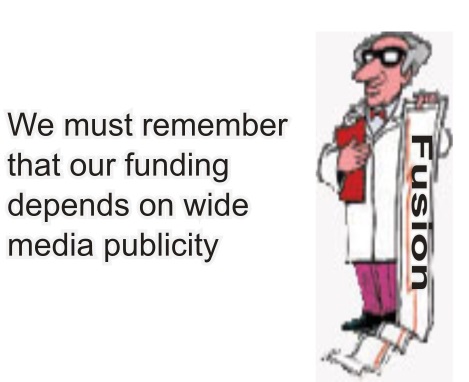
EUROfusion’s Research Roadmap, which the UK co-authored when it was still part of ITER, sees fusion as only making a significant contribution to global energy production in the course of the 22nd century. This may be politically unpalatable, but it is a realistic conclusion.
EUROfusion’s Research Roadmap, which the UK co-authored when it was still part of ITER, sees fusion as only making a significant contribution to global energy production in the course of the 22nd century. This may be politically unpalatable, but it is a realistic conclusion.
https://physicsworld.com/a/fusions-public-relations-drive-is-obscuring-the-challenges-that-lie-ahead/, 09 Sep 2024
Guy Matthews says that the focus on public relations is masking the challenges of commercializing nuclear fusion.
“For a successful technology, reality must take precedence over public relations, for nature cannot be fooled.” So stated the Nobel laureate Richard Feynman during a commission hearing into NASA’s Challenger space shuttle disaster in 1986, which killed all seven astronauts onboard.
Those famous words have since been applied to many technologies, but they are becoming especially apt to nuclear fusion where public relations currently appears to have the upper hand. Fusion has recently been successful in attracting public and private investment and, with help from the private sector, it is claimed that fusion power can be delivered in time to tackle climate change in the coming decades.
Yet this rosy picture hides the complexity of the novel nuclear technology and plasma physics involved. As John Evans – a physicist who has worked at the Atomic Energy Research Establishment in Harwell, UK – recently highlighted in Physics World, there is a lack of proven solutions for the fusion fuel cycle, which involves breeding and reprocessing unprecedented quantities of radioactive tritium with extremely low emissions.
Unfortunately, this is just the tip of the iceberg. Another stubborn roadblock lies in instabilities in the plasma itself – for example, so-called Edge Localised Modes (ELMs), which originate in the outer regions of tokamak plasmas and are akin to solar flares. If not strongly suppressed they could vaporize areas of the tokamak wall, causing fusion reactions to fizzle out. ELMs can also trigger larger plasma instabilities, known as disruptions, that can rapidly dump the entire plasma energy and apply huge electromagnetic forces that could be catastrophic for the walls of a fusion power plant.
In a fusion power plant, the total thermal energy stored in the plasma needs to be about 50 times greater than that achieved in the world’s largest machine, the Joint European Torus (JET). JET operated at the Culham Centre for Fusion Energy in Oxfordshire, UK, until it was shut down in late 2023. I was responsible for upgrading JET’s wall to tungsten/beryllium and subsequently chaired the wall protection expert group.
JET was an extremely impressive device, and just before it ceased operation it set a new world record for controlled fusion energy production of 69 MJ. While this was a scientific and technical tour de force, in absolute terms the fusion energy created and plasma duration achieved at JET were minuscule. A power plant with a sustained fusion power of 1 GW would produce 86 million MJ of fusion energy every day. Furthermore, large ELMs and disruptions were a routine feature of JET’s operation and occasionally caused local melting. Such behaviour would render a power plant inoperable, yet these instabilities remain to be reliably tamed.
Complex issues
Fusion is complex – solutions to one problem often exacerbate other problems. Furthermore, many of the physics and technology features that are essential for fusion power plants and require substantial development and testing in a fusion environment were not present in JET. One example being the technology to drive the plasma current sustainably using microwaves. The purpose of the international ITER project, which is currently being built in Cadarache, France, is to address such issues.
ITER, which is modelled on JET, is a “low duty cycle” physics and engineering experiment. Delays and cost increases are the norm for large nuclear projects and ITER is no exception. It is now expected to start scientific operation in 2034, but the first experiments using “burning” fusion fuel – a mixture of deuterium and tritium (D–T) – is only set to begin in 2039. ITER, which is equipped with many plasma diagnostics that would not be feasible in a power plant, will carry out an extensive research programme that includes testing tritium-breeding technologies on a small scale, ELM suppression using resonant magnetic perturbation coils and plasma-disruption mitigation systems.
The challenges ahead cannot be understated. For fusion to become commercially viable with an acceptably low output of nuclear waste, several generations of power-plant-sized devices could be needed
Yet the challenges ahead cannot be understated. For fusion to become commercially viable with an acceptably low output of nuclear waste, several generations of power-plant-sized devices could be needed following any successful first demonstration of substantial fusion-energy production. Indeed, EUROfusion’s Research Roadmap, which the UK co-authored when it was still part of ITER, sees fusion as only making a significant contribution to global energy production in the course of the 22nd century. This may be politically unpalatable, but it is a realistic conclusion.
The current UK strategy is to construct a fusion power plant – the Spherical Tokamak for Energy Production (STEP) – at West Burton, Nottinghamshire, by 2040 without awaiting results from intermediate experiments such as ITER. This strategy would appear to be a consequence of post-Brexit politics. However, it looks unrealistic scientifically, technically and economically. The total thermal energy of the STEP plasma needs to be about 5000 times greater than has so far been achieved in the UK’s MAST-U spherical tokamak experiment. This will entail an extreme, and unprecedented, extrapolation in physics and technology. Furthermore, the compact STEP geometry means that during plasma disruptions its walls would be exposed to far higher energy loads than ITER, where the wall protection systems are already approaching physical limits.
I expect that the complexity inherent in fusion will continue to provide its advocates, both in the public and private sphere, with ample means to obscure both the severity of the many issues that lie ahead and the timescales required. Returning to Feynman’s remarks, sooner or later reality will catch up with the public relations narrative that currently surrounds fusion. Nature cannot be fooled.
TEPCO restarts debris extraction attempt at Fukushima plant

 KYODO NEWS – https://english.kyodonews.net/news/2024/09/35e573ef1ad3-urgent-tepco-restarts-debris-extraction-attempt-at-fukushima-plant.html
The operator of the Fukushima Daiichi nuclear complex restarted Tuesday a bid to retrieve a small amount of melted fuel from one of its stricken reactors after its first attempt last month was suspended due to setup complications.
The trial extraction was put on hold on Aug. 22 due to issues discovered during preparations, according to Tokyo Electric Power Company Holdings Inc.
The resumption comes after TEPCO confirmed that five pipes set to be used to insert a retrieval device into the No. 2 reactor’s containment vessel are now installed in the correct order.
TEPCO said earlier that it and contractor Mitsubishi Heavy Industries Ltd. failed to check the order in which the pipes were set up, causing the earlier issues.
There are an estimated 880 tons of fuel debris in the Nos. 1, 2 and 3 reactors.
The task of retrieving melted fuel remains a serious challenge in the decades-long decommissioning plan for the Fukushima Daiichi complex, which was damaged following a massive earthquake and tsunami in March 2011.
Japan PM hopeful Kono calls for US assurances to deter nuclear ambitions
By Tim Kelly and Yukiko Toyoda, September 9, 2024
TOKYO, Sept 9 (Reuters) – Tokyo should seek stronger assurances from Washington about its commitment to Japan’s nuclear defence, in order to deflect concerns that could fuel domestic calls for an independent nuclear arsenal, Taro Kono, a prime ministerial contender, said.
Kono, who oversees Japan’s digital transformation and has been both foreign and defence minister, made the comment amid uncertainty over November’s U.S. presidential election fought by Vice President Kamala Harris and former President Donald Trump.
“If the U.S. government becomes unstable, some people in Japan might suggest that Japan develop an independent nuclear deterrent,” Kono told Reuters in an interview on Friday.
“However, if Japan were to declare its intention to abandon nuclear disarmament, South Korea and others might follow suit.”
The only nation to have suffered atomic bomb attacks, Japan has long renounced nuclear weapons, relying instead on the United States to deter potential nuclear-armed rivals such as China, North Korea and Russia.
In the past, however, Trump has stoked concern about that U.S. commitment by suggesting that Japan pay the United States to defend it, including with nuclear weapons.
Japan’s large plutonium stockpile and access to advanced technology, such as rockets developed for its space program, means it has many of the components to build nuclear missiles.
Doing so would hurt rather than strengthen Japan’s national security, said Kono, because apart from proliferation risks, it would probably cut off access to the nuclear fuel Japan needs for its power plants at a time of tight energy supplies………………………………… https://www.reuters.com/world/asia-pacific/japan-pm-hopeful-kono-calls-us-assurances-deter-nuclear-ambitions-2024-09-09/
North Korea’s Kim Jong Un says country to increase number of nuclear weapons, KCNA says
By Reuters, September 10, 2024,
Reporting by Joyce Lee Editing by Chris Reese, https://www.reuters.com/world/asia-pacific/north-koreas-kim-jong-un-says-country-increase-number-nuclear-weapons-kcna-says-2024-09-09/
SEOUL, – North Korean leader Kim Jong Un said the country is now implementing a nuclear force construction policy to increase the number of nuclear weapons “exponentially,” state media KCNA said on Tuesday.
Kim gave a speech on North Korea’s founding anniversary on Monday, KCNA said.
North Korea must more thoroughly prepare its “nuclear capability and its readiness to use it properly at any given time in ensuring the security rights of the state,” Kim said, according to KCNA.
A strong military presence is needed to face “the various threats posed by the United States and its followers,” Kim added.
Nuclear news and more – week to 10 September
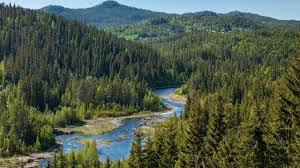
Some bits of good news – Norway’s Forests Have More Than Tripled in a Hundred Years. Zimbabwe’s endangered black rhinos are finally making a comeback. LIXIL-UNICEF partnership improves sanitation and hygiene for 12.7 million people.
TOP STORIES.
Starmer permanently ties UK nuclear arsenal to Washington.
The billions for Sizewell C show Labour’s shameful nuclear hypocrisy.
The US empire is hidden in plain sight. The US Empire Can Exist Only In A Continuous State Of Mass Military Violence.
Climate. Summer 2024 was world’s hottest on record. African nations are losing up to 5% of their GDP per year with climate change, a new report says. ‘Dangerously hot’ weather roasts US west as brutal summer continues.
Noel’s notes. Yah wouldn’t know it was happening – USA military might and toxic nuclear waste quietly infiltrating Australia? The Anglophone nations ganging up to dominate the rest of the world, mindlessly obeying the USA.
************************
AUSTRALIA Basing US Nuclear Subs at Stirling on Garden Island makes Western Australia a nuclear target, while risking “catastrophic conditions” in a N-Sub reactor accident. Submission- G.H. Toll -re new agreement on Naval Nuclear Propulsion- Australia should pursue an independent non aligned foreign policy. The massive new projects propelling South Australia towards 100 per cent net renewables. More Australian news headlines at https://antinuclear.net/2024/09/05/australian-nuclear-news-headlines-sept-5-9/
NUCLEAR ITEMS
| CLIMATE. Developing a plan B for nuclear power in Washington, to cope with global heating. | ECONOMICS. “Subsidy for UK nuclear build calls funding into question”. NuScale Power: Cash Burn, Dilution And Insider Selling. | ENERGY. South Australia is aiming for 100% renewable energy by 2027. It’s already internationally ‘remarkable’ Renewables beat nuclear – even with full balancing included. |
| ENVIRONMENT. How much water does nuclear really need? ALSO AT https://antinuclear.net/2024/09/05/2-a-how-much-water-does-nuclear-really-need/ | EVENTS. 20 -22 September #NoWar2024 Conference: Resisting the USA’s Military Empire. 21-22 September. Peace, Nature and Co-operation in the Baltic and Arctic. International Online/Offline Conference & Round Table Discussions | HEALTH. Leukaemia, lymphoma, and multiple myeloma mortality after low-level exposure to ionising radiation in nuclear workers (INWORKS): updated findings from an international cohort study. |
| HISTORY. Declassified files reveal plans for nuclear power plant in Tyrone, Northern Ireland. | LEGAL. An arms embargo on Israel is not a radical idea — it’s the law. | MEDIA. Chernobyl Roulette by Serhii Plokhy review – gripping account of wartime chaos at Ukraine’s nuclear plant. Physicist MV Ramana on the problem with nuclear power, |
| POLITICS.Israel’s plan for Gaza comes into view . Inside UK Labour’s plans for a new nuclear age -ALSO AT https://nuclear-news.net/2024/09/05/1-b1-inside-uk-labours-plans-for-a-new-nuclear-age/ A staggering £5.5bn more of UK taxpayers’ money to be thrown at this white elephant, Sizewell C nuclear. Ed Miliband considers scrapping planned nuclear plant. Ynys Môn MP calls for UK Government clarity on Wylfa site. Will new UK nuclear power station plan be scrapped? SNP activists whoop as leader John Swinney tells party conference an independent Scotland will give up nuclear deterrent and rejoin the EU. Controversy Surrounds Kazakhstan’s Nuclear Referendum, | POLITICS INTERNATIONAL and DIPLOMACY. Iran desperately needs a nuclear deal to save its battered economy. Netanyahu to Biden…’We can’t complete the genocidal ethnic cleaning of Gaza without you.’ Japan PM hopeful Kono calls for US assurances to deter nuclear ambitions. |
| RADIATION. Rare photos show Earth’s fatal hotspot that can kill any human standing nearby in just five minutes. The scientific nature of the linear no-threshold (LNT) model used in the system of radiological protection. | SAFETY.Seismic Showdown Coming at Diablo Canyon.AEA’s Grossi says Zaporizhzhia cooling tower likely to be demolished. New images raise concerns over state of UK nuclear submarines. Former Palisades engineering director has misgivings about the plant’s historic restart effort. |
| SECRETS and LIES. ICC prosecutor says world leaders ‘threatened’ him over Israel arrest warrants. Boris Johnson faces ‘serious questions’ over new business with uranium entrepreneur. Victoria Nuland, former US deputy secretary of state, confirms West told Zelensky to abandon peace deal. | SPACE. EXPLORATION, WEAPONS. Whoopsie, SpaceX Blew Up Two Rockets and Punched a Massive Hole in One of Earth’s Layers |
| ECHNOLOGY.Small Modular Nuclear Reactors (SMRs) in Canada. Delays, debts and false promises — inside France’s nuclear nightmare – ALSO AT https://nuclear-news.net/2024/09/06/2-a-delays-debts-and-false-promises-inside-frances-nuclear-nightmare/ Why nuclear-powered commercial ships are a bad idea. France still faces problems in starting up long-delayed super-expensive Flamanville nuclear reactor. France’s newest nuclear reactor shuts itself down. Nuclear Fusion’s public-relations drive is obscuring the challenges that lie ahead. | WASTES. Complex compensation scheme represents tacit admission that nuke dump causes blight. Which rural area will take the UK’s nuclear waste? A robot resumes mission to retrieve a piece of melted fuel from inside a damaged Fukushima reactor. TEPCO restarts debris extraction attempt at Fukushima plant. |
| WAR and CONFLICT. America’s New Nuclear War Plan: Time to Panic? | Amb. Jack Matlock, Col. Larry Wilkerson, Ted Postol. Project 2025’s stance on nuclear testing: A dangerous step back. Netanyahu ‘torpedoed’Palestinian peace talks – CNN. 9700 Ukrainian Soldiers Killed Invading Russia. | WEAPONS and WEAPONS SALES.Nuclear Roulette: The U.S. Nuclear Employment Guideline. US arms advantage over Russia and China threatens stability, experts warn. White House pushes for AUKUS to move to ‘pillar two’ weapons focus. Ukrainian Tipping Points: UPDATE. Israeli Official: Without US Aid, Israel Couldn’t Sustain Gaza Operations for More Than a Few Months . Israel’s nuclear arsenal poses major threat to global peace’. UK suspends 30 arms exports to Israel over Gaza war crimes concerns. South Africa halts artillery shells to Poland over fears they will be used against Russia.Indian nuclear weapons, 2024. North Korea’s Kim Jong Un says country to increase number of nuclear weapons, KCNA says. |
Victoria Nuland, former US deputy secretary of state, confirms West told Zelensky to abandon peace deal

Comment: Nuland confirms what was already known. The reason the conflict is ongoing is because the US wanted it to be so.
https://www.rt.com/news/603708-ukraine-istanbul-us-nuland/ 9 Sept 24
Ukraine-Russia talks fell apart after Kiev asked foreign backers for advice, the former US deputy secretary of state has said.
The US, UK and other backers of Ukraine told Kiev to reject the deal reached at the 2022 Istanbul peace talks with Russia, former US under secretary of state Victoria Nuland has said.
In an interview with Russian journalist Mikhail Zygar, former editor-in-chief of the liberal news channel Dozhd, which aired on Thursday, Nuland was asked to comment on reports that the peace process between Moscow and Kiev in late March and early April 2022 collapsed after then-British Prime Minister Boris Johnson traveled to Ukraine and told Vladimir Zelensky to keep fighting.
“Relatively late in the game the Ukrainians began asking for advice on where this thing was going and it became clear to us, clear to the Brits, clear to others that [Russian President Vladimir] Putin’s main condition was buried in an annex to this document that they were working on,” she said of the deal being discussed by the Russian and Ukrainian delegations in Türkiye’s largest city.
The proposed agreement included limits on the kinds of weapons that Kiev could possess, as a result of which Ukraine “would basically be neutered as a military force,” while there were no similar constraints on Russia, the former diplomat explained.
“People inside Ukraine and people outside Ukraine started asking questions about whether this was a good deal and it was at that point that it fell apart,” Nuland said.
The veteran diplomatic hawk, who during her time in the State Department was renowned for her hostility towards Russia, quit the post of under secretary of state for political affairs in March this year. Nuland played a key role in the violent Western-backed coup in Kiev in 2014, which toppled Ukraine’s democratically elected president, Viktor Yanukovich.
During the escalation between Moscow and Kiev in February 2022, she called for deeper US involvement in the conflict and advocated for Ukraine to be armed with increasingly sophisticated weapons. However, in February, the 63-year-old essentially acknowledged the failure of her longstanding policy of containing Moscow, telling the CNN that modern Russia had turned out to be “not the Russia we wanted”
During her conversation with Zygar, Nuland confirmed that both Moscow and Kiev were eager to seek a diplomatic solution a month after the outbreak of the fighting.
“Russia had an interest at that time in at least seeing what it could get. Ukraine, obviously, had an interest if they could stop the war and get and get Russia out,” she said.
US officials “were not in the room” during the talks in Istanbul, only offering Kiev “support” in case it were needed, she claimed.
Putin said last week that the only reason the Istanbul deal failed was because of “the wish of the elites in the US and some European nations to inflict a strategic defeat on Russia,” adding that Boris Johnson served as the messenger to quash the peace process.
The negotiations in Türkiye yielded a draft agreement, which would have ended the hostilities, Putin recalled. Kiev was willing to declare military neutrality, limit its armed forces, and vow not to discriminate against ethnic Russians. In return, Moscow would have joined other leading powers in offering Ukraine security guarantees, he stressed.
According to the Russian leader, talks with Kiev are still possible, but can only happen “not on the basis of some ephemeral demands but on the basis of the documents that were agreed and actually initialized in Istanbul.”
A robot resumes mission to retrieve a piece of melted fuel from inside a damaged Fukushima reactor

The goal of the operation is to bring back less than 3 grams (0.1 ounce) of an estimated 880 tons of fatally radioactive molten fuel that remain in three reactors.
An operation to send an extendable robot into one of three damaged reactors at Fukushima Daiichi nuclear power plant to bring back a tiny gravel of melted fuel debris has resumed, nearly three weeks after its earlier attempt was suspended due to a tech…
By MARI YAMAGUCHI Associated Press, September 10, 2024, https://abcnews.go.com/International/wireStory/robot-resumes-mission-retrieve-piece-melted-fuel-inside-113538057
An extendable robot on Tuesday resumed its entry into one of three damaged reactors at Fukushima Daiichi nuclear power plant to retrieve a fragment of melted fuel debris, nearly three weeks after its earlier attempt was suspended due to a technical issue.
The collection of a tiny sample of the spent fuel debris from inside of the Unit 2 reactor marks the start of the most challenging part of the decadeslong decommissioning of the plant where three reactors were destroyed in the March 11, 2011, magnitude 9.0 earthquake and tsunami disaster.
The sample-return mission, initially scheduled to begin on Aug. 22, was suspended when workers noticed that a set of five 1.5-meter (5-foot) add-on pipes to push in and maneuver the robot were in the wrong order and could not be corrected within the time limit for their radiation exposure, the plant operator Tokyo Electric Power Company Holdings said.
The pipes were to be used to push the robot inside and pull it back out when it finished. Once inside the vessel, the robot is operated remotely from a safer location.
The robot, nicknamed “telesco,” can extend up to about 22 meters (72 feet), including the pipes pushing it from behind, to reach its target area to collect a fragment from the surface of the melted fuel mound using a device equipped with tongs that hang from the of the robot.
The mission to obtain the fragment and return with it is to last about two weeks.
The mix-up, which TEPCO called a “basic mistake,” triggered disappointment and raised concerns from officials and local residents. Industry Minister Ken Saito ordered TEPCO President Tomoaki Kobayakawa a thorough investigation of the cause and preventive steps before resuming the mission.
The pipes were brought into the Unit 2 reactor building and pre-arranged at the end of July by workers from the robot’s prime contractor and its subsidiary, but their final status was never checked until the problem was found.
TEPCO concluded the mishap was caused by a lack of attention, checking and communication between the operator and workers on the ground. By Monday, the equipment was reassembled in the right order and ready for a retrial, the company said.
The goal of the operation is to bring back less than 3 grams (0.1 ounce) of an estimated 880 tons of fatally radioactive molten fuel that remain in three reactors. The small sample will provide key data to develop future decommissioning methods and necessary technology and robots, experts say.
The government and TEPCO are sticking to a 30 to 40-year cleanup target set soon after the meltdown, despite criticism it is unrealistic. No specific plans for the full removal of the melted fuel debris or its storage have been decided.
Project 2025’s stance on nuclear testing: A dangerous step back

By Tom Armbruster | September 6, 2024,
https://thebulletin.org/2024/09/project-2025s-stance-on-nuclear-testing-a-dangerous-step-back/
There are few places more peaceful than a Pacific island. At 6:45 am on a March morning in 1954, that peace was shattered by the largest nuclear test in American history: Operation Bravo.
The Bravo test was a thousand times more powerful than the Hiroshima bomb. Now, 70 years later, Project 2025 is proposing a resumption of testing. That should alarm every military service member, downwinder, Pacific Islander, and taxpayer.
As US Ambassador to the Republic of the Marshall Islands, I joined in the solemn observance of “Remembrance Day,” the Marshallese national holiday that pays tribute every March 1 to those who lost their homeland, fell victim to cancer, or were otherwise affected by the Bravo shockwave and fallout.
The shorthand for the 67 nuclear tests from 1946 to 1958, including two undersea tests that wiped out rich Pacific marine life, is the “Nuclear Legacy.” It would be more accurate to call it the “Nuclear Wound.” The tests on Bikini, Enewetak, and Kwajalein wounded the land and the ocean, the people—both Marshallese and American servicemen—and the relationship between our two countries. Healing is marked in decades, if not centuries.
We’ve had the nuclear tiger by the tail for a long time. No leader of any country would want their legacy to be the use of such indiscriminate and destructive weapons. When I joined the Foreign Service from Hawaii, Ronald Reagan was President. A chance for nuclear disarmament came and went with his summit with Soviet leader Mikhail Gorbachev in Reykjavik. Today, the Soviet Union is gone but nuclear weapons are still here. We’ve made progress, but Reagan’s vision of a nuclear-free world remains out of reach. Until we achieve that goal, maintaining a test ban is in everyone’s interest. It is part of the legacy we leave our children.
I’ve stood on the Runit Dome concrete cap that covers the nuclear scrap that was bulldozed into a pit. That is also part of the legacy. As Nuclear Affairs Officer at the US Embassy in Moscow, I also visited some of the vast Russian nuclear architecture. I joined the late Sen. Pete Domenici (R-New Mexico) on a trip to Arzamas-16, a once-secret Russian nuclear city now known as Sarov. We saw abandoned ballrooms with torn curtains and dusty grand pianos, a testament to the empty result of spending on nuclear weapons. A waste of millions of dollars, rubles, or whatever currency used by the nuclear actor.
On page 431, Project 2025 calls for the United States to “Reject ratification of the Comprehensive Test Ban Treaty and indicate a willingness to conduct nuclear tests in response to adversary nuclear developments if necessary. This will require that the National Nuclear Security Administration be directed to move to immediate test readiness… .”
The Project 2025 proposal is a tremendous step backwards. We should be negotiating further cuts in the world’s nuclear arsenals, a prohibition of weapons in outer space, and cleanup of the “legacy” test sites around the world. It would help if Russia were a responsible partner in denuclearization but sadly that is not the case. We could be working together to find ways to mend the planet, rather than inflict further damage that will last for thousands of years.
The planet is resilient. Even sharks have returned to Bikini, although the sons and daughters of those displaced by testing have not. Pacific Islanders would never allow a return to testing in the Pacific, but no one on Earth should ever wake up again to a test like Bravo.
Renewables beat nuclear – even with full balancing included
RENEW EXTRA WEEKLY, 9 Sept 24
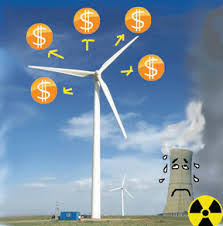
A new Danish study comparing nuclear and renewable energy systems (RES) concludes that, although nuclear systems require less flexibility capacity than renewable-only systems, a renewable energy system is cheaper than a nuclear based system, even with full backup: it says ‘lower flexibility costs do not offset the high investment costs in nuclear energy’.
It’s based on a zero-carbon 2045 smart energy scenario for Denmark, although it says its conclusions are valid elsewhere given suitable adjustments for local conditions. ‘The high investment costs in nuclear power alongside cost for fuel and operation and maintenance more than tip the scale in favour of the Only Renewables scenario. The costs of investing in and operating the nuclear power plants are simply too high compared to Only Renewables scenario, even though more investment must be put into flexibility measures in the latter’.
In the Danish case, it says that ‘the scenario with high nuclear implementation is 1.2 billion EUR more expensive annually compared to a scenario only based on renewables, with all systems completely balancing supply and demand across all energy sectors in every hour.’ It goes on ‘to achieve a more cost-efficient system based predominantly on nuclear power- the investment costs would have to drop to 1.55 MEU/MW. This is significantly below any current or future cost projection for nuclear power. Such a high cost-margin indicates that a combination of low-cost RES and sector coupling presents a cost-effective energy transition making it very hard for nuclear power to deliver a competitive alternative’…………………………………………………………………………….
Interestingly, in the UK context, Lord Turner, Chair of the UK Energy Transitions Commission, has also said that costly new nuclear plants may not be needed for net zero, since there are cheaper, low-carbon alternatives that could back up intermittent renewables. Hydrogen fuel or gas power plants fitted with CCS could fill the gap when wind or solar was not enough to keep the lights on. ‘I don’t think it is the case that you need new nuclear to balance the system. The systems of the future don’t absolutely need a base load.’ The power system ‘can work on a combination of intermittent variable renewables, wind & solar plus some hydro. I think the challenge for new nuclear is that it is just expensive. Bluntly, new nuclear can play very little role in a 2030 target.’
Well maybe that’s why there seems to have been some second thoughts about the new EPR reactor proposed for Sizewell in the UK, with the final investment decision for the Sizewell C nuclear plant evidently facing delays. Initially, EDF, the project’s developer, aimed to secure funding by the end of this year, but the timeline may now extend into 2025.
The prospect for nuclear do seem a bit uncertain, with the case for it these day relying in part on the claim that it can back up renewables and help avoid climate change. But that also seems to be uncertain, as is argued in a new comprehensive review of nuclear issues by academics from Germany and Finland, arguing that it has no role to play in responding to climate change. It says that it is ‘not a sustainable and affordable source of energy for the low-carbon energy transformation’ given its ‘cost-intensive nature, coupled with safety considerations’. And crucially it says that it is ‘characterized by very long construction times, and even longer developments of new technical generations, too far away and uncertain to contribute to climate change mitigation anytime soon’.
In addition ‘from an energy system perspective, nuclear power is not compatible with a system based on renewables, but rather hinders its expansion. Last but not least, nuclear power is particularly unfavorable in a future with higher temperatures and weather extremes and more military threats’.
That sounds pretty damning, even leaving aside radioactive waste handing, and also weapons proliferation and terrorism-related issues, with, as Prof. Ramana discusses in his recent powerful overview book ‘Nuclear is not the solution’, in addition to its other problems, reliance on civil nuclear power making ‘catastrophic nuclear war more likely’. Even if, hopefully, we can avoid that, there are still concerns about nuclear blackmail. And all this just to generate expensive energy.
Yes, going for renewables does mean we have invest in flexible balancing technology and energy storage, but that is cheaper overall and it also getting even cheaper, with many new options emerging. As Ramana says, to balance the variability of renewables, ‘we must invest in a mix of renewable energy technologies across various regions, and in battery and other storage technologies to store excess energy. In addition, we need to shape electricity demand to more closely match supply.’ In common with the German and Finnish researchers, he too sees that as the way ahead. https://renewextraweekly.blogspot.com/2024/09/renewables-beat-nuclear-even-with-full.html
Will new UK nuclear power station plan be scrapped?
The Energy Secretary has reportedly directed officials to review the nation’s nuclear plans, including the proposed plant at Wylfa in Anglesey
Dimitris Mavrokefalidis, 09/08/2024, https://www.energylivenews.com/2024/09/08/will-new-uk-nuclear-power-station-plans-be-scrapped/
The government’s plan to build a new nuclear power station in Wales is reportedly under review.
According to The Telegraph, the Energy Secretary has asked officials to reassess future nuclear projects, which puts the planned plant at Wylfa, Anglesey, in question.
The review will also examine the previous target to reach 24 gigawatts of nuclear capacity by 2050, set under Boris Johnson.
There are concerns that these plans were rushed before the last general election.
Minister for Nuclear Lord Hunt wrote on X (formerly known as Twitter): “Great British Nuclear has recently acquired the Wylfa site in Anglesey along with the Oldbury site in Gloucestershire.
“No decisions have yet been taken on the projects and technologies to be deployed at sites and any decision will be made in due course.”
Energy Live News has contacted the Department for Energy Security and Net Zero for comment.
Earlier this week, Ynys Môn MP Llinos Medi urged the UK Government to give definitive commitments and timelines for the Wylfa site and Wales’ overall energy strategy.
During a debate on the Great British Energy Bill on 5th September, Ms Medi emphasised the region’s significant natural energy resources and expressed frustration with the continued political uncertainty around the Wylfa nuclear project.
Whoopsie, SpaceX Blew Up Two Rockets and Punched a Massive Hole in One of Earth’s Layers
We learned something, though. By Darren Orf Sep 05, 2024
- In mid-November 2023, a disastrous SpaceX launch, which saw the explosion of not one but two rockets, offered a rare opportunity to study the effects of such phenomena on the ionosphere.
- A study by Russian scientists revealed how this explosion temporarily blew open a hole in the ionosphere stretching from the Yucatan to the southeastern U.S.
- Although far from the first rocket-induced disturbance in the ionosphere, this is one of the first explosive events in the ionosphere to be extensively studied.
November 18, 2023, wasn’t a great day for the commercial spaceflight company SpaceX. While testing its stainless steel-clad Starship, designed to be the company’s chariot to Mars, the spacecraft exploded four minutes after liftoff over the skies of Boca Chica, Texas.
Filling a metal candle with more than a thousand tons of propellant and flinging it into outer space has always run its fair share of risks (and explosions), but this particular event—occurring around 93 miles above the Earth’s surface—allowed scientists to closely study one poorly understood aspect of human spaceflight: What damage do rockets inflict on the Earth’s all-too-important ionosphere?
Lying at the edge of the planet’s atmosphere and outer space some 50 to 400 miles above the surface, the ionosphere is a sea of electrically charged particles vital to global radio and GPS technologies as well as protecting us from harmful solar rays. Because of its important role in the everyday function of modern society, scientists are eager to understand how disturbances in the ionosphere can impact life on Earth, and that’s why team of researchers from institutes and universities in Russia and France analyzed the explosion of the tallest and most powerful rocket ever built. The results were published in the journal Geophysical Research Letters.
Although bad news for SpaceX, the explosion oddly presented a rare opportunity to study aspects of the ionosphere that would, under normal conditions, be too weak to detect……………………………………………………………………………………………..https://www.popularmechanics.com/space/rockets/a62047078/starship-explosion-ionosphere/
TODAY. Yah wouldn’t know it was happening. USA military might and toxic nuclear waste quietly infiltrating Australia?

I think that you’ve got to give credit to the corporate media, especially the Australian media.
I dunno about the rest of you, but I am pretty much numbed by the blanketing of all news for weeks on end, with coverage of the Olympics. Former Liberal Prime Minister Malcolm Fraser wished that politics should be relegated to page 3,with sport at the front page. He would be delighted with today’s situation where sport occupies about the first 37 pages of the news.
In Melbourne, we are about to come up for air after being submerged in Olympics news, only to face the next inundation, which is of course Australian Rules Football.
But the media here will dutifully make an exception for news about an enormous weapons industry fest now being held in Melbourne. No doubt there’ll be condemnation of those evil protestors who want to stop this wonderful industry – that brings in the dollars in weapons sales to places like Israel and Ukraine – so good for the Australian economy!
There are bits of news that just do not surface at all.
There’s a government Review going on – that just about nobody has heard about – https://www.defence.gov.au/about/reviews-inquiries/review-woomera-prohibited-area-coexistence-framework .
It’s all about how the government uses a large stretch of land in South Australia – almost certainly a quiet introduction to the idea of dumping USA’s AUKUS nuclear waste there. They very quietly called for Submissions by September 6th.
So pretty much nobody knew anything about that. (One investigative nuisance – David Noonan actually managed to get a Submission in)
Australians are pretty much conditioned now, to know that the only important news is sport, preferably with Australia winning, – (because it’s the only thing we’re good at, isn’t it?). Some Aborigines might be anxious to learn that South Australian land, already polluted by British nuclear bomb tests in the 1950s, is going to get another burst of nuclear weapons pollution from our “friends” the UK and USA.
But last year, the Australian media managed to kill off any plan for the Aborigines to have a Voice to Parliament. This year, media silence on the AUKUS nuclear waste plan will probably be even more effective in removing any Aboriginal objection from the process.
1 This Month.
5 January -Webinar-What is Trump’s Golden Dome?
REGISTER AT Massachusetts Peace Action Education


New book – https://www.amazon.com/dp/1923372157?utm_source=substack&utm_medium=email
Now until to February 10, 2026 Radioactive waste storage in France: the debate is finally open! How to participate?
-
Archives
- December 2025 (293)
- November 2025 (359)
- October 2025 (377)
- September 2025 (258)
- August 2025 (319)
- July 2025 (230)
- June 2025 (348)
- May 2025 (261)
- April 2025 (305)
- March 2025 (319)
- February 2025 (234)
- January 2025 (250)
-
Categories
- 1
- 1 NUCLEAR ISSUES
- business and costs
- climate change
- culture and arts
- ENERGY
- environment
- health
- history
- indigenous issues
- Legal
- marketing of nuclear
- media
- opposition to nuclear
- PERSONAL STORIES
- politics
- politics international
- Religion and ethics
- safety
- secrets,lies and civil liberties
- spinbuster
- technology
- Uranium
- wastes
- weapons and war
- Women
- 2 WORLD
- ACTION
- AFRICA
- Atrocities
- AUSTRALIA
- Christina's notes
- Christina's themes
- culture and arts
- Events
- Fuk 2022
- Fuk 2023
- Fukushima 2017
- Fukushima 2018
- fukushima 2019
- Fukushima 2020
- Fukushima 2021
- general
- global warming
- Humour (God we need it)
- Nuclear
- RARE EARTHS
- Reference
- resources – print
- Resources -audiovicual
- Weekly Newsletter
- World
- World Nuclear
- YouTube
-
RSS
Entries RSS
Comments RSS
 nuclear-news