‘Unacceptable’: Is this Ontario nuclear waste dump a risk to Quebec’s water supply?
The Bloc Québécois is calling for work to immediately stop on an already-approved nuclear waste facility at the Chalk River research site in eastern Ontario, arguing its current placement unnecessarily risks Quebecers’ water supply — a claim that the company behind the project denies.
Sept. 10, 2024, By Alex Ballingall, Ottawa Bureau, Toronto Star
OTTAWA — The Bloc Québécois is calling for work to immediately stop on an already-approved nuclear waste facility at the Chalk River research site in eastern Ontario, arguing its current placement unnecessarily risks Quebecers’ water supply — a claim the company behind the project denies.
Bloc Leader Yves-François Blanchet held a news conference on Parliament Hill Monday with First Nations from Ontario and Quebec who also oppose the project. Trumpeting his solidarity with the leaders, who claim the project’s approval early this year violated their rights as Indigenous Peoples, Blanchet said the waste facility is too close to the Ottawa River that separates Quebec from Ontario and flows into the St. Lawrence River.
Speaking in French, Blanchet described the plan as a way to take the “dangerous” waste from Ontario’s nuclear industry and place it in a spot that he claimed could put the water supply of Quebecers at risk.
“This is unacceptable to us,” Blanchet said. He added that the planned facility “should be placed elsewhere.”
Chief Lance Haymond of the Kebaowek First Nation, who attended the news conference with Blanchet, accused the company building the facility — Canadian Nuclear Laboratories, which is contracted to run the Chalk River facility by an arms-length federal Crown corporation — of dismissing his community’s concerns, which include worries about disruption to local bears and other wildlife.
Haymond said the company is presenting a “façade of reconciliation” over its failure to seek his nation’s consent for the project, which is on unceded territory of the Algonquin Anishinaabeg near Deep River, Ont., almost 200 kilometres northwest of Ottawa.
The Kebaowek First Nation has also launched a legal process in Federal Court that seeks to overturn the January decision by Canada’s federal nuclear regulator to green-light the project.
“We will not stand by while our rights are trampled, our lands desecrated and our future put at risk,” Haymond said. ……………………………………………………………..
The Canadian Nuclear Safety Commission approved the project in January, more than eight years after Canadian Nuclear Laboratories first raised the idea.
A spokesperson for the commission declined to comment Monday, citing the Federal Court challenge………………………………………………………………………….
According to the safety commission, most of the waste slated for disposal there will come from the company’s existing Chalk River Laboratories operation at the site, with about 10 per cent coming from other sites, including commercial sources like hospitals and universities.
The waste site is planned as an “engineered containment mound” that covers 37 hectares, alongside other facilities like a wastewater treatment plant.
The project has been controversial for months, with several municipalities in the region and environmental groups stating their opposition alongside First Nations. Bloc MPs and Green Leader Elizabeth May have also denounced the project. https://www.thestar.com/politics/federal/unacceptable-is-this-ontario-nuclear-waste-dump-a-risk-to-quebecs-water-supply/article_27adb27e-6ec2-11ef-985e-9345e7a9932d.html?source=newsletter&utm_source=ts_nl&utm_medium=email&utm_email=C574FBD817092BE3920DD70067C080F0&utm_campaign=frst_1906
Boris Johnson goes into business with Steve Bannon, Charlotte Owen and a uranium entrepreneur
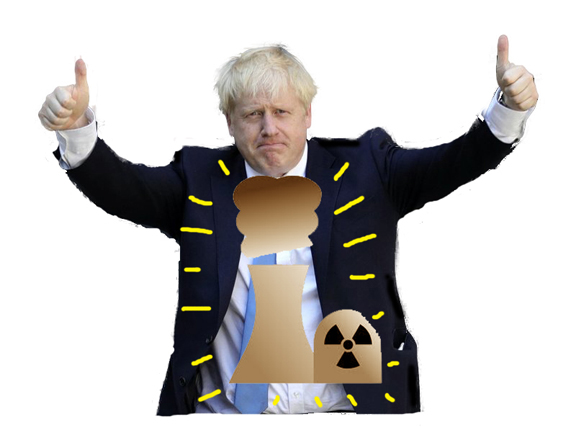
Owen, who was elevated to the House of Lords last year at the age of 29, now has a plum job despite having no energy sector experience.
by Jack Peat, 2024-09-09, https://www.thelondoneconomic.com/business-economics/boris-johnson-goes-into-business-with-steve-bannon-charlotte-owen-and-a-uranium-entrepreneur-382535/
Boris Johnson has been added as the director and co-chairman of Better Earth, a company that lists Charlotte Owen, Steve Bannon and a uranium entrepreneur among its staffers.
Better Earth was incorporated by Amir Adnani in December last year and now includes a high-profile roster of employees, including a former prime minister, a controversial media strategist and Britain’s youngest peer.
Adnani, a Canadian citizen of Iranian heritage, is the director of a network of offshore companies based in the British Virgin Islands and is president and CEO of Uranium Energy Corp, a US-based mining and exploration company, championed by former Donald Trump adviser Bannon.
On 1st May, Companies House filings reveal that “the Rt Hon Alexander Boris de Pfeffel Johnson” was added as a director and co-chairman, shortly followed by Charlotte Owen – now Baroness Owen of Alderley Edge – who joined the company to work alongside him despite having a lack of energy sector experience.
Headquartered in a serviced office building in Sevenoaks, Better Earth describes itself as an “energy transition company”.
Its website, which is currently under construction, says it will “work directly with national governments and regions that are seeking both inward investment and/or to reduce their emissions ahead of 2030”.
In 2022, just days before leaving office, Johnson announced a £700 million investment in the controversial Sizewell C reactor stating the country needed to “Go nuclear, go large!”.
At the time, Caroline Lucas, the then Green MP and former party leader, described Sizewell C as “massively costly, achingly slow and carries huge unnecessary risks”.
Among those who cheered the Sizewell C investment was Adnani. He excitedly posted the announcement on his Twitter account: “Boris Johnson plans to sign off on new £30bn nuclear plant in his final week in power! #uranium.”
Adnani has appeared at least twice on former Donald Trump adviser Steve Bannon’s War Room podcast, and on one occasion told him that his ambition was to achieve “full spectrum energy dominance”.
Doesn’t sound scary at all!
Democracy Dumped in Cumbria.. Nuclear Dump Under the Irish Sea Here We Come?! UNLESS….

On By mariannewildart
Today’s BBC news item features Councillor David Moore enthusing “it’s (Sellafield) the biggest employer in the area”. He adds: “I think that’s why conversation here’s different. We’re already the hosts of the waste. And we all want to find it a safer location.” Councillor Moore is of course very keen on new wastes arriving at Sellafield.
What today’s BBC news article on nuclear waste fails to state is that Councillor David Moore was one of only 3 (I know!) “executive councillors” who took the decision to put Cumbria in the frame for an unprecedented deep sub-sea nuclear dump by agreeing to the “Community Partnership” with Nuclear Waste Services in the plan to “deliver a Geological Disposal Facility.” In doing so Councillor Moore failed to declare his fiscal interests in the nuclear industry by dint of his paid membership of various nuclear bodies (monies recieved totalling over £100,000) and his spouse’s employment.
A police complaint was made about this ongoing failure to declare interests but Cumbria police after over a year of obfuscation and delays decided that there was no offence. Cumbria police have essentially given the green light to those in public office not to declare fiscal interests in decisions they make on industrial developments.
We have asked for sight of Cumbria Police’s reasons for failing to take Councillor David Moore to task over his failure to declare interests but to no avail. It is clear that Councillor Moore was told by Cumbria Police that no action would be taken against him long before we were told. And we were only told after saying we would make an official complaint against the length of time the Police’s decision was taking.
We have sent off another email today asking for sight of Cumbria Police’s justification for not taking any action against David Moore – not even a slap on the wrist it appears for what is a criminal offence. Meanwhile Councillor David Moore, who has put Cumbria once again in the frame for a nuclear dump, is the ‘go to’ voice of the “community” for the mainstream media.
Something is very wrong here.
oday’s email to Cumbria Police’s Disclosure Unit:
Dear Disclosure Unit
We do not appear to have had full answers from you regarding Cumbria Police’s decision not to prosecute Councillor David Moore’s failure to declare nuclear interests when taking nuclear decisions with Copeland Borough Council. David Moore is quoted on today’s BBC News as a Councillor and member of the GDF Partnership. The news item does not mention that David Moore was one of only three councillors who voted to go forward with GDF Partnership while recieving monies from the nuclear industry. https://www.bbc.co.uk/news/articles/czx6e2x0kdyo
?What Date was Councillor David Moore told of the decision that he had committed no criminal offence when making Council decisions on nuclear by neglecting to disclose monies from the nuclear industry and that fact that his wife works for ……..
On behalf of over 30 people signing a letter of complaint against Cllr David Moore, I request sight of the “comprehensive review of the police investigation that was undertaken and the outcome that no further action is to be taken because there is no evidence of any criminality.”
In particular I request sight of justifications for overturning the Localism Act in the case of Cllr David Moore
http://publicsectorblog.practicallaw.com/first-conviction-of-a-councillor-under-the-localism-act-2011/
The original letter of complaint was written in 2022 – the length of time the police took to reply to us and then take a decision (to take no action) is scandalous.
For all links including the original letter check out Lakes Against Nuclear Dump
Letter to New First Minister over South Wales Nuclear Overflights

https://www.nuclearpolicy.info/news/letter-to-new-first-minister-over-south-wales-nuclear-overflights/ 10th September 2024
With the recent election of Dame Eluned Morgan, the NFLA Secretary has written to the new Welsh First Minister to ask for action on the flights carrying nuclear materials over South Wales.

Cardiff City Councillor Sue Lent, Chair of the Welsh NFLAs, first wrote to Dame Eluned’s predecessor Vaughan Gething at the end of April drawing attention to the carriage of nuclear materials by
RAF aircraft passing over the heavily populated cities of South Wales enroute from the USA to Brize Norton.
In that letter we asked First Minister Gething, as Chair of the Wales Resilience Forum, with responsibility for emergency planning across the nation, to seek a reassurance from the MoD / RAF that such flights will be diverted out to sea, well away from South Wales municipalities and revisit emergency planning arrangements for any accident involving these special nuclear materials.
After two reminders were sent to the First Minister’s Office, a reply was finally received on 5 August, the day before Dame Eluned replaced him in office. Unfortunately, that letter stated that whilst some preparation for the possibility of an aircraft accident had been made by first responders, ‘the issues you raise with respect to flight paths and nuclear related policies are reserved matters for the UK Government’
We also wrote to the Defence Nuclear Organisation asking them whether any emergency planning exercises had been held in Wales since Exercise Astral Bend in 2011, and we also requested any assessments of those exercises. As per usual the military denied our Freedom of Information requests suggesting that the Welsh NFLAs had a nefarious purpose in seeking to undermine national security and the efficiency of our armed forces when our concern was for the safety of the people of Wales. The only thing they would tell us is that a further exercise had been held on 21 September 2023, ironically the UN International Day of Peace.
We have now written to Dame Eluned Morgan asking her to take up the two ‘asks’ that we made of her predecessor. When we have her reply then the correspondence will be published in full in a future NFLA Briefing.
UK Government considering scrapping Wylfa plans and 24GW nuclear capacity target
2 Government considering scrapping Wylfa plans and 24GW nuclear capacity
target. Energy secretary Ed Miliband is considering scrapping plans to use
the Wylfa site in North Wales for a new large-scale nuclear power plant as
well as the UK’s target of developing 24GW of nuclear capacity by 2050.
New Civil Engineer 9th Sept 2024
An avalanche of objections to the latest proposed AUKUS nuclear treaty
Have pity on me. I said I would copy and publish all the submissions to this jargonistic, almost impenetrable latest USA/UK plan to hoodwink Australia into paying $squillions for useless soon-obsolete nuclear submarines, and also taking in their foul radioactive trash.
The proposed Treaty had virtually no publicity, and a short-timed not-publicised call for submissions
So I thought that there’d be only a very few intrepid souls from the usual suspects – Friends of the Earth etc – who would wade through it all, and write an excellent submission.
But – I was wrong – it’s now up to 134 submissions published. Not counting the earliest 2 pro-nuke ones, I’m just coming across angry submission after angry submission saying NO to this AUKUS proposal. I’m sure I will come to the pro-nuclear ones – but not so far.
Anyway – gotta stop now and have A Nice Cup Of Tea.
It is good to know that not all Australians are suckers for American militarism.
The future of new nuclear

With new nuclear stagnating and renewables soaring – the sober reality is that nuclear power is just too costly and too late amid crisis
by Dr Paul Dorfman, 10-09-2024 ,
https://bylines.scot/environment/the-future-of-new-nuclear/
Editor’s note: This article has been written by Dr Dorfman and others:
- Prof Steve Thomas (Coordinating Editor, Energy Policy; Emeritus Professor of Energy Policy, University of Greenwich, UK).
- Dr Bernard Laponche (Polytechnicien, Docteur ès Sciences en Physique des Réacteurs Nucléaires, Docteur en Economie de l’Energie, France).
- Prof MV Ramana (Professor and Simons Chair in Disarmament, Global and Human Security at the School of Public Policy and Global ANairs, University of British Columbia, Canada).
- Tetsunari Iida (Chairperson, Institute for Sustainable Energy Policies, Japan).
- Prof Amory Lovins (Civil Engineering, Stanford University, USA).
Many governments around the world are under enormous pressure to expand funding for nuclear power, usually accompanied by claims that nuclear must or will play a key role in achieving climate change targets. However, the fact is that nuclear technology is in decline, and for good reason. Nuclear energy’s share of global electricity production has decreased from 17.5% (1996) to 9.2% (2023), largely due to the high costs of, and delays to, building and operating nuclear reactors.

Governments must resist pressures from the nuclear industry to fund this declining technology. These resources should be used to fund renewables and energy storage or management options – these can and will deliver climate change objectives more abundantly, reliably, quickly, and cost-effectively.

New nuclear promotional pressure can be seen in three areas: funding for the development of Small Modular Reactors (SMRs), financing new large reactors, and paying for life extension of existing reactors as they reach the end of their design life. These pressures on governments can be seen in five of the major nuclear-generating countries: the USA, France, Canada, Japan, and the UK.
Small Modular Reactors (SMRs)

When times get tough, the nuclear industry always redirects attention to new technologies it claims will solve the problems of existing designs. The latest magic bullet is SMRs. Even though no commercial order is even close to being placed, SMRs are presented in the press as quick, cheap, safe, and under construction. Yet, in reality, SMRs are years away from commercial operation, are as expensive as large reactors, and share the same safety, security, and waste problems.

Indeed, the motivation behind SMRs appears to be financial. In recent years the nuclear industry has quietly changed its business model from making and selling products to harvesting subsidies for SMR ‘development’. In Canada, various publicly owned bodies are trying to develop new SMRs using public money, while here, the UK government is running an SMR design competition with a budget of £20bn from the public purse. Ultimately, the underlying problems become obvious – as demonstrated by last year’s collapse of NuScale USA’s SMR design and EDF France’s recent abandonment of its own SMR effort.
Large nuclear reactors
Far from improving, the record of large nuclear reactor construction is in decline with the latest designs being the worst-ever record of delays and cost escalation. The nuclear industry’s recipe is always the same; claim they are learning, claim bulk orders will reduce cost, and try to ‘streamline’ planning, safety and security regulation. These have never worked in the past and won’t work now.
Meanwhile, despite the usual cost and time overruns, the UK government is struggling to build two more reactors using the frail European Pressurised Reactor (EPR) reactor design. In France, EDF (the nationalised French nuclear utility), has plans to develop new large reactors using a modified version of the EPR design – limiting a number of safety and security features – while signalling that it will need even more public financial support.

Ageing nuclear
The world’s reactor stock is ageing. In the USA, about half the operating reactors are beyond their 40-year design life, providing expensive power even though their construction costs have been paid off. There, nuclear can survive in competitive electricity markets only thanks to large new public subsidies. In Japan, 23 reactors remain closed since the Fukushima disaster – their utilities are still trying to reopen them despite these reactors being out of service for 13 years and more. In France, EDF is facing a bill of up to €100bn for mandatory safety upgrades to its ageing nuclear fleet. Globally, these old reactors fall far short of the safety and security standards required for new reactors and should therefore be replaced as soon as possible with non-nuclear options.
Transition to renewables
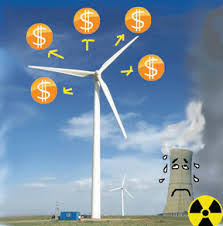
Nuclear power has never been economic, and its real costs have continued to rise throughout its history. In the past, nuclear survived because electricity was a monopoly, and electric utilities could pass on the cost, no matter how high. The introduction of competitive electricity meant this option was lost, causing the finance market to turn away from new nuclear.
After more than 60 years of commercial history, nuclear is getting further from, not nearer to, being able to survive without massive public subsidies. This is a clear indication that this quintessentially mid-20th century technology is in terminal decline and should be abandoned. Doing so would help protect the climate, not least because an hour of nuclear energy production costs several times more than renewables. In other words, nuclear delivers far less power per pound sterling than renewables.
Nuclear displaces far less fossil fuel than renewables, in terms of cost and delivery time. According to the UK Government’s Regulated Asset Base Model Impact Assessment, new nuclear takes up to 17 years for the planning, regulation and construction of just one station. The more concerned you are about climate change, the more vital it is to buy cost-effective, fast, sure, renewable options rather than expensive, slow, speculative nuclear.
The International Panel on Climate Change has reported that renewables are now ten times more efficient than nuclear at CO2 mitigation. New renewable electricity provided 507 Gigawatts (GW) in 2023, accounting for 86% of global additions of generation capacity, (reaching a total renewable capacity of 3870 GW). The renewable share of total power capacity rose to 43.2%. This extraordinary surge shows that renewables are the only technology available for a rapid transition from fossil fuels. At best, new nuclear adds only as much electricity in a year as renewables add every few days. For example, China is now installing wind and solar capacity equivalent to five new nuclear reactors every week.
New nuclear has no business case
With new nuclear stagnating and renewables soaring, the sober reality is that nuclear power is just too costly and too late for the climate and energy crises.
Far from being needed to back up variable solar and wind power, nuclear plants require even more and costlier support because their failures are larger, longer, more abrupt, and far less predictable. In 2022, half of all French reactors were online with safety faults. Not only is nuclear slow and expensive, but it is also far too inflexible to keep going up and down with the swings of electricity demand. In contrast, the variability of wind and solar technologies can be more easily integrated into evolving, flexible electricity grids capable of adjusting output to fluctuating demand and providing stable power at all times.
New nuclear has no operational need and no business case. The fact is, it’s entirely possible to sustain a reliable power system by using electricity far more efficiently and expanding diverse renewable energy supply in all sectors. This can be achieved together with the rapid growth and modernisation of the electricity grid, fuller and faster interconnection, smart energy management, and swift deployment of today’s cost-effective storage technology.
We need to secure affordable, sustainable, low-carbon energy to power our industry, transport, homes, and businesses. Since all key energy international organisations and institutes agree that renewables will do the heavy lifting to achieve net-zero, the future backbone of the world’s power supply will be clean, green, safe, and cost-effective. Nuclear is none of those.
CNN Shared A Glimpse Of Just How Bad Everything Has Become For Ukraine

The ideal solution for Kiev would be to reach a ceasefire for facilitating its voluntary withdrawal from part of Donbass (ex: Pokrovsk’s surroundings) in parallel with pulling out of Kursk, which are terms that Russia might entertain since they’d advance some of its political and military goals.
Andrew Korybko, Sep 09, 2024, https://korybko.substack.com/p/cnn-shared-a-glimpse-of-just-how
Outgunned and outnumbered, Ukraine’s military is struggling with low morale and desertion
By Ivana Kottasová and Kostya Gak, CNN, 8 Sept 24
The Ukrainian Armed Forces are in the midst of converging crises caused by the failed counteroffensive, the forcible conscription policy, and Zelensky’s Kursk blunder, which are leading to more desertions, defeats, and ultimately more desperation.
CNN carried out a rare act of journalistic service with their detailed report about how “Outgunned and outnumbered, Ukraine’s military is struggling with low morale and desertion”. It candidly describes the numerous problems afflicting the Ukrainian Armed Forces (UAF) at this pivotal moment in the conflict as they continue to occupy part of Kursk but are still losing ground in Donbass. Their story begins by introducing a battalion commander who lost most of the around 800 men under his control.
This figure couldn’t take it anymore and thus transferred to a cushy military administrative job in Kiev. He and the five others who CNN spoke to when researching their report informed them that “desertion and insubordination are becoming a widespread problem, especially among newly recruited soldiers.” In the words of one commander, “Not all mobilized soldiers are leaving their positions, but the majority are…They either leave their positions, refuse to go into battle, or try to find a way to leave the army.”
The reader is then informed that these troops are forcibly conscripted, thus adding context to why they desert, but they also claimed that morale problems began to infect the armed forces’ ranks during the now-resolved impasse over more American aid to Ukraine. While that likely played a role, CNN conspicuously omits to mention last summer’s failed counteroffensive, which proved that Ukraine is unable to reconquer its lost lands despite all the hype and the aid that it received up until that point.
Moving along after having clarified the real reason behind the UAF’s plunging morale over the past year, drones have made the battlefield more unbearable than before, and the amount of time between rotations has grown since some troops simply can’t leave their positions without risking their lives. CNN then added that “In just the first four months of 2024, prosecutors launched criminal proceedings against almost 19,000 soldiers who either abandoned their posts or deserted”.
They also acknowledged that “It’s a staggering and – most likely – incomplete number. Several commanders told CNN that many officers would not report desertion and unauthorized absences, hoping instead to convince troops to return voluntarily, without facing punishment. This approach became so common that Ukraine changed the law to decriminalize desertion and absence without leave, if committed for the first time.”
The impending Battle of Pokrovsk, which could be a game-changer for Russia on the Donbass front, risks turning into a total disaster for the UAF since “some commanders estimate there are 10 Russian soldiers to each Ukrainian.” Just as alarming is the claim from one officer that “There have even been cases of troops not disclosing the full battlefield picture to other units out of fear it would make them look bad.” Communication problems are also reportedly rife between Kiev’s varied units there too.
The Kursk front isn’t as bad, but it might not have served its political purpose of boosting morale among the UAF unlike what Zelensky has claimed. CNN quoted some sappers who were unsure of the strategy involved, questioning why they were redeployed from defending Pokrovsk to invade Russia when the Donbass front is experiencing such difficulties as was already reported. The piece then ends with a psychological support expert declaring that he’s no longer going to be emotionally attached to anyone.
Reflecting on CNN’s surprisingly critical report, it’s clear that the UAF is in the midst of converging crises caused by the failed counteroffensive, the forcible conscription policy, and Zelensky’s Kursk blunder, which are leading to more desertions, defeats, and ultimately more desperation. In such circumstances, Ukraine can either stay the course by remaining in Kursk at the expense of losing more ground in Donbass, withdraw from Kursk to help hold Donbass, or asymmetrically escalate.
The first two scenarios are self-explanatory while the last could concern expanding the conflict into other Russian regions, Belarus, and/or Moldova’s breakaway Transnistria region, seriously damaging Russian nuclear power plants out of desperation to provoke a nuclear response, and/or assassinating top Russians. There are only a few months left before the winter impedes combat operations on both sides, after which the status quo will persist until spring, when one or both sides might go on the offensive.
This timeline adds urgency to the impending Battle of Pokrovsk, which Russia wants to win as soon as possible in order to push through the fields beyond, capture more territory, threaten the Kramatorsk-Slavyansk agglomeration from the south, and possibly prepare to make a move on Zaporozhye city from the northeast. If Ukraine can hold out into next year, then it could have more time to build more defenses beyond Pokrovsk, thus reducing the pace of Russia’s advance if it comes out on top there.
Even if Ukraine holds on for at least several months or perhaps as long as half a year longer there, the problems touched upon in CNN’s piece will likely only exacerbate seeing as how more forcibly conscripted troops will be thrown into what might by then become the next infamous meat grinder. Morale will probably continue plummeting while defections could spike, both of which could combine to cripple the UAF and create an opening for Russia to exploit in Pokrovsk or elsewhere along the front.
The ideal solution for Kiev would be to reach a ceasefire for facilitating its voluntary withdrawal from part of Donbass (ex: Pokrovsk’s surroundings) in parallel with pulling out of Kursk, which are terms that Russia might entertain since they’d advance some of its political and military goals. It’s better for Ukraine from the perspective of its regime’s interests to have an orderly withdrawal than a chaotic one if Russia achieves a breakthrough, but Zelensky and his ilk aren’t known for their rational decisions.
Nevertheless, those like India and Hungary who are want to help politically resolve this conflict could propose something of the sort, perhaps also suggesting the revival of last month’s reported Qatari-mediated partial ceasefire proposal for eschewing attacks against the other’s energy infrastructure. Zelensky is unlikely to agree, especially since he’s under the influence of uber-hawk Yermak, but it would still be best to informally circulate some variant of the aforementioned proposal sooner than later.
Regardless of well-intentioned third parties’ proposals, the conflict appears poised to continue raging into the next year absent a complete military and/or political breakdown in Ukraine, neither of which can be ruled out though considering how bad everything has become per CNN’s latest report. Ukraine and its Anglo-American “deep state” allies could also stage a major provocation aimed at desperately “escalating to de-escalate” on more of their terms, so observers shouldn’t rule that scenario out either.
Bloc Québécois backs First Nation fighting nuclear waste site.
By Natasha Bulowski , Ottawa Insider, September 10th 2024
Bloc Québécois leader Yves-François Blanchet is throwing his weight behind a First Nation fighting a nuclear waste disposal site near the Ottawa River.
Flanked by three BQ MPs — Sébastien Lemire, Mario Simard and Monique Pauzé — Blanchet reaffirmed the BQ’s support for Kebaowek First Nation’s sustained opposition to the radioactive waste disposal site, located about 190 kilometres northwest of Ottawa at Chalk River Laboratories.
Blanchet called on the federal government to immediately suspend the project. …………………………………………………………………………………..more https://www.nationalobserver.com/2024/09/10/news/bloc-quebecois-radioactive-waste-facility
Ukrainian Tipping Points: UPDATE 2
Russian and Eurasian Politics, by Gordonhahn, September 11, 2024
Outgoing US President Joe Biden has said his administration is working on approval of Ukrainian use of U.S. long-range missiles against targets deep inside Russia (https://www.ft.com/content/48289996-e1bf-4c3e-befb-031698e89e1b). The UK is pressuring the US to approve such use, and US Secretary of State and UK’s foreign minister have just arrived in Kiev (https://ctrana.news/news/471869-blinken-i-hlava-mid-britanii-pribyli-v-kiev.html).
UPDATE 1:
Reuters reports US is just about se to send long-range missiles to Ukraine for attacks deep inside Russia:
US close to agreeing on long-range missiles for Ukraine; delivery to take months.
Summary
-Stealthy JASSM weapons have range to hit targets inside Russia
-Decision expected in autumn, U.S. officials say
-Pentagon trying to integrate JASSMs on Soviet-era Ukrainian jets
WASHINGTON, Sept 3 (Reuters) – The U.S. is close to an agreement to give Ukraine long-range cruise missiles that could reach deep into Russia, but Kyiv would need to wait several months as the U.S. works through technical issues ahead of any shipment, U.S. officials said.The inclusion of Joint Air-to-Surface Standoff Missiles (JASSM) in a weapons package is expected to be announced this autumn, three sources said, though a final decision has not been made (https://www.reuters.com/world/us-close-agreeing-long-range-missiles-ukraine-delivery-take-months-2024-09-03/).
ORIGINAL ARTICLE:
The NATO-Russia Ukrainian war is at a tipping point; one that leads to a Russian march to the Dniepr River and the relocation of what remains of pro-NATO Ukraine’s populace to right bank Ukraine and its Maidan government away from the western banks of the Diner and deeper into western Ukraine, likely Lvov. Not surprisingly, Kiev therefore is desperate and trying to escalate in ways that implicate or bring deeper, more direct NATO involvement, which has been deep and escalating on NATO’s part for years. For Kiev, ideal would be a full-scale NATO military intervention. The West’s previous strategy of gradual escalation – ‘boiling the frog’ by providing redlined air defense systems, then short-range missile/artillery systems, then tanks, then F-16s – hasd run its course.
The only options now are permitting Kiev to use Western missiles to hit deep inside Russia and target Russian President Vladimir Putin and other top leaders. Until now neither Kiev nor the West has crossed any Russian or ‘Putin red lines’ because there have not been any Russian-declared ‘red lines’ but Western MSM-set red lines. One would-be hard-pressed to cite even one clearly expressed Putin ‘red line.’
I fear the Western escalation will continue up to crossing an actual ‘red line’ that Russians have indirectly hinted at – Ukraine’s use of long-range Western missiles such as American ATACMs and British Storm Shadows to strike deep into Russia – will be crossed one way or another, likely after the U.S. presidential election on November 5th.……………………………………………………………………………………………………………… more https://gordonhahn.com/2024/09/11/ukrainian-tipping-points-update-2/—
Flamanville EPR shutdown prompts fresh questions over reactor design

The first attempt to start up the process of nuclear reaction in the European Pressurized Reactor (EPR) at the Flamanville nuclear power plant, situated on France’s Channel Coast close to Jersey and Guernsey, was aborted by an automatic shutdown last week. The process was finally successfully re-engaged four days later, but the failure was just the latest in a catalogue of incidents and delays at the site, now 12 years overdue. For one specialist, the flaws in the design of the reactor, which is the same design as that planned for Hinkley Point in England, are such that it ‘will never function properly’. Jade Lindgaard reports.
Jade Lindgaard, 9 September 2024, Mediapart
French utility giant EDF was an official sponsor of the Summer Olympic and Paralympic Games in Paris, and it’s management knows only too well how embarrassing a false start can be. For that was the case with its initial announcement last week about the starting up of the European Pressurized Reactor (EPR) at Flamanville, northern France – the most awaited event in the French nuclear energy industry in recent history……………………………………..(Subscribers only) https://www.mediapart.fr/en/journal/france/090924/flamanville-epr-shutdown-prompts-fresh-questions-over-reactor-design
Claims that UK’s Wylfa mega-nuclear site is ‘under-review’ with potential switch to mini-nuke plants
Previous UK Government named the Anglesey site as the next “preferred” location for the next large nuclear development.
Owen Hughes, Daily Post, Business correspondent, 9 Sept 24
There are reports that the UK’s nuclear plans are under review – with Wylfa’s status as the next potential site for a ‘mega-nuclear’ project under threat. Ahead of the General Election this year the previous UK Government named the Anglesey site as the “preferred” location for the next large nuclear development.
It followed the purchase by the government of the site and a nuclear location at Oldbury, Gloucestershire, for £160m from Hitachi. The news brought hope of a revival of a new major nuclear plant that would bring thousands of jobs. But after a number of false dawns there was also scepticism locally that the scheme would ever happen.
Now it is being reported the new UK energy secretary Ed Miliband has asked his department to review all nuclear plans over concerns that proposals set out by the last Conservative government were rushed out ahead of the general election, with insufficient due diligence.
There are reports that instead of a ‘mega-nuclear’ site the land next to the last Wylfa plant could instead host small nuclear reactors (SMRs). It is stated that officials believe they could be built and switched on more quickly (mid-2030s) and potentially provide the best value for money.
A government spokesman said: “No decisions have yet been taken on the projects and technologies to be deployed at sites and any decision will be made in due course.”
Ynys Môn MP Llinos Medi last week called on the UK Government to provide clear commitments and timelines regarding the future of the Wylfa site and the broader energy strategy for Wales. Speaking during a debate on the Great British Energy Bill on Thursday, Ms Medi highlighted the island’s rich natural energy potential and criticised the ongoing political uncertainty surrounding the Wylfa nuclear site.
She criticised the previous Conservative government for playing a “political game” and offering local communities a “false dawn” regarding the future of the nuclear site……………………………….. https://www.dailypost.co.uk/news/north-wales-news/claims-wylfa-mega-nuclear-site-29895174
Blackwater – a land in transition
4 September 2024, https://www.banng.info/news/regional-life/blackwater-in-transition/
The Blackwater is a land where earth, water and sky intermingle in an eternal process of transition and transformation. In our time Climate Change and the Energy Transition are creating fundamental changes in the relationship between land, sea and air that will utterly transform our environment in the years to come.
The Blackwater is not an iconic landscape, unlike, say, Constables Country, with its charms set in a romantic afterglow and its appeal as the idealised English landscape. The Blackwater is more a concept with specific meanings and specific environments for farmers, sailors, fishermen, holidaymakers, birders and residents enjoying its waters, marshes, seaside, farmland and settlements. It is a precious region with many national and international conservation designations. Some of its landscapes are ecological treasure chests, especially the dwindling marshes taken from the sea by progressive dyking and draining to produce the so-called ‘meadows of the sea’.
Today, a reversal is in train as coastal squeeze erodes the fragile waterlands in a battle that only the sea can win. Gradually, though inexorably, the land yields as seal levels rise and storm surges, flooding and erosion intensify with global warming.
Global warming is already at critical levels and further increases in temperatures are already baked in. We will have to adapt to inevitable consequences while trying to prevent runaway Climate Change by making a rapid shift from fossil fuels to renewable forms of energy – in other words to achieve an Energy Transition.
While this is a global challenge it must be achieved through local measures already under way and impacting on our landscape. Out to sea in vast arrays of turbines are turning contributing to the UK’s 30GW of offshore wind power capacity. Onshore the windmills on the Dengie represent a tiny part of the 15GW onshore wind, two-thirds comes from Scotland. The government has committed to increasing wind capacity by 2030, to 30GW onshore and 60GW offshore.
This is a herculean ambition and major constraints lie in the way. One of these is transmission as the National Grid confronts local communities with its planned Norwich to Tilbury Great Grid Upgrade. The line of tall pylons will not impact the Blackwater landscape and a landfall at Bradwell is unlikely.
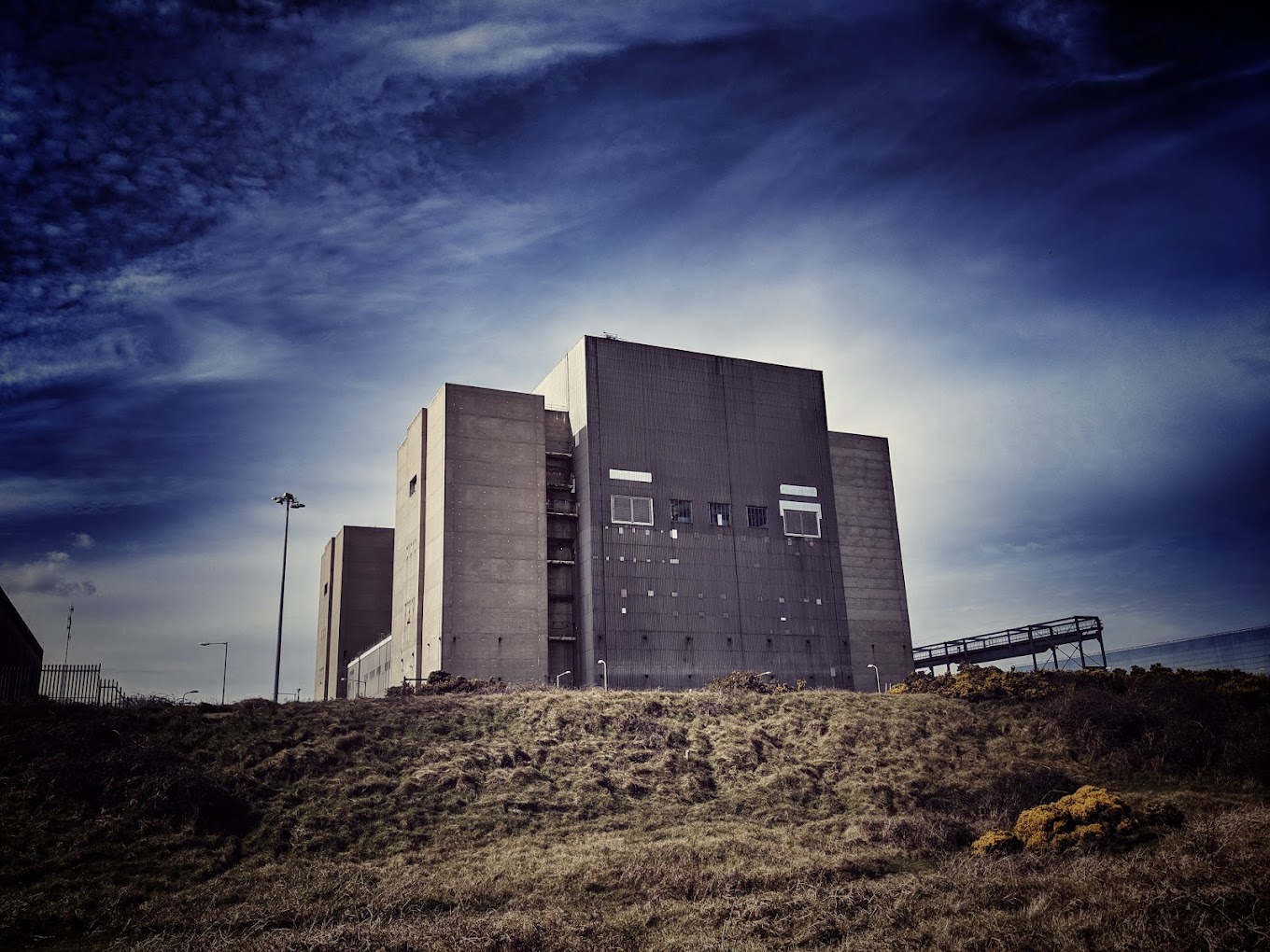
Even more unlikely is the possibility of new nuclear at Bradwell. Climate Change will put paid to the idea of building on a floodable coast today and a vanishing one in the far future. For the present there remains the forlorn hulk of the former Bradwell nuclear power station, once at the forefront of an energy transition now an isolated relic of a bygone age.
Somerset campaigners celebrate as EDF Energy U-turns on planned Hinkley Point C saltmarshes
More than 800 acres have been saved
By Daniel Mumby, Local Democracy Reporter, Somerset Live 11th Sept 2024
Environmental campaigners in Somerset are celebrating after plans to create new saltmarshes to offset the county’s new nuclear power station were scrapped. EDF Energy held a public consultation in January and February over its proposals for new saltmarshes on the Pawlett Hams, which lie on the right bank of the River Parrett near the villages of Combwich and Pawlett.
The plans envisioned more than 800 acres of saltmarsh being created as part of the wider mitigation for the new Hinkley Point C nuclear power station, which is currently under construction. EDF argued that the new marshes would provide safe habitats for fish and animals, improve water quality and reduce the risk of localised flooding – complementing the creation of the Bridgwater tidal barrier immediately upstream.
But following a substantial local backlash, the energy giant has U-turned and promised that any saltmarshes created to offset the power station will be created outside of the Somerset Council area. EDF released a statement confirming the change of heart on Monday evening (September 9), stating that it would be seeing alternative locations “within the wider Severn estuary” before any formal planning application is submitted to the Planning Inspectorate ahead of a public inquiry, which is currently expected to be held in the autumn of 2025.
The company has confirmed that none of the other sites being considered as “within the Somerset Council boundary” and that further rounds of public consultation will take place in the chosen locations. In addition, the company will be looking to upgrade an existing weir on the River Wye at Osbaston near Monmouth, in order to support migrating fish like salmon and shad in their journeys upstream………………………………………………………….. https://www.somersetlive.co.uk/news/somerset-news/somerset-campaigners-celebrate-edf-energy-9542744
World’s largest uranium miner warns Ukraine war makes it harder to supply west
Kazatomprom’s chief executive has warned that Russia’s war on
Ukraine is making it harder for the world’s largest uranium producer.
Kazatomprom’s chief executive has warned that Russia’s war on Ukraine
is making it harder for the world’s largest uranium producer to keep
supplying the west as the gravitational pull towards Moscow and Beijing
grows stronger.
Meirzhan Yussupov, chief of the Kazakh state miner, said
that sanctions caused by the war had created obstacles to supplying western
utilities. “It is much easier for us to sell most, if not all, of our
production to our Asian partners — I wouldn’t call [out] the specific
country . . . They can eat up almost all of our production, or our
partners to the north,” he told the FT.
FT 10th Sept 2024
https://www.ft.com/content/b8b34ec4-20ca-4c00-937b-fc620ae7503e
1 This Month.
5 January -Webinar-What is Trump’s Golden Dome?
REGISTER AT Massachusetts Peace Action Education


New book – https://www.amazon.com/dp/1923372157?utm_source=substack&utm_medium=email
Now until to February 10, 2026 Radioactive waste storage in France: the debate is finally open! How to participate?
-
Archives
- December 2025 (293)
- November 2025 (359)
- October 2025 (377)
- September 2025 (258)
- August 2025 (319)
- July 2025 (230)
- June 2025 (348)
- May 2025 (261)
- April 2025 (305)
- March 2025 (319)
- February 2025 (234)
- January 2025 (250)
-
Categories
- 1
- 1 NUCLEAR ISSUES
- business and costs
- climate change
- culture and arts
- ENERGY
- environment
- health
- history
- indigenous issues
- Legal
- marketing of nuclear
- media
- opposition to nuclear
- PERSONAL STORIES
- politics
- politics international
- Religion and ethics
- safety
- secrets,lies and civil liberties
- spinbuster
- technology
- Uranium
- wastes
- weapons and war
- Women
- 2 WORLD
- ACTION
- AFRICA
- Atrocities
- AUSTRALIA
- Christina's notes
- Christina's themes
- culture and arts
- Events
- Fuk 2022
- Fuk 2023
- Fukushima 2017
- Fukushima 2018
- fukushima 2019
- Fukushima 2020
- Fukushima 2021
- general
- global warming
- Humour (God we need it)
- Nuclear
- RARE EARTHS
- Reference
- resources – print
- Resources -audiovicual
- Weekly Newsletter
- World
- World Nuclear
- YouTube
-
RSS
Entries RSS
Comments RSS
 nuclear-news