The Madness of Antony Blinken

it would be a NATO attack on Russia, dressed up as a Ukrainian one. It would mean the U.S. and Britain were at war with Moscow, something Blinken seems to want and said was going to happen.
Blinken has emerged as the undisputed leader of who George H.W. Bush called the “crazies in the basement.”
Two years after the Pentagon shot down his ploy for a no-fly zone against Russia in Ukraine, the U.S. “top diplomat” has been at it again pushing an even more insane idea, writes Joe Lauria.
By Joe Lauria, Consortium News, https://consortiumnews.com/2024/09/20/the-madness-of-antony-blinken/
On March 7, 2022, two weeks after Moscow entered the civil war in Ukraine, U.S. Secretary of State Antony Blinken told CBS News from Moldova that the U.S. would give NATO-member Poland a “green light” to send Mig-29 fighter jets to Ukraine to enforce a no-fly zone against Russian aircraft.
U.S. House Speaker Nancy Pelosi and Senate Majority Leader Chuck Schumer then also backed the no-fly zone. But within days the Pentagon shot down the idea as it engaged in a consequential battle with the State Department and members of Congress to prevent a direct NATO military confrontation with Russia that could unleash history’s most unimaginable horrors.
A no-fly zone “could result in significant Russian reaction that might increase the prospects of a military escalation with NATO,” according to then Pentagon spokesman John Kirby.
President Joe Biden was caught in the middle of the fray. Pressure on the White House from some members of Congress and the press corps was unrelenting to recklessly bring NATO directly into the war.
Biden ultimately sided with the Defense Department, and he couldn’t be more explicit why. He opposed a NATO no-fly zone over Ukraine fighting Russian aircraft, he said, because “that’s called World War III, okay? Let’s get it straight here, guys. We will not fight the third world war in Ukraine.”
U.S. Defense Secretary Lloyd Austin backed him up:
President Biden’s been clear that U.S. troops won’t fight Russia in Ukraine, and if you establish a no-fly zone, certainly in order to enforce that no-fly zone, you’ll have to engage Russian aircraft. And again, that would put us at war with Russia.”
(The administration plan was, and apparently still is, to bring down the Russian government through a proxy counteroffensive and an economic and information war, not a direct military one.)
Blinken, who stepped out of line to speak above the heads of the president and the Pentagon, lost that round. It’s surprising he kept his job. But he survived and now he’s come back for more.
Relentless
Blinken’s recklessness emerged yet again last week when he peddled a story — eagerly picked up by The Guardian and The New York Times — that Biden would approve a British request to fire its Storm Shadow missiles deep into Russia.
The Guardian story on Sept. 11 said:
“The US secretary of state, Antony Blinken, gave his strongest hint yet that the White House is about to lift its restrictions on Ukraine using long-range weapons supplied by the west on key military targets inside Russia, with a decision understood to have already been made in private.”
Speaking in Kyiv alongside the UK foreign secretary, David Lammy, Blinken said the US had ‘from day one’ been willing to adapt its policy as the situation on the battlefield in Ukraine changed. ‘We will continue to do this,’ he emphasised.”
To fire British Storm Shadows, Ukraine would have to depend on British technical soldiers on the ground in Ukraine to actually launch them and on U.S. geolocation technology. German Chancellor Olaf Scholz revealed those British soldiers are already in Ukraine
In other words, it would be a NATO attack on Russia, dressed up as a Ukrainian one. It would mean the U.S. and Britain were at war with Moscow, something Blinken seems to want and said was going to happen.
The next day Russian President Vladimir Putin warned that launching such missiles into Russia “will mean that NATO countries — the United States and European countries — are at war with Russia. And if this is the case, then, bearing in mind the change in the essence of the conflict, we will make appropriate decisions in response to the threats that will be posed to us.”
Nevertheless, The New York Times ran a story on the same day with the headline: “Biden Poised to Approve Ukraine’s Use of Long-Range Western Weapons in Russia.”
The Guardian added:
“British government sources indicated that a decision had already been made to allow Ukraine to use Storm Shadow cruise missiles on targets inside Russia, although it is not expected to be publicly announced on Friday when Starmer meets Biden in Washington DC.”
Blinken’s words evidently raised British Prime Minister Keir Starmer‘s hopes that he would satisfy his desire to strike Russia with his nation’s arsenal of long-range missiles, despite Putin saying that meant direct war with NATO.
Blinken and the British are trying to lead us to the brink.
Sanity in Arlington
Except that the Pentagon, the purveyor of the most monstrous violence in world history, has pulled the world back from it.
For at least the second time — publicly known — the Department of War secured peace from neocon recklessness fronted by Blinken.
Starmer was sent back on his chartered British Airways flight from the White House meeting licking his wounds. He’d evidently been led by Blinken to believe that it was a done deal: the U.S. would let Britain attack Russia with its long-range missiles using U.S. technology — even if the U.S. wouldn’t allow its own long-range ATACMS to be used.
The Times of London reported that Biden withholding approval “surprised British officials who had listened closely to hints from Antony Blinken, the US secretary of state, that America was edging towards authorising Storm Shadow, an Anglo-French weapon which relies on American GPS guidance systems.”
Starmer’s mania to strike Russia illustrates the British elite’s continuing pathological hatred of Russia, extending back centuries, compared to a perhaps more tempered, though determined, American geostrategic rivalry with Moscow.
Biden’s Limits With the Neocons
Biden has proven himself a supreme warmonger, his advocacy for the illegal invasion of Iraq and his complicity in the genocide in Gaza as the most egregious examples.
Like the two presidents before him, Biden allowed neocons to worm themselves into positions of power in his administration. But the extent to which Biden himself is a neocon, as opposed to a traditional warmonger, is subject to question.
As a creature of Washington of more than half a century, he seems to respect the military’s judgement about military matters and, on his good days, understands that even America has limits.
Barack Obama let Hillary Clinton, the “Queen of Warmongers,” bring Neocon Queen Victoria Nuland into his administration. Donald Trump let neocons John Bolton and Mike Pompeo into his. And Biden has Blinken (and for a time Nuland too.)
Instead of banishing these people, they are allowed to linger and drag the U.S. into evermore perilous failures: Iraq, Afghanistan, Gaza and Ukraine, leaving behind a mountain of squandered dollars and an ocean of blood.
As a careerist, Blinken said what he had to say to get to where he is. Obama in 2015 wisely decided against arming Ukraine after the Nuland and Biden-led 2014 coup because he did not want to antagonize Russia, for whom he said Ukraine was a vital interest, while it was not for the U.S. Obama also feared U.S. arms would fall into the hands of “thugs” — meaning neo-Nazi Azov types, whom Obama was well aware of.
Blinken at the time was Obama’s deputy secretary of state. To support the president’s position, he told a conference in Berlin:
“If you’re playing on the military terrain in Ukraine, you’re playing to Russia’s strength, because Russia is right next door. It has a huge amount of military equipment and military force right on the border. Anything we did as countries in terms of military support for Ukraine is likely to be matched and then doubled and tripled and quadrupled by Russia.”
But once he was freed of the restraints of Obama, he joined Biden’s aggressive Ukraine policy at the top of the State Department. From that position, and with a power vacuum in the White House because of Biden’s dementia, Blinken has been openly pushing the neocon agenda, laid out plainly in the 2000 report of the Project for a New American Century.
And what is that agenda? In another age, before it became a dirty word, it would have been proudly proclaimed as imperialism. It contains all of the hubris and sense of invincibility and impunity of any empire in history.
PNAC plainly promulgates that no power or alliance of powers will be allowed to rise up to stand in the way of the neocons’ mad quest to harness American power to achieve world domination. An alliance of powers such as that of China, Russia and the BRICS countries, which has only accelerated in opposition to unhinged, neoconservative adventurism.
No matter the many disasters piling up, notably Iraq, Palestine and now Ukraine, the neocons are undeterred and unrestrained. It’s about power and murder but it is made palatable to themselves with flowery language about America saving the world for democracy.
Their belief in their own supremacy, cloaked in an American flag, remains fanatic, no matter the death and destruction they cause. They do not understand that American power has limits and to test that, they risk everything.
In 2019, Blinken teamed up with arch-neoconservative Robert Kagan to write a Washington Post op-ed arguing for more aggressive use of U.S. power abroad and against U.S. domestic trends towards non-interventionism.
With Kagan’s wife Nuland out of the Biden Administration and National Security Advisor Jake Sullivan crucially siding with the realists, Blinken has emerged as the undisputed leader of who George H.W. Bush called the “crazies in the basement.”
That was 30 years ago. The neocons are in the penthouse now and only the restraint of the Pentagon and Sullivan’s persuasion brought Biden back from the brink.
IAEA chief says situation tense around Russia’s Kursk plant, but no permanent mission planned.

By Reuters, September 24, 2024, https://www.reuters.com/world/europe/iaea-chief-says-situation-tense-around-russias-kursk-plant-no-permanent-mission-2024-09-23/
Sept 24 (Reuters) – U.N. nuclear agency chief Rafael Grossi, in an interview published early on Tuesday, said the situation remained serious around Russia’s Kursk nuclear power plant, but his agency planned no permanent mission at the site.
Ukrainian troops remain in Russia’s southern Kursk region after pouring over the border last month, but remain some 40 km (25 miles) from the facility.
“(The situation) is serious in that a military incursion has taken place and that incursion has reached the stage that it is not that distant from a nuclear power station,” Grossi, Director General of the International Atomic Energy Agency, told Russia’s RIA news agency.
Grossi visited the Kursk plant, made up of four reactors, last month and said it would be “extremely exposed” if it came under attack as the facility had no containment dome.
In his comments to RIA, made in New York ahead of debates at the U.N. General Assembly, he said he hoped favourable circumstances would mean he would not have to visit the plant again.
“I hope there will be no need to return to the Kursk station as that would mean that the situation has stabilised,” he said.
The IAEA, he said, had no plans to station observers permanently at the station – as it has at Ukraine’s four plants, including the Zaporizhzhia station, seized by Russian forces in the early days of Moscow’s February 2022 invasion of Ukraine.
Grossi said the situation remained tense at Zaporizhzhia, where each side regularly accuses the other of planning to attack the station.
“My experts continue to report on military action near the station,” he told RIA.
Grossi has visited the Zaporizhzhia station five times since the invasion and urged both sides to show restraint to guard against any nuclear accident.
Israel: ‘Escalate to De-escalate’
By Ray McGovern and Robert Scheer / ScheerPost Staff Writers, 24 Sept 24 https://scheerpost.com/2024/09/23/israel-escalate-to-de-escalate/
In this week’s episode of “Playing President,” Ray McGovern, 27-year CIA veteran and briefer of five presidents, continues to make sense of the world to “President” Scheer, who prepared for this role through his decades as a journalist, including in-depth interviews with five presidents from Nixon to Clinton. In the universe of “Playing President,” however, Scheer is not a journalist, but instead plays the President of the United States attempting to navigate the geopolitical landscape of governance and media with the help of his trusty daily briefer from the CIA, Ray McGovern.
This week, McGovern updates the president on the major escalations going on in Lebanon via massive Israeli bombing.
War Forever, Everywhere, War Doesn’t End When It “Ends”
Unexploded Ordnance and the Weaponry We Leave Behind
Tom Dispatch, By Andrea Mazzarino, September 22, 2024
Count on one thing: armed conflict lasts for decades after battles end and its effects ripple thousands of miles beyond actual battlefields. This has been true of America’s post-9/11 forever wars that, in some minimalist fashion, continue in all too many countries around the world. Yet those wars, which we ignited in Afghanistan, Iraq, and Pakistan in the wake of the 9/11 attacks, are hardly the first to offer such lessons. Prior wars left us plenty to learn from that could have led this country to respond differently after that September day when terrorists crashed planes into the World Trade Center in New York City and the Pentagon in Washington, D.C. Instead, we ignored history and, as a result, among so many other horrific things, left our weaponry — explosives, small arms, you name it — in war zones to kill and maim yet more people there for generations to come.
Case in point: We Americans tend to disregard the possibility (however modest) that weapons of war could even destroy our own lives here at home, despite how many of us own destructive weaponry. A few years ago, my military spouse and I were looking for a house for our family to settle in after over a decade of moving from military post to military post. We very nearly bought an old farmhouse owned by a combat veteran who mentioned his deployments to Afghanistan and Iraq. We felt uncertain about the structure of his house, so we arranged to return with our children to take another look after he had moved out. The moment we entered the garage with our two toddlers in tow, we noticed a semi-automatic rifle leaning against the wall, its barrel pointing up. Had we not grabbed our son by the hand, he might have run over to touch it and, had it been loaded, the unthinkable might have occurred. Anyone who has raised young children knows that a single item in an empty room, especially one as storied as a gun (in today’s age of constant school shootings and lockdowns) could be a temptation too great to resist.
That incident haunts me still. The combat vet, who thought to remove every item from his home but a rifle, left on display for us, was at best careless, at worst provocative, and definitely weird in the most modern meaning of that word. Given the high rates of gun ownership among today’s veterans, it’s not a coincidence that he had one, nor would it have been unknown for a child (in this case mine) to be wounded or die from an accidental gunshot. Many times more kids here die that way, whether accidentally or all too often purposely, than do our police or military in combat. Boys and men especially tend to be tactile learners. Those of them in our former war zones are also the ones still most likely to fall victim to mines and unexploded ordnance left behind, just as they’re more likely to die here from accidental wounds.
Scenes not that different from the one I described have been happening in nearly 70 countries on a regular basis, only with deadlier endings. …………………………………………………………………………………………..
After the international Cluster Munitions Convention took effect in 2010, 124 countries committed to retiring their stockpiles. But neither the U.S., Russia, nor Ukraine, among other countries, signed that document, although our government did promise to try to replace the Pentagon’s cluster munitions with variants that supposedly have lower “dud” rates. (The U.S. military has not explained how they determined that was so.)
Our involvement in the Ukraine war marked a turning point. In mid-2023, the Biden administration ordered the transfer of cluster munitions from its outdated stockpile, sidestepping federal rules limiting such transfers of weapons with high dud rates. As a result, we added to the barrage of Russian cluster-munition attacks on Ukrainian towns. New cluster-munition attacks initiated in Ukraine have created what can only be seen as a deadly kind of time bomb. If it can be said that the U.S. and Russia in any way acted together, it was in placing millions of new time bombs in Ukrainian soil in their quest to take or protect territory there, ensuring a future of mortal danger for so many Ukrainians, no matter who wins the present war.
Afghanistan, Every Step You Take
At the Costs of War Project, which I helped found at Brown University in 2010, a key goal continues to be to show how armed conflict disrupts human lives, undermining so much of what people need to do to work, travel, study, or even go to the doctor. Afghanistan is a case in point: An area roughly 10 times the size of Washington, D.C., is now thoroughly contaminated by mines and unexploded ordnance………………………………………………………………………………………………………………………………… more https://tomdispatch.com/war-forever-everywhere/
NASA’s uncrewed Artemis mission highlights radiation risk to astronauts
ABC, By science reporter Jacinta Bowler, Thu 19 Sep, 24
In short:
Scientists analysed the radiation experienced by two ‘radiation phantom’ dummies on NASA’s November 2022 uncrewed Artemis I mission.
The results suggest radiation may not be an issue for short Moon missions, but could be on longer Moon layovers or missions to Mars.
What’s next?
Scientists are trying to design ways to minimise radiation on longer space missions, including radio-protective drugs and spacecraft magnetic fields.
In September next year, astronauts will be strapped into the Orion spacecraft and rocketed around the Moon in the first human moon visit in more than 50 years.
And thanks to two space-travelling test dummies we now know those astronauts will likely be protected against dangerously high radiation exposure on their short trip.
Known as “radiation phantoms”, the specially designed dummies Helga and Zohar were included on last year’s Artemis 1 uncrewed mission.
Helga and Zohar are recreations of female humans, complete with fake organs that allowed researchers to record radiation exposure throughout the journey, and analyse results from skin, lungs, stomach, uterus and the spine to understand how radiation moves throughout the body.
The results are published today in Nature.
Stuart George, lead author and a member of the NASA Space Radiation Analysis Group, says the results suggest that radiation exposure won’t be dangerously high for short Moon missions, but problems may arise on longer Moon missions such as the “Gateway” lunar space station, and eventual trips to Mars.
“These measurements comprehensively showed we have a well-developed system for protecting the crew from radiation during Artemis I, but challenges still remain for longer duration missions such as Mars,” Dr George said.
Why is radiation an issue?
………………………………………………Items in low-Earth orbit are under the protection of Earth’s magnetic field, which shields Earth from the vast majority of radiation produced by our Sun (or from background cosmic radiation).
But outside of this field, in open space, it’s a different story.
“In general, radiation levels are higher outside of the protection of low-Earth orbit and the protection of Earth’s magnetic field,” Dr George said.
“In addition, the exposure of crew to space weather, specifically ‘energetic solar particle events’ can be much higher as the Earth’s magnetic field is very effective at shielding these.”
……………………………………………...What did the research find?
The Artemis 1 mission, which lasted for 25 days, flew 450,000 km to the Moon, looped around it and then almost 65,000 kms out into deep space before flying back to Earth.
The team used Helga and Zohar as well as radiation sensors called HERA (Hybrid Electronic Radiation Assessor) placed throughout the cabin of the Orion spacecraft to assess how radiation levels changed throughout the mission.
………………………………………………………………..it wasn’t all good news.
“The inside of the cabin was full of X-rays during the transit of the outer Van Allen belt which was something we did not expect,” Dr George said.
“The overall biological impact was minor, but this was still a fascinating observation.”
The health risk of ionising radiation is measured in millisieverts (mSv).
The research team suggested that a quick trip around the Moon, like in the Artemis I mission might set you back about 26.7 – 35.4 millisieverts (mSv), which is well below the amount that might cause damage to an astronaut.
……………………………………………………………………………. According to Dr George, travelling to, and then staying on Gateway would expose astronauts to much higher levels of radiation than what they would receive on the ISS.
Then there’s Mars, a trip which may take around nine months each way, plus any radiation you might receive on the surface.
When the team extrapolated out the Artemis results to a Mars mission, and combined it with measurements from Mars’ Curiosity rover, they found astronauts might scrape by under the NASA lifetime limit of radiation, which is 600 mSv, but not by much.
“A really big solar particle event (with appropriate sheltering) might also push you up by a few hundred mSv,” Dr George said. …………………………………………………………………..
……………………………………..further into the future, radiation protection might become significantly more high tech.
According to Anatoly Rozenfeld, a medical physicist at the University of Wollongong who specialises in space radiation, one line of research is trying to build a magnetic field for the spacecraft itself, but he warns that this is still very much in it’s infancy.
“There’s a lot of different kinds of projects and some of them are realistic, some of them are less realistic,” Professor Rozenfeld said.
“People are also developing radio-protective drugs. So when you take these pills, your cells will recover very quickly after radiation.” https://www.abc.net.au/news/science/2024-09-19/nasa-radiation-artemis-mission-helga-zolar/104365924
Iran ready for nuclear talks at UN ‘if other parties willing’, foreign minister says

By Reuters, September 23, 2024,
Reporting by Dubai Newsroom; editing by Alex Richardson, Christina Fincher and Mark Heinrich https://www.reuters.com/world/iran-ready-nuclear-talks-new-york-if-other-parties-are-willing-foreign-minister-2024-09-23/
DUBAI, Sept 23 (Reuters) – Iran is ready to start nuclear negotiations on the sidelines of the U.N. General Assembly in New York if “other parties are willing”, Foreign Minister Abbas Araqchi said on Monday in a video published on his Telegram channel.
The U.S., under then-President Donald Trump, withdrew in 2018 from a nuclear accord signed in 2015 by Iran and six world powers under which Tehran curbed its disputed nuclear programme in return for a lifting of international sanctions.
Indirect talks between Washington and Tehran to revive the deal have stalled. Iran is still formally part of the deal but has scaled back commitments to honour it due to U.S. sanctions reimposed on the Islamic Republic.
“I will stay in New York for a few more days than the [Iranian] president and will have more meetings with various foreign ministers. We will focus our efforts on starting a new round of talks regarding the nuclear pact,” Araqchi said.
He added that messages have been exchanged via Switzerland and a “general declaration of readiness” issued, but cautioned that “current international conditions make the resumption of talks more complicated and difficult than before”.
Araqchi said he would not meet with U.S. Secretary of State Antony Blinken: “I do not believe it would be expedient to hold such a dialogue. There were such meetings before but there is currently no suitable ground for that. We are still a long way from holding direct talks.”

Since the renewal of U.S. sanctions during the Trump administration, Tehran has refused to directly negotiate with Washington and worked mainly through European or Arab intermediaries.
Iranian leaders want to see an easing of U.S. sanctions that have significantly harmed its economy. But Iran’s relations with the West have worsened since the Iranian-backed Palestinian Hamas militant group attacked southern Israel on Oct. 7, and as Tehran has increased its support for Russia’s war in Ukraine.
U.S. President Joe Biden’s administration has said the United States is not ready to resume nuclear talks with Iran.
Microsoft’s Three Mile Island deal: How big tech is snatching up nuclear power
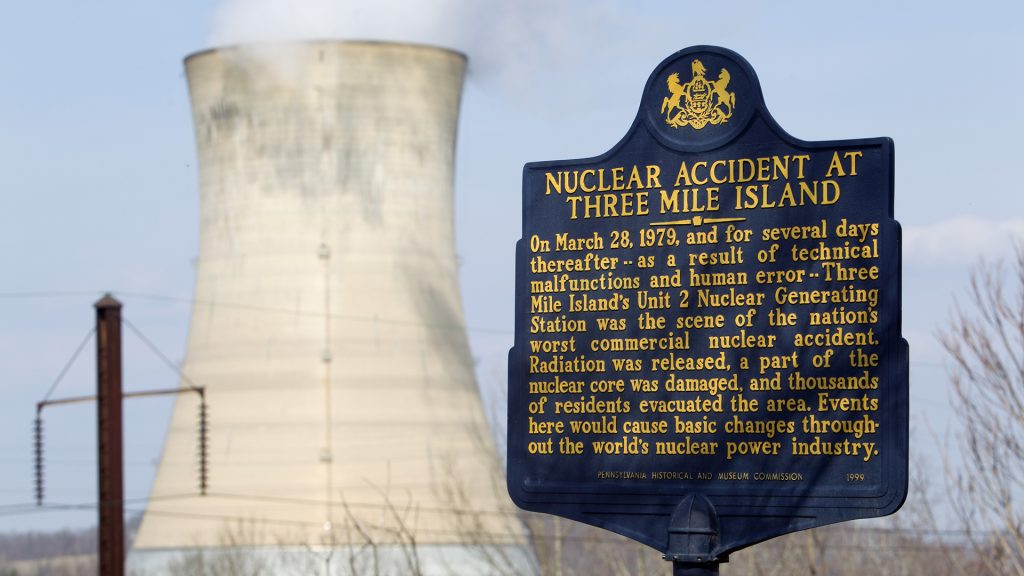
The company paid for access to all the power made by the previously defunct nuclear plant
By Theara Coleman, The Week US, 24 September 2024
With artificial intelligence putting a damper on its clean energy goals, Microsoft is turning to nuclear power in a first-of-its-kind exclusive deal with a nuclear plant. The massive amount of energy needed to power artificial intelligence has contributed to a resurgence of interest in nuclear power, a turn for an industry on its way out over the last decade. But with Big Tech closing in on nuclear plants, some wonder what will be left for everyone else.
The symbolism of the deal
Three Mile Island, the dormant Pennsylvania nuclear plant at the center of the Microsoft deal, became “shorthand for the risks posed by nuclear energy after one of the plant’s two reactors partly melted down in 1979,” said The New York Times. The other reactor operated safely for years before ultimately closing down for economic reasons five years ago. With the Microsoft deal, a “revival is at hand.” Because of artificial intelligence, the tech giant needs massive amounts of electricity for its growing number of data centers, and the company has agreed to use as much power as possible from the plant over the next 20 years. The plant’s owner, Constellation Energy, promises to spend $1.6 billion refurbishing the reactor, hoping to restart it by 2028 with regulatory approval. The deal marks the first time “Microsoft has secured a dedicated, 100% nuclear facility for its use,” the Times said.
“The symbolism is enormous,” Joseph Dominguez, the chief executive of Constellation, said to the Times. Even though Three Mile Island “was the site of the industry’s greatest failure,” it can now be a “place of rebirth.”…………………………………………………………….
Unfortunately, tech’s bullish approach to securing nuclear power has some experts worried there will not be enough to go around. The owners of nearly a third of the country’s nuclear power plants were in talks with tech companies to meet the demands of the AI boom, The Wall Street Journal said. These deliberations could potentially “remove stable power generation from the grid while reliability concerns are rising across much of the U.S,” and the electricity demand is driven up by new tech like AI, the outlet said. Instead of helping to add new green energy solutions to meet their “soaring power needs,” tech companies would be “effectively diverting existing electricity resources.” That could raise prices for other customers and “hold back emission-cutting goals,” said the Journal.
Amazon Web Services closed a similar deal earlier this year, acquiring a data center campus connected to Talen Energy Corp.’s nuclear power plant on the Susquehanna River in Pennsylvania for $650 million. The arrangement raised concerns among clean energy advocates and regulators, specifically the the state’s consumer advocate, Patrick Cicero, who said he was worried about cost and reliability if big companies snatch up all the plants. “Never before could anyone say to a nuclear-power plant, we’ll take all the energy you can give us,” Cicero said to the Journal.
https://theweek.com/tech/microsoft-three-mile-island-nuclear-power-big-tech
Losing The Narrative War: Israel Illegally Raids and Shuts Down Al Jazeera’s West Bank Bureau

The Dissenter, Kevin Gosztola, Sep 23, 2024
Israel attacks Al Jazeera and its journalists because their reporting consistently shows the truth of Israel’s war and undermines its military occupation against Palestinians.
As the Israeli government struggles to maintain its preferred narrative in the global news media around the country’s brutal assault on Gaza, the Israeli military illegally raided Al Jazeera’s West Bank bureau in Ramallah on September 22 and said the news network would be shut down for 45 days.
Israel’s latest act of lawfare against Al Jazeera occurred several months after the Israeli military raided Al Jazeera’s office in East Jerusalem in May. In that raid, soldiers seized the network’s media equipment after Prime Minister Benjamin Netanyahu and the Knesset banned Al Jazeera from operating in the country.
“The Network vehemently condemns and denounces this criminal act by the Israeli occupation forces. Al Jazeera reject the draconian actions, and the unfounded allegations presented by Israeli authorities to justify these illegal raids,” Al Jazeera stated. “Al Jazeera reaffirms its unwavering commitment to continue reporting on the war on Gaza and the ongoing occupation of the Palestinian territories and the regional escalation.”
Israeli communications minister Shlomo Karhi said the raid was launched to stop “the mouthpiece of Hamas and Hezbollah.” He added, “We will continue to fight the enemy’s channels and ensure the safety of our heroic fighters.”
Al Jazeera’s media license in the West Bank does not come from the Israeli government but rather the Palestinian National Authority, which released a statement denouncing the illegal raid.
According to reporting from Al Jazeera English, masked and “heavily armed” Israeli soldiers entered the Al Jazeera office in the early morning. A document reflecting a decision by an Israeli military general was shown to Al Jazeera media personnel. Every person in the office was given 10 minutes to grab their personal belongings and cameras and leave.
Israeli soldiers tore down a poster of Shireen Abu Akleh, the Palestinian American correspondent for Al Jazeera who was effectively assassinated in May 2022 by Israeli military forces while reporting on a military raid in the Jenin refugee camp in the West Bank.
Soldiers took the microphone from Walid Al-Omari, who is the West Bank bureau chief, as he tried to provide a live report on the raid. They confiscated media equipment and documents that had information potentially from confidential media sources. And the soldiers also welded shut the doors to the office.
Carlos Martínez de la Serna, who is a program director for the Committee to Protect Journalists, condemned the raid and said, “Israel’s efforts to censor Al Jazeera severely undermine the public’s right to information on a war that has upended so many lives in the region. Al Jazeera’s journalists must be allowed to report at this critical time, and always.”
“The policy of this Israeli government is to prevent any voice that might contradict its official line. They have destroyed all the media in Gaza, targeted and killed journalists because they were doing their job, and now they want to wipe out the media in the occupied West Bank,” declared Anthony Bellanger, the secretary general for the International Federation of Journalists (IFJ).
The National Union of Journalists in the United Kingdom called the shut down of Al Jazeera in the West Bank a “dangerous act clearly intended to silence truths and prevent journalists from carrying out their crucial work. The seizure of confidential documents is particularly alarming, as we know protecting sources will be of utmost priority to all journalists impacted by the raid.”……………………………………………………………………………
As of September 20, there were more than 170 deaths of journalists in Gaza and the occupied Palestinian Territories. The Israeli military has detained nearly 100 Palestinian journalists—with 52 journalist still “languishing in Israeli jails.”
Paired with the censorship regime that the Israeli government has imposed on international correspondents, the crackdown on Al Jazeera increases the Israeli government’s ability to commit atrocities without the world seeing them in real time. In fact, in the past month, Israel has significantly ramped up its acts of aggression against Palestinians in the West Bank.
“Israel’s ongoing suppression of the free press is blatantly aimed at concealing its actions in the Gaza Strip and the occupied West Bank, in contravention of international and humanitarian law. Israel’s direct targeting and killing of journalists, along with arrests, intimidation, and threats, will not deter Al Jazeera from its commitment to coverage,” declared the Al Jazeera news network.
Basravi recorded a video message in anticipation of the raid. “Where we are now in the occupied West Bank is the core of newsgathering hub from where Al Jazeera has carried out uninterrupted storytelling spanning three decades.”
“In that time, our journalists have worked to bring our viewers stories about the Palestinian experience—everything from home demolitions to airstrikes, raids, and assassinations, the construction of separation barriers and the absurdity of occupation in the 21st century, the expansion of illegal settlements and the terror of settler violence, the humiliation and economic burdens of checkpoints, the suffering of thousands of incarcerated Palestinians and the impact on their families, the pain and anger of a people that [United Nations] officials have described as living under apartheid.”
Basravi concluded, “Our teams regularly faced threats to their safety, and too many have made the ultimate sacrifice for telling stories about people fighting for their freedom,” and, “Al Jazeera has been accused of harming Israeli security, of inciting against Israeli soldiers.”
“But to quote our bureau chief here, all we’ve been doing is reporting on what the Israeli military has been doing to people in the Occupied Palestinian Territories. And if they stop doing it, we can stop reporting it.” https://thedissenter.org/losing-the-narrative-war-israel-raids-and-shuts-down-al-jazeeras-west-bank-bureau-2/
1 This Month

of the week – Shut Down Drone Warfare!


Tell the Ukrainian Government to Drop Prosecution of Peace Activist Yurii Sheliazhenko

Petition to revoke the licensing of the Near Surface Nuclear Disposal Facility (NSDF) at Chalk River. https://www.ourcommons.ca/petitions/en/Petition/Details?Petition=e-7247
To see nuclear-related stories in greater depth and intensity – go to https://nuclearinformation.wordpress.com
-
Archives
- April 2026 (91)
- March 2026 (251)
- February 2026 (268)
- January 2026 (308)
- December 2025 (358)
- November 2025 (359)
- October 2025 (376)
- September 2025 (257)
- August 2025 (319)
- July 2025 (230)
- June 2025 (348)
- May 2025 (261)
-
Categories
- 1
- 1 NUCLEAR ISSUES
- business and costs
- climate change
- culture and arts
- ENERGY
- environment
- health
- history
- indigenous issues
- Legal
- marketing of nuclear
- media
- opposition to nuclear
- PERSONAL STORIES
- politics
- politics international
- Religion and ethics
- safety
- secrets,lies and civil liberties
- spinbuster
- technology
- Uranium
- wastes
- weapons and war
- Women
- 2 WORLD
- ACTION
- AFRICA
- Atrocities
- AUSTRALIA
- Christina's notes
- Christina's themes
- culture and arts
- Events
- Fuk 2022
- Fuk 2023
- Fukushima 2017
- Fukushima 2018
- fukushima 2019
- Fukushima 2020
- Fukushima 2021
- general
- global warming
- Humour (God we need it)
- Nuclear
- RARE EARTHS
- Reference
- resources – print
- Resources -audiovicual
- Weekly Newsletter
- World
- World Nuclear
- YouTube
-
RSS
Entries RSS
Comments RSS
 nuclear-news