Miliband urged by US nuclear giant to abandon large reactors in favour of mini-nukes

GE-Hitachi Nuclear boss says investors have ‘scars’ from large projects’ cost overruns
Matt Oliver, Industry Editor
An American nuclear power giant has urged
Ed Miliband to focus on building a new generation of mini reactors instead
of vast megaprojects such as Hinkley Point C. Andrew Champ, the UK country
director for GE-Hitachi Nuclear, said small modular reactors (SMRs) offered
“the best route” to expanding Britain’s nuclear capacity as the
Energy Secretary draws up plans to overhaul the power grid.
By comparison, many investors have “scars” from budget overruns and delays with bigger
nuclear projects and view them as too risky, he claimed. Mr Champ pointed
to the large cost of Hinkley Point C in Somerset as an example. The
project’s budget has ballooned from £20bn to as much as £46bn when
inflation is included.
His comments come as the Government is reconsidering
proposals to build a large-scale nuclear power station in Wylfa, a
taxpayer-owned site on the Welsh island of Anglesey.
GE-Hitachi, which also builds larger-scale reactors, is among those currently trying to
commercialise SMR technology and is vying to secure funding from the UK
under the Government’s current mini-nuke development competition. SMRs
have been hailed as a potential breakthrough for nuclear power because they
would be built in chunks by factories and then assembled rapidly on site,
potentially meaning they can benefit from economies of scale.
So far the technology remains unproven on a commercial basis and no such reactors are
in operation. He also said the UK’s current target to build out 24
gigawatts of nuclear capacity was likely to prove too conservative, partly
due to the huge growth in power demand from data centres being used to
develop artificial intelligence software.
Telegraph 16th Sept 2024
https://www.telegraph.co.uk/business/2024/09/15/miliband-urged-ge-hitachi-prioritise-mini-nukes/
Dounreay nuclear wastes : new snake like robot to access off limits areas
A new robot has been trialled at Dounreay in order to reach “severely
restricted” areas at the former experimental nuclear plant. During
decommissioning of the reactor, engineers have had to come up with
innovative solutions to access parts of the plant that are off limits to
humans.
John O’Groat Journal 17th Sept 2024
US Navy chief unveils plan to be ready for possible war with China by 2027
The announcement of the goals comes as US leaders are treading a fine line, pledging a commitment to the defence of Taiwan while also working to keep communication open with Beijing to deter greater conflict.
Beijing regards Taiwan as part of China to be reunited, by force if necessary. Most countries, including the US, do not recognise Taiwan as an independent state.
But Washington opposes any attempt to take the island by force and is legally bound to support Taiwan’s military defence capability.
Admiral Lisa Franchetti says lessons from combat in the Red Sea and Ukraine’s Black Sea fight can help the US prepare for an attack on Taiwan
SCMP, Associated Press, 19 Sep 2024
The US Navy is taking lessons from its combat in the Red Sea over the past year and what Ukraine has done to hold off the Russians in the Black Sea to help US military leaders prepare the service for a potential future conflict with China.
From drones and unmanned surface vessels to the more advanced operation of shipboard guns, the US Navy is expanding its combat skills and broadening training. It is also working to overcome recruiting struggles so it can have the sailors it needs to fight the next war.
Admiral Lisa Franchetti, chief of naval operations, is laying out a series of goals, including several that will be highly challenging to meet, in a new navigation plan she described in an interview. The objective is to be ready to face what the Pentagon calls its key national security challenge – China.
“I’m very focused on 2027. It’s the year that President Xi [Jinping] told his forces to be ready to invade Taiwan,” Franchetti said. “We need to be more ready.”
The new plan, released on Wednesday, includes what she considers seven priority goals, ranging from removing delays in ship depot maintenance to improving US Navy infrastructure, recruiting and the use of drones and autonomous systems.
One significant challenge is to have 80 per cent of the force be ready enough at any given time to deploy for combat if needed – something she acknowledged is a “stretch goal”. The key, she said, is to get to a level of combat readiness where “if the nation calls us, we can push the ‘go’ button and we can surge our forces to be able to meet the call”.
The announcement of the goals comes as US leaders are treading a fine line, pledging a commitment to the defence of Taiwan while also working to keep communication open with Beijing to deter greater conflict.
Beijing regards Taiwan as part of China to be reunited, by force if necessary. Most countries, including the US, do not recognise Taiwan as an independent state.
But Washington opposes any attempt to take the island by force and is legally bound to support Taiwan’s military defence capability.
An important element in any Asia-Pacific conflict will be the need to control the seas. Franchetti said the US can learn from how the Ukrainians have used drones, air strikes and long-range unmanned vessels to limit Russian ship activity in the western Black Sea and keep access open to critical ports.
“If you look at the Ukrainian success in really keeping the Russian Black Sea fleet pushed all the way over into the east, that’s all about sea denial and that’s very important,” Franchetti said. She added that Ukraine has been innovating on the battlefield by using existing systems, such as drones, in different ways.
The US Navy’s months-long battle with the Iran-backed Houthi rebels in Yemen has provided other lessons…………………………………………………………………. https://www.scmp.com/news/world/united-states-canada/article/3279048/us-navy-chief-unveils-plan-be-ready-possible-war-china-2027
Ukraine hits Russia with “massive drone attack” on military depot in Toropets, causing huge explosion
“If we make no effort to change direction, we will end up where we are heading.”
https://www.cbsnews.com/news/ukraine-hits-russia-drone-attack-toropets-military-depot-explosions/ 18 Sept 24
Kyiv, Ukraine — Ukrainian drones struck a large military depot in a town deep inside Russia overnight, causing a huge blaze and prompting the evacuation of some local residents, a Ukrainian official and Russian news reports said Wednesday. The strike came after a senior U.S. diplomat said Ukrainian President Volodymyr Zelenskyy’s recently announced but still confidential plan to win the war “can work” and help end the conflict that’s now in its third year.
Ukraine claimed the strike destroyed military warehouses in Toropets, a town in Russia’s Tver region about 240 miles northwest of Moscow and 300 miles from the border with Ukraine.
The attack was carried out by Ukraine’s Security Service, along with Ukraine’s Intelligence and Special Operations Forces, a Kyiv security official told The Associated Press, speaking on condition of anonymity to discuss the operation. According to the official, the depot housed Iskander and Tochka-U missiles, as well as glide bombs and artillery shells. He said the facility caught fire in the strike and was burning across an area 4 miles wide.
Russian state news agency RIA Novosti quoted regional authorities as saying air defense systems were working to repel a “massive drone attack” on Toropets, which has a population of around 11,000. The agency also reported a fire and the evacuation of some local residents.
There was no immediate information about whether the strikes had caused any casualties.
Successful Ukrainian strikes on targets deep inside Russia have become more common as the war has progressed and Kyiv developed its drone technology.
Zelenskyy has been pushing for approval from his Western partners, including the U.S., for Ukraine to use the sophisticated weapons they’re providing to hit targets inside Russia. Some Western leaders have balked at that possibility, fearing they could be dragged into the conflict.
Russian President Vladimir Putin warned last week that a decision by the U.S. or its NATO allies to allow Ukraine to use Western missiles to strike targets deep inside Russia would be viewed as “nothing less than the direct participation of NATO countries, the United States, and European countries, in the war in Ukraine.”
Ukraine’s targeting of Russian military equipment, ammunition and infrastructure deep inside Russia with drones and other weapons it already has — as well as making Russian civilians feel some of the consequences of the war that is being fought largely inside Ukraine — is part of Kyiv’s strategy.
The swift push by Ukrainian forces into Russia’s Kursk border region last month fits into that plan, apparently seeking to compel Putin to back down.
Putin has shown no signs of doing that, however, and has been trying to grind down Ukraine’s resolve through attritional warfare, while also trying to sap the West’s resolve to support Kyiv by drawing out the conflict. That has come at a price, however, as the U.K. Defense Ministry estimates the war has likely killed and wounded more than 600,000 Russian troops.
On Tuesday, Putin ordered his country’s military to increase its number of troops by 180,000 to a total of 1.5 million by Dec. 1.
Zelenskyy said last month that his plan for victory included not only battlefield goals but also diplomatic and economic wins. The plan has been kept under wraps but U.S. Ambassador to the United Nations Linda Thomas-Greenfield said during a news conference Tuesday that officials in Washington had seen it.
“We think it lays out a strategy and a plan that can work,” she said, adding that the United States would bring it up with other world leaders at the U.N. General Assembly in New York next week. She did not comment on what the plan contains.
‘An Act of Terror’: Israel Behind Pager Explosions That Killed 11, Wounded Thousands
“Each explosion constitutes an indiscriminate attack,” argued Heidi Matthews, an associate professor at the Osgoode Hall Law School of York University.
Jake Johnson, Common Dreams, 17 Sept 24
Sep 18, 2024
Several news outlets confirmed late Tuesday what was widely suspected: Israel’s military and intelligence services were behind the explosions of pagers recently purchased by the Lebanese political party and militant group Hezbollah.
The explosions, reportedly set off earlier Tuesday by a message that appeared as if it was from Hezbollah’s leadership, killed at least 11 people—including an 8-year-old girl—and wounded thousands more.
Citing both an unnamed former Israeli official with knowledge of the operation and an anonymous U.S. official, Axiosreported that “Israeli intelligence services planned to use the booby-trapped pagers it managed to ‘plant’ in Hezbollah’s ranks as a surprise opening blow in an all-out war to try to cripple Hezbollah.”
“But in recent days, Israeli leaders became concerned that Hezbollah might discover the pagers,” the outlet continued. “Israeli Prime Minister Benjamin Netanyahu, his top ministers, and the heads of the Israel Defense Forces and the intelligence agencies decided to use the system now rather than take the risk of it being detected by Hezbollah, a U.S. official said.”
A spokesperson for the U.S. State Department publicly denied that the Biden administration was involved in the attack or aware of the operation in advance.
Heidi Matthews, an associate professor at the Osgoode Hall Law School of York University, wrote Tuesday that “each explosion constitutes an indiscriminate attack,” pointing to video footage of a pager detonating in a crowded market.
“Under these circumstances,” Matthews added, “this is an act of terror.”
The New York Timesreported Tuesday that Hezbollah ordered thousands of pagers from the Taiwanese manufacturer Gold Apollo, but the company denied making the devices. According to the Times, which cited unnamed officials, Israeli operatives “tampered with” the devices “before they reached Lebanon,” planting in them “as little as one to two ounces” of explosive material and a switch “that could be triggered remotely to detonate the explosives.”…………………………………………………………. https://www.commondreams.org/news/hezbollah-pager-explosions
Turkey needs to acquire nuclear arms to stop Israel, urges Erdogan’s chief fatwa giver
September 19, 2024, Abdullah Bozkurt/Stockholm, Nordic Monitor
Hayrettin Karaman, the 90-year-old Islamic jurist and chief fatwa (religious edict) giver for Turkish President Recep Tayyip Erdogan and a prominent ideologue for the Turkish Muslim Brotherhood, has said Turkey must pursue nuclear capabilities to counter Israel and establish deterrence against its adversaries.
In an article published September 8 in the Islamist Yeni Şafak daily, Karaman argued that Turkey’s current efforts are insufficient to stop Israel. He urged that “either the Islamic world must unite and collaborate with China and Russia, or Turkey must move forward by acquiring nuclear warheads and weapons.”…………………………………………………………………………………………………
Recalling his 1995 trip to Israel and Palestine, Karaman said he personally observed how Jews envision a “Greater Israel,” known as the “promised land” (Arz-ı Mev’ud). He claimed that Jews are advancing toward this goal with support from the West.
The so-called “promised land” conspiracy allegedly extends to parts of southeastern Turkey. President Erdogan has echoed this claim in public speeches, alleging that Israel seeks to annex Turkish territory. Erdogan has also praised Hamas, saying the group defends not only the rights of Palestinians but also those of Turks…………………………………………………………………………………………………………………………………………………….. more https://nordicmonitor.com/2024/09/turkey-needs-to-acquire-nuclear-arms-to-stop-israel-urges-erdogans-chief-fatwa-giver/
Unrealistic expectations for So-Called Novel Nuclear Reactor Concepts
Analysis and Evaluation of the Development Status, Safety and Regulatory
Framework for So-Called Novel Reactor Concepts.
For all technology lines considered, extensive research and development work has been taking place for several decades, in some cases since the middle of the last century.
Depending on the technology line, technical test stands for individual
phenomena have been built and operated, and so have smaller experimental
reactors (for SFR, for example, the U.S. EBR-I and II plants or the Russian
BR-10 and Bor-60) and larger demonstration reactors (for SFR, for example,
the French Phoenix and Super-Phoenix plants or the Russian BN-350 or BN-600
plants).
Nevertheless, until today no commercially competitive reactor
concept exists in the field of SNR. To plan, license, construct and operate
such experimental and demonstration reactors, a period of at least one to
two decades must be assumed for each reactor project, probably
substantially more based on historical experience. The knowledge gained
with these facilities needs to be evaluated and incorporated into the
technical design of an eventual prototype reactor.
The expectation, often expressed in public discourse and by developers themselves, that SNR
concepts can make a significant contribution to solving today’s problems in
nuclear technology cannot be considered realistic in view of the current
state of development of these systems and the actually proven and expected
advantages and disadvantages of the individual technology lines.
German Federal Office for the Safety of Nuclear Waste Management
(accessed) 18th Sept 2024
Israel Admits It Probably Killed Israeli Hostages in Gaza Airstrike in November
The Israeli military told the captives’ families at the time that they were killed by Hamas forces.
By Sharon Zhang , Truthout, September 17, 2024, https://truthout.org/articles/israel-admits-it-probably-killed-israeli-hostages-in-gaza-airstrike-in-november/
he Israeli military has admitted that one of its own airstrikes is likely responsible for killing three Israeli captives whose bodies were recovered from Gaza last year, confirming what Hamas officials had said about the hostages’ deaths at the time.
In a release on Sunday, the Israeli military said that an investigation into the deaths of the three captives found there was a “high probability” that they were killed by an Israeli strike carried out on November 10. This finding is based on the location of their bodies in relation to that of the strike and analysis of the strike itself. The military claims the strike targeted and killed a Hamas commander.
Two of the captives were soldiers, Corporal Nick Beiser and Sergeant Ron Sherman. The military also recovered the body of Eliya Toledano. They were all captured amid the October 7 attack, and their bodies were recovered in December.
At the time, Israeli forces told the captives’ families that they were killed by Hamas. But the results of the investigation confirms Hamas’s assertion that they were killed by the Israeli military.
Israeli forces have killed numerous hostages amid their genocide in Gaza, and released hostages have said that their top fear while in captivity was that they would be killed by Israeli strikes.
In December, Israeli forces shot and killed three Israeli captives who were traveling together in northern Gaza. Though the captives were shirtless and waving a white flag, Israeli soldiers opened fire on them. The military later claimed that the soldiers acted correctly to the best of their understanding, as they interpreted the captives’ cries for help as a ruse.
These captives could have been alive today if Israel had agreed to ceasefire agreements early on. Just days after Israel’s genocidal assault of Gaza commenced, Hamas had offered to release all of the captives if the Israeli military didn’t enter Gaza, former political adviser and leader of an advocacy organization for the captives’ families Haim Rubinstein told Times of Israel earlier this year.
Since then, Israel has rejected ceasefire deal after ceasefire deal, with Israeli leaders openly expressing their contempt for the very idea of stopping their genocide in Gaza at any point. There is widespread unrest among Israelis for the government’s failure to secure a hostage release, but Israeli leaders’ actions in the ceasefire negotiations have made it clear that a hostage release is not a top priority for them.
Just earlier this month, Israeli media reported that three captives whose bodies were recently recovered from Gaza were actually slated for release in a ceasefire deal discussed in July. But Israeli Prime Minister Benjamin Netanyahu effectively single handedly killed that deal, introducing a number of last-minute demands that he knew Hamas and other countries’ negotiators would reject — like a permanent Israeli occupation of Gaza’s border with Egypt.
Additionally, Israeli media have reported this week that Netanyahu is reportedly considering dismissing his defense minister Yoav Gallant and replacing him with a political leader whose party has helped cement Netanyahu’s power amid the genocide. Gallant has been a critic of Netanyahu, and recently called for a ceasefire after being in favor of the genocidal invasion last year.
Netanyahu’s insistence that Israel continue its genocide, even at the expense of the lives of Israeli captives, has led many in Israeli society to conclude that Netanyahu doesn’t care about the captives; rather, he relishes in their deaths as new opportunities to demonize Hamas and justify his genocide of Palestinians, as some commentators have noted.
It is clear, then, that Israel’s main goal in Gaza is death and occupation. UN Special Rapporteur for Palestine Francesca Albanese has warned that Israel is on track to wipe out the entire population of Gaza if it continues along this path, and that the true death toll of Palestinians could be estimated at 335,500 as of this month — with no end to Israel’s invasion in sight.
TEPCO again halts work to collect melted nuclear fuel
By KEITARO FUKUCHI/ Staff Writer, September 17, 2024
https://www.asahi.com/ajw/articles/15429866
Once again, Tokyo Electric Power Co. has been forced to halt its project to collect melted nuclear fuel debris at the stricken Fukushima No. 1 nuclear power plant.
On Sept. 17, TEPCO could not confirm camera images of equipment being used to remove the debris from the No. 2 reactor of the plant, bringing a stop to the project, the utility said.
TEPCO had planned to pick up melted fuel debris from the bottom of the reactor’s containment vessel that day.
The cause of the problem is under investigation, and there are no prospects of soon resuming the fuel-collecting operation, TEPCO said.
The company had earlier planned to start the fuel-removal work on Aug. 22. But the project was suspended after it was discovered that equipment for the operation had been installed in an incorrect order.
The work resumed on Sept. 10 after TEPCO took measures to prevent a recurrence.
After the fuel-removal device was pushed inside the reactor containment vessel, TEPCO checked the operation of the camera on the tip of the device. It was working on Sept. 13.
Workers had been checking the equipment from the morning of Sept. 17.
But a glitch occurred in the remote control room, about 400 meters away from the site, and the camera images could not be checked, the utility said.
Because of this, workers were unable to pick up the fuel debris.
Hinkley Point C must deploy mandated protections for fish
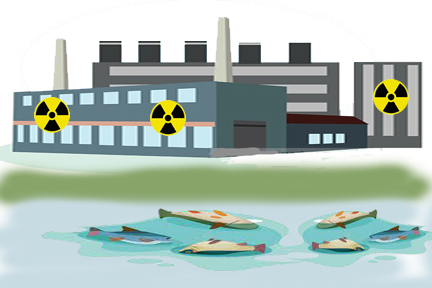
For Hinkley Point C to deliver on its environmental claims, the project must install its mandated Acoustic Fish Deterrent (AFD) system, writes Fish Guidance Systems’ Lewis English.
Can we truly call energy “clean” if it
causes significant environmental harm? This question becomes particularly
pertinent when examining the situation at Hinkley Point C, a new generation
nuclear power plant under construction in Somerset.
For nearly eight years,
EDF Energy has been working to remove a vital environmental protection at
Hinkley Point C, the Acoustic Fish Deterrent (AFD). The AFD system is
designed to protect aquatic life by deterring fish from entering the
cooling systems of the power plant, and was included in the initial design
plans of Hinkley Point C. Despite its importance, the removal of the AFD
has been a contentious issue.
The Welsh Government Commission has warned
that its absence could lead to the death of approximately 182 million fish
annually, including sensitive species like shad, sprat, Atlantic salmon,
and herring, which are crucial to local ecosystems, and Secretary of State
Kwasi Kwarteng ruled in a Public Inquiry that the measure must be applied.
Still, EDF continues to contest it, arguing that it would further delay the
completion of Hinkley Point C and hold up the UK’s net zero plans.
The Engineer 16th Sept 2024
A Suffolk wildlife and conservation charity has called for “greater transparency” from Sizewell C in relation to its wildlife compensation schemes.
Earlier in September, developers of the new Sizewell C nuclear
power station announced a new partnership with the nature restoration
movement WildEast to promote the return of land to nature across the
region. In announcing the partnership, Sizewell C flagged up how it had
pledged to return a large part of the land to nature during the
construction of the new power station. Its involvement in leading on a
wildlife habitat scheme at Wild Aldhurst nature reserve in Leiston was
mentioned, along with plans for wetland habitat creation at three nature
reserves at Benhall, Halesworth and Pakenham.
However, in a joint statement
with the Royal Society for the Protection of Birds (RSPB), the Suffolk
Wildlife Trust spoke of its “real disappointment” that Sizewell C had
included the work at the three nature reserves, which is part of its legal
duty to compensate for the impacts of the power station’s construction on
wildlife. The charities said the projects were a “minimum requirement,” but
were being “misrepresented” as examples of the developers going the extra
mile for nature.
East Anglian Daily Times 16th Sept 2024
https://www.eadt.co.uk/news/24585320.suffolk-wildlife-trust-rspb-speak-sizewell-c-nature/
The UK’s nuclear waste problem

“more nuclear power means more nuclear waste”
By Chas Newkey-Burden, The Week UK, 16 Sept 24 https://theweek.com/environment/the-uks-nuclear-waste-problem
Safety concerns as ‘highly radioactive’ material could be buried in the English countryside
“Not in my backyard” is a term normally used in conversations about proposed new housing or rail lines, but a version of it could soon be heard about one of the most dangerous materials on the planet.
Nuclear power stations are filling up with radioactive waste, so “swathes” of the highly dangerous material are set to be “buried in the English countryside”, said The Telegraph. For local communities, it isn’t so much “not in my backyard” as “not under my backyard”, said the Financial Times.
‘100,000 years of hazard’
Sellafield, in Cumbria, is the “temporary home to the vast majority of the UK’s radioactive nuclear waste”, said the BBC, “as well as the world’s largest stockpile of plutonium”. It’s stuck there because no long-term, high-level waste facilities have been created to deal with it.
The “highly radioactive material” releases energy that can infiltrate and damage the cells in our bodies, Claire Corkhill, professor of radioactive waste management at the University of Bristol, told the broadcaster, and “it remains hazardous for 100,000 years”.
The permanent plan to handle the waste currently at Sellafield is to first build a designated 650ft-deep pit to store it. Although the contentious matter of its location has yet to be agreed, the facility will hold some of the 5 million tonnes of waste generated by nuclear power stations over the past seven decades. Then, in the second half of the century, a much deeper geological disposal site will be dug, which will hold the UK’s “most dangerous waste”, such as plutonium, said The Telegraph.
The problem is only going to get bigger because nuclear power is a central part of the government’s mission for “clean power by 2030” and “more nuclear power means more nuclear waste”, said the BBC.
With at least three new nuclear power stations planned, said The Telegraph, the country will quickly be “at odds with” the 1976 review of nuclear waste policy by the Royal Commission on Environmental Pollution, which warned the UK was amassing nuclear waste so fast that it should stop building reactors until it had a solution.
‘Poison portal’
Some believe part of that solution will be found overseas. Earlier this year, there were warnings that Australia could become a “poison portal” for the UK and US as a result of a new three-nation defence pact called Aukus. The original wording of the agreement would allow for facilities to be created to dispose of waste from “Aukus submarines”, which could have included UK and US vessels.
Dave Sweeney, the Australian Conservation Foundation’s nuclear free campaigner, warned at the time that Aukus partners could see Australia as “a little bit of a radioactive terra nullius”.
After pushback, the Australian government added a loophole to the legislation to “ensure Australia will not become a dumping ground for nuclear waste”, said The Guardian.
But the Australian Greens’ defence spokesperson, David Shoebridge, said the changes did not go far enough. The amendment only addresses high-level radioactive waste, he said, and “still allows the US and UK to dump intermediate-level waste, and Australian high-level waste, anywhere in Australia”.
New logo for Geological Disposal Facility (GDF) represents a costly conversation
‘£4,600 excluding VAT’ was the answer to the query posed to Nuclear
Waste Services by NFLA Secretary Richard Outram who asked about the cost of
commissioning a new logo for the GDF Theddlethorpe Community Partnership.
With two speech bubbles signifying a conversation, the new logo was
conceived by House 337, who are ‘experts at building brands across many
sectors’. House 337 is an arm of NWS’s ‘contracted strategic delivery
partner’, MHP. Wags might suggest that a single speech bubble signifying
a one-sided conversation or a deaf ear signifying an inattentive NWS might
have been more appropriate.
NFLA 16th Sept 2024
1 This Month

of the week – Shut Down Drone Warfare!


Tell the Ukrainian Government to Drop Prosecution of Peace Activist Yurii Sheliazhenko

Petition to revoke the licensing of the Near Surface Nuclear Disposal Facility (NSDF) at Chalk River. https://www.ourcommons.ca/petitions/en/Petition/Details?Petition=e-7247
To see nuclear-related stories in greater depth and intensity – go to https://nuclearinformation.wordpress.com
-
Archives
- April 2026 (19)
- March 2026 (251)
- February 2026 (268)
- January 2026 (308)
- December 2025 (358)
- November 2025 (359)
- October 2025 (376)
- September 2025 (257)
- August 2025 (319)
- July 2025 (230)
- June 2025 (348)
- May 2025 (261)
-
Categories
- 1
- 1 NUCLEAR ISSUES
- business and costs
- climate change
- culture and arts
- ENERGY
- environment
- health
- history
- indigenous issues
- Legal
- marketing of nuclear
- media
- opposition to nuclear
- PERSONAL STORIES
- politics
- politics international
- Religion and ethics
- safety
- secrets,lies and civil liberties
- spinbuster
- technology
- Uranium
- wastes
- weapons and war
- Women
- 2 WORLD
- ACTION
- AFRICA
- Atrocities
- AUSTRALIA
- Christina's notes
- Christina's themes
- culture and arts
- Events
- Fuk 2022
- Fuk 2023
- Fukushima 2017
- Fukushima 2018
- fukushima 2019
- Fukushima 2020
- Fukushima 2021
- general
- global warming
- Humour (God we need it)
- Nuclear
- RARE EARTHS
- Reference
- resources – print
- Resources -audiovicual
- Weekly Newsletter
- World
- World Nuclear
- YouTube
-
RSS
Entries RSS
Comments RSS
 nuclear-news