Biden, Harris sacrificing endless thousands of Ukrainians to retain presidency November 5.

Walt Zlotow, West Suburban Peace Coaliton, Glen Ellyn IL, 16 Sept 24

President Biden sent Secretary of State Antony Blinken to Kyiv last week to reassure Ukrainian President Zelensky that Ukraine can prevail against Russia with endless US billions in weapons. He also stated that Ukraine will eventually achieve NATO membership.
Blinken was lying to Zelensky. He, along with President Biden and Democratic nominee Kamala Harris, know full well the US proxy war against Russia in Ukraine is lost. Indeed, it was certain to be lost the day it started over two and a half years ago. It could not be won without direct US/NATO involvement, regardless of how many hundreds of billions we squander supplying Ukraine with weapons. Direct involvement was ruled out because it likely means WWIII. US weapons are worthless because Ukraine is running out of soldiers to use them.
The US essentially green-lighted the invasion believing US weaponry would allow Ukraine to weaken, even defeat Russia, a long sought US foreign policy goal to keep them out of the European political economy.
The result has been a catastrophe for Ukraine, now a shattered country. It spells the end of continued US domination of Europe that offered no seat at the table for Russia.
The Biden/Harris administration must now take the sensible, moral action of forcing Ukraine to sue for peace. Allowing Ukraine to bleed out with further destruction to its economy, infrastructure, demographics and hundreds thousands more casualties is a grotesque policy to pursue.
But Biden and Harris are committed to their declaration this is a holy way of autocracy v. freedom. They are loathe to allow any settlement which allows Russia to achieve their war aims of no NATO membership for Ukraine and independence for Donbas, with security for Ukraine going forward.
It’s even more improbable for them to do that with the election just 7 weeks away. Admitting defeat after squandering over $150 billion simply destroying Ukraine to allow a Russian victory will bring an avalanche of criticism from national security state warhawks. It would rip away the false notion that this was a just war to protect US national security interests. It could cost Harris the election.
So Biden and Harris continue to prevent and cover up Ukraine’s impending collapse till after Election Day. They continue to fling tens of billions in weaponry into Ukraine which will either be destroyed by overwhelming Russian firepower or sit idle unused.
Biden and Harris have made a pact with the Devil over Ukraine. Tens of thousands of Ukrainians must die to keep the Democrats from losing a war shortly before an election. A war that never should have been fought and that signals the impending demise of US unilateral control of the world.
During his first year, President Biden lost the 20 year long Afghan war. Losing 2 senseless wars in one term is a lost war too far to remain in power. Biden and Harris’ message to Ukraine? ‘Keep dying Ukrainians. We’ll figure something out after November 5’.
Tritium into the air?

“You get layers and layers and layers and layers of denial.”
Venting plans at Los Alamos have received scant attention, writes Alicia Inez Guzmán of Searchlight New Mexico
Beyond Nuclear International, 16 Sept 24
Last fall, the international community rose up in defense of the Pacific Ocean. Seafood and salt purveyors, public policy professors, scientists and environmentalists, all lambasted Japan’s release of radioactive wastewater from the disastrously damaged Fukushima Daiichi nuclear plant into the sea.
At the heart of the contention was tritium, an element that, by mass, is 150,000 times more radioactive than the plutonium used in the cores of nuclear weapons. Odorless and colorless, tritium — the radioactive form of hydrogen — combines with oxygen to form water. Just one teaspoon is enough to contaminate 100 billion gallons more water up to the U.S. drinking water standard, according to Arjun Makhijani, an expert on nuclear fusion and author of the monograph, “Exploring Tritium Dangers.”
What didn’t make international headlines — but was quietly taking place on the other side of the world — was Los Alamos National Laboratory’s own plans to vent the same radioactive substance into northern New Mexico’s mountain air. Japan’s releases would take place over three decades. LANL’s would include up to three times more tritium — and take place in a matter of days.
There is no hard timeline for the release, but if the plans are approved by the Environmental Protection Agency, LANL is looking at a period with “sufficiently warm weather,” a spokesperson from the National Nuclear Security Administration wrote by email. That could mean as soon as this summer.
Those controversial plans date back to 2016, when LANL discovered that a potentially explosive amount of hydrogen and oxygen was building up in four containers of tritium waste stored in a decades-old nuclear dump called Area G. The safest and most technically viable solution, the lab decided — and the best way to protect workers — would be to release the pressure and, with it, thousands of curies of tritium into the air.
When advocates caught wind of the venting in March 2020, Covid was in its earliest and most unnerving phase. Pueblo leaders, advocates and environmentalists wrote impassioned letters to the lab and the EPA, demanding that they change or, at the very least, postpone the release until after the pandemic. At the same time, Tewa Women United, a nonprofit founded by Indigenous women from northern New Mexico, issued its first online petition, focusing on tritium’s ability to cross the placental barrier and possibly harm pregnant women and their fetuses. Only after a maelstrom of opposition did the lab pause its plans and begin briefing local tribes and other concerned members of the community.
“We see this as a generational health issue,” said Kayleigh Warren, Tewa Women United’s food and seed sovereignty coordinator. “Just like all the issues of radioactive exposure are generational health issues.”
Last fall, the lab again sought the EPA’s consent. A second petition from Tewa Women United followed. Eight months later, the federal agency’s decision is still pending.
The NNSA, which oversees the health of America’s nuclear weapons stockpile from within the Department of Energy, declined Searchlight New Mexico’s requests for an interview.
The crux of the issue comes down to what is and isn’t known about the state of the containers’ contents. Computer modeling suggests they are pressurized and flammable, but the actual explosive risk has not been measured, the lab has conceded.
Critics have requested that the contents be sampled first to determine whether there is any explosive risk and whether venting is even needed. The EPA says that sampling would require going through the same red tape as venting. The lab, for its part, plans to sample and vent the contents in one fell swoop.
But why, critics wonder, are these containers in this state in the first place? Were they knowingly over packed and left for years to grow into ticking time bombs?…………………………………………………………………………………………………………………………………..
……………..Tritium 101
Plutonium and uranium are familiar to most people, if by name only. But few know anything at all about tritium — a radioactive isotope of hydrogen that is used to make watch dials and EXIT signs glow bright neon. Tritium’s other, lesser-known use is as a “boost gas,” which, when inserted into the hollow core of a plutonium pit, amplifies a nuclear weapon’s yield. Globally, hundreds of atmospheric weapons tests dispersed tritium into the atmosphere, steeping rain, sea, and groundwater with the element and, ultimately, lacing sediment worldwide.
Tritium is widely produced at nuclear reactors and is today tested, handled and routinely released at Los Alamos National Laboratory
Criticisms of this venting have always centered on two of the element’s key characteristics: First, it travels “tens to hundreds of miles,” according to lab documents. Second, when tritium is in the form of water, it becomes omnipresent and easy for bodies to absorb.
“Tritium is unique in this,” wrote Makhijani. “It makes water, the stuff of life, most of the mass of living beings, radioactive.”
Years of LANL reports depict tritium’s ubiquity in the lands and ecosystem within its bounds, a palimpsest of radioactive decay. This is measured in curies, a basic unit that counts the rate of decay second by second.
The lab’s first environmental impact statement, published in 1979, estimated that it had buried close to 262,000 curies of tritium at Area G and released tens of thousands more into the air from various stacks over the decades. The lab had two major accidental releases of tritium around the same time — 22,000 curies in the summer of 1976 and nearly 31,000 curies in the fall of 1977.
Today, trees have taken it into their root systems on Area G’s southeast edge. Rodents scurrying in and out of waste shafts are riddled with the substance, owing to tritium vapors from years past. A barn owl ate those rodents and had 740 times more tritium concentration in its body than the U.S. drinking water standard, the common reference value for indicating tritium contamination. The lab’s honeybee colonies — kept to determine how radioactive contaminants are absorbed — produced tritiated honey up to 380 times more concentrated than the drinking water standard, reports show.
The EPA set the current standard for radioactive emissions at DOE facilities in 1989, but that didn’t stop the lab from releasing thousands of curies of tritium into the air shortly afterward. In 1991, the EPA issued a notice of non-compliance to the lab for not calculating how much of a radiation dose the public received. Another notice followed in 1992.
Concerned Citizens for Nuclear Safety filed a lawsuit two years later alleging that the DOE hadn’t properly monitored radioactive emissions, as required by the Clean Air Act. At the time, a former lab safety officer, Luke Bartlein, observed what he described in an affidavit as a “pattern and practice of deception at LANL with respect to the radionuclide air monitoring system.” It was routine for lab staffers and management to vent glove boxes and other materials contaminated with tritium outside so that the contamination would deliberately “not register” on the stack monitors, he recounted, leading to false emissions reports.
The lab settled in 1997; a consent decree followed and would stay in effect until 2003. The lab says it has maintained low annual emissions ever since……………………………………………………………………………………………………………..
Tewa Women United and others now worry that the region’s famously fitful winds will carry tritium, a consummate shapeshifter, to corners far beyond the lab’s bounds.
The movement will be invisible. First, tritium will transform moisture in the air. Then, that moisture will quickly contaminate other “open water surfaces and biota downwind, including food growing in the area and food in open-air markets, and humans themselves,” according to Ian Fairlie, a London-based radiation consultant for the European Parliament.
A fraction of that tritium can linger in the body, if ingested. In pregnant women, tritium can then stage another imperceptible passage across the placental barrier, concentrating 60 percent more of the element in the fetus than in the mother, according to Makhijani. Radiation exposure can lead to early failed pregnancies and neurological damage in the first weeks of gestation.
While the Nuclear Regulatory Commission has radiation exposure limits for pregnant women in the workplace, there are no specific radiation protections for pregnant women in the public — or their fetuses.
In 1999, Makhijani and more than 100 scientists, activists and physicians across the country and worldwide signed a letter to the National Academy of Sciences. Their ask? To evaluate how radionuclides that cross the placental boundary, including tritium, impact the fetus, a request Makhijani renewed in 2022.
As he put it, tritium — the “most ubiquitous pollutant from both nuclear power and nuclear weapons” — has largely escaped regulatory and scientific scrutiny when it comes to matters of pregnancy.
Cindy Folkers, the radiation and health hazard specialist at Beyond Nuclear, a national advocacy organization, believes the reason is rooted in the radiation establishment’s fear of liability. “You get layers and layers and layers and layers of denial.”
The scant research that does exist comes from pregnant women who survived atomic bombs in Hiroshima and Nagasaki. In 1986, the International Commission on Radiation Protection concluded that exposing a fetus to ionizing radiation, the kind that tritium emits, has a “damaging effect…upon the development of the embryonic and fetal brain.” The area most at risk of harm, it went on, is the forebrain, which controls complex and fundamental functions like thinking and processing information, eating, sleeping and reproduction.
Ionizing radiation damages the cell in two ways. On the one hand, it breaks apart the building blocks from which humans are made, causing rifts in DNA. On the other, it fundamentally changes the chemistry of the cell, breaking apart its water molecules and upsetting its metabolism.
That’s what makes it different from, say, an X-ray, Folkers said. “A machine can be shut off,” but “a radioactive particle that’s inside your body will continue irradiating you.” For a pregnant woman, this adds up to “cumulative biological damage,” the kind that cuts across generations.
“We’re dealing with a life cycle,” Folkers said. “And females are an integral part of that life cycle. Not only are they more damaged by radioactivity, and their risks are higher for cancer, but they are also carrying in them the future generations. So when you’re dealing with a female baby who’s developing in the womb, you are dealing with that child’s children at the very least.”
In other words, a mother is like a Russian nesting doll. She holds a fetus and that fetus, if a female, holds all future eggs. Exposure to her is exposure to future generations.
Alicia Inez Guzmán was raised in the northern New Mexican village of Truchas and has written about histories of place, identity and land use in New Mexico. She brings this knowledge to her current role at Searchlight, where she focuses on nuclear issues and the impacts of the nuclear industry. https://beyondnuclearinternational.org/2024/09/16/tritium-into-the-air/
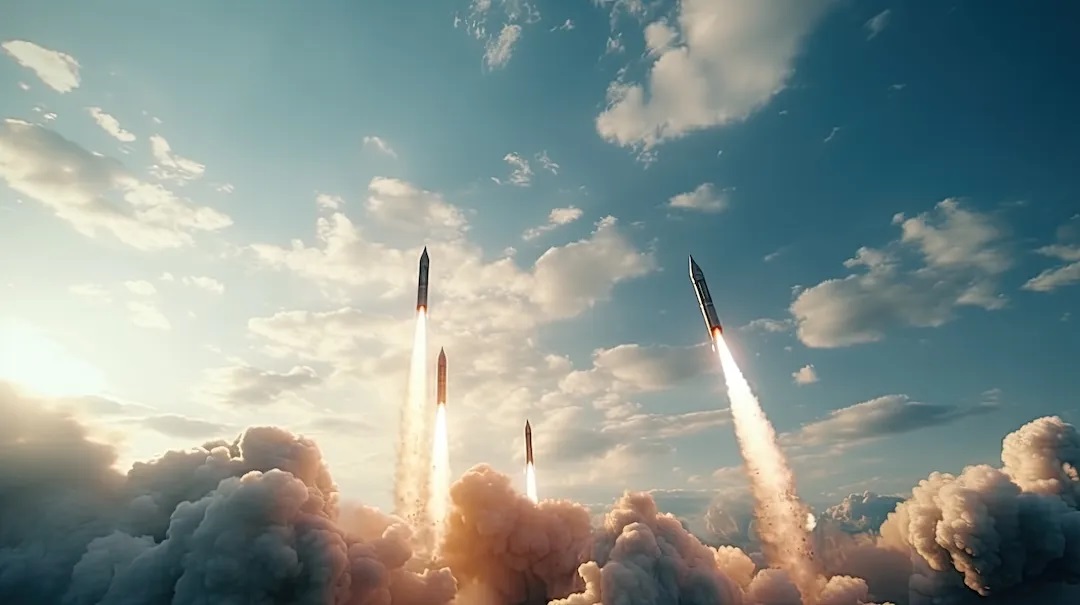
Ukrainian Tipping Points – UPDATE 4: US Blocks Long-Range Missile Attacks Until After Elections?
Russian and Eurasian Politics, by Gordonhahn, September 16, 2024, https://gordonhahn.com/2024/09/16/ukrainian-tipping-points-update-4-us-blocks-long-range-missile-attacks-until-after-elections/
As I expected in my original article (included further below), the, the political wing kicked down the road until after the elections the escalation against Russia that would have occurred by allowing Kiev to hit the country with US long-range missiles.
The US has refrained from removing its prohibition on Ukraine’s use of US ATACM or JSSSAM long-range missiles against targets deep inside Russia’s pre-2014 territory. Against all military and political logic, the UK lobbied hard during its prime minister’s visit to Washington and had approved use of its Storm Shadow missiles for such use (https://ctrana.news/news/471905-london-razreshil-ukraine-bit-po-rossii.html).
The US is operating under military and political logic. The Biden administration demanded that Ukrainian President Volodomyr Zelenskiy present a list of potential Russian targets to the White House, after the Pentagon questioned the military utility of such attacks (https://ctrana.news/news/471904-ssha-trebujut-ot-kieva-stratehiju-dalnobojnykh-udarov-po-rf.html).
Politically, as I noted, it is not in the Biden administration’s and Democratic party’s interest to have a crisis of a status of the Cuban Missile Crisis or have have Ukrainian forces suffer a grave collapse before the November 5 presidential elections.
This precluded any lifting of the prohibition before then, but afterwards things could change, and there those such as US Secretary of State Anthony Blinken and other neocons will be pressing hard to work out a reversal of this sane decision.
It appears that Russian President Vladimir Putin’s warning that such attacks would require NATO country officers’ involvement and thus would mean that NATO is directly fighting Russia and so Moscow would regard itself to be in a state of war with the country or countries’ the missiles of which were used played a role in the US’s decision to back down. The political configuration after the election could overcome the hesitation Putin induced among top US decision makers.
Welcome to Planet Vogtle! The Lessons of Georgia’s Nuclear Boondoggle
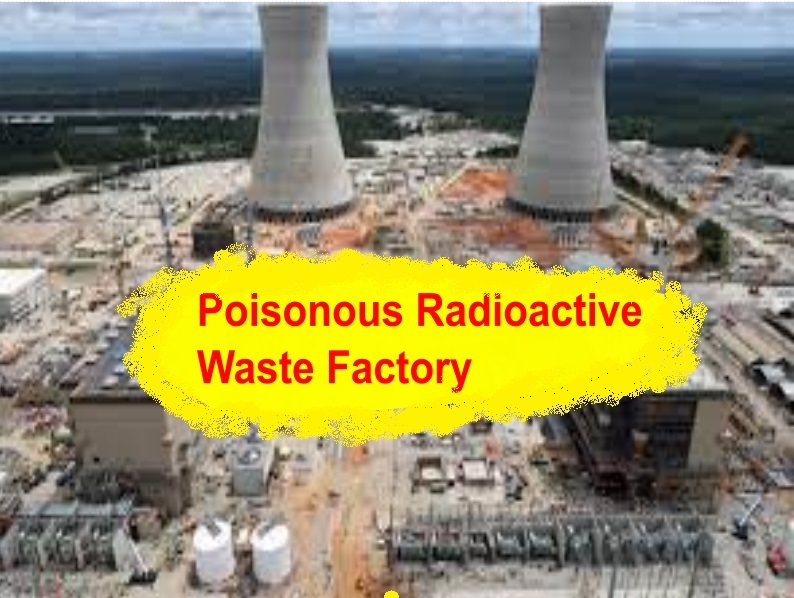
The ADVANCE Act greases the tracks by eliminating regulatory barriers, essentially transforming the Nuclear Regulatory Commission from a safety watchdog into an industry booster. It curtails the licensing process, downgrades health and safety standards, and promotes the export of nuclear technology. The U.S. can now compete with Russia and China to spread “nuclear waste factories” like Vogtle around the globe.
Jul 1, 2024, https://www.stephenwing.com/blog/2024/07/01/welcome-to-planet-vogtle-the-lessons-of-georgias-nuclear-boondoggle/
A global race is on to see who will host the next nuclear disaster, and as always the U.S.A. is determined to take the lead. On June 18 the Senate passed the so-called ADVANCE Act, pledging billions of taxpayer dollars to the most expensive, inefficient, and toxic form of energy ever devised. Thanks to the $37 billion expansion of Plant Vogtle, Georgia Power ratepayers like me know what that means: record-breaking profits for utility companies, record-breaking power bills for the rest of us.
Lavish federal subsidies under the last four presidents and a grandiose “nuclear renaissance” P.R. campaign have failed to reverse decades of decline for nuclear energy. No surprise – it’s an obsolete, dangerous, and financially untenable technology that no private investor or insurance carrier will touch.
Now, like the Four Horsemen of the Apocalypse, what Naomi Klein calls “disaster capitalism” comes galloping to the rescue. A rare bipartisan consensus hails “clean, safe nuclear energy” as the answer to climate change. The 93-page ADVANCE Act – cleverly concealed within the 3-page Fire Grants & Safety Act – delivers the entire wish list of the nuclear industry. Only Bernie Sanders and Ed Markey voted “no.” Liberal icon Sheldon Whitehouse actually helped to draft the legislation.
Calling nuclear power “clean” and “safe” would be laughable if it weren’t such a grim joke. Radioactive contamination plagues it at every step, from carcinogenic uranium mining to routine radionuclide releases at every operating reactor to the mounting backlog of radioactive waste. “Disposal” is a euphemism; the waste will remain deadly to life for tens of thousands of years, longer than the entire history of civilization, with no safe storage option in sight.
Expecting nukes to help slow global warming is equally deluded. The two new reactors at Plant Vogtle – the nation’s first since the Three Mile Island meltdown in 1979 – took 15 years to construct, double the original estimate. We would have to build 1,400 more within ten years to noticeably impact the pace of climate change. Developing untested technologies such as “Small Modular Nuclear Reactors” will take decades longer.
Electricity as a Byproduct of Profit
The ADVANCE Act greases the tracks by eliminating regulatory barriers, essentially transforming the Nuclear Regulatory Commission from a safety watchdog into an industry booster. It curtails the licensing process, downgrades health and safety standards, and promotes the export of nuclear technology. The U.S. can now compete with Russia and China to spread “nuclear waste factories” like Vogtle around the globe.
Not that the NRC ever seriously hindered the industry it is charged to regulate. The new legislation comes amid a nationwide rush to extend the licensing of nuclear plants from their estimated safe lifespan of 40 years to 60, 80, even 100 years, despite the proven tendency of radioactivity to “embrittle” the concrete that shields us from exposure.
Though media coverage of the ADVANCE Act was largely clueless, several outlets quoted a statement by Ed Lyman of the Union of Concerned Scientists: “Make no mistake: This is not about making the reactor licensing process more efficient, but about weakening safety and security oversight across the board, a longstanding industry goal.”
The only reason utilities are pushing nukes – and the only reason they ever did – is profit. Ever since Eisenhower heralded “the peaceful atom” and the industry promised energy “too cheap to meter,” nuclear power has depended entirely on government subsidies to survive. By far the most costly way to generate electricity, it’s also the most profitable, since We the Taxpayers cover most of the costs, from uranium mining and enrichment to managing nuclear waste to the uninsurable consequences of catastrophic accidents.
Betting on nukes not only wastes irrecoverable time and money; it pre-empts real solutions. Investing the same tax dollars in renewables like solar and wind, energy-efficient retrofits, and upgrading the power grid would displace far more carbon emissions. Renewables already provide more electricity globally than nukes, are far cheaper per kilowatt-hour, and can be expanded much more rapidly while generating exponentially more jobs.
Not to mention sidestepping the risk of another Fukushima, Chernobyl, or Three Mile Island. Factor in the escalating threats of extreme weather and terrorism, declining safety standards, and the industry’s eagerness to sell its radioactive snake-oil to developing nations, and the odds of another deadly meltdown somewhere in the world approach the threshold of inevitability – maybe right here in my home state.
Georgia’s Plant Vogtle: A Cautionary Tale
On the eve of Georgia Power’s triumphant ribbon-cutting for its new reactors, six environmental and consumer groups released “Plant Vogtle: The True Cost of Nuclear Power in the United States,” a 35-page report exposing the political maneuvering and cynical profiteering that made the project a “success.”
The story begins in 2009, when most U.S. utilities had abandoned the “nuclear renaissance” due to plunging natural gas prices, zero growth in energy consumption, and the astronomical cost of nuclear fission. Despite federal loan guarantees, no one was investing – until the Georgia General Assembly solved the problem with a bill allowing Georgia Power (a subsidiary of Southern Company) to charge customers a monthly fee to finance two additional reactors at Plant Vogtle, near Augusta.
Georgia Power’s sales had been flat for two decades and its generating capacity was nearly three times the reserves recommended by the federal agency in charge of our national grid. So why would the company build two expensive, unnecessary new reactors? And why would Georgia’s elected utility regulators, the Public Service Commission, allow it?
“By all appearances,” the report explains, “the Georgia PSC is deep in regulatory capture, a phenomenon where a regulator prioritizes the interests of the companies it regulates (like Georgia Power) over the public good. . . .
Since Georgia Power is a monopoly and operates outside of a competitive business market, it can shift risks and costs onto customers if regulator or legislative bodies enable it. That is exactly what the Georgia PSC did.”
Adding as much as 10% to a typical power bill, the fees raised over $4 billion – 88% of it from residential customers, small businesses, even public schools, and only 11% from major industries, thanks to some canny lobbying. The average household ended up paying about $1,000 up-front to subsidize the reactors. The U.S. Treasury contributed a $12 billion low-interest loan, and the rest of the up-front cost came from other lenders. But Georgia law guarantees that ratepayers must cover loan repayment along with Georgia Power’s other costs – which the PSC repeatedly approved as the budget jumped from an initial $14 billion to $21, then $27 billion.
In effect, ratepayers and taxpayers were forced to shoulder the entire investment, while the profits go to Southern Company shareholders.
Milking a Corporate Monopoly to the Max
That same year, South Carolina authorized a similar customer fee to expand its VC Summer plant. Both projects were contracted to Westinghouse. Construction began in 2013, but according to the report, “Cost overruns at both reactor sites began immediately, and by early 2017 were so extreme that Westinghouse declared bankruptcy.” In South Carolina, an investigation led to criminal charges against Westinghouse and utility executives, four of whom went to prison and paid steep fines “for lying about the costs and progress of the project.”
“Similar behavior by Westinghouse and Georgia Power/Southern Company officials occurred in Georgia,” the report goes on, “but there has been no accountability. . . . Commissioners repeatedly accepted Georgia Power’s budget and schedule forecasts in defiance of documented evidence from the Commission’s own staff and consultants that they were materially inaccurate for over ten years.” The Commissioners also praised the company and nuclear power itself with evangelical fervor, violating state regulations that require neutrality in upholding the public interest.
The two reactors ultimately cost over $36.85 billion, making Vogtle “the most expensive power plant ever built on Earth.” But because the PSC approved an exceptionally high rate of “return on equity” (ROE), every cost overrun and construction delay only bolstered Georgia Power’s profits. “Georgia Power was making substantially greater profits from Vogtle 3 and 4’s delay than if it had finished on schedule,” the report says. “Indeed, commissioners allowed Georgia Power to amass a record $17 billion in profits between 2009 and 2023, while allowing $20 billion in cost overruns for Vogtle 3 and 4.”
In December 2023, the PSC voted to saddle ratepayers with $11.1 billion in cost overruns, often caused by shoddy workmanship, inept management, or poor design. Vogtle-related rate increases will eventually total 23.7% – “in stark contrast,” the report points out, “to claims Georgia Power made in 2016 that completing Vogtle units would put ‘downward pressure on rates.’ . . . It is very likely Georgians will soon be paying the highest power bills in the nation due to Plant Vogtle.”
The report’s conclusion illuminates the fraudulent premises of the ADVANCE Act:
“Fossil fuels and uranium are burned to boil water to produce steam to generate electricity which produces large amounts of waste heat. Renewable energy not only does not produce waste heat, but is more than twice as efficient as steam generated power, thus fossil fuel and nuclear energy can be replaced by less than half as much clean, renewable energy . . .”
“Washington, Oregon, Idaho, and South Dakota produced over 60% of their electricity from renewables in 2023, and ten countries generated 60 to 90% of their electricity from renewables in 2022 including Scotland, Iceland, the Netherlands, Germany, and Guatemala, among others. California’s output from wind, water and solar power exceeded demand for 30 of 38 days early in 2024 . . .”
“Investments in a clean energy transition would save substantial amounts of ratepayer money, and would quickly meet the reduced greenhouse gas emissions reduction targets the world needs to address the climate crisis. Yet these investments are not made as they are not as profitable for monopoly utilities seeking to maximize profits. . . . An immense transfer of wealth is taking place from the people of Georgia to a rich, powerful monopoly whose only motivation is to maximize profits.”
Don’t let your state be taken in by scammers in suits! Download the full report here.
Playing with nuclear fire
Eric S. Margolis, 16 Sept 24, https://thesun.my/opinion-news/playing-with-nuclear-fire-EC13005045
REPUBLICANS in the US Senate have been urging the White House to provide Ukraine with long-range missiles that can strike deep into Russia. Such is the madness of pro-war sentiment.
America’s Secretary of State Anthony Blinken has apparently confirmed that Washington plans to shortly deliver such strategic weapons to Ukraine. This week, Britain’s new prime minister arrived in Washington to discuss more strategic arms for Ukraine.
One is vividly reminded of the mobs who thronged Paris train stations in August 1914, screaming “on to Berlin”. As a British historian aptly noted, “if patriotism is the last refuge of scoundrels, then war is the first platform of fools”.
US-supplied long-range missiles are the last step between what was a border conflict and an all-out war that will likely go nuclear.
Russia’s leader Vladimir Putin has repeatedly stated that he reduced conventional forces to divert funds to Russia’s stunted civilian economy. Nuclear weapons, said Putin, will be used to replace conventional forces if Russia is attacked. We must take him at his word.
The border war with Ukraine, which began in 2014, has shown how much Russia reduced its former conventional might. The once mighty Red Army has proven a shadow of its former self. Under Putin, armies of tanks have been replaced by new apartments across the sprawling nation.
The idea of sending more long-range missiles to Ukraine is sheer madness. Ukraine is slowly being ground down in this long war of attrition.
Ukraine’s current strategy is to provoke a direct clash between Russia and the US. Interestingly, Israel used the same strategy to provoke direct US military intervention against Syria and various Arab militias.
The US, dominated by pro-war Republicans and wealthy pro-Israel special interests, appears eager to promote war with Russia. Most importantly, neoconservatives are urging intensified war against Russia to advance their goal of breaking up the Russian Federation into small, weak pieces dominated by Washington.
Such was the case under former Russian president, Boris Yeltsin, who allowed US financial interests to dominate Russia while he made merry. Former KGB officer Putin put an end to Washington’s attempt to turn Russia into an American satrapy.
I interviewed the leaders of KGB at Moscow’s Lubyanka Prison in 1991. They expressed disgust with Russia’s then-Communist leadership and said there would be a housecleaning. The result was, of course, Putin’s surprising rise to power.
Putin quickly became the target of US media hate. He committed terrible brutalities in Chechnya, but without him, Russia may have ended up as today’s supine Germany.
The US overthrew Ukraine’s last pro-Russian government. Ukraine had been part of the Russian state for hundreds of years and the centre of its heavy industries. This coup cost the US $5 billion (RM21.44 billion), according to leading State Department neocon Victoria Nuland.
An actor, the amiable Volodymyr Zelensky, was put in charge by Nuland. US funds and arms poured into Ukraine. Efforts by Washington to shatter the old Soviet Union were a brilliant success, except that Washington had to foot the bill, which has so far reached an astounding US$44 billion, depriving the US military of many important weapons systems.
One also wonders why former president Donald Trump did not raise the issue of Ukraine’s payments to President Joe Biden and his son.
As a veteran war correspondent and old friend of Ukraine, I see the US and Russia heading to a major war. The Western powers have been relentlessly provoking Russia. The idea of supplying Ukraine with a new class of long-range missiles will likely ignite a dangerous war that may likely go nuclear.
Now is the time for the great powers to impose peace, not supply arms. Time to end the unnecessary sufferings of Ukrainians and Russians. Genuine diplomacy, not more weapons, is the answer.
22,500 Palestinians Now Have Life-Changing Injuries Due to Israel’s Genocide

At least 3,000 Palestinians have had their limbs amputated as a result of Israeli attacks, WHO estimates.
By Sharon Zhang , Truthout, September 12, 2024, https://truthout.org/articles/22500-palestinians-now-have-life-changing-injuries-due-to-israels-genocide/
srael’s genocide has inflicted permanent, life-changing injuries to about a quarter of the nearly 100,000 Palestinians reported injured by Israeli attacks in the last 11 months, according to an analysis by the World Health Organization (WHO).
According to a report using data up until July, roughly 22,500 Palestinians who have been wounded in Israeli attacks have sustained life-changing injuries that will require medical care for years into the future, WHO has estimated.
The majority of these are severe limb injuries, which are affecting roughly between 13,500 and 17,500. Of these, between 3,100 and 4,000 are limb amputations, the report says, though it notes that “anecdotal reports indicate this number may be higher.” It also notes that there will need to be an increase in prosthetic services in the region as a result.
The report also finds that there are likely about 2,000 spinal cord and traumatic brain injuries and at least 2,000 burn injuries, all of which require long-term and specialized care that is largely unavailable in Gaza, due to Israel’s systematic dismantling of Gaza’s health system.
The WHO made the estimates based on medical data reported from Gaza, and the types of injuries identified from those reports.
WHO says that the analysis is a show of the dire need for health care services in Gaza.
“The huge surge in rehabilitation needs occurs in parallel with the ongoing decimation of the health system,” said Richard Peeperkorn, a WHO representative for Palestine. “Patients can’t get the care they need. Acute rehabilitation services are severely disrupted and specialized care for complex injuries is not available, placing patients’ lives at risk.”
The report is a show of the severe impact of Israel’s genocide beyond just the death toll, and one of the myriad ways Israel’s campaign has permanently scarred the Palestinian population.
Because Israel is injuring more people every day in its relentless bombardments and attacks on Palestinians, it is likely that the number of severe injuries is higher now. And, because the report relies on data from emergency sources, there is likely much more life-changing physical harm from things like Israel’s starvation or disease campaigns that are not included in the count.
According to counts by the Gaza Ministry of Health, at least 95,000 people have been injured amid Israel’s genocide, while over 41,000 have been killed. The true death toll, as many experts have noted, is likely far higher; UN Special Rapporteur for the occupied Palestinian territories Francesca Albanese has warned that Israel is on track to exterminate the entire population of Gaza if international powers do not intervene to stop their genocide.
The report does not specify how many children have suffered severe injuries. But children make up nearly half of the population of Gaza, and Save the Children has previously noted that, in the first three months of the genocide, Israel caused over 10 children a day to lose one or both legs.
Nuke waste confusion continues with D.C. Circuit ruling

Kennedy Maize, https://energycentral.com/c/um/nuke-waste-confusion-continues-dc-circuit-ruling. 13 Sept 24
The D.C. Circuit appeals court has upheld the authority of the U.S. Nuclear Regulatory Commission to license private, away-from-reactor storage of spent nuclear fuel, adding confusion to the gnarly issue of what to do with high-level nuclear waste. With federal circuit courts in collision, it may take the U.S. Supreme Court to sort it out.
On Aug. 27, a three-judge D.C. Circuit panel rejected a challenge to a 2021 Nuclear Regulatory Commission license to Interim Storage Partners, a subsidiary of Orano USA, for a private, above-ground “temporary” waste storage site in West Texas near the New Mexico state line. Not long after that, the NRC granted a similar license to Holtec International for an above-ground storage site in eastern New Mexico, close to the Texas line.
In granting the Holtec license, the NRC rejected petitions to intervene by Beyond Nuclear, a Maryland anti-nuclear group, the Sierra Club, and Texas-based Fasken Land and Minerals, a Permian Basin oil and gas producer.
Almost exactly a year ago (Aug. 25, 2023), the ultra-conservative Fifth Circuit Court of Appeals, with jurisdiction in Texas, Louisiana, and Texas, rejected the NRC license for the Texas site in a case brought by Texas Gov. Greg Abbott and Fasken. The Fifth Circuit ruled that neither the Atomic Energy Act nor the Nuclear Waste Policy Act authorized private, away-from-reactor storage of spent fuel, at least until a final federal underground repository is available. That prospect is far in the future, if at all.
In March, the Fifth Circuit expanded its ban of the Texas project to Holtec’s New Mexico waste project, despite it being outside the court’s jurisdiction. In an unpublished decision, the circuit court wrote, “Because this court’s holding in Texas v. NRC dictates the outcome here, we GRANT Fasken’s and PBLRO’s petition for review and VACATE the Holtec license.” The court also rejected an NRC petition to move the case to the D.C. appeals court.
That led to the anti-nuclear filing in D.C., challenging to NRC’s decision to deny them intervenor status in the Holtec license case. In the denial of the petition last month, Judge Neomi Rao wrote for the panel that “the Commission reasonably declined to admit petitioners’ factual contentions and otherwise complied with statutory and regulatory requirements when rejecting the requests to intervene.”
Rao also took on some of the Fifth Circuit’s ruling about the authority for away-from-reactor, above-ground storage. Rao wrote, “According to Beyond Nuclear, the [waste policy act] prohibits DOE from taking title to private spent nuclear fuel until a permanent repository for the disposal of spent nuclear fuel is built, so it is unlawful for the Commission to consider the application.” That’s an assertion the Fifth Circuit also made.
Citing a 2004 D.C. Circuit decision, Rao found, “Even if the NWPA prohibits DOE from taking title to private spent nuclear fuel until a permanent repository for the disposal of such fuel is built, a point we assume without deciding, the statute does not affect ‘the NRC’s authority under the AEA to license and regulate private use of private away-from-reactor spent fuel storage facilities.’
” The Commission correctly determined that Beyond Nuclear did not raise a genuine dispute of law or fact, so we deny its petition for review.”
Rao, 51, a Trump appointee, has served on the D.C. Circuit Court since March 2019.
As the online legal site Justia noted, “Additionally, the court determined that Fasken’s late-filed contentions were procedurally defective, untimely, and immaterial.”
An analysis by the D.C. law firm Hogan Lovells commented, “This decision is contrary to recent Fifth Circuit decisions, but in line with prior D.C. Circuit and Tenth Circuit decisions—further deepening the circuit split on such authority and increasing the likelihood the Supreme Court will consider the issue in its upcoming term.”
The analysis noted that “commercial interim storage” (CIS) “was initially challenged in federal courts in the early 2000s, when the NRC was licensing the first commercial CIS, known as the Private Fuel Storage facility. At that time, a number of court challenges were brought contesting the NRC’s authority to license a CIS facility, and in two circuit court decisions—specifically, in the D.C. Circuit and the Tenth Circuit—the court upheld the NRC’s authority to license the CIS under the AEA. For NRC licensing decisions, as a general matter, the federal circuit courts have direct appellate review, and the appeal can be brought in either the D.C. Circuit or the circuit court where the proposed facility is located.”
The NATO/Ukraine Defeat in Kursk (and Beyond)
SOTT, by Gordonhahn, September 14, 2024
Contrary to the view of Beltway pundits regarding the sunny side or various alleged successes of Ukraine’s Kursk incursion, the Ukrainian President Volodomyr Zelenskiy’s newest simulacra attack –substituting a fake reality for the real one – has led to yet another predictable catastrophe in the real world of war and politics. Zelenskiy’s gambit had no military logic behind it. Its essence was made up of a propagandistic/PR component and perhaps a terrorist element. It was a reckless, desperate last roll of the dice to overturn the playing board which never had a hope of succeeding. Not one of the goals stated by Ukrainian officials was achieved, nor was the unstated, potential goal of seizng the Kursk Nuclear Power Plant achieved. What was ‘achieved’ was a decimation of some of Ukraine’s best remaining men and materiel.
Ukrainian officials publicly stated several goals of the operation:
(1) to force Moscow to redeploy troops away from Russian forces’ increasingly rapid advance on Pokrovsk and across the Donetsk front;
(2) to seize Russian territory to encourage Moscow to negotiate and to trade for the return of Ukrainian lands in peace talks with Moscow;
(3) to capture Russian prisoners of war to exchange for Ukrainian prisoners;
(4) to create angst in Russia among the elite and population in order to weaken support for the war and/or Putin’s hold on power; and
(5) to make Russia feel the pain of death and destruction that Ukraine has been feeling (Zelenskiy alone said this).
None of these goals was achieved.
Regarding the first goal, Ukrainian Armed Forces Commander Gen. Oleksandr Syrskii has acknowledged that the Russian forces did not redeploy from Donetsk to Kursk. The strategy was misconceived from the get-go. The Ukrainians tried to get the Russians to make an obvious mistake: divert forces need for their offensives in Donetsk to the Ukrainians’ mini-salient in Kursk and thereby weaken their offensive force. Ironically, in order to get the Russians to make the mistake of diverting valuable resources from Donetsk to Kursk the Ukrainians had done the same. This led to an acceleration of the Russian advance towards Pokrovsk – a key hub and perhaps the last best barrier hindering the Russian army’s march to the Dnieper.
Regarding the second and third, before the incursion Putin and other Russian officials had repeated their willingness to negotiate, but Kiev refused or ignored each statement. After the incursion, the Russians announced that there will be no talks while Ukrainian forces remain in Kursk and other Russian territories, according to Moscow’s definition. Moreover, as one exiled Ukrainian newspaper Ctrana.news, notes, no Russian is going to give back 18 percent of Ukrainian territory held by Russia in return for 5 percent of Kursk region’s territory. The same paper notes that even prominent Russian liberals, editor-in-chief of the banned Ekh Moskvy Aleksei Venediktov and Yabloko Party leader Grigorii Yavlinskii (who met with Putin weeks back to discuss peace talks), thought negotiations might have begun by year’s end until the Kursk incursion spoiled the mood in the Kremlin. No talks means there will be no trading for land or prisoners, contrary to Kiev’s goals.
Regarding the fourth goal, there has been no discernible elite or popular demand for a change in Putin’s ‘special operation policy’ (SMO). To the contrary, prominent hardliners and others intensified their clamor for untying the Russian military’s hands and undertaking a full-scale war on Ukraine, and this may explain an escalation in Russian missile attacks. In terms of the population, public opinion surveys demonstrate both continuing popular support for Putin and the mirror opposite effect on its views than that intended by Kiev. Ukrainian forces began their incursion on August 6th, crossing the Ukrainian-Russian border between Sumy, Ukraine and Kursk, Russia. In the Levada Center’s polling in July Putin’s approval rating was 87 percent. In August it fell a mere 2 points to 85 percent (within the margin of error).
…………………………………………………………………………………………………………………………………………………….. In regard to the Kursk gambit’s unstated and likely real goal of seizing the Kursk NPP and or nuclear weapons storage site in the hope of holding the local population and the Putin government hostage to a possible terrorist attack and/or trading control of the Kursk object(s) for control over the Zaporozhe NPP, now held by the Russians and badly needed to help Ukraine get throught the upcoming winter, given the diminution of the country’s electricity system as a result of Russia’s repeated attacks.
So just like the attempts to destroy the Crimean Bridge and the drone attacks on Moscow and St. Petersburg, the effect of this newest Kievan-Western move has been the precise opposite of what was supposedly intended. Moscow and all Russia are even more committed to ‘Putin’s unprovoked war of aggression’ and any ‘unprovoked responses’ the Kremlin may mount.
Worst of all for the bright lights who conjured up this operation in Langley or elsewhere, the war is getting closer to ‘the last Ukrainian.’ The Kursk gambit has led to the destruction of much of Kiev’s best fighters and equipment, and it is likely many of those Ukrainian and other troops who made the incursion will be encircled in short time. At the same time, the Kursk gambit made Russian advances greater along much of the front but especially on the Donetsk and southern Donetsk fronts, which will lead to the more rapid fall of Pokrovsk, Vugledar, and the entire Ukrainian defense effort east of the Dnieper River. And do the Second Ruin of Ukraine continues with Western crocodile tears and calls to keep up the fight in defense of NATO expansion for as long as ‘it’ takes. https://www.sott.net/article/494845-The-NATO-Ukraine-defeat-in-Kursk-and-beyond
As Biden deliberates, Ukraine’s nuclear plants are increasingly at risk
fear this coming winter may prove to be a breaking point for Ukraine in the energy war.
Stuck in the crosshairs are key substations feeding high voltage electricity to Ukraine’s still functioning nuclear power stations in Rivne, Khmelnytskyi and Yuzhnoukrainsk in southern Ukraine. Take these substations out and the reactors have to be shut down rapidly, or else it could provoke a “nuclear incident,” energy expert Mykhailo Gonchar told POLITICO. And “that’s what the Russians are aiming to do — hit the key substations.”
Paralyze the three nuclear power stations, though, and it’s game over for Ukraine in the energy war ,
The risk of Ukraine losing the war this winter has pushed Washington and London to reconsider how Kyiv uses Western-supplied long-range missiles, but the U.S. remains fearful of escalation.
Politico, September 15, 2024 , By Jamie Dettmer
KYIV — As the U.S. ponders loosening some of the restrictions on Ukraine’s use of Western-supplied long-range missiles to allow for the targeting of airfields and missile launch sites deeper inside Russia, Ukraine remains on tenterhooks.
As it stands, Washington doesn’t appear ready to take the gloves off entirely and allow Ukraine to target Russia’s airfields with long-range U.S. missiles quite yet — though it may withdraw restrictions on the U.K.’s Storm Shadows, which use U.S. technology.
“I would like to see a more forthright position coming from the Biden administration that says there’s no reason why Ukraine shouldn’t be fighting back,” former U.S. envoy to NATO Kurt Volker told POLITICO. “Russia’s the one attacking Ukraine from all these facilities across Russia. There’s no reason for there to be a sanctuary. But I don’t think we’re going to see Biden authorizing the use of U.S. missiles to strike at Russian airfields, although the British might be allowed to proceed without U.S. objection,” he added. “That won’t be enough.”
And if that’s really the outcome of these weeks-long intense negotiations, Ukraine’s energy officials will be among those most alarmed.
They fear this coming winter may prove to be a breaking point for Ukraine in the energy war. And that’s largely because Russian commanders are adapting their airstrike tactics, having learned from their previous failed bombing campaign to collapse the country’s energy system — and the recent shipments of Iran’s Fath-360 close-range ballistic missiles to Russia will help them do so.
Ukrainian officials expect Russia will use these missiles, which have a range limit of 120 kilometers, to complement their glide bombs in targeting logistics and communications hubs and ammunition depots in the rear of Ukraine’s front lines. That, in turn, will free Russia up to concentrate its own longer-range missiles on civilian infrastructure — particularly the energy system in a bid to break it.
Stuck in the crosshairs are key substations feeding high voltage electricity to Ukraine’s still functioning nuclear power stations in Rivne, Khmelnytskyi and Yuzhnoukrainsk in southern Ukraine. Take these substations out and the reactors have to be shut down rapidly, or else it could provoke a “nuclear incident,” energy expert Mykhailo Gonchar told POLITICO. And “that’s what the Russians are aiming to do — hit the key substations.”
Currently, 55 percent of Ukraine’s energy is generated by its three operating nuclear power stations — the one in Zaporizhzhia, which is the largest nuclear plant in Europe, was captured by Russia in 2022 and has largely been shut down. Russian missile and drone strikes have destroyed 9 gigawatts of the country’s electrical generating capacity — that’s half of the peak winter consumption — with 80 percent of thermal generation from coal- and gas-fired power plants and a third of hydroelectric production capacity wiped out by bombing.
Last year, Russia tried to isolate these nuclear power plants, focusing on degrading Ukraine’s energy transmission. It targeted distribution to consumers and businesses but was met with characteristic Ukrainian ingenuity and confounded by improvised repairs and rerouting.
Paralyze the three nuclear power stations, though, and it’s game over for Ukraine in the energy war , diminishing its war-fighting capacity, crashing the economy and weakening its position if peace negotiations do ever commence.
And according to officials in Kyiv, it’s the fear of this happening that’s been one of the factors driving the Biden administration to reconsider the restrictions, including on U.S. ATACMS and British Storm Shadows. Washington sat up when Russian airstrikes started targeting the main substations feeding operational electricity to the nuclear power plants in late August. “That concentrated minds,” said one Ukrainian official who asked not to be identified in order to speak freely………………………………………………………………………………………………
Burns also stressed no one should underestimate the risk of escalation and admitted his agency genuinely feared Russia might resort to tactical nuclear weapons in 2022. And while Biden and British Prime Minister Kier Starmer brushed off Putin’s threats on Friday, the U.S. administration still appears to be trapped between two worries — fear of how Moscow might respond if Western-supplied missiles start striking Russian airfields, and wreck projects for peace talks to get going, and alarm over the prospect of Ukraine losing power……………………………………………………………… https://www.politico.eu/article/russia-ukraine-nuclear-plants-energy-war-joe-biden-united-states-nato/
India considers joining Russia, China to build nuclear plant on Moon
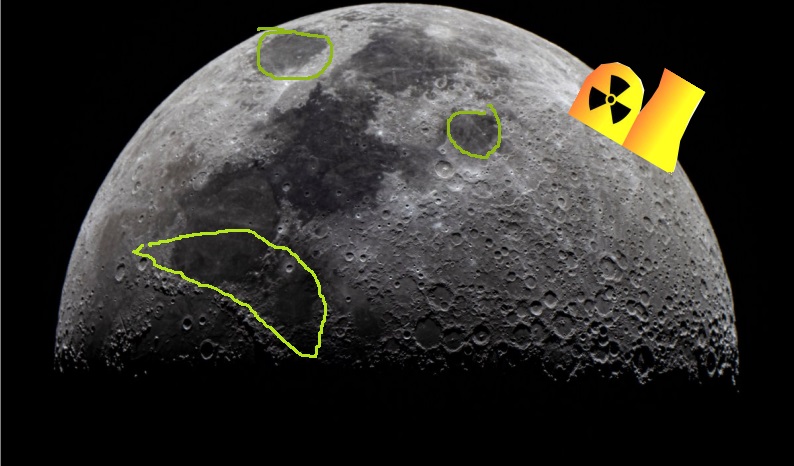
Rivals India and China are said to be keen on joining a Russian project to build an atomic power plant for a human base on the Moon.
14/09/2024, By: Pratap Chakravarty, https://www.rfi.fr/en/international/20240914-india-considers-joining-russia-china-to-build-nuclear-plant-on-moon
Russia’s atomic energy corporation Rosatom says the lunar reactor will be built with “minimal human involvement” and deployed around 2036.
According to Russia’s state-owned news agency Tass, Rosatom CEO Alexey Likhachev told a meeting of the Eastern Economic Forum in Vladivostok earlier this month that both India and China have shown interest in the venture.
“The task we are working on is the creation of a lunar nuclear power plant with an energy capacity of up to half a megawatt,” Likhachev told the gathering of potential investors.
“Both our Chinese and Indian partners are very interested in collaborating as we lay the groundwork for several international space projects,” the Rosatom chief executive claimed.
Cooperation among rivals
Delhi has not commented on the purported collaboration.
While Russia is its key arms supplier and a partner on several space ventures, Indian media have been surprised by the possibility of India teaming up with China.
Alluding to unresolved border disputes which took India and China to war in 1962 and sporadic clashes in following years, local daily Business Standard called the two countries “foes on Earth, pals on Moon”.
The proposed power plant will be integrated into a wider Chinese-Russian project to set up a base called the International Lunar Research Station (ILRS), either on lunar soil or in lunar orbit.
ILRS will serve as a fulcrum of scientific research and will be open to all countries and “international partners” after it becomes operational between 2035 and 2045.
But it would require a stable power supply – which only a nuclear reactor can provide, as the Moon’s lengthy lunar nights make solar energy unreliable.
Nasa has been mulling the construction of similar reactors for its own future lunar bases.
India’s space ambitions
The Russian-led project is separate from India’s own ambitions to set up a space station by 2035 and launch a manned mission to the Moon five years later.
Analysts say India, with its ambitions of creating a human colony on the Moon, is actively seeking out potential opportunities to accelerate its space ambitions.
In August 2023, India landed a spacecraft on the Moon and joined a select space-faring club comprising of China, Russia and the United States – the only nations to have ever reached the Earth’s closest celestial object.
India has shortlisted four military pilots to travel on the country’s first manned space flight next year.
The Indian government says the Gaganyaan spacecraft will orbit Earth at an altitude of 400 kilometres and land at sea three days later.
It will also send a humanoid robot into space later this year in line with preparations to land an Indian on lunar soil by 2040.
Air force pilot Rakesh Sharma became India’s first astronaut to go to space in April 1984, when he spent almost eight days on board the Soviet Salyut-7 space station.
Pentagon orders simulation of consequences of nuclear weapons use in Eastern Europe and Russia
12 September 2024, https://en.topwar.ru/249956-pentagon-zakazal-modelirovanie-posledstvij-primenenija-jadernogo-oruzhija-v-vostochnoj-evrope-i-rossii.html
The Pentagon intends to study the consequences of using nuclear weapons weapons in Europe and Russia. The US military has commissioned a third-party contractor to conduct the study. This is stated in documents from the US Department of Defense that have become publicly available.
The Pentagon has ordered a simulation of a situation involving the use of nuclear weapons in Eastern Europe and Western Russia, with the Americans particularly interested in the consequences of nuclear weapons use on the agricultural sector. As follows from the contract, the contractor must simulate a global nuclear situation the war, which led to the destruction of agriculture. The Pentagon also requires the contractor to expand the modeling beyond Eastern Europe and Western Russia, but with the obligatory condition of including former Eastern Bloc countries in the report.
Engineering Corps armies The United States has awarded a contract (…) to develop active research programs focused on modeling the effects of nuclear weapons on agricultural systems,
– leads RIA News excerpt from the document.
It is worth noting that this is not the first modeling of the consequences of the use of nuclear weapons ordered by the Americans. Similar studies were conducted for the countries of the Asia-Pacific region, the territory of the United States, the Middle East, as well as Europe and the entire Russian territory.
1 This Month

of the week – Shut Down Drone Warfare!


Tell the Ukrainian Government to Drop Prosecution of Peace Activist Yurii Sheliazhenko

Petition to revoke the licensing of the Near Surface Nuclear Disposal Facility (NSDF) at Chalk River. https://www.ourcommons.ca/petitions/en/Petition/Details?Petition=e-7247
To see nuclear-related stories in greater depth and intensity – go to https://nuclearinformation.wordpress.com
-
Archives
- April 2026 (103)
- March 2026 (251)
- February 2026 (268)
- January 2026 (308)
- December 2025 (358)
- November 2025 (359)
- October 2025 (376)
- September 2025 (257)
- August 2025 (319)
- July 2025 (230)
- June 2025 (348)
- May 2025 (261)
-
Categories
- 1
- 1 NUCLEAR ISSUES
- business and costs
- climate change
- culture and arts
- ENERGY
- environment
- health
- history
- indigenous issues
- Legal
- marketing of nuclear
- media
- opposition to nuclear
- PERSONAL STORIES
- politics
- politics international
- Religion and ethics
- safety
- secrets,lies and civil liberties
- spinbuster
- technology
- Uranium
- wastes
- weapons and war
- Women
- 2 WORLD
- ACTION
- AFRICA
- Atrocities
- AUSTRALIA
- Christina's notes
- Christina's themes
- culture and arts
- Events
- Fuk 2022
- Fuk 2023
- Fukushima 2017
- Fukushima 2018
- fukushima 2019
- Fukushima 2020
- Fukushima 2021
- general
- global warming
- Humour (God we need it)
- Nuclear
- RARE EARTHS
- Reference
- resources – print
- Resources -audiovicual
- Weekly Newsletter
- World
- World Nuclear
- YouTube
-
RSS
Entries RSS
Comments RSS
 nuclear-news