TODAY. What is behind all the drama of long range missiles for Ukraine to send to Russia?
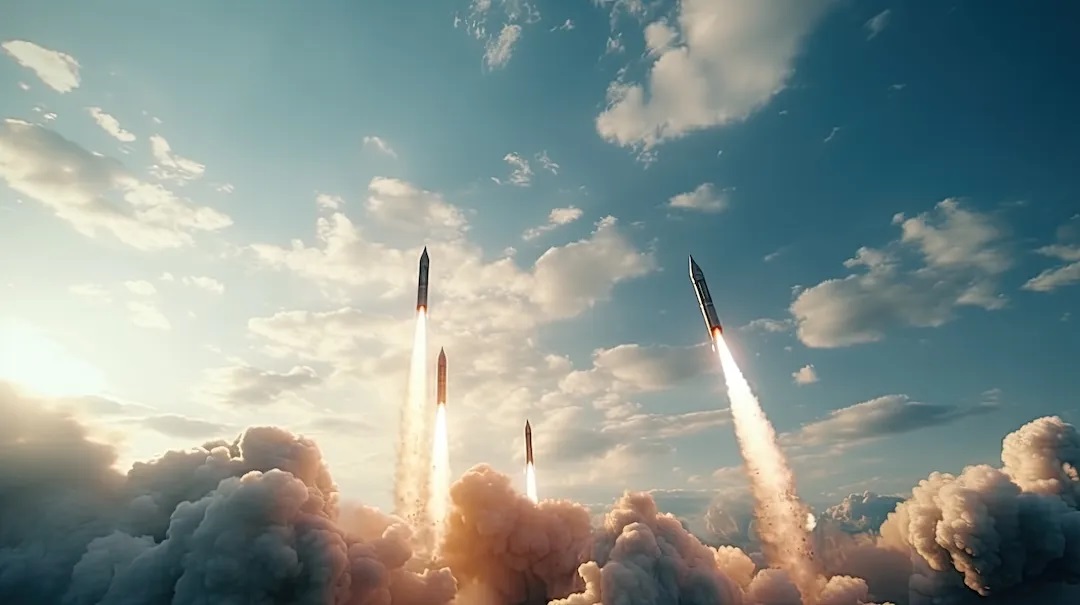
It certainly looks like a dramatic development – as globe-trotting master of ceremonies Antony Blinken, strongly hinted that the US, UK, and NATO might soon allow Ukraine to have long-range missiles attacking deep inside Russia.
Jubilation all round – this is what Zelensky has been clamouring for! It’s the next exciting development, following all the joy of Ukraine’s incursion into the Russian area of Kursk. Best to get over that one quickly, with its huge cost in Ukrainian troops’ lives, without any actual military usefulness to Ukraine.
The dramatic need for these missiles is emphasised as Blinken confirmed that Iran was sending ballistic missiles for Russia to use against Ukraine. These are in fact Project 360 close-range missiles. But no matter – it sounds like a good reason for Ukraine to get long- range ones.
Anyway the point is – we all have to be reassured that Ukraine is winning this war. The Western media dwells on each exciting new development like this, rather than the unpalatable facts that Ukraine is falling back in the critical Donbass area, and that it’s running out of troops, that Zelensky’s survival as president depends on the war continuing a losing fight.
Meanwhile Putin is strongly warning of severe repercussions if the West lets Zelensky attack Russia with long-range missiles. USA and NATO are well aware of the danger of the war expanding into a Russia versus NATO and USA. They don’t want this. Russia doesn’t want this.
The dilemma is for the USA to demonstrate its “iron-clad” support for Ukraine, without actually really upsetting Putin too much. Hence there’s a lot of debate in the West about how to go about sort of sending long-range missiles for Ukraine, but sort of not really using them too much. And how to train and support Ukrainians in the use of them?
To further complicate this issue, it is important for Joe Biden in his last months as President to demonstrate that he’s a tough guy – not some sort of weak sop who would – heaven forfend! sink to negotiations with Putin and end the carnage. So – a forceful decision about long-range missiles for Ukraine would look pretty good in that context.
Only you need some intricate diplomatic footwork to spin it all – which is where the silver-tongued skills of manipulators like Antony Blinken come in. It all has to look very hard and dangerous, without actually being so – without too much provocation of Wladimir Putin, who probably understands all this, underneath his bombastic pronouncements.
So – the war drags on, the deaths continue, Ukraine faces a winter with possibly great suffering, as Russia continues not only its troop attack, but also attacks on Ukraine’s power supply.
But – look on the bright side – it’s great for the USA’s weapons companies and their investors. And we, distant media-watchers continue to be awed with the drama, wait for the next development, and wonder if it’s a dress rehearsal for the Taiwan-China one to follow this.
Biden’s Legacy: The Decline of Arms Control and Disarmament

the mainstream media and many commentators are making the case for additional nuclear weaponry and the modernization of weapons currently in the nuclear arsenal.
Washington’s “Nuclear Employment Guidance” is based on the threat of nuclear coordination between Moscow and Beijing, but there is no evidence of such coordination
by Melvin Goodman September 13, 2024 https://www.counterpunch.org/2024/09/13/bidens-legacy-the-decline-of-arms-control-and-disarmament-2/
Last month, I reported on the Biden administration’s new nuclear doctrine to prepare the United States for a coordinated nuclear challenge from Russia, China, and North Korea. The Biden doctrine revives the concept of “escalation dominance,” one of the main drivers of the nuclear arms race between the United States and the Soviet Union in the 1950s and 1960s.
President Biden’s neglect of arms control and disarmament means that the next president will inherit a nuclear landscape that is more threatening and volatile than any other since the Cuban missile crisis more than 60 years ago. The Cuban missile crisis, however, was a wake up call for both President John F. Kennedy and General Secretary Nikita Khrushchev, leading to a series of arms control and disarmament treaties beginning with the Partial Test Ban Treaty of 1963.
We need another wake up call.
Currently, there is little discussion of reviving arms control and disarmament. Instead the mainstream media and many commentators are making the case for additional nuclear weaponry and the modernization of weapons currently in the nuclear arsenal. The influential British newsweekly, The Economist, is leading the way in this campaign, arguing that the concept of deterrence demands that the United States build up and modernize its nuclear arsenal. An oped in the New York Times this week, written by the chairman of the House Permanent Select Committee on Intelligence, argues that credible deterrence will prevent our adversaries from “even considering a nuclear strike against America or its allies.”
Deterrence requires that nuclear weapons must be in a high state of readiness in order to address the danger of surprise attack, which increases the possibility of unintentional use of nuclear weapons. We need a discussion of alternatives to deterrence, such as negotiations for confidence-building measures as well as arms control and disarmament.
Instead, we are getting a discussion of the need for low-yield nuclear weapons. The Economist and others have been making the case for such weapons—20 kilotons of explosive power, roughly Hiroshima-sized—that can be delivered with “extreme precision and less collateral damage.” U.S. think tanks, such as the Center for a New American Security (CNAS), have argued that the “line between low-yield tactical nuclear weapons and precision-guided conventional weapons in terms of their operational effects and perceived impact is blurring,” and that “nuclear arms are more efficient at destroying large-area targets.”
The current discussion is dangerously reminiscent of the nuclear discussion of the 1950s, which was dominated by false notions of a vast Soviet superiority in deployed nuclear ballistic missiles, the so-called “missile gap,” as well as the so-called “bomber gap” regarding strategic aircraft. The conventional wisdom in the defense community was that we were facing a powerful enemy that was undertaking costly efforts to exploit the potential of nuclear weapons in order to gain unchallenged global dominance. Is history abut to repeat itself, particularly in view of exaggerated concerns regarding greater threats from both China and North Korea as well as the possibility of Sino-Russian collusion?
Henry Kissinger, the most famous and most controversial American diplomat of the 20th century, was responsible for initiating the idea that nuclear powers could wage a war that would involve limited use of nuclear weapons. In his “Nuclear Weapons and Foreign Policy,” Kissinger made the case for limited uses of nuclear weapons, which attracted him to Richard Nixon who made Kissinger the national security adviser in 1969. It was fifteen years before a U.S. president—Ronald Reagan— and a Soviet leader—Mikhail Gorbachev—agreed that a “nuclear war cannot be won and must never be fought,” and that the two sides must not “seek to achieve military superiority.” The initiative for these statements originated with Gorbachev, and they received greater attention in Soviet media than in their U.S. counterparts.
Now, we are facing a disturbing situation that finds the United States modernizing its nuclear arsenal at great cost; China ending its doctrine of limited nuclear deterrence and expanding its nuclear arsenal, and Russia threatening the use of tactical nuclear weapons against Ukraine and issuing warnings of a World War III. Russian publications are discussing the possibility of placing a nuclear weapons in space. U.S. defense analysts project that China could have as many as 1,000 nuclear warheads over the next ten years.
Washington’s “Nuclear Employment Guidance” is based on the threat of nuclear coordination between Moscow and Beijing, but there is no evidence of such coordination and it’s unlikely that these former adversaries are formalizing their nuclear and strategic plans. U.S. guidance is based on worst-case analysis, but there needs to be a recognition of similar worst-case analyses in Moscow and Beijing. In view of greatly expanded U.S. defense spending over the past several years as well as the discussion of a strategic missile defense, Russia and China have much to worry about. Even worse, the United States quietly announced in July that it will deploy conventionally armed ground-launched intermediate-range missiles in Germany on a rotational basis beginning in 2026. This is madness.
Iran’s nuclear program is also expanding in size and sophistication, and North Korea has a nuclear arsenal that rivals three nuclear powers—Israel, India, and Pakistan—that were never part of the Nuclear Non-Proliferation Treaty. Iran’s Ayatollah has indicated a readiness to open discussions with the United States on nuclear matters, but the Biden administration has turned a deaf ear to such a possibility. North Korea’s Kim Jong Un has similarly indicated an interest in discussing nuclear matters with the United States.
The only remaining nuclear disarmament treaty—the New START Treaty—expires in February 2026, and there is no indication that U.S. and Russian officials are planning for talks to renew the treaty. The election year predictably finds Kamala Harris and Donald Trump boasting about maintaining and improving U.S. military prowess. Next to nothing is known about Harris’s view of nuclear matters, and the thought of facing a new nuclear age with Trump back in the White House is positively frightening. We are confronting this difficult situation because the Bush and Trump administrations abrogated two of the most important disarmament treaties in history: the Anti-Ballistic Missile Treaty and the Intermediate Nuclear Forces Treaty.
It’s time for the nuclear experts of the nine nuclear powers as well as the general public to read M.G. Sheftall’s “Hiroshima: The Last Witnesses.” These first-person accounts educate and re-educate the global community on the horrors of Hiroshima and Nagasaki 80 years ago. The accounts of gut-wrenching recollections should be enough to make any sane individual reject the notion of “modernizing” nuclear weapons or discussing “tactical” uses of nuclear weapons.
The danger of nuclear war resulting from an accident, an unauthorized action, the danger of alert practices, or false alarms should never be far from our thinking. Another nuclear arms race in the current international environment would be far more threatening and terrifying than any aspect of the Soviet-American rivalry in the Cold War.
Melvin A. Goodman is a senior fellow at the Center for International Policy and a professor of government at Johns Hopkins University. A former CIA analyst, Goodman is the author of Failure of Intelligence: The Decline and Fall of the CIA and National Insecurity: The Cost of American Militarism. and A Whistleblower at the CIA. His most recent books are “American Carnage: The Wars of Donald Trump” (Opus Publishing, 2019) and “Containing the National Security State” (Opus Publishing, 2021). Goodman is the national security columnist for counterpunch.org.
The Armageddon Agenda
Kamala Harris, Donald Trump, and the Race to Oblivion
mong the first major decisions the next president has to make in January 2025 will be what stance to take regarding the future status of New START (or its replacement).
By Michael Klare, Tomgram, 13 Sept 24
The next president of the United States, whether Kamala Harris or Donald Trump, will face many contentious domestic issues that have long divided this country, including abortion rights, immigration, racial discord, and economic inequality. In the foreign policy realm, she or he will face vexing decisions over Ukraine, Israel/Gaza, and China/Taiwan. But one issue that few of us are even thinking about could pose a far greater quandary for the next president and even deeper peril for the rest of us: nuclear weapons policy.
Consider this: For the past three decades, we’ve been living through a period in which the risk of nuclear war has been far lower than at any time since the Nuclear Age began — so low, in fact, that the danger of such a holocaust has been largely invisible to most people. The collapse of the Soviet Union and the signing of agreements that substantially reduced the U.S. and Russian nuclear stockpiles eliminated the most extreme risk of thermonuclear conflict, allowing us to push thoughts of nuclear Armageddon aside (and focus on other worries). But those quiescent days should now be considered over. Relations among the major powers have deteriorated in recent years and progress on disarmament has stalled. The United States and Russia are, in fact, upgrading their nuclear arsenals with new and more powerful weapons, while China — previously an outlier in the nuclear threat equation — has begun a major expansion of its own arsenal.
The altered nuclear equation is also evident in the renewed talk of possible nuclear weapons use by leaders of the major nuclear-armed powers. Such public discussion largely ceased after the Cuban Missile Crisis of 1962, when it became evident that any thermonuclear exchange between the U.S. and the Soviet Union would result in their mutual annihilation. However, that fear has diminished in recent years and we’re again hearing talk of nuclear weapons use. Since ordering the invasion of Ukraine, Russian President Vladimir Putin has repeatedly threatened to employ nuclear munitions in response to unspecified future actions of the U.S. and NATO in support of Ukrainian forces. Citing those very threats, along with China’s growing military might, Congress has authorized a program to develop more “lower-yield” nuclear munitions supposedly meant (however madly) to provide a president with further “options” in the event of a future regional conflict with Russia or China.
Thanks to those and related developments, the world is now closer to an actual nuclear conflagration than at any time since the end of the Cold War. And while popular anxiety about a nuclear exchange may have diminished, keep in mind that the explosive power of existing arsenals has not. Imagine this, for instance: even a “limited” nuclear war — involving the use of just a dozen or so of the hundreds of intercontinental ballistic missiles (ICBMs) possessed by China, Russia, and the United States — would cause enough planetary destruction to ensure civilization’s collapse and the death of billions of people.
And consider all of that as just the backdrop against which the next president will undoubtedly face fateful decisions regarding the production and possible use of such weaponry, whether in the bilateral nuclear relationship between the U.S. and Russia or the trilateral one that incorporates China.
The U.S.-Russia Nuclear Equation
The first nuclear quandary facing the next president has an actual timeline. In approximately 500 days, on February 5, 2026, the New Strategic Arms Reduction Treaty (New START), the last remaining nuclear accord between the U.S. and Russia limiting the size of their arsenals, will expire. That treaty, signed in 2010, limits each side to a maximum of 1,550 deployed strategic nuclear warheads along with 700 delivery systems, whether ICBMs, submarine-launched ballistic missiles (SLBMs), or nuclear-capable heavy bombers. (That treaty only covers strategic warheads, or those intended for attacks on each other’s homeland; it does not include the potentially devastating stockpiles of “tactical” nuclear munitions possessed by the two countries that are intended for use in regional conflicts.)
At present, the treaty is on life support. On February 21, 2023, Vladimir Putin ominously announced that Russia had “suspended” its formal participation in New START, although claiming it would continue to abide by its warhead and delivery limits as long as the U.S. did so. The Biden administration then agreed that it, too, would continue to abide by the treaty limits. It has also signaled to Moscow that it’s willing to discuss the terms of a replacement treaty for New START when that agreement expires in 2026. The Russians have, however, declined to engage in such conversations as long as the U.S. continues its military support for Ukraine.
Accordingly, among the first major decisions the next president has to make in January 2025 will be what stance to take regarding the future status of New START (or its replacement). With the treaty’s extinction barely more than a year away, little time will remain for careful deliberation as a new administration chooses among several potentially fateful and contentious possibilities…………………………………………………………………………. more https://tomdispatch.com/the-armageddon-agenda/
Don’t Be Bamboozled by Nuclear Power

by Prerna Gupta, https://www.counterpunch.org/2024/09/13/dont-be-bamboozled-by-nuclear-power/
In the face of a complex and urgent problem like climate change, it’s tempting to believe in simple solutions. Just as detox teas or diet pills claim to solve health issues that truly require lifestyle changes, nuclear energy has been marketed as a quick fix for the socio-political problem that climate change is. It’s presented as an essential part of the climate solution, yet, like many health fads, it is both ineffective and harmful. Today, nuclear energy is being pushed in the form of Small Modular Reactors (SMRs)—touted as the latest technological miracle.
Jan Haaken’s latest documentary, Atomic Bamboozle, pulls back the curtain on this techno-fantasy, revealing SMRs for what they truly are: old wine in a new bottle. Haaken, a seasoned filmmaker who has tackled climate action in her recent Necessity films, unravels the fantastic narrative surrounding SMR propaganda through humor, expert testimony, and a rich history of grassroots resistance.
Haaken intersperses the industry’s lofty claims with a systematic critique from nuclear expert M. V. Ramana, who debunks the promises of SMRs. Despite their high-tech veneer, these reactors are burdened by the same issues that have long plagued the nuclear industry: exorbitant costs, proliferation risks, risk of catastrophic accidents, and the unresolved nightmare of nuclear waste. The arguments presented concisely here are expanded upon in Ramana’s recent book, Nuclear is Not the Solution: The Folly of Atomic Power in the Age of Climate Change, which offers a comprehensive critique, demonstrating that nuclear energy is neither a desirable nor feasible solution to the climate crisis.
Haaken then draws our attention to the troubled legacy of nuclear power through the resistance to the Trojan Nuclear Power Plant and the ongoing pollution at the Hanford Site. Voices like Lloyd Marbet, a key figure in the Trojan resistance, highlight the dangers inherent in nuclear projects and the struggle to hold industry accountable. Marbet recalls the safety issues surrounding Trojan, such as cracks in its steam generators and the mounting costs required to address them—which eventually led to its shutdown. Meanwhile, First Nations advocates like Cathy Sampson-Kruse and Dr. Russell Jim emphasize the environmental devastation caused by the Hanford Site. The Yakama Nation, along with other activists, have been fighting tirelessly to protect their land and the Columbia River from contamination, underscoring the toxic legacy that still requires cleanup decades later.
Haaken expertly contrasts these real-world examples of nuclear disasters with the glossy, futuristic promises of SMRs as a “clean, green” energy source. This juxtaposition slices through the propaganda and traces the roots of the narrative back to the “Atoms for Peace” program. After the devastation of Hiroshima and Nagasaki, this initiative sought to rebrand nuclear technology as a “friend” to humanity – presenting nuclear power as a powerful genie that could be safely contained within the walls of a reactor. However, the nuclear industry’s legacy of pollution, which will take thousands of years to clean up, and catastrophic accidents like Fukushima demonstrate that this reassuring image is far from reality.
One of the most dangerous effects of technological quick fixes is their ability to obscure the power dynamics underlying climate issues. Big corporations and influential individuals hide behind technological solutions, deflecting attention from the required changes to a system that disproportionately benefits them. Haaken, therefore, makes a point to focus on billionaires like Bill Gates, who are promoting SMRs. In the video clip shown in the documentary Gates awkwardly plays down the issue of nuclear safety, while Ramana reveals a deeper irony: despite Gates’ immense wealth, even he relies on public funding to push forward these risky projects. Investors seem reluctant to gamble their own money on unproven technologies like SMRs, raising serious doubts about their viability.
This brings Haaken’s sharp yet accessible critique of nuclear energy to its full conclusion, succinctly captured in the film’s title—Atomic Bamboozle. The title itself exposes the latest SMR trend for what it truly is: a sales trick designed to siphon off your tax dollars, peddling an overpriced technology through confusing jargon and false promises.
The Sierra Club Grassroots Network Nuclear Free Team is concluding its first Nuclear-free Film Series with the powerful independent film, ATOMIC BAMBOOZLE: THE FALSE PROMISE OF A NUCLEAR RENAISSANCE. As political pressure mounts in the US to meet net zero carbon goals, the nuclear power industry makes its case for a nuclear “renaissance.” This documentary by NECESSITY Director Jan Haaken follows activists as they expose the true costs of the new small nuclear reactor designs.
United Nations relief agency Says 6 Workers Among at Least 18 Killed in Israeli Strikes on Gaza School

“This school has been hit five times since the war began. It is home to around 12,000 displaced people, mainly women and children. No one is safe in Gaza. No one is spared.”
Brett Wilkins, Sep 11, 2024, https://www.commondreams.org/news/unrwa-school-bombed-again
The United Nations relief agency for Palestine said Wednesday that six of its workers are among the at least 18 people killed in a pair of Israeli airstrikes targeting a U.N. school in the Gaza Strip where thousands of forcibly displaced Palestinians were sheltering.
The United Nations Relief and Works Agency for Palestine Refugees in the Near East (UNRWA) said the Israeli strikes on one of its schools, located in Nuseirat in central Gaza, resulted in “the highest death toll among our staff in a single incident” since Israeli forces began bombarding the strip following last October’s Hamas-led attack on Israel.
“Among those killed was the manager of the UNRWA shelter and other team members providing assistance to displaced people,” the agency said. “Sincere condolences to their families and loved ones. This school has been hit five times since the war began. It is home to around 12,000 displaced people, mainly women and children.”
Victims of the strikes included women and children.
Earlier on Wednesday the United Nations said the school had been “previously deconflicted with the Israeli forces.”
“No one is safe in Gaza. No one is spared,” UNRWA stressed. “Schools and other civilian infrastructure must be protected at all times, they are not a target.”
Responding to the attacks, U.N. Secretary-General António Guterres said on social media that “these dramatic violations of international humanitarian law need to stop now.”
Israel is currently on trial for genocide at the International Court of Justice, a U.N. body. International Criminal Court Prosecutor Karim Khan is also seeking arrest warrants for Israeli Prime Minister Benjamin Netanyahu, Israeli Defense Minister Yoav Gallant, and three Hamas leaders—at least one of whom, Ismail Haniyeh, has been assassinated.
Over the past 341 days, Israel’s assault on Gaza has left more than 145,000 Palestinians dead, maimed, or missing, according to Palestinian and international officials. Nearly all of Gaza’s 2.3 million people have been forcibly displaced, while Israel’s “complete siege” of Gaza has starved and sickened millions of Palestinians, dozens of whom have died of malnutrition, dehydration, and lack of medical care.
UNRWA says around 200 of its staff members have been killed in more than 450 Israeli attacks on agency facilities since October. More than 500 Palestinians have been killed while seeking shelter under the U.N. flag.
Responding to Israeli claims—reportedly extracted from Palestinian prisoners in an interrogation regime rife with torture and abuse—that a dozen of the more than 13,000 UNRWA workers in Gaza were involved in the October 7 attack, numerous nations including the United States cut off funding to the agency. Almost all of them have restored funding as Israeli lies have been debunked.
Bucking this trend, U.S. President Joe Biden in March signed a bill prohibiting American funding for UNRWA.
US, UK to announce expansion of NATO weapons strikes inside Russia
Andre Damon, 11 Sept 24 https://www.wsws.org/en/articles/2024/09/12/lsqq-s12.html
The United States and United Kingdom will imminently announce a major expansion of Ukrainian strikes deep inside Russia using NATO weapons, the Guardian and Politico reported on Wednesday.
The announcement will come just days after Ukraine launched its largest drone barrage deep inside Russian territory on Monday, for the first time killing someone in Moscow and destroying dozens of homes in the capital city of a nuclear-armed state.
The move was discussed between US Secretary of State Antony Blinken and British Foreign Minister David Lammy during their meetings with Ukrainian officials in Kiev on Wednesday.
When asked whether “Ukraine needs this long-range capability of striking into Russian territory,” Blinken replied that “we discussed long-range fires” with Ukrainian officials and that it would be further discussed when US President Joe Biden meets UK Prime Minister Keir Starmer in Washington on Friday.
He continued, “From day one, as you heard me say, we have adjusted and adapted as needs have changed, as the battlefield has changed, and I have no doubt that we will continue to do so as this evolves.”
Regarding the discussions, the Guardian reported, “British government sources indicated that a decision had already been made to allow Ukraine to use Storm Shadow cruise missiles on targets inside Russia, although it is not expected to be publicly announced on Friday when Starmer meets Biden in Washington DC.”
When asked on Tuesday about allowing expanded strikes inside Russia, Biden replied, “We’re working that out now.”
Politico cited Senate Foreign Relations Committee Chair Ben Cardin as saying he “would not be surprised” if the decision had already been made. The report continued, “Wednesday’s joint visit to Kyiv by Blinken and Lammy to meet Zelenskiy would not be taking place had there been no positive decision regarding Storm Shadow, the sources added.”
The news outlet noted, “But it would be considered unnecessarily provocative to make a public announcement about long-range missiles in Kyiv.”
In other words, the announcement will take place in a proverbial “Friday night news dump” to make the fact that NATO weapons will be raining down on Russian cities appear less “provocative” and to keep this development, which threatens to dramatically escalate the war, out of public consciousness.
In a statement on X, Lammy declared, “I am in Kyiv today with @SecBlinken to reiterate our united and ironclad support for Ukraine. We must stand up to Vladimir Putin’s imperialism. Our collective security depends on it.”
Blinken framed the massively provocative action being prepared by the US and UK as a response to an “escalation” by Russia. “And we’ve now seen this action of Russia, Russia acquiring ballistic missiles from Iran, which will further empower their aggression in Ukraine. So if anyone is taking escalatory action, it would appear to be Mr. Putin and Russia,” Blinken said.
On Monday, a group of leading House Republicans published a letter to President Biden calling for the lifting of all remaining restrictions on the use of NATO-provided weapons from Ukraine.
The letter demanded, “We write to urge you to lift the remaining restrictions on Ukraine’s use of U.S.-provided long-range systems, specifically Army Tactical Missile Systems (ATACMS), against legitimate military targets deeper inside Russia.”
The letter declared that “concerns about escalation” have been “consistently invalidated since day one of the war.” It asserted, “Neither Ukraine’s use of U.S.-provided weapons in Russia nor its military incursion into Russia’s Kursk region—the first foreign occupation of Russian territory since World War II—has triggered a Russian escalatory response.”
Commenting on the reporting by the Guardian, Russian Senator Aleksey Pushkov wrote on Telegram, “The decision to strike Russian territory is clearly being prepared. … There are too many conversations and hints about it for it to be reversed. Even if it has not been made yet, it looks like it will be a matter of days. The leak via The Guardian is not accidental. Public opinion is being prepared.”
Anatoly Antonov, the Russian Ambassador to the US, declared that Washington “continues to test the limits of our tolerance for hostile steps” and is “paving the way to World War III.”
On Wednesday, former Kremlin adviser Sergey Karaganov gave an interview to the Kommersant daily in which he urged the country to be prepared to use nuclear weapons in response to NATO attacks. “We have allowed the situation to deteriorate to a point when our adversaries believe we will not use nuclear weapons under any circumstances. … Having nuclear weapons without being able to convince your enemies that you are ready to use them is suicide.”
He added, “The main goal of a doctrine should be in convincing all current and future enemies that Russia is ready to use nuclear weapons.” He added, “It’s high time we stated that any massive strikes against our territory give us a right to respond with a nuclear strike.”
The massive escalation of the US-NATO war against Russia forms the backdrop of Wednesday’s presidential debate in which Vice President Kamala Harris pledged that her candidacy would be dedicated to “ensuring we have the most lethal fighting force in the world” in order to defend America’s “standing” in the world.
White House finalizing plans to expand where Ukraine can hit inside Russia
The talks have been closely held among a small group of officials inside the White House.
Gunners fire at a Russian position in the Kharkiv region, on April 21, 2024, amid the Russian invasion in Ukraine. | Anatolii Stepanov/AFP via Getty Images
Politico, By Erin Banco, Joe Gould and Paul McLeary 09/11/2024
The White House is finalizing a plan to ease some restrictions on how Ukraine can use U.S.-donated weapons and better protect itself from Russian missiles, according to a Western official and two other people familiar with the discussions.
The talks have been closely held among a small group of officials inside the White House, one of the people involved in the debate said. All were granted anonymity because they were not authorized to speak publicly about the conversations.
The details of the plan are still coming together. But officials in Washington, London and Kyiv have in recent days discussed expanding the area inside Russia that Ukraine can hit with American and British-made weapons. They’ve also discussed how to prevent additional cross-border attacks by Russia, including the U.S. agreeing to allow Ukraine to use U.K. long-range missiles that contain American parts to strike inside Russia.
The current conversations between Washington and Kyiv mark a significant change in tenor from the ones the two countries held earlier this summer. And it signals the Biden administration may be ready to finally agree to Kyiv’s requests to enable Ukraine’s military to more forcefully defend itself and to make more aggressive moves inside Russia.
The National Security Council declined to comment.
In an interview with PBS Newshour in June, national security adviser Jake Sullivan indicated that the U.S. might be willing to expand the area it would allow Ukraine to use U.S. weapons in Russia.
“It is not about geography. It is about common sense,” he said. “If Russia is attacking or about to attack from its territory into Ukraine it only makes sense to allow Ukraine to hit back.”
When asked if the administration would lift restrictions on long-range weapons, Biden told reporters Tuesday: “We’re working that out now.”…………………………………………………………..
U.S. officials have also pointed out that since the Army no longer buys Army Tactical Missile Systems, the inventory is limited and is drawing close to where the U.S. would be concerned about its own stockpile. The maker of the missile, Lockheed Martin, is still producing several hundred a year but they are slated for sale to allies overseas. The replacement for the weapon, the Precision Strike Missile, is only beginning to be fielded and not in numbers to fully replace the missiles currently being expended.
Secretary of State Antony Blinken and his British counterpart David Lammy were in Kyiv on Wednesday to huddle with Ukrainian President Volodymyr Zelenskyy to discuss the weapons issue, along with Ukraine’s incursion into Russia and recent Russian advances in Ukraine.
British defense leaders have been in discussions with their U.S. counterparts for weeks about getting the U.S. to sign off on Ukraine using British Storm Shadow missiles to strike inside Russia. No decision has been reached, according to one person familiar with the talks, but the issue will be a part of the discussion between President Joe Biden and U.K. Prime Minister Keir Starmer when the two meet at the White House on Friday………………………………………..
It’s unclear if the Biden administration has decided to lift its restrictions on long-range Army Tactical Missile Systems, which the U.S. has transferred to Ukraine. It has previously told Ukraine it does not want its military using those weapons to strike deep inside Russia………………..
Biden’s earlier decision to allow Ukraine the ability to conduct limited strikes inside Russia came with several caveats, including that Kyiv could only use the weapons in and around the Kharkiv region. The U.S. eventually expanded that geographic plane largely so that Ukraine could shoot down Russian glide bombs………………………………………………………………….. more https://www.politico.com/news/2024/09/11/white-house-weapons-ukraine-00178673
US and UK press Ukraine before allowing Russia strikes
Union Bulletin, Ellen Milligan, Courtney McBride, Daryna Krasnolutska, Alex Wickham
Bloomberg News (TNS), 11 Sept 24
The U.S. and the U.K. signaled they were open to Ukraine’s request to use western-provided weapons to strike deeper into Russia despite concerns that doing so could further escalate a conflict now in its third year.
During a visit to Kyiv on Wednesday, the two countries’ top diplomats didn’t rule out agreeing to President Volodymyr Zelenskyy’s request but said President Joe Biden would discuss the matter more when he meets Prime Minister Keir Starmer in Washington later this week.
That has dovetailed with a push by some of Ukraine’s allies to allow neighboring NATO members to shoot down Russian missiles and drones inside Ukrainian airspace before they enter their own, according to people familiar with the matter.
The U.S. until now has opposed using US-provided weapons to hit targets deeper in Russia, citing concerns that doing so might only deepen the conflict. But Washington and London have changed their tone in the days since they accused Iran of sending a shipment of ballistic missiles to Russia. That move was “a significant and dangerous escalation,” U.K. Foreign Secretary David Lammy said at a press conference in Kyiv.
“I’m going take this discussion back to Washington to brief the president on what I heard,” Secretary of State Antony Blinken said at the same briefing. “We have adjusted and adapted as needs have changed, as the battlefield has changed and I have no doubt we’ll continue to do that.”
The joint visit by Blinken and Lammy was meant to hear Zelenskyy’s plan to striking deeper into Russian territory and discuss his longer-term strategy into next year. That included wanting to get a better sense of what Kyiv wants to target and why.
The meeting between Blinken, Lammy and Zelenskyy went longer than planned and the Ukrainian president explained in detail why Ukraine needs to strike inside Russia, according to a person familiar with the matter who asked not to be identified discussing private deliberations. The person said Zelenskyy told them Ukraine is only interested in military targets and discussed his country’s plans for the coming months.
Ahead of the meeting with Blinken and Lammy, the Ukrainian president said he would reinforce his plea to soften weapons restrictions in a meeting with Biden later this month in New York, where world leaders will gather for the UN General Assembly’s annual high-level debate.
“Unfortunately it doesn’t depend on my optimism, it depends on their optimism,” Zelenskyy told reporters Wednesday.
A decision on deep strikes is unlikely to come before the UN meeting in New York, although Biden may weigh in on whether a policy shift is coming. Lammy confirmed that, saying the UN meeting would be the next opportunity to discuss long-range missiles and further support for Ukraine. The U.K. has indicated it’s open to Ukraine striking military targets inside Russia with Britain’s Storm Shadow missiles.
Late last month, Zelenskyy said he would lay out a “victory plan” to force Russia to halt its invasion when he meets with Biden, though didn’t offer specifics. He said he would also brief the U.S. presidential candidates, Vice President Kamala Harris and former President Donald Trump, on the plan……………………… more https://www.union-bulletin.com/news/world/us-wants-ukraine-to-detail-plan-before-allowing-russia-strikes/article_60dfec2b-c692-52d6-89a5-66f36db06b82.html
Biden administration split over Ukraine’s use of US weapons inside Russia
Pentagon and intelligence community caution against deployment of ATACM missiles by Kyiv
Ft.com Felicia Schwartz in Washington, September 11 2024
US President Joe Biden has said he is considering a request by Ukraine to use weapons provided by the US to strike deep inside Russian territory. Biden’s admission on Tuesday comes as his government is split over whether to allow the use of US weapons, with the state department, which is more open to Kyiv’s request, pitted against the Pentagon and the US intelligence community. “We’re working that out right now,” Biden said when asked by reporters whether he would allow Ukraine to use American long-range Army Tactical Missile System, or ATACMS, to target sites inside Russia.
Ukrainian President Volodymyr Zelenskyy has repeatedly called for restrictions on western-supplied, long-range weapons to be lifted so his military can strike Russian airfields and missile launchers, as well as the ammunition depots, fuel storage and command and control centres that are critical to Moscow’s war. Washington in recent months has shifted away from a blanket ban on the use of US-supplied weapons to attack Russian territory, allowing Ukraine to deploy them for defensive strikes. But Zelenskyy is pressing the US and other western countries to permit the use of long-range weaponry deep inside Russia as part of his strategy of increasing the cost of the invasion for President Vladimir Putin.

Antony Blinken, US secretary of state, is travelling to Ukraine this week with UK foreign secretary David Lammy to meet Zelenskyy and discuss his request and show support for their ally. Ahead of the visit, Blinken told a press conference in London “we’ll be listening intently to our Ukrainian partners. We’ll both be reporting back to the [British] prime minister, to President Biden in the coming days.” He added that Biden would discuss the matter with Keir Starmer, the UK prime minister, when he visits Washington on Friday.
The UK has urged the US to grant Ukraine permission to use long-range weapons provided by its western allies deep inside Russia and believes Kyiv should be able to target Russian sites and assets. US sign-off is needed in order for Ukraine to use the Storm Shadow missiles provided by the UK for long-range strikes inside Russia. While the US state department is more receptive to arguments from Ukraine and many of its western allies, the Pentagon and US intelligence community have cautioned against the use of the long-range weapons deep inside Russia.
The latter recently assessed that 90 per cent of Russian aircraft have been relocated to airfields at least 300km away from Ukrainian-controlled territory, outside of the range of ATACMS………………………………………. https://www.ft.com/content/48289996-e1bf-4c3e-befb-031698e89e1b
Support for nuclear is “money down the drain” – Rystad

(Montel) The expansion of solar energy will make nuclear power obsolete and push it out of the electricity market by the 2030s, making financial support for nuclear power a waste of money, the CEO of consultancy Rystad Energy told Montel on Tuesday.
Reporting by: Elias Huuhtanen, Montel News 27th Aug 2024
Support schemes for nuclear, like the financing model recently mulled by Sweden, was throwing “money down the drain”, said Jarand Rystad on the sidelines of the ONS conference in Stavanger.
Even newer technologies like small modular reactors (SMR) would become “very irrelevant, very fast” because of the changing electricity markets, Rystad said.
“In the 2030s and 40s energy will actually be much cheaper than today and integrated into the system with storage in a different manner. I think [nuclear] is a technology of the past,” he said.
As well as being “tremendously expensive”, nuclear did not have the same flexibility as renewables, Rystad noted, as ramping down nuclear production during periods of low demand did not bring the same cost savings as solar.
Renewables support
Instead, renewables combined with flexible demand had “cracked the code” to create “energy abundance”, he said.
“The big problem now is you have too much energy. It will be irrelevant to have this kind of baseline [from nuclear],” Rystad said………………………………. https://montelnews.com/news/1aa921fb-7184-4eb1-8dcd-2e1ad45de3df/support-for-nuclear-is-money-down-the-drain-rystad
‘Its been a battle’: Neighbors worry about Palisades Nuclear Plant restarting
Fox News , By: Daren Bower, Sep 12, 2024
In May of 2022, Palisades Nuclear Power Plant shut down its reactor. Now Holtec International is in the process of restarting the facility, but neighbors are concerned that the process is being rushed and want to make sure the plant is restarted and operated safely.
Just up the beach from Tom and Jody Flynn’s house is the Palisades Nuclear Power Plant.
“Its been a battle having them as a neighbor,” said Jody Flynn.
The facility was commissioned in 1971 and stopped operating two years ago.
Now, new owner Holtec International is in the process of making Palisades the first nuclear power plant to ever be restarted in the country.
May of 2022 Palisades Nuclear Power Plant shut down it’s reactor. Holtec International is in the process of restarting the facility, but neighbors say the process is being rushed.
Holtec disagrees, saying the plant won’t be operational until December of 2025 at the earliest…………
On Sept. 9, residents filed a petition with the Nuclear Regulatory Commission (NRC) arguing that Palisades is not meeting the standards for a safe start-up.
Palisades Neighborhood spokesperson Alan Blind said, “We’re not sure that anything we say could stop the NRC from approving Palisades. But please, please, please NRC, take the time to do it right.”
Blind adds, since this has never been done before, the NRC needs to have more guidelines in place for the restart to happen safely.
“It’s the NRC’S responsibility to decide what the rules are, and they haven’t done that yet,” said Blind. https://www.fox17online.com/news/local-news/its-been-a-battle-neighbors-worry-about-palisades-nuclear-plant-restarting
Nuclear vs Energy Storage

The Chair of the Nuclear Free Local Authorities has made a plea to the new
Minister of State for Energy for the Department of Energy Security and Net
Zero to prioritise investment in energy storage capacity alongside
renewables as a key component in making Britain a Net Zero nation. Energy
storage, both short- and long-term, is often an unsung, but essential,
element to achieving – as is the Labour Government’s stated ambition
– the goal to make the UK a ‘clean, green energy superpower’.
Numerous academic studies have demonstrated that this is not only possible
solely through investment in renewables, but that it can be achieved at a
cost to the taxpayer that is £100 billion lower than one which embraces
nuclear energy.
The NFLA’s Scotland Policy Advisor Pete Roche has just
written an excellent briefing published under the No2 Nuclear banner
titled, ‘Energy Storage and Flexibility in a 100% Renewable Energy
System’, which highlights its criticality in capturing the surplus energy
often generated, but unused, by renewables as well is in more effectively
managing energy demand against supply.
Dr. M.V. Ramana, the Simons Chair in
Global Disarmament and Human Security at the University of British
Columbia, described the balance between generation, storage and management:
“We have learned how to manage grids with high proportions of renewable
sources. To balance this variability, we must invest in a mix of renewable
energy technologies across various regions, and in battery and other
storage technologies to store excess energy. In addition, we need to shape
electricity demand to more closely match supply.”
NFLA 12th Sept 2024
1 This Month

of the week – Shut Down Drone Warfare!


Tell the Ukrainian Government to Drop Prosecution of Peace Activist Yurii Sheliazhenko

Petition to revoke the licensing of the Near Surface Nuclear Disposal Facility (NSDF) at Chalk River. https://www.ourcommons.ca/petitions/en/Petition/Details?Petition=e-7247
To see nuclear-related stories in greater depth and intensity – go to https://nuclearinformation.wordpress.com
-
Archives
- April 2026 (114)
- March 2026 (251)
- February 2026 (268)
- January 2026 (308)
- December 2025 (358)
- November 2025 (359)
- October 2025 (376)
- September 2025 (257)
- August 2025 (319)
- July 2025 (230)
- June 2025 (348)
- May 2025 (261)
-
Categories
- 1
- 1 NUCLEAR ISSUES
- business and costs
- climate change
- culture and arts
- ENERGY
- environment
- health
- history
- indigenous issues
- Legal
- marketing of nuclear
- media
- opposition to nuclear
- PERSONAL STORIES
- politics
- politics international
- Religion and ethics
- safety
- secrets,lies and civil liberties
- spinbuster
- technology
- Uranium
- wastes
- weapons and war
- Women
- 2 WORLD
- ACTION
- AFRICA
- Atrocities
- AUSTRALIA
- Christina's notes
- Christina's themes
- culture and arts
- Events
- Fuk 2022
- Fuk 2023
- Fukushima 2017
- Fukushima 2018
- fukushima 2019
- Fukushima 2020
- Fukushima 2021
- general
- global warming
- Humour (God we need it)
- Nuclear
- RARE EARTHS
- Reference
- resources – print
- Resources -audiovicual
- Weekly Newsletter
- World
- World Nuclear
- YouTube
-
RSS
Entries RSS
Comments RSS
 nuclear-news