Blackwater – a land in transition
4 September 2024, https://www.banng.info/news/regional-life/blackwater-in-transition/
The Blackwater is a land where earth, water and sky intermingle in an eternal process of transition and transformation. In our time Climate Change and the Energy Transition are creating fundamental changes in the relationship between land, sea and air that will utterly transform our environment in the years to come.
The Blackwater is not an iconic landscape, unlike, say, Constables Country, with its charms set in a romantic afterglow and its appeal as the idealised English landscape. The Blackwater is more a concept with specific meanings and specific environments for farmers, sailors, fishermen, holidaymakers, birders and residents enjoying its waters, marshes, seaside, farmland and settlements. It is a precious region with many national and international conservation designations. Some of its landscapes are ecological treasure chests, especially the dwindling marshes taken from the sea by progressive dyking and draining to produce the so-called ‘meadows of the sea’.
Today, a reversal is in train as coastal squeeze erodes the fragile waterlands in a battle that only the sea can win. Gradually, though inexorably, the land yields as seal levels rise and storm surges, flooding and erosion intensify with global warming.
Global warming is already at critical levels and further increases in temperatures are already baked in. We will have to adapt to inevitable consequences while trying to prevent runaway Climate Change by making a rapid shift from fossil fuels to renewable forms of energy – in other words to achieve an Energy Transition.
While this is a global challenge it must be achieved through local measures already under way and impacting on our landscape. Out to sea in vast arrays of turbines are turning contributing to the UK’s 30GW of offshore wind power capacity. Onshore the windmills on the Dengie represent a tiny part of the 15GW onshore wind, two-thirds comes from Scotland. The government has committed to increasing wind capacity by 2030, to 30GW onshore and 60GW offshore.
This is a herculean ambition and major constraints lie in the way. One of these is transmission as the National Grid confronts local communities with its planned Norwich to Tilbury Great Grid Upgrade. The line of tall pylons will not impact the Blackwater landscape and a landfall at Bradwell is unlikely.
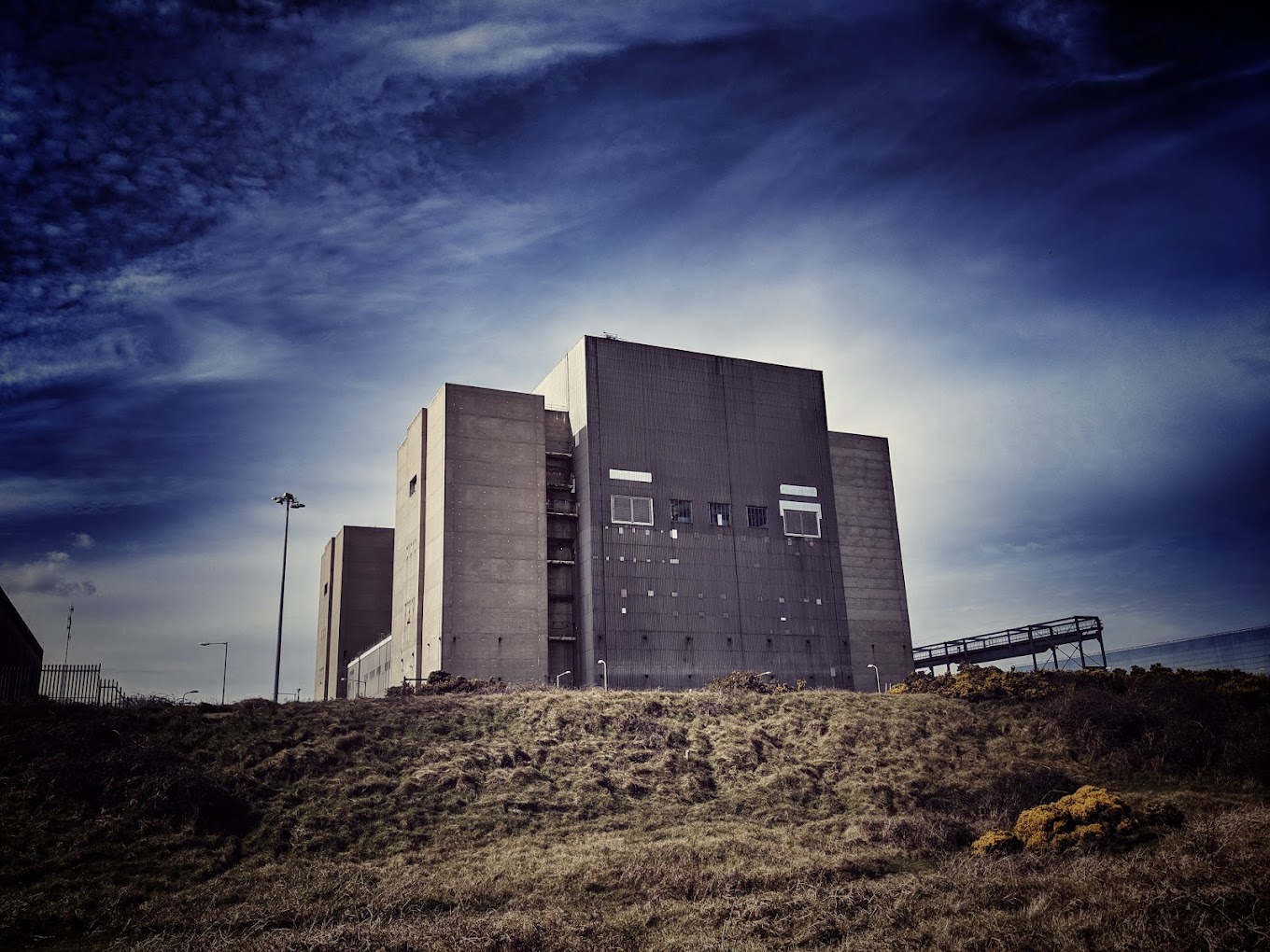
Even more unlikely is the possibility of new nuclear at Bradwell. Climate Change will put paid to the idea of building on a floodable coast today and a vanishing one in the far future. For the present there remains the forlorn hulk of the former Bradwell nuclear power station, once at the forefront of an energy transition now an isolated relic of a bygone age.
No comments yet.
1 This Month
Chernobyl: The Lost Tapes – A good documentary on Chernobyl on SBS available On Demand for the next 3 weeks– https://www.sbs.com.au/ondemand/tv-program/chernobyl-the-lost-tapes/2352741955560

of the week–London Campaign for Nuclear Disarmament

Tell the Ukrainian Government to Drop Prosecution of Peace Activist Yurii Sheliazhenko
To see nuclear-related stories in greater depth and intensity – go to https://nuclearinformation.wordpress.com
-
Archives
- April 2026 (126)
- March 2026 (251)
- February 2026 (268)
- January 2026 (308)
- December 2025 (358)
- November 2025 (359)
- October 2025 (376)
- September 2025 (257)
- August 2025 (319)
- July 2025 (230)
- June 2025 (348)
- May 2025 (261)
-
Categories
- 1
- 1 NUCLEAR ISSUES
- business and costs
- climate change
- culture and arts
- ENERGY
- environment
- health
- history
- indigenous issues
- Legal
- marketing of nuclear
- media
- opposition to nuclear
- PERSONAL STORIES
- politics
- politics international
- Religion and ethics
- safety
- secrets,lies and civil liberties
- spinbuster
- technology
- Uranium
- wastes
- weapons and war
- Women
- 2 WORLD
- ACTION
- AFRICA
- Atrocities
- AUSTRALIA
- Christina's notes
- Christina's themes
- culture and arts
- Events
- Fuk 2022
- Fuk 2023
- Fukushima 2017
- Fukushima 2018
- fukushima 2019
- Fukushima 2020
- Fukushima 2021
- general
- global warming
- Humour (God we need it)
- Nuclear
- RARE EARTHS
- Reference
- resources – print
- Resources -audiovicual
- Weekly Newsletter
- World
- World Nuclear
- YouTube
-
RSS
Entries RSS
Comments RSS
 nuclear-news
Leave a comment