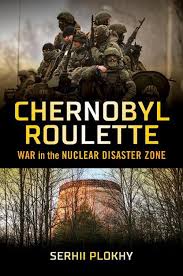
Chernobyl Roulette by Serhii Plokhy review – gripping account of wartime chaos at Ukraine’s nuclear plant
Luke Harding, Mon 2 Sep 2024, https://www.theguardian.com/books/article/2024/sep/01/chernobyl-roulette-by-serhii-plokhy-review-gripping-account-of-wartime-chaos-at-ukraines-nuclear-plant
The Ukrainian historian compellingly chronicles the singular courage and selflessness of atomic power station employees held hostage by Russian troops in 2022
Luke Harding, Mon 2 Sep 2024
On 24 February 2022, workers at the Chornobyl nuclear power station in Ukraine woke to the sound of explosions. A battle was going on, not far from the contaminated exclusion zone. By late afternoon, the Russians had arrived. A column of military vehicles pulled up at a checkpoint and an officer got out. Moscow, he said, was now in charge.
The plant’s 300 personnel – specialist operators and firefighters, plus troops from Ukraine’s national guard – became prisoners. Over the next few weeks, they kept the station’s systems going, working in cramped conditions and living side by side with their armed Russian masters. The enemy had invaded from Belarus. Its main force trundled onwards towards Kyiv.
Chernobyl Roulette by the Ukrainian historian Serhii Plokhy is a gripping account of the extraordinary events inside the plant (Plokhy spells the power station with an “e”). It is a tale of bravery and selflessness, reminiscent of the sacrifice demonstrated by the Chornobyl employees who went through the 1986 nuclear disaster, when reactor No 4 blew up. Some of those on duty in 2022 were involved in the original Soviet-era clean-up.
They included Valentyn Heiko, the 59-year-old shift foreman who was taken hostage with his colleagues. He proved to be a subtle and resilient leader. Heiko met the Russian commanders and told them they would have to follow Ukrainian safety rules and behave in a “civilised manner”. If they didn’t, he promised to unleash a radiation incident, killing them and everyone else. This was blackmail. And a bluff. It worked.
According to Heiko, some of the Russians were polite and rational. About a third of the soldiers, though, were brainwashed and often drunk. The occupiers moved into the fourth floor of the administration building. The station got crowded. There was a shortage of food, cigarettes and razors. The captive nuclear operators – unable to go home to the nearby town of Slavutych – grew beards and puffed on butts.
There were small acts of resistance. Liudmyla Kozak – one of 17 imprisoned women – refused a demand to wear a white armband. The Russians warned her she might be shot. Kozak found a white medical cap, embroidered it with a blue and yellow patch and wore that instead. An order was given to turn off the radio, which brought news of the Russian army’s setbacks around Kyiv. Staff switched it on anyway.
After three weeks, Heiko and his stressed and exhausted workmates could scarcely function. Astonishingly, 46 colleagues volunteered to replace them. The old shift exited the plant, travelled by bus through Belarus and crossed the Dnipro River in a fishing boat. Heiko carried the station’s Ukrainian flag with him. The new team went in the same way – uncertain if or when they would return.
The Kremlin’s occupation of the nuclear plant was an act of astounding recklessness. Soldiers dug trenches in the red forest, one of the world’s most toxic places. It is unclear if they suffered lasting health damage, their heads “full of sawdust”, as one gleeful Ukrainian official put it. Plokhy suggests this might be wishful thinking. Overall, though, radiation levels went up, as thousands of tracked Russian vehicles churned up deadly dust.
In the south of the country, meanwhile, another Russian unit captured the Zaporizhzhia nuclear power station, Europe’s biggest. The attackers fired rocket-propelled grenades at civilian infrastructure and damaged a reactor. Two and a half years on, the Russians are still there. Its turbine halls are stuffed with military kit and weapons. From the territory, they regularly bombard nearby Ukrainian towns with Grad missiles.
Last month, Russian soldiers started a fire in a cooling tower – an apparent warning, after Ukraine’s surprise counter-invasion of Russia’s Kursk region. Since the beginning of Moscow’s all-out attack, Vladimir Putin and his minions have issued a string of mass destruction threats directed at Kyiv and the west. State TV hosts talk about nuking London, Berlin and Paris.
The Chornobyl 2 story at least had a happy ending. On 30 March 2022, Russian servicemen fled north, as part of a pull-out from the Kyiv region. They departed with numerous items stolen from the plant: radiation dosimeters, computers and cars. In the town of Chornobyl, military looting parties carried off sacks of household goods. They even took ancient stuff: black-and-white TVs and video recorders.
The Ukrainian workers who put duty before personal survival narrowly averted another Chornobyl crisis. In Plokhy’s view, Moscow’s 2022 violent takeover of two atomic energy stations should serve as a “wake up call to the world”. It was, he argues, an act of nuclear terrorism carried out by a large nuclear power – a rogue one. The distinction between tactical nuclear weapons and civil nuclear facilities looks increasingly blurred, he says.
How the international community should respond to these alarming developments is less clear. Plokhy calls for a reform of the laws governing nuclear state behaviour and of the body that is supposed to administer them – the International Atomic Energy Agency (IAEA). When Russian tanks entered Chornobyl, the IAEA, led by Rafael Grossi, issued no condemnation of the Kremlin. Nor did it call on the occupiers to get out, appealing instead to “both sides”.
Plokhy is the author of several previous nonfiction books on Ukraine. These include Chernobyl: History of a Tragedy, which won the 2018 Baillie Gifford prize, and The Russo-Ukrainian War, an account of the conflict and its origins, published last year. Chernobyl Roulette is equally compelling. It salutes the singular men and women who stepped up – as their predecessors did before them – when protocols and governments failed.
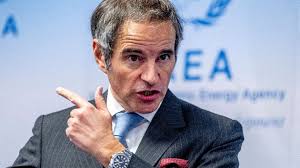
IAEA chief on reviving Iran nuclear deal, preventing Russia-Ukraine nuclear disaster
ALARABIYA NEWS, 1 Sept 24,
In a special interview on Al Arabiya, IAEA Director General Rafael Grossi discussed several pressing global nuclear issues. He highlighted the ongoing concerns related to the conflict between Russia and Ukraine, particularly the risks posed to nuclear power plants situated near active combat zones. Grossi emphasized the IAEA’s commitment to ensuring the safety of these facilities, despite the challenges and uncertainties. He stressed the importance of the agency’s impartiality, noting that their assessments are based solely on independently verified information to avoid politicization.
The IAEA chief also addressed the Iranian nuclear program, expressing concerns over the country’s continued accumulation of highly enriched uranium. He revealed that he had received a response from Iran’s new president, signaling a potential for renewed dialogue aimed at ensuring the peaceful nature of Iran’s nuclear activities. Grossi underscored the need for increased transparency and cooperation from Iran, especially in light of advancements in their nuclear capabilities……………………………………………… https://english.alarabiya.net/webtv/programs/special-interview/2024/09/01/iaea-chief-on-reviving-iran-nuclear-deal-preventing-russia-ukraine-nuclear-disaster—
A quick update on Submissions to the Australian Parliament about the new AUKUS agreement.

The remaining 16 Submissions are clear and straight-out in their condemnation of the agreement.
So far, – at 6 pm Tuesday 3rd September – 18 Submissions have been published
For several days, there were only 2 Submissions up. One, (by Robert Heron) – gives some weak criticism of the agreement. The other gives fulsome support to the agreement – it’s by Crispin Rovere – poker player, AI enthusiast, science fiction writer – who claims to be an “internationally recognised nuclear expert” – recognised by whom, I wonder?)
The remaining 16 Submissions are clear and straight-out in their condemnation of the agreement. On the whole, they give sound arguments for their opposition. I will be publishing them over the next days.
One wonders whether Australia’s always conformist and now cowardly Labor politicians will take any notice of these strong opinions. Liberal/National politicians can be relied on to kow-tow to their corporate backers and to the USA. Thank goodness Australia’s system gives intelligent iIndependents and Greens a chance to have a say.
Here are some of the core statements among those 16 Submissions:
I wish to express my complete opposition to the Aukus agreement. Australia should pursue an independent non aligned foreign policy.
It is sheer lunacy that we have put ourselves in a position which only profits the US and UK.
It is not in the best interests of the Australian people on a number of grounds
This Agreement should be rejected – the underlying premises are false or misleading.
The National Interest Analysis is negligent
Proceeding down the path of AUKUS will not make us safer. This Agreement should
not go forward.
Firstly, AUKUS is a horrifying idea in the sense that it is taking money away from the
Australia institutions that well and truly need it.
The acquisition of a fleet of nuclear-powered submarines (some of them second-hand) costing up to
A$368 billion is the largest defence project since World War Two and the worst foreign policy
mistake.
Not only does the AUKUS spending not produce social good it is harmful and causes risks to
Australian society.
Much to lose and nothing to gain.
Fukushima fishermen not in the clear yet
Japan Times 1 Sept 24
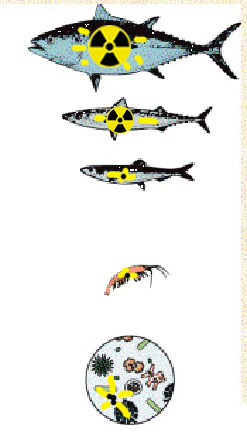
A year has passed since treated water containing trace amounts of tritium started to be released into the sea from the crippled Fukushima No. 1 nuclear power plant.
While the move is said to have had no significant impact on the prices of fishery products, tourism or the surrounding environment, challenges remain, including a number of hurdles for Tokyo Electric Power Company Holdings’ decommissioning of its reactors and measures to reduce the generation of contaminated water………………………………………………………..
In the absence of price decreases, the central and prefectural governments conclude that there has been almost no reputational impact to seafood from the region.
However, those in the local fisheries industry say the prices are holding up because there is momentum to support Fukushima, but they are not optimistic about the future due to it being a temporary measure.
The trading of Joban-mono increased in response to a central government initiative after the treated water started to be released.
But this process is expected to continue for around 30 years.
In April, the release of treated water was temporarily halted after a worker accidentally damaged a power cable at the Fukushima plant, partially cutting off the supply of power.
If such incidents continue to occur, they could pose reputational risks to Joban-mono.
………………………………………………………………………………………….. the local fishermen have lost trust in the central government after it decided on proceeding with the plan to release the treated water into the ocean despite opposition from the fisheries industry in and out of Fukushima Prefecture.
In announcing the decision, Prime Minister Fumio Kishida said, “Even though operations will last for decades, the government will take responsibility until the release is completed.”
The local fishing industry has become increasingly distrustful of Kishida, who suddenly expressed his intention of not seeking reelection as Liberal Democratic Party leader in this month’s presidential race.
“Concerns over treated water will remain for a long time,” a Fukushima fisheries industry official said. “We want the government to work with us as one to cope with the issue.” https://www.japantimes.co.jp/news/2024/09/02/japan/society/fukushima-fisheries-radioactive-water/
Nuclear power scheme given £5.5bn of funding

Neve Gordon-Farleigh & PA, BBC News, Suffolk 30 Aug 24, https://www.bbc.com/news/articles/cp358ywx7e7o—
Up to £5.5bn of government money has been unlocked as part of a new nuclear power station subsidy scheme.
The money will be used for “development expenditure” including enabling works at Sizewell C in Suffolk, before a final investment decision is made.
The government has already spent £2.5bn on the project and while a final investment decision is yet to be made, the government says it is “committed” to carrying out the project.
However, campaign group Stop Sizewell C, said the money would dig further into a financial “black hole”.
While building permission for the project has been granted for the 3.2 gigawatt site, it could take 12 years to construct if funding is secured.
Land between Aldeburgh and Southwold has been earmarked for the site……………………………………………
‘White elephant’
The new Labour government vowed to back this project and other nuclear developments earlier this year.
However, the scheme’s opponents Stop Sizewell C claimed the project will be “slow” to build, harm nearby habitats and damage the tourism economy along the Suffolk Coast.
A spokesperson from the group, said the money was an “extraordinary statement”.
“Sizewell C has already chewed through £2.5 billion, and now we learn that there is the potential for a staggering £5.5 billion more of our taxpayers’ money to be thrown at this white elephant.
“Labour complained about a black hole in the country’s finances yet now they are proposing to dig still further.”
SNP activists whoop as leader John Swinney tells party conference an independent Scotland will give up nuclear deterrent and rejoin the EU
SNP activists cheered today as John Swinney told party conference an independent Scotland will give up the nuclear deterrent and rejoin the EU.
The First Minister tried to be upbeat in his keynote speech in Edinburgh – despite the separatists suffering a meltdown at the general election…………………………….
………….there was rapturous applause as Mr Swinney delivered a series of jibes at UK policies.
‘Labour’s Foreign Secretary thinks Labour should be as proud of creating the UK’s weapons of mass destruction as they are of creating the NHS,’ he said.
‘The SNP wants to see the end of nuclear weapons. With independence, Trident will be removed from Scotland once and for all. …………………………………………………………………….. https://www.dailymail.co.uk/news/article-13802185/SNP-leader-John-Swinney-conference-independent-Scotland-nuclear-deterrent-EU-Brexit-election.html
Russia says it will change nuclear doctrine because of Western role in Ukraine
Reuters, By Mark Trevelyan, September 1, 2024
- Summary
- Minister says work is at “advanced stage”
- Hawks want Putin to lower threshold for nuclear use
- Moscow says West using Ukraine as proxy to harm Russia
- West, Kyiv say this is nonsense
LONDON, Sept 1 (Reuters) – Russia will make changes to its doctrine on the use of nuclear weapons in response to what it regards as Western escalation in the war in Ukraine, state media quoted Deputy Foreign Minister Sergei Ryabkov as saying on Sunday.
The existing nuclear doctrine, set out in a decree by President Vladimir Putin in 2020, says Russia may use nuclear weapons in the event of a nuclear attack by an enemy or a conventional attack that threatens the existence of the state.
Some hawks among Russia’s military analysts have urged Putin to lower the threshold for nuclear use in order to “sober up” Russia’s enemies in the West.
Putin said in June that the nuclear doctrine was a “living instrument” that could change, depending on world events. Ryabkov’s comments on Sunday were the clearest statement yet that changes would indeed be made.
“The work is at an advanced stage, and there is a clear intent to make corrections,” state news agency TASS cited Ryabkov as saying.
He said the decision is “connected with the escalation course of our Western adversaries” in connection with the Ukraine conflict.
Moscow accuses the West of using Ukraine as a proxy to wage war against it, with the aim of inflicting a “strategic defeat” on Russia and breaking it apart.
The United States and its allies deny that, saying they are helping Ukraine defend itself against a colonial-style war of aggression by Russia.
‘RED LINES’
Putin said on day one of Russia’s full-scale invasion of Ukraine in February 2022 that anyone who tried to hinder or threaten it would suffer “consequences that you have never faced in your history”.
Since then, he has issued a series of further statements that the West regards as nuclear threats, and announced the deployment of Russian tactical nuclear weapons in Belarus.
That has not deterred the U.S. and its allies from stepping up military aid to Ukraine in ways that were unthinkable when the war started, including by supplying tanks, long-range missiles and F-16 fighter jets…………………………………………
Russia has more nuclear weapons than any other country. Putin said in March that Moscow was ready for the eventuality of a nuclear war “from a military-technical point of view”.
He said, however, that he saw no rush towards nuclear confrontation and that Russia had never faced a need to use nuclear weapons in Ukraine. https://www.reuters.com/world/europe/russia-will-change-nuclear-doctrine-due-wests-actions-ukraine-official-says-2024-09-01/
South Africa halts artillery shells to Poland over fears they will be used against Russia
South Africa has suspended a major arms deal with Poland, leading to Poland canceling the contract
Grzegorz Adamczyk. ReMix, 28 Aug 24
South Africa has withheld the delivery of 155mm artillery shells to Poland, citing concerns that the munitions could be sent to Ukraine, according to Ezra Jele, head of the secretariat of the South African government body overseeing arms contracts. After two years of uncertainty, Poland has canceled the contract.
In early 2022, following Russia’s invasion of Ukraine, Poland, along with several non-NATO countries, placed an order for 55,000 Assegai artillery shells from Denel Munition, a South African company and subsidiary of German arms manufacturer Rheinmetall. At the time, Jan-Patrick Helmsen, managing director of Denel Munition, expressed pride in the deal, noting NATO’s continued trust in their globally recognized technology.
However, later that year, South Africa’s National Conventional Arms Control Committee (NCACC) halted the contract’s fulfillment. While export permits to Poland and other countries were not canceled, they were indefinitely suspended, with no clear timeline for resolution, according to Jele………………………………………………… more https://www.sott.net/article/494487-South-Africa-halts-artillery-shells-to-Poland-over-fears-they-will-be-used-against-Russia
1 This Month

18 March Webinar @ 1 PM EST: An Assessment of SMR Projects: The Case of Canada
register for the zoom:
https://us02web.zoom.us/webinar/register/WN_o8BIIOUvQ2ONJR1nta65DQ#/registration

of the week – STOP SMALL MODULAR REACTORS IN CANADA
To see nuclear-related stories in greater depth and intensity – go to https://nuclearinformation.wordpress.com
-
Archives
- February 2026 (256)
- January 2026 (308)
- December 2025 (358)
- November 2025 (359)
- October 2025 (376)
- September 2025 (258)
- August 2025 (319)
- July 2025 (230)
- June 2025 (348)
- May 2025 (261)
- April 2025 (305)
- March 2025 (319)
-
Categories
- 1
- 1 NUCLEAR ISSUES
- business and costs
- climate change
- culture and arts
- ENERGY
- environment
- health
- history
- indigenous issues
- Legal
- marketing of nuclear
- media
- opposition to nuclear
- PERSONAL STORIES
- politics
- politics international
- Religion and ethics
- safety
- secrets,lies and civil liberties
- spinbuster
- technology
- Uranium
- wastes
- weapons and war
- Women
- 2 WORLD
- ACTION
- AFRICA
- Atrocities
- AUSTRALIA
- Christina's notes
- Christina's themes
- culture and arts
- Events
- Fuk 2022
- Fuk 2023
- Fukushima 2017
- Fukushima 2018
- fukushima 2019
- Fukushima 2020
- Fukushima 2021
- general
- global warming
- Humour (God we need it)
- Nuclear
- RARE EARTHS
- Reference
- resources – print
- Resources -audiovicual
- Weekly Newsletter
- World
- World Nuclear
- YouTube
-
RSS
Entries RSS
Comments RSS
 nuclear-news