The U.S. and China Can Lead the Way on Nuclear Threat Reduction

Policies of “no first use” are a model for nuclear states.
Foreign Policy, By Zhou Bo, a senior fellow at the Center for International Security and Strategy at Tsinghua University and a retired senior colonel in the Chinese People’s Liberation Army. August 20, 2024,
Since the end of the Cold War, the role of nuclear weapons has only grown. Nuclear arsenals are being strengthened around the world, with many nuclear states continuing to modernize their arsenals. In June, outgoing NATO Secretary-General Jens Stoltenberg said that the alliance was in talks to deploy more nuclear weapons, taking them out of storage and placing them on standby. Robert C. O’Brien, a former national security advisor to former U.S. President Donald Trump, has urged him to conduct nuclear tests if he wins a new term, arguing that it would help the United States “maintain technical and numerical superiority to the combined Chinese and Russian nuclear stockpiles.”
There are two bleak conclusions about nuclear diplomacy in this age. First, it will be impossible to ban such weapons anytime soon. Since its passage in 2017, no nuclear-armed states have signed the United Nations Treaty on the Prohibition of Nuclear Weapons, some of them instead contending that it will distract attention from other disarmament and nonproliferation initiatives.
It is also very hard, if not impossible, to convince these states to reduce their nuclear stockpiles amid ever-intensifying geopolitical and military competition. On the contrary, in February 2023, Russia announced that it was suspending its participation in the 2010 Treaty on Measures for the Further Reduction and Limitation of Strategic Offensive Arms (New START)—the last remaining nuclear arms control treaty limiting Russian and U.S. strategic nuclear forces.
In response, the United States has also suspended the sharing and publication of treaty data. In November, Russia went a step further and withdrew its ratification of the Comprehensive Nuclear Test Ban Treaty (CTBT), citing “an imbalance” with the United States, which has failed to ratify the treaty since it opened for signature in 1996.
Amid such a situation, it is impossible for Beijing to stand by idly. The Stockholm International Peace Research Institute estimates that the size of China’s nuclear arsenal has increased from 410 warheads in January 2023 to 500 in January 2024, and it is expected to continue to grow. For the first time, China may also now be deploying a small number of warheads on missiles during peacetime. According to the U.S. Defense Department, China is likely to increase its nuclear warheads to 1,500 by 2035.
Given this reality, perhaps the most promising near-term way to guard against nuclear risks is not by limiting the number of nuclear weapons but by controlling the policies that govern their use. In this regard, a pledge by nuclear-armed states of “no first use” of nuclear weapons looks to be the most realistic approach in reducing the escalation of nuclear threats.
In theory, no first use refers to a policy by which a nuclear-armed power formally refrains from the use of nuclear weapons or other weapons of mass destruction in warfare, except in the case of doing so as a second strike in retaliation to an attack by an enemy power using weapon of mass destruction.
Of the five nuclear states that have signed onto the Treaty on the Nonproliferation of Nuclear Weapons (NPT)—China, France, Russia, the United Kingdom, and the United States—only China has ever declared a no-first-use policy. On Oct. 16, 1964, when China successfully detonated its first atomic bomb, the country immediately declared that it would not be the first to use nuclear weapons at any time and under any circumstances, and unconditionally committed itself not to use or threaten to use nuclear weapons against nonnuclear states or in nuclear-weapon-free zones…………………………………………..
All nuclear powers could afford to adopt a formal no-first-use policy—taking the moral high ground without reducing their capabilities for retaliation.
Though it has never adopted a no-first-use policy itself, the United States’ nuclear posture is actually more similar to China’s than it seems. In its 2022 Nuclear Posture Review, the Biden administration declared that it would only consider the use of nuclear weapons “in extreme circumstances to defend the vital interests of the United States or its allies and partners.” But it is hard to imagine which interests are so vital that they might require Washington to use nuclear weapons as a first measure to defend them.
To be sure, it is important for the United States to assure its allies that it will follow through on its deterrent promises. It is equally hard to imagine who would venture to launch a nuclear strike on a U.S. ally, knowing the dire potential consequences.
The United Kingdom’s nuclear deterrent, meanwhile, is operationally independent. But in terms of its nuclear policy, the British government has made it clear that “we would consider using our nuclear weapons only in extreme circumstances of self-defence, including the defence of our NATO allies.” France, meanwhile adheres to a principle of “strict sufficiency.”
The real challenge, then, is getting Russia to commit to a no-first-use policy. The Soviet Union adopted a formal policy of no first use in 1982. But after its dissolution, the Russian Federation reversed this approach in 1993, likely to mitigate the comparative weakness of the Russian Armed Forces in the post-Soviet era………………………………………………….
A dual-track approach may be the best bet for the adoption of a formal no-first-use policy.
In Europe, NATO can start with a unilateral no-first-use pledge against Russia as a gesture of goodwill. Even if such an offer isn’t immediately reciprocated by Russia, it might begin to thaw tensions.
As a second—and crucial—step, NATO could pledge to halt any further expansion of its alliance in exchange for Moscow adopting a no-first-use policy This would be a difficult pill for the alliance to swallow. But after Sweden’s and Finland’s entry earlier this year, there are only three aspiring countries on the waiting list: the barely significant Bosnia and Herzegovina as well as Georgia and Ukraine, which have deeply problematic ongoing conflicts with Russia that NATO is sensitive about.
The path forward would likely be smoother if it went through Asia. Both Russia and China have already agreed to no first use against each other. China and the United States could reach a similar agreement, thus de-escalating potential conflicts involving U.S. allies—such as the Philippines and Japan—as well as the dangers that could be provoked through accidental collisions in the sea or air. A U.S.-led example might then make it easier to bring the Europeans on board.
This may seem far-fetched in the current geopolitical climate, but there is precedent for it. When India and Pakistan tested nuclear devices in May 1998, they incurred swift condemnation from the U.N. Security Council, which called for both countries to sign both the NPT and the Comprehensive Nuclear Test Ban Treaty. In a rare show of solidarity, China and the United States made a joint declaration in June 1998 agreeing to de-target their nuclear weapons against each other.
This was largely a symbolic and unverifiable step. But it was not only a defusing of tensions, but also good to see nuclear states at least partially honoring the vision of nuclear disarmament laid out in Article VI of the NPT. And this China-U.S. joint statement eventually led to another joint statement among the five nuclear-armed permanent Security Council states in May 2000, which affirmed that their nuclear weapons are not targeted at each other or at any other states.
No first use is a big step forward from nontargeting. It’s not out of bounds to imagine that, with enough diplomatic capital, a similar but more important pledge of no first use could be made today. In fact, in January 2022—only a month before Russia’s invasion of Ukraine—these five nuclear powers agreed in a joint statement that “a nuclear war cannot be won and must never be fought.”
What is more significant is that during Chinese President Xi Jinping’s visit to Moscow last year, China and Russia reiterated this commitment, even amid Russia’s ongoing war.
If, indeed, a nuclear war cannot be won, then what is stopping these nuclear powers from taking a no-first-use pledge? Nuclear weapons didn’t help the United States in its wars in Vietnam, Iraq, and Afghanistan—or the Russians in Ukraine. A commitment of no first use by the nuclear-armed states would give people hope that a nuclear-free world, however distant, is still possible one day.
This essay is published in cooperation with the Asian Peace Programme at the National University of Singapore’s Asia Research Institute. https://foreignpolicy.com/2024/08/20/nuclear-weapons-war-no-first-use-policy/—
‘US the primary source of nuclear threat in world’
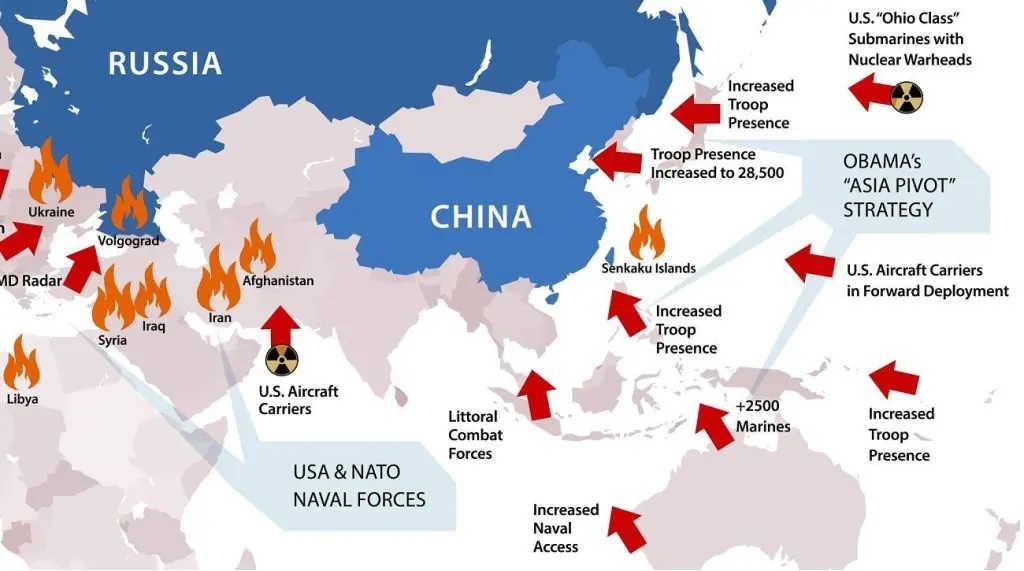
“The size of China’s nuclear arsenal is not on the same level with the US. China follows a policy of ‘no first use’ of nuclear weapons and always keeps its nuclear capabilities at the minimum level required by national security. We have no intention to engage in any form of arms race with others,” Mao said.
Nuclear strategy of US slammed for using China as pretext to expand nuke arsenal
By Zhao Yusha, Aug 21, 2024 , https://www.globaltimes.cn/page/202408/1318453.shtml
The US’ constant hyping of the “China nuclear threat” theory is a convenient pretext for the US to shirk its obligation of nuclear disarmament, expand its own nuclear arsenal and seek absolute strategic predominance, a spokesperson from China’s Ministry of Foreign Affairs said on Wednesday, after US media reported President Joe Biden has approved a highly classified nuclear strategic plan that, for the first time, reorients the US’ deterrent strategy to focus on China’s purported expansion of its nuclear arsenal.
The New York Times reported on Tuesday that Biden approved the document in March after the Pentagon said it believes China’s nuclear arsenal stockpiles will rival the size and diversity of the US’ and Russia’s over the next decade.
The White House never announced that Biden had approved the revised strategy, called the “Nuclear Employment Guidance,” which seeks to prepare the US for possible coordinated nuclear challenges from China, Russia and North Korea. The document, updated every four years or so, is so highly classified that there are no electronic copies, with only a small number of hard copies distributed to a few national security officials and Pentagon commanders.
The US has called China a “nuclear threat” and used it as a convenient pretext for the US to shirk its obligation of nuclear disarmament, expand its own nuclear arsenal and seek absolute strategic predominance, Mao Ning, spokesperson of China’s Ministry of Foreign Affairs said at a Wednesday briefing, while stressing China is gravely concerned over the report.
“The size of China’s nuclear arsenal is not on the same level with the US. China follows a policy of ‘no first use’ of nuclear weapons and always keeps its nuclear capabilities at the minimum level required by national security. We have no intention to engage in any form of arms race with others,” Mao said.
“In contrast, the US sits on the largest and most advanced nuclear arsenal in the world. Even so, it clings to a first-use nuclear deterrence policy, and has invested heavily to upgrade its nuclear triad and blatantly devised nuclear deterrence strategies against others. It is the US who is the primary source of nuclear threat and strategic risks in the world,” Mao stated.
The document reflects that the US has reached a level of hysteria when it comes to competition with countries like China. It has even reached a point where it is prepared for a nuclear conflict, which is extremely dangerous, said Li Haidong, a professor at the China Foreign Affairs University.
He said the US’ hype over China’s nuclear arsenal is a tactic to justify and bolster its own nuclear weapons program for political maneuvering and policy objectives.
Biden’s Convention Speech Made Absurd Claims About His Gaza Policy

August 21, 2024 By Norman Solomon, https://scheerpost.com/2024/08/21/bidens-convention-speech-made-absurd-claims-about-his-gaza-policy/
An observation from George Orwell — “those who control the present, control the past and those who control the past control the future” — is acutely relevant to how President Biden talked about Gaza during his speech at the Democratic convention Monday night. His words fit into a messaging template now in its eleventh month, depicting the U.S. government as tirelessly seeking peace, while supplying the weapons and bombs that have enabled Israel’s continual slaughter of civilians.
“We’ll keep working, to bring hostages home, and end the war in Gaza, and bring peace and security to the Middle East,” Biden told the cheering delegates. “As you know, I wrote a peace treaty for Gaza. A few days ago I put forward a proposal that brought us closer to doing that than we’ve done since October 7th.”
It was a journey into an alternative universe of political guile from a president who just six days earlier had approved sending $20 billion worth of more weapons to Israel. Yet the Biden delegates in the convention hall responded with a crescendo of roaring admiration.
Applause swelled as Biden continued: “We’re working around-the-clock, my secretary of state, to prevent a wider war and reunite hostages with their families, and surge humanitarian health and food assistance into Gaza now, to end the civilian suffering of the Palestinian people and finally, finally, finally deliver a ceasefire and end this war.”
In Chicago’s United Center, the president basked in adulation while claiming to be a peacemaker despite a record of literally making possible the methodical massacres of tens of thousands of Palestinian civilians.
Orwell would have understood. A political reflex has been in motion from top U.S. leaders, claiming to be peace seekers while aiding and abetting the slaughter. Normalizing deception about the past sets a pattern for perpetrating such deception in the future.
And so, working inside the paradigm that Orwell described, Biden exerts control over the present, strives to control narratives about the past, and seeks to make it all seem normal, prefiguring the future.
The eagerness of delegates to cheer for Biden’s mendaciously absurd narrative about his administration’s policies toward Gaza was in a broader context — the convention’s lovefest for the lame-duck president.
Hours before the convention opened, Peter Beinart released a short video essay anticipating the fervent adulation. “I just don’t think when you’re analyzing a presidency or a person, you sequester what’s happened in Gaza,” he said. “I mean, if you’re a liberal-minded person, you believe that genocide is just about the worst thing that a country can do, and it’s just about the worst thing that your country can do if your country is arming a genocide.”
Beinart continued: “And it’s really not that controversial anymore that this qualifies as a genocide. I read the academic writing on this. I don’t see any genuine scholars of human rights international law who are saying it’s not indeed there. . . . If you’re gonna say something about Joe Biden, the president, Joe Biden, the man, you have to factor in what Joe Biden, the president, Joe Biden, the man, has done, vis-a-vis Gaza. It’s central to his legacy. It’s central to his character. And if you don’t, then you’re saying that Palestinian lives just don’t matter, or at least they don’t matter this particular day, and I think that’s inhumane. I don’t think we can ever say that some group of people’s lives simply don’t matter because it’s inconvenient for us to talk about them at a particular moment.”
Underscoring the grotesque moral obtuseness from the convention stage was the joyful display of generations as the president praised and embraced his offspring. Joe Biden walked off stage holding the hand of his cute little grandson, a precious child no more precious than any one of the many thousands of children the president has helped Israel to kill.
Too big to fail? Who cares if there’s no accountability – the Nuclear Lie

How is it that political parties can get away promising huge projects that won’t eventuate for 10 to 20 years; that’s four to eight election cycles in the future.
Even if the current opposition leader, Peter Dutton, manages to sell the nuclear dream at the next election, he won’t be around to see his promises are kept. He simply isn’t accountable for the claims he’s making today.
by David Salt | Aug 21, 2024 https://sustainabilitybites.com/too-big-to-fail-who-cares-if-theres-no-accountability/
Building big on big promises of endless clean energy ignores the limits of our institutions. It’s something rarely considered in the febrile, volatile environment of contemporary politics. We pull our leaders up on the smallest of inconsistencies but let them get away with the biggest of lies. When you next cast your vote, keep in mind that extraordinary promises require extraordinary accountability.
The nuclear lie
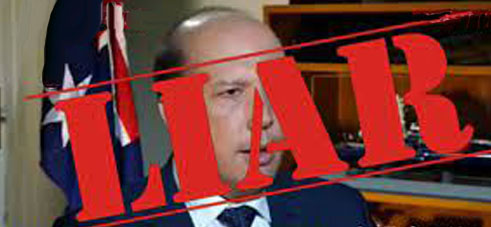
Australia is currently contesting a future based on nuclear energy vs renewables.
The conservative opposition Coalition has put forward a ‘plan’ to build seven government-owned nuclear plants across Australia that will come online around 2035. The promise is that these plants will provide cheap, reliable carbon free electricity and help our nation achieve ‘net zero’ by 2050. It’s a strange policy requiring massive government investment and control from a party the stands for smaller government. But that’s just the beginning of strangeness around this thinking.
To call it a ‘plan’ is drawing a long bow because the proposal comes with no costings or modelling attached; existing legislation prevents the construction of nuclear power plants; and Australia currently lacks the necessary capacity to develop a nuclear power network (something the nuclear loving coalition did nothing about while in government for most of the last decade). Experts from across Australia don’t believe it would be possible to build the plants by 2035, or that they can produce electricity at anything close to what can be produced by renewables.
However, if the electorate was to buy the proposal and vote in the conservatives, it would result in the extension of coal power (to fill the gap till nuclear comes online), the expansion of gas energy and a redirection of investment away from renewables, which don’t really complement nuclear anyway.
While questions are being asked about all of these uncertainties, I think a more fundamental issue relates to governance and scales of time.
How is it that political parties can get away promising huge projects that won’t eventuate for 10 to 20 years; that’s four to eight election cycles in the future. Even if the current opposition leader, Peter Dutton, manages to sell the nuclear dream at the next election, he won’t be around to see his promises are kept. He simply isn’t accountable for the claims he’s making today.
Flawed accountability
Clearly this is a weakness of our democratic system of governance. We vote someone in to represent us for a number of years, three to six years in most electorates around the world, and we hold these representatives to account for the how they perform in delivering what they promised at election time. This tends to have voters actively reflecting on day-to-day business (taxes, health care delivery, education etc), while simply ignoring the hundreds of billions of dollars of commitments made for promises that sit well over the electoral horizon (promises like nuclear submarine fleets and nuclear power plants).
This weakness in accountability appears to be increasingly exploited by all sides of politics. Voters are collapsing under the ‘cost of living’, holding their breaths with every quarterly inflation announcement, and quick to pull down any politician who seems insensitive to the needs of ‘working families’.
Yet, at the same time, voters seem oblivious to the consequences of political leaders making a $100 billion dollar pledge to be delivered in 3-4 election’s time (though I note critics say this plan could easily end up costing as much as $600 billion). Consequently, we’re seeing more of these big announcements because the pollies know the electorate is not going to hold them to account. They simply don’t have the capacity to take it in, they are too absorbed by the day-to-day stuff.
Extraordinary accountability
The late, great astronomer Carl Sagan once said that “extraordinary claims require extraordinary evidence”. He was referring to the possibility of UFOs and extra-terrestrial life, but the same principle should apply to extraordinary political promises. If a political leader makes an extraordinary promise that can’t be delivered in one to two electoral cycles and commits vast quantities of (scarce) resources, then they need to put up a corresponding level of ‘extraordinary accountability’ before their case should be considered seriously by the broader electorate.
It’s not just the money involved and skills needed, it’s also how such a goal might be met over several electoral cycles. Bipartisan support, you would think, would have to be a basic first step.
A couple of decades ago Prime Minister John Howard passed the Charter of Budget Honesty Act in an effort to make political parties more accountable for the spending they promised. Many claim it has achieved little however, at the very least, it was an effort to show the electorate that politicians were aware that they needed to demonstrate greater accountability for the promises they make.
In the case of Dutton’s nuclear plan, this accountability is completely missing. However, rather than acknowledging this and attempting to build a stronger case, the Coalition has instead been attacking the institutions that have been examining the proposal (like CSIRO and the Australian Academy of Technological Sciences and Engineering). The conservatives have simply written them off when they question the validity of the proposal. (“I’m not interested in the fanatics,” says Dutton.) This doubling down is doubly dumb because it involves both extraordinary promises with no proof and the politicisation of independent experts.
Beyond nuclear
But this tendency to aim extraordinarily big without extraordinary accountability goes way beyond Australia’s future nuclear energy ambitions. Consider the quest for fusion energy.

Europe is chasing the holy grail of clean energy by investing in fusion power. The multi-country International Thermonuclear Experimental Reactor (ITER) project was dreamt up in the 1980s and took over 25 years to come together as a formal collaboration between China, the European Union, India, Japan, South Korea, Russia, and the United States. Construction began in 2010 with operations expected to start about a decade later. But manufacturing faults, the COVID-19 pandemic, and the complexity of a first-of-a-kind machine (one of the most complex machines in the world) have all slowed progress and now ITER will not turn on until 2034, 9 years later than currently scheduled. Energy producing fusion reactions—the goal of the project—won’t come online until 2039!
ITER is a doughnut-shaped reactor, called a tokamak, in which magnetic fields contain a plasma of hydrogen nuclei hot enough to fuse and release energy. The technocrats running the project will gleefully explain that particle beams and microwaves heat the plasma to 150 million degrees Celsius—10 times the temperature of the Sun’s core—while a few meters away the superconducting magnets must be cooled to minus 269°C, a few degrees above absolute zero. Amazing as that sounds, it’s possibly less challenging than coordinating the actions and investment choices of the world’s superpowers decades into the future; Russia, China and the US are not exactly buddies at the moment. How strong do the ‘particle beams’ have to be to hold this agreement together for 20-30 years.
And even if ITER never eventuates, the possibility of ‘unlimited, clean energy’ over the horizon impacts investment decisions today. We’re seeing this even with the nuclear fission debate today in Australia as investors become wary of putting their money into renewables with the opposition promising nuclear powerplants just down the road.
And then there’s growing talk about implementing geoengineering solutions to fix humanity’s existential overheating problem (‘global boiling’). We’re talking pumping sulphates into the stratosphere, giant mirrors in space and fertilising the ocean to draw down carbon in the atmosphere. Playing God by ‘controlling’ the Earth system is going to be as big a governance issue as it is a technical challenge. And, given we’re doing so poorly on energy solutions using technology that’s relatively well understood, we’d be wise to demand extraordinary accountability before swallowing any promises in this domain.
Going thermonuclear
Which is not to say that ‘thermonuclear’ is not potentially a big part of a possible energy solution, just not the man-made kind. That big ball of energy in the sky called the Sun is driven by thermonuclear fusion, and this energy is there for the harvesting via photovoltaic cells (and indirectly by wind turbines).
And the accountability on these renewable sources of power doesn’t need the same level of extraordinary accountability that nuclear and thermonuclear demands because it can be delivered now, in the same electoral cycle as the promise to deliver it.
Renewables are not without their own set of issues but in terms of cost, feasibility AND accountability, it’s a solution that Australia (and the world) should be implementing now. Renewables are not ‘too big to fail’ but waiting twenty years before switching to them is simply too little too late.
Labour MP under fire for accepting £2,000 donation from Sizewell C developer.

Opposition to the proposed power plant accuse Jack Abbott of being in ‘EDF’s pocket’
Luke Barr, 19 August 2024
A Labour MP whose constituency borders the proposed Sizewell C nuclear power station has been criticised for accepting a £2,000 donation from the developer behind the project.
Jack Abbott, the newly appointed MP for Ipswich, is facing scrutiny over the decision to
take cash from the French energy giant EDF earlier this month. EDF is the
main private investor behind the proposed nuclear project, which is
expected to cost £20bn and will be part-funded by the taxpayer.
New filings show that Mr Abbott registered the EDF donation on Aug 2, just weeks after
he was elected in Ipswich. His constituency neighbours Sizewell C, which
once completed will serve as a 3.2 gigawatt power station providing energy
to around 6m homes.
However, the project has faced opposition from
campaigners who claim that it risks large cost overruns that will fall on
household bills and that it will spoil local nature.
Alison Downes, executive director of the Stop Sizewell C campaign group, claimed the EDF
donation suggested Mr Abbott was “in EDF’s pocket”. She said: “A huge
project like this has money and will likely use it to persuade people to
lend their support. It is telling that an organisation like ours doesn’t
have lots of money but still has plenty of support.”
A final investment decision on Sizewell C has yet to be made despite around £2.5bn already
being spent on the project. The Government had expected to secure backing
from private investors by the end of the year, although negotiations are at
risk of running into 2025.
Telegraph 19th Aug 2024
A robot’s attempt to get a sample of the melted nuclear fuel at Japan’s damaged reactor is suspended
An attempt to use an extendable robot to remove a fragment of melted fuel from a wrecked reactor at Japan’s tsunami-hit nuclear plant has been suspended due to a technical issue
abc news, By MARI YAMAGUCHI Associated Press, August 22, 2024,
TOKYO — An attempt to use an extendable robot to remove a fragment of melted fuel from a wrecked reactor at Japan’s tsunami-hit Fukushima Daiichi nuclear power plant was suspended Thursday due to a technical issue.
The collection of a tiny sample of the debris inside the Unit 2 reactor’s primary containment vessel would start the fuel debris removal phase, the most challenging part of the decadeslong decommissioning of the plant where three reactors were destroyed in the March 11, 2011, magnitude 9.0 earthquake and tsunami disaster.
The work was stopped when workers noticed that five 1.5-meter (5-foot) pipes used to maneuver the robot were placed in the wrong order and could not be corrected within the time limit for their radiation exposure, the plant operator Tokyo Electric Power Company Holdings said.
The pipes were to be used to push the robot inside and pull it back out when it finished. Once inside the vessel, the robot is operated remotely from a safer location.
The robot can extend up to about 22 meters (72 feet) to reach its target area to collect a fragment from the surface of the melted fuel mound using a device equipped with tongs that hang from the tip of the robot.
The mission to obtain the fragment and return with it is to last two weeks. TEPCO said a new start date is undecided…………………………………………………………….
The government and TEPCO are sticking to a 30-40-year cleanup target set soon after the meltdown, despite criticism it is unrealistic. No specific plans for the full removal of the melted fuel debris or its storage have been decided. https://abcnews.go.com/Technology/wireStory/robots-attempt-sample-melted-nuclear-fuel-japans-damaged-113049701
‘We don’t want your garbage’: Northern township in shock after hearing Ontario is sending it radioactive waste

Communities asking the province to halt its transport plan while it holds consultations
Aya Dufour · CBC News Aug 20, 2024
Residents of a small northern Ontario township 40 minutes west of Sudbury say they were blindsided by Ontario’s decision to transport radioactive waste from an abandoned mill 200 kilometres away to the tailing facilities in their community in the coming weeks.
Nairn and Hyman, with a total of about 300 residents, became aware of the province’s plan when work began on the back roads leading to the Agnew Lake Mine last month, after there hadn’t been much action on that property since the Ministry of Mines took over in the 1990s.
“This project has been in the works for years. Why are we only finding out about it now?” asked Nairn chief administrative officer Belinda Ketchabaw said during an emergency joint council meeting Monday.
The province’s plan involves using the tailings on the property to store 40 tonnes of naturally occurring radioactive materials from the abandoned niobium ore processing mill near Nipissing First Nation.
The mill operated for barely a few months before shutting down in the 1950s and its tailings contaminated soil in the First Nation in the decades that followed.
Remediation work there has been a long time coming, with the process of identifying and excavating the contaminated soil beginning in 2019.
The Ministry of Transportation (MTO) and the Ministry of Mines are now moving on to the next step, which involves hauling the radioactive materials elsewhere.
The tailings facility in Nairn was chosen as it is already designed to receive radioactive materials. It’s been holding radioactive waste and byproducts of the inactive Agnew Lake Mine for decades without incident. The tailings themselves are some 20 kilometers away from the centre of the township.
Townships ask province to halt transport, consult with them……………………..
…………………….A town hall is set to take place in Nairn and Hyman in the coming weeks. https://www.cbc.ca/news/canada/sudbury/nairn-hyman-nipissing-first-nation-remediation-ontario-1.7299108 ]
The Nuclear Decommissioning Authority (NDA)NDA’s £30 million investment into nuclear research & innovation
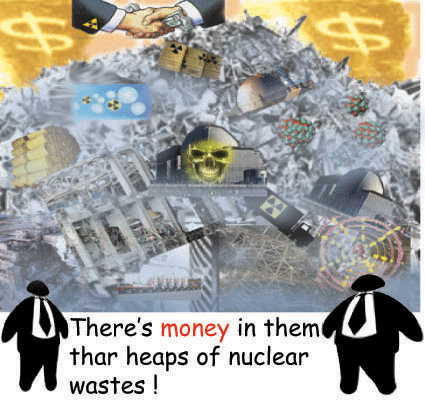
The Nuclear Decommissioning Authority (NDA) has awarded contracts totalling
£30million to drive innovation and research into new techniques to deliver
safe, sustainable and cost-effective decommissioning.
The NDA is cleaning up the UK’s oldest nuclear sites which were designed without
decommissioning in mind, posing challenges which require first-of-a-kind
engineering and technological solutions. Research is an essential part of
the decommissioning programme and each year the NDA group invest
£100million in Research & Development (R&D). The aim is to solve
challenging technical problems more effectively, more efficiently, and,
where possible, for less cost.
The NDA Research Portfolio (NRP) competition
forms a key part of the NDA’s strategic research programme and provides
direct funding for research that supports strategic objectives including
growing and maintaining diverse skills within the supply chain and
promoting innovation across multiple sites.
Electronic Specifier 19th Aug 2024
The lost world of Chornobyl: inside a nuclear disaster zone – in pictures
https://www.theguardian.com/artanddesign/gallery/2024/aug/20/the-lost-world-of-chornobyl-inside-a-nuclear-disaster-zone-in-pictures – [Great pictures!]
For six years photographer Pierpaolo Mittica documented the communities who inhabited and passed through the exclusion zone of the nuclear reactor disaster of 1986. The Russia-Ukraine war has since seen almost everyone evacuated and the site’s perimeter defensively mined – so these pictures are of a vanished life
Rocket Test on Remote Scottish Island Ends in Flames
New York Times, By Lynsey Chutel, Reporting from London, Aug. 20, 2024
Aug. 20, 2024, As European countries push to develop more independent space capabilities, a test at one new site produced an explosion.
The test was spectacular, but not in the way those involved had hoped.
A rocket engine firing at a planned spaceport on a remote Scottish island ended in a tower of fire on Monday, with an explosion that engulfed the launch platform in flames.
The site, a former radar station on Unst, in the north of the Shetland Islands, is intended to become a base for launching small satellites. That ambition reflects a wider push in Western Europe to develop more independent space capabilities after relations with Russia broke down over the war in Ukraine, freezing European access to Russian Soyuz rockets.
But this time at least, the result was a fiery display of the trial and error that characterizes the space business.
The rocket manufacturers involved, the German company Rocket Factory Augsburg, said that an “anomaly” had occurred, and that no one was injured.
“We will take our time to analyze and assess the situation,” the company said in a statement.
“This was a test, and test campaigns are designed to identify issues prior to the next stage,” SaxaVord, the spaceport, said in a statement.
Rocket Factory Augsburg is SaxaVord’s first client, with others including HyImpulse, a German company that specializes in launching small satellites, and a subsidiary of the U.S. aeronautics firm Lockheed Martin.
Setbacks like these were anticipated, Britain’s Civil Aviation Authority said on Tuesday, adding that it was in contact with the companies involved to ensure safety standards. The aviation authority granted SaxaVord a spaceport license last year.
“Advancing space technology is complex and at the cutting edge of aerospace and tests like the one at SaxaVord are essential to achieve future success,” the Civil Aviation Authority said in a statement.
SaxaVord and Rocket Factory Augsburg had planned “extensively for this potential outcome,” the U.K. Space Agency said, and tests like these will become more common as the country develops its satellite launching capabilities. Britain’s space industry was worth an estimated 17.5 billion pounds (nearly $23 billion) in 2021, according to a report published last month by Britain’s National Audit Office.
“The benefits that space brings — to our society, economy and communities across the country — are more than worth it,” the agency said in a statement.
Rocket Factory Augsburg is part of the European Space Agency’s Boost program, an initiative aimed at developing the region’s commercial space capabilities. This test, and its failures, were part of the development process, the agency said in an email.
“It is in Europe’s best interest to have a competitive space transportation industry, with multiple options of launch vehicles at its disposal,” said Thilo Kranz, manager of the agency’s Commercial Space Transportation Program.
Rocket Factory Augsburg’s shareholders said the explosion did not worry them. The company’s approach to testing had prepared its backers, said OHB, a German aeronautics company and one of the factory’s main shareholders.–………………….(Subscribers only)https://www.nytimes.com/2024/08/20/world/europe/rocket-test-on-remote-scottish-island-ends-in-flames.html
How US Big Tech monopolies colonized the world: Welcome to neo-feudalism
US Big Tech corporations are like the feudal landlords of medieval Europe. These Silicon Valley monopolies own the digital land that the global economy is built on, and are charging higher and higher rents to use their privatized infrastructure.
GeoPoliticalEconomy, By Ben Norton, 19 Aug 24
US Big Tech corporations have essentially colonized the world. In almost every country on Earth, the digital infrastructure upon which the modern economy was built is owned and controlled by a small handful of monopolies, based largely in Silicon Valley.
This system is looking more and more like neo-feudalism. Just as the feudal lords of medieval Europe owned all of the land and turned almost everyone else into serfs, who broke their backs producing food for their masters, the US Big Tech monopolies of the 21st century act as corporate feudal lords, controlling all of the digital land upon which the digital economy is based.
Every other company – not just small businesses, but even relatively large ones – must pay rent to these corporate feudal lords.
Amazon takes more than 50% of the revenue of the sellers on its platform, according to a study by the e-commerce intelligence firm Marketplace Pulse.
Amazon’s cut of vendor revenue steadily rose from roughly 35% in 2016 to just over half as of 2022.
In fact, Amazon basically sets prices in markets by using its infamous “buy box”. The platform removes the button if a user sells a product at a price higher than those offered on competing websites. The result: 82-90% of sales on Amazon end up using the buy box.
Neoclassical economists endlessly condemned the inefficiencies of the central planning of the Soviet Union, but apparently have little to say about the de facto price setting being done by neo-feudal corporate monopolies like Amazon.
A monopolist in the 20th century would have loved to control a country’s supply of, say, refrigerators. But the Big Tech monopolists of the 21st century go a step further and control all of the digital infrastructure needed to buy those fridges — from the internet itself to the software, cloud hosting, apps, payment systems, and even the delivery service.
These corporate neo-feudal lords don’t just dominate a single market or a few related ones; they control the marketplace. They can create and destroy entire markets.
Their monopolistic control extends well beyond just one country, to almost the entire world.
If a competitor does manage to create a product, US Big Tech monopolies can make it disappear.
Imagine you are an entrepreneur. You develop a product, make a website, and offer to sell it online. But then you search for it on Google, and it does not show up. Instead, Google promotes another, similar product in the search results.
This is not a hypothetical; this already happens.
Amazon does exactly the same: It promotes Amazon Prime products at the top of its search results. And when a product sells well, Amazon sometimes copies it, makes its own version, and threatens to put the original vendor out of business.
As Reuters reported in 2021, “A trove of internal Amazon documents reveals how the e-commerce giant ran a systematic campaign of creating knockoff goods and manipulating search results to boost its own product lines”. This happened in India, but vendors in other countries have accused Amazon of doing the same.
Toy salesman Molson Hart produced a fascinating documentary that illustrates Amazon’s dystopian monopoly power.
Amazon is more powerful than any 19th-century robber baron could have imagined. It charges exorbitant fees to vendors that sell goods on its platform (goods that Amazon had nothing to do with creating), and can copy their product and make its own version if it looks profitable.
This problem goes much deeper than Amazon. Apple, the largest company on Earth by market capitalization (with a $3.41 trillion market cap as of August 1, 2024), uses many of the same tactics as Amazon.
While Amazon extracts more than 50% of the revenue of the sellers who use its platform, it can at least try to justify this by arguing that these exorbitant fees include the costs of advertising and “fulfillment” (ie, storage, processing, delivery, etc.).
Apple, on the other hand, charges a staggering 30% fee on all purchases done in apps that are downloaded using the iOS store.
In other words, if a user of an iPhone, iPad, or Mac download an app for a third party through the App Store, Apple requires 30% rent for the business done by those other companies. This is despite the fact that Apple has nothing to do with that business. The other firms manage the commerce and maintain their apps; Apple is the neo-feudal lord demanding its tribute.
In an absolutely scandalous announcement in August, the crowd-funding website Patreon revealed in August that the neo-feudal corporate landlords at Apple are taking a 30% cut of all new memberships registered using the iOS app.
Apple is not providing any service, other than allowing people to download an app that it itself does not manage. All Apple does is host the app, nothing more. It is a digital landlord. But because it has a monopoly, Apple can take 30% of the revenue that creators on Patreon receive for all of our hard work…………………………………………………………………………………………..
It all started with Big Tech corporations first offering supposedly “free” services (which were paid for by selling users’ information). Those “free” platforms soon became monopolies, and were so deeply embedded into the economy that they became digital utilities, albeit privatized ones.
A 20th-century economy needed utilities like an electrical grid, water plants, sewage system, highways, etc. These natural monopolies should be publicly owned, provided by the state as public goods, in order to prevent rent-seeking by corporate landlords. (Of course, neoliberals have long sought to privatize these public utilities as well, and have had success in some countries — with inevitably disastrous results, like sky-high bills and sewage being dumped into the UK’s privatized water system.)
A 21st-century economy needs all of those basic utilities plus new digital infrastructure. But here’s the thing: all of the necessary digital infrastructure that our economies are built on is privatized! You have internet providers, Microsoft Windows, iOS, Apple Store, Play Store, Google, Amazon, YouTube, Facebook, Instagram, WhatsApp, Apple Pay, Google Pay, etc.
Then there is the cloud infrastructure that apps and websites use, which is dominated by a few mostly US companies. Amazon Web Services (AWS) had 31% of global market share as of the first quarter of 2024, followed by 25% for Microsoft Azure, and 11% for Google Cloud……………………………………………………………………………………………………………….
If you want to make a small business, you will almost certainly go bankrupt very quickly if you don’t use Amazon to sell your product; Apple’s App Store or Google Play Store to download your app; Facebook, Instagram, and YouTube to market your good or service; or WhatsApp to make an order (especially in many Global South countries, where WhatsApp is more common than in the US). None of this is to even mention private ISPs for an internet connection, or private telecommunications companies that charge high data fees.
If your company makes an app that is not available in the Apple App Store or Google Play Store, you might as well not exist. Good luck getting the vast majority of your customer base to download it…………………………………………………………………………………………..
These Big Tech monopolists are really digital landlords. They own the land upon which the rest of the digital economy is built. They are the 21st-century version of the feudal lords of Medieval Europe, who owned the land upon which serfs toiled.
Now these neo-feudal corporate landlords are charging more and more fees to use their “free” infrastructure.
This digital infrastructure should be nationalized and treated as a public good, like other basic utilities (which should also be nationalized if they have been privatized, which was increasingly the case in the neoliberal era).
This is global monopoly capitalism…………………………………………………………………………………….
Economist Yanis Varoufakis has referred to this system as “technofeudalism”, in his 2024 book with this title. Although I sometimes disagree with Varoufakis, especially in terms of his criticism of China, I do largely share his analysis of technofeudalism.
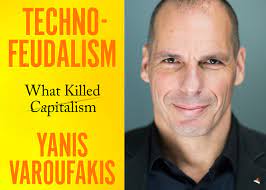
Varoufakis is also absolutely right that one of the factors driving Washington’s new cold war on Beijing is the desire by US Big Tech monopolies to destroy their only competitors, which happen to be Chinese. ………………………….
This observation by Varoufakis hits the nail on the head. Where I think he is wrong is in his claim that China, like the US, is becoming techno-feudal.
There is a fundamental distinction between the two: In the US, capital controls the state; in China, the state controls capital.
In China’s unique system, which it refers to as a socialist market economy and “Socialism with Chinese Characteristics”, roughly a third of GDP comes from massive state-owned enterprises (SOEs), which are concentrated in the most strategic sectors of the economy, such as banking, construction, infrastructure, transportation, and telecommunications.
While it is true that many technology companies in China are private on paper, the reality is much more complicated. The Chinese government has a powerful “golden share” (officially known as a “special management share”) in large firms, such as Alibaba and Tencent, which gives it veto power over important decisions.
Although these large technology companies may not be full state-owned, China’s socialist government ensures that they act in the interest of the country and the people, not simply wealthy shareholders.
The US system is exactly the opposite. Large corporations control the government, and create policy on behalf of wealthy shareholders.
The problem is not just that US corporate monopolies control markets; they create those markets themselves, through their control over digital infrastructure.
As Varoufakis has observed in his discussion of “cloud capital”, Amazon does not just dominate the market; it creates markets — and prevents any potential competitors from creating alternative markets………………………………………………
In the 21st century, the infrastructure of society itself has been privatized.
The solution is clear: the digital infrastructure upon which the modern economy is built must be nationalized and turned into public utilities, like water, electricity, and highways.
That said, the US government nationalizing Silicon Valley Big Tech companies does not solve the problem of the lack of digital sovereignty in other countries.
If Amazon, Apple, Google, and Meta are nationalized, this would still mean the United States has enormous power over nations whose economies rely on this US-controlled digital infrastructure (which, again, is almost all nations everywhere, with the noble exception of China)……………………………………………………………………………………………………………………….
This is a serious problem that should be debated worldwide. There are likely some potential creative solutions………….. https://geopoliticaleconomy.com/2024/08/19/us-big-tech-monopolies-neo-feudalism/
Japan: Removal of nuclear fuel remains in Fukushima will begin on August 22

the first step it will be the recovery of “a few grams” of spent fissile fuel from the plant’s nuclear reactor no. 2.
Large-scale removal of semi-melted fuel rods is expected to be undertaken early in the next decade
Tokyo, August 20 2024, https://www.agenzianova.com/en/news/Japan-the-removal-of-the-remains-of-nuclear-fuel-in-Fukushima-will-begin-on-August-22/
Tokyo Electric Power Company (Tepco), operator of the Japanese Fukushima Daiichi nuclear power plant, will begin on August 22 the delicate operations to recover the remains of nuclear fuel from the reactors damaged in the 2011 disaster. The company announced today that the first step it will be the recovery of “a few grams” of spent fissile fuel from the plant’s nuclear reactor no. 2. Plans call for the gradual expansion of operations to unit #3.
Large-scale removal of semi-melted fuel rods is expected to be undertaken early in the next decade. The removal of radioactive debris contained in the power plant’s reactors is considered the most difficult challenge in the process of decommissioning and disposing of the infrastructure, which was seriously damaged following the devastating earthquake and subsequent tsunami that hit north-eastern Japan 12 years ago. In all, around 880 tonnes of radioactive debris will have to be removed from reactors number 1, 2 and 3 at the nuclear power plant.
Nuclear power on the prairies is a green smokescreen.

By M. V. Ramana & Quinn Goranson, August 19th 2024, Canada’s National Observer https://www.nationalobserver.com/2024/08/19/opinion/nuclear-power-prairies-green-smokescree
On April 2, Alberta Premier Danielle Smith declared on X (formerly Twitter) “we are encouraged and optimistic about the role small modular reactors (SMRs) can play” in the province’s plans to “achieve carbon neutrality by 2050.”
SMRs, for those who haven’t heard this buzzword, are theoretical nuclear reactor designs that aim to produce smaller amounts of electricity compared to the current reactor fleet in Canada. The dream of using small reactors to produce nuclear power dates back to the 1950s — and so has their record of failing commercially.
That optimism about SMRs will be costing taxpayers at least $600,000, which will fund the company, X-Energy’s research “into the possibility of integrating small modular reactors (SMRs) into Alberta’s electric grid.” This is on top of the $7 million offered by Alberta’s government in September 2023 to oil and gas producer Cenovus Energy to study how SMRs could be used in the oil sands.
Last August, Saskatchewan’s Crown Investments Corporation provided $479,000 to prepare local companies to take part in developing SMRs. Alberta and Saskatchewan also have a Memorandum of Understanding to “advance the development of nuclear power generation in support of both provinces’ need for affordable, reliable and sustainable electricity grids by 2050”.
What is odd about Alberta and Saskatchewan’s talk about carbon neutrality and sustainability is that, after Nunavut, these two provinces are most reliant on fossil fuels for their electricity; as of 2022, Alberta derived 81 per cent of its power from these sources; Saskatchewan was at 79 percent. In both provinces, emissions have increased more than 50 per cent above 1990 levels.
It would appear neither province is particularly interested in addressing climate change, but that is not surprising given their commitment to the fossil fuel industry. Globally, that industry has long obstructed transitioning to low-carbon energy sources, so as to continue profiting from their polluting activities.
Canadian companies have played their part too. Cenovus Energy, the beneficiary of the $7 million from Alberta, is among the four largest Canadian oil and gas companies that “demonstrate negative climate policy engagement,” and advocate for provincial government investment in offshore oil and gas development. It is also a part of the Pathways Alliance that academic scholars charge with greenwashing, in part because of its plans to use a problematic technology, carbon capture and storage, to achieve “net-zero emissions from oilsands operations by 2050.”
Carbon capture and storage is just one of the unproven technologies that the fossil fuel industry and its supporters use as part of their “climate pledges and green advertising.” Nuclear energy is another — especially when it involves new designs such as SMRs that have never been deployed in North America, or have failed commercially.
X-energy, the company that is to receive $600,000, is using a technology that has been tried out in Germany and the United States with no success. The last high-temperature, gas-cooled reactor built in the United States was shut down within a decade, producing, on average, only 15 per cent of what it could theoretically produce.
Even if one were to ignore these past failures, building nuclear reactors is slow and usually delayed. In Finland, construction of the Olkiluoto-3 reactor started in 2005, but it was first connected to the grid in 2022, a thirteen-year delay from the anticipated 2009.
Construction of Argentina’s CAREM small modular reactor started in February 2014 but it is not expected to start operating till at least the “end of 2027,” and most likely later. Both Finland and Argentina have established nuclear industries. Neither Alberta nor Saskatchewan possess any legislative capacity to regulate a nuclear industry.
What Alberta and Saskatchewan are indulging in through all these announcements and funding for small modular nuclear reactors is an obstructionist tactic to slow down the transition away from fossil fuels. Discussing nuclear technology shifts attention from present and projected GHG emissions, while enabling a ramp-up of fossil fuel reliance in the medium-term and delaying climate action into the long-term.
Floating the idea of adding futuristic SMR technology into the energy mix is one way to publicly appear to be committed to climate action, without doing anything tangible. Even if SMRs were to be deployed to supply energy in the tar sands, that does not address downstream emissions from burning the extracted fossil fuels.
Relying on new nuclear for emission reductions prevents phasing out fossil fuels at a pace necessary for the scientific consensus in favour of rapid and immediate decarbonization. An obstructionist focus on unproven technologies will not help.
Quinn Goranson is a recent graduate from the University of British Columbia’s School of Public Policy and Global Affairs with a specialization in environment, resources and energy. Goranson has experience working in research for multiple renewable energy organizations, including the CEDAR project, in environmental policy in the public sector, and as an environmental policy consultant internationally.
M.V. Ramana is the Simons Chair in Disarmament, Global and Human Security and Professor at the School of Public Policy and Global Affairs, at the University of British Columbia in Vancouver. He is the author of The Power of Promise: Examining Nuclear Energy in India (Penguin Books, 2012) and “Nuclear is not the Solution: The Folly of Atomic Power in the Age of Climate Change” (Verso Books, 2024).
Meta permanently bans media outlet The Cradle in latest attack on free speech
The Cradle, Mon, 19 Aug 2024, https://www.sott.net/article/494061-Meta-permanently-bans-media-outlet-The-Cradle-in-latest-attack-on-free-speech
On 16 August, Facebook and Instagram parent company Meta permanently banned The Cradle from its social media platforms for allegedly violating community guidelines by “praising terrorist organizations” and engaging in “incitement to violence.”
“No one can see or find your account, and you can’t use it. All your information will be permanently deleted,” reads the message accompanying the ban on Instagram, where The Cradle had surpassed 107,000 followers and amassed millions of views.
“You cannot request another review of this decision,” the message ends, despite the fact the ban came with little warning or any chance for review.
Comment: For the West-Israel, any organisation that it deems to be an opponent can be categorised as ‘terrorist’, and supporting a group’s resistance to the West-Israel’s war of terror can be considered ‘incitement to violence’. Regardless of whether this targeted group’s resistance is considered legitimate under international law; for example: China tells ICJ Palestinians have ‘inalienable right to use armed force’ against Israeli occupation
The Cradle is an independent, journalist-owned news website that covers the geopolitics of West Asia from a West Asian perspective. Since 2021, the publication has made a name for itself by covering regional developments with the kind of breadth and depth – and nuance – that often go missing in mainstream corporate media.
Meta’s accusations of “praising terrorist organizations” and engaging in “incitement to violence” largely stem from posts and videos that relay information or quotes from West Asian resistance movements like Hamas, Hezbollah, and Ansarallah – who are an essential part of the news stories unfolding in a region on the precipice of a major war.
It is also essential to recognize that these are major West Asian political organizations that have deep institutional and civic roots within Lebanon, Palestine, and Yemen and are part of the very fabric of these societies. They are represented in governance, run schools, hospitals, and utilities, and disperse salaries to millions of civilian workers.
Ironically, many of The Cradle’s Meta-flagged quotes on these organizations also come from Israeli and western officials:
“The intelligence information that Hezbollah has collected is accurate at the level of an advanced western intelligence organization, with observation capabilities, accurate intelligence gathering, and real-time documentation … There is almost no target in the north that Hezbollah cannot hit with over 50 percent success.” – Meta claims this two-month old post violated its guidelines, despite the quotes coming from Israeli journalists and officials.
Other posts that Meta claimed violated its rules included a reel on protesters breaking into an Elbit factory in the UK; a news headline image that reads “Israeli army approves plans for offensive on Lebanon“; and a quote from a Hamas official in Lebanon on how the “[Gaza] support fronts … achieved their goal.”
Although The Cradle had occasionally run afoul of Meta’s frustratingly unspecific community guidelines – which the publication always addressed immediately – matters appeared to come to a head following the 31 July assassination of Hamas Politburo Chief Ismail Haniyeh, when the company owned by US billionaire Mark Zuckerberg significantly tightened its grip on free speech.
In the days after Haniyeh’s assassination, Meta took down 10 posts from The Cradle’s Instagram account over 48 hours. These ranged from quotes by Hamas officials and Hezbollah Secretary-General Hassan Nasrallah condemning massacres in Gaza and the Israeli strikes in Tehran and Beirut, videos released by local resistance factions clashing with the Israeli army in Gaza, and even news headlines about Haniyeh.
One of the posts removed for violations was a headline that read, “Hamas calls for ‘day of rage’ following assassination of Haniyeh.” Another was a carousel of image quotes by Hezbollah Secretary-General Hassan Nasrallah, addressing the assassinations in Beirut and Tehran, and a likely response.
Meta informed The Cradle for the first time in early August, “You could lose our account in the future if you kept violating Meta’s community guidelines.”
Days later, Meta issued its permanent ban, targeting The Cradle’s main Instagram account and a backup account that had not violated any of the company’s guidelines. Hours later, the company disabled The Cradle’s Facebook page, which was not directly linked to the Instagram account and was registered under a completely different email. Meta clarified in its message regarding permanently removing the backup account that it does not allow “creating another account after we’ve suspended yours.” The backup account was created before the suspension.
We believe that this serves as evidence that Meta was targeting The Cradle in its entirety.
The Cradle’s business account on Instagram was clearly identified from the onset as a ‘news website/media’ company.
Other news pages on Meta, such as Middle East Eye and Al Jazeera, post similar footage and content – videos released by Hamas and Hezbollah, for example – and appear free to do so without having their posts removed. The Cradle’s description of these posts has been strictly neutral throughout.
Comment: The difference is that The Cradle is much more explicit in revealing the lies, hypocrisy, and corruption. These other outlets tend to adopt analysis that is erroneously ‘balanced’.
Project 2025: The right-wing conspiracy to torpedo global climate action

Bethany Kozma, a former Trump-era USAID official, said that future appointees “will have to eradicate climate change references from absolutely everywhere.”
Bethany Kozma, a former Trump-era USAID official, said that future appointees “will have to eradicate climate change references from absolutely everywhere.”
Bulletin, By Michael E. Mann | August 16, 2024
Summer 2024 saw another round of devastating heat waves, droughts, wildfires, storms, and record-setting global temperatures. The window for averting a catastrophic 1.5 degrees Celsius (3 degrees Fahrenheit) warming of the planet is rapidly closing. Can we meet this moment? I suppose it depends on whom you ask. For this is a tale of two worldviews.
In one—based on facts and evidence—environmental policy is motivated by science and reason, with the intent of advancing the common good and the sustainability of our civilization and our planet. The climate crisis is seen as the defining challenge of our time, demanding immediate and urgent action.
In the other—steeped in myth and conspiratorial ideation—environmental threats are an elaborate ruse perpetrated by scientists and politicians on the take, and environmental sustainability is a Trojan horse, a tool used by “globalists” to instill a new socialist world order. Climate change is a hoax perpetrated by environmental extremists.
Nothing better illustrates this yawning chasm in worldview than two deceptively similar-sounding projects known as the fact-based “Agenda 2030” and the conspiracy-rife “Project 2025.”
The first, “Agenda 2030,” is a United Nations program for Sustainable Development unanimously adopted by UN member nations on September 25, 2015. Agenda 2030 supports a set of 17 global Sustainable Development Goals, or “SDGs,” promoting “peace and prosperity for people and the planet” and the social, economic, and environmental sustainability of our civilization. Among its priorities are the health of the planet’s oceans and forests and the overriding threat of human-caused climate change.
I’ve contributed to the program personally. Back in 2018, I developed a free online course for the SDG Academy, which the UN describes as the “premier source of high-quality resources and guidance on education for the SDGs, with the mandate to enrich the field of sustainable development and advance Agenda 2030.” My course, which is still offered today (so far more than 35,000 people have taken it) is entitled “Climate Change: The Science and Global Impact.” Its stated purpose is that “we need to understand the science behind global warming to avoid the most damaging and irreversible climate change impacts on people and planet.”
So perhaps I’m a bit personally invested in Agenda 2030 and its mission to educate the public and policymakers about the climate crisis. But it is objectively disturbing to see that program attacked in such bad faith by the right. Representative of the assault is the plutocrat and dark money-funded Heritage Foundation, which has denounced Agenda 2030 as “hopelessly flawed from the start,” “replete with imprecise goals and targets,” “senseless, dreamy, and garbled,” and “[the] antithesis of a focused development strategy.” They insist, in fact, that “the US should call out the SDGs for their ineffectiveness and call for a re-evaluation of this failed endeavor.” Strong language. We’ll return to the Heritage Foundation and their role in all of this in a bit.
Agenda 2030, indeed, possesses all the elements despised by the bad actors who help manufacture and promote far-right conspiracy theories. Like the much-vilified Intergovernmental Panel on Climate Change (IPCC), Agenda 2030 operates under the auspices of the United Nations, feeding the fears of the “one world government,” right-wing fever swamp.
Its laudable goals of reducing poverty, hunger, and social inequality play into conservative fears of “socialism.” Its focus on environmental sustainability feeds the “watermelon” (green on the outside, red on the inside) framing that has for so long been used by conservative influencers seeking to weaponize their base against environmental action.
As a result, social media is now rife with the claim that Agenda 2030 is part of a left-wing global socialist plot against individual liberty and freedom, an excuse for even more pervasive and long-lasting pandemic-like lockdowns.
Now, let’s talk about “Project 2025,” a 900-page plan drafted by the aforementioned Heritage Foundation to implement a far-right policy agenda in the United States. If implemented—by a second Trump administration, for example—it would shrink the federal government, putting thousands of civil servants out of work. It would further expand the powers of the president. It would dismantle the Department of Education, impose massive tax cuts, and halt the sale of the abortion pill. It would cancel the National Weather Service and privatize all its meteorological data.
Project 2025 would gut the EPA, which is responsible for enforcement of environmental policies, and it would reverse the EPA’s 2009 “endangerment finding” that classified carbon dioxide as a pollutant to be regulated under the Clean Air Act. It would eliminate the National Oceanic and Atmospheric Administration (NOAA), which monitors changes in our atmosphere, oceans and climate. Project 2025 would eliminate clean energy loan programs at the Department of Energy and remove climate change—one of the greatest national security threats we face—from the National Security Council agenda. It supports more oil drilling in the environmentally sensitive Arctic and asserts that the government has an “obligation to develop vast oil and gas and coal resources.”
Trump and Project 2025 are inextricably linked in numerous ways. Project 2025 was written for Trump, by Trump affiliates, who will staff the various agencies in a prospective second term. Six of the report authors are former Trump cabinet officials. Trump’s vice presidential candidate, J.D. Vance, wrote the foreward for a book about it (Dawn’s Early Light: Taking Back Washington to Save America), written by Heritage Foundation president and Project 2025 brainchild Kevin Roberts. Roberts briefed Trump about Project 2025 during its nascent stages back in 2022 on a private flight to a Heritage Foundation conference where Trump went on to say that the effort would “lay the groundwork and detail plans for exactly what our movement will do.”
ProPublica recently obtained more than 14 hours of videos from the Project 2025 Presidential Administration Academy, an online training archive to prepare incoming political appointees in a prospective Trump administration so they can hit the ground running from day one; 29 of the 36 speakers in the series are connected to Trump either through this campaign or his previous presidency. Among the instructions given in the academy, Bethany Kozma, a former Trump-era USAID official, said that future appointees “will have to eradicate climate change references from absolutely everywhere.”
Trump and his co-conspirators were obstructed by their own incompetence during his first term. That proved to be a saving grace from the standpoint of environmental and climate policy. The whole point of Project 2025 is to make sure they don’t repeat that mistake and instead, go in with a detailed, comprehensive blueprint that will allow them to fast track their agenda.
We face a planetary-scale threat in the form of a prospective Trump second term and a radicalized GOP intent on implementing, in Project 2025, the most extreme, anti-environmental policy agenda in American history. In all likelihood, it would mean the end of meaningful global climate action at this critical juncture. The fate of our planet quite literally hangs in the balance. It’s something for all Americans to think about as they prepare for the pivotal 2024 election. https://thebulletin.org/2024/08/project-2025-the-right-wing-conspiracy-to-torpedo-global-climate-action/
1 This Month

petition to oppose the rapid increase of space-military industry threatening Jeju Island and the region.
[Petition by April 19th (KST)] Stop the joint military-Hanwha Systems-Jeju Provincial Government Sea Launch!
World Nuclear Power. Reactors 1951-2026, 75 Years of Nuclear Power.
Interactive Map– https://dv.worldnuclearreport.org/

Chernobyl: The Lost Tapes – A good documentary on Chernobyl on SBS available On Demand for the next 3 weeks– https://www.sbs.com.au/ondemand/tv-program/chernobyl-the-lost-tapes/2352741955560

of the week–London Campaign for Nuclear Disarmament


Tell the Ukrainian Government to Drop Prosecution of Peace Activist Yurii Sheliazhenko
To see nuclear-related stories in greater depth and intensity – go to https://nuclearinformation.wordpress.com
-
Archives
- April 2026 (194)
- March 2026 (251)
- February 2026 (268)
- January 2026 (308)
- December 2025 (358)
- November 2025 (359)
- October 2025 (376)
- September 2025 (257)
- August 2025 (319)
- July 2025 (230)
- June 2025 (348)
- May 2025 (261)
-
Categories
- 1
- 1 NUCLEAR ISSUES
- business and costs
- climate change
- culture and arts
- ENERGY
- environment
- health
- history
- indigenous issues
- Legal
- marketing of nuclear
- media
- opposition to nuclear
- PERSONAL STORIES
- politics
- politics international
- Religion and ethics
- safety
- secrets,lies and civil liberties
- spinbuster
- technology
- Uranium
- wastes
- weapons and war
- Women
- 2 WORLD
- ACTION
- AFRICA
- Atrocities
- AUSTRALIA
- Christina's notes
- Christina's themes
- culture and arts
- Events
- Fuk 2022
- Fuk 2023
- Fukushima 2017
- Fukushima 2018
- fukushima 2019
- Fukushima 2020
- Fukushima 2021
- general
- global warming
- Humour (God we need it)
- Nuclear
- RARE EARTHS
- Reference
- resources – print
- Resources -audiovicual
- Weekly Newsletter
- World
- World Nuclear
- YouTube
-
RSS
Entries RSS
Comments RSS
 nuclear-news