Molten salt reactors were trouble in the 1960s—and they remain trouble today

Many molten salt reactor developers and proponents seem to have decided that the Molten Salt Reactor Experiment experience was so successful that all that remains is for it to be scaled up and deployed across the world. But is this really the case? A careful look suggests otherwise.
A few years after the Molten Salt Reactor Experiment was shut down, the Atomic Energy Commission terminated the entire molten salt reactor program, although it continued to fund the molten salt breeder reactor program until the end of fiscal year 1976.
Bulletin, By M.V. Ramana | June 20, 2022
Molten salt nuclear reactors are all the rage among some nuclear power enthusiasts. They promise designs that will soon lower emissions from shipping, be cheaper to run and consume nuclear waste, and be transportable in shipping containers. The Canadian government has provided two companies, Terrestrial Energy and Moltex, with tens of millions of dollars in funding. Indonesia’s Ministry of Defense has sponsored a study of thorium-based molten salt reactors. The International Atomic Energy Agency organized a webinar calling molten salt reactors “A game changer in the nuclear industry.” Unsurprisingly, China has plans to build one.
Unlike other nuclear reactor designs that can claim multiple roots, the technology underlying molten salt reactors has a fairly clear origin: the Oak Ridge National Laboratory in Tennessee. All molten salt reactors are based, in one way or another, on the Molten Salt Reactor Experiment that operated at Oak Ridge from 1965 to 1969. That experimental reactor, in turn, was based on another experimental reactor, the Aircraft Reactor Experiment, that had operated a decade earlier at the same facility.
Among developers, the Molten Salt Reactor Experiment has a legendary status. For example, in 2015, an official from Terrapower, the nuclear venture funded in part by Bill Gates, noted that his company was “excited to celebrate and build upon” the experiment by designing a molten chloride fast reactor. His accompanying slide show reinforced the message with pictures of the Molten Salt Reactor Experiment assembly, the red hot heat exchanger, and Alvin Weinberg, the leader of Oak Ridge at that time, noting that the experiment had operated for 6,000 hours. Also in 2015, Terrestrial Energy’s David LeBlanc made “a kind of pilgrimage to Oak Ridge” to celebrate the 50th anniversary of the Molten Salt Reactor Experiment becoming critical.
Many molten salt reactor developers and proponents seem to have decided that the Molten Salt Reactor Experiment experience was so successful that all that remains is for it to be scaled up and deployed across the world. But is this really the case? A careful look suggests otherwise.
Molten salt reactors’ early history. Molten salt reactors go back to the US Air Force’s failed effort to build a nuclear-powered, long-range bomber aircraft. The Air Force spent more than $1 billion (over $7 billion in today’s dollars) between 1946 and 1961 on its Aircraft Nuclear Propulsion program. President John F. Kennedy, seeing how little had been achieved, told Congress on March 28, 1961 that the possibility of success in the foreseeable future was “still very remote” and recommended terminating the program.
As part of this effort, the Air Force made Oak Ridge National Laboratory responsible for building the Aircraft Reactor Experiment as part of its effort to fly a bomber on nuclear power. The 2.5 megawatt reactor operated for a mere nine days in November 1954. Some Oak Ridge officials considered running the reactor longer, but others grew concerned about overheating of one of the reactor components. That concern was legitimate; five days later, this component failed and “released radioactive gas into the reactor compartment.” But Oak Ridge National Lab officials were undeterred. For them, the experience showed “the feasibility of molten-salt fuel” and they “persuaded the Atomic Energy Commission to fund a study of molten-salt power reactors.” In 1958, the commission did just that, and thus began the Molten Salt Reactor Experiment.
To understand the interest in molten salt reactors, start by adopting a 1950s mindset. At the time, nuclear power was expected to expand rapidly, and some energy planners were worried that there would be insufficient uranium to fuel all the reactors to be built over upcoming decades. Alvin Weinberg, the head of Oak Ridge, expressed this eloquently when he prophesized that humanity would need to “burn the rocks” in what are called breeder reactors in order to live a “passably abundant life.” While the dominant types of reactors around the world (light water reactors and heavy water reactors) use only a small fraction of the uranium and thorium found in the Earth’s crust, breeder reactors can exploit a much larger fraction of these minerals.
The concern among nuclear power advocates about running out of uranium was also at the heart of another major nuclear development during this period: the liquid metal (sodium) cooled fast breeder reactor. These reactors were an effort to tap the energy present in the uranium-238 isotope that is not used in standard light and heavy water reactors by converting it into plutonium. Glenn Seaborg, who discovered the element and rose to become Chairman of the US Atomic Energy Commission from 1961 to 1971, predicted in 1970 that, by the year 2000, plutonium “can be expected to be a predominant energy source in our lives.” By contrast, the molten salt reactors were mostly intended as a pathway to use thorium, which was more plentiful than uranium, by converting it into uranium-233.
In retrospect, these expectations proved mistaken in three ways. First, energy demand has risen much more slowly, both in the United States and globally, than predicted. For example, in 1959, Weinberg assumed that the global population would stabilize at 7 billion and that it would need at least 1.9 billion, billion BTU per year. In comparison, in 2020, the world used a little over a quarter of this level of energy for nearly 8 billion people.
Second, nuclear energy proved much more expensive than envisioned in the heady “too cheap to meter” era. As nuclear power’s poor economics became apparent, reactor construction declined dramatically and has never achieved anywhere near the levels seen in the 1970s and 1980s………………………………………………………
Third, uranium proved to be more ubiquitous than anticipated, and global uranium resource estimates have continuously increased. ………………………………………..
…..the Molten Salt Reactor Experiment, Oak Ridge’s proposal for the next step in the molten salt reactor research process, was designed and constructed. As one of the Oak Ridge team leaders described it, “Design of the [Molten Salt Reactor Experiment] started in the summer of 1960, and construction started 18 months later, at the beginning of 1962. The reactor went critical in June 1965.”
In 1965, when the reactor started operating, it was fueled by a mixture of 150 kilograms of depleted uranium and 90 kilograms of weapons-grade, highly-enriched uranium (93 percent of uranium-235). After March 1968, the fuel was changed to one involving another weapons-usable material, uranium-233, which was derived from thorium. After this switch, the Molten Salt Reactor Experiment went critical in October 1968 and reached full power in January 1969. But at the end of that year, the experiment shut down. No more molten salt reactors have been built since.
The Molten Salt Reactor Experiment operation. Proponents of molten salt reactors have claimed for decades that the Molten Salt Reactor Experiment operated successfully. Indeed, they started making this claim even when it had barely started operating. In May 1966, for example, Paul Haubenreich, Oak Ridge National Laboratory associate director, cockily announced that the experiment “will live up to the name which we think goes with the initials M.S.R.E.—Mighty Smooth Running Experiment.” This, after listing many problems, including a basic one that was never resolved.
That basic problem was the reactor’s power level. The Molten Salt Reactor Experiment was designed to produce 10 megawatts (MW) of heat. The power level is given only in terms of heat production because its designers did not even try to generate electricity from the power produced in the reactor. Instead, the experiment just dissipated the heat produced to the surrounding air.
But this design power level was never reached. As Haubenreich described while pronouncing that the experiment was running “mighty smooth,” the operators “ran into some difficulties” and could only operate “at powers up to 5 MW.” …………………It turned out that the designers of the reactor had “miscalculated the heat transfer characteristics” of the system used for dissipating the heat produced into the atmosphere, and the reactor could not operate at its intended power level.
……………the reactor operated for just 13,172 hours over those four years, or only around 40 percent of the time……………….
During its operational lifetime, the Molten Salt Reactor Experiment was shut down 225 times. Of these 225 interruptions, only 58 were planned………………….
One persistent problem was with the electrical system, which experienced “eleven important failures.”…………………………………….. unexpected failures and shutdowns ended only in December 1969, when the Molten Salt Reactor Experiment was shut down.
The patchy experience of the experiment was by no means unique. Many other reactor designs have been plagued by unreliable operations and frequent shutdowns, that in many cases only became worse when scaled up. Consider, for example, sodium cooled fast breeder reactors. France, the country most reliant on nuclear power, tried to commercialize this technology after operating pilot-scale and demonstration reactors. This “commercial” version was the Superphénix, which started operating in 1986, experienced a series of accidents, and was shut down in 1997. During this period, it generated less than 8 percent of the electrical energy of what it would have generated running at full power round-the-clock. In the United States, the first and only commercial sodium cooled breeder reactor, Fermi-1, suffered a disastrous meltdown in 1966 as a result of a series of failures that had been dismissed as not credible by reactor engineers. Likewise, high-temperature, gas-cooled reactors have historically performed poorly.
The Molten Salt Reactor Experiment aftermath. For Oak Ridge officials and other molten salt reactor proponents, these problems with the Molten Salt Reactor Experiment were not worthy of significant concern. They moved forward with plans to build a larger molten salt breeder reactor. (Remember that the ultimate goal was to use thorium to breed nuclear fuel.) But the experiment did identify major hurdles in the path of building reliable molten salt reactors.
Here’s a key concern: Materials used to manufacture molten-salt-reactor components must maintain their integrity in highly radioactive and corrosive environments at elevated temperatures. The corrosion is a result of the reactor’s nature, which involves the use of a fuel consisting of uranium mixed with the hot salts for which the reactor is named. As anyone living near a seashore knows, chemically corrosive salt water eats most metallic objects.
To deal with this problem, Oak Ridge developed a new alloy known as IN0R-8 or Hastelloy-N in the late 1950s. While Hastelloy-N did not get significantly corroded—at least during the four years of intermittent operations—it had two significant problems. First, the material had trouble managing stresses. It became brittle, for example. Second the material developed cracks on surfaces exposed to the fuel salt. Both of these could lead to the component failing.
These problems remain relevant. Even today, no material can perform satisfactorily in the high-radiation, high-temperature, and corrosive environment inside a molten salt reactor. In 2018, scientists at the Idaho National Laboratory conducted an extensive review of different materials and, in the end, could only recommend that “a systematic development program be initiated.” In other words, fifty years after the molten salt reactor was shut down, technical experts still have questions about materials development for a new molten salt reactor design.
A few years after the Molten Salt Reactor Experiment was shut down, the Atomic Energy Commission terminated the entire molten salt reactor program, although it continued to fund the molten salt breeder reactor program until the end of fiscal year 1976…………………………………………………………………………………………………………………………
The Atomic Energy Commission, for its part, justified its decision in a devastating report that listed a number of problems with the large molten salt reactor that Oak Ridge scientists had conceptualized. The list included problems with materials, some of which have been earlier described; the challenge of controlling the radioactive tritium gas that is produced in molten salt reactors; the many large components, such as steam generators, that woud have to be developed from scratch (as researchers had no experience with such components for a molten salt reactor); the difficulties associated with molten-salt-reactor maintenance because radioactive fission products would be dispersed throughout the reactor; some safety disadvantages (though these are balanced by pointing out some of the safety advantages); and problems with graphite, which is used in molten-salt-reactor designs to slow down neutrons, because it swells when subjected to the nuclear reactor’s high radiation doses.
Other institutions too questioned the idea. A 1975 Office of Technology Assessment report listed the pros and cons of maintaining support for the molten salt breeder reactor program. An important set of arguments listed there proved prescient: “the [molten salt breeder reactor] may never work, its economics would be doubtful even if it did, and the chances of needing it are small.” As a result, in the years after the Molten Salt Reactor Experiment was shut down, many arguments were advanced to abandon the molten salt route, including not throwing good money after bad.
The Molten Salt Reactor Experiment’s long difficult tail.………………………………………………………. The distribution of the numbers of papers indicates the challenge of dealing with the waste resulting from a small molten salt reactor.
Dealing with radioactive salt wastes involves at least two separate concerns. The first, ongoing problem is that managing the radioactive salts that contain the uranium isotopes and the fission products is difficult. In the 1990s, researchers discovered that uranium had migrated and settled in other parts of the facility, leading to the possibility of an accidental criticality.
The second challenge is that of securely storing the uranium-233 from the Molten Salt Reactor Experiment. Although the uranium-233 used in the Molten Salt Reactor Experiment is but a small part of the larger US stockpile of the substance, it occurs in chemical forms that are difficult to manage. Further, urarnium-233 is usable in nuclear weapons, and any loss of this material might lead to security concerns.
In all, the costs incurred so far have run into the hundreds of millions of dollars—dozens of times the cost of constructing the reactor itself. …………………………………………………………………………………
Molten salt reactors are a bad idea. The Molten Salt Reactor Experiment’s history is riddled with extensive problems, both during its operational lifetime and the half century thereafter. These problems were not accidental but a result of the many material challenges faced by the reactor itself………………………………………………………………..
Should molten salt reactors ever be constructed, they are unlikely to operate reliably. And if they are deployed, they would likely result in various safety and security risks. And they would produce several different waste streams, all of which would require extensive processing and would face disposal related challenges. Investing in molten salt reactors is not worth the cost or the effort.
This article has benefited from research support from Maggie Chong, a materials engineering student at the University of British Columbia. une 2022
https://thebulletin.org/2022/06/molten-salt-reactors-were-trouble-in-the-1960s-and-they-remain-trouble-today/
The heroes who saved the world from Chernobyl Two.
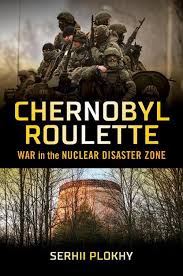
they were facing a life-or-death decision – stay or go. The Russians had told them they could leave – but what would happen if there was no one to monitor the radiation and ensure its safety?
the choices they made saved the world from another Chernobyl disaster.
Daily Mail, By Serhii Plokhy, 25 August 2024
Even though he had one of the most challenging jobs in the world as the man in charge of the night-shift at the Chernobyl nuclear power station, nothing fazed Valentyn Heiko. Three-and-a-half decades after the disastrous meltdown in 1986, round-the-clock monitoring of the site in Ukraine continued for deadly radioactive fallout from its defunct reactors and facilities.
On March 1, 2022, Heiko wished staff via loudspeaker ‘peace of the spirit’. It was a brave and apt message in the circumstances – and a defiant one. Because the corridors around the control rooms of the closed – but still lethally contaminated – nuclear compound were being patrolled by machine-gun toting, trigger-happy Russian soldiers.
Following Vladimir Putin’s invasion of Ukraine six days previously, they had burst their way in and taken over the plant.
Back in 1986, a massive explosion in one of Chernobyl’s reactors had blasted about 300 tons of radioactive graphite into the air, sparking a worldwide emergency.
With the collapse of the Soviet Union five years later, the area became part of an independent Ukraine, whose nuclear specialists have since been undertaking the monumental task of containing all possible contamination.
The danger was far from over. Indeed, just a year before, engineers had detected worrying signs that fission had restarted in one of the supposedly defunct reactors, threatening another accident.
After Putin’s decision to invade, the quickest route to the capital, Kyiv, was to go through the wasteland of the Chernobyl exclusion zone. One of the Russian leader’s excuses for invading was his claim that Ukraine was secretly building a nuclear bomb there and enriching irradiated materials to turn into weapons of mass destruction.
On February 24, 2022 – the first day of the invasion – a column of armoured vehicles broke through the security perimeter and hauled down the Ukrainian flag.
Inside the administrative building, soldiers of the Ukrainian National Guard unit took up positions, ready to fight. Two Russian officers, general Sergei Burakov and colonel Andrei Frolenkov, announced that they were assuming control of the plant.
Hopelessly outnumbered, the 170 Ukrainian guards put down their weapons and became prisoners of war, while the plant’s 50 engineers and operators and 80 firefighters found themselves under occupation.
Suddenly, they were facing a life-or-death decision – stay or go. The Russians had told them they could leave – but what would happen if there was no one to monitor the radiation and ensure its safety?
They knew they had to stay. So, for weeks, they worked at gunpoint with no change of clothing, medication or hygienic supplies.
In effect, these men and women were hostages, stuck on an endless shift, uncertain if they would ever see their loved ones or their homes again. But the choices they made saved the world from another Chernobyl disaster.
Their foreman, Heiko, had to cooperate with the Russians but was determined to do so on his own terms. He came up with a daring plan – he would use his technical know-how to frighten them.
Calmly, he introduced himself to his captors: ‘I am the shift supervisor and represent the state of Ukraine.’ After Heiko had confirmed the identity of his Russian ‘guests’, Burakov and Frolenkov declared that the Chernobyl plant was now behind Russian lines.
Though a captive, Heiko laid down his ground rules. He told them that no matter how powerful the Russian military, at the nuclear plant they were not in charge.
They didn’t understand how the plant worked and, as such, any interference would risk nuclear disaster – and all their lives.
As one observer noted: ‘He made it clear to the occupiers that either they would behave decently or be up s**t creek. That is why they did not touch any workers.’
They agreed his terms. Operational control would remain in the hands of the staff, who would be free to move around as necessary and without interference.
The Russian soldiers were allowed in the administration building but would stay away from the obsolete reactor and spent nuclear fuel facilities, and arms would be prohibited in operational areas.
The Russians accepted that they had captured a dangerous site and, to survive, they would have to follow Heiko’s recommendations.
He even bamboozled them into believing that three reactors were still operational when, in fact, the last one had shut in 2000.
As the days of occupation continued, Heiko turned the screws even more, particularly after Putin hinted at the use of nuclear weapons. He told his captors that if the Kremlin used nuclear weapons against Ukraine, he would sabotage the plant and unleash Chernobyl radiation to kill the Russians.
‘I promise you,’ he spelt out, ‘that you will slowly and certainly die here, together with me. I have enough knowledge and skill to ensure that you will remain here with us forever.’
Despite Heiko’s master manipulation, his fellow Ukrainian staff were totally unprepared for the situation they found themselves in. They lived and worked in appalling conditions, jammed into tiny spaces, four to a room
The work was unrelenting. Under normal circumstances, they were to take a 24-hour rest after a 12-hour shift, but now a new shift began immediately after the previous one. ‘We worked almost round the clock, resting for just a few hours,’ remembered engineer Liudmyla Kozak. ‘We were walking around like ghosts.’
Exhausted and homesick, they felt hunted as they were continuously under surveillance. Some succumbed to depression or panic, feeling ‘trapped, stressed and desperate for relief’ in the words of an article in the Wall Street Journal.
………………………………………..Troops started searching for those ‘nuclear bomb’ laboratories imagined by Putin. All the plant’s buildings were checked, with no result. Then, Russian officers considered opening up the mounds of earth erected over the sites where radioactive debris had been buried after the meltdown in 1986.
Valerii Semenov, a senior engineer, told them they were mad as exposing radioactive debris would put everyone in danger of contamination. Faced with the prospect of digging their own radioactive graves, the Russians desisted. Instead, they fortified their military position by digging trenches.
When Semenov discovered sandbags used to protect firing positions had been sourced from contaminated earth, he exploded: ‘You’re bringing in radioactive dirt from outside. Are you out of your mind?’ He also found trenches dug in some of the most contaminated areas – including one where, in 1986, radiation had discoloured the pine trees ginger brown.
The fact was that morale among the 1,000 Russian troops occupying the plant was very low. They drank heavily, with up to half of their rubbish consisting of empty bottles. Fights were frequent. So was looting as they combed the offices for alcohol.
Semenov recalled that many of the Russians were not prepared for a long war. They had expected it to be over within days.
What happened next was arguably the most heroic episode of the whole Chernobyl saga. It was increasingly obvious that staff at the plant had had enough. Even the Russian commanders agreed, realising the exhaustion and resentment of the Ukrainian personnel might lead to an accident that would jeopardise the lives of the occupiers.
They proposed a change of shift, allowing those on duty ever since the occupation to go home, to be replaced by a crew from the nearby town of Slavutych. But this depended on finding experienced staff prepared to risk their freedom – and perhaps their lives – by going into Russian captivity.
Amazingly, there was no lack of volunteers. Forty-six men and women came forward, with two senior men, Volodymyr Falshovnyk and Serhii Makliuk, offering to lead the new shift. Makliuk recalled: ‘We were worried because we were going into the unknown. But our anxiety was less about how we would work at the plant and more what would happen to the families we were leaving behind.’
It was a complicated process getting the original shift out and the new one in, not least because it had to be done in stages so there would always be some staff left to monitor the place. On the 26th day of what had begun as a 12-hour shift, 50 workers were on their way home – 16 engineers and mechanics stayed, including Semenov.
The two shifts met on the side of a river and the exchange took place. ‘We had just seconds to embrace and shed tears,’ recalled a woman from Heiko’s shift.
Heiko considered the volunteers true heroes. ‘They were going into the unknown,’ he said later. ‘No one knew how it would end or how long they would be there.’
Heiko and his crew had spent 600 hours on duty at the occupied nuclear power plant. It was anyone’s guess how long the replacement shift would be there………………………………………………………….
the Russians locked Falshovnyk in his office and presented him with a document.
It was titled ‘Act of Acceptance and Transfer of Protection of the Chernobyl Atomic Station’ and stated the troops of the Russian Guard had provided ‘reliable protection and defence’ of the Chernobyl nuclear station, which they were now transferring back to the Ukrainians. Men carrying automatic rifles demanded that he and Makliuk sign the document or they would be arrested.
They were being asked to confirm that the Russians had behaved well but, faced with the threat of arrest, they signed.
And then, the Russians were gone. A security camera captured an image of one soldier leaving with a Russian flag trailing behind him like the low-hanging tail of a defeated dog.
The next day, April 3, those inside the plant were astonished to hear a voice on a loudspeaker coming from beyond the perimeter. ‘Good morning,’ it said. ‘We are the armed forces of Ukraine. Please let us in.’
And then a Ukrainian armoured personnel carrier and two trucks rolled into Chernobyl.
It really was over.
The Chernobyl staff got to work cleaning up. The extent of the Russian troops’ damage and looting was astounding.
Missing were some 1,500 meters for checking radiation levels, 698 computers and 344 vehicles, amounting to a total value of $135million (£102million).
The only thing the retreating Russian soldiers left behind was an increased level of radiation – up more than 40 times, almost certainly the result of digging trenches in the highly contaminated Red Forest.
There were unverified reports from inside Russia that one soldier had died, 26 had been admitted to hospital and 73 sent for treatment after exposure to radiation in the Chernobyl zone.
The Ukrainians believed that one reason they departed in such a hurry was in panic that so many of them were falling sick.
The Russian troops may have left Chernobyl, but there was every chance that Chernobyl would never leave them. And the threat of nuclear disaster remains very real elsewhere in Ukraine.
Zaporizhia, a nuclear plant in southern Ukraine and the largest power facility in Europe, remains under Russian control.
And last Saturday, following a drone strike nearby, the UN’s nuclear watchdog warned that the safety situation at the plant was ‘deteriorating’.
At Chernobyl, the brave actions of the plant workers prevented nuclear disaster, but we cannot always count on individual heroism to produce such endings in the future.
Unless the world acts to protect nuclear reactors from attack during wartime, instead of being a solution to the problem of climate change, nuclear power will solidify its reputation as the destroyer of worlds.
Adapted from Chernobyl Roulette by Serhii Plokhy (Allen Lane, £25), out on September 3. © Serhii Plokhy 2024. To order a copy for £22.50 (offer valid to 06/09/24; UK P&P free on orders over £25) see tomailshop.co.uk/books or call 020 3176 2937
The Battle of Kursk probably won’t result in nuclear weapons use against Ukraine. But Russian escalation vis-à-vis NATO can’t be ruled out.
any nuclear use against Ukraine would be self-defeating for Russia.
involvement of the West turned Russia’s so-called “special military operation” (“SVO” in Russia) into a full-scale war. Consequently, nuclear signaling has been addressed to the West.
Russia’s central concern is the possible Western involvement in the war on the side of Ukraine, which can turn the tide at the front line. The most visible cause for such concern is the provision of modern Western arms to Ukraine, including long-range missiles capable of targeting deep into Russian territory.
Bulletin, By Nikolai N. Sokov | August 26, 2024
The successful Ukrainian offensive in the Russian Kursk oblast started in early August has once again triggered speculation about possible Russian nuclear use against Ukraine. The situation resembles the successful Ukrainian offensive in the late summer-fall of 2022 in the Kharkiv oblast, when many worried Russia would resort to battlefield nuclear use to stop advancing Ukrainian forces. On the face of it, there was reason to be concerned: Russian President Vladimir Putin did reference nuclear weapons in September 2022, and it became known more than a year later that the United States was “rigorously” preparing for that contingency.
A closer look reveals, however, that Putin’s 2022 reference to nuclear weapons sounded as an emotional impromptu remark made under stress, whereas the US assessment was reportedly based on an intercept of conversations among Russian generals rather than on tangible signs of preparation or data about discussions among policymakers. We now know that Moscow dealt with that situation in a different way: Partial mobilization helped beef up forces, which stopped the Ukrainian Kharkiv offensive.
Although the Kursk operation caught Russia by surprise once again, its military and civilian leadership are better prepared today to deal with surprise than in 2022.
One has reasons to be skeptical about the prospect of battlefield use of nuclear weapons. It was considered an acceptable option during the Cold War, especially its early years. Both the United States and the Soviet Union held large-scale exercises with live nuclear explosions in the 1950s, and both nuclear powers contemplated large-scale use of tactical nuclear weapons in Europe. Today, however, is different. The “nuclear taboo,” which began to take shape in the 1950s, has grown very strong.
Not that nuclear use is technically impossible. But the political and ethical implications make such a decision daunting—and unlikely. Battlefield nuclear use in Ukraine, for whatever reason, would make Russia a true pariah state in the international system, turning countries—partners and neutrals alike, all critical for breaking the tight sanctions regime, which has been established by the G7 economies and their partners—against Moscow. In other words, any nuclear use against Ukraine would be self-defeating for Russia.
Nuclear signals. Russian nuclear signaling has been persistent, going up and down throughout the war, with high points in the fall of 2022 and the spring of 2024, when Russian official rhetoric was the loudest. (Unofficial and semi-official rhetoric has never really stopped.) This signaling, however, has been exclusively and explicitly directed at the West—the United States and its allies. Even the very first statement of Putin announcing the “special military operation” contained a message to the West: “Do not interfere.”
This is hardly surprising: The war is conceptualized in Russia as a proxy war with NATO. Putin’s spokesman, Dmitry Peskov, has repeatedly said—most recently in March and June of this year—that involvement of the West turned Russia’s so-called “special military operation” (“SVO” in Russia) into a full-scale war. Consequently, nuclear signaling has been addressed to the West.
The Ukrainian operation in Kursk may carry certain risks, but these risks are different from what is commonly and hastily assumed as nuclear use against Ukraine.
Russia’s central concern is the possible Western involvement in the war on the side of Ukraine, which can turn the tide at the front line. The most visible cause for such concern is the provision of modern Western arms to Ukraine, including long-range missiles capable of targeting deep into Russian territory.
At a certain level, Western assistance may create serious, perhaps even insurmountable challenges for the Russian military. Each new step—including the provision of tanks, missile defense systems, tactical ballistic missile systems, and most recently F-16 fighter jets—triggers warnings about possible escalation. So far, Russia has coped with each new level of Ukraine’s military capability, but this may change in the future if Western assistance continues or even intensifies.
Perhaps more consequential for Russia, although less visible, is the provision of intelligence, which has helped Ukraine to select targets and significantly constrains Russia’s ability to clandestinely concentrate and move forces and supplies……………………………….
Russians often repeat that a nuclear state cannot be defeated. This is true only to an extent, but there is realization in the Kremlin and beyond that defeat in the ongoing war cannot be tactical. Not only it will end the political regime—which the Kremlin equates with sovereignty—but consequences will affect the entire country for decades. If Russia considers itself de facto at war with the United States and NATO and believes the West seeks its “strategic defeat,” then nuclear weapons legitimately enter the picture under the existing 2020 Decree on Nuclear Deterrence and the 2014 Military Doctrine. This is precisely the situation the United States has tried to avoid: ………………………………
Russian nuclear signals to the West can be divided into two categories.
The first is public statements, especially coming from the most authoritative source, Vladimir Putin, which have been relatively rare—namely, the “SVO” announcement and the September 2022 warning referenced above. ………………………. If someone’s actions will threaten our sovereignty and territorial integrity, we consider it allowable to use all means at our disposal.” Putin also declared that ndeclaredew threats may force Russia to change its nuclear doctrine, hinting that the nuclear threshold might be lowered.
The second category of nuclear signals is arguably more tangible: actions that change Russia’s nuclear posture and/or alert level. Such actions notably include nuclear sharing arrangements with Belarus, whose implementation began in the summer of 2022—after it became clear that war with Ukraine would be protracted, and Russia could not prevent the West from providing assistance to Ukraine—and was completed already in mid-2023. Other highly visible examples are exercises with tactical nuclear weapons, which have been held in three stages in May, June, and August of 2024………………….
Fuzzy red lines. Without doubt, publicly playing with the prospect of nuclear war is dangerous—in addition to be morally reprehensible—but one must admit that Moscow has been relatively restrained in its threats so far; it could certainly make more threats and make them more openly. So why has Russia shown such restraint as it conducts a full-fledged war?
……………………………………………………………………………………….The Russian leadership itself may not know what exactly constitutes a red line. So far, it seems to make such judgement after the fact, evaluating each new level of assistance to determine its impact on the course of the war. If and when such impact reaches a level that puts Russia on the brink of a “strategic defeat,” it may be classified as having crossed a red line…………………..
Evaluation of each new step takes time—from weeks to months. The absence of visible reaction may create a false sense of safety, potentially emboldening U.S. and Western officials. Then, if and when a Russian reaction takes place, it may catch Western allies by surprise and be perceived as unjustified and unprovoked, for the precise reason that the red line was unknown.
No doubt that Russia is very reluctant to launch an escalation that could result in nuclear use: The costs to Russia itself would be enormous—probably unbearable for the country and its leadership. ……………………………….
………the riskiest circumstances will happen after a red line has been crossed, not before. Each side will balance between caution and the perceived strategic need to act. Worse, a long sequence of moves that did not result in escalation may create a false sense of security and increase propensity for risk-taking on the part of Western military officials and political leaders.
…………………..The crossing of a red line in the war in Ukraine may not result in nuclear use. A more likely contingency is escalation starting with something relatively small, but visibly consequential………………………………………. The threat of nuclear use is expected to force the West to retreat, because its stakes in the conflict are believed to be lower than those of Russia in the war in Ukraine.
……………………………………………………………………..It can be predicted with reasonable confidence that Russia will not threaten, much less use, nuclear weapons against Ukraine. Escalation vis-à-vis NATO, however, is a different matter: That likelihood appears higher, but knowing in advance how high it is may be impossible.
Considering the risks outlined above, one obvious question is whether the West should continue and perhaps increase support of Ukraine. I believe that questions about the Kursk invasion and whether the West should continue aiding Ukraine are essentially unrelated. Regardless of which decision is made in regard to Western aid, the risks of that policy must be known and understood. Nothing good can come out of policy that is consciously blind to possible challenges. To the contrary, full information can enhance chances for success and lessen the likelihood of escalation. https://thebulletin.org/2024/08/the-battle-of-kursk-probably-wont-result-in-nuclear-weapons-use-against-ukraine-but-russian-escalation-vis-a-vis-nato-cant-be-ruled-out/?utm_source=Newsletter&utm_medium=Email&utm_campaign=MondayNewsletter08262024&utm_content=NuclearRisk_RussianEscalationVisAVis_08262024
Nuclear power risks rising in Russia-Ukraine war

Dr Philip Webber, SGR, warns that another nuclear power plant is at major risk as the war enters new territory.
Responsible Science blog, 22 August 2024 more https://www.sgr.org.uk/resources/nuclear-power-risks-rising-russia-ukraine-war—
The Russia-Ukraine war has already led to extremely serious risks to nuclear power plants. In a previous article, [1] I described in some detail those related to the Zaporizhzhia nuclear power plant (ZNPP) in Ukraine. The situation there has once again deteriorated – as I discuss below – but I want to focus first on the threat to another power station.
Kursk
Due to the Ukraine military incursion into the Kursk region of the Russian Federation, which began on 15 August, [2] there is now a severe risk to the huge Kursk nuclear power plant (KNPP) – which has elements in common with the Chernobyl plant. The KNPP is located some 60 kilometres from the border with Ukraine and is, at the time of writing, close to an area of fierce fighting. As a result, the International Atomic Energy Agency (IAEA) has issued further warnings to remind the warring parties to not risk a nuclear disaster in Europe. [3][4]
The KNPP – like the ZNPP – includes six nuclear reactors, and is also one of the three biggest nuclear power stations in Russia. But there are two critical differences. First, two of the KNPP reactors are operating at full power. Second, these two reactors are of the same design – the RBMK – as the Chernobyl nuclear plant, which suffered the world’s worst nuclear accident in 1986. Crucially, these reactors have no protective dome structure [5] making them very vulnerable to a military strike or aircraft impact. With intense fighting only a few tens of kilometres away, both reactors are well within the range of artillery or rocket fire. A military strike on either reactor could initiate a very serious release of radioactive material creating a Europe-wide nuclear disaster.
It is anticipated that the IAEA will soon visit the Kursk NPP to assess the situation on the ground.
Zaporizhzhia
Returning to the situation at the Zaporizhzhia NPP, IAEA inspectors stationed there have again reported intense military activity – artillery, rocket and heavy machine-gun fire – very close to the plant, and several instances of explosive drone strikes on the plant itself, as well as on vital electrical substations and surrounding woodland. [6] One of the two ZNPP cooling towers was hit, fires were started beside an electrical sub-station resulting in a loss of power, and the perimeter road was cratered.
The six ZNPP reactors are all in ‘cold shutdown’ but rely on a supply of electricity to power pumps for water cooling of the reactor cores – and a large number of spent fuel storage tanks – to prevent overheating to dangerous levels and a resultant release of radioactive material. The reliable supply of water remains a serious problem and emergency supplies of fuel for emergency diesel generators are also dangerously low.
Drone attacks also continue to be reported near Ukraine’s other nuclear power sites. [7]
The IAEA Director General, Rafael Grossi, has issued a series of warnings reminding both Russia and Ukraine of UN agreements to avoid military activity at or near nuclear plants. [8] However, the only way to remove these risks completely is for a rapid, negotiated end to the war.
Dr Philip Webber is Co-chair of Scientists for Global Responsibility. He has written widely on the risks of nuclear weapons and nuclear power – including co-authoring the book, London After the Bomb. He spent part of his career working as an emergency planner in local government.
References………………………………………………..
America’s Nuclear ‘Downwinders’ Deserve Justice
Countless Americans were poisoned by the nuclear arms race — and their federal compensation just expired. That’s an outrage.
By Aspen Coriz-Romero, Anila Lopez Marks | August 21, 2024 https://otherwords.org/americas-nuclear-downwinders-deserve-justice/
It’s been nearly 80 years since the first atomic bomb was tested in New Mexico. Communities have been reeling ever since.
For generations, Americans who live “downwind” of nuclear testing and development sites have suffered deadly health complications. And this summer, funding for the Radiation Exposure Compensation Act (RECA) expired, putting their hard-earned compensation at risk.
Coming alongside sky-high spending on nuclear weapons development, this lapse is an outrage. Funding for these communities, which span much of the country, should be not only restored but expanded.
Alongside New Mexicans, people in Nevada, Idaho, Arizona, Utah, and beyond have suffered health complications from nuclear testing in Nevada. And fallout from decades of tests ravaged the Marshall Islands, which were occupied by the U.S. after World War II.
Communities in Colorado were exposed to radiation from the Rocky Flats weapons plant. And people living near Missouri’s Coldwater Creek were exposed when World War II-era nuclear waste was buried there.
Over the generations since, tens of thousands of people have been affected. Health impacts include respiratory illnesses, cardiovascular diseases, birth defects, and elevated rates of cancer.
We’re from New Mexico, the only “cradle-to-grave” state in which all steps of the nuclear production process — mining, testing, and disposal — occur together. We’ve lived near impacted communities our entire lives.
Tina Cordova, co-founder of New Mexico’s Tularosa Basin Downwinders Consortium, says five generations of her family have suffered health and economic impacts from nuclear testing. “We are forced to bury our loved ones on a regular basis,” she said.
Uranium mining in the Navajo Nation has also taken a terrible toll. Between 1944 and 1986, 30 million tons of uranium ore were extracted from Navajo land. Indigenous miners were exposed to radiation without proper safety protocols, resulting in aggressive cancers, miscarriages, lung diseases, and other illnesses.
After decades of struggle to get compensation, communities impacted by nuclear weapons development finally won passage of RECA in 1990 — 45 years after the first atomic bomb was dropped.
The initial law provided $2.6 billion to around 41,000 individuals, limiting coverage to onsite participants and downwinders within designated areas of the Nevada Test Site. The bill was amended in 2000 to include those who contracted cancer or other specific diseases from working as uranium miners between 1942 and 1971.
Since then, there have been bipartisan efforts to expand the bill’s narrow scope to other impacted communities. In response to years of advocacy, an extended and expanded version of RECA successfully passed the Senate this spring with 69-30 in favor — and President Biden’s backing.
The bill would have expanded RECA eligibility to all downwinders in Idaho, Montana, Colorado, New Mexico, and Guam, along with previously excluded areas of Nevada, Arizona, and Utah. And it would have included miners exposed to radiation until 1990.
But Republican House Speaker Mike Johnson blocked a vote in the House, abandoning the unseen victims of the U.S. nuclear arms race. Now RECA has expired altogether.
It’s not for lack of money. The U.S. is projected to spend over $750 billion on nuclear weapons over the next decade — a fact it feels impossible to reconcile with the abandonment of the people affected by that spending.
Meanwhile, people are still being exposed to radiation.
Even now, 523 abandoned uranium mines containing waste piles remain on Navajo territory — and companies continue to haul uranium through Navajo land, despite a nearly two-decade old ban on uranium mining there.
Mismanagement of nuclear waste is another ongoing concern. In 2019, 250 barrels of waste were lost en route to the Waste Isolation Pilot Plant in New Mexico.
To protect future generations — and our own — the ultimate goal should be an end to all nuclear weapons development. But as we work toward that goal, repairing the harm to impacted communities — by renewing and expanding RECA — is a necessary next step.
Farewell, the American Century

What flag-wavers tend to leave out of their account of the American Century is not only the contributions of others, but the various missteps perpetrated by the United States — missteps, it should be noted, that spawned many of the problems bedeviling us today.
Rewriting the Past by Adding In What’s Been Left Out
By Andrew Bacevich TomDispatch, 25 Aug 24
In a recent column, the Washington Post’s Richard Cohen wrote, “What Henry Luce called ‘the American Century’ is over.” Cohen is right. All that remains is to drive a stake through the heart of Luce’s pernicious creation, lest it come back to life. This promises to take some doing.
To solve our problems requires that we see ourselves as we really are. And that requires shedding, once and for all, the illusions embodied in the American Century.
When the Time-Life publisher coined his famous phrase, his intent was to prod his fellow citizens into action. Appearing in the February 7, 1941 issue of Life, his essay, “The American Century,” hit the newsstands at a moment when the world was in the throes of a vast crisis. A war in Europe had gone disastrously awry. A second almost equally dangerous conflict was unfolding in the Far East. Aggressors were on the march.
With the fate of democracy hanging in the balance, Americans diddled. Luce urged them to get off the dime. More than that, he summoned them to “accept wholeheartedly our duty and our opportunity as the most powerful and vital nation in the world… to exert upon the world the full impact of our influence, for such purposes as we see fit and by such means as we see fit.”
Read today, Luce’s essay, with its strange mix of chauvinism, religiosity, and bombast (“We must now undertake to be the Good Samaritan to the entire world…”), does not stand up well. Yet the phrase “American Century” stuck and has enjoyed a remarkable run. It stands in relation to the contemporary era much as “Victorian Age” does to the nineteenth century. In one pithy phrase, it captures (or at least seems to capture) the essence of some defining truth: America as alpha and omega, source of salvation and sustenance, vanguard of history, guiding spirit and inspiration for all humankind.
In its classic formulation, the central theme of the American Century has been one of righteousness overcoming evil. The United States (above all the U.S. military) made that triumph possible. When, having been given a final nudge on December 7, 1941, Americans finally accepted their duty to lead, they saved the world from successive diabolical totalitarianisms. In doing so, the U.S. not only preserved the possibility of human freedom but modeled what freedom ought to look like.
Thank You, Comrades
So goes the preferred narrative of the American Century, as recounted by its celebrants.
The problems with this account are two-fold. First, it claims for the United States excessive credit. Second, it excludes, ignores, or trivializes matters at odds with the triumphal story-line.
The net effect is to perpetuate an array of illusions that, whatever their value in prior decades, have long since outlived their usefulness. In short, the persistence of this self-congratulatory account deprives Americans of self-awareness, hindering our efforts to navigate the treacherous waters in which the country finds itself at present. Bluntly, we are perpetuating a mythic version of the past that never even approximated reality and today has become downright malignant. Although Richard Cohen may be right in declaring the American Century over, the American people — and especially the American political class — still remain in its thrall.
Constructing a past usable to the present requires a willingness to include much that the American Century leaves out.
For example, to the extent that the demolition of totalitarianism deserves to be seen as a prominent theme of contemporary history (and it does), the primary credit for that achievement surely belongs to the Soviet Union. When it came to defeating the Third Reich, the Soviets bore by far the preponderant burden, sustaining 65% of all Allied deaths in World War II.
By comparison, the United States suffered 2% of those losses, for which any American whose father or grandfather served in and survived that war should be saying: Thank you, Comrade Stalin.
For the United States to claim credit for destroying the Wehrmacht is the equivalent of Toyota claiming credit for inventing the automobile. We entered the game late and then shrewdly scooped up more than our fair share of the winnings. The true “Greatest Generation” is the one that willingly expended millions of their fellow Russians while killing millions of German soldiers.
Hard on the heels of World War II came the Cold War, during which erstwhile allies became rivals. Once again, after a decades-long struggle, the United States came out on top…………………………………………….
What flag-wavers tend to leave out of their account of the American Century is not only the contributions of others, but the various missteps perpetrated by the United States — missteps, it should be noted, that spawned many of the problems bedeviling us today.
The instances of folly and criminality bearing the label “made-in-Washington” may not rank up there with the Armenian genocide, the Bolshevik Revolution, the appeasement of Adolf Hitler, or the Holocaust, but they sure don’t qualify as small change. To give them their due is necessarily to render the standard account of the American Century untenable.
Here are several examples, each one familiar, even if its implications for the problems we face today are studiously ignored:
Cuba. In 1898, the United States went to war with Spain for the proclaimed purpose of liberating the so-called Pearl of the Antilles. When that brief war ended, Washington reneged on its promise. If there actually has been an American Century, it begins here, with the U.S. government breaking a solemn commitment, while baldly insisting otherwise. By converting Cuba into a protectorate, the United States set in motion a long train of events leading eventually to the rise of Fidel Castro, the Bay of Pigs, Operation Mongoose, the Cuban Missile Crisis, and even today’s Guantanamo Bay prison camp. The line connecting these various developments may not be a straight one, given the many twists and turns along the way, but the dots do connect.
The Bomb.…………………..the role the United States played in afflicting humankind with this scourge.
The United States invented the bomb. The United States — alone among members of the nuclear club — actually employed it as a weapon of war. The U.S. led the way in defining nuclear-strike capacity as the benchmark of power in the postwar world, leaving other powers like the Soviet Union, Great Britain, France, and China scrambling to catch up. Today, the U.S. still maintains an enormous nuclear arsenal at the ready and adamantly refuses to commit itself to a no-first-use policy, even as it professes its horror at the prospect of some other nation doing as the United States itself has done.
Iran. Extending his hand to Tehran, President Obama has invited those who govern the Islamic republic to “unclench their fists.” Yet to a considerable degree, those clenched fists are of our own making………………….
Afghanistan.………………………………………………………………..
……………………………………..All we know for sure is that policies concocted in Washington by reputedly savvy statesmen now look exceedingly ill-advised.
What are we to make of these blunders? The temptation may be to avert our gaze, thereby preserving the reassuring tale of the American Century. We should avoid that temptation and take the opposite course, acknowledging openly, freely, and unabashedly where we have gone wrong. We should carve such acknowledgments into the face of a new monument smack in the middle of the Mall in Washington: We blew it. We screwed the pooch. We caught a case of the stupids. We got it ass-backwards.
Only through the exercise of candor might we avoid replicating such mistakes.
……………………………………………………….. apologize to them, but for our own good — to free ourselves from the accumulated conceits of the American Century and to acknowledge that the United States participated fully in the barbarism, folly, and tragedy that defines our time. For those sins, we must hold ourselves accountable. https://tomdispatch.com/farewell-the-american-century-2/
Ex-Google CEO Eric Schmidt says the Ukraine War turned him into an arms dealer

Microsoft Start, Story by kniemeyer@insider.com (Kenneth Niemeyer), 25 Aug 24,
- Eric Schmidt, the ex-Google CEO, said his new drone company intends to help Ukraine.
- Schmidt’s startup, White Stork, aims to create AI-driven attack drones.
- He made the comments in April during a lecture at Standford University that was first posted last week.
Google’s former chief executive, Eric Schmidt, said he is now a ‘licensed arms dealer’ because he wants to help Ukraine access AI that could help it fight against Russia’s ongoing invasion.
At a lecture at Stanford University in April, Schmidt said he is working on a company with Udacity CEO Sebastian Thrun that will “use AI in complicated, powerful ways for these essentially robotic wars.” The lecture, which Stanford posted to its YouTube channel last week, quickly went viral. It has since been taken down……………..
The startup, called White Stork, is working to mass-produce drones that could use AI to identify targets. Schmidt previously chaired the National Security Commission on Artificial Intelligence for several years. He was Google’s CEO from 2001 to 2011.
Schmidt said White Stork has two goals: building complicated AI robots and lowering costs. By lowering the cost of the robots, Schmidt says the need for ground battles with tanks and other artillery could be “eliminated.”
He said that with “the support of the governments,” the drones would go “straight into Ukraine” and “fight the war.”
“Because of the way the system works, I am now a licensed arms dealer,” Schmidt said. “A computer scientist, businessman, arms dealer.” https://www.msn.com/en-us/money/other/ex-google-ceo-eric-schmidt-says-the-ukraine-war-turned-him-into-an-arms-dealer/ar-AA1oYiqR
—
China keeps door firmly closed to Japanese seafood imports
Japan Times, Zhoushan, China – 24 Aug 24
China is keeping its door tightly shut to Japanese fishery products after imposing an import ban a year ago in protest against the discharge of treated water into the sea from a crippled nuclear power plant in Japan.
Despite Tokyo’s repeated assurances that the procedure is safe, Chinese officials still refer to the treated water, which contains small amounts of radioactive tritium, as “nuclear-contaminated water.”
Tokyo and Beijing are in talks over the issue but there are no clues yet as to how the situation could be resolved.
In a meeting with Japanese Foreign Minister Yoko Kamikawa late last month, Chinese Foreign Minister Wang Yi reiterated Beijing’s demand that an international system to monitor the water release be established.
China imposed the blanket ban on fishery products from Japan on Aug. 24 last year immediately after the Fukushima No. 1 nuclear power plant started releasing treated water.
Chinese trade statistics show that no fishery products, except aquarium fish, have been imported from Japan since September last year…………………………………………..
The Japanese food company’s sales in China have yet to return to normal levels. “The situation remains tough,” the food company official said.
The impact of the import ban has spread further than Beijing had anticipated.
A woman in her 40s in Beijing said she has not eaten marine products for a long while.
……………………………………………Beijing has said seafood sold in China is safe because strict radiation inspections are conducted in China.
But a dealer in fishery products in Zhoushan said that the ocean is connected. It is illogical that Japanese products are dangerous and Chinese products are safe, the dealer said.
In China, experts’ views that the treated water would reach the Chinese coast as early as this spring spread in state media and on social media. ……………………………………………… https://www.japantimes.co.jp/business/2024/08/24/china-ban-japan-seafood/—
Countering the nuclear lobby spin this week

Some bits of good news. How Copenhagen cleaned up its harbour. Renewable energy consumption hit a record high. The US finally supported a global plastics treaty
***********************************
TOP STORIES.
How US Big Tech monopolies colonized the world: Welcome to neo-feudalism. https://www.youtube.com/watch?v=Qf1wQ9QeaKM
The heroes who saved the world from Chernobyl Two.
‘Very serious’ nuclear situation could happen ‘at any moment’ in Ukraine, says IAEA chief.
Donald Trump and Nuclear Weapons.
Molten salt reactors were trouble in the 1960s—and they remain trouble today.
From the archives. A new French fairy tale: “Cheap” nuclear electricity in France is not what it appears.
Biodiversity. Capitalism is killing the planet – but curtailing it is the discussion nobody wants to have. ALSO AT https://nuclear-news.net/2024/08/20/2-b1-capitalism-is-killing-the-planet-but-curtailing-it-is-the-discussion-nobody-wants-to-have/
Climate. Climate scientist says 2/3rds of the world is under an effective ‘death sentence’ because of global warming. Think we don’t have a choice when it comes to saving the planet? Think again– ALSO AT https://nuclear-news.net/2024/08/20/2-b1-think-we-dont-have-a-choice-when-it-comes-to-saving-the-planet-think-again/ Project 2025: The right-wing conspiracy to torpedo global climate action. Meeting 1.5C warming limit hinges on governments more than technology, study says.
Plastic pollution. Human brain tissue made up of 0.5 per cent microplastics, study reveals.
Noel’s notes. A whole new way of thinking about nuclear weapons – THEY’RE SILLY! “Churnalism” – that is a timely word that we all need to consider.
***********************************
AUSTRALIA. Is the USA now considering withdrawal from AUKUS? Australia offers U.S. a vast new military launchpad in China conflict. AUKUS 2.0: Albanese Drives It Like He Stole It, and Then Gives It Away to the US. Civil Society faces imposition of an AUKUS military High Level nuclear waste dump. The anti-renewables groups pushing the nuclear option to rural Australia – ALSO AT https://antinuclear.net/2024/08/26/the-anti-renewables-groups-pushing-the-nuclear-option-to-rural-australia/ Too big to fail? Who cares if there’s no accountability – the Nuclear Lie.
NUCLEAR ITEMS.
ARTS and CULTURE. The lost world of Chornobyl: inside a nuclear disaster zone – in pictures. The UK nuclear lobby’s festival of joyous propaganda.
CLIMATE. Why Nuclear Energy Is Not the Solution to the Climate Crisis. Why the big push for nuclear power as “green”?
ECONOMICS. Atlantic Canada’s only nuclear power station is offline, again.
Final investment decision on new nuclear plant Sizewell C is delayed. “Final Investment Decision (FID) ” in Sizewell C nuclear station might never happen. Nuclear unicorn Newcleo to move holding company from UK to France to tap EU funds.
China keeps door firmly closed to Japanese seafood imports.
SMRs and nuclear renaissance: Learning from past to avoid over promising on low costs.
ENERGY. AI’s insatiable energy demand is going nuclear.
Global disappointment with the most promising energy: ‘The dream is dead’, and we are in ‘big trouble’
ENVIRONMENT. Sizewell C seeks permit for ‘water vole displacement activities’ ALSO AT https://nuclear-news.net/2024/08/24/1-b1-sizewell-c-seeks-permit-for-water-vole-displacement-activities/
EVENTS. 1 September, Ontario WALK AGAINST NUCLEAR WASTE https://www.facebook.com/nonukesontreatylands
| MEDIA. Defence Correspondents: The Journalistic Wing of the Military? |
| POLITICS. Harris’s concluding speech at DNC embraces agenda of global war. Democrats Release Insanely Hawkish Middle East Policy Platform. ‘Strong record of supporting the U.S.-Israel relationship’: a look at Tim Walz’s votes on Palestine as a member of Congress.Biden’s Convention Speech Made Absurd Claims About His Gaza Policy. | POLITICS INTERNATIONAL and DIPLOMACY. Blinken ‘Sentenced Ceasefire Talks to Death’ With Comments on Netanyahu.Hungary again breaks with West: Ukrainian attack on Kursk is ‘wrong‘ .The U.S. and China Can Lead the Way on Nuclear Threat Reduction. White House downplays Chinese concerns over possible US nuclear strategy change, |
| SAFETY. Rafael Grossi to visit Kursk nuclear power plant in Russia , following reports that remains of a drone were found there Nuclear power risks rising in Russia-Ukraine war. Fire at Zaporizhzhia elevates meltdown risk. IAEA chief to visit Kursk nuclear plant due to Ukraine incursion. UK’s nuclear facilities ‘at high risk of atomic blackmail’ from Putin. Flight attendant turned author reveals terrible security vulnerability she fears could trigger nuclear apocalypse. How EDF almost plunged France into darkness .Incident: Fluid leak forces rail shipment to return to the San Onofre nuclear power plant | SECRETS and LIES. Report on nuclear power in Wales is so secret the UK Government won’t even disclose its name .Labour MP under fire for accepting £2,000 donation from Sizewell C developer. ALSO AT https://nuclear-news.net/2024/08/22/1-b1-labour-mp-under-fire-for-accepting-2000-donation-from-sizewell-c-developer/ Inside the ‘suitably opaque’ response to a toxic sewage spill at Chalk River nuclear lab. |
| SPACE. EXPLORATION, WEAPONS. Rocket Test on Remote Scottish Island Ends in Flames. | SPINBUSTER. Nuclear power on the prairies is a green smokescreen. ALSO AT https://nuclear-news.net/2024/08/21/2-b1-nuclear-power-on-the-prairies-is-a-green-smokescreen/ Why fans of nuclear are a problem today. |
| TECHNOLOGY. Small modular reactors: Not all that glows is gold. The Risk of Bringing AI Discussions Into High-Level Nuclear Dialogues. A robot’s attempt to get a sample of the melted nuclear fuel at Japan’s damaged reactor is suspended | WASTES. Britain’s Dirtiest Beaches – Don’t Mention the Pu! Japan: Removal of nuclear fuel remains in Fukushima will begin on August 22.The Nuclear Decommissioning Authority (NDA)NDA’s £30 million investment into nuclear research & innovation.We don’t want your garbage‘: Northern township in shock after hearing Ontario is sending it radioactive waste. |
| WAR and CONFLICT. Blinken Heads to Israel for Gaza Cease-Fire Push as IDF Slaughter Continues. Moscow Says Ukraine Destroyed Russian Bridge With Western-Provided Missiles. Ukraine could trigger ‘another Chernobyl’ – ex-US Army officer. Zelensky’s Misadventures in Kursk. Kazakhstan Takes Lead in Global Push for Nuclear Disarmament Amid Heightened Tensions. | WEAPONS and WEAPONS SALES. From the NPT to the UN Summit of the Future: Cut nuclear weapons budgets and investments. ‘US the primary source of nuclear threat in world’. Biden approved nuclear strategy focusing on China: Report. US crying wolf over China’s ‘nuclear threat’ while expanding nuclear arsenal. Ex-Google CEO Eric Schmidt says the Ukraine War turned him into an arms dealer. |
1 This Month

of the week – Shut Down Drone Warfare!



Tell the Ukrainian Government to Drop Prosecution of Peace Activist Yurii Sheliazhenko

Petition to revoke the licensing of the Near Surface Nuclear Disposal Facility (NSDF) at Chalk River. https://www.ourcommons.ca/petitions/en/Petition/Details?Petition=e-7247

of the week – STOP SMALL MODULAR REACTORS IN CANADA
To see nuclear-related stories in greater depth and intensity – go to https://nuclearinformation.wordpress.com
-
Archives
- March 2026 (222)
- February 2026 (268)
- January 2026 (308)
- December 2025 (358)
- November 2025 (359)
- October 2025 (376)
- September 2025 (258)
- August 2025 (319)
- July 2025 (230)
- June 2025 (348)
- May 2025 (261)
- April 2025 (305)
-
Categories
- 1
- 1 NUCLEAR ISSUES
- business and costs
- climate change
- culture and arts
- ENERGY
- environment
- health
- history
- indigenous issues
- Legal
- marketing of nuclear
- media
- opposition to nuclear
- PERSONAL STORIES
- politics
- politics international
- Religion and ethics
- safety
- secrets,lies and civil liberties
- spinbuster
- technology
- Uranium
- wastes
- weapons and war
- Women
- 2 WORLD
- ACTION
- AFRICA
- Atrocities
- AUSTRALIA
- Christina's notes
- Christina's themes
- culture and arts
- Events
- Fuk 2022
- Fuk 2023
- Fukushima 2017
- Fukushima 2018
- fukushima 2019
- Fukushima 2020
- Fukushima 2021
- general
- global warming
- Humour (God we need it)
- Nuclear
- RARE EARTHS
- Reference
- resources – print
- Resources -audiovicual
- Weekly Newsletter
- World
- World Nuclear
- YouTube
-
RSS
Entries RSS
Comments RSS
 nuclear-news