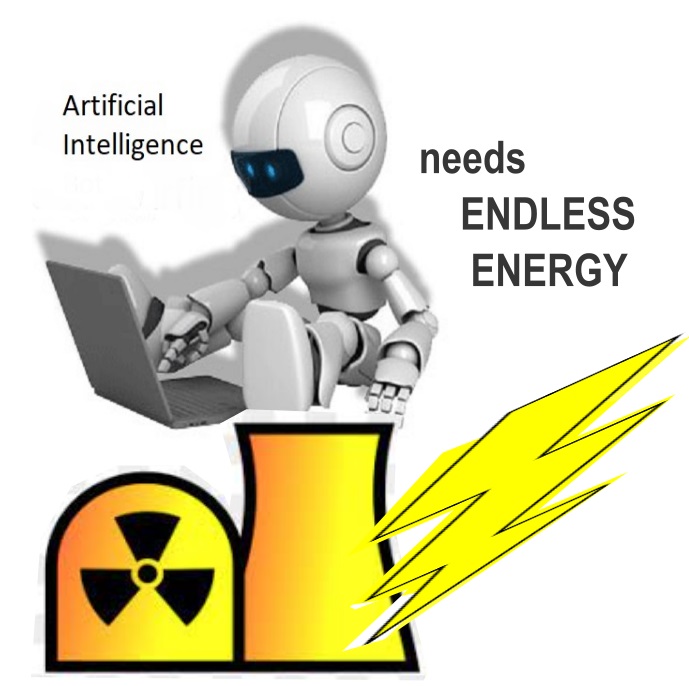
AI’s insatiable energy demand is going nuclear
Yahoo.com, Rachelle Akuffo, Host, Mon, Aug 26, 2024
On the surface, the deal indicates Amazon’s ambitious expansion plans. But dig deeper, and the company’s purchase of a nuclear power facility speaks to a broader issue that Amazon and other tech giants are grappling with: the insatiable demand for energy from artificial intelligence.
In Amazon’s case, AWS purchased Talen Energy’s Pennsylvania nuclear-powered data center to co-locate its rapidly expanding AI data center next to a power source, keeping up with the energy demands that artificial intelligence has created.
The strategy is a symptom of an energy reckoning that has been building as AI has been creeping into consumers’ daily lives — powering everything from internet searches to smart devices and cars
Companies like Google (GOOG, GOOGL), Apple (AAPL), and Tesla (TSLA) continue to enhance AI capabilities with new products and services. Each AI task requires vast computational power, which translates into substantial electricity consumption through energy-hungry data centers.
Estimates suggest that by 2027, global AI-related electricity consumption could rise by 64%, reaching up to 134 terawatt hours annually — or the equivalent of the electricity usage of countries like the Netherlands or Sweden.
This raises a critical question: How are Big Tech companies addressing the energy demands that their future AI innovations will require?
The rising energy consumption of AI
According to Pew Research, more than half of Americans interact with AI at least once a day.
Prominent researcher and data scientist Sasha Luccioni, who serves as the AI and climate lead at Hugging Face, a company that builds tools for AI applications, often discusses AI’s energy consumption.
Luccioni explained that while training AI models is energy-intensive — training the GPT-3 model, for example, used about 1,300 megawatt-hours of electricity — it typically only happens once. However, the inference phase, where models generate responses, can require even more energy due to the sheer volume of queries.
For example, when a user asks AI models like ChatGPT a question, it involves sending a request to a data center, where powerful processors generate a response. This process, though quick, uses approximately 10 times more energy than a typical Google search.
“The models get used so many times, and it really adds up quickly,” Luccioni said. She noted that depending on the size of the model, 50 million to 200 million queries can consume as much energy as training the model itself.
“ChatGPT gets 10 million users a day,” Luccioni said. “So within 20 days, you have reached that ‘ginormous’ … amount of energy used for training via deploying the model.”
The largest consumers of this energy are Big Tech companies, known as hyperscalers, that have the capacity to scale AI efforts rapidly with their cloud services. Microsoft (MSFT), Alphabet, Meta (META), and Amazon alone are projected to spend $189 billion on AI in 2024.
As AI-driven energy consumption grows, it puts additional strain on the already overburdened energy grids……………………………………………
https://finance.yahoo.com/news/ais-insatiable-energy-demand-is-going-nuclear-143234914.html
.
Why fans of nuclear are a problem today

… not because they will succeed, but because they will fail
Jérôme à Paris, Aug 25, 2024,
https://jeromeaparis.substack.com/p/why-fans-of-nuclear-are-a-problem
Nuclear energy has been great. In many places, it has produced relatively cheap electricity and (although we did not care about that when it was built) it is largely carbon-free. It still works, but it is simply no longer competitive against available alternatives, and it is going to be increasingly difficult to integrate in a system that is inexorably dominated by solar energy during the day and other renewables. (see for instance this recent academic study). In any case, it is not financeable, and given the large amounts required for each plant, they will struggle to get built, even with large-scale state support.
If a few nuclear plants could easily be built on budget and on time in a given system, it would not be an issue, but the problem is that (i) a lot of the energy of its proponents is directed at maligning renewable energy, presenting it as unserious and insufficient (arguments of the “you can’t do vital surgery if there’s no wind” type which ignore how grids work), and (ii) more importantly, nuclear swallows an incredible volume of political capital that could better be used for other purposes, like energy efficiency, upgrading the grid or reducing fossil fuel use outside the electricity sector.
Politicians like these very large, multi-billion-euro projects that seem to solve an issue in one go, and can be forcefully and visibly decided by a handful of large-ego persons like themselves. They don’t understand (or hate) the very decentralized and uncontrollable nature of renewable energy systems, that require complex rules and don’t give them the same publicisable impact on things. Nuclear provides a concentrated nexus of jobs, TV opportunities, and VIP meetings with big stakes. So they are easily convinced by proponents that this is what is needed.
And thus we get endlessly repeating “decisions” to build new nuclear plants, to be executed over the next 20 or 40 years, and which increasingly resemble fusion energy – always 20 years away. This is because the underlying arithmetic unfortunately no longer works, and nobody is actually willing to sink the billions, or pay the inflated tariffs, that are required to get the plants of the ground – and that’s before delays and cost overruns hit (and obviously nobody sane will agree to be responsible for these in advance).
If nuclear made sense, Microsoft or Amazon or Rio Tinto would finance the construction of a few plants to feed their ever growing appetite for reliable carbon-free energy… In reality, despite all the high-powered attention, ridiculously few new nuclear plants are being built compared to new renewables, even in China. Nuclear is at best irrelevant and at worst a distraction…
This would be harmless if it did not occupy the limited time that senior politicians have to spend on the topic of energy, and get them to spend their political capital on these projects that end up going nowhere. It also means that they don’t understand what is actually happening in the energy sector in the meantime, and don’t work on the new policies that are needed to make sure that ongoing (unstoppable) transition to renewables is done more smartly and efficiently.
Nuclear proponents do understand the energy system a bit better, and they certainly see that renewables are eating their lunch (typified by the switch in discourse, beyond the “it’s ugly” and ‘what do you do when there’s no wind” arguments, from “it’s too small to matter” to “it cannot do 100% on its own”) and thus they need to attack and criticise renewables to make it appear that nuclear is still necessary or relevant.
In that – continuing to denigrate renewables, and capturing too much political attention, nuclear proponents achieve only one thing – slowing down the transition to renewables, and making it more expensive than it could be because regulatory changes are not made. They have effectively become the useful idiots of the fossil fuels industry which they still occasionally claim to fight.
And, to conclude, a fun fact that seems ignored by most: France has lost more annual kWh from nuclear than Germany since 2011, which closed its plants. Maybe the blame for weakening the nuclear case should go to France rather than Germany?
Why the big push for nuclear power as “green”?
Why is it so difficult to recognise that – as is normal with technologies – nuclear energy is obsolescing?
nuclear affections are a military romance. Powerful defence interests – with characteristic secrecy and highly active PR – are mostly driving the dogged persistence.
https://beyondnuclearinternational.org/2024/08/25/why-the-big-push-for-nuclear-power-as-green/
Heavy lobbying by France and a “military romance” provide some answers, write Andy Stirling and Phil Johnstone

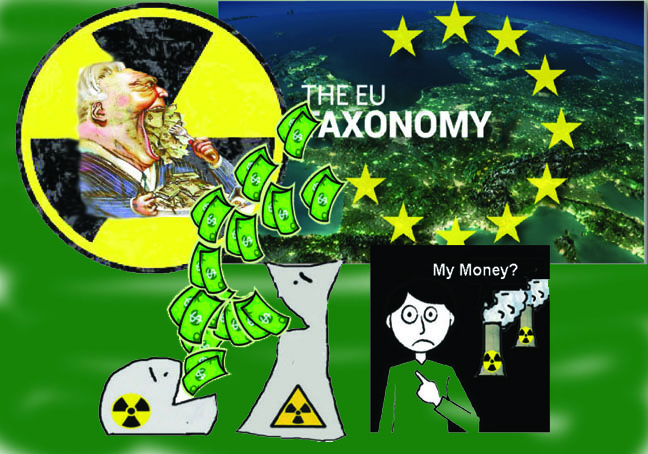
Whatever one’s view of nuclear issues, an open mind is crucial. Massive vested interests and noisy media clamour require efforts to view a bigger picture. A case in point arises around the European Commission’s much criticised proposal – and the European Parliament’s strongly opposed decision – to last year accredit nuclear power as a ‘green’ energy source.
In a series of legal challenges, the European Commission and NGOs including Greenpeace are tussling over what kind and level of ’sustainability’ nuclear power might be held to offer.
To understand how an earlier more sceptical EC position on nuclear was overturned, deeper questions are needed about a broader context. Recent moves in Brussels follow years of wrangling. Journalists reported intense lobbying – especially by the EU’s only nuclear-armed nation: France. At stake is whether inclusion of nuclear power in the controversial ‘green taxonomy’ will open the door to major financial support for ‘sustainable’ nuclear power.
Notions of sustainability were (like climate concerns) pioneered in environmentalism long before being picked up in mainstream policy. And – even when its comparative disadvantages were less evident – criticism of nuclear was always central to green activism. So, it might be understood why current efforts from outside environmentalism to rehabilitate nuclear as ‘sustainable’ are open to accusations of ‘greenwash’ and ‘doublespeak’.
In deciding such questions, the internationally-agreed ‘Sustainable Development Goals’ are a key guide. These address various issues associated with all energy options – including costs and wellbeing, health effects, accident risks, pollution and wastes, landscape impacts and disarmament issues. So, do such comparative pros and cons of nuclear power warrant classification alongside wind, solar and efficiency?
On some aspects, the picture is relatively open. All energy investments yield employment and development benefits, largely in proportion to funding. On all sides, simply counting jobs or cash flowing through favoured options and forgetting alternatives leads to circular arguments. If (despite being highlighted in the Ukraine War), unique vulnerabilities of nuclear power to attack are set aside, then the otherwise largely ‘domestic’ nature of both nuclear and renewables can be claimed to be comparable.
Orderings are more stark on economics and environment. Despite room for many views, it is difficult to deny that history raises especially grave queries about nuclear power. Nuclear costs have long been acknowledged to be far less competitive than renewables. Multiple nuclear accidents have occurred of kinds initially claimed to have ‘negligible’ likelihood. Nuclear waste “solutions” are still largely undeveloped. New questions continually arise about assumptions underpinning ‘safe levels’ of ionising radiation. Build times far exceeding those promised have helped cause nuclear bankruptcy and fraud. Growth rates of renewables surpass what government officials even quite recently claimed to be physically possible. Associated trends nearly all favour renewables.
But what of climate urgency? Does this not justify nuclear proponents’ calls to “do everything” to “keep the nuclear option open” (as if this were an end in itself)? Again: deeper thought might expose this as special pleading. Precisely because climate action is so imperative, isn’t it more rational to prioritise whatever is most substantial, cost effective and rapid?
A more reasoned approach might ask about long-neglected kinds of statistical analysis, which show that national carbon emission reductions tend to associate less with nuclear than with renewable uptake. Key reasons here include that nuclear contributions to climate targets are smaller, slower and more expensive than are offered by renewables. So other evidence that nuclear and renewable energy strategies also tend to conflict further queries the ‘sustainable’ status of nuclear power.
What then of claimed needs for ‘baseload’ power – to manage variable outputs from some renewables? Surprisingly given its public profile, this notion is long abandoned by the electricity industry as “outdated”. Nuclear power is itself inflexible in its own way. Myriad system innovations, grid improvements, demand measures and new storage technologies are all available to better address variable renewables over different timescales. Even in relatively pro-nuclear UK, it is authoritatively documented how a 100% renewable system outperforms any level of nuclear contribution. Even the UK Government now admits that adding these costs still leaves renewables outcompeting nuclear. In less nuclear-committed European countries, the picture is even more stark.
So, as this picture has unfolded, nuclear ‘sustainability’ arguments have retreated through successively undermined claims – that nuclear is “necessary”; brooks “no alternative”; is “more competitive”; uniquely offers to “keep the lights on”; or is just a way to “do everything” (as if this was ever a sensible response to any challenge, especially one as urgent and existential as climate disruption).
Whatever position one starts from, then, a final question arises: why all the fuss? Why should it be now after all these years (just as its comparative performance becomes so much less favourable) that European efforts become so newly energetic to redefine nuclear as ‘sustainable’? Why is it so difficult to recognise that – as is normal with technologies – nuclear energy is obsolescing?
Here, the answer is surprisingly obvious. It is officially repeatedly confirmed in countries working hardest to revive nuclear power – atomic weapons states like the US, France, the UK, Russia and China. Oddly neglected in mainstream energy policy and the media, the picture is especially evident on the defence side. Although skewed public debates leave many unaware, nuclear affections are a military romance. Powerful defence interests – with characteristic secrecy and highly active PR – are mostly driving the dogged persistence.
The result is clear. Dubiously justified in climate terms, elevated consumer prices, government funding and public risk underwriting all help maintain a joint civil/military ‘nuclear industrial base’. In nuclear armed countries like the UK and France, this helps fund – outside defence budgets, off the public books and away from due scrutiny – expensive specialist nuclear skills, supply chains, research facilities, navy recruitment, wider infrastructures. In particular, the building and operating of nuclear propelled submarines would be unaffordable without these concealed cross-subsidies. Without nuclear power, it would become much harder to guarantee the later careers that are so essential in recruiting nuclear-trained officers.
As President Macron recently said “without civilian nuclear, no military nuclear, without military nuclear, no civilian nuclear”. This is the main reason why France is pressing so hard for nuclear to be supported by the European Union as ‘sustainable’. This is why non-nuclear-armed Germany has been more open to grasping nuclear realities. This is why France and Germany find themselves at such loggerheads on this issue. This is why the UK Government so opposes this – and is so fixated on support for general nuclear skills. This is why other nuclear-armed states in general, are so resolutely fixated by the slow, small and costly nuclear response to the climate emergency.
A decision has yet to be reached on whether the inclusion of nuclear by the European Commission in their Green Taxonomy is unlawful. Yet it is clear that nuclear compares poorly to other low carbon technologies when considered in terms of sustainability. What is especially concerning is that the military rationales that are influencing renewed enthusiasm for nuclear are largely unaddressed in policy and wider media coverage. That associated issues are so little discussed, raises grave concerns not just for energy and climate policy, but for European democracy as a whole.
Andy Stirling is Professor of Science & Technology Policy in the Science Policy Research Unit, University of Sussex. Philip Johnstone is Research Fellow, SPRU, University of Sussex.
Harris’s concluding speech at DNC embraces agenda of global war
Harris declared, “As commander-in-chief, I will ensure America always has the strongest, most lethal fighting force in the world.” As for whom this force will be fighting, Harris left little doubt, going on to refer to China, Russia, North Korea and Iran, the same countries that the Biden-Harris administration has targeted in a new document outlining American strategy for a future nuclear world war.
Patrick Martin, 23 August 2024
The four days of the Democratic National Convention culminated Thursday with the acceptance speech by Vice President Kamala Harris as the Democratic Party’s candidate for president.
As a whole, the convention consisted of an endless series of inane speeches, hosannahs to Harris that completely falsified her right-wing career as a prosecutor, declarations from billionaires that Harris would be a “president of joy” and constant invocations of the “historic” character of elevating a (multi-millionaire) African American and Asian American woman to the presidency.
The Democrats sought to substitute entertainment for policy, with a series of Hollywood and pop music celebrities embracing Harris. However, the real content of the policies they propose came through in the candidate’s closing speech: an agenda of escalating global war.
Harris declared, “As commander-in-chief, I will ensure America always has the strongest, most lethal fighting force in the world.” As for whom this force will be fighting, Harris left little doubt, going on to refer to China, Russia, North Korea and Iran, the same countries that the Biden-Harris administration has targeted in a new document outlining American strategy for a future nuclear world war.
As in any major address by an American capitalist politician, Harris’s acceptance speech was directed to two audiences. For Wall Street and the military-intelligence apparatus, the real base of the Democratic Party, Harris pledged to continue the militaristic foreign policy of the Biden administration to defend the global interests of the American financial aristocracy.
She was a safe pair of hands, she proclaimed, unlike the unreliable and self-interested Trump—a theme sounded on the convention’s final day by a range of right-wing speakers, from former Defense Secretary and CIA Director Leon Panetta, to a string of Republicans who are now endorsing Harris, to a trio of military-intelligence officials now holding seats as Democrats in the House of Representatives.
While Harris’s brief reference to the suffering of the Palestinian population of Gaza was highlighted in media accounts—and will undoubtedly be hailed as a significant shift by the pseudo-left apologists for the Democratic Party—this came after she flatly reiterated an uncompromising pledge to provide unlimited US military aid to Israel: “I will always stand up for Israel’s right to defend itself, and I will always ensure Israel has the ability to defend itself.”
In other words, more bombs and missiles to kill tens of thousands more in Gaza and potentially in the West Bank, Lebanon, Yemen, Iran and other countries in the region targeted by imperialism…………………………………………………………………………….. more https://www.wsws.org/en/articles/2024/08/24/turk-a24.html
Rafael Grossi to visit Kursk nuclear power plant in Russia , following reports that remains of a drone were found there

https://www.world-nuclear-news.org/Articles/Grossi-plans-visit-to-Kursk-plant, 23 Aug 24
Russian authorities informed the IAEA that the drone fragments were located roughly 100 metres from the plant’s used nuclear fuel storage facility. The IAEA said it was told that the drone was “suppressed” in the early morning of 22 August.
Grossi has confirmed his intention to personally assess the situation at the site during his visit next week. During his visit, he will “discuss modalities for further activities as may be needed to evaluate the nuclear safety and security conditions of the Kursk nuclear power plant.”
“Military activity in the vicinity of a nuclear power plant is a serious risk to nuclear safety and security,” Grossi said. “My visit to KNPP next week will provide us with timely access to independently assess the situation.”
On 9 August, the IAEA said it was monitoring the situation after Ukrainian forces advanced 30 kilometres into Russia’s Kursk region, bordering Ukraine. They had reportedly advanced within 50 kilometres of the Kursk nuclear power plant.
The report of a drone at the Kursk plant comes just days after a drone struck on a road near the perimeter of the Russian-held Zaporizhzhia nuclear power plant in Ukraine. On 17 August, an explosive carried by a drone detonated just outside the plant’s protected area, close to the cooling water sprinkler ponds and about 100 metres from the Dniprovska power line, which is the only remaining 750 kilovolt line providing external power supply to the plant.
Recent days have seen a fire in one of the cooling towers at the Zaporizhzhia plant and damage to a power and water substation in nearby Energodar, where many of the nuclear power plant workers and their families live.
The six-unit Zaporizhzhia nuclear power plant – or ZNPP – is Europe’s largest nuclear power plant, has been under Russian military control since early March 2022. It is close to the frontline between Russian and Ukrainian forces.
Ukraine and Russia each accuse the other side of putting nuclear safety at risk and breaching the IAEA’s central safety principles for nuclear facilities. Grossi explained at the United Nations in April that the IAEA would not attribute blame without “indisputable proof” and said the agency aims to “keep the information as accurate as we can and we do not trade into speculating”.
Britain’s Dirtiest Beaches – Don’t Mention the Pu!

The cocktail of radioactive wastes on our beaches is a direct result of the uranium fuel industry whose product is actually nuclear wastes rather than the ephemeral here today gone tomorrow electricity.
On By mariannewildart, https://mariannewildart.wordpress.com/2024/08/23/britains-dirtiest-beaches-dont-mention-the-pu/
Seascale and Haverigg are in the top 10 dirtiest beaches for poo – they also contain Pu (Plutonium) but no-one is looking at the health impacts of long lived radio-toxic pollution on our beaches.
The West Cumbrian coastline cradling the World Heritage Site of the Lake District has two entries in the top 10 dirtiest beaches featured in yesterday’s Express. While much is made quite rightly of the health impacts of sewage pollution no-one is willing to talk about the Pu (Plutonium) on West Cumbrian beaches and in harbours near the worlds riskiest nuclear waste site. Sellafield has a larger workforce 11,000+ than all the surrounding towns and villages put together. According to the Environment Agency “We are working with Sellafield Limited to investigate the potential impact of non-radioactive discharges from the Sellafield site. The primary focus is on sewage originating from the toilet facilities provided on site for the Sellafield workforce. The work is considering whether the level of sewage treatment needs to be enhanced to improve and protect the bathing water quality at Seascale thus protecting public health”. 2024 Bathing Water Profile for Seascale.
The West Cumbrian coastline cradling the World Heritage Site of the Lake District has two entries in the top 10 dirtiest beaches featured in yesterday’s Express. While much is made quite rightly of the health impacts of sewage pollution no-one is willing to talk about the Pu (Plutonium) on West Cumbrian beaches and in harbours near the worlds riskiest nuclear waste site. Sellafield has a larger workforce 11,000+ than all the surrounding towns and villages put together. According to the Environment Agency “We are working with Sellafield Limited to investigate the potential impact of non-radioactive discharges from the Sellafield site. The primary focus is on sewage originating from the toilet facilities provided on site for the Sellafield workforce. The work is considering whether the level of sewage treatment needs to be enhanced to improve and protect the bathing water quality at Seascale thus protecting public health”. 2024 Bathing Water Profile for Seascale.
Nuclear wastes continue to arrive daily and a vicious cocktail of nuclear wastes continues to pour into the Irish Sea daily. Enough was enough decades ago. But this gargantuan radio-toxic turd on the Lake District coastline continues to accept nuclear wastes from existing reactors in the UK while MPs, government and the nuclear industry agitate for ever more nuclear waste from new build next to Sellafeld and elsewhere.
The cocktail of radioactive wastes on our beaches is a direct result of the uranium fuel industry whose product is actually nuclear wastes rather than the ephemeral here today gone tomorrow electricity.
So the nuclear waste industry’s message is ‘Don’t mention the Pu.’ In fact the nuclear industry has a vested interest in encouraging youngsters to dig for hours on the beaches – its great PR for the nuclear waste industry and says “look we are great neighbours and we are giving you (tax payers) money for your beach events because the beaches are soooo safe.”
The UK nuclear lobby’s festival of joyous propaganda.
The Sizewell C team has been raising awareness of the new nuclear power
project at community events across the county this summer. From The Suffolk
Show and the First Light Festival to Sotterley Country Fair, the team have
been engaging with thousands of people across the county as the project
continues to make significant progress.
“We’re really lucky in Suffolk to
have some of the best summer festivals and community events in the
country,” says Marjorie Barnes, Head of Regional External Affairs and
Development, Sizewell C. This week, Sizewell C volunteers attended the
Aldeburgh Carnival, and in September the team will be at the first Leiston
Book Festival.
Sizewell C 23rd Aug 2024
Fluid leak forces rail shipment to return to the San Onofre nuclear power plant

Federal regulator says the leak had “low safety significance” but Southern California Edison officials admit it should not have happened.
By Rob Nikolewski | rob.nikolewski@sduniontribune.com | The San Diego Union-Tribune, August 21, 2024
A pair of dismantled pressurizers that departed the San Onofre Nuclear Generating Station by rail had to be returned to the now-shuttered power plant after it was discovered that one of the giant pieces of equipment had leaked fluid during the trip.
Surveys conducted by the plant’s operator, Southern California Edison, said “no detectable radioactivity” above otherwise normal background levels was detected and there was “no threat to public health and safety, or the environment.” But an official with the utility admitted to the Union-Tribune, “that should not happen.”
An inspection from the U.S. Nuclear Regulatory Commission found two violations but the federal regulator’s report described the “safety significance” of the infractions as “low.”
The NRC’s inspection report made no mention of issuing any fines.
But Edwin Lyman, director of nuclear safety at the Union of Concerned Scientists, suspects the NRC’s report does not reflect “the severity of (Edison and its contractor’s) screw-up.”
“They had one job to do, which was to transport this pressurizer without any (free) liquid in a container that couldn’t leak,” Lyman said. “And they missed on both counts.”
……………………………What happened?
The San Onofore Nuclear Generating Station, known as SONGS for short, is in the midst of a massive $4.7 billion decommissioning and dismantlement project that is scheduled to wrap up by the end of 2028.
During the course of the demolition, about 1.1 billion pounds of material is expected to be removed, with most of it going by rail. More than 1,000 rail shipments originating from a spur built at SONGS have left the site since dismantlement efforts began some four years ago.
In late June, two large pressurizers were loaded onto special rail cars, on their way to a disposal site in Clive, Utah.
When a nuclear power plant is in operation, pressurizers control reactor coolant systems that use demineralized pure water to remove heat from the reactor core and allow steam to power turbine generators.
The SONGS Unit 2 and Unit 3 pressurizers are big — 37 feet tall and weighing about 100 tons each, with capacity to regulate 16,500 gallons of liquid.
After they were taken out, the pressurizers were labeled as Class A waste, which is the lowest level of radioactive waste as classified by the NRC.
At a stop at a railyard in San Bernardino, a worker noticed a water leakage on the top of the flatbed railcar hauling the Unit 2 pressurizer. SCE officials said the water did not drip onto the ground.
No leaks were found in the Unit 3 pressurizer but both were sent back to SONGS to find out what happened.
Although each pressurizer was supposed to be completely drained, it was soon discovered that 190 gallons of water was found at the bottom of the Unit 2 pressurizer.
“Workers incorrectly believed” all the water had been drained out of the pressurizer before it was loaded onto the rail car, Pontes said.
What now?
An ongoing investigation is trying to determine what went wrong. Until then, the pressurizers from both units will not be rescheduled for shipment back to Utah.
The NRC noted two violations — one for failing to ensure the pressurizer was “properly closed and sealed to prevent release of radioactive content” and the second for not properly packaging it for shipment.
Pontes said the NRC findings are being reviewed by SCE, the dismantlement’s general contractor (called SONGS Decommissioning Solutions) and workers at the facility. “We remain committed, in our oversight role, to ensuring safety and adherence to all regulatory material packaging requirements,” he said.
But Lyman questioned whether the NRC’s actions amounted to a “slap on the wrist.”
“When they process these violations through their system and it spits out ‘low-safety significance,’ I don’t feel it conveys the gravity of the two violations, when compounded, led to a release of this liquid,” Lyman said. “It could have been worse, presumably.”
Other incidents
First opened in 1968, SONGS has not produced electricity since 2012 after a leak in a steam generator tube led to its closing.
In August 2018, a 50-ton canister filled with radioactive spent fuel was being transferred to a dry storage facility on the north end of SONGS. While being lowered into a cavity, the canister was accidentally left suspended almost 20 feet from the floor.
Eventually, the canister was safely lowered but the NRC later fined Edison $116,000 and chided the company for failing “to establish a rigorous process to ensure adequate procedures, training and oversight guidance.”
In April 2022, demolition work was briefly halted after a worker fell about five feet while trying to install a ventilation hose into the floor vault opening, injuring his shoulder.
Once the dismantlement project wraps up, all that is expected to remain at SONGS will be two dry storage facilities; a security building with personnel to look over the waste; a seawall 28 feet high, as measured at average low tide at San Onofre Beach; a walkway connecting two beaches north and south of the plant, and a switchyard with power lines.
The switchyard’s substation without transformers stays put because it houses electricity infrastructure that provides a key interconnection for the power grid in the region. https://www.sandiegouniontribune.com/2024/08/21/fluid-leak-forces-rail-shipment-to-return-to-the-san-onofre-nuclear-power-plant/?fbclid=IwY2xjawE3ZUdleHRuA2FlbQIxMQABHapLLh1xKud7eOWCb9iO4yGGQxJgVZFSJhbgWcw92LLlNek-XIz_bl-r_g_aem_TD76JCKRAQE_2TARdViWEw
Hungary again breaks with West: Ukrainian attack on Kursk is ‘wrong’
Tyler Durden, Zero Hedge , 24 Aug 2024
Hungary has broken with its NATO and EU allies in condemning Ukraine’s Kursk incursion, calling it out as not purely ‘defensive’ but as part of needlessly provocative offensive operations against Russian territory.
Gergely Gulyas, top advisor and spokesman for Hungarian Prime Minister Viktor Orbán said in a Thursday press briefing that Budapest is staunchly “pro-peace” – and when asked about the ongoing Kursk invasion, he said: “Ukraine is not only defending, but also attacking. We want a ceasefire and peace.”
Gulyas went on to explain that Hungary is against anything which thwarts potential diplomatic settlement to the war. He said this is “wrong” given the offensive includes a “spillover of the hostilities into Russian territory.”
………………………………………………………………….. Orban has certainly not shared the same enthusiasm for developments in Kursk as other European leaders. For example, recently the EU’s top diplomat Josep Borrell “reiterated the EU’s full support to the [Ukrainian] people’s fight.”
…………………………….Interestingly, there’s been similar pushback coming from Italy of late related to the Kursk offensive, akin to Hungary’s criticisms:
Italy’s Defence Minister Guido Crosetto has ignited a political firestorm with comments that appear to question Ukraine’s military operations inside Russian territory, POLITICO reported. In an interview, Crosetto warned that ‘no country should invade another country’ and expressed concerns over the conflict escalating into Russian territory, which could complicate efforts toward peace. His remarks have raised doubts about Italy’s commitment to Ukraine, despite Prime Minister Giorgia Meloni’s staunch support for Kyiv since the start of Russia’s invasion.
Crosetto emphasized that the weapons provided to Ukraine by Italy are intended strictly for defensive purposes, clarifying that these arms ‘do not have the possibility of being used for an attack on Russian territory’.
On a strategic level, while Ukraine forces have certainly dealt a serious morale blow to Kremlin leadership, Russia is still on the advance in the Donbass, where the front line to the conflict is located. If and when Ukraine’s Kursk operation utterly fails, it will have translated into no actual strategic gains in eastern Ukraine. https://www.zerohedge.com/geopolitical/hungary-again-breaks-west-ukrainian-attack-kursk-wrong
Fire at Zaporizhzhia elevates meltdown risk
13 Aug 24, https://cnduk.org/fire-at-zaporizhzhia-elevates-meltdown-risk/
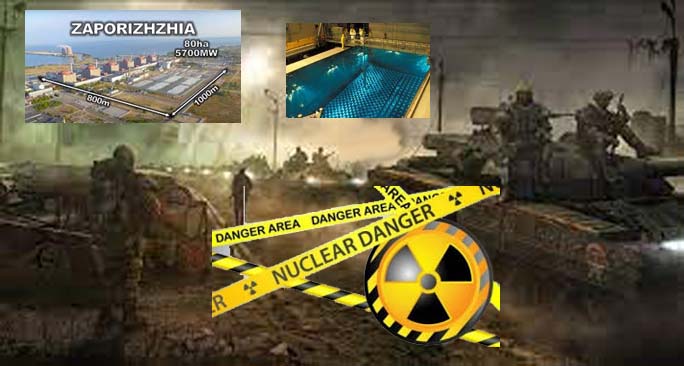
CND scientific advisor, radiation expert Dr Ian Fairlie writes about the elevated risks posed by the recent fire at the Zaporizhzhia nuclear plant.
The recent fire at the Russian-occupied Zaporizhzhia nuclear plant in Ukraine is causing much concern throughout Europe.
Ukraine’s nuclear energy company, Energoatom, which operated the site until Russian forces seized control in the early days of the war, confirmed that flames broke out at the service water supply facility, later engulfing one of the cooling towers. Both Vladimir Putin and Volodymyr Zelensky have traded blame for the fire. The six nuclear reactors at Zaporizhzhia are in cold shutdown and no nuclear activity was recorded on Sunday August 11, but the overall risk of nuclear meltdown remains elevated.
In 1986, the huge nuclear accident at the Chornobyl nuclear station in Ukraine resulted in radioactive fallout throughout Europe including all of the UK.
Ideally, the UK government should make arrangements to pre-distribute prophylactic iodide tablets (to protect against thyroid cancer) to all individuals who wish them, as occurs in many countries, but it has resisted previous calls for this. Current UK official advice on iodide tablets merely states “you will be given official advice from government or emergency services on how to get them, when to take them and how much to take”.
In the absence of timely official UK advice, readers may wish to consult official US advice or the WHO’s advice.
SMRs and nuclear renaissance: Learning from past to avoid over promising on low costs
NS Energy 26 Aug 24, Dr Charles McCombie, Independent nuclear advisor
“………………….It is yet to be shown that the economies of scale which led to nuclear power plants becoming ever larger can be outweighed by the economies of multiples which are expected from factory line production – assuming that full order books can keep these lines busy. But for how many of the over 80 SMR designs being developed will there be a large enough market to feed a factory production line?
Already 50 years ago, physicists and engineers designing large nuclear power plants were focused on the interesting challenges of proposing ever more reactor variants that looked – on paper – to be more efficient, safer or cheaper. But even the comparatively limited variety of designs proposed back then proved to be more an obstacle than an advantage. The UK, for example, dithered for years in making hard choices, while building and operating expensive first-of-a-kind units of many different types. The most successful large reactor programme was in France where an early decision was taken to narrow in to a standardised PWR design. Today, the clear lesson is that only a handful of SMR designs can hope to benefit from economics of multiples and thus reach commercial success.
A further mistake from the past which also affects the economics is the long timescales required for implementation of nuclear power plants. Many of the delays have been due to technical or project management weaknesses but a large contributor has often been the time needed by regulators to license a new design. …………………………….
But getting the economics of SMRs right and shortening licensing and construction times will not on their own solve the problem. There are other challenges which large reactor designers ignored until too late. The clearest example here is neglecting to address the issue of safe disposal of spent fuel and/or highly radioactive wastes. Even today, although safe geological disposal facilities are being implemented, for example in Finland, the “unsolved waste problem” is still put forward by many as an objection to expanding nuclear power. SMR developers should, already at the design stage be considering what wastes will be produced and at the tendering stage should be offering specific help and advice to their potential customers, most especially if these are small or new nuclear nations.
In addition to these potential impediments to wide deployment of SMRs, there are some novel issues to be addressed. One of these is related to the nuclear proliferation and security concerns which might arise in a scenario where hundreds of SMRs are distributed around the globe in many countries with no nuclear experience and, in some cases, in remote regions within these countries. In the end, because of their smaller fissile inventories and compact designs, the nuclear security concerns with widespread SMR deployment may be less than with current nuclear power plants with their much larger inventories of fissile materials. However, the issue should be discussed now by the nuclear community and not ignored until it is brought up as an impediment by nuclear opponents in potential SMR user countries.
If we want to learn from the bitter lessons of past hoped-for nuclear renaissances, then we should learn from the mistakes made back then and also anticipate any new and novel issues that will arise with widespread SMR deployment. https://www.nsenergybusiness.com/analysis/smrs-and-nuclear-renaissance-learning-from-past-to-avoid-over-promising-on-low-costs/
1 This Month

of the week – Shut Down Drone Warfare!


Tell the Ukrainian Government to Drop Prosecution of Peace Activist Yurii Sheliazhenko

Petition to revoke the licensing of the Near Surface Nuclear Disposal Facility (NSDF) at Chalk River. https://www.ourcommons.ca/petitions/en/Petition/Details?Petition=e-7247
To see nuclear-related stories in greater depth and intensity – go to https://nuclearinformation.wordpress.com
-
Archives
- April 2026 (34)
- March 2026 (251)
- February 2026 (268)
- January 2026 (308)
- December 2025 (358)
- November 2025 (359)
- October 2025 (376)
- September 2025 (257)
- August 2025 (319)
- July 2025 (230)
- June 2025 (348)
- May 2025 (261)
-
Categories
- 1
- 1 NUCLEAR ISSUES
- business and costs
- climate change
- culture and arts
- ENERGY
- environment
- health
- history
- indigenous issues
- Legal
- marketing of nuclear
- media
- opposition to nuclear
- PERSONAL STORIES
- politics
- politics international
- Religion and ethics
- safety
- secrets,lies and civil liberties
- spinbuster
- technology
- Uranium
- wastes
- weapons and war
- Women
- 2 WORLD
- ACTION
- AFRICA
- Atrocities
- AUSTRALIA
- Christina's notes
- Christina's themes
- culture and arts
- Events
- Fuk 2022
- Fuk 2023
- Fukushima 2017
- Fukushima 2018
- fukushima 2019
- Fukushima 2020
- Fukushima 2021
- general
- global warming
- Humour (God we need it)
- Nuclear
- RARE EARTHS
- Reference
- resources – print
- Resources -audiovicual
- Weekly Newsletter
- World
- World Nuclear
- YouTube
-
RSS
Entries RSS
Comments RSS
 nuclear-news