Defence Correspondents: The Journalistic Wing of the Military?
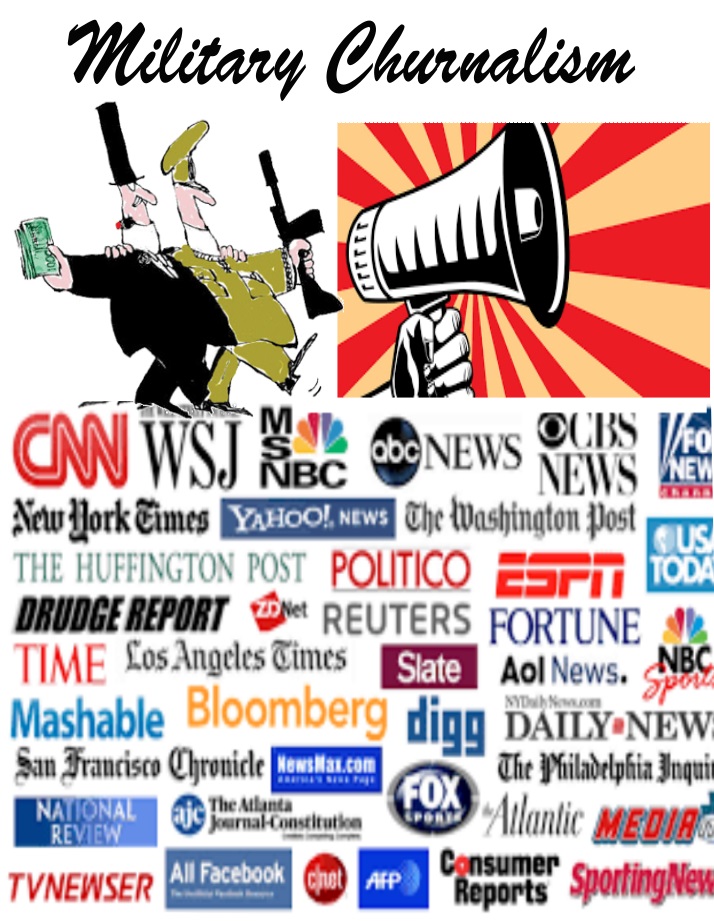
There are stenographers – and then there are UK defence correspondents.
DECLASSIFIED UK, DES FREEDMAN, 19 August 2024
An analysis of broadcasters’ online coverage of defence spending and strategy since Keir Starmer won the election shows that reporting is virtually 100% in line with the government’s own priorities.
Critical voices, where they are included, are entirely from the right.
All 20 articles posted under ‘defence’ since 4 July – 14 from Sky, 5 from the BBC and 1 from ITV – faithfully reproduce the government’s agenda.
These include its proposals for a defence review, its promise to increase military spending to 2.5% of GDP, its commitment to Ukraine and NATO (described on the BBC by foreign secretary David Lammy as ‘part of Britain’s DNA’).
Its notion that there is a need to restore confidence in the military in order to face up to “rapidly increasing global threats” (as Sky quoted defence secretary John Healey) also features.
The only critical voices that appear are Conservative shadow ministers, hawkish think tank spokespeople and military ‘experts’, all speaking about how vital it is to boost defence spending, which currently stands at £64.6bn a year (2.32% of GDP).
Such spending is apparently necessary to confront what the army’s chief Sir Roland Walker has described as an “axis of upheaval” composed of Russia, China, Iran and North Korea.
Sky quoted Walker without comment on 23 July as saying that “there was an ‘urgent need’ for the British Army to rebuild its ability to deter future wars with credible fighting power”.
Churnalism
Much of the coverage feels like a press release from the Ministry of Defence, which is hardly surprising given that MoD statements are liberally incorporated – without challenge – into news reports.
For example, ITV News’ report of 16 July on Labour’s “root and branch” review of defence draws heavily on the MoD’s release earlier that day
Its only deviation from government spin is that it also quotes the shadow armed forces minister Andrew Bowie saying that “the country didn’t need another review, and instead ‘we just need to get on and spend more money on defence’.”
Both the BBC and Sky ran lengthy, gushing reports on the speeches given by the defence secretary and General Walker at the Royal United Services Institute’s ‘Land Warfare’ conference on 22/23 July, unambiguously pushing the line that increasing defence spending was crucial to securing peace.
None of these pieces featured comments about the huge political and economic risks of increasing defence spending and a possible acceleration, not reduction, of instability.
Guns not butter
This isn’t just a matter of excluding voices from the left arguing for a completely different set of priorities. There isn’t even room for mainstream economists like Paul Johnson from the Institute for Fiscal Studies, criticising the way recent governments have presented the proposed hike and making the obvious, if important, point that “[m]ore money for defence means less for everything else”…………………………………………………………………………………………..
‘Pre-war world’
The tone of recent coverage is, however, entirely in line with what has gone on before where news broadcasters have acted more as cheerleaders of the UK government’s strategic defence priorities than impartial journalists.
For example, following a widely reported speech in January by then defence secretary Grant Shapps, committing the UK to spending 2.5% of GDP on defence, Sky News launched a series called “Prepared for War?” in April.
This examined whether the UK was ready for the “possibility of armed conflict” and was based on interviews with defence specialists, former military officers and academics, all of whom were singing to the same pro-war hymn sheet.
It reported on the emergence of a “national defence plan” to deal with “mounting concerns about Russia, China and Iran” and uncritically embraced the idea that we are now in a “pre-war world”.
This has all the trappings of a drive to war.
Seduced
Broadcasters’ favourite defence-related stories appear to be ones where they can show dazzling images of the latest military hardware.
As Richard Norton-Taylor, former defence correspondent for the Guardian and now contributor to Declassified UK, has noted: “The MoD knows how to seduce journalists, especially those writing for specialist defence publications – often used as primary sources by mainstream journalists – by showing off new weapons.”
So in January, Sky News ran a puff piece on a new laser system, DragonFire, developed by the MoD to the tune of around £100m, that spoke of its “pinpoint accuracy” taken straight from the MoD’s own press release. ……………………………………………………………………………………………………………..
As always, an uncritical embrace of the UK’s strategic geopolitical interests comes before any commitment to transparency and even to exploring the claim that increasing military spending might not be the best way of de-escalating rising tensions across the globe.
How do we account for this deference on the part of defence correspondents?
Declassified UK has run several stories examining this question and revealing the preferential treatment of favoured journalists, sanctions against those who ask tough questions, the close contacts between correspondents and defence and security-related officials and indeed the existence of a revolving door between journalism and military PR.
When it comes to reporting on defence and security, ‘[d]eference, as much as secrecy, remains the English disease’, notes Norton-Taylor.
Indeed, all too often, it’s not a specific strategy so much as ideological congruence between the defence establishment and defence journalists about what is understood to be protecting the “national interest”.
That means that while the UK ramps up its support for Ukraine and continues to stand by Israel in defending it from possible attacks from Iran, British broadcast journalists are operating effectively as part of a coordinated effort to boost defence spending.
Their silence on stories such as the training of Israeli troops inside the UK or the number of UK military flights from Cyprus to Israel is just as troubling as their more visible and uncritical amplification of successive UK governments’ defence priorities.
This isn’t journalism but public relations https://www.declassifieduk.org/defence-correspondents-the-journalistic-wing-of-the-military/
No comments yet.
1 This Month


Tell the Ukrainian Government to Drop Prosecution of Peace Activist Yurii Sheliazhenko

Petition to revoke the licensing of the Near Surface Nuclear Disposal Facility (NSDF) at Chalk River. https://www.ourcommons.ca/petitions/en/Petition/Details?Petition=e-7247


of the week – STOP SMALL MODULAR REACTORS IN CANADA
To see nuclear-related stories in greater depth and intensity – go to https://nuclearinformation.wordpress.com
-
Archives
- March 2026 (193)
- February 2026 (268)
- January 2026 (308)
- December 2025 (358)
- November 2025 (359)
- October 2025 (376)
- September 2025 (258)
- August 2025 (319)
- July 2025 (230)
- June 2025 (348)
- May 2025 (261)
- April 2025 (305)
-
Categories
- 1
- 1 NUCLEAR ISSUES
- business and costs
- climate change
- culture and arts
- ENERGY
- environment
- health
- history
- indigenous issues
- Legal
- marketing of nuclear
- media
- opposition to nuclear
- PERSONAL STORIES
- politics
- politics international
- Religion and ethics
- safety
- secrets,lies and civil liberties
- spinbuster
- technology
- Uranium
- wastes
- weapons and war
- Women
- 2 WORLD
- ACTION
- AFRICA
- Atrocities
- AUSTRALIA
- Christina's notes
- Christina's themes
- culture and arts
- Events
- Fuk 2022
- Fuk 2023
- Fukushima 2017
- Fukushima 2018
- fukushima 2019
- Fukushima 2020
- Fukushima 2021
- general
- global warming
- Humour (God we need it)
- Nuclear
- RARE EARTHS
- Reference
- resources – print
- Resources -audiovicual
- Weekly Newsletter
- World
- World Nuclear
- YouTube
-
RSS
Entries RSS
Comments RSS
 nuclear-news
Leave a comment