Revealed: ministers’ doubts over nuclear plant at Torness
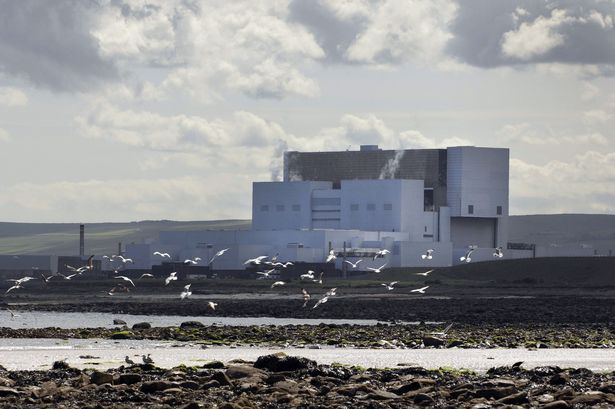
Torness Rob Edwards, August 12, 2024
Labour and Conservative governments secretly harboured doubts about building a nuclear power station at Torness in East Lothian in the late 1970s, according to internal documents released by the Scottish Government.
Campaigns against Torness won support within the then Scottish Office, and came closer to success than realised. There was a “real risk” of the treasury in London delaying the project, warned one official.
But the nuclear industry fought a fierce behind-the-scenes battle in defence of the power station, and it ended up being built in the 1980s.
Campaigners condemned past decision-making about Torness as a “total sham”. According to one former UK Government adviser, lobbying by the nuclear industry had always been “more influential” than evidence.
The Ferret analysed 11 large government files on Torness in 1978 and 1979 at the National Records of Scotland in Edinburgh. One was only released in 2023 after a request under freedom of information law.
The files reveal that ministers and officials in both James Callaghan’s and Margaret Thatcher’s governments privately raised concerns about the proposed nuclear station at Torness.
Torness was the target for a series of anti-nuclear protests in the 1970s, initially organised by the Scottish Campaign to Resist the Atomic Menace (SCRAM). There were demonstrations and an occupation of the site in 1978, and in May 1979 more than 10,000 people joined a weekend protest there.
Despite further protests in 1980 and 1981, the nuclear station was built and formally opened by Thatcher in 1989. It is currently scheduled to keep operating until 2028, though there are plans to run it for longer.
Early in 1978 SCRAM made a submission to the Scottish Office arguing that Torness should be subject to a new public inquiry. An earlier inquiry in 1974 had been inadequate because it had not specified the type of reactors to be built, the campaign group argued……………………………………………………………………………………………………
Case for Torness ‘less than convincing’
However, a covering note from an official on 16 May 1979 admitted that the case for Torness was “less than convincing”. The absence of information in support of the plant was “worrying”, the official commented, “because I think there is a real risk in the present climate of the treasury seeking to re-examine or hold up the project”.
In a memo two days later, Fletcher said: “I still have some doubts concerning the advisability of a nuclear station at Torness”. A handwritten note by an official added simply “Amen”.
A memo on 1 June 1979 reported that Torness’s backer, the government-owned South of Scotland Electricity Board (SSEB), was “most despondent” about the lack of investment approval. All the signs were that the project was “slipping out of control”, it said.
In the end, though, the government documents show that the SSEB, backed by its supporters in the Scottish Office, saved Torness. They worked hard to convince the treasury and, ultimately, Thatcher, that it should go ahead because it was needed to sustain the power station industry…………………………………………………………………………
Torness ‘a total sham’
The veteran environmental campaigner and energy author, Walt Patterson, testified at the Torness inquiry in 1974. “Torness was a total sham, and the inquiry had no relevance to the official decision to build it,” he told The Ferret.
“Torness was ordered just to keep the power station building industry busy, not because we could use the electricity.”
Pete Roche, a nuclear consultant who worked with SCRAM in Edinburgh in the 1970s and 1980s, suggested that politicians might have been worried that cancelling Torness would “somehow legitimise protest”.
He said: “We knew at the time that the case for Torness was collapsing before our very eyes, but it’s a pleasant surprise to learn that both Labour and Tory Ministers had secretly expressed doubts about the plant.”
Dr Ewan Gibbs, a researcher from the school of social and political sciences at University of Glasgow who has studied Torness protests, pointed out that anti-nuclear activists had mobilised tens of thousands of people in opposition to the plant.
“Thanks to these new research findings, we now know that both Scottish Labour and Tory ministers had serious doubts over the nuclear power station project in the late 1970s.”……………………………………….. more https://theferret.scot/torness-nuclear-doubts-ministers/—
No comments yet.
1 This Month

of the week – Shut Down Drone Warfare!


Tell the Ukrainian Government to Drop Prosecution of Peace Activist Yurii Sheliazhenko

Petition to revoke the licensing of the Near Surface Nuclear Disposal Facility (NSDF) at Chalk River. https://www.ourcommons.ca/petitions/en/Petition/Details?Petition=e-7247
To see nuclear-related stories in greater depth and intensity – go to https://nuclearinformation.wordpress.com
-
Archives
- April 2026 (68)
- March 2026 (251)
- February 2026 (268)
- January 2026 (308)
- December 2025 (358)
- November 2025 (359)
- October 2025 (376)
- September 2025 (257)
- August 2025 (319)
- July 2025 (230)
- June 2025 (348)
- May 2025 (261)
-
Categories
- 1
- 1 NUCLEAR ISSUES
- business and costs
- climate change
- culture and arts
- ENERGY
- environment
- health
- history
- indigenous issues
- Legal
- marketing of nuclear
- media
- opposition to nuclear
- PERSONAL STORIES
- politics
- politics international
- Religion and ethics
- safety
- secrets,lies and civil liberties
- spinbuster
- technology
- Uranium
- wastes
- weapons and war
- Women
- 2 WORLD
- ACTION
- AFRICA
- Atrocities
- AUSTRALIA
- Christina's notes
- Christina's themes
- culture and arts
- Events
- Fuk 2022
- Fuk 2023
- Fukushima 2017
- Fukushima 2018
- fukushima 2019
- Fukushima 2020
- Fukushima 2021
- general
- global warming
- Humour (God we need it)
- Nuclear
- RARE EARTHS
- Reference
- resources – print
- Resources -audiovicual
- Weekly Newsletter
- World
- World Nuclear
- YouTube
-
RSS
Entries RSS
Comments RSS
 nuclear-news
Leave a comment