Teresa Ribera faces nuclear hurdle to running EU green policy

A French government minister even conceded to POLITICO that his country — the EU’s most high-profile and vocal nuclear advocate — “is trying to ensure that energy does not go to someone anti-nuclear.”
Nuclear-friendly lawmakers and countries like France don’t want the EU’s potential next green chief to thwart an atomic revival.
August 9, 2024 , Politico, By Victor Jack
BRUSSELS — On paper, the European Union’s leading candidate to guide green policy for the next five years has it all: decades of experience, endless high-profile contacts and a shining reputation.
There’s just one problem: Teresa Ribera is a hardened nuclear skeptic.
The former U.N. climate negotiator, who until recently served as Spain’s deputy prime minister, shepherded the closure of her country’s atomic reactors, railed against the cost of nuclear power and called the EU’s decision to label it a sustainable investment a “big mistake.”
That’s prompting worries among pro-atomic European Parliament members and EU countries that Spain’s top climate official could scupper plans to expand the buildout of nuclear power across the bloc just as the industry is riding a fresh wave of political momentum. France, where a hegemonic nuclear industry provides roughly 70 percent of the country’s electricity, is likeliest to cause a stir.
Those anxieties will likely play out on the public stage this fall, when Ribera is expected to face Parliament at her EU commissioner confirmation hearing. She’ll inevitably get pointed questions about whether she’d constrain a nuclear resurgence. And her answers could make or break her candidacy, as nuclear support unites politicians from numerous political families.
“In every political group, there are those that won’t vote for someone who’d be a vocal opponent of the nuclear cause,” said pro-nuclear French MEP Christophe Grudler, a member of the centrist Renew Europe group who could eventually be one of the lawmakers deciding Ribera’s fate.
“A Commissioner … is here to implement the Commission’s program — there’s no place for personal feelings,” he added. “She’ll have to just get on board … and I can assure you we’ll make sure she gets on board.”
A French government minister even conceded to POLITICO that his country — the EU’s most high-profile and vocal nuclear advocate — “is trying to ensure that energy does not go to someone anti-nuclear.”
Nuclear fallout
The race to become the EU’s next energy chief comes amid a new wave of excitement around nuclear, and at a critical moment for an industry that argues it’s long been forgotten in Brussels.
That moment came in 2022, when Russia’s brutal invasion of Ukraine sent the EU searching for new energy sources. Many have since settled on nuclear power as a useful option.
……………………………………………………………………….. Whoever takes over as the EU’s next energy commissioner will have the power to shape Brussels’ nuclear agenda. That ranges from lobbying the EU to open its piggy bank for atomic energy, to drafting strategies that give potent political signals to investors.
Ribera would also become the driving force behind a suggested “Nuclear Act,” aimed at boosting nuclear reactors if the Commission does go ahead with the idea.
“We’re a bit concerned,” said one EU diplomat from a nuclear-supporting country, who like others for this story was granted anonymity to speak freely.
“We cannot have decarbonization without nuclear,” said a second EU diplomat, arguing that Ribera could be “challenging” for the nuclear sector.
For atomic industry figures, the next five years are an opportunity for the EU to put their sector on equal footing with renewable energy like wind and solar in Brussels’ green legislation, according to Yves Desbazeille, secretary general of the nucleareurope lobby group. ……………………..
Brussels battle
The fight would likely come to a head this fall, when Ribera would face an MEP grilling to secure her job.
Depending on Ribera’s specific portfolio, she could end up before the Parliament’s powerful industry and energy committee or its environment committee — or both.
If committee leaders disagree over whether Ribera is well-suited for the job, it could go to a committee vote. Occasionally, lawmakers do reject commissioner candidates, disqualifying them from the role.
There’s no guarantee, of course, that Ribera will be given a broad green policy portfolio for the next five years.
While Ribera has repeatedly expressed interest in the role, the final call rests with European Commission chief Ursula von der Leyen. The EU chief has yet to say how she will divide up the myriad green policy issues — everything from cutting carbon emissions to keeping Europe’s manufacturers competitive.
So Ribera could get a climate-specific role, for instance, while someone else is handed energy policy.
Even if Ribera does get an overarching green job, she’ll have to balance her personal views against Brussels’ company line, which has been increasingly nuclear-friendly. It’s a balance former Green Deal chief Frans Timmermans was able to strike, even if he was seen by some pro-atomic countries as overly skeptical of nuclear power.
Von der Leyen, for her part, recently said she wants the Green Deal to proceed with “technology neutrality” — a euphemism for giving similar focus to nuclear and renewables in lawmaking.
Nuclear proponents aren’t banking on those caveats.
“I’m not seeing this potential nomination as positive for us, to be honest,” when it comes to Ribera, said Desbazeille, the nuclear lobbyist. https://www.politico.eu/article/teresa-ribera-nuclear-hurdle-run-eu-green-policy/
The nuclear lobby wants new large nuclear reactors to be classed as “Small”
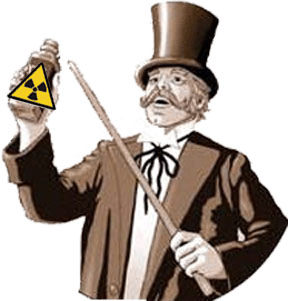
By magic, QUITE LARGE nuclear reactors are now SMALL.
And geewhiz – these new nuclear reactors no longer need much safety regulation

10 Aug 24, The Canadian Nuclear Association (CNA, the nuclear lobby) has written to all federal Members of Parliament in preparation for the 2025 budget. Their requests are in two sections: “investment tax credits” and “regulatory improvements.”
The investment tax credits allow companies to reduce their taxes owed if they spend money on nuclear development.
The CNA has numerous requirements , especially regarding SMRs
Small Modular Reactors (SMRs) – the numerous requirements include:
*Adjusting the definition to include projects up to 1400 megawatts thermal, or roughly 470 megawatts electrical.
*The CNA wants nuclear regulations to be reduced, particularly for Impact Assessments.
Streamline the Impact Assessment (IA) process:
Narrow the scope to factors of federal interest and indigenous rights and Remove the requirements for a Detailed Project Description
******************************************
From the International Atomic Energy Agency. Small modular reactors (SMRs) are advanced nuclear reactors that have a power capacity of up to 300 MW(e) per unit, which is about one-third of the generating capacity of traditional nuclear power reactors. https://www.iaea.org/newscenter/news/what-are-small-modular-reactors-smrs
From the International Atomic Energy Agency (For Small Modular Reactors) The main concepts underpinning the current safety approach — such as, for example, defence-in-depth, which assures prevention and mitigation of accidents at several engineering and procedural levels — are relevant for SMRs . A comprehensive safety assessment of all plant states — normal operation, anticipated operational occurrences and accident conditions — is required. https://www.iaea.org/newscenter/news/technology-neutral-safety-and-licensing-of-smrs
Germany may take another 50 years to find final repository for waste from shuttered nuclear power
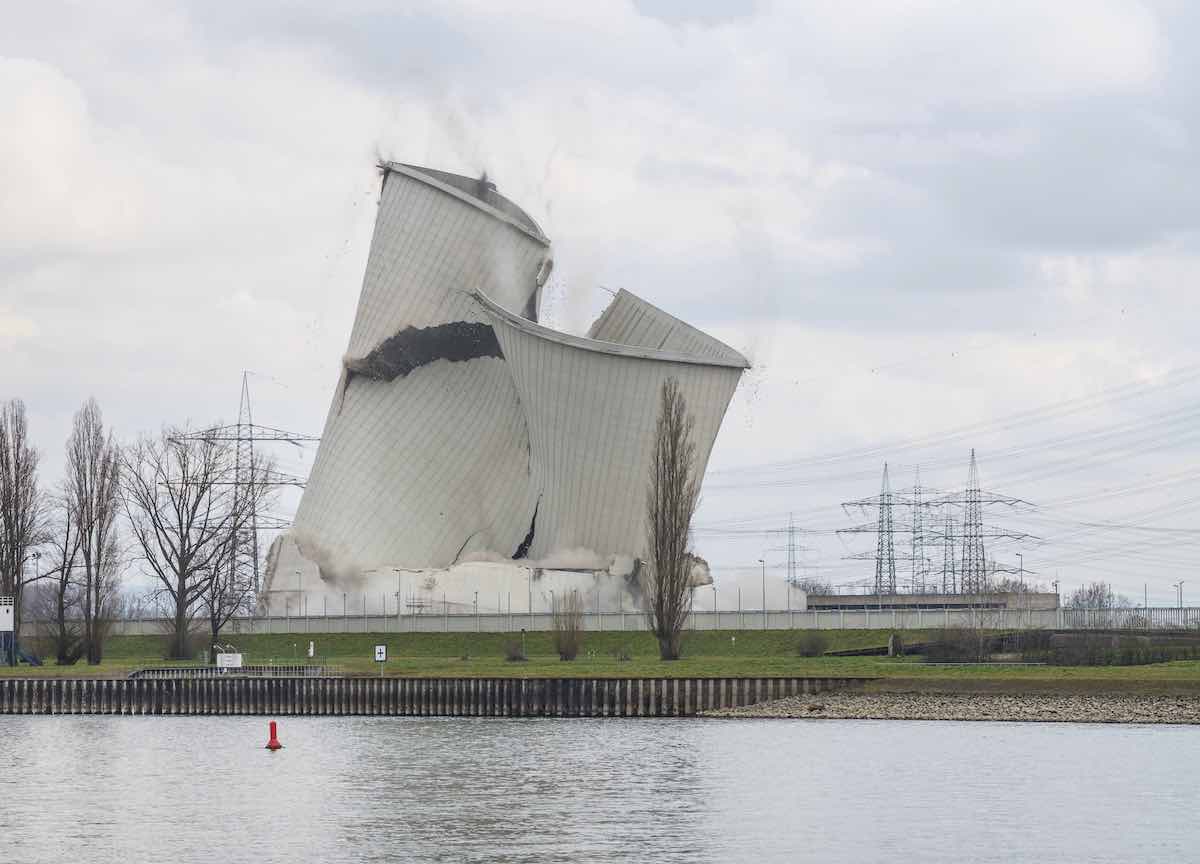
Sören Amelang, Aug 9, 2024, https://reneweconomy.com.au/germany-may-take-another-50-years-to-find-final-repository-for-waste-from-shuttered-nuclear-power/
Germany’s ongoing hunt for a final repository for highly radioactive nuclear waste could last until the 2070s, a report has warned.
The report by the Institute for Applied Ecology (Öko-Institut), which was commissioned by the country’s Federal Office for the Safety of Nuclear Waste Management (BASE), said a decision on a location can be expected in 2074 at the earliest under ideal conditions, reports Zeit Online.
This would be more than 40 years later than the original 2031 target, which the government already gave up almost two years ago. The environment ministry said the report did not take into consideration significant progress in efforts to shorten the search, for example by saving time on long exploration periods.
The ministry declared in November 2022 that the search won’t be completed in 2031, following a paper by the Federal Company for Radioactive Waste Disposal (BGE) that estimated the search could take until 2046 or, in another scenario, until 2068.
The next step will be for the BGE to propose shortlisted siting regions at the end of 2027, the ministry said. “This is the right time to discuss and regulate further acceleration in a transparent manner. A great deal of time can be saved, particularly in the surface and underground exploration,” it added.
But Journalist Bernward Janzing wrote in a commentary it was questionable how much the “scientifically well designed” process can be accelerated without compromising high safety standards.
Germany completed its nuclear phase-out last year and will now have to store 1,900 large containers, or around 28,100 cubic metres (m3), of high-level radioactive waste by 2080, when all its nuclear power stations and many research facilities will have been finally decommissioned and the fuel elements treated at other facilities.
Highly radioactive, heat-generating waste accounts for only five percent of Germany’s radioactive refuse, but is responsible for 99 percent of the radiation. It is currently held at temporary storage facilities near decommissioned nuclear power stations and in central interim repositories.
Construction of a repository following a location decision is scheduled to take about 20 years, according to current plans. The process of transporting and storing thousands of casks in the final repository will then take decades more.
Experts from a parliamentary storage commission said that loading and sealing the repository could be expected to last “well into the next century”.
Australia being turned into ’51st US state’ – former Prime Minister

https://www.sott.net/article/493814-Australia-being-turned-into-51st-US-state-ex-PM 10 Aug 24
Canberra is losing its strategic autonomy due to its security pact with the US and UK, former Prime Minister Paul Keating has said.
The US is surrounding Australia with military bases under the AUKUS pact, which undermines the country’s sovereignty and makes it a legitimate target for China.
In an interview with ABC on Thursday, Keating, who served as prime minister between 1991 and 1996, voiced strong skepticism about whether his country benefits from being a member of AUKUS – a landmark security partnership between Australia, UK, and the US, which was announced in 2021. The pact, which has been condemned by China, focuses on helping Australia acquire nuclear-powered submarines.
Keating argued that by allowing the US to “displace our military” and surround the country with bases, Canberra is essentially giving up its right to determine its foreign and defense policy. Australia will “completely lose” its strategic autonomy as a result, he claimed.
“So AUKUS is really about, in American terms, the military control of Australia. The government of Prime Minister Anthony Albanese is “likely to turn Australia into the 51st state of the United States.”
The former prime minister added that the expanded military presence makes the country a target from China’s point of view.
“We’re now defending the fact that we’re in AUKUS… If we did not have an aggressive ally, like the United States, aggressive to others in the region, there would be nobody attacking Australia. We are better left alone.”
The US, he argued, is trying to “superintend” China, with tensions between the two being fueled by a power struggle over the self-ruled island of Taiwan, which Beijing views as part of its sovereign territory.
However, Keating argued that the Taiwan situation “is not a vital Australian interest” while China “has no strategic design” on Australia. The US attitude to Taiwan is comparable to China deciding that Tasmania needed help breaking away from Australia, he said.
The former prime minister’s remarks come after Australian Defense Minister Richard Marles and Foreign Minister Penny Wong traveled to Washington for talks about the AUKUS pact, and to discuss a new agreement on the transfer of nuclear material to Canberra as part of its push to acquire domestic-built atomic submarines from the 2030s.
China has warned that the AUKUS agreement raises nuclear proliferation risks, adding that it was conceived in the “Cold War mentality which will only motivate an arms race.” Russia has also sounded the alarm about the security situation in the Asia-Pacific, insisting that it “has no place for closed military and political alliances.”
UK’s most dangerous nuclear site pleads guilty after endangering national security

More than 11,000 people work at the nuclear site in Cumbria, Sellafield, which holds the world’s largest store of plutonium and was called UK’s ‘most dangerous’
By WILLIAM MORGAN, Fri, Aug 9, 2024 https://www.express.co.uk/news/uk/1933985/UK-dangerous-nuclear-site-guilty-endangering-national-security
Europe’s largest nuclear site and the world’s largest plutonium storage facility has admitted putting Britain’s national security at risk, after a series of cybersecurity failings at the vast former nuclear power plant in Cumbria, Sellafield.
The company running the site, Sellafield Ltd, has apologised after pleading guilty to charges relating to information technology security from 2019 to 2023. Westminster Magistrates Court heard that, during this period, three quarters of the nuclear site’s servers were vulnerable to attack.
A Guardian investigation into nuclear industry practices also found that contractors could get unsupervised access to Sellafield computers and could plug external drives into the Sellafield systems. The company’s own report into the issue found that any “reasonably skilled hacker or malicious insider” could take advantage of these weaknesses.
The court heard from the nuclear watchdog that information which could pose a threat to national secrity lay vulnerable for years, with many of the critical security checks that Sellafield Ltd said they were completing, were simply not being done. The site has an otherwise poor reputation, often called “the most dangerous” site in the UK, employing 11,000 people to process nuclear waste and decommission equipment.
Tests of the vulnerable IT systems found that someone could access Sellafield’s servers and install phishing softward “without raising any alarms”. Raising further fears of information vulnerabiliy in key UK infrastructure to threats from hostile actors.
During their prosecution for failing to secure their systems, it emerged that 13 files marked “official/sensitive” had mistakenly been sent to outside contractors, alongside 4000 other files. Somehow, this did not trigger any elerts in their computer system, which was blamed in part for using “obsolete” software – including Windows 7 and Windows 2008.
At a court hearing on Thursday, a statement was read out from Sellafield Ltd’s CEO, Euan Hutton, who was present but did not speak.
The statement read: “I again apologise on behalf of the company for matters which led to these proceedings … I genuinely believe that the issues which led to this prosecution are in the past.”
The company is not due to be sentenced until September. The Office for Nuclear Regulation said after the August 8 hearing: “Sellafield Ltd had previously pleaded guilty to those offences in June, and while a hearing did take place today, Chief Magistrate Senior District Judge Paul Goldspring did not pass sentence.
“We expect Sellafield Ltd to be sentenced in September, when further details will be provided on our website and social media channels.”
How French nuclear output has declined faster in France than Germany

French decline may be caused by having to ‘load follow’ renewables
David Toke, Aug 09, 2024, https://davidtoke.substack.com/p/how-french-nuclear-output-has-declined
Whatever one thinks of the German decision to phase-out nuclear power, a really strange thing is that the French are coordinating an unintentional phase-out of nuclear energy. At the same time as Germany has been running down its nuclear production. Much attention has focussed on criticising German policy, but much less on criticising what is a continuing failure of French energy policy.
For sure French non-fossil energy production is still much higher than most countries, but this lead is seriously declining. The proportion of non-fossil electricity production is now little higher than a country such as non-nuclear Denmark which has built up its renewables from virtually nothing in recent times. Talk of building half a dozen more French nuclear plant is – just talk.
Plans for new nuclear plant have been bullish for decades- the term ‘nuclear renaissance’ has been doled out for 20 years. However, in practice, little gets built. On the other hand France is failing to develop its renewable energy industry at anything like a good enough speed to make up for the decline in nuclear production. You can see the comparison of nuclear decline in France and Germany in the graph below [on original], which takes its data from the Energy Institute ‘s Statistical Review of World Energy, see HERE
As can be seen in the graph, from 2011 French nuclear production declined by 104 TWh, whilst in Germany it declined by 101 TWh. Yet it has been the decline in German nuclear production (following the decision to phase out nuclear in 2011) that has been much more of a long-term talking point.
Certainly, the dominant message in the press in the UK, spread by politicians from Labour and Conservatives, is that the failure to stop the decline in nuclear production which has also occurred in the UK is because of political failure. But this story ought to be wearing thin, after so many years of so-called nuclear renaissance and its promotion. Might it just have something to do with the failing nature of the technology itself? This seems obvious to independent observers, but it does not detract from our leaders’ desire to throw immense sums after technology that takes almost forever to deliver.

I discuss these issues in my recently published book Energy Revolutions, Profiteering versus Democracy’ (Pluto Press) (see HERE). But a few salient points can be made here to attempt to explain the decline in nuclear power in France. One can hypothesise a couple of reasons why French nuclear production may be declining. One factor may well simply be that the French nuclear industry did a bad job and built a lot of sub-standard power plant.
There is another possibility which may be adding to the problems caused by the first suggested reason. The French nuclear power stations may be accelerating their own demise because of the technical damage caused by the balancing role they are being forced to play in the French power market. Nuclear power plant in France have been forced to ‘load-follow’ ie, often reduce their output, because of variations in solar and wind power that is generated across the continental electricity system. #
The continental electricity interconnectors use AC transmission equipment which means that France cannot just disconnect when there is too much electricity coming into the French system. French power plant have to power down, and since nuclear forms such a dominant part of French generation, the nuclear power power plant has to regularly ramp up and down.
There are relatively few publicly available discussions of the possibilities for reactor damage in such load-following activities. Such discussions as they are, seem to be side-shows to ascertaining whether load following by nuclear reactors is possible, rather than the long-term damage involved. But there are some pointers in the discussions that are available.
One academic thesis commented, on a simulation based on a Swedish reactor, that: ‘The mechanisms for the damages are for example erosion-corrosion, fatigue, vibrations and wear. In the reactor core, there are also limitations for the rate of how quickly the power decrease and increase can be performed and how low the power can be reduced before problems with xenon poisoning and PCI occur……………….An increased usage of the pumps and valves was shown, which will give an added risk of wear and tear’ (Bjurenfolk, 220, 9 see HERE) . A study published by the Nuclear Energy Agency for the OECD commented: ‘Load cycling leads to variation in the coolant temperature, and thus in the temperatures of different components (see Figure 3.3 and Figure 3.4). These periodic temperature variations lead to cyclic changes in the mechanical load in some parts of the equipment, and could induce localised structural damage (fatigue) of these elements if the temperature gradients are large.’ OECD/NEA 2011, 41, see HERE
Of course in the UK no such problems of damage due to load-following will ever occur for the simple reason that in the UK nuclear power has a privileged position. Despite increasing international interconnection, the interconnection is through DC transmission systems which offer much greater control over imports. Nuclear power plants are allowed to generate as much as they can, and it is renewable energy that has to power down in cases where there are grid constraints or an excess of supply compared to demand.
In the case of Hinkley C, when it eventually comes online, the contracts given to EDF encourage it to carry on generating, not load follow. In the UK it is windfarms that bear political blame for compensation paid to them for lost production when they have to switch off (very often to protect nuclear production). This has been documented by 100percentrenewableuk in the case of Scotland, see HERE.
However, turning back to France, the French Government’s recent press releases on building future nuclear power obscure the fact that it has taken around two decades to build one plant. Meanwhile, the amount of solar and wind power production added in France since 2011 is rather less than the decline in nuclear production. To cap it all EDF has called for subsidies for solar pv to be reviewed (see HERE).
Yes, solar pv may be inconvenient for nuclear power, but it does seem that unless France develops renewables, including solar pv, much more quickly than has been done since 2011, the French electricity system will (at recent rates of nuclear decline) gradually collapse.
Certainly, the dominant message in the press in the UK, spread by politicians from Labour and Conservatives, is that the failure to stop the decline in nuclear production which has also occurred in the UK is because of political failure. But this story ought to be wearing thin, after so many years of so-called nuclear renaissance and its promotion. Might it just have something to do with the failing nature of the technology itself? This seems obvious to independent observers, but it does not detract from our leaders’ desire to throw immense sums after technology that takes almost forever to deliver.
I discuss these issues in my recently published book Energy Revolutions, Profiteering versus Democracy’ (Pluto Press) (see HERE). But a few salient points can be made here to attempt to explain the decline in nuclear power in France. One can hypothesise a couple of reasons why French nuclear production may be declining. One factor may well simply be that the French nuclear industry did a bad job and built a lot of sub-standard power plant.
There is another possibility which may be adding to the problems caused by the first suggested reason. The French nuclear power stations may be accelerating their own demise because of the technical damage caused by the balancing role they are being forced to play in the French power market. Nuclear power plant in France have been forced to ‘load-follow’ ie, often reduce their output, because of variations in solar and wind power that is generated across the continental electricity system. #
The continental electricity interconnectors use AC transmission equipment which means that France cannot just disconnect when there is too much electricity coming into the French system. French power plant have to power down, and since nuclear forms such a dominant part of French generation, the nuclear power power plant has to regularly ramp up and down.
There are relatively few publicly available discussions of the possibilities for reactor damage in such load-following activities. Such discussions as they are, seem to be side-shows to ascertaining whether load following by nuclear reactors is possible, rather than the long-term damage involved. But there are some pointers in the discussions that are available.
One academic thesis commented, on a simulation based on a Swedish reactor, that: ‘The mechanisms for the damages are for example erosion-corrosion, fatigue, vibrations and wear. In the reactor core, there are also limitations for the rate of how quickly the power decrease and increase can be performed and how low the power can be reduced before problems with xenon poisoning and PCI occur……………….An increased usage of the pumps and valves was shown, which will give an added risk of wear and tear’ (Bjurenfolk, 220, 9 see HERE) . A study published by the Nuclear Energy Agency for the OECD commented: ‘Load cycling leads to variation in the coolant temperature, and thus in the temperatures of different components (see Figure 3.3 and Figure 3.4). These periodic temperature variations lead to cyclic changes in the mechanical load in some parts of the equipment, and could induce localised structural damage (fatigue) of these elements if the temperature gradients are large.’ OECD/NEA 2011, 41, see HERE
Of course in the UK no such problems of damage due to load-following will ever occur for the simple reason that in the UK nuclear power has a privileged position. Despite increasing international interconnection, the interconnection is through DC transmission systems which offer much greater control over imports. Nuclear power plants are allowed to generate as much as they can, and it is renewable energy that has to power down in cases where there are grid constraints or an excess of supply compared to demand
As can be seen in the graph, from 2011 French nuclear production declined by 104 TWh, whilst in Germany it declined by 101 TWh. Yet it has been the decline in German nuclear production (following the decision to phase out nuclear in 2011) that has been much more of a long-term talking point.
Certainly, the dominant message in the press in the UK, spread by politicians from Labour and Conservatives, is that the failure to stop the decline in nuclear production which has also occurred in the UK is because of political failure. But this story ought to be wearing thin, after so many years of so-called nuclear renaissance and its promotion. Might it just have something to do with the failing nature of the technology itself? This seems obvious to independent observers, but it does not detract from our leaders’ desire to throw immense sums after technology that takes almost forever to deliver.
I discuss these issues in my recently published book Energy Revolutions, Profiteering versus Democracy’ (Pluto Press) (see HERE). But a few salient points can be made here to attempt to explain the decline in nuclear power in France. One can hypothesise a couple of reasons why French nuclear production may be declining. One factor may well simply be that the French nuclear industry did a bad job and built a lot of sub-standard power plant.
There is another possibility which may be adding to the problems caused by the first suggested reason. The French nuclear power stations may be accelerating their own demise because of the technical damage caused by the balancing role they are being forced to play in the French power market. Nuclear power plant in France have been forced to ‘load-follow’ ie, often reduce their output, because of variations in solar and wind power that is generated across the continental electricity system. #
The continental electricity interconnectors use AC transmission equipment which means that France cannot just disconnect when there is too much electricity coming into the French system. French power plant have to power down, and since nuclear forms such a dominant part of French generation, the nuclear power power plant has to regularly ramp up and down.
There are relatively few publicly available discussions of the possibilities for reactor damage in such load-following activities. Such discussions as they are, seem to be side-shows to ascertaining whether load following by nuclear reactors is possible, rather than the long-term damage involved. But there are some pointers in the discussions that are available.
One academic thesis commented, on a simulation based on a Swedish reactor, that: ‘The mechanisms for the damages are for example erosion-corrosion, fatigue, vibrations and wear. In the reactor core, there are also limitations for the rate of how quickly the power decrease and increase can be performed and how low the power can be reduced before problems with xenon poisoning and PCI occur……………….An increased usage of the pumps and valves was shown, which will give an added risk of wear and tear’ (Bjurenfolk, 220, 9 see HERE) . A study published by the Nuclear Energy Agency for the OECD commented: ‘Load cycling leads to variation in the coolant temperature, and thus in the temperatures of different components (see Figure 3.3 and Figure 3.4). These periodic temperature variations lead to cyclic changes in the mechanical load in some parts of the equipment, and could induce localised structural damage (fatigue) of these elements if the temperature gradients are large.’ OECD/NEA 2011, 41, see HERE
Of course in the UK no such problems of damage due to load-following will ever occur for the simple reason that in the UK nuclear power has a privileged position. Despite increasing international interconnection, the interconnection is through DC transmission systems which offer much greater control over imports. Nuclear power plants are allowed to generate as much as they can, and it is renewable energy that has to power down in cases where there are grid constraints or an excess of supply compared to demand.
In the case of Hinkley C, when it eventually comes online, the contracts given to EDF encourage it to carry on generating, not load follow. In the UK it is windfarms that bear political blame for compensation paid to them for lost production when they have to switch off (very often to protect nuclear production). This has been documented by 100percentrenewableuk in the case of Scotland, see HERE.
However, turning back to France, the French Government’s recent press releases on building future nuclear power obscure the fact that it has taken around two decades to build one plant. Meanwhile, the amount of solar and wind power production added in France since 2011 is rather less than the decline in nuclear production. To cap it all EDF has called for subsidies for solar pv to be reviewed (see HERE).
Yes, solar pv may be inconvenient for nuclear power, but it does seem that unless France develops renewables, including solar pv, much more quickly than has been done since 2011, the French electricity system will (at recent rates of nuclear decline) gradually collapse.
We Must Oppose Israel’s Dangerous Gamble Before It’s Too Late

Failure to stop Israel’s genocide of Palestinians gambles with the fate of humanity as a whole.
CODEPINK Alert, By: Kathy Kelly, Aug 09, 2024, https://codepink.substack.com/p/we-must-oppose-israels-dangerous?r=cqey&utm_campaign=post&utm_medium=email&triedRedirect=true
Following World War II, Albert Camus posed a “formidable gamble” to those who had survived a tragedy of immense proportions. “We’re in history up to our necks,” he observed, yet we must wager that “words are more powerful than munitions.”
“Leave or die” are the horrid words threatening largely unprotected Palestinian civilians in Gaza as dismayed populations around the world demand moral decency, or at least some indication of sanity, from their non-responsive governments.
The stakes couldn’t be higher. For decades, Israel has flouted international norms by refusing to acknowledge its nuclear weapons arsenal. Nor has it signed relevant treaties governing the biological weapons it possesses. For years, Israel has flagrantly violated the Geneva Conventions and basic principles of customary international law through its forcible acquisition of territories in the West Bank and East Jerusalem and through its transfer of Israeli settlers into the Occupied Palestinian Territories.
Now, Israel’s genocidal attacks against Palestinians living in Gaza have cost the lives of at least 39,677 people. Tens of thousands more are believed to be buried beneath the rubble, with at least 90,000 wounded and the overwhelming majority of its displaced 1.9 million population facing starvation.
Israel’s failure to comply with international treaties and humanitarian law signal an acute need for other countries to organize weapons embargoes, cease trade deals, and provide support for civilian peacekeepers to bring about a permanent ceasefire.
Instead of unwavering adherence to international law, the United States continues to arm and protect Israel’s genocidal campaign against Palestinians, which now includes using starvation as a weapon of war.
We must try to absorb what it means to live as a refugee in an open-air concentration camp—already one of the most densely populated areas on Earth, even before 70 percent of its housing was destroyed. More than 341 mosques and three churches have been destroyed. 2,000-pound bombs have been dropped on tents in places deemed safe areas.
Innocent civilians are being killed by snipers. Thirty-one out of thirty-six hospitals have been damaged or destroyed. Escape routes are cut off. Persistent restrictions on the flow of humanitarian aid into and around Gaza are driving a desperate shortage of food, fuel, and medicine. As access to humanitarian relief is deliberately choked off, children are being collectively punished while Israeli leaders denounce them as animals. The world watches in horror as surgeons are forced to amputate the limbs of wounded children with no available anesthetics.
A new polio epidemic emerges while Israel vaccinates its soldiers but leaves the Palestinian civilian population vulnerable. Newly released prisoners have said they were subjected to torture, including being waterboarded and raped.
Rather than bring suspects before international courts, Israel has resorted to assassinations of the very negotiators with which it purports to be seeking peace, and in a manner clearly intended to expand the conflict into a global war involving multiple nuclear-armed nations.
In its July 19, 2024, authoritative Advisory Opinion on Israel’s Settlement Policy and Practices, the World Court clearly declared the Israeli settlement project in the Occupied Territories to be illegal. The Court outlined the obligation of all parties to the Geneva Convention and the Genocide Convention to discontinue any economic or trade dealings with Israel which might help perpetuate Israel’s occupation and unlawful presence in the territory. Countries that signed or ratified these agreements are obligated to immediately stop arms exports to Israel and to use political, military, and economic influence to stop Israel’s flagrant, escalating violations of international humanitarian law.
The World Court has provided strong, clear words denouncing Israel’s genocide against Palestinians. As during the Vietnam War, ordinary citizens can no longer abide with the lawless barbarism of continuing assaults against Palestinians.
“Rolling the bones” is a slang expression for gambling. With a regional war perhaps now unavoidable in the Middle East, the genocidal derangement of the United States and Europe over Israel’s actions may well lead to a nuclear war that ends the human species. Failing to use our words at this most crucial juncture for humanity would be, as Camus said, a formidable gamble indeed.
Red Cross Hospital in Japan continuing to treat nuclear bomb victims – the hibakusha

The waiting room of the Red Cross hospital in downtown Hiroshima is always
crowded. Nearly every available seat is occupied, often by elderly people
waiting for their names to be called. Many of these men and women don’t
have typical medical histories, however. They are the surviving victims of
the American atomic bomb attack 79 years ago.
Not many Americans have Aug. 6 circled on their calendars, but it’s a day that the Japanese can’t forget. Even now, the hospital continues to treat, on average, 180
survivors — known as hibakusha — of the blasts each day.
When the United States dropped an atomic weapon on Hiroshima on Aug. 6, 1945, the
entire citizenries of both countries were working feverishly to win World
War II. For most Americans, the bomb represented a path to victory after
nearly four relentless years of battle and a technological advance that
would cement the nation as a geopolitical superpower for generations. Our
textbooks talk about the world’s first use of a nuclear weapon.
Many today in Hiroshima and Nagasaki, where the United States detonated a bomb
just three days later, talk about how those horrible events must be the
last uses of nuclear weapons.
New York Times 6th Aug 2024
https://www.nytimes.com/interactive/2024/08/06/opinion/hiroshima-nagasaki-atomic-bombing.html
EDF extends heat-related warning cuts at 3 nuclear plants
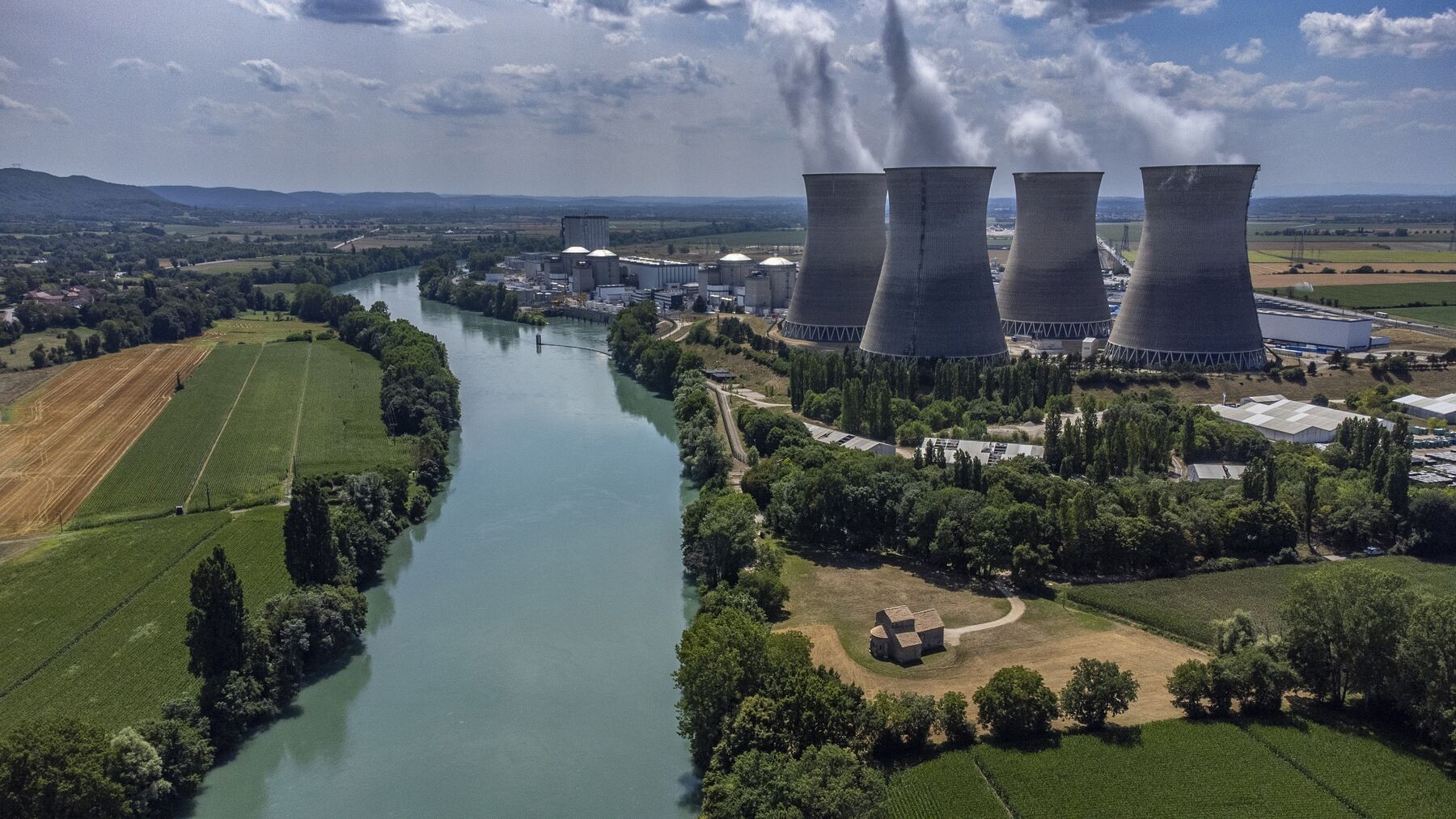
(Montel) French utility EDF has extended by two days a warning of power output curbs at three nuclear power plants – totalling 10 GW – along the river Rhone in southeastern France from tomorrow until Friday next week due to high temperatures.
Reporting by: Muriel Boselli, 08 Aug 2024, https://montelnews.com/news/f1e0a4b4-61b8-4d45-8027-d549192b910e/edf-warns-of-heat-related-cuts-at-3-nuclear-plants-10-gw
EDF could curb output at 3.6 GW Tricastin, 3.6 GW Bugey and 2.6 GW St Alban, the state-owned utility said on Thursday.
Weather service Meteo France has forecast temperatures to intensify in southeast France over the next few days, with peaks reaching 35C.
At some power plants, EDF uses river water to cool reactors. However, it could reduce output if river water temperatures or levels are too warm or too low.
Separately, EDF has extended a capacity cut warning at its 2.6 GW Golfech nuclear power plant in southwest France by three days to 17 August, due to warm temperatures.
Will Ukraine’s attack on Russian territory lead to the seizure of the Kursk Nuclear Plant?
Bellona, BY Dmitry Gorchakov, 9 Aug 24
As the Ukrainian army’s cross-border incursion into Russia’s Kursk Region rages into its fourth day, the objectives of the surprise attack have been grist for media speculation. Some have suggested the Ukrainians might target the Kursk Nuclear Power Plant as payback for Russia’s long-running seizure of Ukraine’s Zaporizhzhia nuclear plant.
It’s difficult to say how likely such a scenario is, but should it come to pass, it makes sense to briefly analyze the problems, risks, and dilemmas that would come of such an attack.
The specifics of the Kursk NPP
The Kursk Nuclear Power Plant is the closest Russian nuclear power plant to the Ukrainian border—just 60 km away. The idea that it could be at risk of attacks during a full-scale war became evident in the early months of Russia’s full-scale invasion of Ukraine. The Russia seizure of the Zaporizhzhia plant and territory of Chernobyl, followed by vigorous Ukrainian counterattacks, made clear that this would be a full-scale and potentially prolonged war with consequences for Russian territories.
As the war has dragged on, we have seen the Kursk NPP and its satellite city, Kurchatov, fall under attack by Ukrainian drones. No other Russian nuclear plants, which are much farther from the border and the front line, have been subjected to such attacks.
Currently, only two units are operating at the Kursk NPP, Units 3 and 4, each with a capacity of 1,000 MW. The first two units were shut down in 2021 and early 2024, respectively, after 45 years of operation. Fuel has been unloaded from Unit 1. All of the Kursk NPP’s units are RBMK-1000 reactors, similar to those used at Chernobyl. It’s worth noting that RBMK reactors — unlike the VVER-1000 reactors installed at the Zaporizhzhia NPP — are less protected against external threats. Much of our risk analysis for the Zaporizhzhia NPP during its seizure, presented in our 2023 report “The Radiation Risks of Seizing the Zaporizhzhia Nuclear Power Plant,” was based on a comparison of the characteristics of these reactor types.
Let’s examine some of the technical points and key vulnerabilities of the RBMK design. First, the lack of concrete containment structures (domes) over the reactor compartments makes RBMK reactors more vulnerable to damage from accidental or deliberate attacks by missiles, bombs, and artillery. Small arms or even light drones pose less danger.
Second, RBMK’s are single-circuit, boiling water reactors. This means that the same water and steam that pass through the reactor core go directly to the turbine, without intermediate circuits and heat exchangers. Therefore, depressurization and damage to the machine hall could lead to a radiation release………………………………
The seizure of nuclear facilities during war
Any armed seizure of a nuclear facility is unacceptable and extremely dangerous. Formally, this can be considered nuclear terrorism according to the International Convention for the Suppression of Acts of Nuclear Terrorism. Unfortunately, the reality of recent years in Europe has shown that many of the formulas embedded in international agreements, as well as many international organizations in general, are incapable of addressing, much less preventing, the modern challenges we are facing………………………………………………. https://bellona.org/news/nuclear-issues/2024-08-will-ukraine-attacks-on-russian-territory-lead-to-the-seizure-of-the-kursk-nuclear-plant
Modernizing Nuclear War
SCHEERPOST, 9 August 24
Seventy-nine years ago, the Truman administration dropped atom bombs on the Japanese cities of Hiroshima and Nagasaki, instantly killing approximately 100,000 innocent civilians. Host Robert Scheer calls these horrific incidents among the major instances of terror ever committed in human history.
Bill Hartung of the Quincy Institute for Responsible Statecraft joins Scheer Intelligence to discuss the history and legacy of nuclear weapons in relation to the military industrial complex, as a $2 trillion effort from the Pentagon to build “a new generation of nuclear-armed missiles, bombers, and submarines” takes place.
The central question underlying the conversation is asked by Scheer; “How could they, in good conscience, be talking about modernizing the devil’s weapon?”
Hartung claims that the Pentagon and arms manufacturers are doing so under the guise of deterrence, but also because of false stories of controllable nuclear war and even the “evil” consideration that it may be necessary to use nuclear weapons on certain populations.
“I think some of the folks promoting this stuff would like to believe that they’re not putting the future of humanity at risk. So they kind of tell themselves these stories, which they then tell to the public and hope they can persuade them.”
In the past, the horror of nuclear war was widely acknowledged to some extent by the public and the political class alike, as even Reagan said a nuclear war could never be won and should never be fought. Hartung claims that the belief that nuclear war could be winnable was previously “pushed off the agenda,” but it “seems to be back.”
Despite movies like Oppenheimer, which to some extent injected the issue of nuclear war into public discussion, citizens and the media remain largely uninterested and unaware of the dangers of nuclear war, especially with regard to the war in Ukraine.
This is reflected in the opinions of the American political class. Hartung points out that “if you go to Washington, there’s this sort of atmosphere that, if you’re for reducing these things, you know, you’re the one who’s unrealistic. The logic is flipped on its head …”
Transcript………………………………………………………………………………………………………….. more https://scheerpost.com/2024/08/09/modernizing-nuclear-war/
Remembering Hiroshima and Nagasaki – Nuke weapons for Japan?
August 7, 2024, https://beyondnuclear.org/remembering-hiroshima-and-nagasaki/
During the Hiroshima and Nagasaki commemoration events this week, Japan’s prime minister Fumio Kishida reiterated that despite the widening nuclear threats in the world, “we must continue moving forward” on the path to nuclear disarmament. The remarks come amidst on-going concerns that Japan could quickly develop nuclear weapons given its plutonium stockpile accumulated from its civil nuclear power program and commonly described as Japan’s “bomb in the basement”.
Last year, former US secretary of state Henry Kissinger said that Japan was “heading towards becoming a nuclear power in five years”. Kishida insisted in his remarks this week that Japan will work “towards the realization of a world without nuclear weapons.” Nevertheless, Japan has not signed the Treaty on the Prohibition of Nuclear Weapons.
Meanwhile, far from disarming, the world’s nuclear powers appear to be ramping up their arsenals. “As we mourn the loss of all those killed at Hiroshima and Nagasaki by US atomic bombs, in August 1945, we cannot avoid the fact that we are closer than ever to nuclear war,” writes CND general secretary, Kate Hudson, on Beyond Nuclear International this week. ” This is a bad time for humanity — and for all forms of life on Earth. It’s time for us to stand up and say No: we refuse to be taken into nuclear Armageddon.”
Each year in the greater Washington, DC area, a commemoration is held by the Hiroshima/Nagasaki Peace Committee of the National Capitol Region. In addition to a vigil downtown, an online event was also held this year, featuring speakers Gwen DuBois of Chesapeake Physicians for Social Responsibility; Linda Pentz Gunter of Beyond Nuclear; and Fan Yang of Women’s International League for Peace and Freedom and hosted by John Steinbach. A highlight of the event — available to watch on YouTube — were remarks made by Hiroshima survivor, Hideko Tamara. Contributions were also made by Melvin Hardy, Dennis Nelson, Ellen Thomas and James Wagner. Hardy described how children from All Souls Church Unitarian sent art supplies to Hiroshima children who then sent some of their pictures back to All Souls. (One is pictured in the headline image.) Many decades later, a trip was made to Hiroshima with the drawings and paintings for a meeting with some of the original artists. A film, Pictures from a Hiroshima Schoolyard, tells this moving story.
In Toronto, Canada, an exhibition was held of 100 photos commemorating the atomic bombings of Hiroshima and Nagasaki, including five taken by the only Japanese photographer present on the day in Hiroshima. All of the photos can be viewed on line. Read the article about the exhibition on Beyond Nuclear International.
While Cumbrian MPs Blindly Agitate for More Uranium Mining to Feed More Nuclear New Build, Indigenous Australians are celebrating Halt to Poisoning of their Lands

On By mariannewildart, https://mariannewildart.wordpress.com/2024/08/07/while-cumbrian-mps-blindly-agitate-for-more-uranium-mining-to-feed-more-nuclear-new-build-indigenous-australians-are-celebrating-halt-to-poisoning-of-their-lands/
Here in Cumbria MPs, most especially the new MP for Sellafield (apologies, MP for Whitehaven and Workington, Josh MacAlister) are agitating for new nuclear build on the floodplain of the River Ehen next to the bursting at the seams Sellafield nuclear waste site. New nuclear, even the so called “Small Modular Reactors” (actually near the size of the original Calder Hall reactors) would require new uranium – this is not a “home grown” or “clean” industry as its cheerleaders claim, the profligate amounts of uranium, high tensile steel, copper and a whole smorgasbord of toxic chemicals are shipped in and they outstrip any other industry in quantities and toxicity.
The start of the toxic uranium fuel cycle begins on the lands of indigenous peoples worldwide. In Australia a battle has been raging to stop ever more uranium mining, this time at Jabiluka. Now that battle has been won but the MP for Whitehaven and Workington wants indigenous peoples worldwide to carry on paying the price of polluted waters, poisoned lands and damaged health in order to continue with nuclear business as usual despite the fact that nuclear power’s most long lasting legacy is not “free electricity” far from it, energy bills will go up because successive governments’ have had an obsession with funding the nuclear industry at any price even asking consumers now to pay the price before they recieve any electricity and for generations after to try and ‘keep the wastes safe’.
“The announcement has been made that the mining lease will not be extended and the process to get Jabiluka into world heritage and Kakadu National Park can begin. A big shout out to the Traditional Owners, the @Mirarr for standing strong for this for generations, and thousands of people around the country standing with them.”
Meanwhile here in Cumbria this is what the local press fizzingly tell us “Cumbrian leaders put pressure on NDA over land at Moorside for SMRs. A letter signed by more than 100 political, business and union leaders is calling for urgent action to resolve land issues at Moorside so that new nuclear power stations can be built. Whitehaven and Workington MP Josh MacAlister wrote the letter, which has been signed by fellow Cumbrian MPs Julie Minns and Markus Campbell-Savours, local members of the House of Lords, Cumberland Council leader Mark Fryer, trade union leaders in the nuclear industry and dozens of local business leaders. Mr MacAlister says that unless urgent action is taken to resolve issues about land use at Moorside, west Cumbria will lose out in a competitive process that is now underway. Mr MacAlister says GBN will only select sites that have enough land available and the NDA (who own Sellafield) want to use much of the Moorside site for other decommissioning purposes. This has resulted in an impasse that, if left unresolved, will leave Cumbria behind in the race for new nuclear. The NDA says it is working with the government to consider how the land at Moorside may be used to enable new nuclear energy facilities, while taking into account how it might need to utilise the land in order to successfully deliver its mission. Mr MacAlister said: “In my first few weeks as an MP I’ve met with ministers, the NDA, GBN and leading industry figures. It’s become clear that there’s been a conspiracy of silence for years over plans for new nuclear in our area.In Cumbria 7th Aug 2024 https://www.in-cumbria.com/news/24501223.cumbrian-leaders-put-pressure-nda-land-moorside-smrs/“
No doubt Josh MacAlister MP for Whitehaven and Workington will be absolutely delighted to hear that as is the way of all ruthless corporations, yesterday “Mining company Energy Resources Australia (ERA) has launched legal action against the Commonwealth and Northern Territory governments over a decision not to renew its lease over the Jabiluka uranium mine. Surrounded by Kakadu National Park, the site at Jabiluka is one of the world’s largest and richest uranium deposits.”
Josh Macalister MP is the smiling assassin agitating to rip uranium out of the earth to fuel new nuclear on land next to Sellafield (on the flood plain of the river Ehen). Nice!
1 This Month

of the week – Shut Down Drone Warfare!


Tell the Ukrainian Government to Drop Prosecution of Peace Activist Yurii Sheliazhenko

Petition to revoke the licensing of the Near Surface Nuclear Disposal Facility (NSDF) at Chalk River. https://www.ourcommons.ca/petitions/en/Petition/Details?Petition=e-7247
To see nuclear-related stories in greater depth and intensity – go to https://nuclearinformation.wordpress.com
-
Archives
- March 2026 (237)
- February 2026 (268)
- January 2026 (308)
- December 2025 (358)
- November 2025 (359)
- October 2025 (376)
- September 2025 (257)
- August 2025 (319)
- July 2025 (230)
- June 2025 (348)
- May 2025 (261)
- April 2025 (305)
-
Categories
- 1
- 1 NUCLEAR ISSUES
- business and costs
- climate change
- culture and arts
- ENERGY
- environment
- health
- history
- indigenous issues
- Legal
- marketing of nuclear
- media
- opposition to nuclear
- PERSONAL STORIES
- politics
- politics international
- Religion and ethics
- safety
- secrets,lies and civil liberties
- spinbuster
- technology
- Uranium
- wastes
- weapons and war
- Women
- 2 WORLD
- ACTION
- AFRICA
- Atrocities
- AUSTRALIA
- Christina's notes
- Christina's themes
- culture and arts
- Events
- Fuk 2022
- Fuk 2023
- Fukushima 2017
- Fukushima 2018
- fukushima 2019
- Fukushima 2020
- Fukushima 2021
- general
- global warming
- Humour (God we need it)
- Nuclear
- RARE EARTHS
- Reference
- resources – print
- Resources -audiovicual
- Weekly Newsletter
- World
- World Nuclear
- YouTube
-
RSS
Entries RSS
Comments RSS
 nuclear-news