TODAY. World “experts” are kicking the nuclear waste can down the road – to our great grandchildren
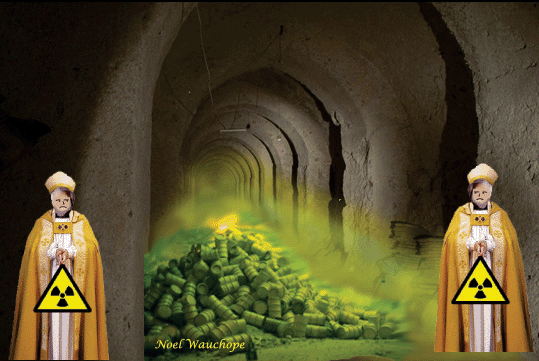
From https://theaimn.com/world-experts-are-kicking-the-nuclear-waste-can-down-the-road-to-our-great-grandchildren/ 10 Aug 24
The latest news from Germany really shows up this problem. IF conditions are ideal – a decision on a site for Germany’s underground nuclear waste repository could be made by 2074.
- That’s – 50 years to find a site.
- Then 20 years to build the underground dump.
- Then many decades for transporting and storing thousands of casks .
That’s just for Germany, which took the courageous decision to just shut down this filthy industry. Germany is not creating any more radioactive trash!
This is a comforting situation for today’s “nuclear experts”
Why is it comforting? Well, because they don’t need to worry about producing ever more of this toxic trash. They’ll be dead and gone long before it all has to get fixed. They can flummox around bleating about the marvels of deep disposal, enjoying their fat salaries, and leave it all for future generations to face.

II have previously written about the concept of “rolling stewardship”, advocated by Dr Gordon Edwards. This is a system whereby high level nuclear waste is kept above ground, in very strong containers. The containers are sited away from waterways, and are regularly monitored and repaired. This system, combined with the closing down of all nuclear reactors, would be a practical and honourable way to address the global radioactive waste threat. Expensive? Yes. But no more expensive than the current grandiose “expert” plans for deep disposal.
Sellafield apologises after guilty plea over string of cybersecurity failings

Nuclear site awaits sentencing over breaches that it admitted could have threatened national security
Anna Isaac and Alex Lawson, Fri 9 Aug 2024 https://www.theguardian.com/business/article/2024/aug/08/sellafield-apologises-guilty-plea-security-failings-nuclear–
Sellafield has apologised after pleading guilty to criminal charges relating to a string of cybersecurity failings at Britain’s most hazardous nuclear site, which it admitted could have threatened national security.
Among the failings at the vast nuclear waste dump in Cumbria was the discovery that 75% of its computer servers were vulnerable to cyber-attacks, Westminster magistrates court in London heard.
Information that could threaten national security was left exposed for four years, the nuclear watchdog revealed, and Sellafield said it had been performing critical IT health checks that were not, in fact, being carried out.
Late last year, the Guardian’s Nuclear Leaks investigation revealed a string of IT failings at the state-owned company dating back several years, as well as radioactive contamination and toxic workplace culture.
Sellafield is a sprawling rubbish dump for nuclear waste from weapons programmes and decades of atomic power generation. It has a workforce of about 11,000 people and is part of the Nuclear Decommissioning Authority, a taxpayer-owned and -funded quango.
The Guardian’s investigation also revealed concerns about external contractors being able to plug memory sticks into Sellafield’s system while unsupervised and that its computer servers were deemed so insecure that the problem was nicknamed Voldemort after the Harry Potter villain because it was so sensitive and dangerous.
Sellafield pleaded guilty to charges brought by the Office for Nuclear Regulation (ONR) in June, which relate to information technology security offences spanning a four-year period from 2019 to 2023.
The firm is now awaiting final sentencing, whichthe chief magistrate, Paul Goldspring, said would happen within weeks. The ONR has said it expects sentencing to take place in September.
At a sentencing hearing on Thursday, the court heard that a test had found that it was possible to download and execute malicious files on to Sellafield’s IT networks via a phishing attack “without raising any alarms”, according to Nigel Lawrence KC, representing the ONR.
The site, the world’s largest store of plutonium, was left vulnerable to internal and external cyber-attacks and 75% of its servers were insecure, Lawrence said, citing a report by Atos, a subcontractor at the site.
Sellafield’s own report, from the external IT company Commissum, found that any “reasonably skilled hacker or malicious insider” could access sensitive data and insert malware – computer code – that could then be used to steal information.
Euan Hutton, chief executive of Sellafield, apologised for failures spanning years in a written witness statement referred to by Paul Greaney KC, representing the company. Hutton said: “I again apologise on behalf of the company for matters which led to these proceedings … I genuinely believe that the issues which led to this prosecution are in the past.”
Hutton was in court but did not speak at the hearing.
Greaney said the company had tried to address its cybersecurity failings by changing IT management at the site and creating a new secure datacentre.
The barrister said some problems identified in recent years had been “turbo-charged” by the prosecution. Greaney said the failings were not a result of cost-cutting. “There was no penny-pinching,” he added.
The court also heard that a subcontractor was sent 4,000 files by mistake, 13 of which were classed as “official/sensitive”, without any alarm being triggered.
Sensitive nuclear information (SNI), the industry’s special classification system, was left vulnerable in part because of the use of “obsolete” technology including Windows 7 and Windows 2008, Lawrence said.
SNI is a mode of categorising information that may have national security implications, and has a special status in law, like other classified materials handled by the British security services or the civil service. Details are given SNI status if they are “deemed to be of value to an adversary planning a hostile act”, according to the ONR.
While all parties said the failings were very serious, the judge said he would need to balance the cost to the taxpayer with the need to deter others in the sector from committing similar offences.
The sentencing would be “new territory for all of us”, Goldspring said, given that no nuclear site had been prosecuted in this way before.
The National Audit Office, Britain’s public spending watchdog, launched an investigation this year into costs and risks at Sellafield.
The Guardian reported last year that the site systems had been hacked by groups linked to Russia and China in December last year, embedding sleeper malware that could lurk and be used to spy or attack systems.
At the time, Sellafield said it did not have evidence of a successful cyber-attack. Greaney told the court that there was no evidence found for an “effective” cyber-attack on Sellafield. The court heard that Sellafield’s operations centre was found to be “unable to adequately alarm and respond to tested attacks”.
A spokesperson for the company said: “We take cybersecurity extremely seriously at Sellafield, as reflected in our guilty pleas. The charges relate to historic offences and there is no suggestion that public safety was compromised.
“Sellafield has not been subjected to a successful cyber-attack or suffered any loss of sensitive nuclear information. We’ve already made significant improvements to our systems, network, and structures to ensure we are better protected and more resilient.”
The ONR declined to comment. Sellafield has agreed to pay £53,000 in legal costs
Analysis of Canadian Nuclear Association (CNA) recommendations for Budget 2025

The lack of new nuclear projects in Canada reflects investor decisions, not excess regulation. No nuclear project has been assessed since the Act came into force nearly five years ago.
Ole Hendrickson , 10 August 24
The House of Commons Standing Committee on Finance announced its annual pre-budget consultations process on June 24, 2024. It invited the submission of written briefs no later than August 2, 2024. The committee will table a report on these consultations in the House of Commons, with recommendations to be considered by the Deputy Prime Minister and Minister of Finance in their development of Budget 2025. On July 30, 2024, the Canadian Nuclear Association (CNA) submitted its recommendations.
Part 1 – “Clean Economy” Investment Tax Credit (ITC) Programs
The CNA brief refers to four “Clean Economy” investment tax creditprograms from Budget 2024. Three were passed into law in June 2024.
Nuclear projects should not be eligible for investment tax credits. Nuclear power is not clean. It produces vast amounts of pollutants and waste, ranging from toxic mine tailings to irradiated fuel rods. Providing tax credits for nuclear power represents poor economic and environmental policy.
The only apparent reason for providing investment tax credits for nuclear power is that the Minister of Natural Resources Canada, whose department provides “engineering and scientific guidance” for the ITC programs, has a mandate to promote nuclear power under the Nuclear Energy Act.
1. Clean Technology ITC
Small modular nuclear reactors (SMRs) are the only nuclear power projects eligible for the 15% refundable tax credit under this program. The accepted definition of an SMR is a reactor that has a power capacity of up to 300 megawatts electrical per unit, or roughly 900 megawatts thermal.
The CNA wants to expand the definition of an SMR to include reactors up to 1400 megawatts thermal, or roughly 470 megawatts electrical.
There is considerable evidence that SMRs would produce far more expensive electricity than other generating facilities, including larger nuclear reactors. Does the CNA anticipate that the 300-megawatt BWRX-300 reactors that Ontario Power Generation plans to build at the Darlington nuclear site will not be cost-competitive without additional subsidies?
2. Clean Hydrogen ITC
This ITC program provides refundable tax credits ranging from 15-40% depending on the carbon intensity of the hydrogen produced. Widespread use of hydrogen as an energy source would require expensive new infrastructure investments. Using expensive nuclear power to produce hydrogen would further increase costs. The CNA wants hydrogen produced by using nuclear power to hydrolyze water to be considered as a qualified clean hydrogen project. The Government of Canada has not provided details on eligible projects under this ITC program.
3. Clean Technology Manufacturing ITC
This ITC program provides refundable tax credits for “clean technology manufacturing and processing.” The CNA wants to see explicit mention of the extraction and processing of uranium as a “critical mineral”, of the manufacturing of nuclear energy equipment and nuclear fuels, and of the manufacturing of “equipment for lifecycle handling of uranium fuel,” as being eligible for tax credits.
All the activities in the nuclear fuel “lifecycle” generate waste that is hazardous to human health and difficult to manage. The use of robotic equipment to handle the highly radioactive spent nuclear fuel waste is one of the most expensive parts of this “lifecycle”. A “clean economy” program should not subsidize waste management for a particular industry, particularly when that industry has delayed its decommissioning and waste management activities for decades.
4. Clean Electricity ITC
Under this ITC program, which has not yet passed into law, the CNA wants to “include all components enabling clean electricity assets to continue operating in refurbishment expenditures.”
Ontario Power Generation and Bruce Power have active reactor refurbishment programs. The Ontario provincial government already provides a $7.3 billion taxpayer subsidy to hold down electricity rates and shield industrial and household ratepayers from reactor refurbishment costs. A new federal subsidy for refurbishment of Ontario’s reactors would further hide nuclear costs, and would provide no apparent benefit to Canadian taxpayers in other provinces.
Part 2 – Policies that “enhance the regulatory framework to expedite project approvals”
The CNA is seeking to restrict the public’s ability to participate in assessments of nuclear projects. This builds on proposals from a Ministerial Working Group on Regulatory Efficiency for Clean Growth Projects, and a review of the Physical Activities Regulations (the “Project List”) by the Impact Assessment Agency of Canada. Policy matters that go beyond the Committee’s request for views on 2025 Budget priorities should be debated by appropriate Parliamentary committees.
1. Exempting nuclear projects from impact assessment
Based on a plan (Building Canada’s Clean Future) created by a Ministerial Working Group on Regulatory Efficiency for Clean Growth Projects, the Impact Assessment Agency of Canada wishes to reduce the possibility that future nuclear projects will be assessed under the Impact Assessment Act. On July 30, 2024, the Agency released a Discussion paper on the review of the Physical Activities Regulations – the so-called “Project List” – with comments due September 27, 2024.
Proposals in the Agency’s discussion paper mirror those in the CNA’s submission to the Finance Committee, suggesting that the two may have been working together. The CNA wants to exempt nuclear reactors of any size that are built on “brownfield” sites (e.g., sites where coal- or gas-fired generating stations have been shut down), or on licensed nuclear sites, from assessment. At present, only reactors of up to 200 megawatts thermal on brownfield sites, or 900 megawatts thermal on licensed sites, are exempt. The CNA proposal would also limit technical assessments to “First of a Kind” reactors, with only site considerations for future reactors of a similar design.
The CNA also wants to exempt construction, expansion and decommissioning of uranium mines with an ore production capacity of up to 5,000 tons per day. This would double the current 2,500 tons/day exemption. And it wants to allow provincial assessments to replace federal assessments.
These are not constructive proposals. They would increase the likelihood that nuclear projects will generate conflicts and fail to gain social license. The Act improves the chances that a project will proceed by encouraging public participation in project planning stages, The ability of independent experts to examine technical details brings rigor to the assessment process.
The lack of new nuclear projects in Canada reflects investor decisions, not excess regulation. No nuclear project has been assessed since the Act came into force nearly five years ago.
2. Putting the Canadian Nuclear Safety Commission (CNSC) in charge of impact assessment
If a nuclear project is captured by the Physical Activities Regulations under the Impact Assessment Act, under Section 44 of the Act the Minister of the Environment must create a review panel, set the panel’s terms of reference, appoint the chairperson and at least two other members of the panel, and ensure that they are unbiased and free from any conflict of interest relative to the project.
The Minister also has the power to designate a project for assessment, even if it is not captured by the Project List. The CNA wants to remove the Minister’s powers and give them to the CNSC.
An expert panel report, Building Common Ground: A New Vision for Impact Assessment in Canada, noted the long-standing perception of a lack of independence and neutrality of the CNSC because of its close relationship with the industry it regulates, and its promotion of projects it is tasked with regulating. The panel found that the CNSC has eroded confidence in the assessment process, leading to widespread use of the term “regulatory capture” to describe this body.
Taking away the Ministers’ powers and reassigning them to the CNSC would be a regressive step, leading to further loss of social license for nuclear projects, as has been the case with the proposed Near Surface Disposal Facility at the federally owned Chalk River Laboratories.
3. Amending the Species at Risk Act
Under section 79 of the Species at Risk Act, the proponent of a project must “notify the competent minister or ministers in writing of the project if it is likely to affect a listed wildlife species or its critical habitat.”
The CNA recommends that section 79 be modified “to align with the Supreme Court of Canada opinion, focusing on federal jurisdiction.” The Court, in its reference decision on the Impact Assessment Act, considered the Species at Risk Act and found that the protection of migratory birds, fish, fish habitat, and aquatic species should be included in the definition of adverse federal effect in the Impact Assessment Act. The Court did not discuss amending the Species at Risk Act.
The Species at Risk Act applies to all wild species found in Canada and has provisions to promote cooperation with other governments and jurisdictions. The CNA recommendation to amend the Act in the context of Budget 2025 would represent an inappropriate use of budget legislation.
The Nagasaki Peace Declaration 9 August 2024
we call for the Japanese government to sign and ratify the Treaty on the Prohibition of Nuclear Weapons as soon as possible.
Everyone in the world, we are “global citizens” who live in the
huge community of Earth.
we call for the Japanese government to sign and ratify the Treaty on the Prohibition of Nuclear Weapons as soon as possible.
Shiro Suzuki,
Mayor of Nagasaki / First Vice President of Mayors for Peace 9 August 24
People making atomic bombs!
Rest from your work for a while and close your eyes.
It was on August 9, 1945!
An atomic bomb that you had made
Brought houses and assets to naught in a flash,
Completely devastating loving families.
Survivors had to
Recover from scratch
To follow a tough, long road to bloody lives
With deep concern that an “atomic bomb disease” would end
their lives any day and
Infinite grievance over the loss of their families and relatives
Haunting them forever.
This is a quote from a poem by Ms. Fukuda Sumako, a poet from
Nagasaki who was exposed to the atomic bombing at 23 and
devoted the rest of her life to making people aware of the misery
brought by the atomic bomb while combatting atomic bomb
disease.
Since that day, hibakusha, or atomic bomb survivors, have lived
with deep sorrow over the loss of their family members and
friends, scars left on their body, the serious effect of radiation
spoiling cells and causing various symptoms even after many
years, and the hardships of discrimination and life due to being
hibakusha.
Their immense pain and suffering caused by the atomic bombing
were not just of an immediate kind. Instead, hibakusha have
experienced them throughout their lifetime.
Nevertheless, hibakusha have continued to share their
experience of surviving severe hardships with strong
determination to ensure that no one in the world will again have
the same experience as theirs.
Since that day, hibakusha, or atomic bomb survivors, have lived
with deep sorrow over the loss of their family members and
friends, scars left on their body, the serious effect of radiation
spoiling cells and causing various symptoms even after many
years, and the hardships of discrimination and life due to being
hibakusha.
Their immense pain and suffering caused by the atomic bombing
were not just of an immediate kind. Instead, hibakusha have
experienced them throughout their lifetime.
Nevertheless, hibakusha have continued to share their
experience of surviving severe hardships with strong
determination to ensure that no one in the world will again have
the same experience as theirs.
Since that day, hibakusha, or atomic bomb survivors, have lived
with deep sorrow over the loss of their family members and
friends, scars left on their body, the serious effect of radiation
spoiling cells and causing various symptoms even after many
years, and the hardships of discrimination and life due to being
hibakusha.
Their immense pain and suffering caused by the atomic bombing
were not just of an immediate kind. Instead, hibakusha have
experienced them throughout their lifetime.
Nevertheless, hibakusha have continued to share their
experience of surviving severe hardships with strong
determination to ensure that no one in the world will again have
the same experience as theirs.
To achieve this, please visit the atomic-bombed cities and listen
carefully and conscientiously, as an individual, to hibakusha
sharing their pain and thoughts.
We also call for your dialogue and diplomatic efforts to explore a
path toward peaceful solutions, no matter how difficult the path is,
instead of choosing a path toward arms expansion or threats of
force.
The government of Japan, the only state attacked by atomic
bombs in war, must express a serious attitude of pursuing a world
without nuclear weapons.
As a step toward this, we call for the Japanese government to
sign and ratify the Treaty on the Prohibition of Nuclear Weapons
as soon as possible.
We also call for the Japanese government to firmly uphold the
principle of peace embodied in the Constitution of Japan and to
demonstrate its leadership in international efforts to ease the
heightened tension in Northeast Asia and advance disarmament
in the region, such as the Northeast Asia Nuclear-Weapon-Free
Zone initiative.
Moreover, we strongly request that further enhanced aid be given
to hibakusha, whose average age exceeds 85, and that relief
measures be adopted as soon as possible for those who were
exposed to the atomic bombings but have not yet been officially
recognized as hibakusha.
Everyone in the world, we are “global citizens” who live in the
huge community of Earth.
Imagine what would happen if a conflict like those found in the
current world escalated to bring about a nuclear war. It would
have a devastating impact not only on the lives of people but also
on the global environment, imposing a grave threat to the
existence of humankind.
That is why the abolition of nuclear weapons is an absolute
requirement for the survival of humankind, which can be viewed
as a prerequisite for the Sustainable Development Goals (SDGs)
striven for by the international community.
Nagasaki has recently seen increasing vigour of long-term efforts
to achieve a world without nuclear weapons, mainly among
younger generations. In May of this year, a peace-focused forum
supported by One Young World, a global community for young
leaders that is dubbed as the “junior Davos,” was held in
Nagasaki for the first time.
Circles of younger generations around the world working together
as leaders have expanded to various regions. They are the light
of our hope of building a sustainable and peaceful future.
People making peace!
Even if each of you has only a little power, you are never
powerless.
If we as global citizens speak up and work together, we will surely
overcome the current difficult situation. If we share our wisdom
with each other and partner with each other irrespective of any
difference in nationality, religion, race, gender, or generation, we
will surely fulfil our future vision.
Nagasaki firmly believes so.
I would like to express my deepest condolences for the lives
claimed by the atomic bombings.
Nagasaki will disseminate throughout the world a culture of
peace, that is, a culture of respecting others, fostering mutual
trust, and striving for solutions through dialogue in collaboration
with global citizens who hope to contribute to peace making.
I hereby declare that Nagasaki will continue its tireless efforts to
abolish nuclear weapons and realize permanent world peace so
that Nagasaki remains the last place to suffer an atomic bombing.
US Policy: Let Israel Escalate Against Iran, Then Tell Iran Not To Escalate Back
When Iran does whatever it’s about to do, we may be certain that the western empire and its propagandists in the mass media are going to frame it as an unprovoked and outrageous act of aggression and start babbling about “defending” Israel against its “attackers”.
Caitlin Johnstone, Aug 09, 2024, https://www.caitlinjohnst.one/p/us-policy-let-israel-escalate-against?utm_source=post-email-title&publication_id=82124&post_id=147506650&utm_campaign=email-post-title&isFreemail=true&r=1ise1&triedRedirect=true&utm_medium=email
In an article titled “U.S. Warns Iran of ‘Serious Risk’ if It Conducts Major Attack on Israel,” The Wall Street Journal reports that officials within the Biden administration have been warning Iran not to “escalate” against Israel in its planned retaliatory strikes for the assassination of a Hamas leader in Tehran.
“The United States has sent clear messaging to Iran that the risk of a major escalation if they do a significant retaliatory attack against Israel is extremely high,” an anonymous US official told The Wall Street Journal, adding that “there is a serious risk of consequences for Iran’s economy and the stability of its newly elected government if it goes down that path.”
As we sit awaiting Iran’s planned reprisal attack and hope dearly that it doesn’t lead to a major new war in west Asia, one can’t help but read such reports and think it sure would’ve been nice of the Americans to issue these kinds of warnings to Israel against escalating before it went on its insanely escalatory assassination spree in the capital cities of Iran and Lebanon.
You’ll never see western officials so enthusiastic about the idea of de-escalation as they are in those time periods when their side has just severely escalated tensions with an extreme act of aggression, but the other side has yet to retaliate. They remind you of a parent who lets their kid run around clobbering other children at the playground, then when another child goes to hit them back they rush in and start yelling about the need to play nice.
They’ve been doing this song and dance for the last few days, ever since it became clear that Iran was going to retaliate for the assassination of Hamas leader Ismail Haniyeh while he was a guest on their territory.
“Earlier, Vice President Harris and I were briefed in the Situation Room on developments in the Middle East,” President Biden’s Twitter account posted on Monday. “We received updates on threats posed by Iran and its proxies, diplomatic efforts to de-escalate regional tensions, and preparations to support Israel should it be attacked again. We also discussed the steps we are taking to defend our forces and respond to any attack against our personnel in a manner and place of our choosing.”
“Further attacks only raise the risk of dangerous outcomes that no one can predict and no one can fully control,” US Secretary of State Antony Blinken proclaimed on Tuesday.
“Further escalation in the Middle East is in no one’s interests,” tweeted UK Foreign Secretary David Lammy on Tuesday. “I spoke to Iran’s acting Foreign Minister, Ali Bagheri Kani, and cautioned that any Iranian attack would have devastating consequences for the region. Iran and all parties must urgently and immediately de-escalate.”
Israel’s powerful western backers are happy to let it run rampant throughout the region without making any meaningful warnings against its criminal actions or imposing any consequences on it whatsoever. But as soon as it becomes clear that Israel has crossed a red line and is about to get hit, these western empire managers turn into a bunch of hippies who just want peace and love.
When Iran does whatever it’s about to do, we may be certain that the western empire and its propagandists in the mass media are going to frame it as an unprovoked and outrageous act of aggression and start babbling about “defending” Israel against its “attackers”. Imperial history always begins right after Israel’s aggressions, and starts the clock as the retaliations for them emerge.
That’s how the imperial spin machine operates: reversing victim and victimizer, aggressor and defender, claiming to always be acting in self-defense while existing in a continuous state of attack. When the inevitable blowback from these aggressions turns up, they stare with Bambi-eyed innocence and call it an unprovoked attack launched by deranged madmen with hatred in their hearts, and use it to justify even more mass military slaughter in the parts of the world where they already wanted to inflict it.
Are you not tired of having your intelligence insulted like this? I know I am.
Search for nuclear waste storage facility could be delayed by decades
According to a report by the Freiburg-based Öko-Institut , the search for a final storage facility for
highly radioactive nuclear waste in Germany could take more than 40 years longer than expected. The responsible Ministry of the Environment does not believe this. The law currently stipulates that a site will be determined by 2031. However, it has long been clear that this timetable cannot be met. The study commissioned by the Federal Office for the Safety of Nuclear Waste Management (Base) confirms this and names 2074 as a possible date.
………………………..The search for a final storage facility is about finding a place deep underground for the permanent storage of 27,000 cubic meters of highly radioactive waste (1,750 so-called Castor containers) from more than 60 years of nuclear power in Germany. According to Base, this is five percent of the
radioactive waste in Germany , but it contains around 99 percent of the total radioactivity of all waste. The waste is currently stored in 16 above-ground interim storage facilities in various federal states, whose permits expire before 2050. https://www.zeit.de/wissen/umwelt/2024-08/atommuell-endlager-gutachten
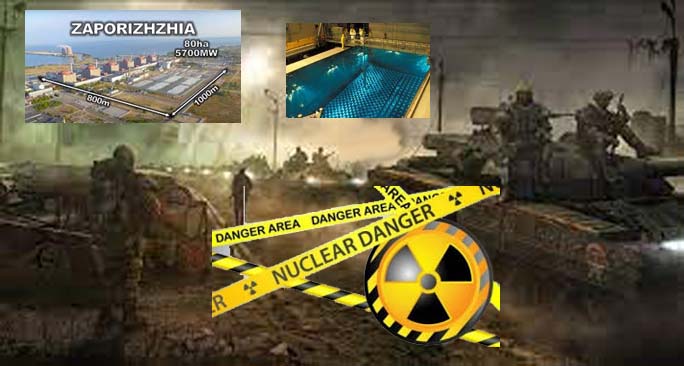
IAEA concerned about forest fires near occupied Zaporizhzhia Nuclear Power Plant
Tetyana Oliynyk — Thursday, 8 August 2024, https://www.pravda.com.ua/eng/news/2024/08/8/7469572/
he International Atomic Energy Agency (IAEA) believes that intense fires near the Zaporizhzhia Nuclear Power Plant, which is temporarily occupied by Russia, pose a risk for its external power supply.
Source: IAEA website, as reported by Ukrinform
Quote: “On several occasions over the past week, the IAEA Support and Assistance Mission to Zaporizhzhya (ISAMZ) observed several fires at various distances from the ZNPP and nearby villages. Over the weekend, the IAEA experts observed smoke coming from an area to the north of the ZNPP near the Zaporizhzhya Thermal Power Plant (ZTPP) inlet channel.”
Details: The agency noted that the fire was underneath the remaining overhead power cables that supply power to the plant.
Quote: “As the summer heat continues, such fires along the pathways of the two remaining lines place the ZNPP at risk of loss of external power. While there was no disconnection of either line on this occasion, the situation highlighted the fragility of off-site power at the ZNPP.”
Australia makes undisclosed ‘political commitments’ in new AUKUS deal on transfer of naval nuclear technology

ABC News, By defence correspondent Andrew Greene, 8 Aug 2024
In short:
AUKUS partners have struck a revamped agreement to allow the transfer of US and UK naval nuclear material to Australia.
Critics of the trilateral submarine project warn the new document could eventually see high-level radioactive waste stored locally.
What’s next?
The agreement between the US, UK and Australia will need to be ratified by each AUKUS partner before coming into effect.
Undisclosed “political commitments” have been made between the Albanese government and its AUKUS partners in a new agreement for the transfer of naval nuclear technology to Australia, which critics warn is likely to also allow radioactive waste to be dumped here.
The White House confirmed Australia, the United Kingdom and the United States had reached another significant “AUKUS milestone” that set up further trilateral cooperation that would be essential for this country to build, operate and maintain nuclear-powered submarines.
Under the AUKUS “optimal pathway” unveiled in San Diego last year, Australia will spend up to $368 billion over the next three decades to first purchase second-hand Virginia-class submarines and then develop a new SSN-AUKUS fleet using British technology.
In a letter to speaker the US House of Representatives speaker and the US Senate president, President Joe Biden urged Congress to give the revamped AUKUS agreement “favourable consideration”
Mr Biden’s letter explains that the new agreement would permit the continued communication and exchange of Naval Nuclear Propulsion Information (NNPI), including certain Restricted Data (RD), only previously shared between the US and UK…………………………………………………………………..
Concerns over radioactive waste ‘loophole’
AUKUS critics, including the Greens party, warn that the new agreement is likely to eventually allow high-level radioactive waste to be stored in Australia and for uranium enrichment to be undertaken locally, but the government insists that is not the case.
“A political assurance is there — a legal assurance, a legislative assurance, an institutional assurance is not. That gate needs to be closed, that loophole needs to be closed,” warns Dave Sweeney, a nuclear free campaigner from the Australian Conservation Foundation.
“And that’s one of many concerns and many options for interpretation of how AUKUS is operationalised that can add greater pressure, nuclear threat in our ports, in our harbours and waters and on land around the management of radioactive waste.” https://www.abc.net.au/news/2024-08-08/australia-makes-political-commitments-in-new-aukus-deal/104200814
Iran Is Better Positioned to Launch Nuclear-Weapons Program
New U.S. Intelligence Assessment Says. U.S. officials say Iran isn’t currently
seeking to build a nuclear device but is engaged in activities that could
help it do so. Iran is pursuing research that has put it in a better
position to launch a nuclear-weapons program, according to a new assessment
by U.S. intelligence agencies. The shift in Washington’s view of Iran’s
nuclear efforts comes at a critical time, with Iran having produced enough
highly enriched nuclear fuel for a few nuclear weapons.
Wall St Journal 9th Aug 2024
Biden’s $1.5 Billion Deal To Resurrect A Nuclear Plant Is Facing Fresh Drama

An ex-employee at Michigan’s Palisades plant is throwing a wrench in the first-of-a-kind revival plan.
Huffington Post, By Alexander C. Kaufman, Aug 9, 2024,
The United States’ effort to reverse the permanent shutdown of a nuclear station for the first time hit a potential snag this week when an ex-employee at the facility went public with safety concerns about reopening the 53-year-old power plant.
Now the company that owns the Palisades Nuclear Generating Station on Michigan’s southwest coast is hitting back at what it called a series of “assumptions” and “inaccurate statements” from Alan Blind, a former engineering director…………………
In an unusually pointed 1,000-word rebuttal, Holtec said “significant investments, upgrades, and modifications were made by the prior owner to dramatically and measurably improve plant reliability” in the nine years after Blind’s departure. The company said the process is “on schedule” and announced at a public meeting this month that the plant is on track to reopen in October 2025.
But Blind cast doubt on Holtec’s proposed budget and timeline for restoring Palisades given that no U.S. reactor has ever come back online after ceasing operations ahead of a planned demolition.
Resurrecting the Palisades plant is among the most closely watched nuclear projects in the nation now that construction is finally finished on the only two new reactors built from scratch in a generation.
While atomic energy is considered by far the most reliable source of carbon-free electricity ever harnessed, the steep cost and decade-long timelines for constructing new plants limit the potential for nuclear power to meet Americans’ surging electricity demand, stem rising blackouts and slash planet-heating pollution from fossil fuels.
New laws Congress passed over the past three years made billions of dollars available to the nuclear energy industry to extend the operating lives of existing plants, build new reactors and catch up with Russia and China on next-generation nuclear power technologies.
The money is going out. In January, the Biden administration put up $1.1 billion to keep California’s last nuclear power station from closing. Two months later, the Department of Energy offered Holtec a loan worth $1.5 billion to make Palisades the first U.S. nuclear plant to ever come back online after shutting down in preparation for decommissioning……..https://www.huffpost.com/entry/palisades-nuclear-plant-michigan-drama_n_66b676a2e4b044cc5e99b7fc
IAEA chief calls for restraint as fighting remains ongoing ‘in the vicinity’ of Russia’s Kursk Nuclear Power Plant

by Dmytro Basmat, Kyiv Independent 10th Aug 2024
International Atomic Energy Agency (IAEA) Director General Rafael Mariano Grossi called on both Kyiv and Moscow to “exercise maximum restraint” in order to avoid a nuclear accident as fighting is reportedly ongoing in the region around the Kursk Nuclear Power Plant (KNPP).
In a statement issued by the IAEA on Aug. 9, Grossi said that a nuclear accident at the KNPP would have “the potential for serious radiological consequences.”
Grossi noted that two of the six nuclear reactors at the KNPP are in shutdown, while another two are fully operational. The remaining two reactors are under construction.
The statement comes as Ukraine’s continues its surprise incursion across the border into Kursk Oblast, with Ukraine reportedly making gains deeper into Russian territory.
Earlier in the day on Aug. 9, a fire caused by an alleged drone attack on a power substation led to power outages in several areas of Kurchatov which houses the KNPP, regional Governor Alexei Smirnov claimed.
On Aug. 8, Kurchatov’s mayor, Igor Korpunkov, claimed that battles are ongoing “a few dozen kilometers” from the town.
Independent Russian news outlet IStories reported on Aug. 9 that Russia is currently preparing to defend the Kursk Nuclear Power Plant as Ukrainian troops are approaching it.
The entrances to the Kursk Nuclear Power Plant were blocked as of the afternoon of Aug. 9, the pro-government regional newspaper network Bloknot claimed, citing its undisclosed sources.
Everything at the nuclear power plant’s units under construction has been de-energized, and construction workers have left the site, Bloknot claimed………………………………………..
Russia’s Emergency Situations Ministry also said on Aug. 9 that the situation in Kursk Oblast had been declared a “federal emergency,” and began sending additional military equipment into the region. https://kyivindependent.com/iaea-chief-calls-for-restraint-to-ensure-nuclear-safety-at-kursk-nuclear-power-plant/
Spy cop ‘made up absurd bomb plot’ over nuclear waste on railway route
Undercover officer infiltrated ‘anarchist movement’ in the early 1980s
Friday, 9th August — By Tom Foot, https://www.islingtontribune.co.uk/article/spy-cop-made-up-absurd-bomb-plot-over-nuclear-waste-on-railway-route
A SPY cop’s report about a plot to blow up North London Line trains transporting nuclear waste was an absurd fantasy used to justify a top secret undercover unit’s existence, an inquiry has heard.
An officer who infiltrated the “anarchist movement” in the early 1980s claimed “people against the nuclear programme built a bomb” that was “actually found” on the overground railway that runs through Islington.
The route goes through Highbury and Islington station and has recently been renamed the Mildmay Line by London Mayor Sadiq Khan.
The explosive claims from Roger Pearce, known to the inquiry as officer HN85, are discredited by several activists in statements published by the Undercover Policing Inquiry for the first time this week.
The statements tell how for many years nuclear waste was transported on the line from power stations in Kent, Suffolk and Essex to Sellafield, Cumbria.
The documents show how peace groups feared a terrorist attack on the trains could cause a national emergency and considered planting a fake bomb on the network for publicity.
The witness statement from Michael Zeitlin, a campaigner for the anti-nuclear movement, said: “I firmly believe that HN85 has deliberately suggested that a real bomb was planted in order to elevate the status of his reports and so justify his spying.
“I am convinced that any possible ‘bomb on the North London Line’ refers to informal discussions of placing a fake bomb as a publicity stunt, in order to draw attention to the threat created by the transportation of nuclear waste through residential areas.
“The idea that an actual bomb would have been planted is patently absurd as the whole issue was one of public safety. Such a bomb plot does sounds very much like fiction as might be found in a novel.”
The documentss show how a meeting of the Hampstead CND branch had heard discussions about “some form of action to protest against the transportation of nuclear fuel” but this had been “completely taken out of context and then grossly exaggerated” by the undercover officer.
Mr Pearce’s statement to the inquiry said: “There were people who were prepared to take violent action against the nuclear policy of the UK and I felt this provided justification for reporting on them.
“People against the nuclear programme, including anarchists who were my associates, built a bomb on the North London Line which transport nuclear waste.”
The inquiry docs show how Roger Pearce – there is no reporting restriction on using his name – trained as an Anglican Priest at Durham before joining the police in 1973.
He joined the Special Demonstration Squad that was set up by the Met to “prevent violent disorder” but led to officers spying on dozens of left-wing organisations and pacifist groups over four decades with little to no gain.
Training for the “top secret unit” took place at Holborn police station, Mr Pearce’s witness statement reveals, while recruitment took place on a “tap on the shoulder in the corridor” basis.
He chose the “legend” Adrian Roger Thorley, a name taken from a child who was killed in a road accident in in Stoke on Trent, and lied about being a van driver delivering spare parts for the car company Ford.
He lived in a “cover flat” off the Goldhawk Road in west London and wore red and black with shoes with “worn through soles”, claiming he was given the prestigious nickname “Trotsky” by activists he was spying on.
“Using a deceased child’s identity was a distasteful practice and a violation of privacy but we felt it would never be revealed,” his statement said.
The UCP Inquiry was launched in 2017 after it was revealed that some SDS officers used names of dead children and fathered children with activists.
Huge resources were ploughed into the discredited project with critics saying the ends did not justify the means.
More than one million documents have been submitted to the inquiry –already the longest and most expensive in British history – that is not expected to conclude until 2026.
The Space Force can require private companies to cut off service to their other customers.

Space Force Seeks Industry Input On Draft Civil Reserve Framework
The U.S. Space Force is calling on the commercial space industry to weigh in on its draft plan for a Commercial Augmentation Space Reserve.
Released through a request for information, the Space Force’s draft plan includes several questions about whether the proposed incentives are enough to encourage participation from commercial companies.
The framework proposes two levels of industry involvement. The first level supports regular and surge operations through pre-negotiated agreements. The second level, known as “full CASR execution,” kicks in when the Secretary of Defense orders top-priority support from commercial participants.
At this point, the Space Force can require companies to cut off service to their other customers, if necessary, to focus on military needs, resulting in concern about the potential loss of income if companies are required to deny service to other customers during a crisis.
To address this, the RFI asks for feedback on nine proposed incentives, such as early R&D funding, preferred contract status with the Space Force, and financial protections against potential losses if satellites are damaged during operations.
The U.S. Space Force <https://www.spaceforce.mil/> is reportedly https://breakingdefense.com/2024/08/space-force-asks-industry-to-critique-draft-civil-reserve-framework-including-incentives/> calling on the commercial space industry to weigh in on its draft plan for a Commercial Augmentation Space Reserve (CASR). This initiative aims to create a commercial space reserve fleet that supports national security during both peacetime and conflict. Released through a request for information (RFI), the Space Force’s draft plan includes several questions about whether the proposed incentives are enough to encourage participation from commercial companies.
The CASR framework, developed by the Space Systems Command’s Commercial Space Office, led by Col. Rich Kniseley, builds on the concept of the Air Force’s Civil Reserve Air Fleet but adapts it to the unique challenges of space operations. Unlike the Air Force’s model, which involves aircraft, the CASR must account for the diverse capabilities provided by different space systems. This requires a more tailored approach to each mission area.
The framework proposes two levels of industry involvement. The first level supports regular and surge operations through pre-negotiated agreements. The second level, known as “full CASR execution,” kicks in when the Secretary of Defense orders top-priority support from commercial participants.
At this point, the Space Force can require companies to cut off service to their other customers, if necessary, to focus on military needs. A key concern for commercial companies is the potential loss of income if they are required to deny service to other customers during a crisis.
To address this, the RFI asks for feedback on nine proposed incentives, such as early R&D funding, preferred contract status with the Space Force, and financial protections against potential losses if satellites are damaged during operations.
The Space Force plans to begin initial CASR pilot contracts soon, with the goal of achieving initial operational capability by fiscal year 2026. The RFI represents an important step in engaging industry stakeholders to ensure that the final CASR framework is both effective and fair, balancing national security needs with commercial interests.
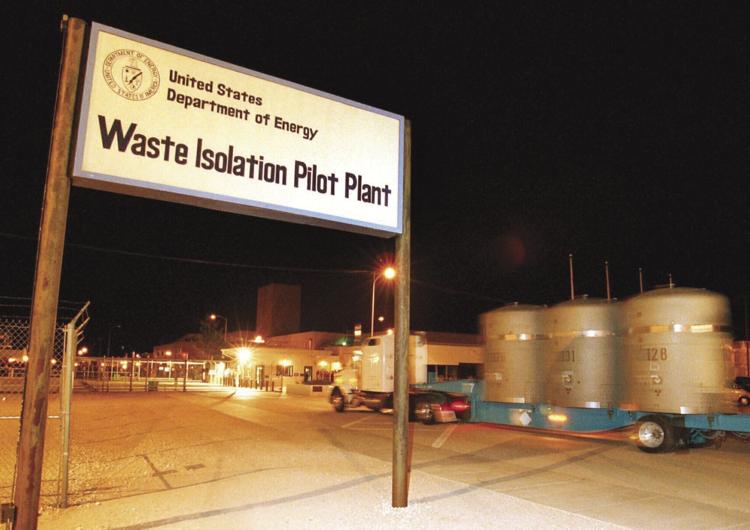
EPA Public Meetings about Waste Isolation Pilot Plant (WIPP) Expansion: August 26th in Carlsbad and August 28th in Santa Fe
| Concerned Citizens for Nuclear Safety | Aug 9, 2024, https://nuclearactive.org/ |
EPA Public Meetings about WIPP Expansion: August 26th in Carlsbad and August 28th in Santa Fe
The Department of Energy (DOE) wants to expand its operations at the Waste Isolation Pilot Plant (WIPP) for plutonium-contaminated waste from the fabrication of nuclear weapons. In March, DOE submitted a Planned Change Request to the Environmental Protection Agency (EPA) seeking permission to mine and operate two underground disposal panels in the WIPP underground disposal facility. EPA wants to hear from you and is hosting public meetings in Carlsbad and Santa Fe the week of August 26th. https://www.epa.gov/radiation/wipp-news#WIPP-PCR
EPA has one of two ways to decide whether to grant permission. One is through an internal administrative process. The second is through a legal rulemaking that allows the public to present legal challenges to the decision. A full rulemaking and a comprehensive review of the risks from DOE’s proposed changes is the only way to ensure nuclear safety.
Further, DOE wants to significantly expand the WIPP underground with Panels 11 and 12 and eventually mine seven additional panels – Panels 13 through 19 – to bring new types of waste to WIPP, including surplus plutonium. As a result EPA requested additional scientific data and information about how seven new panels and new types of waste would affect WIPP’s ability to contain the waste for 10,000 years.
To help you prepare public comments, the Stop Forever WIPP Coalition is hosting a virtual educational webinar on Wednesday, August 21st from 6 to 8 pm. Don Hancock, the Director of the Southwest Research and Information Center Nuclear Waste Program http://sric.org/ , and Doug Meiklejohn, the Water Quality and Land Restoration Advocate at Conservation Voters of New Mexico https://cvnm.org/ , will present about the DOE Planned Change Request, EPA’s decision making process, and how you can help stop WIPP expansion. Zoom registration link: https://us02web.zoom.us/meeting/register/tZckdu2urzovG9HUHimFBKcTho4p_amGvt8L#/registration
The informational webinar will prepare you to provide public comments at the in-person and virtual EPA meeting on Monday, August 26th from 2 to 4 pm at the DOE’s Carlsbad Field Office, 4021 National Parks Highway. Zoom registration link:
https://usepa.zoomgov.com/meeting/register/vJIsdeiqrTwpHUkjZ1z_djiz7fqgYMDqcc8
On Wednesday, August 28th from 1 to 3 pm in Santa Fe, EPA will host an in-person and virtual technical meeting among experts about planned changed request. The public is invited to observe. Zoom registration link: https://usepa.zoomgov.com/meeting/register/vJIsdOyqqjosG2w3uwOoOk4UNSxZwyXxE2s
From 6 to 8 pm EPA will host an in-person and virtual public meeting and receive comments about DOE’s Planned Change Request. https://usepa.zoomgov.com/meeting/register/vJIsdumqrzIvHZWmhyQ_Jh7EBe1EcgTmi5Y
Both Santa Fe meetings will take place in the Canyon Ballroom at the Hilton Santa Fe-Historic Plaza, 100 Sandoval Street.
‘Massive disinformation campaign’ is slowing global transition to green energy

UN says a global ‘backlash’ against climate action is being stoked by fossil fuel companies
Fiona Harvey Environment editor, Thu 8 Aug 2024, https://www.theguardian.com/environment/article/2024/aug/08/fossil-fuel-industry-using-disinformation-campaign-to-slow-green-transition-says-un
Fossil fuel companies are running “a massive mis- and disinformation campaign” so that countries will slow down the adoption of renewable energy and the speed with which they “transition away” from a carbon-intensive economy, the UN has said.
Selwin Hart, the assistant secretary general of the UN, said that talk of a global “backlash” against climate action was being stoked by the fossil fuel industry, in an effort to persuade world leaders to delay emissions-cutting policies. The perception among many political observers of a rejection of climate policies was a result of this campaign, rather than reflecting the reality of what people think, he added.
“There is this prevailing narrative – and a lot of it is being pushed by the fossil fuel industry and their enablers – that climate action is too difficult, it’s too expensive,” he said. “It is absolutely critical that leaders, and all of us, push back and explain to people the value of climate action, but also the consequences of climate inaction.”
He contrasted the perception of a backlash with the findings of the biggest poll ever conducted on the climate, which found clear majorities of people around the world supporting measures to reduce greenhouse gas emissions. The survey found 72% of people wanted a “quick transition” away from fossil fuels, including majorities in the countries that produce the most coal, oil and gas. Green parties and plans may have suffered reverses in some parts of the world, he said, but in others they have gained seats, and seen policies that would once have been considered radical enter the mainstream.
Governments must take note, said Hart, who acts as special adviser on climate to the UN secretary general, António Guterres. “This should alert political leaders – those that are ambitious are not only on the right side of history, they’re on the side of their people as well.
“Climate appears to be dropping down the list of priorities of leaders,” he said. “But we really need leaders now to deliver maximum ambition. And we need maximum cooperation. Unfortunately, we are not seeing that at the moment.”
He warned that the consequences of inaction were being felt in rich countries as well as poor. In the US, many thousands of people are finding it increasingly impossible to insure their homes, as extreme weather worsens. “This is directly due to the climate crisis, and directly due to the use of fossil fuels,” he said. “Ordinary people are having to pay the price of a climate crisis while the fossil fuel industry continues to reap excess profits and still receives massive government subsidies.”
Yet the world has never been better equipped to tackle climate breakdown, Hart added. “Renewables are the cheapest they’ve ever been, the pace of the energy transition is accelerating,” he said.
Governments should also take care to ensure that their climate policies did not place unfair burdens on those on low incomes, as poorly designed measures could hurt the poor, according to Hart. “Each country will really need to ensure its transition is well planned to minimise the impact on people and vulnerable populations, because a lot of the so-called pushback comes when there’s a perception that the costs on poor and vulnerable persons are being disproportionately felt,” he said.
For that reason, the UN is calling for new national plans on the emissions reductions required under the 2015 Paris agreement, in which governments must set out clearly not just their targets but how they will be achieved through policy, and what the probable impacts are.
The new national plans, called nationally determined contributions (NDCs), should be “as consultative as possible so that whole segments of society – young people, women, children, workers – will be able to provide their perspective on how the transition should be planned and well-managed, and how it will be financed”, he said.
“Despite everything we see [in the form of extreme weather], we’re still not seeing the level of ambition or action that the world desperately needs.”
1 This Month


Tell the Ukrainian Government to Drop Prosecution of Peace Activist Yurii Sheliazhenko

Petition to revoke the licensing of the Near Surface Nuclear Disposal Facility (NSDF) at Chalk River. https://www.ourcommons.ca/petitions/en/Petition/Details?Petition=e-7247


of the week – STOP SMALL MODULAR REACTORS IN CANADA
To see nuclear-related stories in greater depth and intensity – go to https://nuclearinformation.wordpress.com
-
Archives
- March 2026 (163)
- February 2026 (268)
- January 2026 (308)
- December 2025 (358)
- November 2025 (359)
- October 2025 (376)
- September 2025 (258)
- August 2025 (319)
- July 2025 (230)
- June 2025 (348)
- May 2025 (261)
- April 2025 (305)
-
Categories
- 1
- 1 NUCLEAR ISSUES
- business and costs
- climate change
- culture and arts
- ENERGY
- environment
- health
- history
- indigenous issues
- Legal
- marketing of nuclear
- media
- opposition to nuclear
- PERSONAL STORIES
- politics
- politics international
- Religion and ethics
- safety
- secrets,lies and civil liberties
- spinbuster
- technology
- Uranium
- wastes
- weapons and war
- Women
- 2 WORLD
- ACTION
- AFRICA
- Atrocities
- AUSTRALIA
- Christina's notes
- Christina's themes
- culture and arts
- Events
- Fuk 2022
- Fuk 2023
- Fukushima 2017
- Fukushima 2018
- fukushima 2019
- Fukushima 2020
- Fukushima 2021
- general
- global warming
- Humour (God we need it)
- Nuclear
- RARE EARTHS
- Reference
- resources – print
- Resources -audiovicual
- Weekly Newsletter
- World
- World Nuclear
- YouTube
-
RSS
Entries RSS
Comments RSS
 nuclear-news