Israeli policy means ‘difficult to know’ how close world is to nuclear war, warns International Campaign to Abolish Nuclear Weapons (ICAN)
By Thomas Moller-Nielsen | Euractiv, 6 August 24, https://www.euractiv.com/section/global-europe/news/israeli-policy-means-difficult-to-know-how-close-world-is-to-nuclear-war-warns-anti-nuclear-weapons-group/
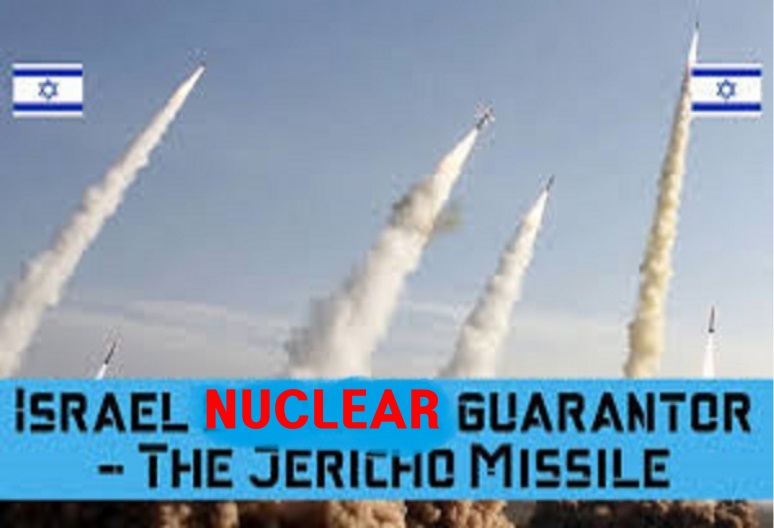
Israel’s policy of strategic ambiguity over its nuclear weapons arsenal makes it “difficult to know” how close the current crisis in the Middle East is to escalating into a nuclear war, a leading anti-nuclear weapons group has warned.
The International Campaign to Abolish Nuclear Weapons (ICAN)—a Geneva-based Nobel Peace Prize-winning group—said that Israel’s strategy of neither confirming nor denying its possession of nuclear weapons makes it hard to predict whether an imminent anticipated attack by Hezbollah or Iran could trigger a nuclear response.
“As the country refuses to confirm or deny it has such weapons, little is known about [Israel’s] arsenal, but experts believe it can launch nuclear weapons using missiles, submarines and aircraft,” Susi Snyder, ICAN’s Programme Coordinator, told Euractiv.
“Israel is also opaque about the circumstances under which it would use nuclear weapons so it is difficult to know how close we might be to the use of nuclear weapons,” she added.
Tensions have risen further in the Middle East following the assassination last week of Hezbollah commander Fuad Shukur in Beirut and Hamas political chief Ismail Haniyeh in Tehran. Both the Lebanese and Palestinian militant groups are backed by Iran.
Israel has confirmed that it killed Shukur but has neither confirmed nor denied its involvement in Haniyeh’s death. It blames Hezbollah for a rocket attack on a soccer field in the Israeli-occupied Golan Heights last month, in which 12 children were killed.
Hezbollah has continually exchanged rocket fire across Israel’s northern border with Lebanon since Hamas launched a surprise attack on Israel on 7 October that killed roughly 1,200 Israelis and triggered the current war in Gaza.
More than 40,000 Palestinians have been killed in Israel’s retaliatory offensive, according to Gaza’s health ministry.
EU continues to call for restraint
Asked about the potential of the current crisis to escalate further, a European Commission spokesperson directed Euractiv to a statement published on Sunday by G7 foreign ministers urging all relevant parties in the Middle East “to refrain from perpetuating the current destructive cycle of retaliatory violence, to lower tensions and engage constructively toward de-escalation”.
The spokesperson also confirmed that Enrique Mora, one of the EU’s top diplomats who was in Tehran at the time of Haniyeh’s assassination, had left the country.
Both Mora and Haniyeh had been in Tehran to attend the inauguration of Iran’s new president, Masoud Pezeshkian. Mora subsequently held talks with top Iranian officials and suggested on social media that EU-Iran relations had entered a “new chapter”.
Citing “three sources briefed on the call”, Axios reported that US Secretary of State Antony Blinken told his G7 counterparts over the weekend that an attack by Iran and Hezbollah against Israel could begin on Monday (5 August).
On Friday (2 August), the US sent additional fighter jets and warships to the region in an apparent bid to deter military action by Iran and Hezbollah, both of which have vowed retaliatory attacks on Israel.
US President Joe Biden was also reportedly set to meet with his national security team cabinet on Monday to discuss the crisis.
Israel, which has possessed nuclear weapons since the 1960s, has repeatedly said that it “will not be the first to introduce nuclear weapons into the Middle East”.
Together with India and Pakistan, it is one of three of the nine nuclear-armed countries that has never signed the Non-proliferation Treaty (NPT), which aims to prevent the global spread of nuclear weapons.
Arms Control Association, a US-based NGO, estimates that Israel currently has 90 plutonium-based nuclear warheads.
How to avoid ‘disaster’
Snyder also emphasised that “any use of nuclear weapons” in the current crisis “would be a disaster for the region and the world”.
“A single nuclear weapon would likely kill hundreds of thousands of civilians and injure many more; radioactive fallout could contaminate large areas, including in the country that used the weapon, particularly if used against a nearby target which would be the case in the Middle East,” she said.
Snyder also urged citizens to pressure their governments to sign up to the Treaty on the Prohibition of Nuclear Weapons (TPNW), a 2021 UN agreement more stringent than the NPT which expressly prohibits signatories from developing, possessing, or threatening to use nuclear weapons.
“Policymakers and the public in countries that have not yet joined the treaty should encourage their governments to join the TPNW without delay, as it is the only treaty which comprehensively outlaws nuclear weapons and provides for their elimination,” she said.
None of the world’s nine nuclear-armed countries have signed the TPNW. In addition to Israel, the US, Russia, China, the United Kingdom, France, North Korea, Pakistan and India all currently possess nuclear weapons.
No comments yet.
1 This Month

of the week – Shut Down Drone Warfare!


Tell the Ukrainian Government to Drop Prosecution of Peace Activist Yurii Sheliazhenko

Petition to revoke the licensing of the Near Surface Nuclear Disposal Facility (NSDF) at Chalk River. https://www.ourcommons.ca/petitions/en/Petition/Details?Petition=e-7247
To see nuclear-related stories in greater depth and intensity – go to https://nuclearinformation.wordpress.com
-
Archives
- April 2026 (103)
- March 2026 (251)
- February 2026 (268)
- January 2026 (308)
- December 2025 (358)
- November 2025 (359)
- October 2025 (376)
- September 2025 (257)
- August 2025 (319)
- July 2025 (230)
- June 2025 (348)
- May 2025 (261)
-
Categories
- 1
- 1 NUCLEAR ISSUES
- business and costs
- climate change
- culture and arts
- ENERGY
- environment
- health
- history
- indigenous issues
- Legal
- marketing of nuclear
- media
- opposition to nuclear
- PERSONAL STORIES
- politics
- politics international
- Religion and ethics
- safety
- secrets,lies and civil liberties
- spinbuster
- technology
- Uranium
- wastes
- weapons and war
- Women
- 2 WORLD
- ACTION
- AFRICA
- Atrocities
- AUSTRALIA
- Christina's notes
- Christina's themes
- culture and arts
- Events
- Fuk 2022
- Fuk 2023
- Fukushima 2017
- Fukushima 2018
- fukushima 2019
- Fukushima 2020
- Fukushima 2021
- general
- global warming
- Humour (God we need it)
- Nuclear
- RARE EARTHS
- Reference
- resources – print
- Resources -audiovicual
- Weekly Newsletter
- World
- World Nuclear
- YouTube
-
RSS
Entries RSS
Comments RSS
 nuclear-news
Leave a comment