Eastern Europe’s purchase of US nuclear reactors is primarily about military ties, not climate change

Military linkages. For countries like Romania and Poland, the rationale offered for supporting nuclear energy, namely climate mitigation, is just one face of the coin. A parallel set of military developments are also at play.
Poland also tied itself militarily to the United States by becoming part of US missile defense infrastructure.
It should be clear who would profit most at the expense of the Polish public.
By Maha Siddiqui, M.V. Ramana | August 2, 2024, https://thebulletin.org/2024/08/eastern-europes-purchase-of-us-nuclear-reactors-is-primarily-about-military-ties-not-climate-change/
The nuclear industry hasn’t been so excited in a while. From the pledge to triple nuclear energy by 2050 made by around 20 countries during the 28th UN climate summit in Dubai, United Arab Emirates to the recent report to the G20 by the International Atomic Energy Agency on speeding up investment into nuclear power to meet net zero goals, there is much talk about a new round of nuclear reactor construction.
Countries in Eastern Europe, such as Poland, are active participants in this effort to rebrand nuclear energy as clean and climate friendly. Poland’s inclusion in this list should be surprising: Its electricity primarily comes from fossil fuels, and the country has not committed to any net-zero target, making it “the lowest-placed EU nation” in its ability to reach net zero emissions by 2050. Nevertheless, in 2023, Poland’s government announced plans to import nuclear reactors.
Even though it promotes nuclear power as a way to meet climate goals, Poland and other countries in Eastern Europe seem to be using nuclear purchases for geopolitical leverage with the United States. That desire is evident in their parallel actions in the military front. Given the ongoing war in Ukraine and tensions in multiple parts of the world, the combination of geopolitics and nuclear technology may prove dangerous, even as it is ineffective at mitigating climate change.
Nuclear talk. In recent years, Poland has entered into a number of agreements to build nuclear reactors, including the in-vogue small modular reactors (SMRs) from the United States and large reactors from South Korea. Poland has attempted to build nuclear reactors in the past—in 2009, then-Prime Minister Donald Tusk announced plans to build two nuclear plants, with the first to begin operating in 2020. Those plans went nowhere.
Seen in that light, the rash of recent announcements have a desperate ring to them. Not surprisingly, Tusk has continued to advocate for building nuclear reactors, stating in November 2023 that Poland had to pursue nuclear energy “as quickly as possible.” But he has pushed back plans to start construction: The “first pour of concrete”—which is the traditional marker of project initiation—is now scheduled for 2028, two years after the earlier projected date of 2026.
Romania has taken a somewhat similar path. In 2021, on the sidelines of the 26th UN climate conference in Glasgow, Romanian officials signed a cooperation agreement on small modular reactors with NuScale Power. At that time, Romanian Energy Minister Virgil Popescu talked about developing SMRs “to meet [Romania’s] critical energy demand and green targets and to secure a quality future for the generations to come.” (Since then, NuScale’s first proposed SMR project in the United States has collapsed because of massive cost increases, and it is uncertain if the Romanian project will move forward.)
Military linkages. For countries like Romania and Poland, the rationale offered for supporting nuclear energy, namely climate mitigation, is just one face of the coin. A parallel set of military developments are also at play.
In April, Poland President Andrzej Duda publicly expressed a readiness to host NATO nuclear weapons. In an interview published in a Polish news outlet, he revealed that nuclear sharing had been discussed with the United States “for some time.” Although not widely noted at that time, the previous Prime Minister Mateusz Morawiecki had also indicated an “interest in hosting nuclear weapons under NATO’s nuclear-sharing policy.”
The interest in hosting nuclear weapons aligns with Poland’s efforts to position itself as close to the West ever since the collapse of the Soviet Union. Among countries that were formerly part of the Warsaw Pact with the Soviet Union, Poland was among the first three countries to join NATO, together with Hungary and the Czech Republic.
Poland also tied itself militarily to the United States by becoming part of US missile defense infrastructure. The process started during the George W. Bush administration and continued through the successive US presidencies. Most recently, as part of the Biden administration’s 2024 budget for defense, the Missile Defense Agency requested funding to complete construction of a site in Poland to deploy the Aegis Ashore missile defense system and purchase missiles for this site.
Poland has emerged as one of Europe’s largest importers of military equipment, second only to Ukraine, buying military equipment worth billions of dollars from the United States. In the 2023 fiscal year alone, Poland purchased Apache Helicopters ($12 billion), High Mobility Artillery Rocket System ($10 billion), Integrated Air And Missile Defense Battle Command System ($4 billion), and M1A1 Abrams Main Battle Tanks ($3.75 billion).
Such significant imports are a good indicator that the country is seeking to ally with the United States. While Poland still lags far behind traditional US allies and arms importers like Saudi Arabia, South Korea, and Australia, Poland is rapidly expanding such imports. The country’s military spending in 2023 was 75 percent higher than in 2022 and 181 percent higher than in 2014. Poland was also among the world’s 20 largest importers of weapons in the 2019-2023 period, with its share of imports jumping four-fold compared to the previous 2014-2018 period. Of these imports, nearly half came from the United States.
US officials see the purchase of military equipment as one of the many ways the United States can bring Poland closer in geopolitical terms. Another is to have them buy US nuclear reactors.
In its “Integrated Country Strategy” for Poland from June 2022, the US State Department’s top two mission goals were stated to involve military engagement and adoption of new energy technology, including nuclear power. The document praises the “potential partnership with the United States to develop large-scale nuclear power plants with US technology” because it “could result in over $18 billion dollars in US exports and strategically tie our two countries even more tightly together over the coming century.” It should be clear who would profit most at the expense of the Polish public.
The United States has historically tried to use nuclear development to expand its empire and influence. During the Cold War, US nuclear power companies “had a specific agenda to promote the advancement of nuclear technology in non-communist countries,” which was one reason they exported nuclear reactors to South Korea.
By all evidence, the focus on nuclear energy in Eastern Europe appears not to be driven mainly by climate change but by old-fashioned geopolitics in significant proportion. Were the urgency of climate change really driving investment in nuclear energy, Poland should have considered purchasing reactors also from Russia or China. In fact, over the past decade, Russia has dominated the export market for nuclear power plants and China has built more nuclear plants than any other country.
Why it matters. The geopolitical framing of imports of nuclear energy is a problem, especially in Eastern Europe where there is an active war in neighboring Ukraine. Building up military forces using US technology and expanding US military presence in the region, even possibly basing nuclear weapons in Poland, may increase the likelihood of a catastrophic war between Russia and NATO. Such a war would be compounded by the potential for radioactive contamination from deliberate or inadvertent attacks on nuclear reactors, as illustrated by the Zaporizhzhia nuclear plant in Ukraine, which Russia has occupied since March 2022 and used as a source of leverage.
Such geopolitical games also make dealing with climate change much more difficult. A geopolitical view, by its very nature, conceives of problems essentially as a zero-sum competition: Countries will avoid cooperating with each other. But as happened with the global response to the COVID-19 pandemic, the lack of cooperation will undermine the chances of quickly reducing global emissions.
The analyst and disarmament activist Andrew Lichterman recently explained that anyone interested in a more fair, peaceful, and ecologically sustainable global society should avoid using “the conceptual frame of geopolitics” which “is limited to the imperatives of holding and deploying power in what is portrayed as an endless, inevitable struggle for dominance among the world’s most powerful states.”
Investments in nuclear power in Eastern Europe hide geopolitical and military motivations behind a smoke screen of fighting climate change. When these motivations result in the massive acquisition of military equipment, manufacturing and operating them will increase carbon dioxide emissions. Worse, military buildups will also increase the risk of conflict, potentially leading to a catastrophic war that could involve nuclear weapons.
Link between unexploded munitions in oceans and cancer-causing toxins determined

by Anisa S. Jimenez, Phys Org, February 18, 2009
During a research trip to Puerto Rico, ecologist James Porter took samples from underwater nuclear bomb target USS Killen, expecting to find evidence of radioactive matter – instead he found a link to cancer. Data revealed that the closer corals and marine life were to unexploded bombs from the World War II vessel and the surrounding target range, the higher the rates of carcinogenic materials.
“Unexploded bombs are in the ocean for a variety of reasons – some were duds that did not explode, others were dumped in the ocean as a means of disposal,” said Porter. “And we now know that these munitions are leaking cancer-causing materials and endangering sea life.”
Data has been gathered since 1999 on the eastern end of the Isla de Vieques, Puerto Rico – a land and sea area that was used as a naval gunnery and bombing range from 1943-2003. Research revealed that marine life including reef-building corals, feather duster worms and sea urchins closest to the bomb and bomb fragments had the highest levels of toxicity. In fact, carcinogenic materials were found in concentrations up to 100,000 times over established safe limits. This danger zone covered a span of up to two meters from the bomb and its fragments.
According to research conducted in Vieques, residents here have a 23% higher cancer rate than do Puerto Rican mainlanders. Porter said a future step will be “to determine the link from unexploded munitions to marine life to the dinner plate.”….. https://phys.org/news/2009-02-link-unexploded-munitions-oceans-cancer-causing.html
Burying radioactive nuclear waste poses enormous risks
by David Suzuki, July 31, 2024, https://rabble.ca/environment/burying-radioactive-nuclear-waste-poses-enormous-risks/
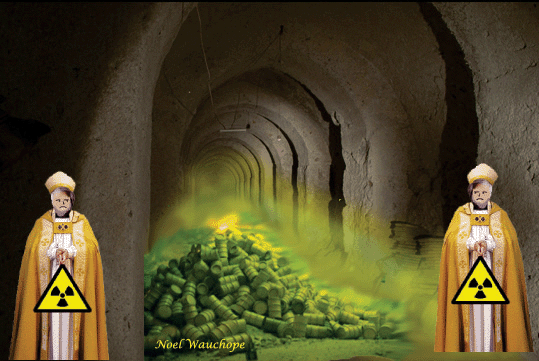
The spent fuel will remain radioactive for hundreds of thousands of years, and contamination and leaks are possible during storage, containment, transportation and burial.
As the consequences of burning dirty, climate-altering fossil fuels hit harder by the day, many are seizing on nuclear power as a “clean” energy alternative. But how clean is it?
Although it may not produce the emissions that burning fossil fuels does, nuclear power presents many other problems. Mining, processing and transporting uranium to fuel reactors creates toxic pollution and destroys ecosystems, and reactors increase risks of nuclear weapons proliferation and radioactive contamination. Disposing of the highly radioactive waste is also challenging.
In this case, the NWMO has already paid Indigenous and municipal governments large sums to accept its plans — ignoring communities that will also be affected along transportation routes or downstream of burial sites.
According to Canadian Dimension, industry expects to ship the wastes “in two to three trucks per day for fifty years, in one of three potential containers.” None of the three containment methods has been subjected to rigorous testing.
Even without an accident, trucking the wastes will emit low levels of radiation, which industry claims will produce “acceptable” exposure. Transferring it from the facility to truck and then to repository also poses major risks.
Although industry claims storing high-level radioactive waste in deep geological repositories is safe, no such facility has been approved anywhere in the world, despite many years of industry effort.
Canadian Dimension says, “a growing number of First Nations have passed resolutions or issued statements opposing the transportation and/or disposal of nuclear waste in northwestern Ontario, including Lac Seul First Nation, Ojibway Nation of Saugeen, Grassy Narrows First Nation, Fort William First Nation, and Wabaseemoong Independent Nations.”
Five First Nations — including Grassy Narrows, which is still suffering from industrial mercury contamination after more than 60 years — have formed the First Nations Land Alliance, which wrote to the NWMO, stating, “Our Nations have not been consulted, we have not given our consent, and we stand together in saying ‘no’ to the proposed nuclear waste storage site near Ignace.”
Groups such as We the Nuclear Free North are also campaigning against the plan.
All have good reason to be worried. As Canadian Dimension reports, “All of Canada’s commercial reactors are the CANDU design, where 18 months in the reactor core turns simple uranium into an extremely complex and highly radioactive mix of over 200 different radioactive ingredients. Twenty seconds exposure to a single fuel bundle would be lethal.”
The spent fuel will remain radioactive for hundreds of thousands of years, and contamination and leaks are possible during storage, containment, transportation and burial. Industry, with its usual “out of sight, out of mind” approach, has no valid way to monitor the radioactive materials once they’re buried.
With 3.3 million bundles of spent fuels already waiting in wet or dry storage at power plants in Ontario, New Brunswick, Quebec and Manitoba, and many more to come, industry is desperate to find a place to put it all.
Even with the many risks and no site yet chosen for burial, industry and governments are looking to expand nuclear power, not just with conventional power plants but also with “small modular reactors,” meaning they could be spread more widely throughout the country.
Nuclear power is enormously expensive and projects always exceed budgets. It also takes a long time to build and put a reactor into operation. Disposing of the radioactive wastes creates numerous risks. Energy from wind, solar and geothermal with energy storage costs far less, with prices dropping every day, and comes with far fewer risks.
Industry must find ways to deal with the waste it’s already created, but it’s time to move away from nuclear and fossil fuels. As David Suzuki Foundation research confirms, renewable energy from sources such as wind and solar is a far more practical, affordable and cleaner choice.
David Suzuki is a scientist, broadcaster, author and co-founder of the David Suzuki Foundation. Written with David Suzuki Foundation Senior Writer and Editor Ian Hanington.
US nuclear plant unfit for quick resurrection, former lead engineer says

By Timothy Gardner, WASHINGTON, Aug 2 2024, (Reuters)
– The first U.S. nuclear plant to ever try reopening after undergoing preparations for permanent closure is not fit to restart anytime soon because it sidestepped important safety work for years before retirement, a former official at the reactor said.
Power company Entergy (ETR.N), opens new tab closed the Palisades reactor in Michigan in 2022, after the plant generated electricity for more than 50 years. Privately-held Holtec International bought Palisades shortly after and has since secured a $1.52 billion conditional U.S. loan guarantee to restart. Holtec seeks to open the plant in about a year.
The fate of Palisades is closely watched by the nuclear industry as at least two other shuttered plants, including a unit at Constellation Energy’s (CEG.O)
, opens new tab Three Mile Island, consider reopening…………
“I’m pro-nuclear, but they selected the wrong horse to ride to town on,” said Alan Blind, who was engineering director at the Palisades plant from 2006 to 2013 under Entergy.
Blind said the plant got exemptions from the U.S. Nuclear Regulatory Commission, the nuclear safety regulator, allowing it to fall short of safety design standards that more modern plants must adhere to because it was nearing retirement.
Those safety standards include prevention of cooling systems being clogged by the breakdown of insulation on pipes, defense against earthquakes, and reduction of risks to fires, Blind said, adding he had been monitoring the plants’ exemption requests since his retirement.
“I’m worried that the NRC will not insist that the generic safety issues be the fixed before they allow Palisades to restart,” Blind told Reuters………………………………………………………..
The Biden administration’s Loan Programs Office at the Department of Energy issued Holtec a conditional $1.52 billion loan guarantee in March to restart Palisades. … https://www.reuters.com/business/energy/us-nuclear-plant-unfit-quick-resurrection-former-lead-engineer-says-2024-08-02/
The Folly of Atomic Power

by Ron Jacobs, 2 Aug 24, https://www.counterpunch.org/2024/08/02/the-folly-of-atomic-power/
This past June, a couple of my sisters and I drove from California to Minnesota. One of the states we traveled through was Idaho. We gassed up in a town called Atomic City, which advertised itself as the first city in the United States to have nuclear-powered electricity. This town is inside what grounds of the Idaho National Laboratory, an 890 square mile research site run by the Department of Energy together with various commercial and military interests. Its website currently touts its scientific expertise and its mission devoted to carbon-free nuclear energy, alternative energy and military security. There are currently over 6000 employees working at the various sites of the laboratory, which includes over fifty nuclear reactors and has an annual budget of $1.6 billion dollars. The laboratory and its web page provide a perfect example of how the business of nuclear energy as described by author M. V. Ramana in his brilliant new book Nuclear is Not the Solution: The Folly of Atomic Power in the Age of Climate Change actually works.
Indeed, the laboratory’s work is a physical and very real representation of the triple threat Ramana describes in the text: the development of nuclear energy, nuclear weapons, and, almost as an afterthought, alternative energy sources like solar and wind. Ramana, who holds the Simons Chair in Disarmament, Global and Human Security and is a Professor at the School of Public Policy and Global Affairs at the University of British Columbia in Vancouver, Canada, is a longtime opponent of the nuclear power industry and the government that collaborate and support it. His scientific background provides a solid rebuke to those in the industry and those who shill for it who repeat the same half-truths and lies whenever nuclear energy is brought up. In addition, this book is a convincing response supported by solid science (and a bit of political economy) to those who want the public to believe that nuclear power is a reasonable and affordable alternative to fossil fuels and the global climate crisis.
Chapter by chapter, Ramana addresses the health risks, the economics of, and the unbreakable link between nuclear power and the nuclear war industry. Instead of talking in terms of possibility, he focuses on the existing circumstances. To those who would try and sell the public a new nuclear plant by suggesting that the possibility of a nuclear accident at the plant is infinitesimal, Ramana writes:
“Theoretical predictions of stupefyingly low accident probabilities do not square with the empirical evidence of severe accidents at nuclear reactors.”(26)
In other words, believe what you see, not what the industry says. In another chapter, Ramana questions the method by which the private power utilities socialize the costs while privatizing the profits. Perhaps the most shocking aspect of this phenomenon is the contracts and laws that force utility companies to pay for plants that never go online (and, in some cases, are never even built.) I recall this occurring when I lived in North Carolina. South Carolina Electric & Gas Company (SCE&G) lobbied for and received the go-ahead to build two nuclear reactors. As costs mounted, the company asked the Public Utilities Commission to allow the firm to charge customers for the costs associated with building the plants. To make a long story short, customers are still paying for the plants, and the plants were never built. Ramana provides a detailed account of this story in a chapter he titles “Private Profits, Social Costs: Industry Strategies” as a perfect example of how the industry works.
In his chapter on the links between nuclear power and the nuclear war industry, the author is equally scathing. When discussing the claim made by some environmentalists who support nuclear power that the nuclear power industry and the nuclear war industry are two different things, Ramana is clear: any separation is simply an illusion. In fact, he argues that one reason governments are so willing to support the nuclear power industry is because it produces the essential element plutonium for nuclear weapons as a supposed by-product. In fact, it appears more likely that plutonium is not a mere by-product but one of the primary reasons for the ongoing governmental support for the industry.
Nuclear is Not the Solution discusses the nuclear industry in a frank and honest manner. There are no questionable claims about nuclear energy or fantastic excuses made for the industry’s mistakes and its questionable premises. The text details the industry’s lies, mistakes and cover-ups, reminding the reader that they should focus on the historical and empirical facts, not fanciful advertising and promises. He describes an industry rife with corruption and hungry for profits. Although his primary focus is on the industry in the United States, Ramana does not spare other nuclear powers from his reasoned and well-informed exposé. Those who think nuclear energy should be the future would do well to read his book. It should convince one the opposite is more likely the truth.
Ron Jacobs is the author of Daydream Sunset: Sixties Counterculture in the Seventies published by CounterPunch Books. He has a new book, titled Nowhere Land: Journeys Through a Broken Nation coming out in Spring 2024. He lives in Vermont. He can be reached at: ronj1955@gmail.com
Kamala: We need a ceasefire and arms embargo NOW!
https://www.codepink.org/kamalastopisrael 2 Aug 24
Over the past weeks, we’ve seen Vice President Kamala Harris’s image being portrayed as more sympathetic to Palestinians in comparison to Joe Biden. But in reality she repeats so many of the same anti-Palestinian talking points and hasn’t done anything to move us towards a ceasefire. It’s time to put pressure on the VP! Sign the petition below!
Vice President Kamala Harris,
As Vice President of the United States, your job is to serve the people, and the majority of Americans want a permanent ceasefire and an end to U.S. arms sales to Israel. We are disgusted with how our hard-earned money is being used to annihilate innocent people in Palestine!
You have strategically presented yourself as distinct from President Biden, especially with regard to Israel’s genocide campaign in Gaza, though you are part of the same administration. We have not been fooled, and we know you are not powerless. We know you can take significant action to stop Israel’s genocide, and you haven’t.
We will not blindly praise you — as others have — for calling for a ceasefire “for at least six weeks” in March of 2024. At that point, 30,000 Palestinians had already been murdered by Israel and we were five months into the genocide.
In the past, you have had no problem meeting with the American Israel Public Affairs Committee (AIPAC), taking in hundreds of thousands of Zionist campaign contributions, and speaking at their events. We understand the true purpose of this lobby group is to ensure continued U.S. funding of Israel’s occupation of Palestine and imperialism in the Middle East. We reject the influence of foreign governments in American politics and see your relationship with AIPAC as a stark contradiction to your supposed support of a ceasefire in Gaza.
Most recently, you condemned protests in D.C. opposing Israeli Prime Minister Benjamin Netanyahu’s visit to Congress — the man spearheading the worst genocide we’ve seen in recent history. Policing Americans who are rightfully angry about war crimes and the mass murder of innocent children was a true display of your immorality, and proved your alignment with Biden’s policies on Israel. What’s worse is that you characterized these protests as anti semitic, showing us your complete lack of understanding for what’s really happening.
Sharing stories of how you as a young girl helped plant trees for Israel is a deliberately tone-deaf attempt at greenwashing Israel’s occupation, given the ecological devastation the IOF have waged on the Palestinian people, land, water and vegetation for 76 years, culminating in the utter devastation of Gaza in recent months. How can you be so selfishly blind to the reality on the ground?
Considering your stances, we have no reason to believe you are not following Biden’s policies on Israel. In order to salvage what political credibility you may have left, it is imperative that you use your capacity as Vice President to push for a ceasefire and an end to U.S. arms sales to Israel. We demand you release a statement explicitly distancing yourself from Biden’s support for genocide, and call for an arms embargo on Israel.
Generic Design Assessment Step 1 of the Holtec SMR: statement of findings
Holtec International’s SMR-300 small modular reactor design has
completed Step 1 of the UK’s generic design assessment (GDA) process and
will now progress to Step 2, which is expected to last for 14 months. The
Environment Agency, the Office for Nuclear Regulation, and Natural
Resources Wales announced on 1 August that they are progressing to the next
phase of their assessment of the design.
Holtec has now launched a comments
process, enabling anyone to submit comments and questions about the reactor
design to the company for its response.
Nucnet 1st Aug 2024
Is Manitoba willing to accept nuclear waste risks?
ANNE LINDSEY. 2 Aug 24.
ANYONE driving Highway 17 from Winnipeg to Thunder Bay will pass through Ignace a couple of hours east of Dryden.
A modest Canadian Shield town with about 1,300 inhabitants, Ignace was built on the forest industry, but like so many northern Ontario towns, today actively seeks other economic opportunities.
The alert traveller will also notice many roadside signs between Kenora and Thunder Bay, proclaiming “No Nuclear Waste in Northwest Ontario.” The issue has reached a critical juncture recently in this area.
Hosting Canada’s high-level nuclear waste repository is one of the economic development opportunities being explored by Ignace.
On July 10, Ignace Town Council voted in favour of being a “willing host” for this massive storage hole in the ground and the accompanying transfer facility for the highly radioactive and toxic “spent” fuel from existing and future reactors.
The taxpayer-funded Nuclear Waste Management Organization or NWMO (consisting of the owners of Canada’s nuclear waste and charged by the federal government to find a repository site) provided Ignace a half-million dollar signing bonus, in addition to NWMO’s many donations and monetary contributions to local initiatives leading up to the vote.
Problems abound with this “willingness” declaration, not the least of which is that the site in question is not even in Ignace or in the same watershed. The Revell batholith site, 45 kilometres west of Ignace, lies on the watersheds of both theRainy River which flows into Lake of the Woods, and thence to the Winnipeg River and Lake Winnipeg, and the English River which flows north through Lac Seul and into Lake Winnipeg.
The waste will remain dangerous for literally millennia. Burying irretrievable nuclear waste in an excavated rock cavern that is deep underground where groundwater flows through the rock and eventually links to surface bodies has never been tested in real life. The industry relies on computer models to persuade us that future generations will not be at risk.
The waste will have to be transported to Revell, mostly from southern Ontario and New Brunswick — several massive shipments daily for 40 years for the existing waste — along the often-treacherous route skirting Lake Superior. It must then be “repackaged” in a surface facility into burial canisters.
Little is publicly known about what this entails, but any accidents and even routine cleaning will result in radioactive pollution to the surrounding waters posing a more immediate risk.
First Nations along the downstream routes have expressed their opposition to this project. Chief Rudy Turtle of Asubpeeschoseewagong (Grassy Narrows) was clear in his letter to the CEO of NWMO: “The water from that site flows past our reserve and into the waters where we fish, drink, and swim. The material that you want to store there will be dangerous for longer than Canada has existed, longer than Europeans have been on Turtle Island, and longer than anything that human beings have ever built has lasted. How can you reliably claim that this extremely dangerous waste will safely be contained for hundreds of thousands of years?”
His views are echoed by neighbouring chiefs, and other Treaty 3 First Nations have rejected nuclear waste transportation and abandonment through and in their territories. Wabigoon First Nation, the closest to the Revell site, will hold its own community referendum on willingness to host the site this fall. It’s not known how much money or other inducements NWMO has offered for a signing bonus.
In 1986, a citizens group in the Eastern Townships of Quebec successfully lobbied politicians on both sides of the border to reject a U.S. proposal for a massive nuclear waste repository in Vermont, on a watershed flowing into Canada.
Around the same time, Manitoba citizens convinced our government to oppose another proposed U.S. nuclear waste site — with potential for drainage to the Red River. And eventually, the NDP government of Howard Pawley passed Manitoba’s High-Level Radioactive Waste Act, banning nuclear waste disposal in this province.
Where does Manitoba stand today? We don’t know, even though the Revell site is not far from Manitoba and the water is flowing this way.
No single town should be making decisions with such profound risks to all of our health and futures. People who depend on Manitoba rivers and lakes (including Winnipeggers, via our water supply from Shoal Lake) should be part of this decision. Now is the time for our elected officials on Broadway and Main Street to become active stakeholders and demand a voice in the nuclear waste “willingness” question.
Anne Lindsey is a longtime observer of the nuclear industry and a Canadian Centre for Policy Alternatives Manitoba Research Associate. This article was written in collaboration with the Manitoba Energy Justice Coalition.
First NATO F-16’s delivered to Ukraine (nuclear capable)

Bruce K. Gagnon, 2 Aug 24, https://space4peace.blogspot.com/2024/08/first-nato-f-16s-delivered-to-ukraine.html
Reports indicate that six F-16’s have been sent to Ukraine (UAF) from the Netherlands to be used against Russia.
Doesn’t this mean that US-NATO are fully at war with Russia? Of course the US-NATO deny that fact but we are surely used to their endless lies by now!
It appears the war planes will be based in western Ukraine – far from the front lines in eastern Ukraine which is closest to the Russia border.
Previously, a number of NATO states, including the US, France, Bulgaria, Denmark, the Netherlands, Belgium, Canada, Luxembourg, Norway, Poland, Portugal, Romania, and Sweden, formed a so-called ‘F-16 coalition’, pledging to provide Kiev with 79 of the American-made fighter jets as well as to train Ukrainian pilots to operate the aircraft.
While Ukraine is pinning high hopes on the fighter jets, the truth is that NATO is only supplying them to make up for the heavy losses of the UAF and prolong the conflict.
In addition the US-NATO war mongering ‘coalition’ must supply the weapons for the planes as well as the maintenance crews since Ukraine does not have the technical capacity to keep the planes in the air by themselves. The west will also likely need to supply the repair parts and the jet fuel for the planes.
Because it takes years to properly train pilots some have speculated that US-NATO pilots (wearing Ukraine military uniforms) might end up being the ones flying in combat against Russia. Especially after the first six planes get shot down and the Ukrainian F-16’s crews might be quickly erased.
There are reports that Moldova could be used as the main base for F-16 fighters. This will allow NATO countries to avoid becoming targets for Russian missiles, but at the same time provoke the Kremlin to a harsh reaction. (Any F-16 that enters Ukraine from a NATO country and continues to fly on to its combat area will be seen as an attack by NATO enabling Russia to legally attack the country of origin. Theoretically, this could start WW III – with a nuclear power no less. Note, however, that Moldova is not a NATO member. At any rate, the West is courting disaster.) This will increase the escalation and take the conflict in Ukraine to a new level, using Moldova for this purpose.
These planes will have the capability to carry US supplied nuclear weapons and fire them from a distance at ‘Russian targets’ that often means nothing more than population centers as Ukraine has been doing since the war began in 2014 after the US orchestrated coup d’état in Kiev. Moscow has said that it must conclude that any F-16’s in the air heading toward Russia could be carrying nukes and will respond accordingly.
The US long ago positioned nuclear weapons throughout Europe as you can see in the graphic just below. [on original]
Out of their complete desperation, as the US-NATO lose the war in Ukraine, they very well could decide to use these nukes now deployed in Europe. If that decision is made (and it would be made in Washington) then we are without a doubt off to the nuclear war races.
Now is the time for people not suffering from terminal imperial insanity to speak loudly – publicly and with determination – if we hope to survive the decline of the US-NATO killing project
Extreme ‘heat dome’ hitting Olympics ‘impossible’ without global heating

The “heat dome” causing scorching temperatures across western Europe
and north Africa, and boiling athletes and spectators at the Olympic Games
in Paris, would have been impossible without human-caused global heating, a
rapid analysis has found. Scientists said the fossil-fuelled climate crisis
made temperatures 2.5C to 3.3C hotter. Such an event would not have
happened in the world before global heating but is now expected about once
a decade, they said. Continued emissions of heat-trapping carbon dioxide
will make them even more frequent, the researchers warned.
Guardian 31st July 2024
Japan, U.S. urged to work for nuclear abolition at symposium
By NAOKI NAKAYAMA/ Staff Writer, July 28, 2024
NAGASAKI–Japan and the United States have a “special responsibility” to lead efforts to abolish nuclear weapons, the head of a U.S. nongovernmental organization told a 30th international peace symposium.
Ivana Hughes, president of the Nuclear Age Peace Foundation, was speaking at the “International Symposium for Peace: The Road to Nuclear Weapons Abolition” held at the Nagasaki Atomic Bomb Museum on July 27.
She said damage from radiation is still an issue in the Marshall Islands in the Pacific Ocean 70 years after the largest U.S. hydrogen bomb test at Bikini Atoll.
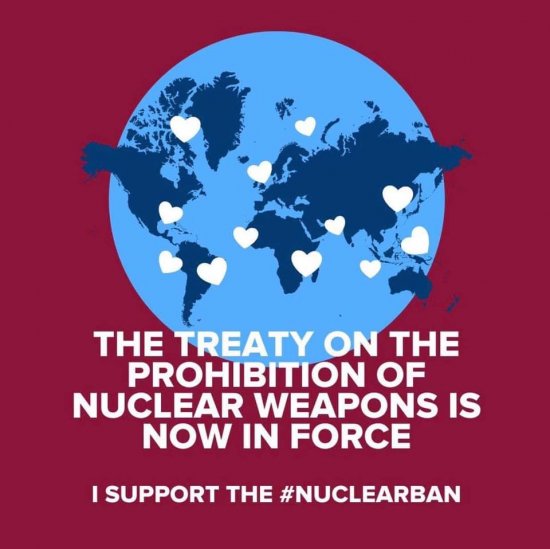
“After all, although for different reasons, the United States and Japan both have a special responsibility to not only join the Treaty on the Prohibition of Nuclear Weapons, but to lead efforts toward its full and complete implementation and total elimination of nuclear weapons,” Hughes said as she wound up her keynote speech.
Many speakers felt that the global situation surrounding nuclear weapons has deteriorated over the past 30 years, with nuclear disarmament stalled, and expressed concerns about growing international tensions, citing Russia’s war in Ukraine and the Israel-Hamas conflict.
“We should think about nuclear abolition from the perspective of the security of ‘mankind,’ not of nations,” said Mitsuru Kurosawa, an expert on nuclear disarmament and professor emeritus at Osaka University.
Batyrkhan Kurmanseit, minister-counselor at the Kazakhstan Embassy in Japan, said Kazakhstan is the only former Soviet republic that ratified the Treaty on the Prohibition of Nuclear Weapons. He said an international framework for nuclear abolition has never been more needed than right now.
The Asahi Shimbun has been a co-sponsor of the annual symposium, which has alternately been held in Hiroshima and Nagasaki with the municipal governments and local peace organizations every summer since 1995.
Terumi Tanaka, a hibakusha atomic bomb survivor and co-chair of the Japan Federation of A- and H-Bomb Sufferers Organization (Nihon Hidankyo), and Seiko Mimaki, an associate professor at Doshisha University’s graduate school specializing in U.S. politics and diplomacy, also participated in the symposium’s panel discussion.
In a speech, Kan Sang-jung, president of Chinzei Gakuin University in Nagasaki Prefecture, emphasized the importance of listening to hibakusha, saying that many lives have been lost as countries clash over what they believe is just amid the post-Cold War rise of nationalism.
Hibakusha Shizuko Mitamura read a hand-made picture card show that tells the story of what happened to her on Aug. 9, 1945, when the city of Nagasaki was leveled by atomic bombing, and the loss of her daughter to cancer in 2010, when she was 39.
Nuclear plant trips due to fire, and battery storage steps in to stabilises the grid
What happens when a giant nuclear power station
suddenly goes off line? It’s a question that market operators have to ask
themselves all the time.
The biggest units on the grid are generally
nuclear, in those countries that have them, and a considerable amount of
planning and expense needs to make sure that the back-up is on hand,
despite the insistence by some of the whackier pro-nuclear spruikers in
Australia that no storage or gas is needed.
According to Grid Status, which
monitors grid operations in the US, the frequency excursion was arrested by
a rapid response from the state’s rapidly growing portfolio of big
battery projects. “Immediately, grid frequency declined,” Grid Status
noted in a post on LinkedIn and X. “An excursion below critical levels
required a fast response by ERCOT to ensure stability of the grid. In this
case, ERCOT swiftly deployed ancillary services, including a significant
amount of batteries providing ECRS, to boost the frequency back to
normal.” ERCOT is the Electricity reliability Council of Texas, which
manages the grid. ECRS refers to the contingency reserve service. The big
batteries were back in action a few days later when one of the state’s
coal fired power station units also tripped.
Texas is expected to more than
double its battery storage capacity in 2024, adding around 6.4 GW of
battery capacity (with varying levels of storage), to the 5.5 GW that
existed before.
Renew Economy 1st Aug 2024
1 This Month

of the week – Shut Down Drone Warfare!


Tell the Ukrainian Government to Drop Prosecution of Peace Activist Yurii Sheliazhenko

Petition to revoke the licensing of the Near Surface Nuclear Disposal Facility (NSDF) at Chalk River. https://www.ourcommons.ca/petitions/en/Petition/Details?Petition=e-7247
To see nuclear-related stories in greater depth and intensity – go to https://nuclearinformation.wordpress.com
-
Archives
- April 2026 (44)
- March 2026 (251)
- February 2026 (268)
- January 2026 (308)
- December 2025 (358)
- November 2025 (359)
- October 2025 (376)
- September 2025 (257)
- August 2025 (319)
- July 2025 (230)
- June 2025 (348)
- May 2025 (261)
-
Categories
- 1
- 1 NUCLEAR ISSUES
- business and costs
- climate change
- culture and arts
- ENERGY
- environment
- health
- history
- indigenous issues
- Legal
- marketing of nuclear
- media
- opposition to nuclear
- PERSONAL STORIES
- politics
- politics international
- Religion and ethics
- safety
- secrets,lies and civil liberties
- spinbuster
- technology
- Uranium
- wastes
- weapons and war
- Women
- 2 WORLD
- ACTION
- AFRICA
- Atrocities
- AUSTRALIA
- Christina's notes
- Christina's themes
- culture and arts
- Events
- Fuk 2022
- Fuk 2023
- Fukushima 2017
- Fukushima 2018
- fukushima 2019
- Fukushima 2020
- Fukushima 2021
- general
- global warming
- Humour (God we need it)
- Nuclear
- RARE EARTHS
- Reference
- resources – print
- Resources -audiovicual
- Weekly Newsletter
- World
- World Nuclear
- YouTube
-
RSS
Entries RSS
Comments RSS
 nuclear-news