Cold War experiment ‘gone wrong’ as US state Georgia ‘moments from nuclear disaster’

Residents of Savannah, Georgia, could potentially be under threat from an undetonated nuclear bomb that lies in the murky depths of a nearby river after being dropped by a US Air Force plane
By Tom McGhie, 31 JUL 2024, https://www.dailystar.co.uk/news/us-news/cold-war-experiment-gone-wrong-33365185
Just off the coast of Georgia, an unexploded nuclear bomb lurks at the bottom of the water.
The 7,000-pound undetonated explosive was deposited at the mouth of the Savannah River off near to Tybee Island, during a “Cold War simulation” according to NPR. On February 5, 1958, a B-47 collided with another US military Air Force jet, causing the B-47 to let the bomb loose.
Over sixty years later, the warhead has never been found. While the Air Force claims the bomb if left undisturbed poses little threat to the area, bomb-enthusiasts and people of a generally nervous disposition aren’t so sure.
After the incident in 1958, the US Navy searched unsuccessfully for over two months. “Assistant Secretary of Defence W.J. Howard concluded that despite our best efforts, the possibility of an accidental nuclear explosion still existed,” a declassified report read from the time.
Their line on it these days is “let sleeping dogs lie”.
“An intact explosive would pose a serious explosion hazard to personnel and the environment if disturbed by a recovery attempt,” they wrote in a 2001 report.
However, some nosy locals are still on the lookout for the device, including retired Air Force pilot Derek Duke. In 2004, the veteran carried out a search in shallow water off the coast of Savannah, Georgia, and discovered “high radiation” in the waters.
Government officials investigated, but to everyone’s relief they concluded radiation readings were “normal” for the naturally occurring minerals in the area.
But Duke was right to have a gander – according to the Savannah Morning News if the bomb managed to get outfitted with a plutonium trigger and detonate, thermal radiation would rip up the environment in a 10-mile radius.
This nuclear waste site could soon host a massive solar installation
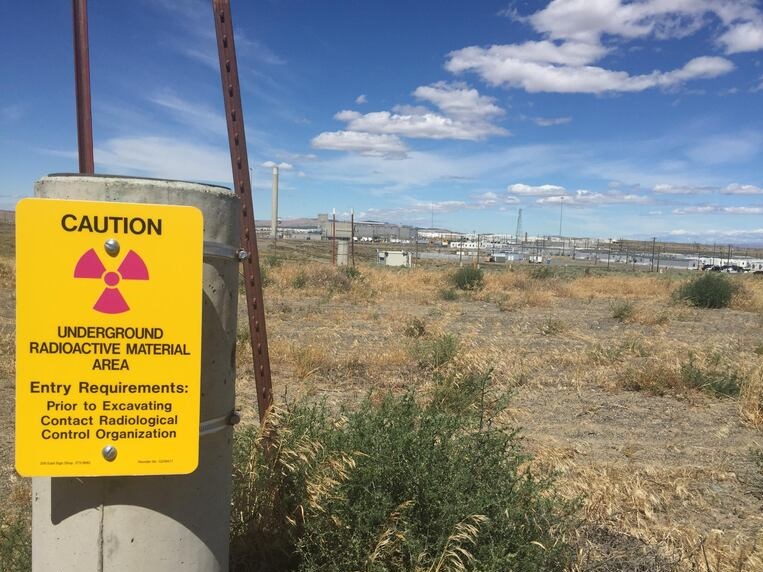
The Hanford Site in Washington state, a radioactive relic of the Manhattan Project and Cold War, was selected by DOE to be outfitted with up to 1GW of solar.
By Carrie Klein, 30 July 2024, https://www.canarymedia.com/articles/solar/this-nuclear-waste-site-could-soon-host-a-massive-solar-installation—
The U.S. Department of Energy announced plans last week to transform a contaminated former nuclear weapons production site into what could be the largest solar project in the country. The installation would stretch across up to 8,000 acres in south-central Washington state and boast up to 1 gigawatt of energy capacity — enough to power 750,000 homes.
One of the core challenges of building large solar installations is deciding where to put them. Local residents and farmers sometimes protest the use of agricultural land, while environmentalists urge caution in disturbing ecosystems. But this project location, known as the Hanford Site, is heavily contaminated from decades of atomic weapons production — first as part of the Manhattan Project and later during the Cold War.
Weapons production at Hanford created around 56 million gallons of radioactive and chemical waste, plus millions of cubic feet of solid waste and billions of gallons of less contaminated liquids. During production and upon Hanford’s decommissioning in the early 1990s, much of this waste was disposed of in concrete-lined pits, trenches, and ponds, and has since leached into the Columbia River basin, contaminating groundwater and causing health issues for locals.
Building solar at this location is “a great way to reuse land that has limited potential for other uses,” said Nels Johnson, senior advisor for renewable energy at The Nature Conservancy, who notes that “it means we’re not converting” prime farmland.
The project is part of the DOE’s new program Cleanup to Clean Energy, launched last year to help attain the climate goals in President Joe Biden’s 2021 executive order directing federal agencies to develop clean energy generation on their properties, with the goal of those agencies achieving 100 percent clean electricity by 2030.
The department announced the program’s first two projects — also solar installations — in June and July. One project will be located on 890 square miles of Idaho National Laboratory land and will feature 400 megawatts of solar capacity. The other will take up 2,400 acres of the Nevada National Security Site and has a capacity of 200 megawatts.
The Hanford project aims to generate the most energy by far — and, in addition to potentially becoming the largest solar project in the country, Johnson said that it would certainly be the largest on mine land, brownfield, or other degraded land.
Real estate negotiations are currently underway between the DOE and renewable energy developer Hecate Energy. Once an agreement is reached, Hecate will lead environmental reviews, including cultural resource surveys and consultations with local tribal nations, a DOE spokesperson told Canary Media. Hecate will also assess the impact of the proposed power generation on the grid to determine if any transmission upgrades are needed. These environmental and grid assessments could impact the ultimate size of the installation, according to the DOE.
The department declined to share a target timeline for the project.
In Benton County, where the Hanford Site sits, the Tri-City Development Council (TRIDEC) sees the solar installation as part of a larger transformation of the economy. The council, originally created to help diversify employment so the county was less dependent on federal funding, is planning several other renewable energy projects, along with “decarbonized manufacturing and industrial” projects, said Sean O’Brien, executive director at TRIDEC. “We very much envision that there will be a strong appetite for the electrons that this project will produce.”
Cleanup of the Hanford Site will be ongoing while the solar project moves forward into construction and operation in the coming years. “We can be doing both,” O’Brien said. The project itself will mostly be located on land that doesn’t require environmental remediation work, he said.
The Hanford Site is 560 square miles — about half the size of the state of Rhode Island. Since the late 1990s, workers have “cocooned,” or covered, seven nuclear reactors, removed 600 tons of contaminants from groundwater, and treated 32 billion gallons more. But decades of work still remain to fully remediate the site, O’Brien said. Adding solar to the site doesn’t change that, though it does at least put the land to productive use in the meantime.
Major escalation’: Israel bombs densely populated area of Beirut, Hezbollah says commander survived the attack
SOTT, Peoples Dispatch, Tue, 30 Jul 2024
In a major escalation towards regional war, Israel today bombed one of the most densely populated areas in Beirut. The Israeli military claims to have targeted a senior Hezbollah commander, who in fact survived the attack. Israeli forces have claimed that this commander was responsible for theattackon Majdal Shams, in the occupied Syrian Golan Heights on Saturday, July 27.
Comment: Except that Hezbollah have refuted the claim, and they aren’t known for lying about their retaliations, whilst Israel is. Hezbollah also has no reason to kill Druze people in what is Syrian territory. And, tellingly, when Israeli officials visited to ‘pay their respects’ they were shouted down by the locals.
The attack occurred almost immediately after Netanyahu had finished his US genocide tour, and after allegedly receiving pledges of support from US officials to escalate the Greater Israel war. Netanyahu used this incident as his excuse to leave the US earlier than scheduled: Israel’s FM claims ‘moment of an all-out war’ with Hezbollah approaching
Following this attack, Israeli officials had released numerous threats against Hezbollah, who they blamed for the Majdal Shams strike, which killed at least 12 people, including 9 children and one teenager. Israeli Prime Minister Benjamin Netanyahuvowed that Israel will “not let [the attack] pass in silence.” Israeli military spokesperson Daniel Hagari threatened, “We will prepare for a response against Hezbollah, we will act.”
Comment: Israel’s motive for this attack should now be quite obvious.
Israel’s attack of densely populated Beirut was this response, an attack which resulted in the death of at least one person.
However, Hezbollah as well as other regional resistance forces have claimed that they are not responsible for the Majdal Shams attack, with some placing the blame squarely on Israel. The head of the Druze initiative Ghaleb Saifclaimedthat the missiles which fell on the Syrian Golan Heights and Galilee were Israeli interceptor missiles. “Every day, we see how Iron Dome missiles miss their targets and end up falling on us,” he said.
The Iranian ambassador to Lebanon Mojtaba Amani described the attack on Majdal Shams as a “staged play orchestrated by the occupation regime.”
“This was incredibly reckless and criminal by Israel. Once again it’s the side labeled ‘terrorists’ who are left to act as the adults in the room,” said Rania Khalek, journalist with Breakthrough News who is based in Beirut. According to Khalek, “awaiting Hezbollah’s response never feels as unsettling as awaiting Israel’s aggression, [because Hezbollah has] thus far been measured while the Israelis play with fire.”
Comment: Around the same time as the above, an explosion was reported at an Iraqi base for ‘Iran-aligned’ security forces base:……………………………….more https://www.sott.net/article/493570-Major-escalation-Israel-bombs-densely-populated-area-of-Beirut-Hezbollah-says-commander-survived-the-attack
Canada and the Atom Bomb: Remembering As an Act of Resistance

Anton Wagner, July 23, 2024, http://imagearts.ryerson.ca/hiroshima/remembering/
I met Setsuko Thurlow in 1995 when I produced Our Hiroshima for Vision TV for the 50th commemoration of the atomic bombings of Hiroshima and Nagasaki. In 1954, she had received death threats while studying at an American college in Virginia after criticizing the United States’ hydrogen bomb test in the Marshall Islands, one thousand times more powerful than the atom bomb dropped on Hiroshima. But when she settled in Canada with her husband, Jim Thurlow, the following year, she found “a very passive, almost indifferent world here. Maybe Canadians felt they had nothing to do with the nuclear age.”
In Our Hiroshima, Setsuko singled out the Eldorado uranium refinery in Port Hope, Ontario, that enriched all the uranium used by the American Manhattan Project to produce the Hiroshima and Nagasaki bombs. She found Canadians were not informed about their country’s involvement in the development of the atom bomb and failed to recognize that nuclear weapons were a universal, global phenomenon. “We all have to be concerned.”
The documentary showed her speaking to a huge peace rally at the University of Toronto Varsity Stadium in 1982. “Peoples around the world, with their deafening silence, have permitted their government to continue producing and accumulating ever more destructive weapons of genocide,” she told the rally. The hundreds of billions of dollars spent on armaments annually “diverted the resources that could feed the starving, heal the sick, and teach the illiterate.”
Setsuko began sharing the horrors she had witnessed as a survivor of Hiroshima with Canadians in “A Silent Flash of Light,” published in Saturday Night in August 1985. She would make these same very detailed, moving personal descriptions for international media for the next four decades. Nine members of her family and over three hundred of her schoolmates and teachers perished. Her family’s house was but ashes and broken tiles. Only an ornate clock in a cast-iron frame (seen in Jim Allen’s photograph above) could be salvaged as a reminder of life before the atomic bombing. “In the Peace Park in Hiroshima, there is a cenotaph with the inscription: ‘Rest in peace; the evil will not be repeated,’” she concluded her Saturday Night memoir. “This has become the vow of the survivors. Only then will our loved ones’ grotesque deaths not have been in vain. Only then will our own survival have meaning.
Thirty-two years later, in December 2017, Setsuko Thurlow accepted the Nobel Peace Prize, together with Beatrice Fihn, awarded to the International Campaign to Abolish Nuclear Weapons for bringing about the United Nations Treaty on the Prohibition of Nuclear Weapons. In her acceptance speech, she asked her audience in Oslo, “Today, I want you to feel in this hall the presence of all those who perished in Hiroshima and Nagasaki. I want you to feel, above and around us, a great cloud of a quarter million souls. Each person had a name. Each person was loved by someone. Let us ensure that their deaths were not in vain.”
With the approaching 75th anniversary of the atomic bombings in 2020, Thurlow wrote to all the world’s heads of state, including Canada’s Prime Minister Justin Trudeau, who had not yet ratified the Treaty on the Prohibition of Nuclear Weapons. In her personal appeal to the Prime Minister, she included my research document “Canada and the Atom Bomb” that provides the factual basis for this “Canada and the Atom Bomb” exhibition.
Setsuko referred to the delegation from Deline in the Northwest Territories representing Dene hunters and trappers employed by Eldorado to carry the sacks of radioactive uranium ore on their backs for transport to the Eldorado refinery in Port Hope. The delegation travelled to Hiroshima in August of 1998 and expressed their regret that uranium from their lands had been used in the development of the atom bomb. As seen in Robert Del Tredici’s photographs, Dene had themselves died of cancer because of their exposure to uranium ore, leaving Deline a village of widows. “Surely,” Thurlow wrote Trudeau, “the Canadian Government should make its own acknowledgement of Canada’s contribution to the creation of the atom bombs that destroyed Hiroshima and Nagasaki.”
She stated that an awareness by Canadians of our country’s direct participation in the atomic bombings of Hiroshima and Nagasaki had all but disappeared from our collective consciousness. Thurlow proposed to the Prime Minister that the 75th anniversary of the atomic bombings would be the appropriate moment to acknowledge Canada’s critical role in the creation of nuclear weapons, express a statement of regret for the deaths and suffering they caused in Hiroshima and Nagasaki, as well as announce that Canada would ratify the Treaty on the Prohibition of Nuclear Weapons. The Globe and Mail headlined her August 2020 op ed about her appeal to Trudeau, “Canada must acknowledge our key role in developing the deadly atomic bomb.”
Justin Trudeau never acknowledged receipt of Setsuko’s appeal, although Liberal MP Ali Ehsassi personally delivered a copy to the Prime Minister’s Office. With Trudeau’s refusal to meet or communicate with Thurlow, she turned her lobbying efforts to Toronto City Council. She had facilitated the creation of a large Peace Garden directly in front of City Hall as a memorial to the atomic bombings and the need for peace in 1984. As shown in the exhibition, City Council hosted Prime Minister Pierre Elliott Trudeau who turned the sod, beginning construction of the Peace Garden; Pope John Paul II kindled its eternal flame, and Queen Elizabeth II dedicated it as a lasting expression of Toronto’s commitment to peace.
Setsuko was a fierce defender of the Peace Garden when the $40 million revitalization of the City Hall Square resulted in its demolition. She was a leading figure among peace activists and community peace groups who convinced City Council to rebuild the Peace Garden on the civic square. Michael Chambers’ images capture this rededication of the Peace Garden in 2016.
The following year, Toronto City Council honoured Setsuko for her peace activism and reaffirmed Toronto as a nuclear weapons-free zone. The Toronto Board of Health held public hearings that resulted in its recommendation that City Council request that the Government of Canada sign the Treaty on the Prohibition of Nuclear Weapons. City Council passed such a motion and sent the text to Justin Trudeau, the Minister of Foreign Affairs, and the Minister of Health.
But nothing Canadian peace activists did changed the policies of the federal Canadian government. Setsuko Thurlow’s life-long commitment towards the abolition of nuclear weapons is a challenge to all concerned about the survival of human civilization. How can we transform our yearning for peace and justice into political action that will compel governments to prohibit and eliminate nuclear weapons? Setsuko donated her family’s precious ornate clock to the Canadian War Museum in Ottawa for a small peace exhibition in 2013. Will some survivors of a nuclear holocaust digging in the rubble of what once was Ottawa find a small, charred clock that once belonged to a survivor of the first atomic bombing but whose words of remembrance of that horror were buried by the silence of political leaders?
AUKUS Australian servility to USA – just one facet of poor governance
By Paul KeatingJul 31, 2024, https://johnmenadue.com/aukus-servility-just-one-facet-of-poor-governance/
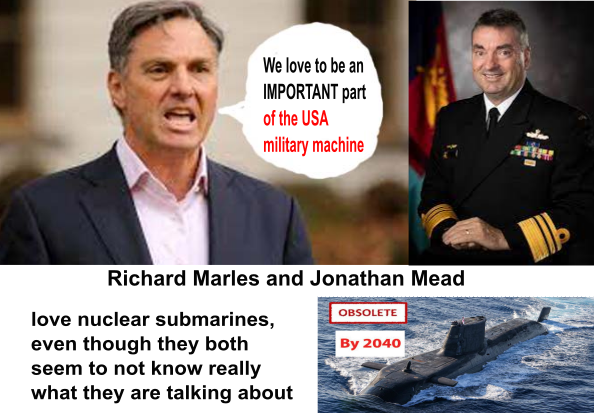
Richard Marles has the Navy out in force firing torpedoes at AUKUS critics.
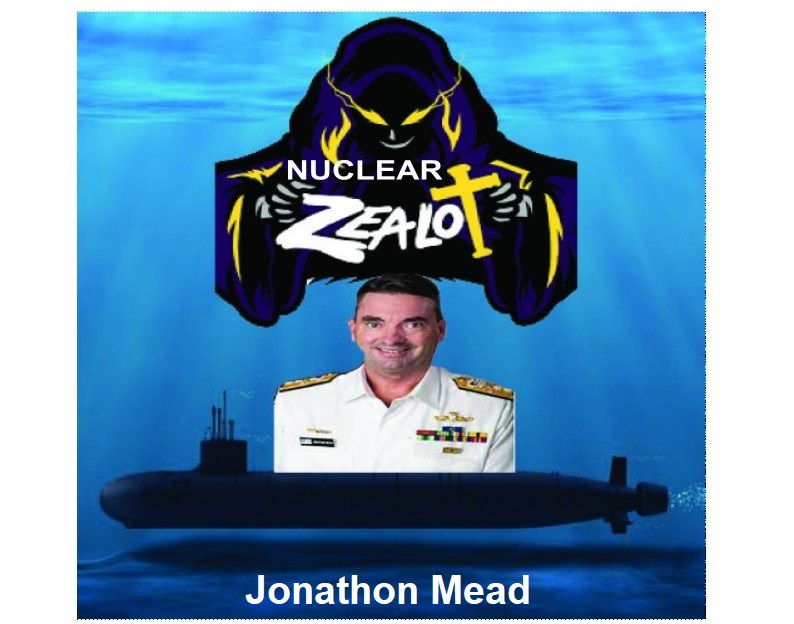
On Friday last, Vice Admiral Jonathan Mead claimed the critics need to produce evidence of any challenges to AUKUS being realised, then on Saturday, Vice Admiral Hammond, Chief of Navy, raised his periscope claiming the AUKUS debate was being ‘hijacked’ by people with ‘specific agendas’ without indicating what these agendas might be or who was likely making them.
The fact is, what clearly is being ‘hijacked’ is national accountability – accountability for the most wayward strategic and financial decision any government has taken since Federation.
Despite AUKUS’s half trillion of budgetary cost and its dangerous strategic implications there has not been one Ministerial Statement explaining its rationale, its strategic policy objective or defending its hugely distorting impact on government expenditures.
Not a coherent or persuasive word has come from the Minister for Defence or for that matter, the Prime Minister, let alone from a parliamentary debate on what is significantly a seminal turn in the country’s strategic and defence policy settings.
Vice Admiral Hammond, ignoring Australia’s geography – its residence among populous and prosperous Asian states, fell back on the old Anglo glee-club adage ‘three developed nations who have over 100 years of shared history, heritage, values and sense of purpose.’
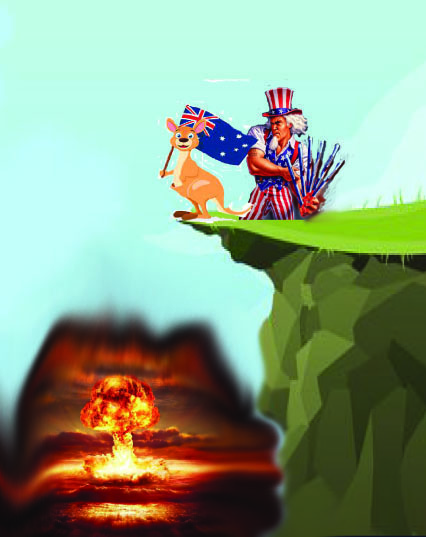
The likelihood is that Australia will not come into possession of nuclear submarines of its own making, but what it will certainly become is landlord and host to American nuclear submarines as the United States appropriates Australian real estate in its attempts, against all odds, to maintain strategic primacy in Asia. Odds that carry the likelihood of Australia being dragged into military skirmishes with China, or indeed, worse.
So irresponsible, secretive and smug has the government been in making its decision, that no amount of ‘hijacking’ by anyone else is likely to disrupt Australia from its current path of effectively falling into American hands, or at least, being abjectly at America’s beck and call.
Republished from Australian Financial Review, July 30, 2024
NuScale Power plunges after report says it is under SEC investigation
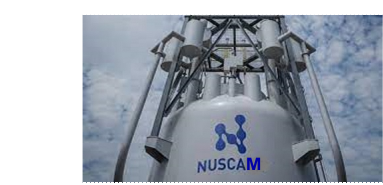
NuScale Power -12% to its lowest level in more than a month after a
Hunterbrook Capital published a critical report on the company, saying the
Securities and Exchange Commission’s Division of Enforcement is conducting
an “active and ongoing” investigation into the company
The SEC cautioned that its decision “should not be construed as an indication by the
Commission or its staff that any violations of law have occurred.” NuScale
Power (SMR), which has positioned itself as a pioneer in small modular
reactor technology, has seen its market capitalization more than triple
over the past six months to $2B-plus. Approval of NuScale’s (SMR) reactor
by the Nuclear Regulatory Commission is crucial for the company, given that
NuScale has indicated it does not anticipate commercializing an earlier, 50
MW version of its reactor that was the first small modular reactor to be
certified by the NRC.
Seeking Alpha 29th July 2024
https://seekingalpha.com/news/4129469-nuscale-sinks-after-report-says-under-sec-investigation
The US might lose a war with China, congressional commission says
Insufficient industry, readiness, innovation, and funding hamper military’s ability to prevail in conflict, key experts find.
By Patrick Tucker, Science & Technology Editor, Defense One, July 29, 2024, https://www.defenseone.com/threats/2024/07/us-might-lose-war-china-congressional-commission-says/398418/
The U.S. military “lacks both the capabilities and the capacity required to be confident it can deter and prevail in combat,” in the judgment of a congressional commission whose new report finds that collaboration between Russia, China, and other autocratic states is increasing the chance of a multi-front conflict—and that the U.S. would have trouble sustaining such a fight.
For more than a year, the former lawmakers, military leaders, and policy experts on the Commission on the National Defense Strategy have studied how well the U.S. military is executing the 2022 national defense strategy. The group released their report on Monday and will present its findings to the Senate Armed Services committee on Tuesday.
The group found big gaps between the Defense Department’s ambitions of deterring or prevailing in a major conflict and reality. One of the reasons they came to that conclusion is the current state of the U.S. defense industrial base compared to China’s.
“Unclassified public wargames suggest that, in a conflict with China, the United States would largely exhaust its munitions inventories in as few as three to four weeks, with some important munitions (e.g., anti-ship missiles) lasting only a few days. Once expended, replacing these munitions would take years,” the report states.
Furthermore, the growing collaboration between autocratic powers make it nearly inevitable that China and Russia would coordinate against the United States in the event of an armed conflict with one or the other.
“The United States should assume that if it enters a direct conflict involving Russia, China, Iran, or North Korea, that country will benefit from economic and military aid from the others. We also believe that this partnership increases the likelihood that a conflict with one would expand to multiple fronts, causing simultaneous demands on U.S. and allied resources,” the report states.
Of the commission’s many recommendations, most are similar to efforts the Pentagon is already undertaking, including reaching out more aggressively to the private sector, particularly new information-technology focused startups, to establish a new industrial base, and reevaluating counterproductive regulatory impediments to buying and selling defense technology.
Other recommendations are more pointed, such as abandoning outdated “programs of record” in order to procure key pieces of equipment, and loosening ship maintenance rules, allowing more maintenance in foreign ports, and being more willing to buy weapons and supplies from other countries.
But for the most part, the commission’s report paints a picture of a situation years in the making that can’t be righted quickly.
“Today, the United States has a DIB with too few people, too few companies, declining and unstable financial support, and insufficient production capacity to meet the needs of the Joint Force in both peacetime and wartime,” the group said.
Putin often cites Russia’s ‘nuclear doctrine’ governing the use of atomic weapons. But what is it?
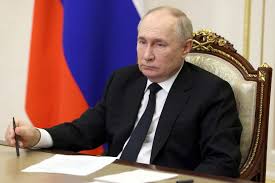
9 News, By Associated Press, 1 August 24
Since Russia invaded Ukraine in 2022, President Vladimir Putin and other Kremlin voices have frequently threatened the West with its nuclear arsenal.
On Day 1 of the war, Putin said “whoever tries to impede us, let alone create threats for our country and its people, must know that the Russian response will be immediate and lead to consequences you have never seen in history”.
Over nearly two and a half years of fighting, the West has given Ukraine billions of dollars of advanced weapons, some of which have struck Russian soil.
And while there have been more Kremlin threats – and even the deployment of battlefield nuclear weapons in Belarus, just over the border from Ukraine – so far it has remained only a blunt message.
What could finally trigger a nuclear response?
Asked that in June by international news agencies, Putin pointed to Russia’s so-called nuclear doctrine.
“Look what is written there,” he said at the St Petersburg session.
“If somebody’s actions threaten our sovereignty and territorial integrity, we consider it possible to use all means at our disposal.”
Now Russian hawks are urging him to change the doctrine to lower the threshold for using nuclear weapons, and Putin says the document could be modified to take into account the evolving global situation.
What is Russia’s nuclear doctrine?
Formally known as the “Basic Principles of State Policy on Nuclear Deterrence”, it was signed by Putin in 2020 and outlines when Russia could dip into its atomic arsenal, the world’s largest.
It describes nuclear weapons as “a means of deterrence”, noting that their use is an “extreme and compelled measure”.
It declares that Russia “takes all necessary efforts to reduce the nuclear threat and prevent aggravation of interstate relations that could trigger military conflicts, including nuclear ones”.
The document states that “nuclear deterrence is aimed to provide comprehension by a potential adversary of the inevitability of retaliation in the event of aggression against the Russian Federation and/or its allies.”
What does it say will trigger using nuclear weapons?
Russia could use them, the doctrine says, “in response to the use of nuclear and other types of weapons of mass destruction against it and/or its allies, as well as in the event of aggression against the Russian Federation with the use of conventional weapons when the very existence of the state is in jeopardy”.
It says nuclear weapons could be used under the following specific situations:
- If reliable information is received about the launch of ballistic missiles targeting the territory of Russia or its allies.
- If nuclear weapons or other weapons of mass destruction are used against Russia or its allies.
- If an enemy attack with conventional weapons threatens Russia’s existence.
- If there are attacks on critically important Russian government or military facilities that could undermine the country’s retaliatory nuclear strike capability.
Has any attack so far come close to crossing this threshold?
As Russia attacked parts of northeastern Ukraine near the city of Kharkiv, Washington has allowed Kyiv to use longer-range US-supplied weapons for strikes in Russian territory in the border region.
But these attacks have been limited in scope and would not seem to pose an existential threat that would fall under the nuclear doctrine.
However, the hawks in Moscow have pointed to a series of Ukrainian attacks on Russian air bases that host long-range nuclear capable bombers earlier in the conflict, as well as recent raids on early warning radars.
They say these circumstances would seem to warrant the use of nuclear weapons as laid out in the doctrine…………………………………………………………………………. more https://www.9news.com.au/world/russia-nuclear-weapons-vladimir-putin/c2c4b211-658d-4b11-b6bc-656b56c5bd39
Nagasaki decides against inviting Israel to commemorate nuclear bombing of Japan amid war on Gaza
In contrast, another US nuclear bomb-hit Hiroshima city has invited Tel Aviv to annual event
Riyaz ul Khaliq 01.08.2024, ISTANBUL https://www.aa.com.tr/en/asia-pacific/nagasaki-decides-against-inviting-israel-to-commemorate-nuclear-bombing-of-japan-amid-war-on-gaza/3290598
The local government in Nagasaki province declared Wednesday it will not invite Israel to its annual conference to commemorate US nuclear bombing of Japan.
Mayor Shiro Suzuki said Israel would “not be invited to the Aug. 9 annual peace ceremony,” Tokyo-based Kyodo News reported.
The decision to not invite Israel to the event comes on a day Israel assassinated Palestinian resistance group Hamas political chief Ismail Haniyeh at his residence in Iranian capital Tehran.
Nagasaki and Hiroshima cities will be commemorating 79th anniversary of 1945 atomic bombing by the US on Japan next month.
Japan has refused to invite Russia and Belarus for similar conference since Moscow waged war on Ukraine in Feb. 2022.
However, local government in Hiroshima has invited Tel Aviv to its event on Aug. 6.
The local authorities in Hiroshima, however, have called for an “immediate cease-fire in the Palestinian territory.”
The Hiroshima government has come under severe criticism for purported double standards and many activists are pressing the authorities to withdraw the invite to Tel Aviv.
Several programs against Israel’s participation have been planned in the run up to Aug. 6.
Japan has witnessed many demonstrations and protests against Israeli war on Palestinian besieged enclave of Gaza, with calls to ceases military relations with Tel Aviv.
Israel, flouting a UN Security Council resolution demanding an immediate cease-fire, has faced international condemnation amid its continued brutal offensive on Gaza since an Oct. 7, 2023 attack by the Palestinian group Hamas.
At least 39,400 Palestinians have since been killed, mostly women and children, and nearly 91,000 injured, according to local health authorities.
Over nine months into the Israeli onslaught, vast tracts of Gaza lie in ruins amid a crippling blockade of food, clean water and medicine.
Israel is accused of genocide at the International Court of Justice, which ordered it to immediately halt its military operation in the southern city of Rafah, where more than 1 million Palestinians had sought refuge from the war before it was invaded on May 6.
2-3 August, and 6-8 August Hiroshima Seen: Survivors and Witnesses Picture the Nuclear Age –
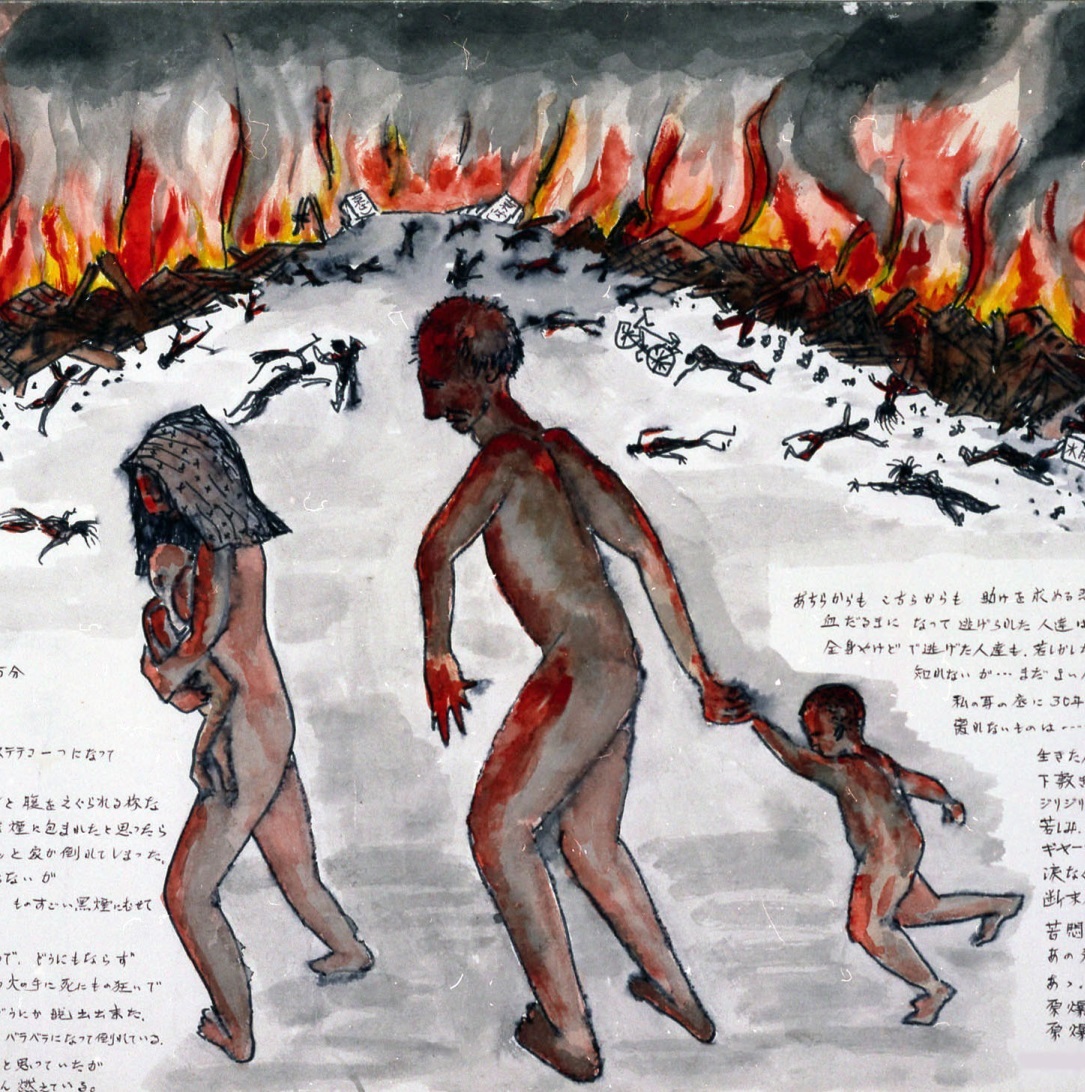
Learn more by exploring the galleries:
On August 6th, 1945, one U.S. B29 bomber dropped one bomb, code-named Little Boy, on the city of Hiroshima at 8:15 a.m. without warning. The destruction it loosened upon the city’s 300,000 inhabitants was unimaginable. Never had such a fierce weapon existed: its flash released heat up to one million degrees centigrade, the shock wave toppled some 60,000 buildings, a firestorm erupted that burned four square miles. Radioactive oily black rain fell—and many gasping for water opened their mouths to drink it.
Some 70,000 people perished instantly or within days, due to radiation poisoning and other grave injuries; 70,000 more died before the end of the year. Those exposed to radioactivity faced punishing illnesses, cancers, and disorders such as bone crushing fatigue and recurring bleeding. Due to the censorship imposed over the seven-year U.S. Occupation, personal stories were repressed, but not forgotten. More than 25 years after the bombing, survivors were asked to make drawings of what they remembered of that day, reflecting their harrowing memories. These images were donated to the Hiroshima Peace Memorial Museum, whose mission is to witness and educate about the devastating effects of nuclear warfare—and to prevent its ever happening again.
This exhibition is co-sponsored by Hiroshima Nagasaki Day Coalition (HNDC) and Artspace Gallery. Images are courtesy of the Hiroshima Peace Memorial Museum. Curated by Katy McCormick.
Bruce County Council nuclear endorsement undermines local democracy
Dr. Sandy Greer, PhD, Blyth, https://midwesternnewspapers.com/letter/bruce-county-council-nuclear-endorsement-undermines-local-democracy/ July 2024
Bruce County Council’s endorsement of the declaration of Global Partnership for Nuclear Communities of principles, based on membership in the Canadian Association of Nuclear Host Communities (CANHC), ought to raise alarm bells by any thinking regional citizen. Read for yourself the two documents behind this endorsement, which are publicly available in the online agenda of the County’s June 6th meeting.
CANHC, in collaboration with European and American nuclear community alliances, published a press release dated March 21, 2024 to announce this global partnership based on “supporting clean energy development in local communities” in accordance with the International Atomic Energy Agency’s (IAEA) approach to address climate change. The longstanding question to raise, of course, is whether nuclear energy can truthfully be characterized as clean and safe, when it produces radioactive waste.
Meanwhile, although I concede that Bruce County Council’s membership, as well as the Municipality of Kincardine, in the CANHC, is logical, given the longstanding presence of Bruce Power located in Kincardine, there is a huge problem – and I would call it misleading and even dishonest – for CANHC to include the Municipality of South Bruce as a `nuclear host community.’ The rationale, apparently, is because CANHC welcomes “current, future and interested nuclear host communities… in an ongoing proactive relationship with the Canadian nuclear industry and regulators.”
The biggest alarm bell here is triggered by what is written in the second document shown in the June 6th agenda, as a staff report titled: Engagement on Nuclear Energy Sector Projects” which reads: “Endorsing…helps establish expectations as the County is involved in the pre-planning and initial phases of the federal impact assessment processes on nuclear energy sector projects. Current initiatives related to the nuclear energy sector in the pre-planning stage of engagement in Bruce County include the NWMO Deep Geological Repository project
Upon watching the online June 6th Bruce County Council meeting, while Deputy Warden Luke Charbonneau championed the principles, in reference to “the multitude of [nuclear] projects we are privileged to have in our County,” Huron-Kinloss councillor Don Murray cautioned that “sometimes people feel we at County Council are trying to take over projects – not so.”
But, given the county council endorsement of the global declaration, Councillor Murray’s words ring hollow, when in referring to the proposed NWMO DGR as “in the pre-planning stage of engagement” gives the impression that the DGR will go forward.
What happened to the promise of a Referendum by-election vote, for the people who live in South Bruce, which is scheduled for late October this year? Does that actually mean nothing? Has this entire enterprise through the past dozen years been a fraudulent engagement in democracy, in which the people most predominantly impacted in so many ways actually will have no voice at all?
As a regional citizen who was a ratepayer in South Bruce for 13 years, the first problem which I observe is not so much the County taking over projects but, instead, the Nuclear Waste Management Organization (NWMO) taking over the Municipality of South Bruce Any opposition to the proposed deep geological repository has continuously been marginalized by NWMO, with the complicity of South Bruce Council which has been enchanted by the vision of an economic boom, since it first became engaged in 2012 in the NWMO site selection process. I have witnessed it from that beginning.
Dialogue with the local community is a lie. NWMO only engages in one-sided forums of information, and never has been willing to sit in a town hall with voices who can communicate well-informed independent research which exposes the lack of science behind DGRs globally. Regional citizens are not being fully informed, because points of view which raise awkward questions are continuously discredited if not silenced entirely.
A lot of questions need to be asked, for which working journalists carry a responsibility. I am a former journalist who always dug for the deeper truth. I weep at the plight of journalism today. An important way for local journalism to regain trust from citizens is to ask difficult questions rather than merely repeat what politicians want us to hear.
Texas safety dept responds to fire involving radioactive materials
AUSTIN – On Friday, July 19, around 7:45 p.m., members of the Texas Department of Public Safety’s (DPS) Radiation/Nuclear Detection Unit, along with the Upton County Sheriff’s Office, Texas Department of Transportation and other local agencies, responded to the scene of a truck tractor semi-trailer on fire along State Highway 329 northwest of Rankin, Texas. The trailer was transporting UN3332—a radioactive material that contains Cesium-137 which can pose a serious health threat.
The road was immediately closed by local authorities, and DPS personnel began taking action to ensure the public’s safety, as well as that of the first responders who had been exposed to potential radiation.
DPS Corporal Scott Keane screened the area for radiation using his vehicle’s radiation detection system and found the area was clear. Corporal Keane and Corporal Dustin Henderson then conducted radiation contamination surveys on each of the first responders using their handheld radiation survey equipment.
Once Corporals Keane and Henderson had secured the burned truck tractor semi-trailer and determined the area was safe, the company was allowed to safely transport the UN3332 back to its facility.
The road reopened to traffic around 11 p.m.
TODAY. “People of a generally nervous disposition” worry about mishaps with nuclear bombs.
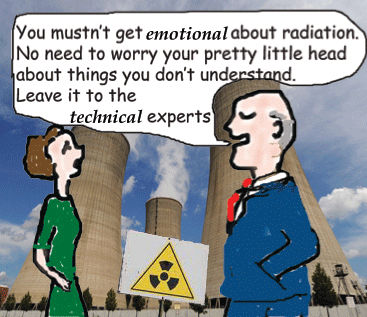
I just couldn’t resist that little quotation from an article today about an undetonated nuclear bomb lying at the bottom of a river. To be fair, I think that the writer might have been being sarcastic. He also mentions that “bomb-enthusiasts” worry, too.
Nevertheless, his statement is symptomatic of the comfortable attitude of the authorities to the whole subject of nuclear weapons – in this system, quaintly called deterrence. We’re all a bit worried that someone, like Putin, for example, might actually use one, some day.
But, in the “normal” course of events, nuclear weapons provide good, reliable jobs, and all sorts of government benefits to the community, and something to be proud of- “my strong country” etc. Don’t they?
So, it’s a bit annoying, when someone kicks up a fuss about the nuclear weapons that get accidentally dropped, and lost. They have all sorts of safety features, so they can’t easily explode. well, the land-based ones are supposed not to, anyway. The Atomic Archive lists for the USA 32 “Broken Arrow” nuclear accidents. Of course, that’s only the American ones. What about the others – French, British, Russian, North Korean, Chinese nuclear weapons? Russia was known to have 45.000 nuclear weapons up to 1986 – most of them on submarines – how many got lost undersea? Can they explode, undersea?
But that’s the thing. We are comforted by the reassurance from the experts, that explosion of a lost nuclear weapon is extremely unlikely. We are safe.
What they don’t talk about – is corrosion, leakage of radioactive materials. Over time, increased radioactivity in water and land will affect millions of people, – but don’t worry – of all those millions, only a few million will get cancer from this. So you see, a few million cancer deaths is nothing much really, to worry about. Or so the experts would have us think.
The nuclear lobby has achieved a wonderful global brainwashing. The only thing to worry about is a dramatic event, – an explosion with high levels of radiation released.
If you worry about those less dramatic millions of cancers, well, you must be “a person of a generally nervous disposition”. Hell – it’s your fault – you need psychiatric care, you poor thing.
1 This Month
Chernobyl: The Lost Tapes – A good documentary on Chernobyl on SBS available On Demand for the next 3 weeks– https://www.sbs.com.au/ondemand/tv-program/chernobyl-the-lost-tapes/2352741955560

of the week–London Campaign for Nuclear Disarmament

Tell the Ukrainian Government to Drop Prosecution of Peace Activist Yurii Sheliazhenko
To see nuclear-related stories in greater depth and intensity – go to https://nuclearinformation.wordpress.com
-
Archives
- April 2026 (126)
- March 2026 (251)
- February 2026 (268)
- January 2026 (308)
- December 2025 (358)
- November 2025 (359)
- October 2025 (376)
- September 2025 (257)
- August 2025 (319)
- July 2025 (230)
- June 2025 (348)
- May 2025 (261)
-
Categories
- 1
- 1 NUCLEAR ISSUES
- business and costs
- climate change
- culture and arts
- ENERGY
- environment
- health
- history
- indigenous issues
- Legal
- marketing of nuclear
- media
- opposition to nuclear
- PERSONAL STORIES
- politics
- politics international
- Religion and ethics
- safety
- secrets,lies and civil liberties
- spinbuster
- technology
- Uranium
- wastes
- weapons and war
- Women
- 2 WORLD
- ACTION
- AFRICA
- Atrocities
- AUSTRALIA
- Christina's notes
- Christina's themes
- culture and arts
- Events
- Fuk 2022
- Fuk 2023
- Fukushima 2017
- Fukushima 2018
- fukushima 2019
- Fukushima 2020
- Fukushima 2021
- general
- global warming
- Humour (God we need it)
- Nuclear
- RARE EARTHS
- Reference
- resources – print
- Resources -audiovicual
- Weekly Newsletter
- World
- World Nuclear
- YouTube
-
RSS
Entries RSS
Comments RSS
 nuclear-news