UK – the Ed Milliband Nuclear Nonsense Show

Great British Nuclear’s life started out as a Boris Johnson publicity stunt to get some cheap headlines, and it’s been downhill since then. It took two years to set up (civil servants at DESNZ kept asking what this particular Bojo wet dream was all about, and are still waiting for an answer), has no proper governance arrangements, is run by a bunch of nuclear non-entities, and so far has had only one task: to run “the competition “to see who will be the recipient of pots of taxpayers’ money to bring forward our “world-beating” Small Modular Reactor programmes.
Jonathon Porritt, Sustainability Campaigner and Writer, 31 July 24
1 I’m loving the Ed Miliband Show! The curtain went up on July 5th, and it’s been one reveal a day since then………………………………….
On Friday, he brought forward the Bill to establish Great British Energy (GBE), a cornerstone of Labour’s manifesto and its Net Zero ambitions. The one thing that grabbed everyone’s attention was the new partnership between GBE and the Crown Estate to unlock £60 billion of private investment in offshore wind – with a view to securing 30 GW of electricity before 2030 (enough to provide electricity for 20 million homes). To help make this happen, another Bill was introduced to overcome some of the barriers that the Crown Estate currently faces in expediting investment at that scale. Serious stuff!
The GBE Bill also referenced another partnership – with Great British Nuclear, with the emphasis on “exploring how Great British Energy and Great British Nuclear will work together”. And end more of the same kind of meaningless blather!
Let me elaborate a bit by way of contrasting these two strategic partners.
1. The Crown Estate
This is a powerful organisation that knows what it’s doing, does it with a real sense of purpose, and has been leading the charge on offshore wind for the last decade. It has a tried and tested CEO (Dan Labbad), formerly CEO of property developer Lend Lease here in the UK), a proven sustainability champion, deal-maker and job-creator.
Other big players in the energy sector get this kind of proposition and are already coming forward with their “in principle” commitments.
2. Great British Nuclear
Great British Nuclear’s life started out as a Boris Johnson publicity stunt to get some cheap headlines, and it’s been downhill since then. It took two years to set up (civil servants at DESNZ kept asking what this particular Bojo wet dream was all about, and are still waiting for an answer), has no proper governance arrangements, is run by a bunch of nuclear non-entities, and so far has had only one task: to run “the competition “to see who will be the recipient of pots of taxpayers’ money to bring forward our “world-beating” Small Modular Reactor programmes.

It’s struggled with this somewhat limited remit (already nine months behind schedule, with at least another six months to go), even though everybody already knows that the Government’s favoured SMR black hole will be Rolls Royce – there’s nothing worse for ministers than having Tufan Erginbilgic (Rolls Royce’s powerful, whining bully of a CEO) making trouble for you.
So, Ed, where are you going to go with all this? Both the Crown Estate and Great British Energy will, theoretically, help you “de-risk” prospects for critical private sector investors. The Crown Estate will do it for real, reducing the cost of capital, smoothing planning consents, securing supply chains, creating jobs – and, in due course (if not before 2030) – making offshore wind significantly cheaper. Exactly as has happened in Denmark. Great British Nuclear will suck you in, suck you dry, and do none of that…………..
The Treasury has always been less enthusiastic about nuclear power than the rest of government. It won’t object to a few more tens of millions bunged at Rolls Royce or a few more well-paid nuclear wastrels at Culham (emphasising the links with our inconceivably costly nuclear weapons establishment).

But the tens of billions that will be required to de-risk private sector investment in Sizewell C – that’s another matter. This is the time, surely, to let Sizewell C die under the weight of its own monstrous irrelevance.
Sizewell C will obviously make literally zero contribution to the 2030 target that Labour has for decarbonising the grid. As it happens, Ed shouldn’t really be worrying too much about 2030 anyway. This isn’t going to happen (full marks to those sad gits at the Telegraph for spotting this!), but it really doesn’t matter. The key date is 2029, the date of the next election, not 2030.
……………………………..So, Ed, keep your eyes on the prize: making people feel good (and possibly even a bit excited) about the UK’s low-carbon future – in terms of jobs, skills, supply chains, lower bills and so on. Deep down, you must know as well as I do that’s all about prioritising real delivery partners (viz the Crown Estate), not about preposterous pipe-dreaming fantasists in the nuclear industry. https://www.jonathonporritt.com/go-ed-go/
Iran vows revenge after Hamas leader Ismail Haniyeh killed in Tehran
Death came hours after Israel said it killed a top Hezbollah commander in Beirut, fuelling fears of regional conflict
Guardian, Emma Graham-Harrison, Quique Kierszenbaum and Bethan McKernan in Jerusalem, and William Christou in Beirut 31 July 24
Ismail Haniyeh, the political leader of Hamas, was killed by a strike in Tehran in the early hours of Wednesday morning, only hours after Israel said it had killed a top Hezbollah commander in Beirut.
The dual assassinations are heavy blows to Hamas and Hezbollah, but also raise the stakes for Iran, which backs both groups and vowed revenge. They will fuel growing fears that the war in Gaza could escalate into a broader regional conflict.
A senior Hamas official described Haniyeh’s killing as a “cowardly act that will not go unpunished”. Mediators Qatar and Egypt warned it would set back talks on a ceasefire and a deal to release hostages held in Gaza.
Haniyeh was targeted by an airstrike at a “residence in Tehran”, Hamas said, after he travelled to the Iranian capital for the inauguration of the country’s new president, Masoud Pezeshkian.
Iran’s supreme leader, Ayatollah Ali Khamenei, said that because the attack took place in Tehran, “we consider his revenge as our duty”. Pezeshkian said his country would defend its territorial integrity and honour, and make the “terrorist occupiers regret their cowardly action”.
The Israeli government officially declined to comment on Haniyeh’s death, but the strike was widely acknowledged as an Israeli operation both inside the country and beyond.
Israel vowed to kill all Hamas leaders after the 7 October attacks, and its intelligence services have a history of carrying out covert killings inside Iran, mostly targeting scientists working on the country’s nuclear programme.
The retired general Amos Yadlin, a former head of Israel’s Military Intelligence Directorate, described the attacks on Wednesday night as “two quality operations of Israel defence forces against two top terrorists, one in Beirut and one in Tehran”.
The US defence secretary, Lloyd Austin, speaking after the assassinations, said the Biden administration was “doing things to take the temperature down” but would come to Israel’s defence if it were attacked…………………………………………………………………….
Haniyeh’s death came hours after Israel claimed it had killed Hezbollah’s top military commander, Fuad Shukur, in an airstrike on a south Beirut suburb launched in retaliation for a rocket attack that killed 12 children at the weekend…………………………………………………………….. more https://www.theguardian.com/world/article/2024/jul/31/hamas-leader-ismail-haniyeh-death-raid-iran-home-israel-gaza-war
Government partnership is needed if Dutch pension fund PME is to make “risky” nuclear investment.

Dutch pension fund PME keen for nuclear power investments
European Pensions , By Natalie Tuck, 30/07/24
The Dutch pension fund PME is keen to invest in nuclear investment but this must be in partnership with the Dutch government, due to it being such a “risky investment”.
The pension fund, for those working in the tech and metal industry, has published a position paper on investing in nuclear energy in the wake of the publication of the Dutch National Energy System Plan, which looks to scale up the use of nuclear energy in the Netherlands………………………….
Making the case for nuclear energy, PME said the “manageable disadvantage” of radioactive waste and the high level of safety of nuclear power plants weigh into PME’s positive view of nuclear energy as a stable addition to the energy mix……………
When it comes to financing, PME said the “high cost of construction and the long duration of construction make nuclear power plants a very risky investment”.
The paper continued: “Financing nuclear power plants requires a leading role of the state, which will have to assume a significant part of the risk in all phases of the nuclear power plant’s life. Security of return is a basic requirement for PME so that funding also contributes to participants’ pension accrual and pensioners.
“The construction of nuclear power plants takes a very long time and is very costly. It is precisely for these reasons that risk-return requirements are paramount in any financing of nuclear power.”
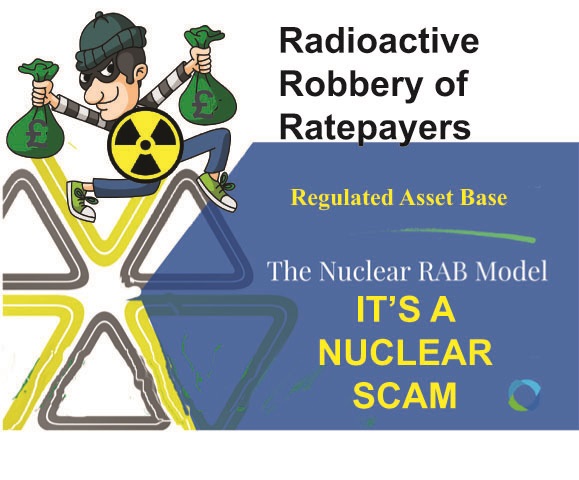
It therefore advocates for the use of a Regulated Asset Base (RAB) model to finance the construction of nuclear power plants. In this model, private parties bear the investment, and receive a fixed ‘fair return’ (the RAB fee) from the start of construction.In the RAB model, at each stage, the primary risk is shared between the state and the financing market party or parties.
……………………….“In addition to the quantitative participant survey, PME holds focus groups with participants, retirees and employers. PME also organises retiree meetings where the topic of nuclear energy was discussed recently. The basic attitude toward nuclear energy is almost always positive among the majority of constituents. However, there are concerns about the yield, the risks, the safety of nuclear power plants and the problem of radioactive waste,” PME stated. https://www.europeanpensions.net/ep/Dutch-pension-fund-PME-keen-for-nuclear-power-investments.php
Japan continues search for its first nuclear waste disposal site by screening tiny rural town

by undergoing just the first step of screening, the town can receive grants of up to 2 billion yen (US$12.7 million).
Channel Newws Asia Michiyo Ishida, Louisa Tang 31 July 24
Japan has produced more than 19,000 tonnes of nuclear waste since it began generating atomic energy in the 1960s.
GENKAI, Japan: Cattle farmer Hiroshi Nakayama practically grew up with nuclear power in the rural town of Genkai, which has a population of just under 5,000.
The 56-year-old raises 2,000 black-haired wagyu, selling the best as premium and highly sought after Saga beef.
Even though his hometown in southern Kyushu island may one day become Japan’s final destination for nuclear waste, he brushed off concerns that it would affect his business.
Screening began last month to assess if Genkai, which has hosted a nuclear plant for about five decades, is suitable to serve as the country’s first radioactive waste disposal facility.
“Given Japan’s technology, I do not think there will be environmental contamination. Some people say it is dangerous, but no one has died from (the existence of) the nuclear plant,” Mr Nakayama told CNA…………………………
THIRD SITE TO BE SCREENED
Genkai is the third site to undergo screening after two others in Hokkaido which are still being reviewed. It is the only one among them that hosts a nuclear plant.
Japan needs a radioactive waste disposal facility as it has produced more than 19,000 tonnes of nuclear waste since it began generating atomic energy in the 1960s.
This waste will continue to accumulate in interim storage that is dangerous in the long run.
Nuclear waste needs to be stored at least 300 metres underground for about 100,000 years until radioactivity falls to acceptable levels.
Meanwhile, the entire process to select a permanent disposal site will take about 20 years.
Local authorities have the right to pull out at each stage, but by undergoing just the first step of screening, the town can receive grants of up to 2 billion yen (US$12.7 million).
The process begins with the collection of documents describing the town’s geological features. The central government-linked Nuclear Waste Management Organization will then spend two years studying the documents before publishing a report.
Based on that, local leaders will decide whether to move on to the next step.
MAYOR EXPRESSES MISGIVINGS
Some groups in Genkai, including hotel and restaurant associations, had pushed for their town to be screened by submitting petitions. These were approved by the local assembly which represents residents in Genkai.
While the town’s mayor Shintarou Wakiyama gave the green light in May, he said he has misgivings about a disposal site being built there.
One reason he cited was the size of Genkai – just 36 sq km.
“I thought we are too small and not suitable for hosting a final nuclear waste disposal site,” he added……………………………..
By having Genkai undergo screening, he said he hopes other towns will come forward.
He stressed that his decision to approve the screening was not driven by money, noting that the town’s coffers were already in good shape from substantial payouts due to hosting a nuclear plant. https://www.channelnewsasia.com/east-asia/japan-nuclear-radioactive-waste-disposal-site-screening-genkai-town-4513641
Largest wildfire in US grows to cover area bigger than Los Angeles

The largest wildfire in the US swelled to more than 380,000 acres (154,000
hectares) on Tuesday morning, an area bigger than the city of Los Angeles
and three times the surface area of Lake Tahoe, as thousands of
firefighters battled the blaze in a remote wilderness area in northern
California. Meanwhile, the destruction caused by wildfires raging across
the US west came into sharp focus as photographers documented the
destruction left by the Borel fire in southern California. The fast-growing
fire tore through the historic mining town of Havilah, leaving burnt
buildings, cars and forests.
Guardian 30th July 2024
https://www.theguardian.com/us-news/article/2024/jul/30/california-wildfires-los-angeles
Assange, CIA Surveillance and Spain’s Audencia Nacional
Australian Independent Media, August 1, 2024, Dr Binoy Kampmark
The sordid story on the CIA-backed operation against the WikiLeaks publisher Julian Assange during his time cramped in London’s Ecuadorian Embassy continues to froth and thicken. US officials have persisted in their reticent attitude, refusing to cooperate with Spain’s national high court, the Audiencia Nacional, regarding its investigation into the Agency’s espionage operations against the publisher, spearheaded by the Spanish security firm Undercover (UC) Global.
Since 2019, requests for assistance regarding the matter, including querying public statements by former CIA director Mike Pompeo and former head of counterintelligence, William Evanina, along with information mustered by the relevant Senate Intelligence Committee, have been made to US authorities by judges José de la Mata and Santiago Pedraz. These have been treated with a glacial silence.
On December 12, 2023, the General Subdirectorate of International Legal Cooperation furnished the US authorities “an express announcement” whether such judicial assistance would be denied.
Spain’s liaison magistrate in the US, María de las Heras García, duly revealed that the tardiness to engage had been occasioned by ongoing legal proceedings being conducted before the US District Court of the Southern District of New York. As Courtney E. Lee, trial attorney at the US Justice Department’s Office of International Affairs explained, supplying Spain’s national high court with such information would “interfere” with “ongoing US litigation”. Hardly a satisfactory response, given requests made prior to the putative litigation.
The litigation in question involved a legal suit filed in the US District Court of the Southern District of New York by civil rights attorney Margaret Ratner Kunstler, media lawyer Deborah Hrbek, and journalists John Goetz and Charles Glass.
In their August 2022 action, the complainants alleged that they had been the subject of surveillance during visits to Assange during his embassy tenure, conduct said to be in breach of the Fourth Amendment. The plaintiffs accordingly argued that this entitled them to money damages and injunctive relief from former CIA director Mike Pompeo, the director of the Spanish security firm Undercover (UC) GlobalDavid Morales, and UC Global itself.
On December 19, 2023 District Judge John G. Koeltl granted, in part, the US government’s motion to dismiss while denying other portions of it. The judge accepted the record of hostility shown by Pompeo to WikiLeaks openly expressed by his April 2017 speech and acknowledged that “Morales was recruited to conduct surveillance on Assange and his visitors on behalf of the CIA and that this recruitment occurred at a January 2017 private security industry convention at the Las Vegas Sands Hotel in Las Vegas, Nevada.
The litigants found themselves on solid ground with Koeltl in the finding that they had standing to sue the intelligence organisation. “In this case, the plaintiffs need not allege, as the Government argues, that the Government will imminently use their information collected at the Ecuadorian Embassy in London.” The plaintiffs would “have suffered a concrete and particularized injury fairly traceable to the challenged program and redressable by favorable ruling” if the search of the conversations and electronic devices along with the seizure of the contents of the electronic devices were found to be unlawful.
-Advertisement-
The plaintiffs also convinced the judge that they had “sufficient allegations that the CIA and Pompeo, through Morales and UC Global, violated their reasonable expectation of privacy in the contents of their electronic devices.” But they failed to convince Koeltl that they had a reasonable expectation of privacy regarding their conversations with Assange, given the rather odd reasoning that they were aware the publisher was already being “surveilled even before the CIA’s alleged involvement.” Nor could such an expectation arise given the acceptance of video surveillance of government buildings. Problematically, the judge also held that those surrendering devices and passports at an Embassy reception desk “assumed the risk that the information may be conveyed to the Government.”
Sadly, Pompeo was spared the legal lash and could not be held personally accountable for violating the constitutional rightsof US citizens. “As a presidential appointee confirmed by Congress […] Defendant Pompeo is in a different category of defendant from a law enforcement agent of the Federal Bureau of Narcotics.”…………………………………………………………………………..
As long as the Agency stifles and drags out proceedings on the grounds of this misused privilege, the Justice Department is bound to remain inert in the face of the Spanish investigation. https://theaimn.com/assange-cia-surveillance-and-spains-audencia-nacional/
Some UK higher education rejoices in the nuclear and military partnership

Nuclear decommissioning centre shares learning with MoD apprentices
An innovative engineering and maintenance centre is forging links with the Ministry of Defence to help share learnings between the nuclear and defence sectors.
Sellafield Ltd Engineering Centre of Excellence in Cleator Moor, hosted degree apprentices from Royal Naval Armaments Depot Coulport in Argyll and Bute, Scotland on Wednesday.
The visit was arranged by the Sellafield Engineering Centre of Excellence team to showcase its pioneering work with robotics, unmanned aerial vehicles, remotely operated vehicles, flight and electrical simulators and VR technology.
Five MoD degree apprentices, all on a five-year programme linked to the University of Wales, Trinity Saint David, at Swansea, gained hands-on experience of operating a drone simulator, using VR equipment and a range of other remotely operated technology at the state-of-the-art centre in Cumbria. ………………………………………………………………more https://cumbriacrack.com/2024/07/30/nuclear-decommissioning-centre-shares-learning-with-mod-apprentices/
1 This Month
Chernobyl: The Lost Tapes – A good documentary on Chernobyl on SBS available On Demand for the next 3 weeks– https://www.sbs.com.au/ondemand/tv-program/chernobyl-the-lost-tapes/2352741955560

of the week–London Campaign for Nuclear Disarmament

Tell the Ukrainian Government to Drop Prosecution of Peace Activist Yurii Sheliazhenko
To see nuclear-related stories in greater depth and intensity – go to https://nuclearinformation.wordpress.com
-
Archives
- April 2026 (126)
- March 2026 (251)
- February 2026 (268)
- January 2026 (308)
- December 2025 (358)
- November 2025 (359)
- October 2025 (376)
- September 2025 (257)
- August 2025 (319)
- July 2025 (230)
- June 2025 (348)
- May 2025 (261)
-
Categories
- 1
- 1 NUCLEAR ISSUES
- business and costs
- climate change
- culture and arts
- ENERGY
- environment
- health
- history
- indigenous issues
- Legal
- marketing of nuclear
- media
- opposition to nuclear
- PERSONAL STORIES
- politics
- politics international
- Religion and ethics
- safety
- secrets,lies and civil liberties
- spinbuster
- technology
- Uranium
- wastes
- weapons and war
- Women
- 2 WORLD
- ACTION
- AFRICA
- Atrocities
- AUSTRALIA
- Christina's notes
- Christina's themes
- culture and arts
- Events
- Fuk 2022
- Fuk 2023
- Fukushima 2017
- Fukushima 2018
- fukushima 2019
- Fukushima 2020
- Fukushima 2021
- general
- global warming
- Humour (God we need it)
- Nuclear
- RARE EARTHS
- Reference
- resources – print
- Resources -audiovicual
- Weekly Newsletter
- World
- World Nuclear
- YouTube
-
RSS
Entries RSS
Comments RSS
 nuclear-news